


 Скачать презентацию Chapter 11 Phase 5 Covering Tracks and Hiding
55320297c2e03447adab966a6848c694.ppt
- Количество слайдов: 32
 Chapter 11 Phase 5: Covering Tracks and Hiding
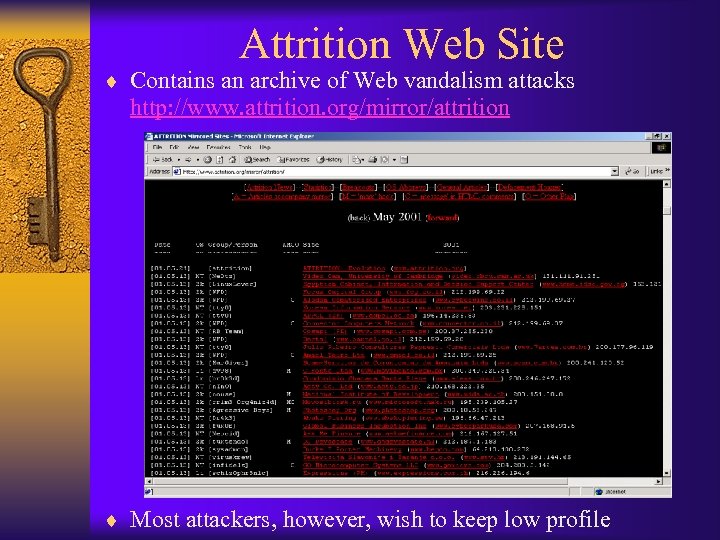 Attrition Web Site ¨ Contains an archive of Web vandalism attacks http: //www. attrition. org/mirror/attrition ¨ Most attackers, however, wish to keep low profile
 Hiding Evidence by Altering Event Logs ¨ Attackers like to remove evidence from logs associated with attacker’s gaining access, elevating privileges, and installing Root. Kits and backdoors – Login records – Stopped and restarted services – File access/update times
 Event Logging in Windows NT/2000 ¨ Security-related events such as failed login attempts or failed access to files are stored in file Sec. Event. Evt ¨ System events such as inability in starting a system service are stored in file Sys. Event. Evt ¨ Application events related to applications such as databases or web servers are stored in file App. Event. Evt
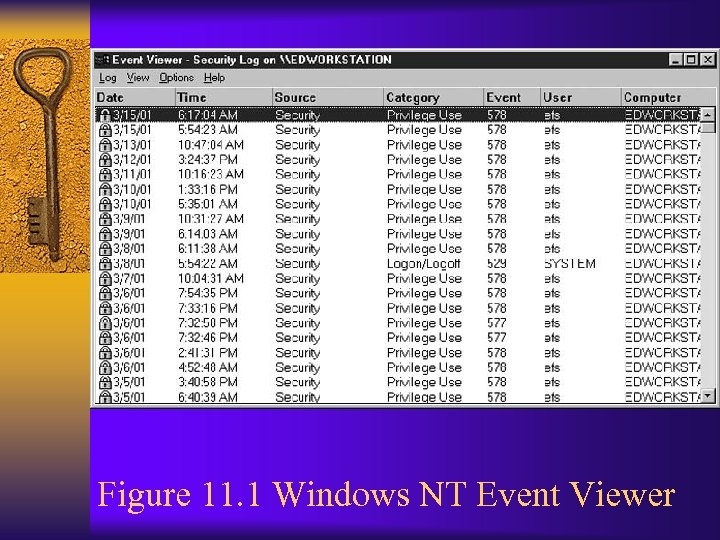 Figure 11. 1 Windows NT Event Viewer
 Altering Event Logs in Windows NT/2000 ¨ opening or editing event log files cannot be done with a standard file editing tool ¨ Deleting event log files possible but may cause suspicion ¨ Win. Zapper tool allows attacker to selectively delete security events http: //ntsecurity. nu/toolbox/winzapper
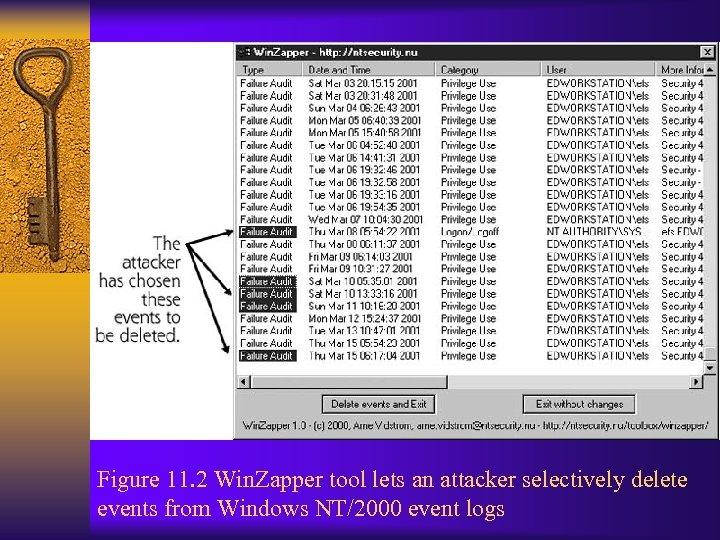 Figure 11. 2 Win. Zapper tool lets an attacker selectively delete events from Windows NT/2000 event logs
 Altering System Logs in Unix ¨ Unix log files are stored in files specified in /etc/syslog. conf (eg. /var/adm/messages) ¨ Attackers can alter log files via editors such as vi or emacs
 Altering Accounting Files in Unix ¨ utmp, wtmp, and lastlog files are the main accounting files in Unix – Written in special binary format – Can be edited using tools such as remove, wtmped, marry, cloak, logwedit, wzap, and zapper • http: //ftp. technotronic. com/unix/log-tools • Tools included in Root. Kits
 Unix Shell History Files ¨ stores a complete list of all commands entered by the user at the Unix command prompt ¨ Usually stored in users’ home directories ¨ Attacker may configure the length of the shell history file to be zero but may raise suspicion ¨ Careful attacker will remove unwanted lines from the history file via ASCII editor
 Defenses for Log and Accounting File Attacks ¨ Activate logging on your critical systems ¨ Set proper permissions on the log files, utmp, wtmp, lastlog, and users’ shell history files ¨ Setup a a separate logging server – Add line “syslog 514/udp” to /etc/services on logging server – Modify /etc/syslog. conf on critical server to redirect desired message types to logging server – Hostname and IP address of logging server should be added to /etc/hosts on critical server to thwart DNS attack – In Windows NT/2000, replace Event. Log service with an NT-compatible version of syslog to centralize logging • Kiwi syslog for NT http: //www. kiwi-enterprises. com
 Defenses for Log and Accounting File Attacks (cont. ) ¨ Encrypt log files http: //www. core- sdi. com/english/freesoft. html ¨ On Linux systems, make log files append only $ chattr +a [log_filename] ¨ Store logs on write-once media such as -ROM CD
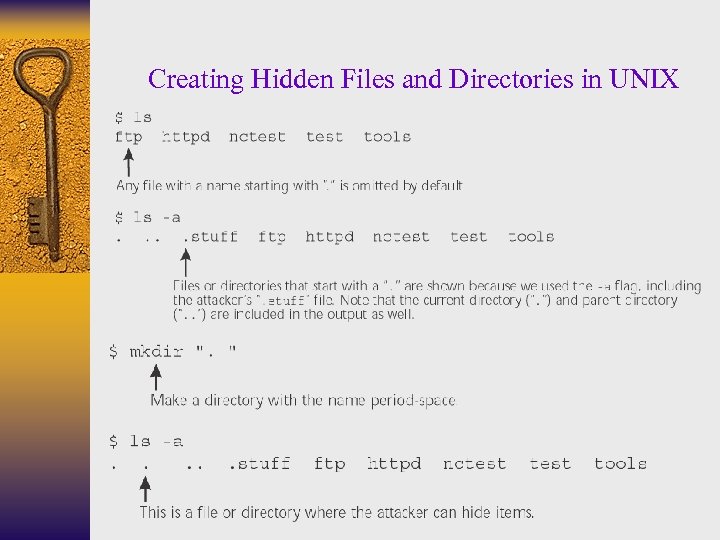 Creating Hidden Files and Directories in UNIX
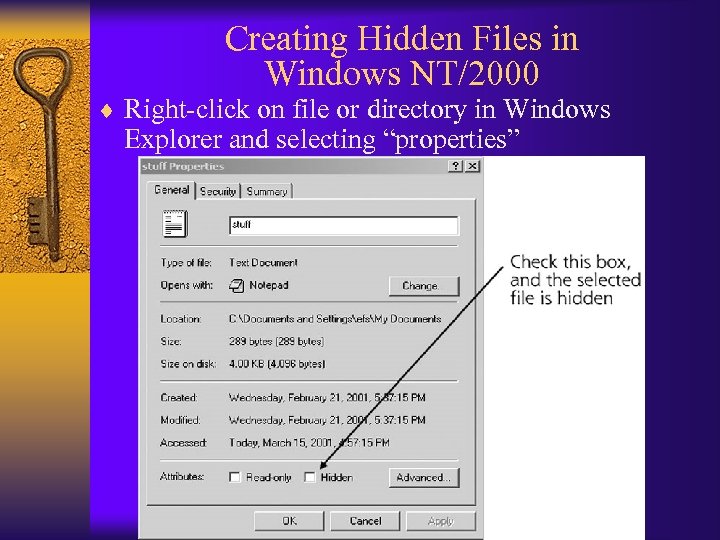 Creating Hidden Files in Windows NT/2000 ¨ Right-click on file or directory in Windows Explorer and selecting “properties”
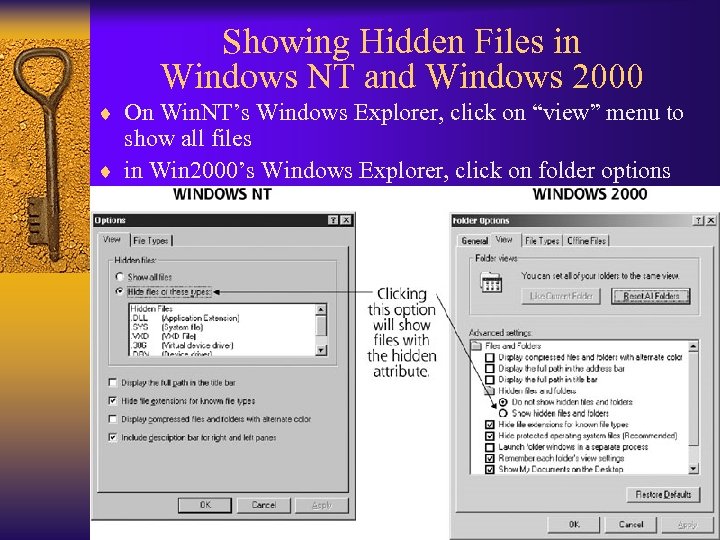 Showing Hidden Files in Windows NT and Windows 2000 ¨ On Win. NT’s Windows Explorer, click on “view” menu to show all files ¨ in Win 2000’s Windows Explorer, click on folder options
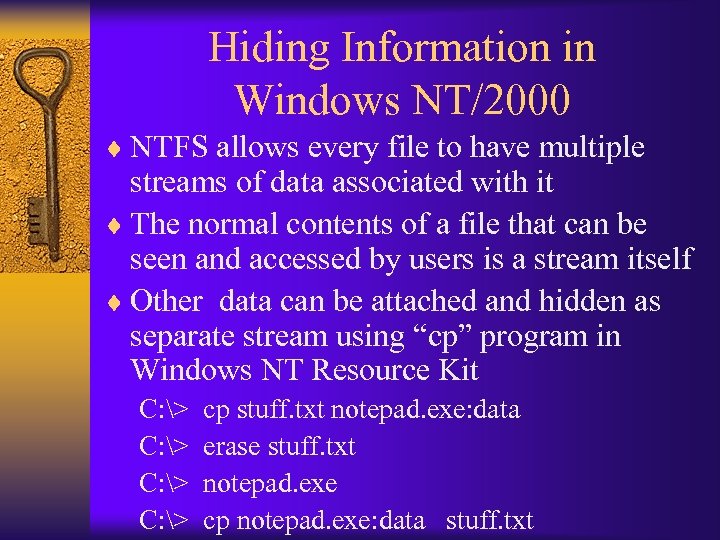 Hiding Information in Windows NT/2000 ¨ NTFS allows every file to have multiple streams of data associated with it ¨ The normal contents of a file that can be seen and accessed by users is a stream itself ¨ Other data can be attached and hidden as separate stream using “cp” program in Windows NT Resource Kit C: > cp stuff. txt notepad. exe: data erase stuff. txt notepad. exe cp notepad. exe: data stuff. txt
 Defenses from Hidden Files ¨ Use file integrity checking tools such as Tripwire to check contents of files and directories to verify that no additional data, files or directories have been hidden in them ¨ Use host-based IDS tools and anti-virus tools to check for presence of hidden file and generate alert message
 Covert Channels ¨ Communication channels that disguises data while it moves across the network to avoid detection ¨ Require a client and server ¨ Can be used to remotely control a machine and to secretly transfer files or applications
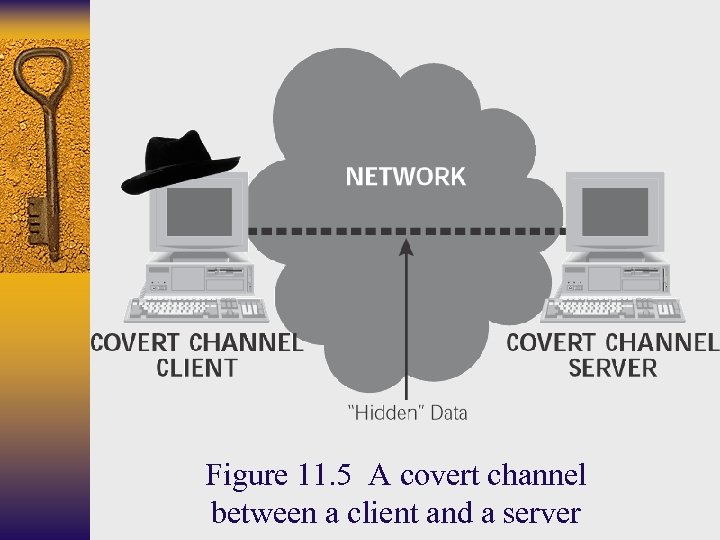 Figure 11. 5 A covert channel between a client and a server
 Techniques Used to Get a Covert Channel Server Installed ¨ Perform a buffer overflow on victim and install a backdoor ¨ Email an unsuspecting user an executable which installs a covert channel server ¨ Install covert channel as a contractor or employee with administrative privilege
 Tunneling ¨ Carrying one protocol inside another protocol – Eg. Tunneling Apple. Talk traffic over IP ¨ Any communications protocol can be used to transmit another protocol – SSH protocol used to carry telnet, FTP, or XWindows session ¨ Used by covert channels – Loki – Reverse WWW Shell
 Loki ¨ Covert channel using ICMP as a tunnel to carry interactive communication with a backdoor listener ¨ More stealthy and difficult to detect than other backdoor programs that listen on a given TCP/UDP port ¨ Description and source code available at http: //phrack. com ¨ Loki client wraps up attacker’s commands in ICMP and transmits them to the Loki server (lokid) ¨ Loki server upwraps the commands, executes them and wraps the responses up in ICMP packets ¨ Lokid must be run with root privilege
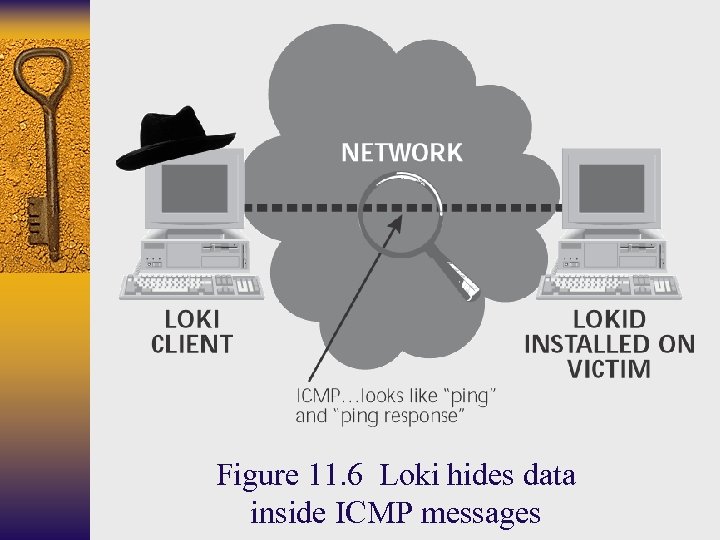 Figure 11. 6 Loki hides data inside ICMP messages
 Loki (cont. ) ¨ can only be detected via the presence of Loki daemon process running as root on the victim and the presence of bidirectional ICMP traffic ¨ Can disguise its packets as DNS queries and responses by running over UDP port 53 ¨ Supports protocol-switching by typing “/swapt” on client to toggle between ICMP and UDP port 53 ¨ Supports encryption of ICMP payload information
 Reverse WWW Shell ¨ Uses HHTP as a covert channel ¨ Allows an attacker to remotely access a victim machine with a command-line prompt ¨ A Reverse WWW Shell server and Perl interpreter must be installed on the victim machine ¨ A Reverse WWW Shell master software and Perl interpreter must be installed on the attacker’s machine ¨ Can sneak past firewall ¨ Perl code available at http: //thc. pimmel. com
 Reverse WWW Shell (cont. ) ¨ Every minute, Reverse WWW Shell server will contact the master to retrieve commands issued by the attacker ¨ Reverse WWW Shell server executes the commands, sends the results to Reverse WWW Shell master (via http request), and retrieves the next command (via http reply) ¨ Victim machine appears to be a web client sending HHTP Get commands while attacker’s machine appears to be a web server
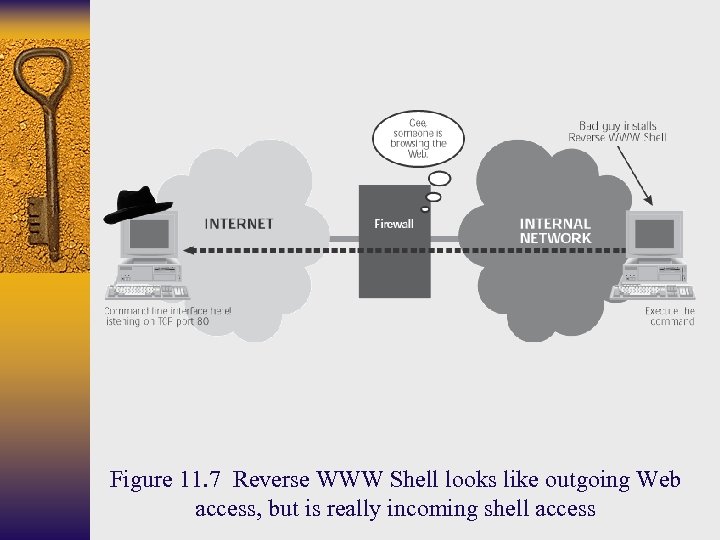 Figure 11. 7 Reverse WWW Shell looks like outgoing Web access, but is really incoming shell access
 Protocols used for Covert Channels ¨ ICMP ¨ HTTP ¨ Telnet ¨ SMTP ¨ FTP ¨ Streaming audio ¨ SSH
 Covert_TCP ¨ http: //www. psionic. com/papers/covert ¨ Uses TCP and IP headers to create covert channels ¨ Data can be hidden in various fields – IP Identification field • One character embedded per packet – TCP sequence number • One character embedded per SYN request and Reset packets – TCP acknowledgement number • One hidden character packet is relayed by a “bounce” server ¨ Can send data over any TCP source/destination ports – Can bypass firewall if use ports such as 25 or 53
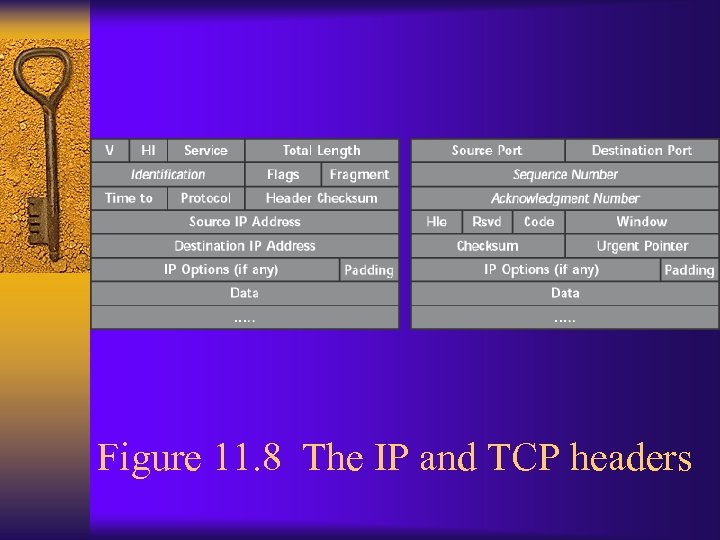 Figure 11. 8 The IP and TCP headers
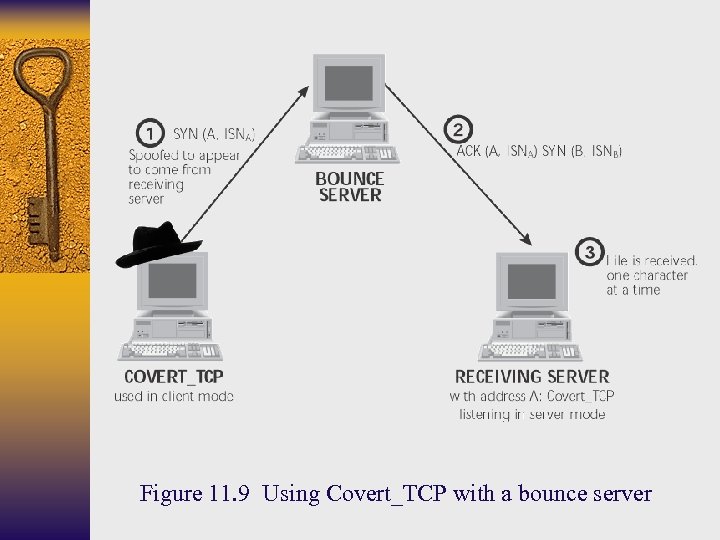 Figure 11. 9 Using Covert_TCP with a bounce server
 Defenses against Covert Channels ¨ Don’t let attacker get root or administrator access on hosts – Harden OS – Install latest security patches ¨ Install network IDS – Loki and other covert channels can be detected by Snort