


 Скачать презентацию Chapter 11 Consumption To develop an historical
cac376750b58057db5c060b2ac2337b8.ppt
- Количество слайдов: 26
 Chapter 11 Consumption • To develop an historical overview of consumption and consumerism • To summarize sociological, neoclassical, and Marxist views of consumption • To analyze geographies of consumption at multiple scales • To note the environmental impacts of mass consumption
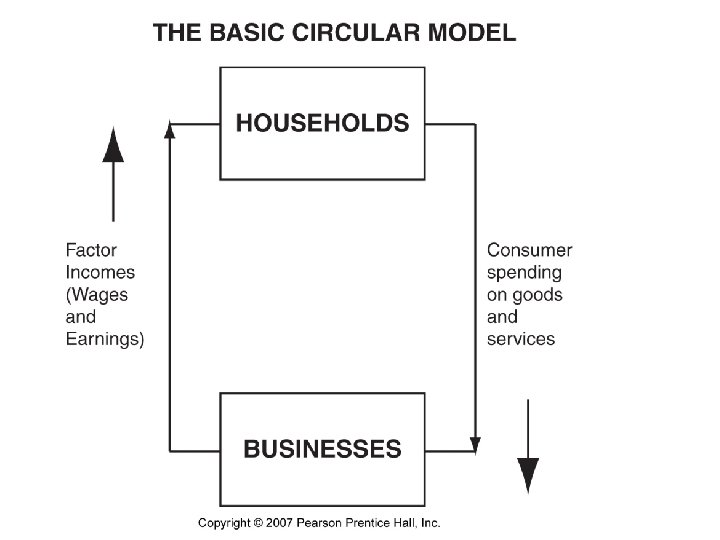
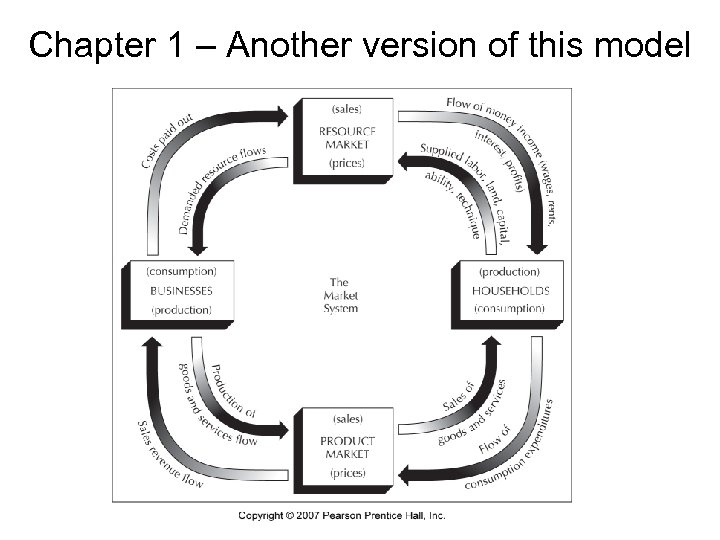 Chapter 1 – Another version of this model
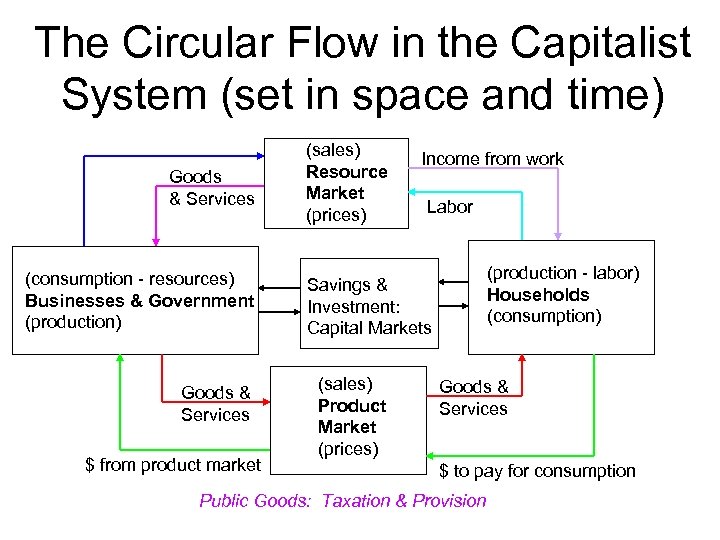 The Circular Flow in the Capitalist System (set in space and time) Goods & Services (consumption - resources) Businesses & Government (production) Goods & Services $ from product market (sales) Resource Market (prices) Income from work Labor (production - labor) Households (consumption) Savings & Investment: Capital Markets (sales) Product Market (prices) Goods & Services $ to pay for consumption Public Goods: Taxation & Provision
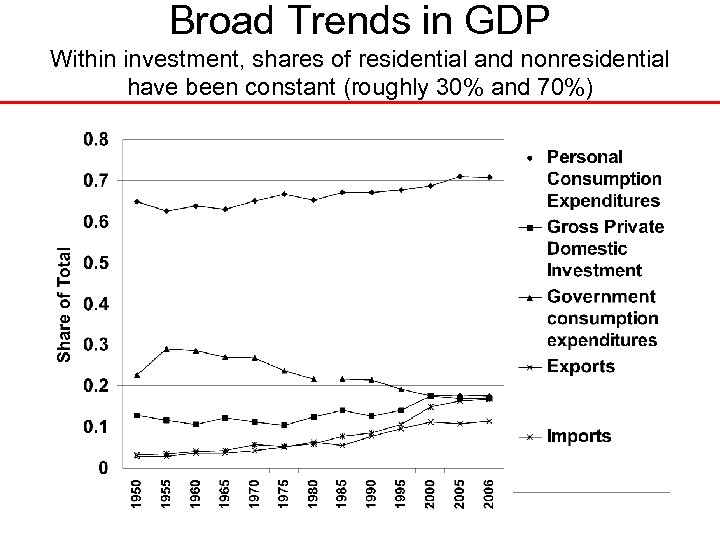 Broad Trends in GDP Within investment, shares of residential and nonresidential have been constant (roughly 30% and 70%)
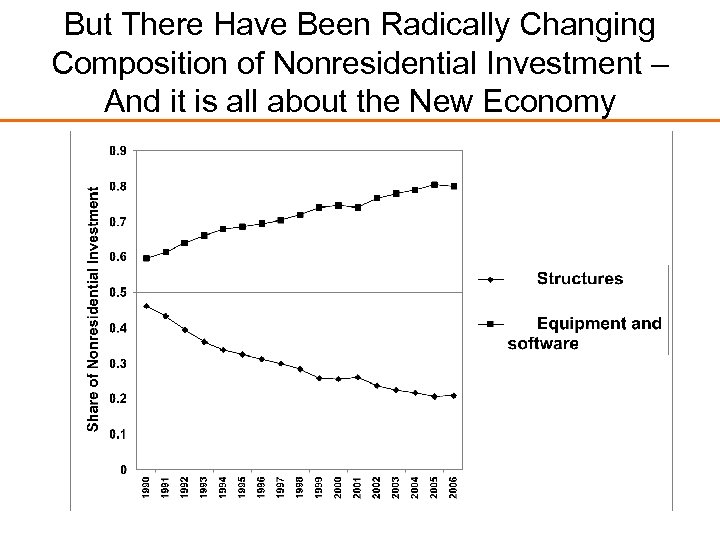 But There Have Been Radically Changing Composition of Nonresidential Investment – And it is all about the New Economy
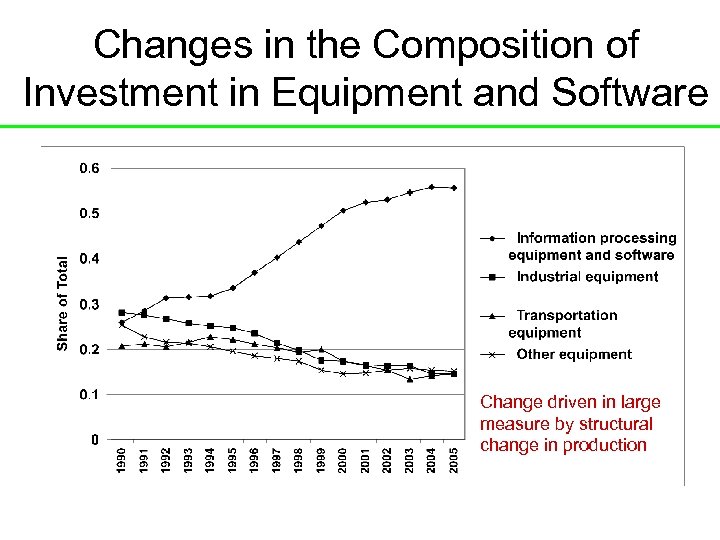 Changes in the Composition of Investment in Equipment and Software Change driven in large measure by structural change in production
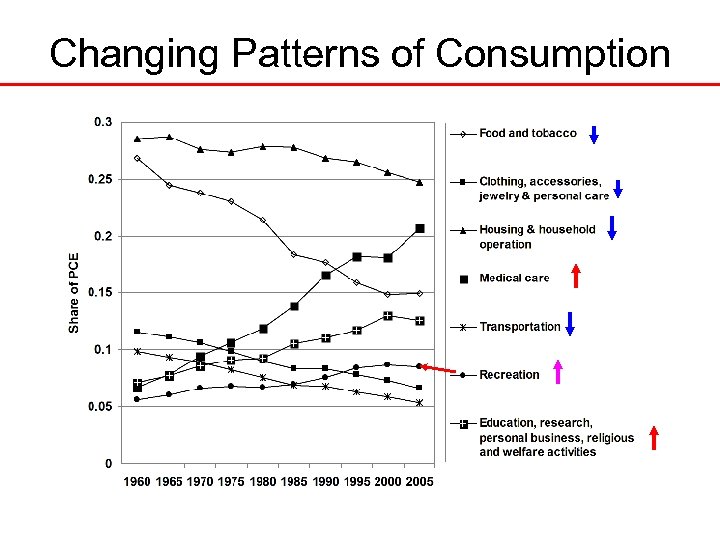 Changing Patterns of Consumption
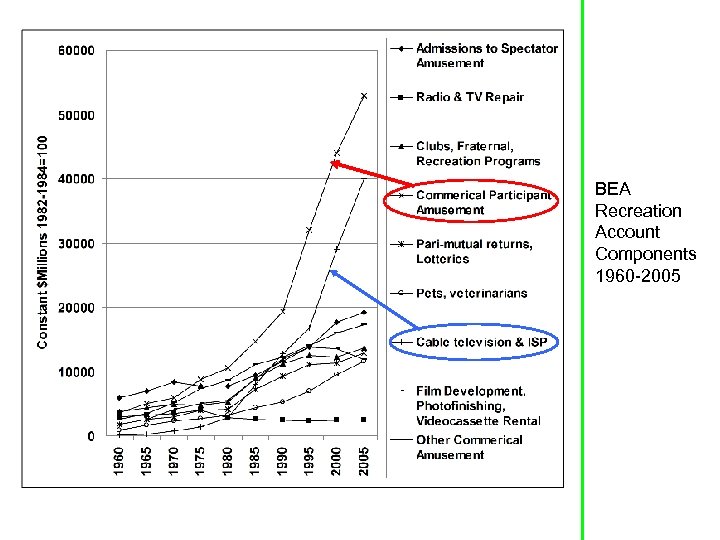 BEA Recreation Account Components 1960 -2005
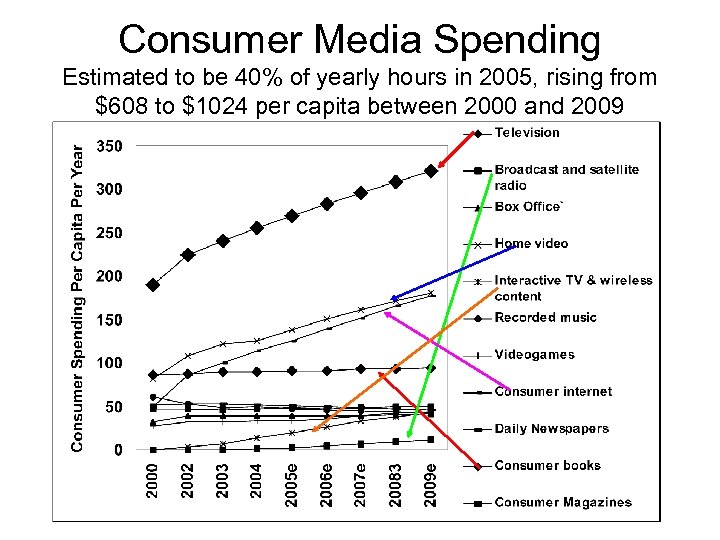 Consumer Media Spending Estimated to be 40% of yearly hours in 2005, rising from $608 to $1024 per capita between 2000 and 2009
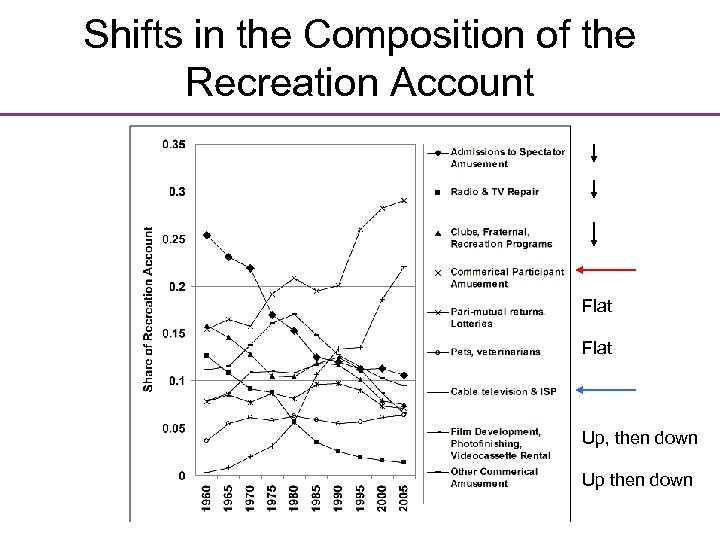 Shifts in the Composition of the Recreation Account Flat Up, then down Up then down
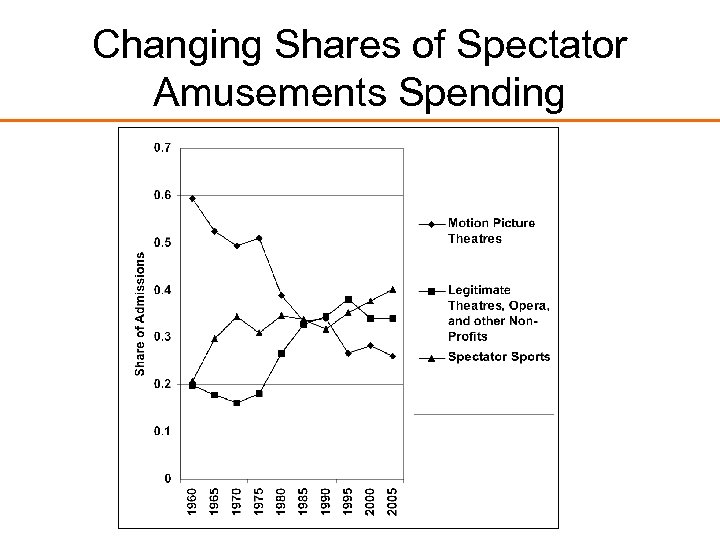 Changing Shares of Spectator Amusements Spending
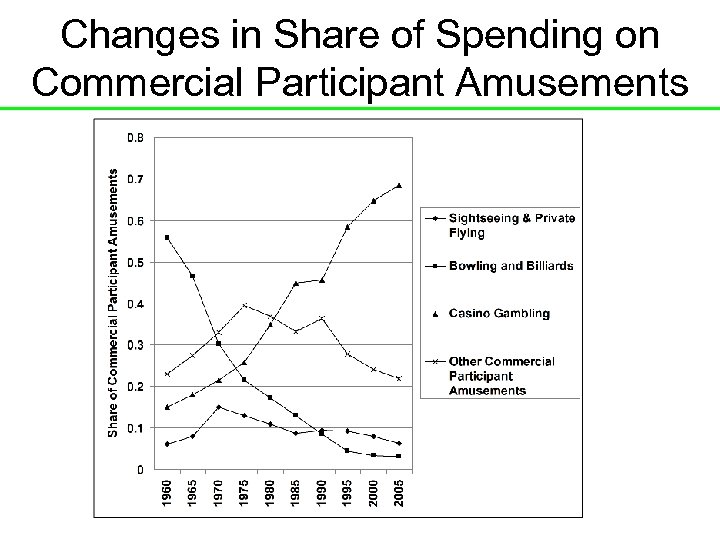 Changes in Share of Spending on Commercial Participant Amusements
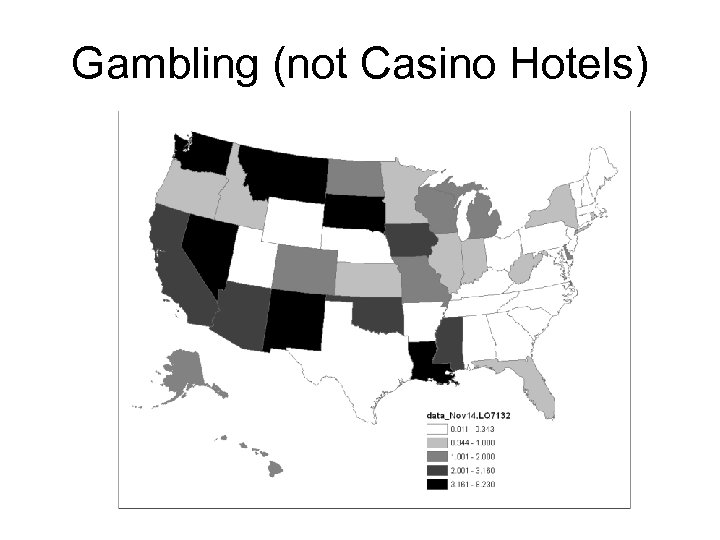 Gambling (not Casino Hotels)
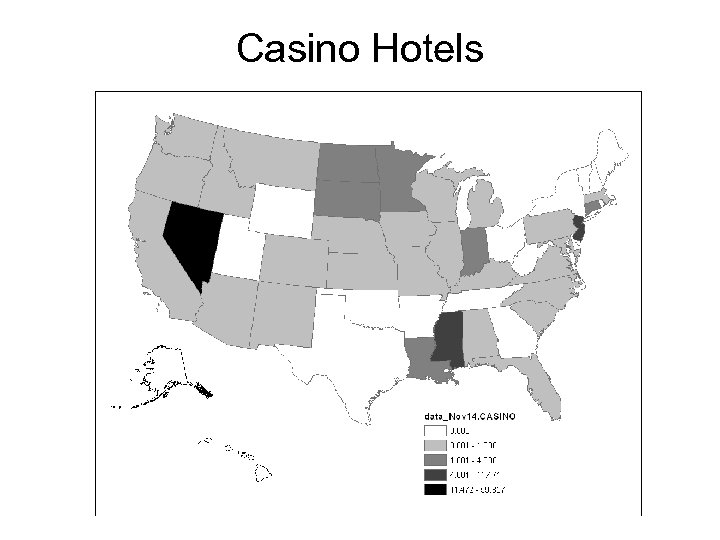 Casino Hotels
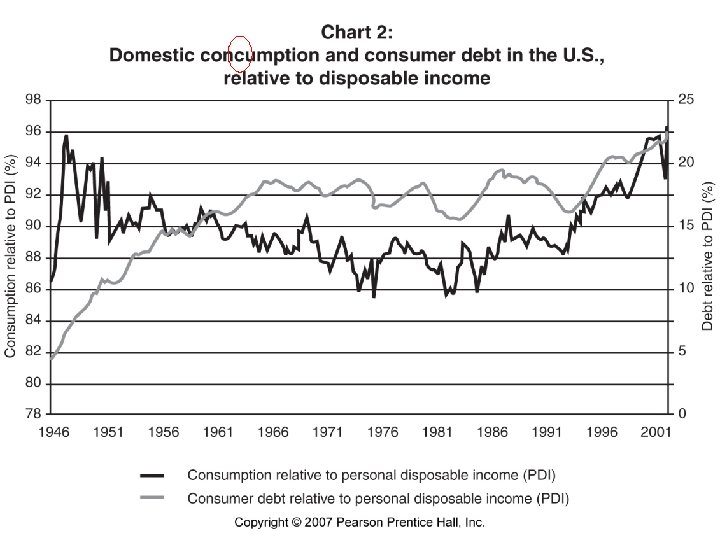
 Historical Context of Consumption • The rise of consumption as incomes rosethe shift from self production to market purchases related to the changing division of labor • Structural change (earlier diagram) • Change in social behavior (diagrams on household travel in Chapter 9) • Fueling consumption with credit
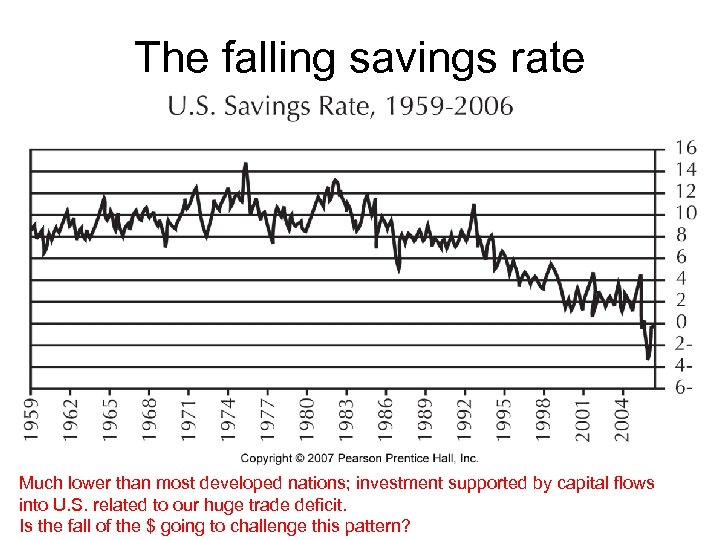 The falling savings rate Much lower than most developed nations; investment supported by capital flows into U. S. related to our huge trade deficit. Is the fall of the $ going to challenge this pattern?
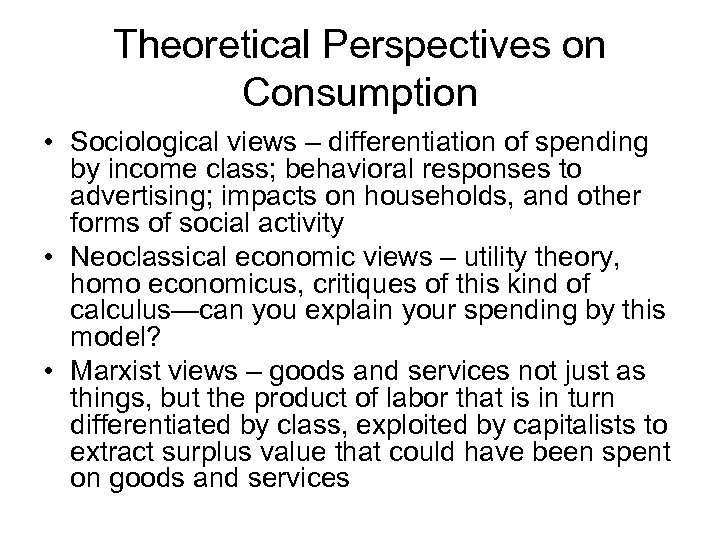 Theoretical Perspectives on Consumption • Sociological views – differentiation of spending by income class; behavioral responses to advertising; impacts on households, and other forms of social activity • Neoclassical economic views – utility theory, homo economicus, critiques of this kind of calculus—can you explain your spending by this model? • Marxist views – goods and services not just as things, but the product of labor that is in turn differentiated by class, exploited by capitalists to extract surplus value that could have been spent on goods and services
 Geographies of Consumption • Several approaches undertaken by geographers • Consumption, the body and individual experience • Shopping spaces as places with “meaning”, documenting the nature of social relations in these places • The commodity chain approach, often viewed in the context of globalization
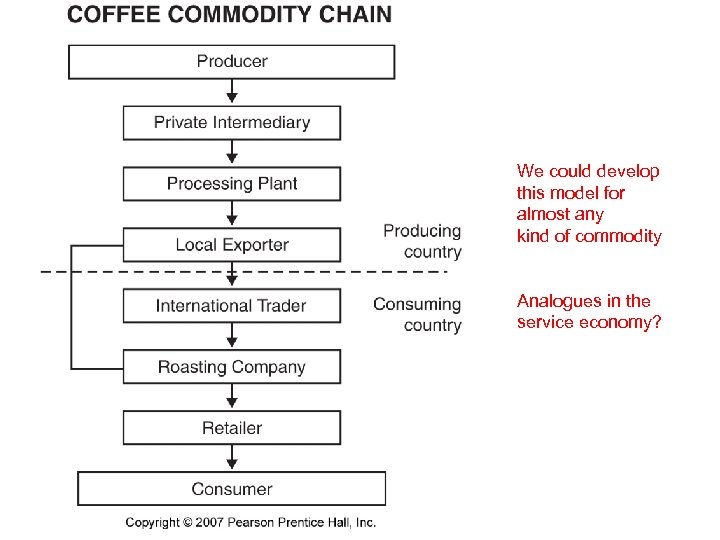 We could develop this model for almost any kind of commodity Analogues in the service economy?
 Environmental Dimensions of Consumption • Environmental impacts of production, distribution, consumption, and postconsumption • Unequal impact on the globe of production and consumption processes (Figure 11. 8) • How to restructure these relationships, such as the measures of global footprints? (Figures 11. 9 and 11. 10)
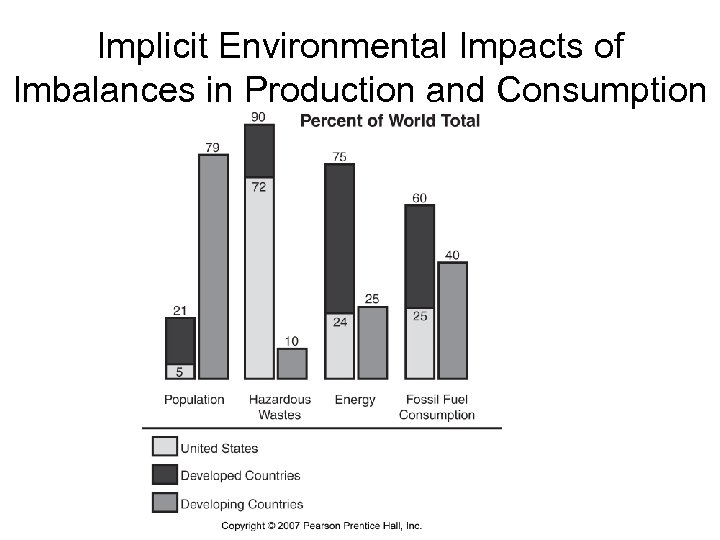 Implicit Environmental Impacts of Imbalances in Production and Consumption
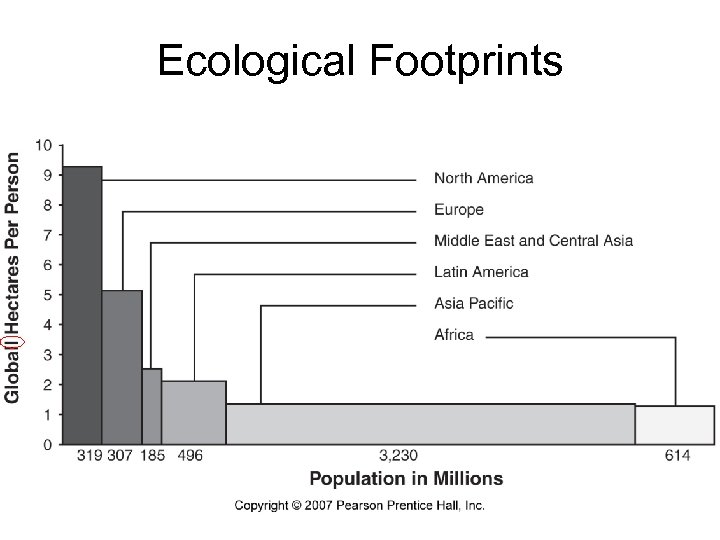 Ecological Footprints
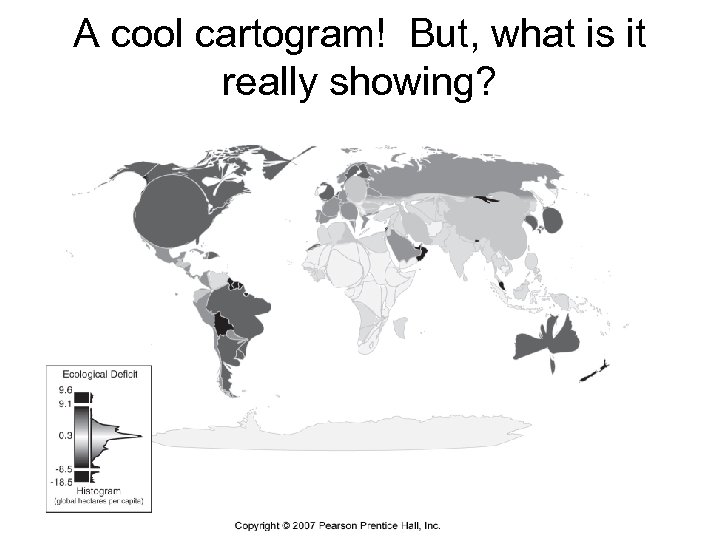 A cool cartogram! But, what is it really showing?
 Summary • Consumption dominates GDP in most countries, but geographies of it are relatively understudied • Economic models of consumption are too simple, but alternatives are equally difficult to document • Active research on commodity chains is helping to trace ecological footprints, and define more sustainable production systems (e. g the work I just reviewed for Sustainable Seattle) • How to measure environmental impacts of consumption, and design production & consumption systems with lower environmental impacts—in many ways the challenge posed by global warming