


 Скачать презентацию Chapter 10 To Parent or Not to Parent
0534618596_43926.ppt
- Количество слайдов: 27
 Chapter 10 To Parent or Not to Parent
 Chapter Outline § § Fertility Trends in the United Sates The Decision to Parent or Not to parent Having Children: Options and Circumstances Three Emerging Options
 Chapter Outline § § Preventing Pregnancy Abortion Involuntary Infertility and Reproductive Technology Adoption
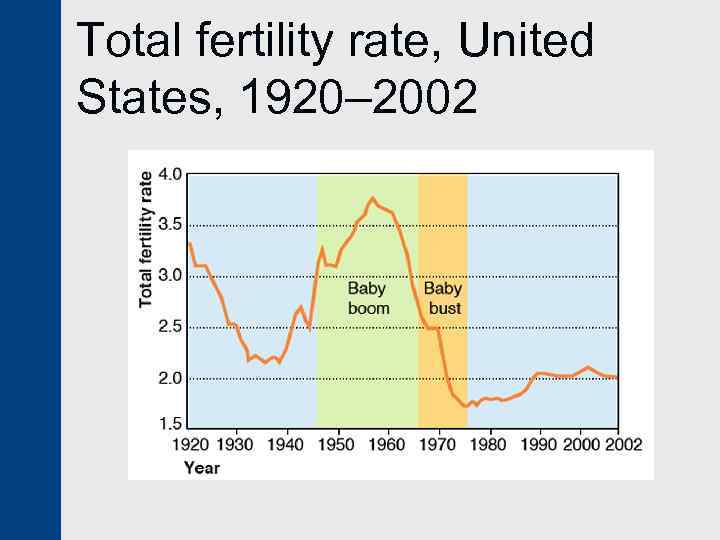 Total fertility rate, United States, 1920– 2002
 Social Pressures to Have Children § § § Our society has a pronatalist bias: Having children is taken for granted. 83% of American women say being or becoming a mother is important to their identity. Some of the strongest pressures may come from a couple’s parents.
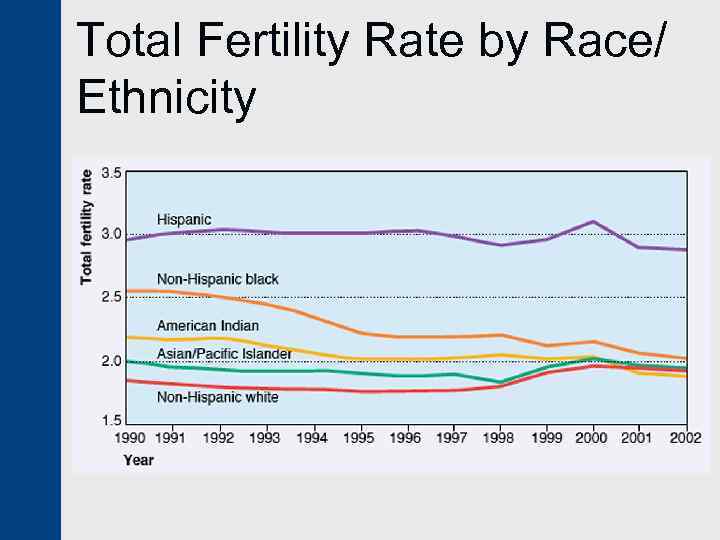 Total Fertility Rate by Race/ Ethnicity
 Costs of Having Children § § Cost of raising a child born in 2001 to the age of 18, including college - $231, 470. Opportunity Costs § Parents forego income and investment when they raise their children. § Parents work additional hours and have less leisure time.
 Voluntary Childlessness § § 70% of women surveyed in 2001 said “no” to the question of whether “a woman needs the experience of motherhood to have a complete life, ” including 69% of mothers. Factors: § Greater ability to control fertility § Participation of women in work force § Concern about overpopulation § Rejection of the traditional family
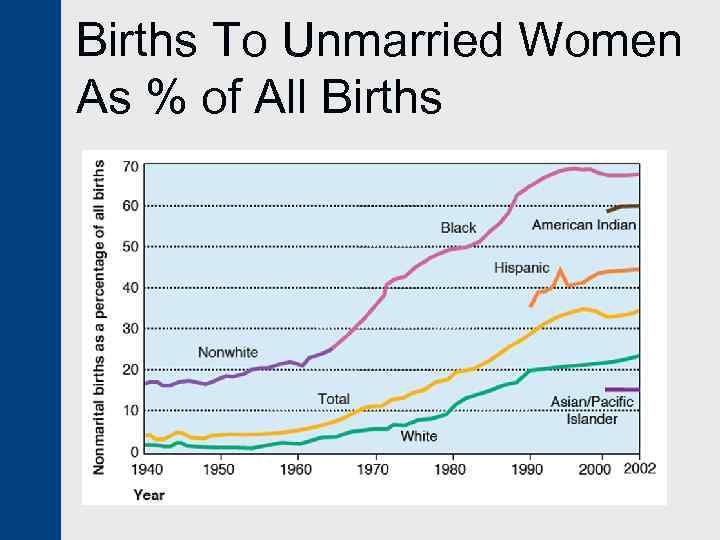 Births To Unmarried Women As % of All Births
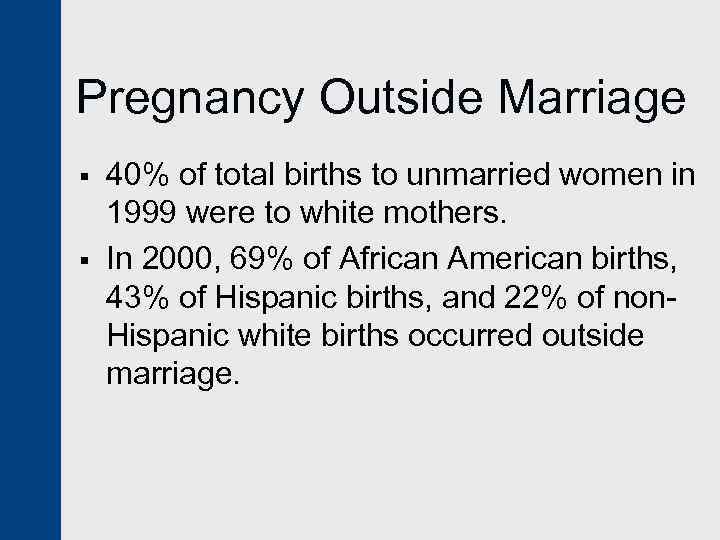 Pregnancy Outside Marriage § § 40% of total births to unmarried women in 1999 were to white mothers. In 2000, 69% of African American births, 43% of Hispanic births, and 22% of non. Hispanic white births occurred outside marriage.
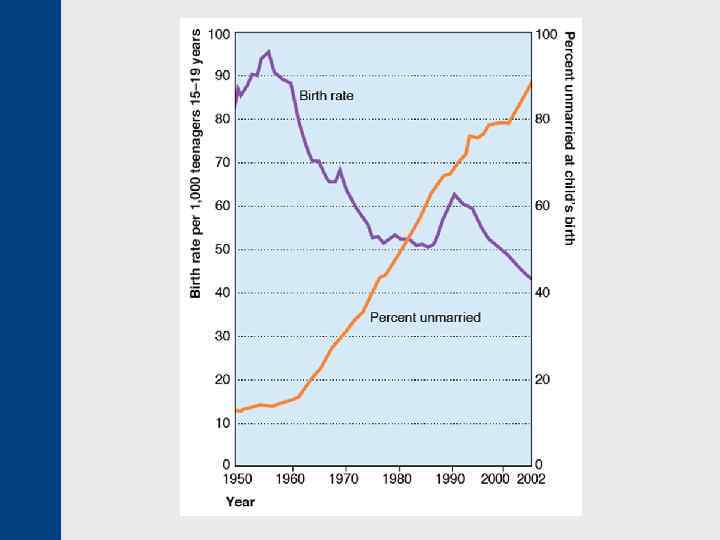
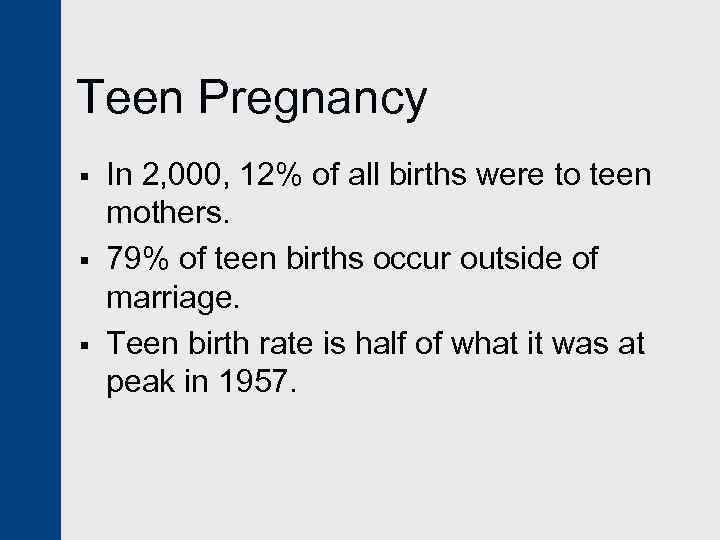 Teen Pregnancy § § § In 2, 000, 12% of all births were to teen mothers. 79% of teen births occur outside of marriage. Teen birth rate is half of what it was at peak in 1957.
 Abortion § § 30% of American women have had an induced abortion at some point in their lives. Abortion decisions are primarily made in the context of unmarried, accidental pregnancy.
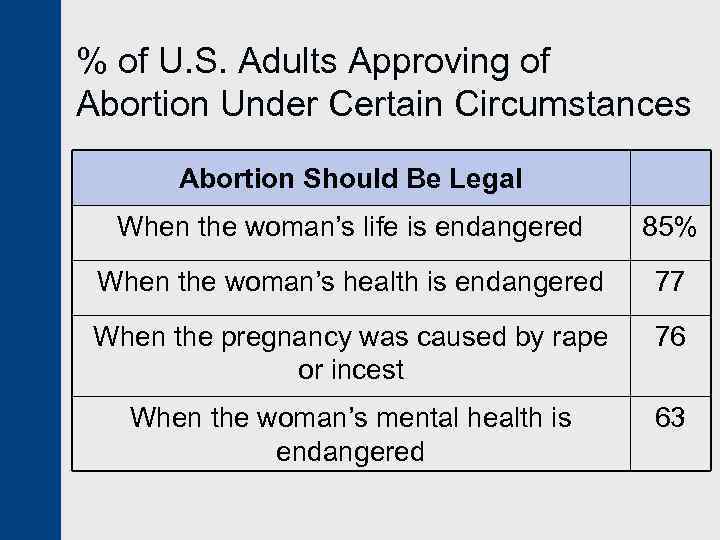 % of U. S. Adults Approving of Abortion Under Certain Circumstances Abortion Should Be Legal When the woman’s life is endangered 85% When the woman’s health is endangered 77 When the pregnancy was caused by rape or incest 76 When the woman’s mental health is endangered 63
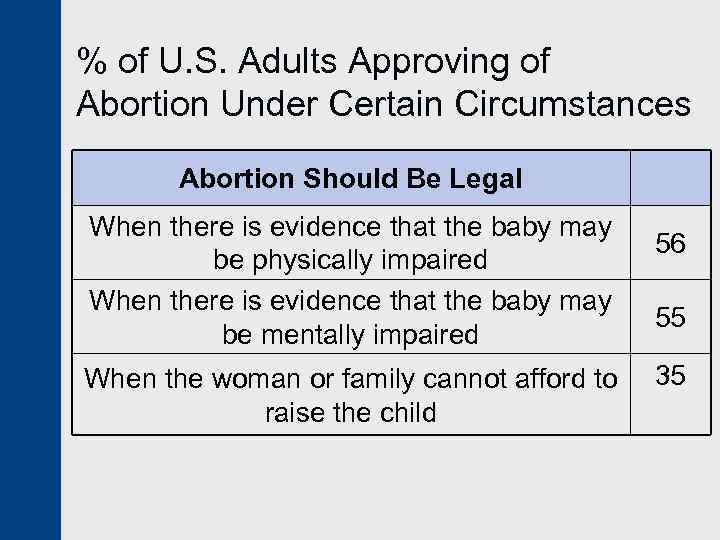 % of U. S. Adults Approving of Abortion Under Certain Circumstances Abortion Should Be Legal When there is evidence that the baby may be physically impaired When there is evidence that the baby may be mentally impaired When the woman or family cannot afford to raise the child 56 55 35
 Involuntary Infertility § § § Wanting to conceive and bear a child but being physically unable to do so. Infertility problems are attributed to the male partner in 40% of cases, to the female partner in 40% of cases; 20% are attributed to both partners or to unknown causes. Infertility has increased slightly—from 8% of women aged 15 -44 in the 1980 s to an estimated 10% in 1995.
 Adoption § § § The U. S. Census looked at adoption for the first time in 2000 when there were more than 2 million adopted children in U. S. households, about 2. 5% of all children. In terms of numbers there are more adopted children in non-Hispanic white families. Asian/Pacific Islander families have the highest rate of adoption relative to their population.
 International Adoptions § § About 18, 000 adoptions in 2000 were of children from outside the country. 48% of all children who have been adopted from overseas by American parents were from Asia, 33% percent from Latin America, and 11% from Europe.
 Quick Quiz
 1. Some observers argue that U. S. society has become _____ that is, against having children or, at least, that it is not doing all it can to support parents and their children. a) child disoriented b) antinatalist c) child-opposed d) child-phobic
 Answer: b § Some observers argue that U. S. society has become antinatalist that is, against having children or, at least, that it is not doing all it can to support parents and their children.
 2. The text points out that, over time, spouses’ reported marital satisfaction tends to a) decline over time. b) increase somewhat over time. c) remain stable. d) increases dramatically over time.
 Answer: a § The text points out that spouses’ reported marital satisfaction tends to decline over time.
 3. Marital strain is considered to be a common cost of having children. a) True b) False
 Answer: True § Marital strain is considered to be a common cost of having children
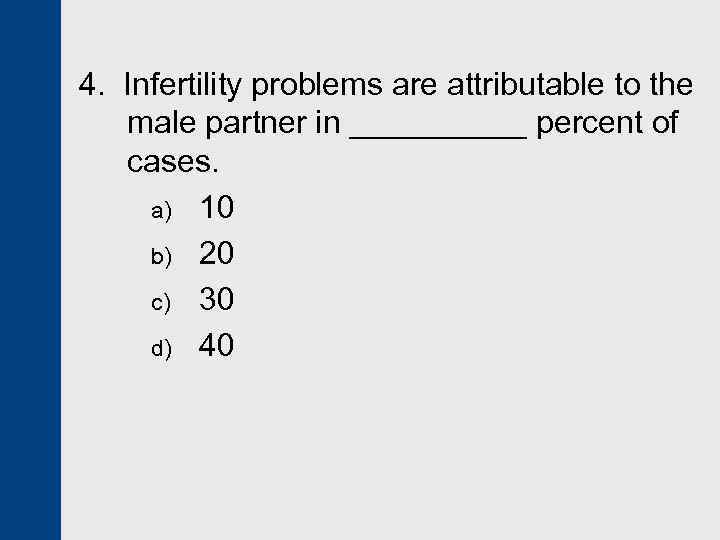 4. Infertility problems are attributable to the male partner in _____ percent of cases. a) 10 b) 20 c) 30 d) 40
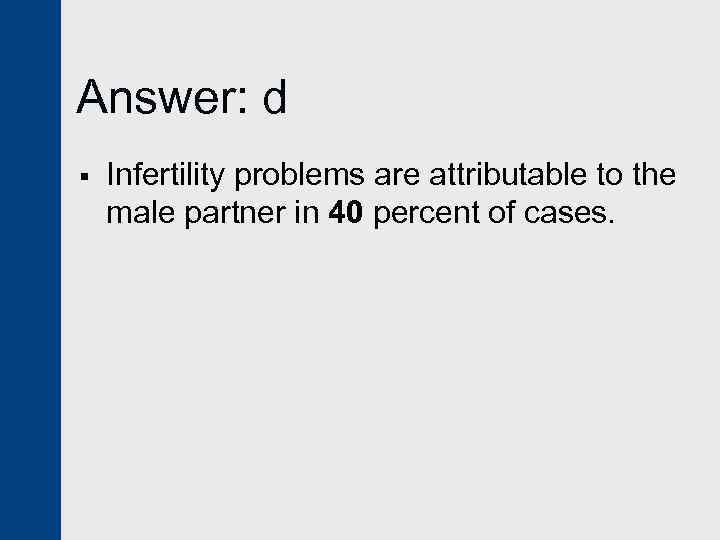 Answer: d § Infertility problems are attributable to the male partner in 40 percent of cases.