 Скачать презентацию Chapter 10 Product and Brand Decisions 10 -1
a632a50b80d6db49d77032bf40693f60.ppt
- Количество слайдов: 59



Chapter 10 Product and Brand Decisions 10 -1
Introduction: What to Sell ? The international marketer needs to determine what the market offering should be in a foreign market : – Defining the product offering – Products versus Services/Rights 2
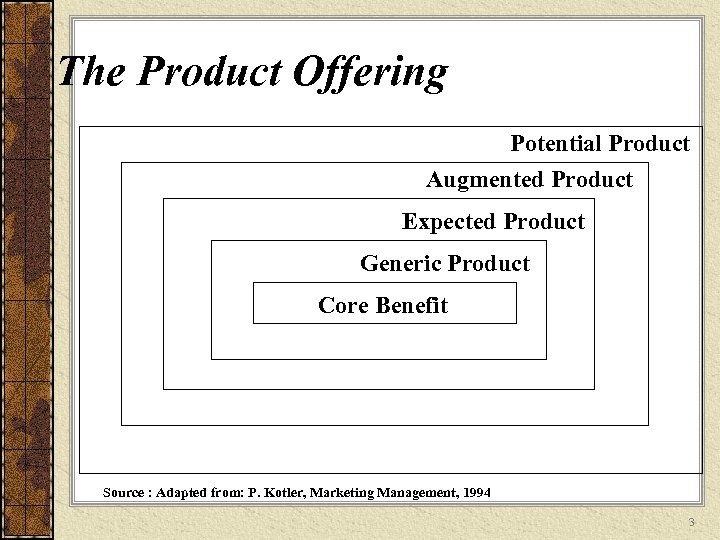
The Product Offering Potential Product Augmented Product Expected Product Generic Product Core Benefit Source : Adapted from: P. Kotler, Marketing Management, 1994 3
Basic Product Concepts A product is a good, service, or idea – Tangible Attributes – Intangible Attributes Product classification – Consumer goods – Industrial goods 4
Product Warranty and Service Product Warranty : – Should a company keep the same warranty for all markets or adapt it country by country ? – Should the firm use warranty as a competitive weapon ? Product Service : – Service capability to accredit the firm with foreign suppliers – high investment in facilities, staffing, training, and distribution network 5
Goods versus Services/Rights Instead of marketing a product abroad, the company may also sell rights or services in a foreign market: - rights : brand / trademark / patent - services : chain) management skills (hotel 6
Sales of Rights - Examples Franchising business : - Coca-Cola : use of its name to licensed bottlers around the world. - Pilkington: licensing of the process of float glass. - Other : Manpower, Mc. Donald's, etc. 7
Sales of Rights - Examples Management Contracts : - Sheraton Hotels : • Management contract for hotels abroad • Sale of consulting and management contracts • Little equity invested : Sheraton manages almost 400 hotels worldwide but has equity in only 40 of them. • Advantages : minimum risk & strong competitive position. 8
Sales of Rights - Examples Turn-Key operations : – The firm is selling technical and engineering skills. – The firm is training foreign nationals to run a plant. – The firm is supplying material and equipment. 9
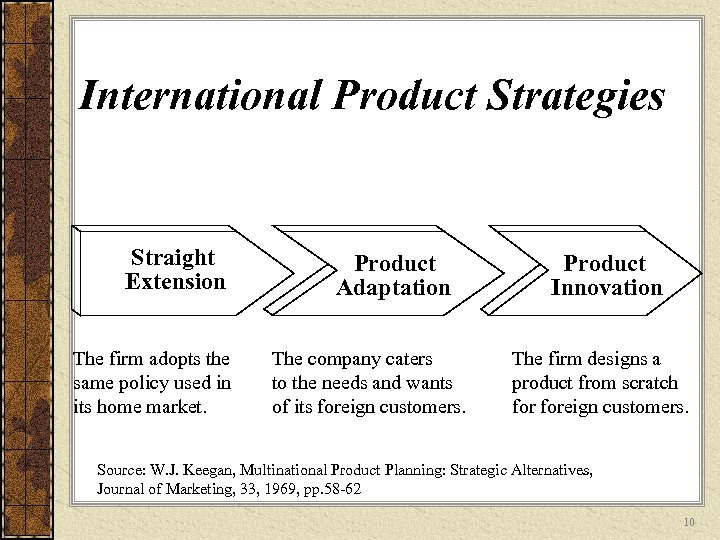
International Product Strategies Straight Extension The firm adopts the same policy used in its home market. Product Adaptation The company caters to the needs and wants of its foreign customers. Product Innovation The firm designs a product from scratch foreign customers. Source: W. J. Keegan, Multinational Product Planning: Strategic Alternatives, Journal of Marketing, 33, 1969, pp. 58 -62 10
Extend, Adapt, Create: Strategic Alternatives in Global Marketing Extension – offering product virtually unchanged in markets outside of home country Adaptation – changing elements of design, function, and packaging according to needs of different country markets Creation – developing new products for the world market 11
Standardization versus Customization Although the products sold abroad generally are not identical to their domestic counterparts, there is always a core of expertise that the firm can carry abroad. Principle " All Business is local. " 17
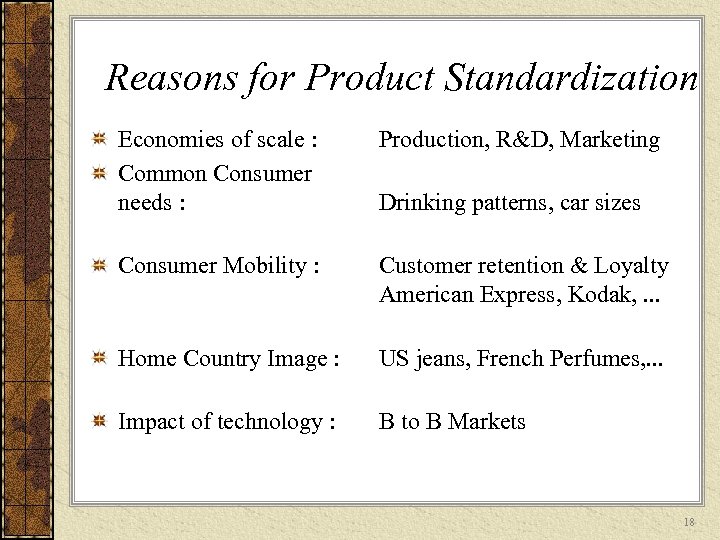
Reasons for Product Standardization Economies of scale : Common Consumer needs : Production, R&D, Marketing Consumer Mobility : Customer retention & Loyalty American Express, Kodak, . . . Home Country Image : US jeans, French Perfumes, . . . Impact of technology : B to B Markets Drinking patterns, car sizes 18
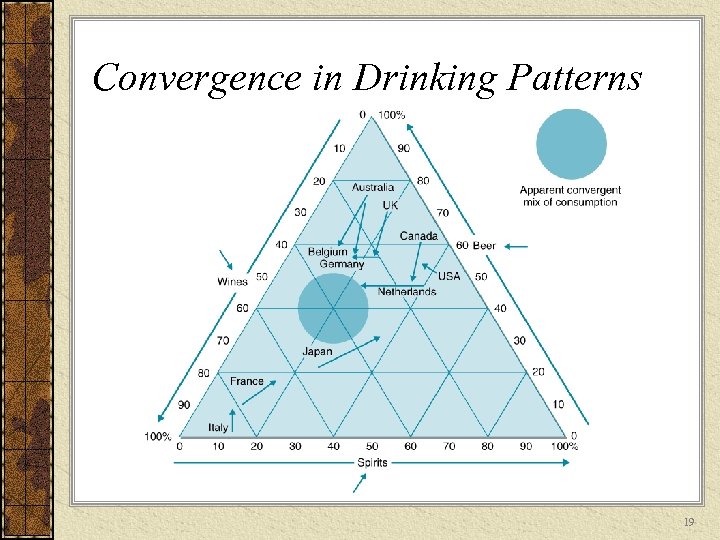
Convergence in Drinking Patterns 19
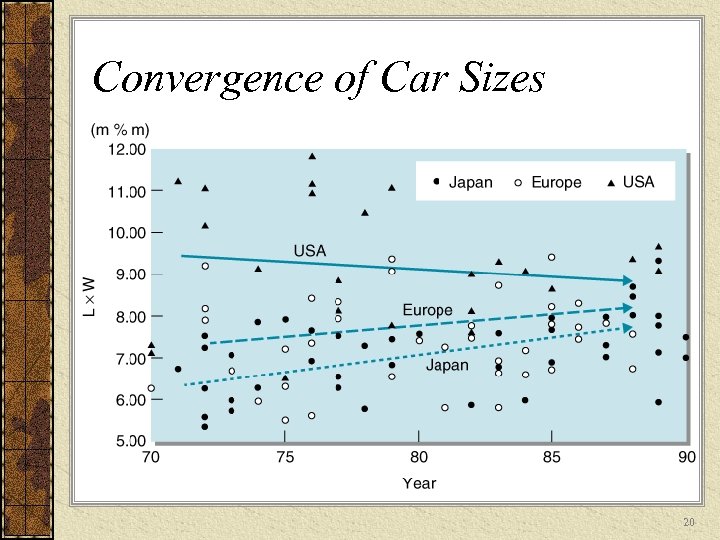
Convergence of Car Sizes 20
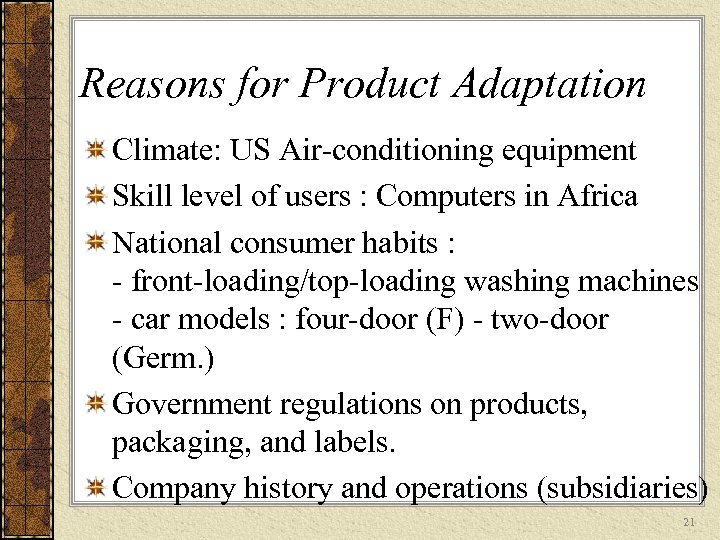
Reasons for Product Adaptation Climate: US Air-conditioning equipment Skill level of users : Computers in Africa National consumer habits : - front-loading/top-loading washing machines - car models : four-door (F) - two-door (Germ. ) Government regulations on products, packaging, and labels. Company history and operations (subsidiaries) 21
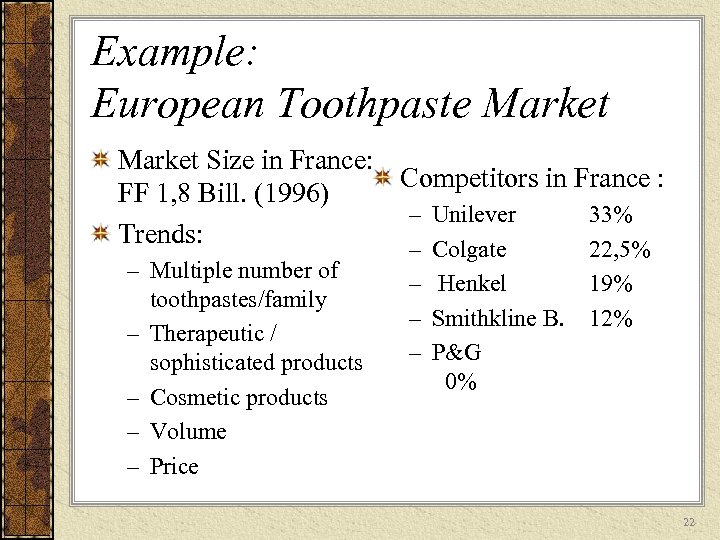
Example: European Toothpaste Market Size in France: Competitors in France : FF 1, 8 Bill. (1996) – Unilever 33% Trends: – Multiple number of toothpastes/family – Therapeutic / sophisticated products – Cosmetic products – Volume – Price – – Colgate Henkel Smithkline B. P&G 0% 22, 5% 19% 12% 22
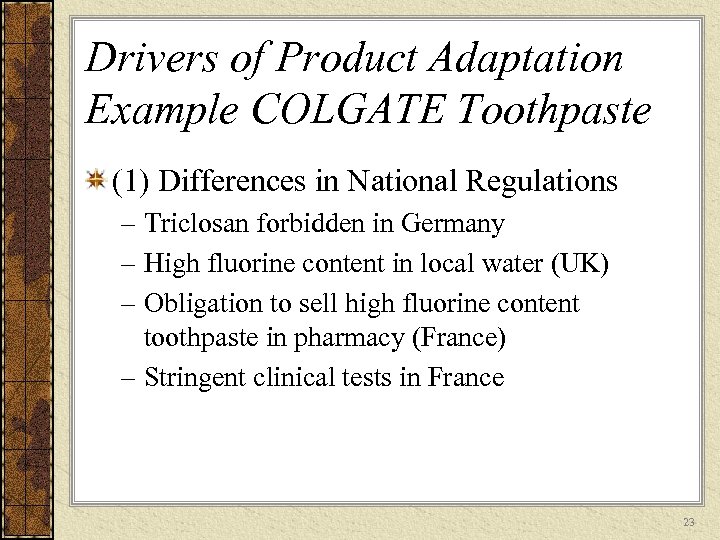
Drivers of Product Adaptation Example COLGATE Toothpaste (1) Differences in National Regulations – Triclosan forbidden in Germany – High fluorine content in local water (UK) – Obligation to sell high fluorine content toothpaste in pharmacy (France) – Stringent clinical tests in France 23
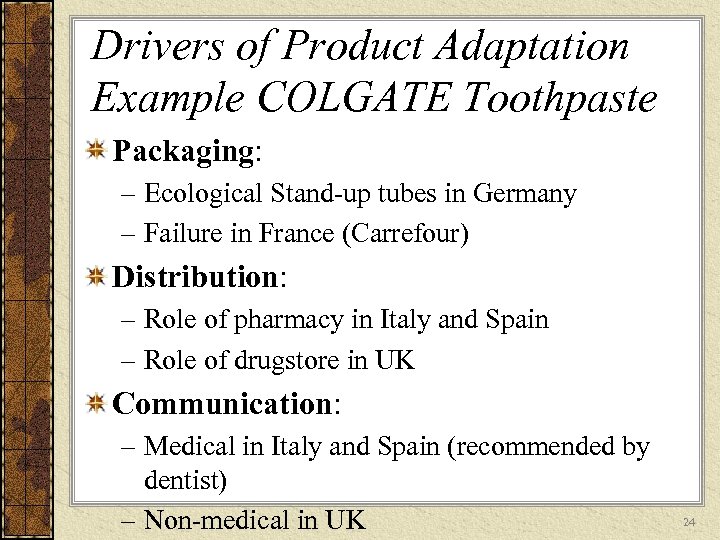
Drivers of Product Adaptation Example COLGATE Toothpaste Packaging: – Ecological Stand-up tubes in Germany – Failure in France (Carrefour) Distribution: – Role of pharmacy in Italy and Spain – Role of drugstore in UK Communication: – Medical in Italy and Spain (recommended by dentist) – Non-medical in UK 24
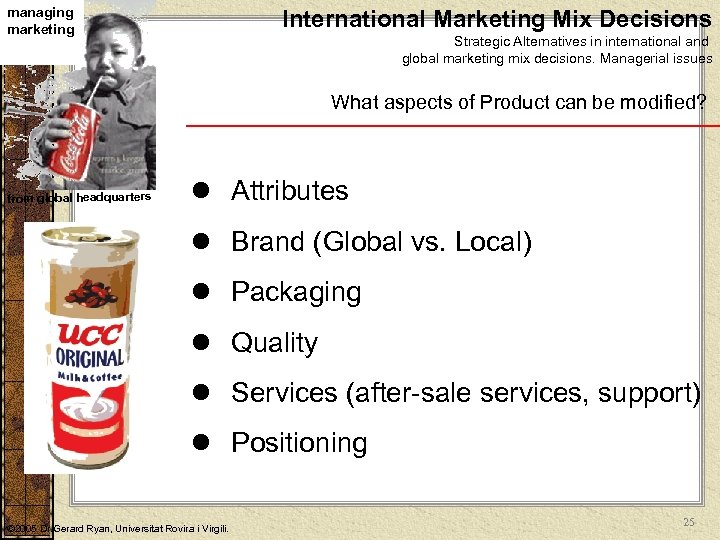
managing marketing International Marketing Mix Decisions Strategic Alternatives in international and global marketing mix decisions. Managerial issues What aspects of Product can be modified? from global headquarters l Attributes l Brand (Global vs. Local) l Packaging l Quality l Services (after-sale services, support) l Positioning © 2005 Dr. Gerard Ryan, Universitat Rovira i Virgili. 25
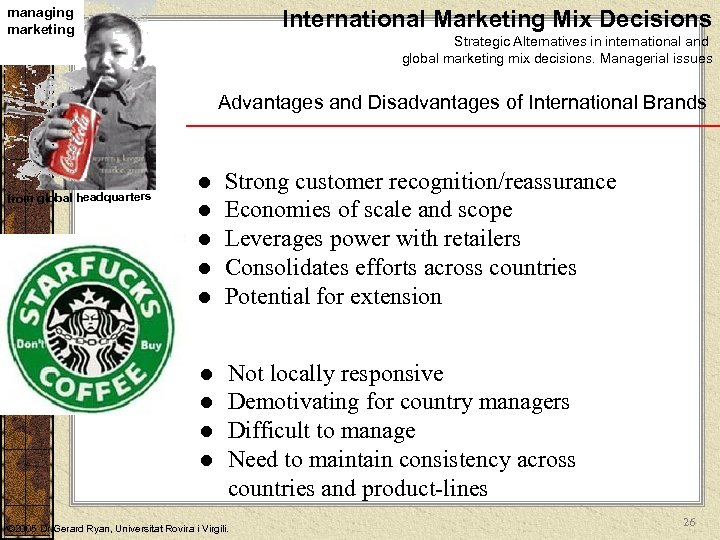
managing marketing International Marketing Mix Decisions Strategic Alternatives in international and global marketing mix decisions. Managerial issues Advantages and Disadvantages of International Brands l l l Strong customer recognition/reassurance Economies of scale and scope Leverages power with retailers Consolidates efforts across countries Potential for extension l l from global headquarters Not locally responsive Demotivating for country managers Difficult to manage Need to maintain consistency across countries and product-lines © 2005 Dr. Gerard Ryan, Universitat Rovira i Virgili. 26
Product Types Buyer orientation – Amount of effort expended on purchase – Convenience – Preference – Shopping – Specialty 27
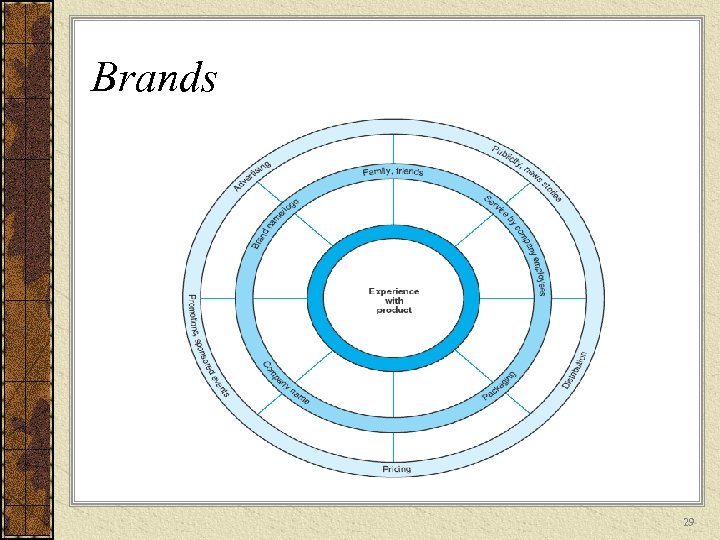
Brands Bundle of images and experiences in the customer’s mind A promise made by a particular company about a particular product A quality certification Differentiation between competing products The sum of impressions about a brand is the Brand Image 28
Brands 29
Brands The added value that accrues to a product as a result of investments in the marketing of the brand An asset that represents the value created by the relationship between the brand customer over time 30
Brands “We have to shift to high valueadded products, and to do that we need to improve our brand. ” - Noboru Fujimoto, President Sharp Electronics Corporation 31
Local Products and Brands that have achieved success in a single national market Represent the lifeblood of domestic companies Entrenched local products/brands can be a significant competitive hurdle to global companies 32
International Products and Brands Offered in several markets in a particular region – ‘Euro-brands’ 33
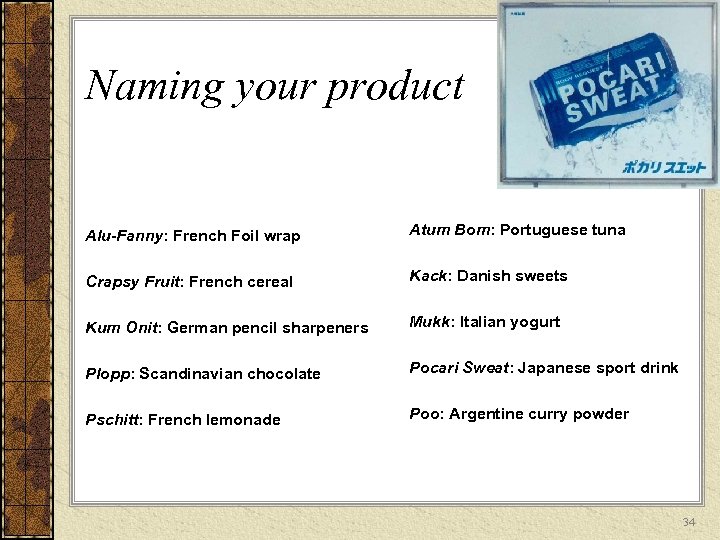
Naming your product Alu-Fanny: French Foil wrap Atum Bom: Portuguese tuna Crapsy Fruit: French cereal Kack: Danish sweets Kum Onit: German pencil sharpeners Mukk: Italian yogurt Plopp: Scandinavian chocolate Pocari Sweat: Japanese sport drink Pschitt: French lemonade Poo: Argentine curry powder 34
Naming your product Phonetic Problems with Brand Names - Bardok (Sounds like Brothel in Russian) - Misair (Sounds like Misery in French) Translations Intent - Stepping Stone - Car Wash - Highly Rated Translation - Stumbling Block - Car Enema - Over Rated Symbols - Owl - Bad Luck in India Other Countries make mistakes too - Zit (Chocolate from Germany) - Koff (Beer) 35
Global Products and Brands Global products meet the wants and needs of a global market and is offered in all world regions Global brands have the same name and similar image and positioning throughout the world 36
Global Products and Brands A multinational has operations in different countries. A global company views the world as a single country. We know Argentina and France are different, but we treat them the same. We sell them the same products, we use the same production methods, we have the same corporate policies. We even use the same advertising—in a different language, of course. - Alfred Zeien Former Gillette CEO 37
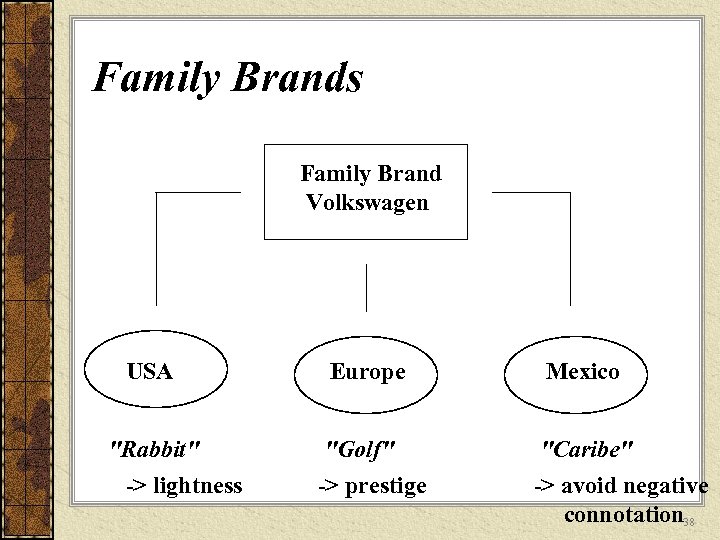
Family Brands Family Brand Volkswagen USA "Rabbit" -> lightness Europe "Golf" -> prestige Mexico "Caribe" -> avoid negative connotation 38
Private Label Branding Large retailers are moving increasingly into their own brand, i. e. Marks &Spencer. They try to obtain greater control and higher margins. Private branding can be an effective way to break into foreign markets. (Asian TV manufacturers) 39
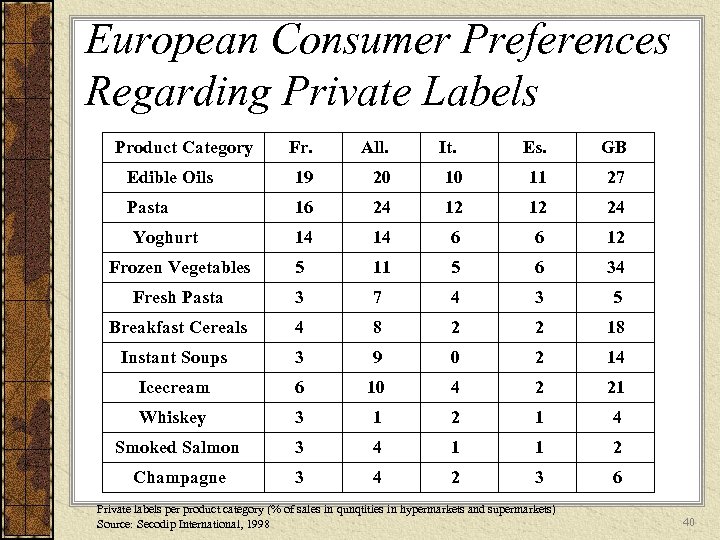
European Consumer Preferences Regarding Private Labels Product Category Fr. All. Edible Oils 19 20 Pasta 16 Es. GB 10 11 27 24 12 12 24 14 14 6 6 12 Frozen Vegetables 5 11 5 6 34 Fresh Pasta 3 7 4 3 5 Breakfast Cereals 4 8 2 2 18 Instant Soups 3 9 0 2 14 Icecream 6 10 4 2 21 Whiskey 3 1 2 1 4 Smoked Salmon 3 4 1 1 2 Champagne 3 4 2 3 6 Yoghurt It. Private labels per product category (% of sales in qunqtities in hypermarkets and supermarkets) Source: Secodip International, 1998 40
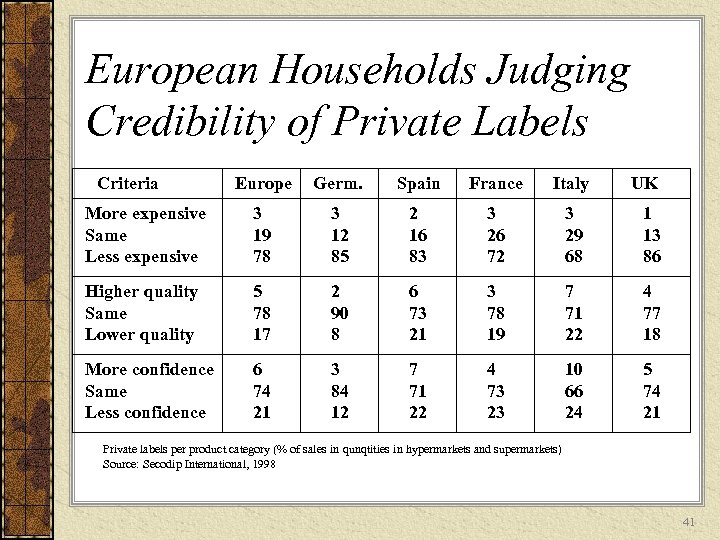
European Households Judging Credibility of Private Labels Criteria Europe Germ. Spain France Italy UK More expensive Same Less expensive 3 19 78 3 12 85 2 16 83 3 26 72 3 29 68 1 13 86 Higher quality Same Lower quality 5 78 17 2 90 8 6 73 21 3 78 19 7 71 22 4 77 18 More confidence Same Less confidence 6 74 21 3 84 12 7 71 22 4 73 23 10 66 24 5 74 21 Private labels per product category (% of sales in qunqtities in hypermarkets and supermarkets) Source: Secodip International, 1998 41
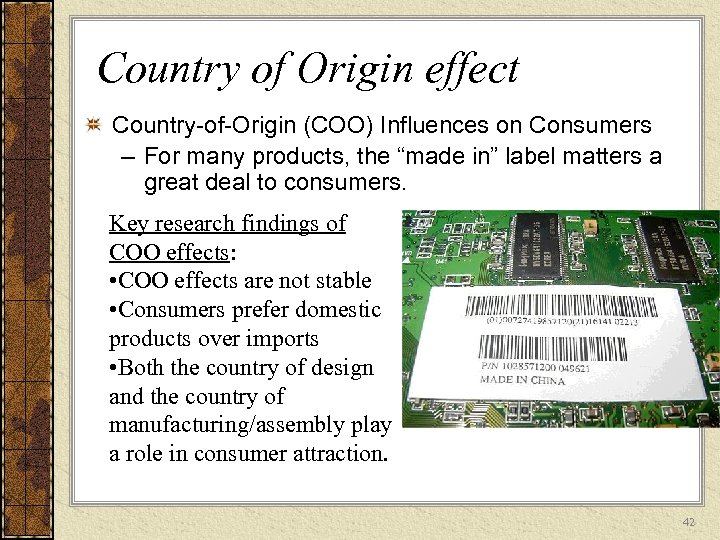
Country of Origin effect Country-of-Origin (COO) Influences on Consumers – For many products, the “made in” label matters a great deal to consumers. Key research findings of COO effects: • COO effects are not stable • Consumers prefer domestic products over imports • Both the country of design and the country of manufacturing/assembly play a role in consumer attraction. 42
Branding Strategies Combination or tiered branding: allows marketers to leverage a company’s reputation while developing a distinctive identity for a line of products – Sony Walkman Co-branding features two or more company or product brands – Nutra. Sweet and Coca-Cola – Intel Inside 43
Branding Strategies Brand acts as an umbrella for new products – Example: The Virgin Group • • Virgin Entertainment: Virgin Mega-stores and MGM Cinemas Virgin Trading: Virgin Cola and Virgin Vodka Virgin Radio Virgin Media Group: Virgin Publishing, Virgin Television, Virgin Net • Virgin Hotels • Virgin Travel Group: Virgin Atlantic Airways, Virgin Holidays 44
Global Brand Development Questions to ask when management seeks to build a global brand: – Will anticipated scale economies materialize? – How difficult will it be to develop a global brand team? – Can a single brand be imposed on all markets successfully? 45
Global Brand Development Global Brand Leadership – Using organizational structures, processes, and cultures to allocate brand-building resources globally, to create global synergies, and to develop a global brand strategy that coordinates and leverages country brand strategies 46
Global Brand Development Create a compelling value proposition Think about all elements of brand identity and select names, marks, and symbols that have the potential for globalization Research the alternatives of extending a national brand versus adopting a new brand identity globally Develop a company-wide communication system 47
Global Brand Development Develop a consistent planning process Assign specific responsibility for managing branding issues Execute brand-building strategies Harmonize, unravel confusion, and eliminate complexity 48
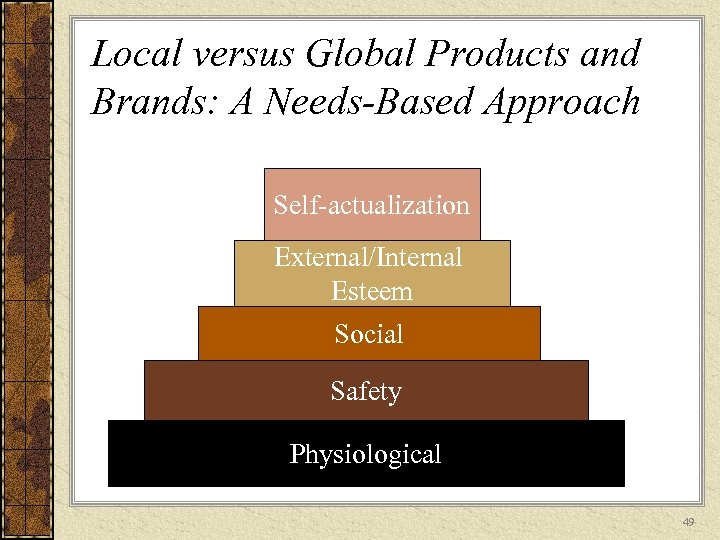
Local versus Global Products and Brands: A Needs-Based Approach Self-actualization External/Internal Esteem Social Safety Physiological 49
Country of Origin as Brand Element Perceptions about and attitudes toward particular countries often extend to products and brands known to originate in those countries – Japan – Germany – France – Italy 50
Packaging Consumer Packaged Goods when the packaging is designed to protect or contain the product during shipping Eco-Packaging because package designers must address environmental issues Offers communication cues that provide consumers with a basis for making a purchase decision 51
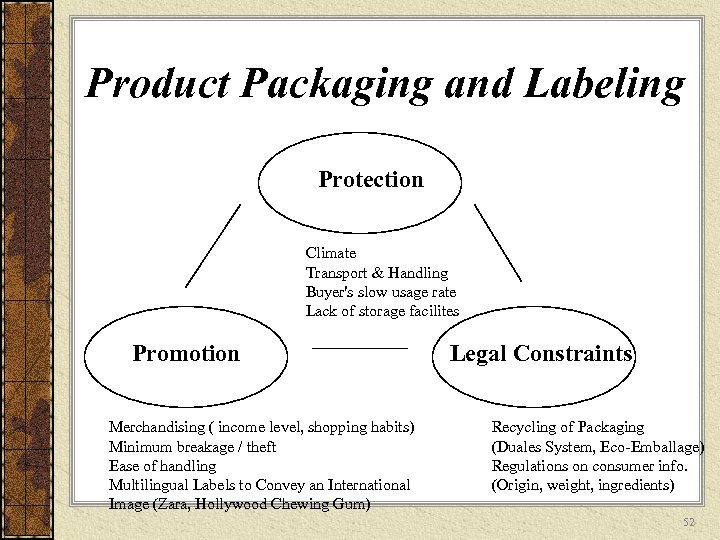
Product Packaging and Labeling Protection Climate Transport & Handling Buyer's slow usage rate Lack of storage facilites Promotion Merchandising ( income level, shopping habits) Minimum breakage / theft Ease of handling Multilingual Labels to Convey an International Image (Zara, Hollywood Chewing Gum) Legal Constraints Recycling of Packaging (Duales System, Eco-Emballage) Regulations on consumer info. (Origin, weight, ingredients) 52
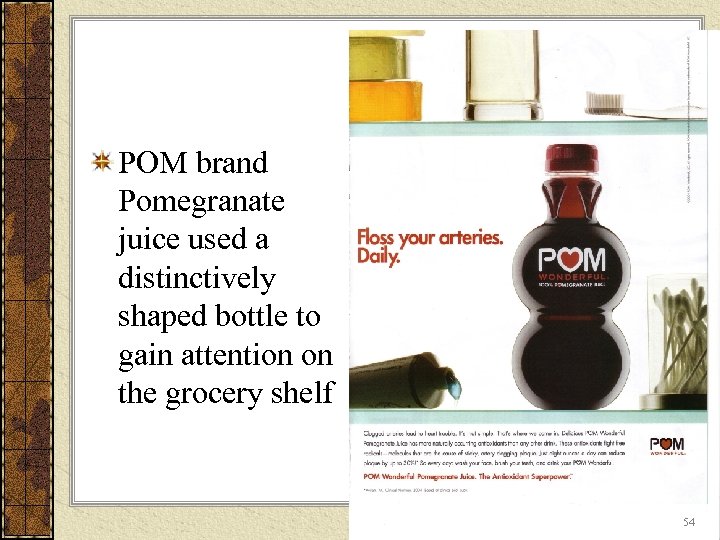
POM brand Pomegranate juice used a distinctively shaped bottle to gain attention on the grocery shelf 54
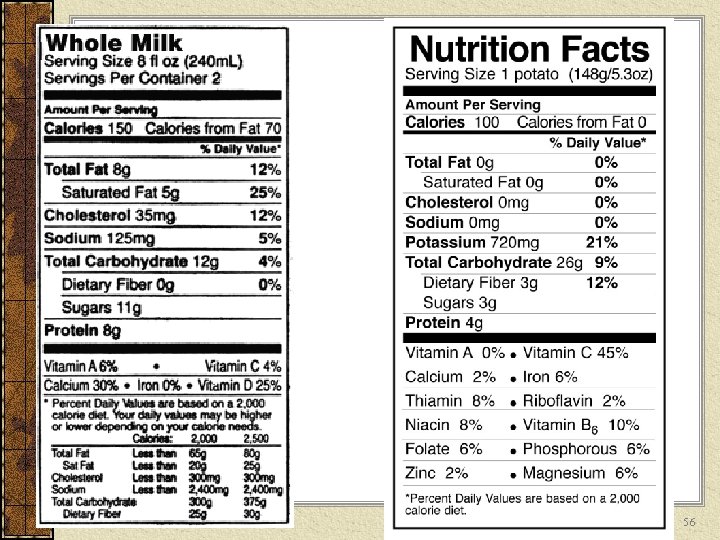
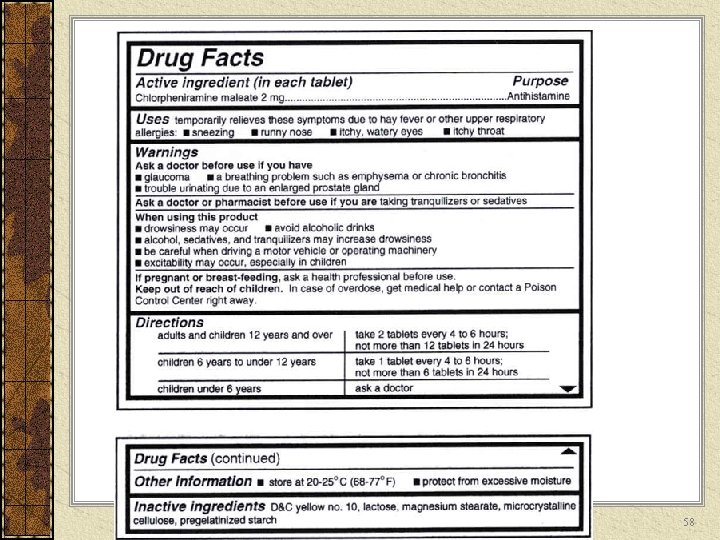
Labeling Provides consumers with various types of information Regulations differ by country regarding various products – Health warnings on tobacco products – American Automobile Labeling Act clarifies the country of origin, and final assembly point – European Union requires labels on all food products that include ingredients from genetically modified crops 55
56
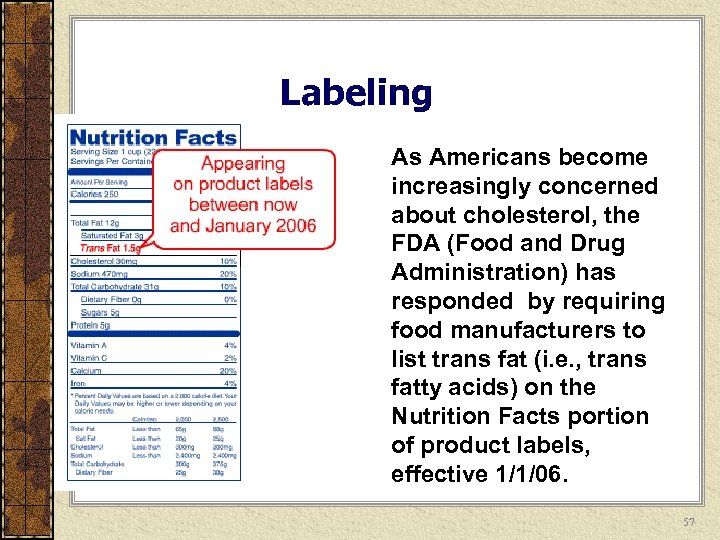
Labeling As Americans become increasingly concerned about cholesterol, the FDA (Food and Drug Administration) has responded by requiring food manufacturers to list trans fat (i. e. , trans fatty acids) on the Nutrition Facts portion of product labels, effective 1/1/06. 57
58
Aesthetics Global marketers must understand the importance of visual aesthetics Aesthetic Styles (degree of complexity found on a label) differ around the world 59
Product Warranties Express Warranty is a written guarantee that assures the buyer is getting what they paid for or provides a remedy in case of a product failure Warranties can be used as a competitive tool 60
New Products in Global Marketing Pursue opportunities in competitive arenas of global marketplace Focus on one or only a few businesses Active involvement from senior management Ability to recruit and retain best employees Understand the importance of speed in bringing product to market 61
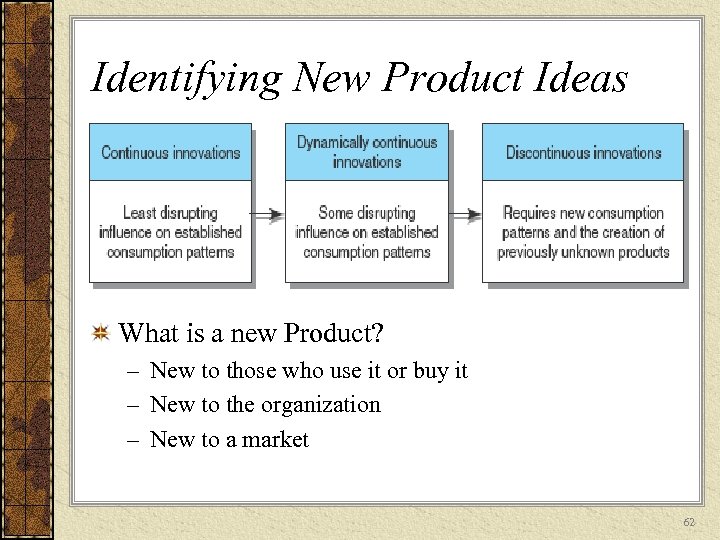
Identifying New Product Ideas What is a new Product? – New to those who use it or buy it – New to the organization – New to a market 62
The International New Product Department How big is the market for this product at various prices? What are the likely competitive moves in response to our activity? Can we market the product through existing structure? Can we source the product at a cost that will yield an adequate profit? Does product fit our strategic development plan 63
Testing New Products When do you test a new product? – Whenever a product interacts with human, mechanical, or chemical elements because there is the potential for a surprising and unexpected incompatibility Test could simply be observing the product being used within the market 64
Looking Ahead Chapter 11 Pricing decisions 65
Скачать презентацию Chapter 10 Product and Brand Decisions 10 -1
a632a50b80d6db49d77032bf40693f60.ppt