


 Скачать презентацию Chapter 10 Exchange Rates and Exchange Rate Systems
b57b1d5df94a9f4ebc5fbf8e44a0352b.ppt
- Количество слайдов: 42
 Chapter 10 Exchange Rates and Exchange Rate Systems
 Learning Objectives • List the reasons for holding foreign exchange and the main institutions in the foreign exchange market. • Differentiate short-run, medium-run, and long-run forces that help determine the value of a currency. • Diagram the effects on the home currency of a change in supply or demand foreign currency. • Calculate a currency’s forward premium or discount based on interest rate differentials. • Use a simple equation to demonstrate the effect on the real exchange rate of higher inflation at home. Copyright © 2014 Pearson Education, Inc. All rights reserved. 10 -2
 Introduction: Fixed, Flexible, or In-Between? • Every country must choose an exchange rate system to determine how prices in the home country currency are converted into prices in another country’s currency • Countries have numerous choices among exchange rate systems on a continuum from fixed to completely flexible systems • Each exchange rate system requires that governments and central banks have credible policies to respond differently to the pressures of the world economy Copyright © 2014 Pearson Education, Inc. All rights reserved. 10 -3
 Exchange Rates and Currency Trading • Exchange rate: The price of a currency stated in terms of a second currency – U. S. dollars per Mexican peso = 0. 10 dollars – Mexican pesos per U. S. dollar = 10 pesos – Exchange rates are reported in every newspaper with a business section and on numerous web sites Copyright © 2014 Pearson Education, Inc. All rights reserved. 10 -4
 Exchange Rates and Currency Trading (cont. ) • Appreciation of a currency: the currency’s becoming more valuable (or able to buy more units of another currency) • Depreciation of a currency: the currency’s becoming less valuable in relation to another currency Copyright © 2014 Pearson Education, Inc. All rights reserved. 10 -5
 Exchange Rates and Currency Trading (cont. ) • The three most frequently traded currencies are: - European Union’s euro - Japanese yen - British pound • All three are flexible exchange rates, meaning they are not fixed over time Copyright © 2014 Pearson Education, Inc. All rights reserved. 10 -6
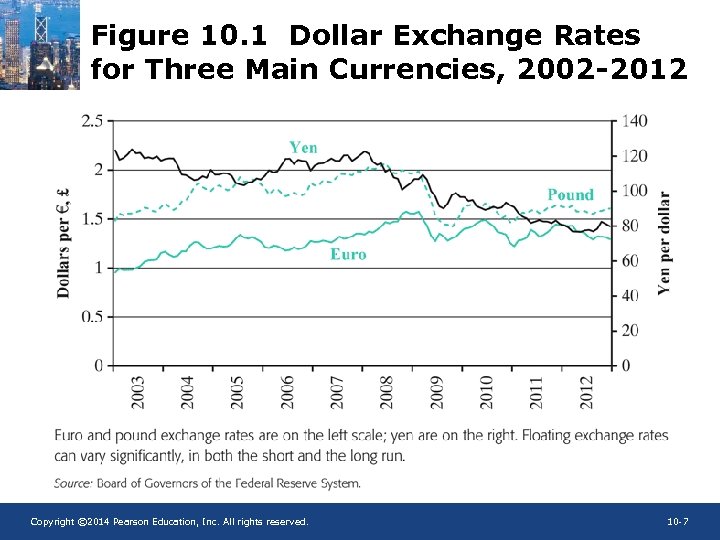 Figure 10. 1 Dollar Exchange Rates for Three Main Currencies, 2002 -2012 Copyright © 2014 Pearson Education, Inc. All rights reserved. 10 -7
 Reasons for Holding Foreign Currencies 1. Trade and investment: traders (importers and exporters) and investors routinely transact in foreign currencies 2. Interest rate arbitrage: taking advantage of interest rate differentials between countries; arbitrageurs borrow money where interest rates are low and sell it where interest rates are high 3. Speculation: buying and selling of currency in anticipation of changes in the currency’s exchange rate; speculators sell overvalued currencies and buy undervalued currencies Copyright © 2014 Pearson Education, Inc. All rights reserved. 10 -8
 Institutions • There are four main actors involved in foreign currency markets: – Retail customers: firms and individuals hold foreign currency to engage in purchases, to adjust their portfolios, to profit from expected future currency movements – Commercial banks: hold inventories of foreign currencies as part the services to customer; most important of four participants – Foreign exchange brokers: middlemen between buyers (banks) and sellers of foreign currency – Central banks: a country’s bank of banks Copyright © 2014 Pearson Education, Inc. All rights reserved. 10 -9
 Exchange Rate Risk • Exchange rate risks stem from the fact that currencies are constantly changing in value – Expected future payments in a foreign currency will likely be a different domestic currency amount from when the contract was signed – Firms that do business in more than one country are thus subject to exchange rate risk Copyright © 2014 Pearson Education, Inc. All rights reserved. 10 -10
 Exchange Rate Risk (cont. ) • Forward exchange rate: The price of currency that will be delivered in the future; allows an exporter or importer to sign a currency contract that guarantees a set price for the foreign currency in either 30, 90, or 180 days into the future • Forward market: A market in which the buying and selling of currencies for future delivery takes place; important mechanism for exporters, importers, financial investors, and speculators • Spot market: Buying and selling of foreign currencies in the present Copyright © 2014 Pearson Education, Inc. All rights reserved. 10 -11
 Exchange Rate Risk (cont. ) • Hedging: buying a forward contract to sell foreign currency at the same time that the bonds or other interest-earning asset matures • Covered interest arbitrage: The use of forward market by an interest rate arbitrageur against exchange rate risk Copyright © 2014 Pearson Education, Inc. All rights reserved. 10 -12
 The Supply and Demand for Foreign Exchange • The value of one nation’s money, like most things, can be analyzed by looking at its supply and demand. • Under a system of flexible, or floating, exchange rates, an increase in the demand for the dollar will raise its price (cause an appreciation in its value), while an increase in its supply will lower its price (cause a depreciation). • Under a fixed exchange rate system, the value of the dollar is held constant through the actions of the central bank that counteract the market forces of supply and demand. Copyright © 2014 Pearson Education, Inc. All rights reserved. 10 -13
 Supply and Demand with Flexible Exchange Rates • Figure 10. 2 (next slide) shows the supply and demand for British pounds in the United States. • The demand curve is a normal, downward sloping curve, indicating that as the pound depreciates relative to the dollar, the quantity of pounds demanded by Americans increases. Copyright © 2014 Pearson Education, Inc. All rights reserved. 10 -14
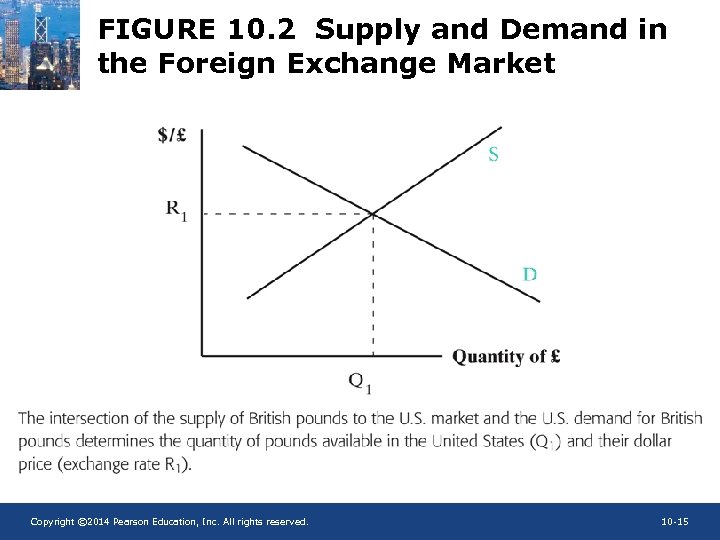 FIGURE 10. 2 Supply and Demand in the Foreign Exchange Market Copyright © 2014 Pearson Education, Inc. All rights reserved. 10 -15
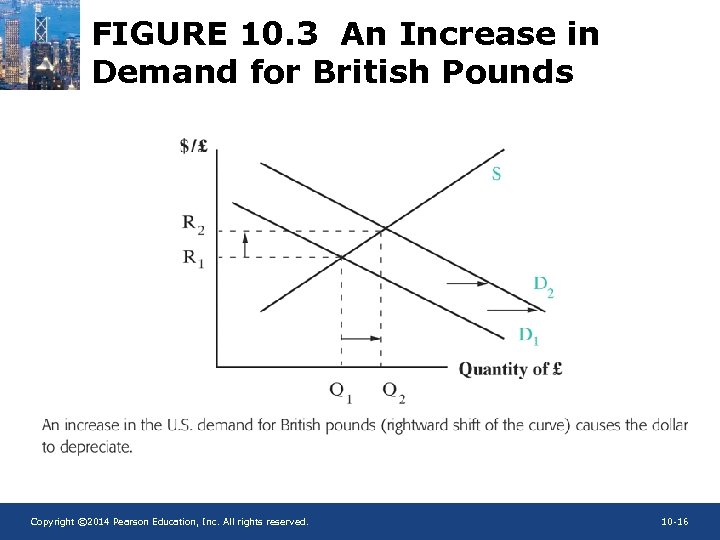 FIGURE 10. 3 An Increase in Demand for British Pounds Copyright © 2014 Pearson Education, Inc. All rights reserved. 10 -16
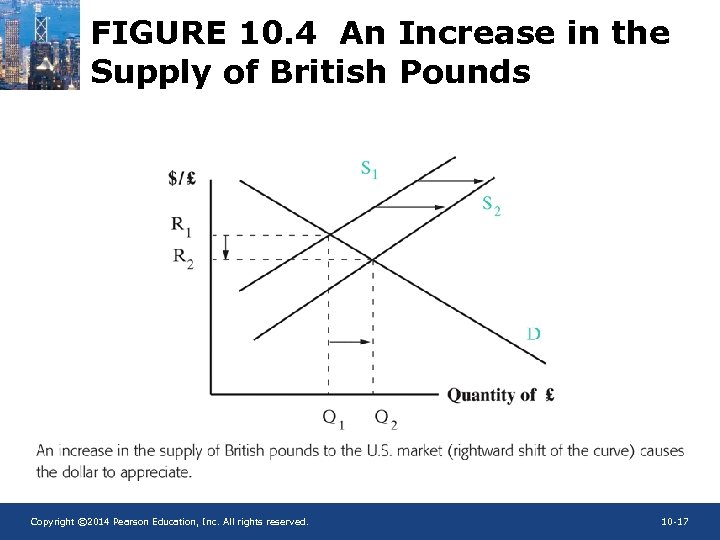 FIGURE 10. 4 An Increase in the Supply of British Pounds Copyright © 2014 Pearson Education, Inc. All rights reserved. 10 -17
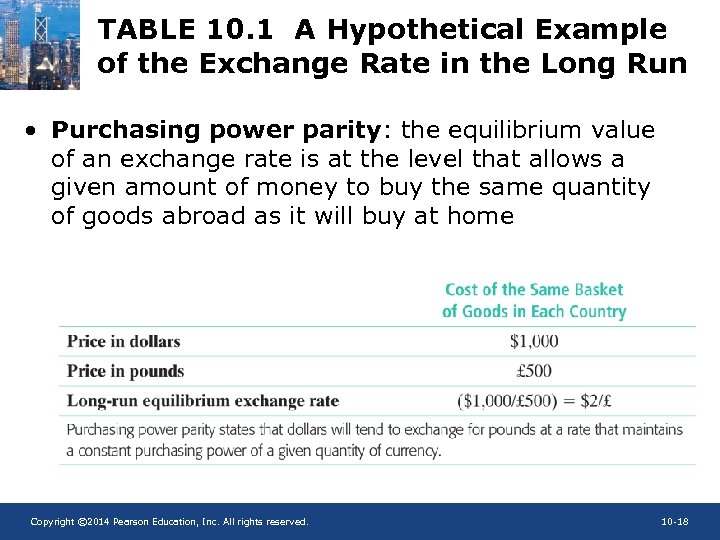 TABLE 10. 1 A Hypothetical Example of the Exchange Rate in the Long Run • Purchasing power parity: the equilibrium value of an exchange rate is at the level that allows a given amount of money to buy the same quantity of goods abroad as it will buy at home Copyright © 2014 Pearson Education, Inc. All rights reserved. 10 -18
 Exchange Rates in the Medium Run and Short Run • Most important medium-run force is the strength of a country’s economic growth: – Rapid economic growth at home is translated into increased imports and an outward shift in the demand foreign currency – Growth abroad results in an increase of exports from the home country and an increase in the supply of foreign currency Copyright © 2014 Pearson Education, Inc. All rights reserved. 10 -19
 Exchange Rates in the Medium Run and Short Run (cont. ) • Two variables in particular are responsible for a large share of short-run capital flows: • These flows are determined by (1) interest rates and (2) expectations of future exchange rates • Let’s analyze these forces more closely… Copyright © 2014 Pearson Education, Inc. All rights reserved. 10 -20
 Exchange Rates in the Medium Run and Short Run (cont. ) • Interest parity: the difference between any two countries’ interest rates is approximately equal to the expected change in the exchange rate • If i = i*, investors are indifferent • If i > i*, investors prefer home to foreign Copyright © 2014 Pearson Education, Inc. All rights reserved. 10 -21
 Exchange Rates in the Medium Run and Short Run (cont. ) • The difference between forward exchange rate and spot rate reflects the expected appreciation or depreciation of the home currency – F > R: home currency expected to depreciate, and home interest rates must exceed foreign rates by an equivalent percentage – However, say, i < i* and F = R: no changes are expected in the exchange rate, and investors should invest in foreign Copyright © 2014 Pearson Education, Inc. All rights reserved. 10 -22
 Exchange Rates in the Medium Run and Short Run (cont. ) A simple example • A U. S. -based investor has a choice between a one-year certificate of deposit (CD) issued by a U. S. bank or a German bank. • Assume the CDs are similar with respect to risk, transaction costs, and other characteristics. Copyright © 2014 Pearson Education, Inc. All rights reserved. 10 -23
 Exchange Rates in the Medium Run and Short Run (cont. ) The U. S. investment is denominated in dollars; pays 3 percent (i) The German investment in euros; pays 2 percent (i*) In one year, $1, 000 invested in US will pay $1, 000 x (1+0. 03), or $1, 030 The return on German CD depends on the fixed interest rate and exchange rate a year from now Copyright © 2014 Pearson Education, Inc. All rights reserved. 10 -24
 Exchange Rates in the Medium Run and Short Run (cont. ) • If one year from now the exchange rate is 1. 3, then $1, 000 converted to euros today and invested in Germany will pay 850 x 1. 3, or $1, 105. • The investor earns (1. 3/R) x (1+ 0. 02) in one year, where R is today’s spot rate of exchange. Copyright © 2014 Pearson Education, Inc. All rights reserved. 10 -25
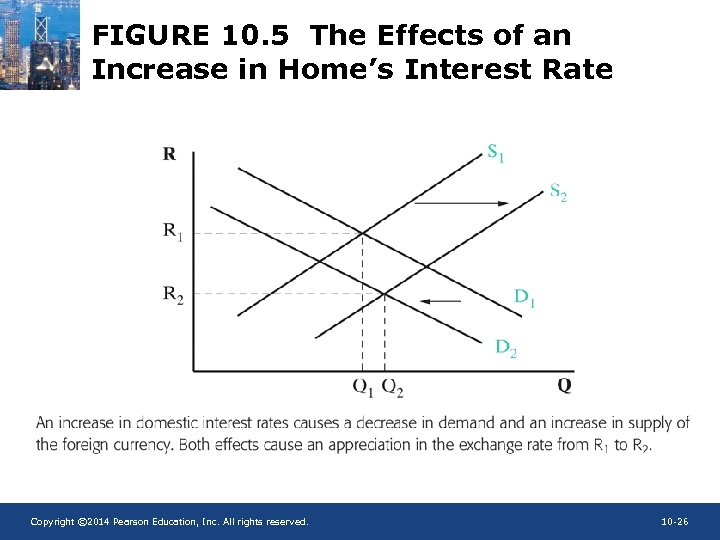 FIGURE 10. 5 The Effects of an Increase in Home’s Interest Rate Copyright © 2014 Pearson Education, Inc. All rights reserved. 10 -26
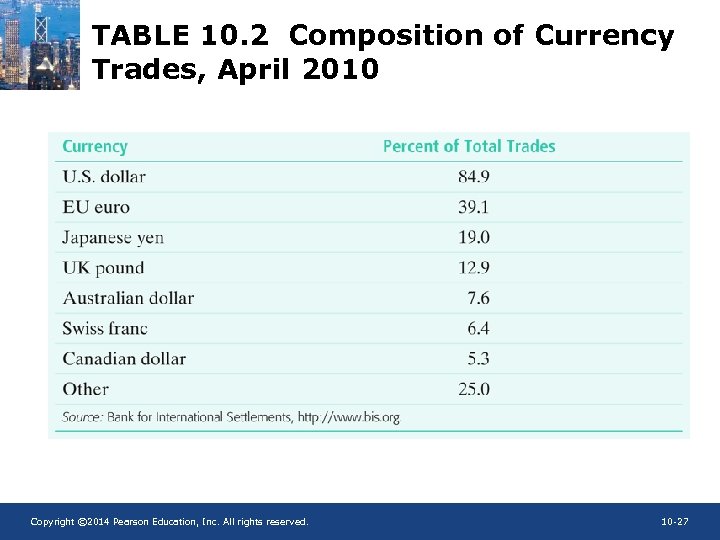 TABLE 10. 2 Composition of Currency Trades, April 2010 Copyright © 2014 Pearson Education, Inc. All rights reserved. 10 -27
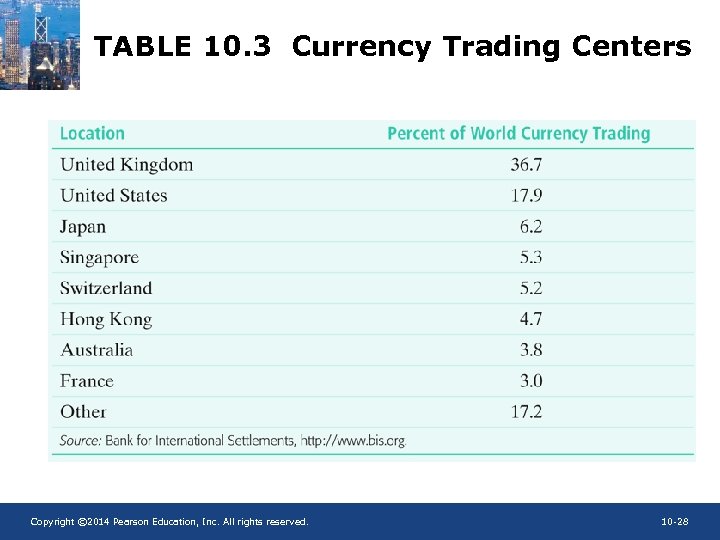 TABLE 10. 3 Currency Trading Centers Copyright © 2014 Pearson Education, Inc. All rights reserved. 10 -28
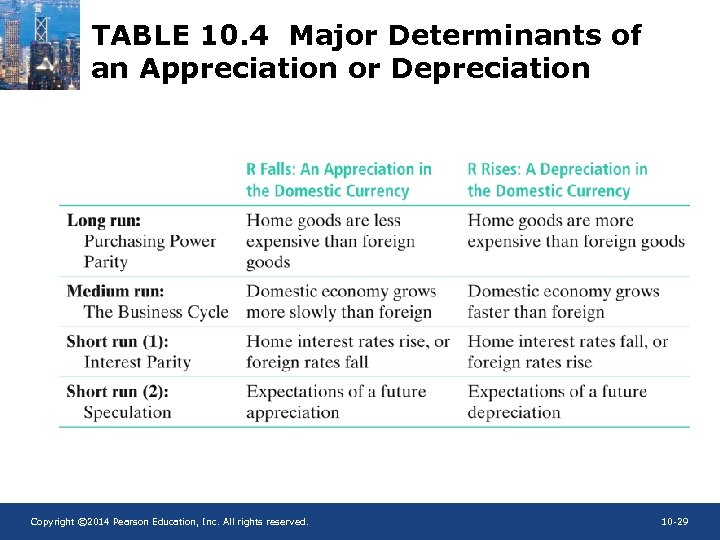 TABLE 10. 4 Major Determinants of an Appreciation or Depreciation Copyright © 2014 Pearson Education, Inc. All rights reserved. 10 -29
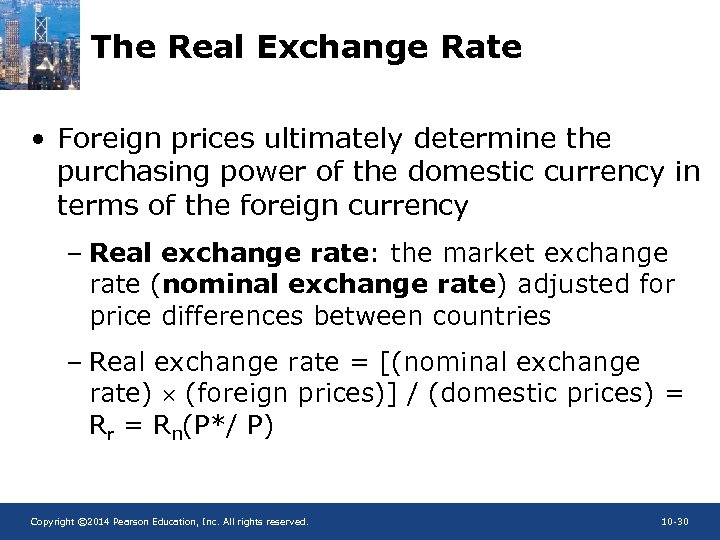 The Real Exchange Rate • Foreign prices ultimately determine the purchasing power of the domestic currency in terms of the foreign currency – Real exchange rate: the market exchange rate (nominal exchange rate) adjusted for price differences between countries – Real exchange rate = [(nominal exchange rate) (foreign prices)] / (domestic prices) = Rr = Rn(P*/ P) Copyright © 2014 Pearson Education, Inc. All rights reserved. 10 -30
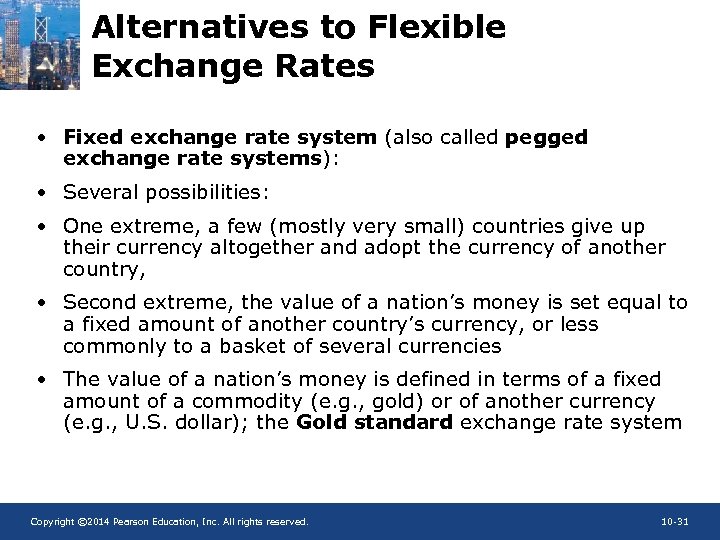 Alternatives to Flexible Exchange Rates • Fixed exchange rate system (also called pegged exchange rate systems): • Several possibilities: • One extreme, a few (mostly very small) countries give up their currency altogether and adopt the currency of another country, • Second extreme, the value of a nation’s money is set equal to a fixed amount of another country’s currency, or less commonly to a basket of several currencies • The value of a nation’s money is defined in terms of a fixed amount of a commodity (e. g. , gold) or of another currency (e. g. , U. S. dollar); the Gold standard exchange rate system Copyright © 2014 Pearson Education, Inc. All rights reserved. 10 -31
 Alternatives to Flexible Exchange Rates (cont. ) If the exchange rate is not allowed to vary it is called a hard peg. Fixed exchange rates that fluctuate within a set band are soft pegs can take several forms depending on the amount of variation allowed Copyright © 2014 Pearson Education, Inc. All rights reserved. 10 -32
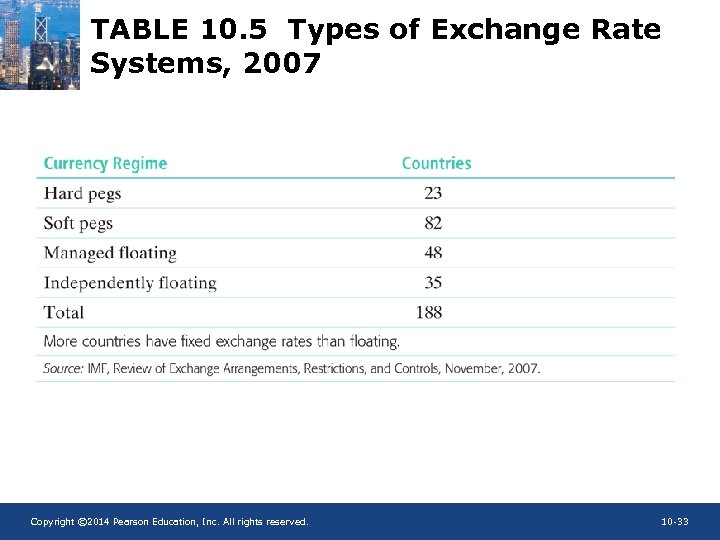 TABLE 10. 5 Types of Exchange Rate Systems, 2007 Copyright © 2014 Pearson Education, Inc. All rights reserved. 10 -33
 Alternatives to Flexible Exchange Rates (cont. ) • Flexible exchange rate system: The value of the currency is allowed to float up and down with market forces • Currently, less than half of the world’s nations have flexible rates Copyright © 2014 Pearson Education, Inc. All rights reserved. 10 -34
 Fixed Exchange Rate Systems • Gold standards are a form of fixed exchange rates. Under a pure gold standard, nations keep gold as their international reserve. • Bretton Woods exchange rate system: A type of gold standard in 1947– 1971: U. S. dollar and British Pound were fixed to each other and to gold; a modified Gold standard exchange rate system Copyright © 2014 Pearson Education, Inc. All rights reserved. 10 -35
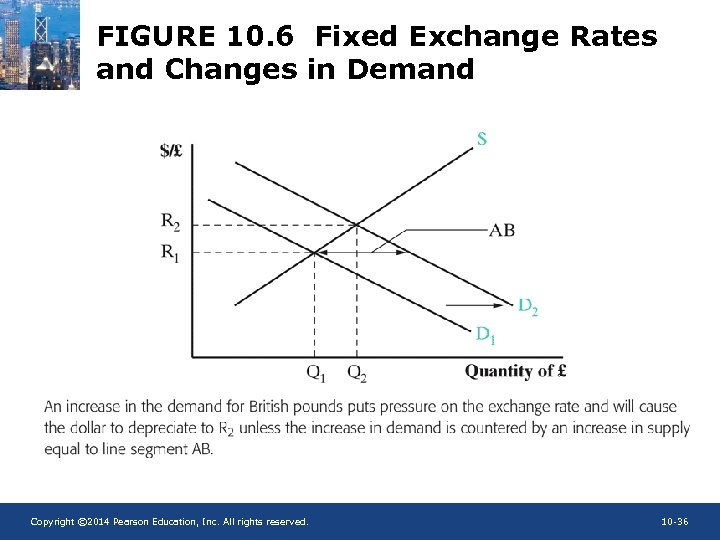 FIGURE 10. 6 Fixed Exchange Rates and Changes in Demand Copyright © 2014 Pearson Education, Inc. All rights reserved. 10 -36
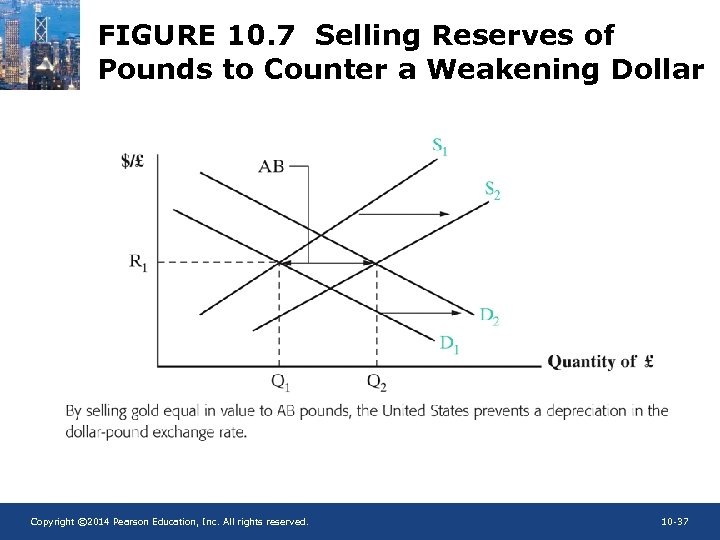 FIGURE 10. 7 Selling Reserves of Pounds to Counter a Weakening Dollar Copyright © 2014 Pearson Education, Inc. All rights reserved. 10 -37
 Fixed Exchange Rate System (cont. ) • Pegged exchange rate system: one currency is anchored to another currency instead of gold • Crawling peg: soft pegs that are fixed but periodically adjusted. – The idea is to offset any differences in inflation (changes in P) through regular adjustments in Rn. Copyright © 2014 Pearson Education, Inc. All rights reserved. 10 -38
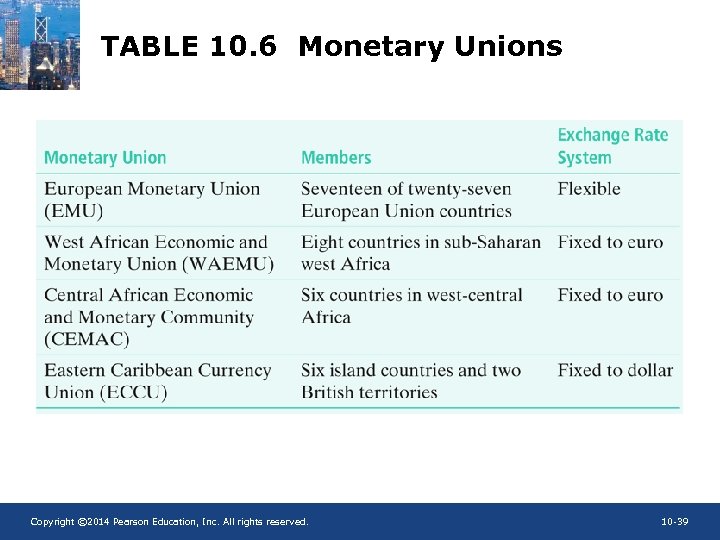 TABLE 10. 6 Monetary Unions Copyright © 2014 Pearson Education, Inc. All rights reserved. 10 -39
 Single Currency Areas • In 1999, 11 European Union (EU) members adopted a common currency, the euro, which began circulating in 2002 • As of 2011, 17 of 27 EU members use the euro Copyright © 2014 Pearson Education, Inc. All rights reserved. 10 -40
 Single Currency Areas (cont. ) • 4 reasons for countries to adopt common currency: – Reduces currency conversions and transaction costs – Eliminates of price fluctuations – Help increase political trust between countries – Provides exchange rate greater credibility Copyright © 2014 Pearson Education, Inc. All rights reserved. 10 -41
 Conditions for Adopting A Single Currency • Optimal currency area: Robert Mundell’s criteria to determine whether two or more countries would be better off by sharing a currency • For common currency to be viable, countries must share: 1. Synchronized business cycles 2. A high degree of labor and capital mobility 3. Regional policies to deal with economic imbalances 4. An integration effort that goes beyond mere free trade Copyright © 2014 Pearson Education, Inc. All rights reserved. 10 -42