


 Скачать презентацию Chapter 10 Careers HR Development Employee
e50d00e51cdae7698ecdb91abc631d92.ppt
- Количество слайдов: 31
 Chapter 10: Careers & HR Development
 Employee Development • Significant Developments Ø More horizontal “ladders” in middle management Ø More strategic focus on core competencies Ø Careers as a series of projects, not upward steps in an organization Ø Career development now extends to all employees Ø In “new career” era, the individual manages own development, not the organization. Ø Employees who change jobs and employers frequently are now the norm.
 Careers and Career Planning • Career Ø The series of work-related positions a person occupies through life. • Organization-Centered Career Planning Ø Focuses on jobs and on identifying career paths that provide for the logical progression of people between jobs in the organization. • Individual-Centered Career Planning Ø Focuses on an individual’s career rather than in organizational needs.
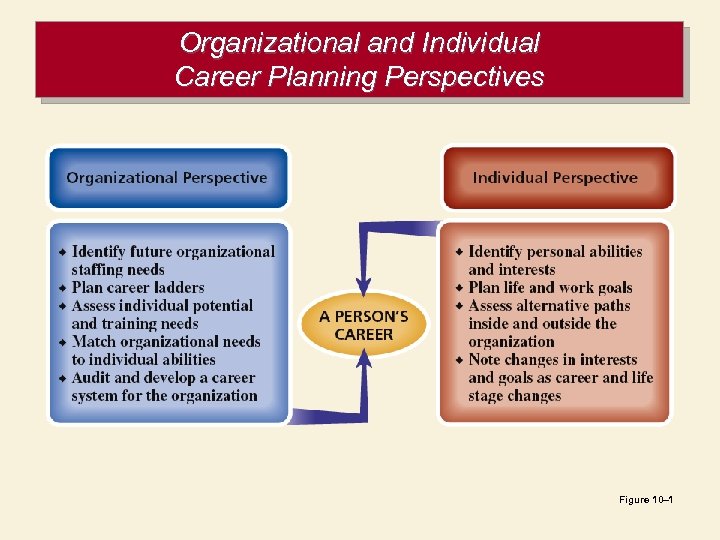 Organizational and Individual Career Planning Perspectives Figure 10– 1
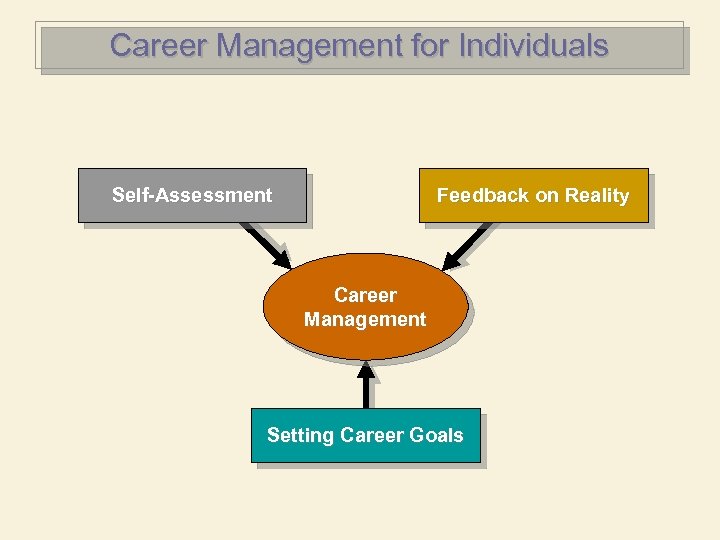 Career Management for Individuals Self-Assessment Feedback on Reality Career Management Setting Career Goals
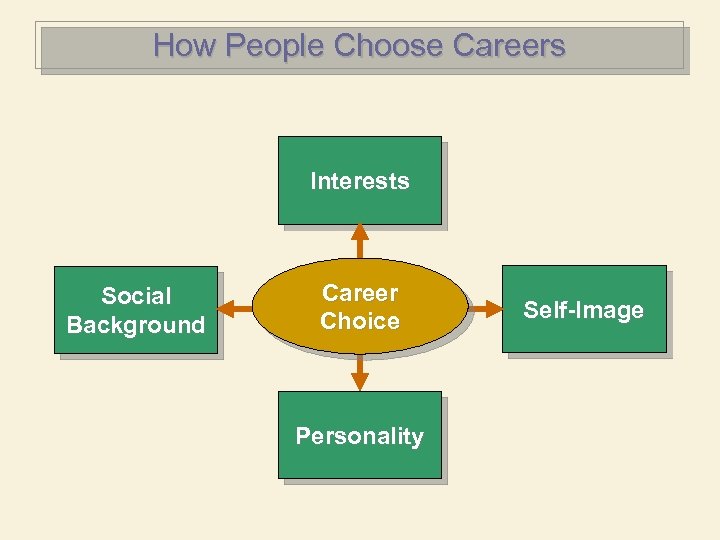 How People Choose Careers Interests Social Background Career Choice Personality Self-Image
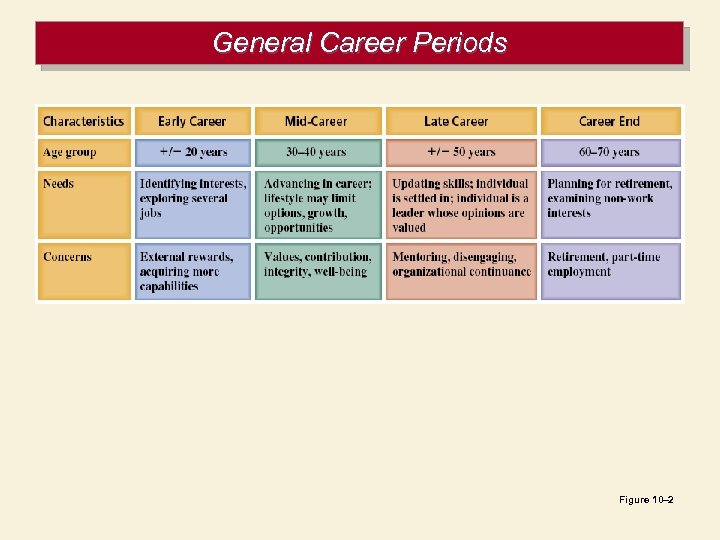 General Career Periods Figure 10– 2
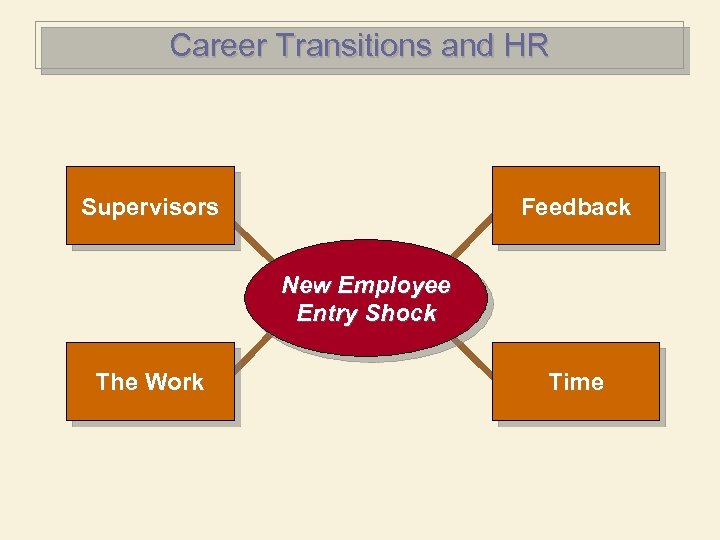 Career Transitions and HR Supervisors Feedback New Employee Entry Shock The Work Time
 Global Career Development • Repatriation Ø Planning, training, and reassignment of global employees to their home countries. • Development Issues Ø Focusing on developing local managers as well as global executives. Ø Development areas typically include: v Cultural issues, running a business, leading and managing, handling problematic people, personal qualities, self, and career.
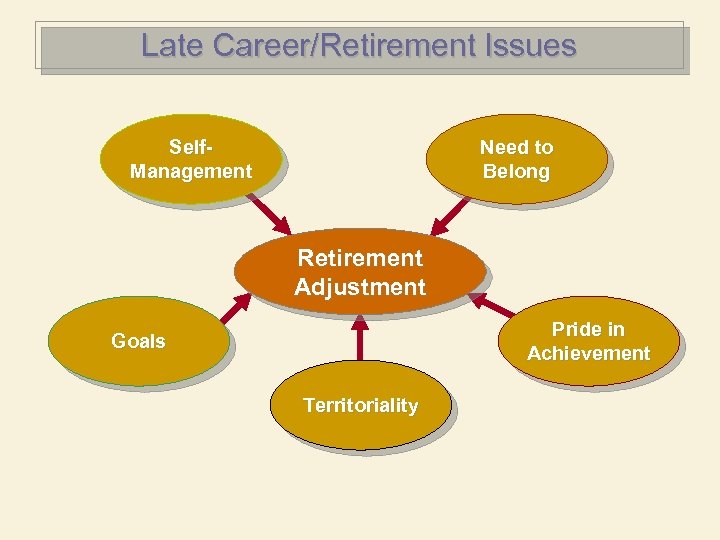 Late Career/Retirement Issues Self. Management Need to Belong Retirement Adjustment Pride in Achievement Goals Territoriality
 Women and Careers • The percentage of women in the workforce has more than doubled since 1970, and will reach 48% by 2010. Ø “Sequencing”: v Women’s careers are often interrupted for child birth and child rearing and a later return go back to work with a job that allows flexibility when they are older. Ø Glass ceiling: v The situation in which women fail to progress into top management positions. Ø Employers can tap into the female labor market with child care, flexible work policies, and a willingness to be accommodative.
 Special Career Issues for Organizations and Employees • Career Plateaus Ø Employees who are “stuck” at a career level and lack opportunities for upward mobility. • Technical and Professional Workers Ø Dual-career ladders provide advancement pathways for specialists and technical employees. • Dual-Career Couples Ø Problems occur when one partner is promoted or transferred, causing the other partner to have to relocate.
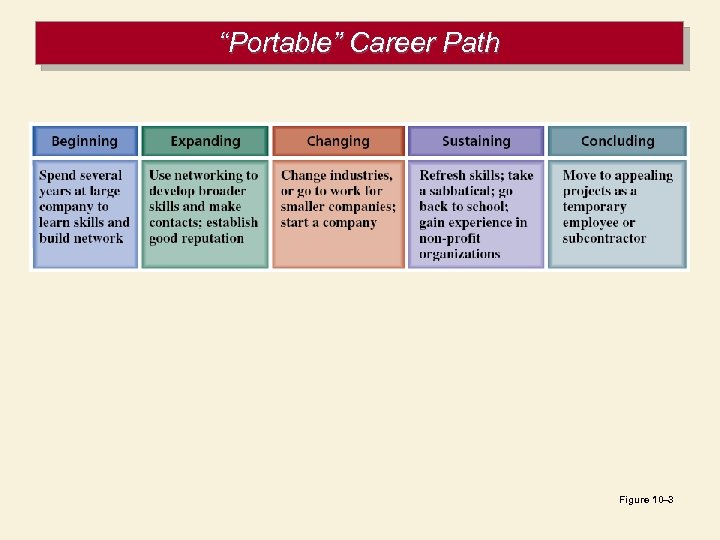 “Portable” Career Path Figure 10– 3
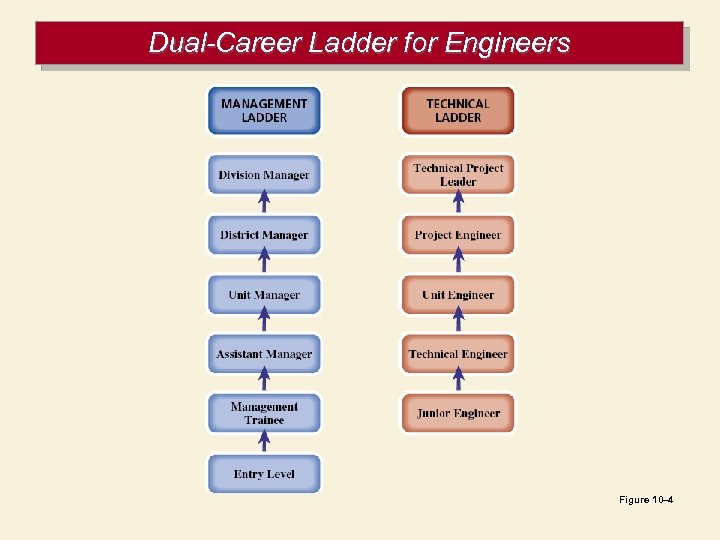 Dual-Career Ladder for Engineers Figure 10– 4
 Global Transfers • HR employee relocation assistance policies that consider the concerns of dual-career couples: Ø Paying employment agency fees for the relocating partner Ø Paying for a designated number of trips for the partner to look for a job in the proposed new location Ø Helping the partner find a job in the same company or in another division or subsidiary of the company Ø Developing computerized job banks to share with other companies in the area that list partners available for job openings
 Developing Human Resources • Development Ø Efforts to improve employees’ ability to handle a variety of complex assignments (knowledge work) requiring judgment, responsibility, decision making, and communication. • Organizational Needs Analyses Ø Future employee competencies Ø Employee and managerial succession Ø Retirements, promotions, transfers, departures
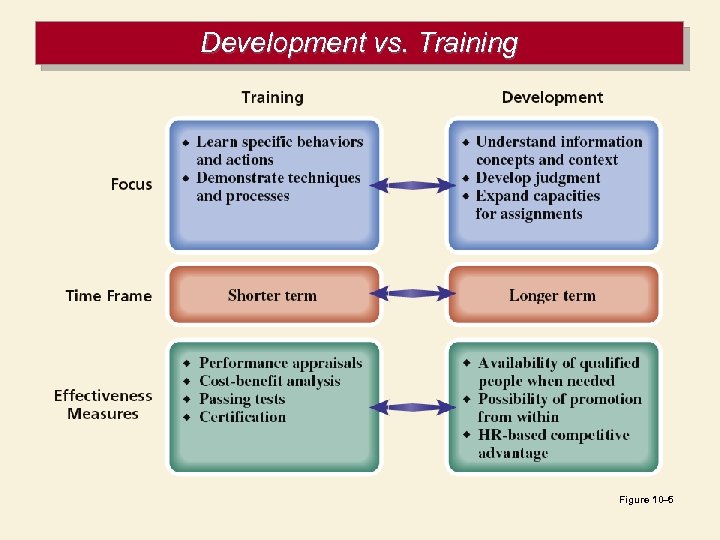 Development vs. Training Figure 10– 5
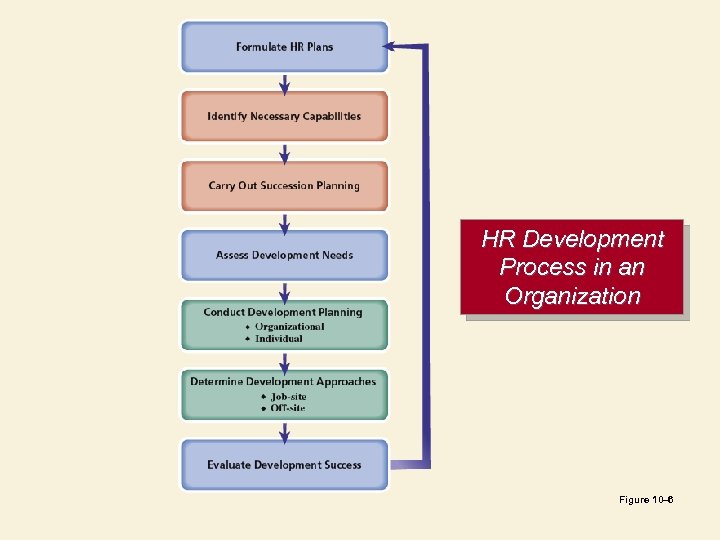 HR Development Process in an Organization Figure 10– 6
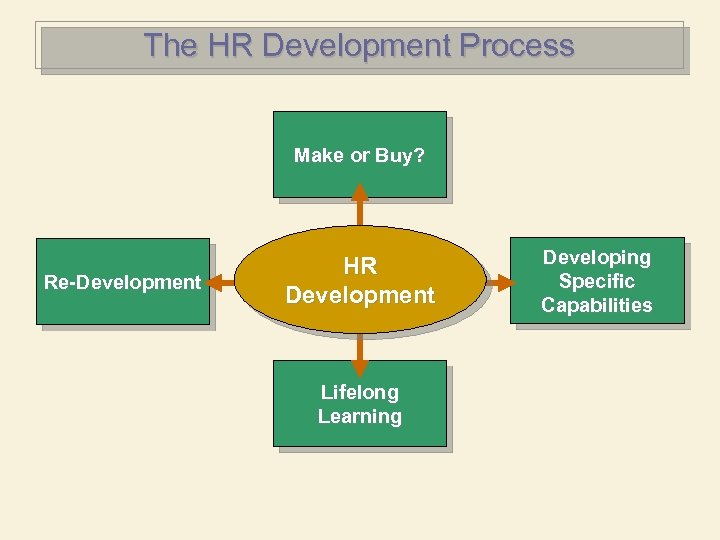 The HR Development Process Make or Buy? Re-Development HR Development Lifelong Learning Developing Specific Capabilities
 Development Needs Analyses • Assessment Centers Ø A collection of instruments and exercises designed to diagnose individuals’ development needs. v Intent is to identify management potential in participants. • Psychological Testing Ø Intelligence tests, verbal and mathematical reasoning tests, and personality tests are often used. Ø Interpretation of results is problematic. • Performance Appraisals Ø Serve as a source of development information. Ø Results can be difficult to interpret.
 Development Needs Analyses • Succession Planning Ø The process of identifying a longer-term plan for the orderly replacement of key employees. • Succession in Small and Closely Held Organizations Ø Important in small and medium-sized firms, but studies show that few of these firms formalize succession plans.
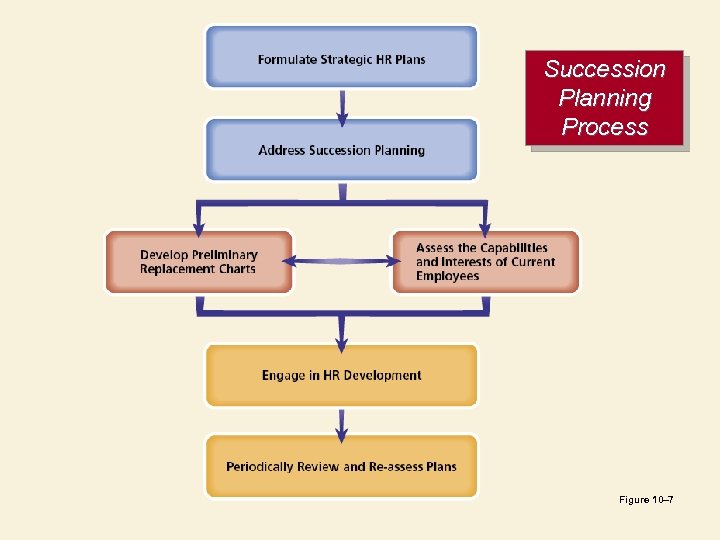 Succession Planning Process Figure 10– 7
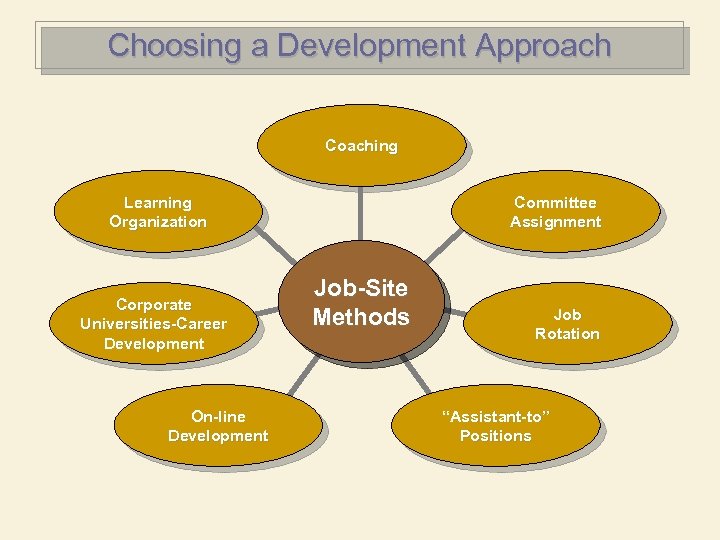 Choosing a Development Approach Coaching Learning Organization Corporate Universities-Career Development On-line Development Committee Assignment Job-Site Methods Job Rotation “Assistant-to” Positions
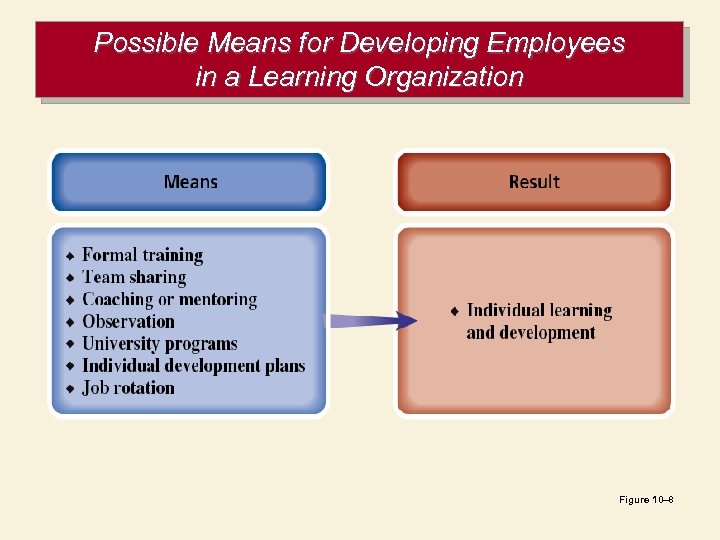 Possible Means for Developing Employees in a Learning Organization Figure 10– 8
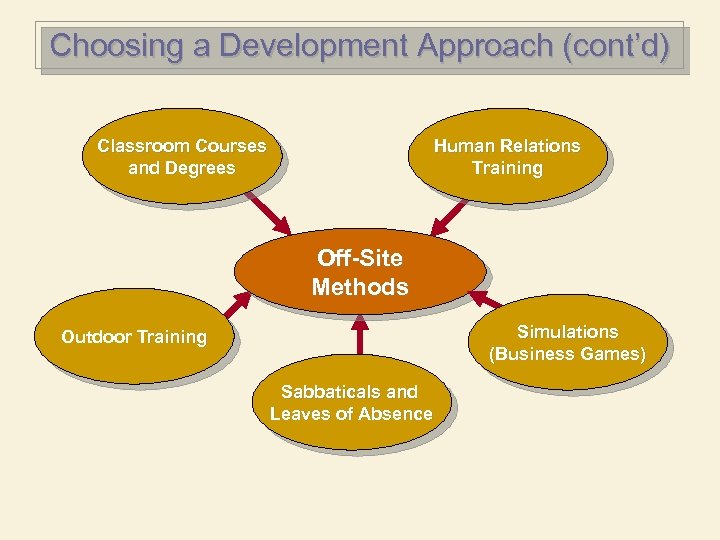 Choosing a Development Approach (cont’d) Classroom Courses and Degrees Human Relations Training Off-Site Methods Simulations (Business Games) Outdoor Training Sabbaticals and Leaves of Absence
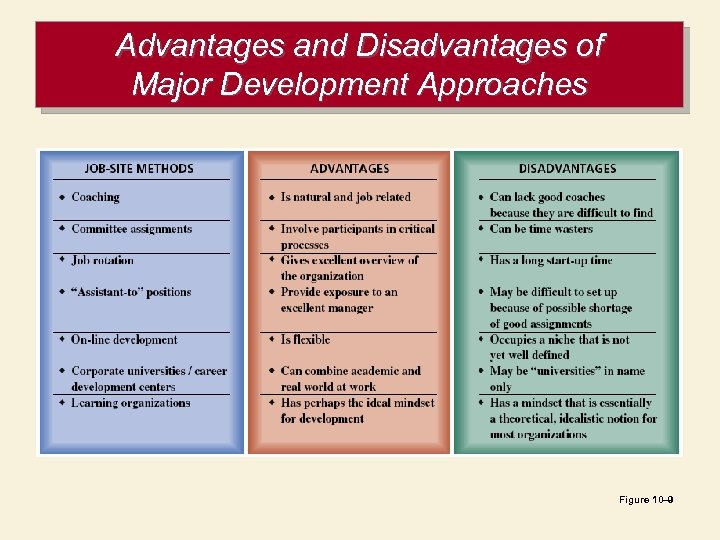 Advantages and Disadvantages of Major Development Approaches Figure 10– 9
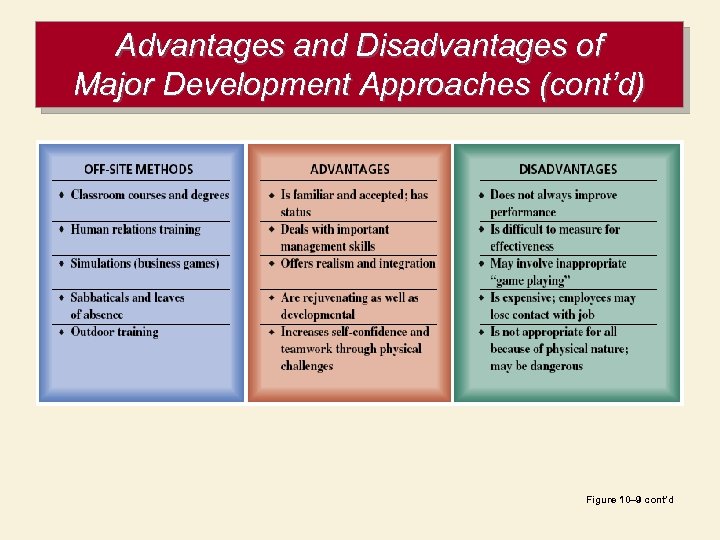 Advantages and Disadvantages of Major Development Approaches (cont’d) Figure 10– 9 cont’d
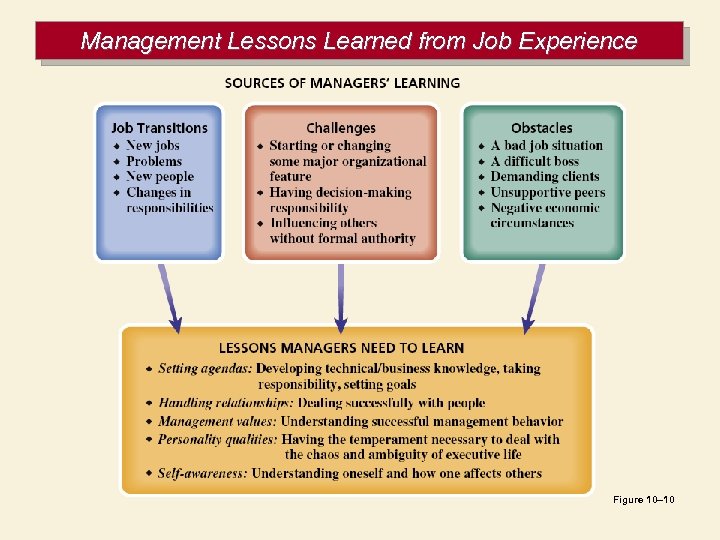 Management Lessons Learned from Job Experience Figure 10– 10
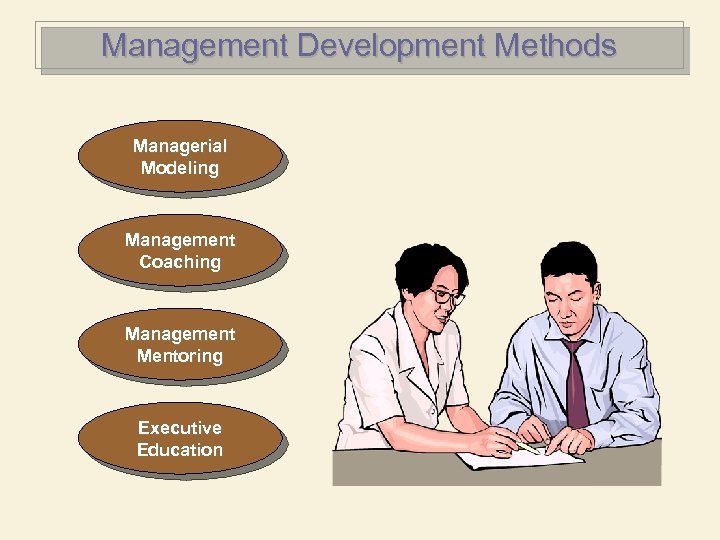 Management Development Methods Managerial Modeling Management Coaching Management Mentoring Executive Education
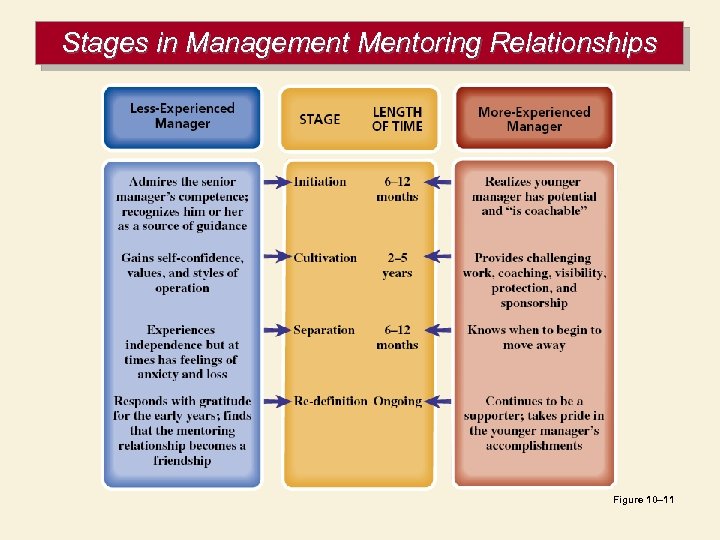 Stages in Management Mentoring Relationships Figure 10– 11
 Problems with Management Development Efforts • Inadequate HR planning and a lack of coordination of HR development efforts. Ø Failing to conduct adequate needs analysis, trying out fad programs or training methods, and substituting training for selecting qualified individuals. • Encapsulated Development Ø A situation in which an individual learns new methods and ideas in a development course and returns to a work unit that is still bound by old attitudes and methods.