 Скачать презентацию Chapter 1 Money Banking and Financial Markets—An Overview
2b0fe273a60216608f67cd6cbb4ad640.ppt
- Количество слайдов: 20



Chapter 1 Money, Banking, and Financial Markets--An Overview ©Thomson/South-Western 2006 1
Money And Banking: Key Elements § money § financial intermediaries (traditionally, especially banks) § interest rates § government budget deficits (or surpluses) 2
Money § Money is the stock of items widely used to make payment for goods and services. § Money, or the money supply, includes: § currency and coins in circulation, § checking accounts in depository institutions, and § other items, such as Certificates of Deposit (CDs), when measured more broadly. 3
What Determines The Money Supply? § The central bank is responsible for the trend or long-run behavior of the money supply. § In the United States, the central bank is the Federal Reserve System (the Fed). § The Fed conducts monetary policy. 4
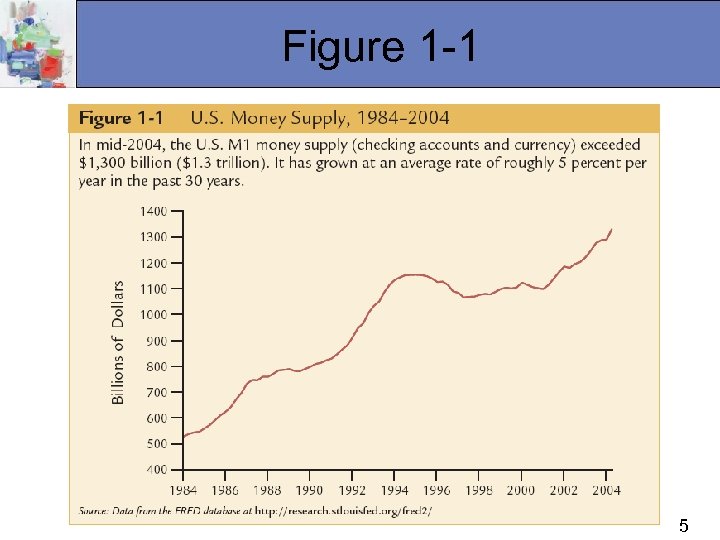
Figure 1 -1 5
Money, Inflation, and Deflation § When the money supply increases more rapidly than the output of goods and services, inflation occurs. § Inflation targeting occurs when a central bank announces an explicit inflation range it pledges to maintain and enforces policies consistent with that goal. § Deflation is a continuing decline in prices and is more damaging to a nation's economic health than inflation. 6
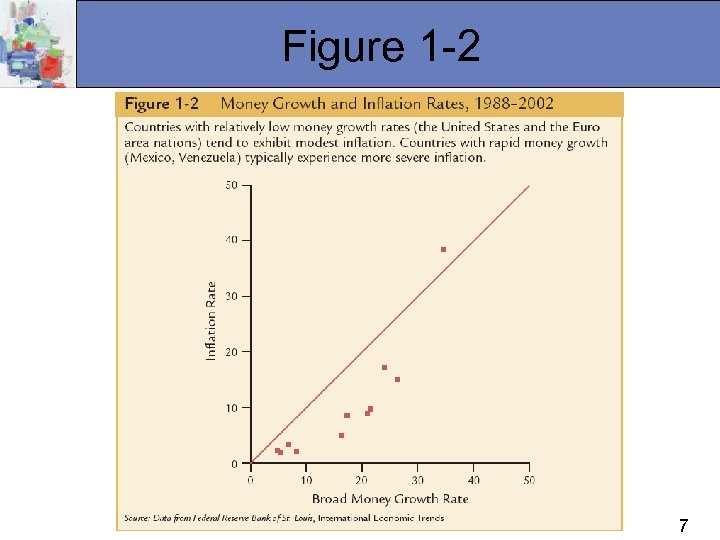
Figure 1 -2 7
Banks And Other Financial Intermediaries § Banks accept various types of deposits and use the funds attracted primarily to grant loans. § "Banks" is a generic term for all depository institutions. § Banks are older-generation financial intermediaries. Today, other intermediaries like pension funds and insurance companies are playing an increasingly important role in capital markets, encroaching on banks’ traditional role. § Intermediaries match savers’ money with borrowers’ funding demands. 8
Interest Rates § The interest rate is the cost of borrowing (or the return for lending), expressed as a percent per year. § The real interest rate is the stated interest rate adjusted for expected inflation. § Key interest rates: § prime loan rate § 3 -month U. S. Treasury securities § short-term corporate debt 9
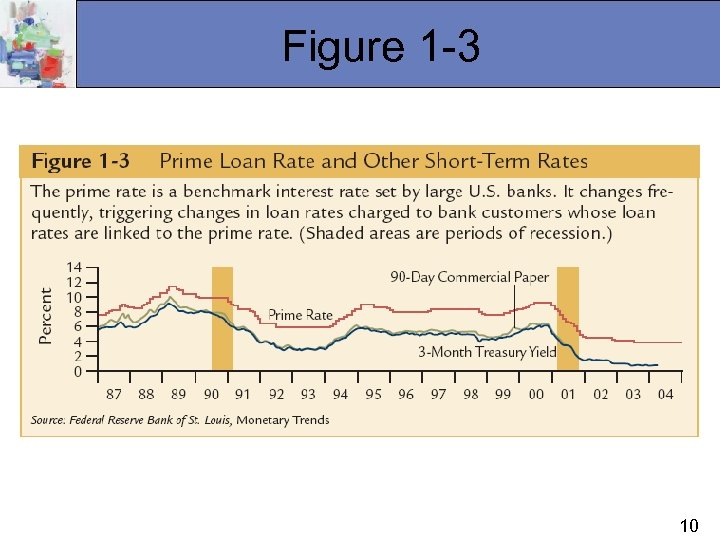
Figure 1 -3 10
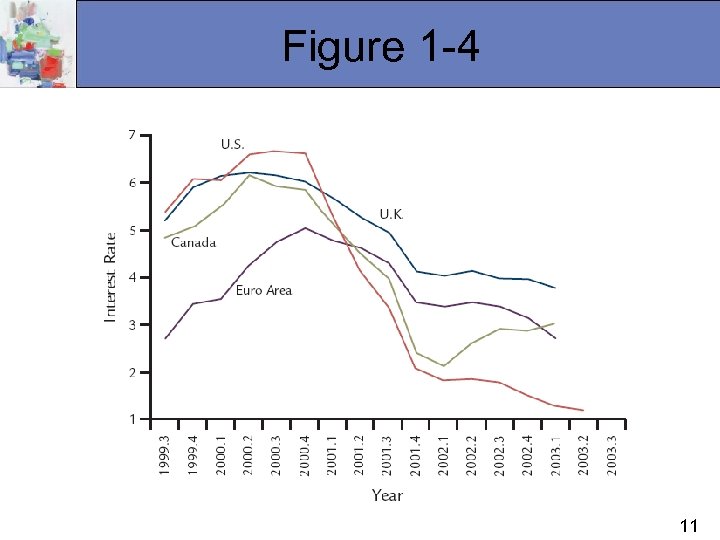
Figure 1 -4 11
The Federal Budget Deficit § The federal government’s budget deficit is the annual amount by which federal government expenditures exceed tax revenues collected. § The national debt is the cumulative sum of past budget deficits less past surpluses. 12
Key Financial Markets § The stock market § The bond market § The foreign exchange (For. Ex) market 13
The Stock Market § Shares are claims of ownership in individual corporations. § A company’s stock share price reflects the opinion of the market about the corporation's continually changing prospects. § Major indexes reflect changing sentiment about the nation's economic prospects. § Dow-Jones Industrials Average (DJIA) § Standard and Poor's 500 Average (S&P 500) 14
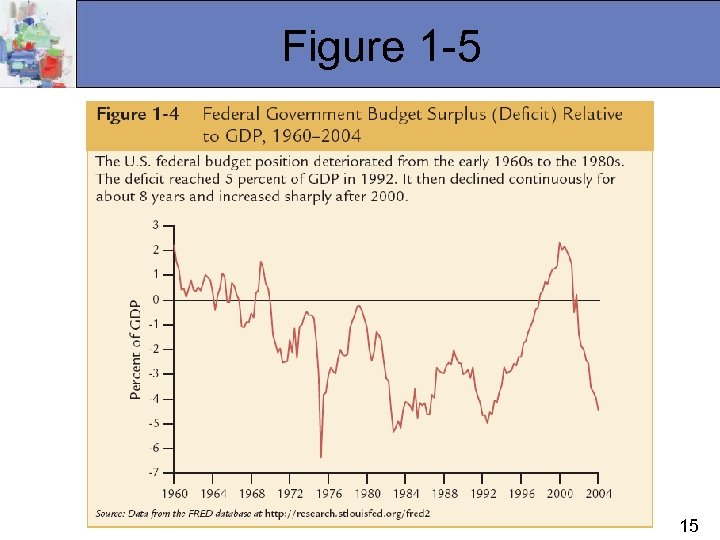
Figure 1 -5 15
The Bond Market § A bond is a debt instrument issued by a corporation, government, or government agency. § A bond’s indenture is an agreement to make a stream of interest payments at specified future dates, and also to return the principal at maturity. § Bondholders are lenders; stockholders are owners. § Interest rates (or yields) are determined by market forces of supply and demand. 16
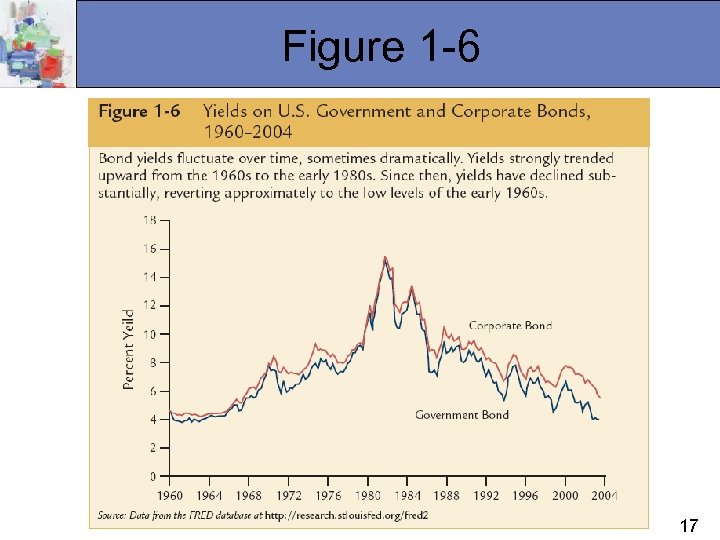
Figure 1 -6 17
The Foreign Exchange Market § Various national currencies trade in the foreign exchange (For. Ex) market. § Foreign trade necessitates trade in national currencies in the For. Ex market. § The price at which one country's currency exchanges foreign currency is the exchange rate. 18
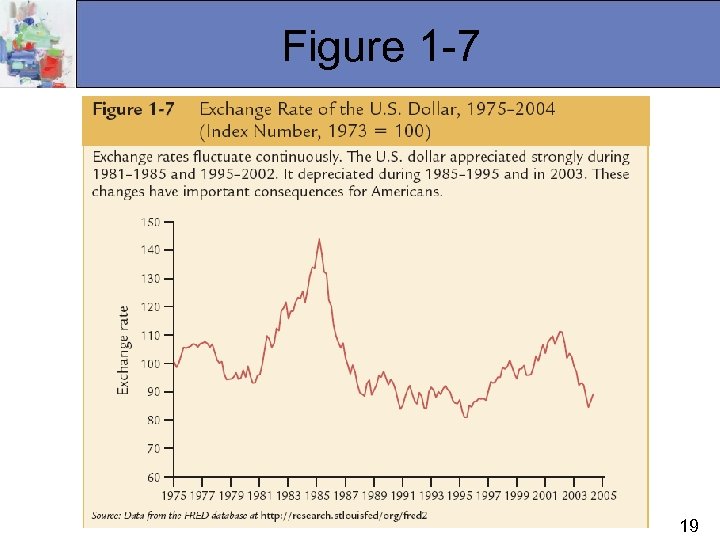
Figure 1 -7 19
Foreign Exchange and Trade § Appreciation is an increase in the value of one nation’s currency relative to another nation’s currency. § Depreciation is the opposite. § Appreciation causes: § higher prices to foreign buyers of exports, § lower prices to domestic consumers of imports, and § a trade deficit (or a reduction in the trade surplus). § Depreciation causes: § lower prices to foreign buyers of exports, § higher prices to domestic consumers of imports, and § a trade surplus (or a reduction in the trade deficit. ) 20
Скачать презентацию Chapter 1 Money Banking and Financial Markets—An Overview
2b0fe273a60216608f67cd6cbb4ad640.ppt