 Скачать презентацию CHAPTER 1 MICROBIOLOGY FOR THE HEALTH SCIENCES
1d124ebdc2ca63648ef9b5bdc3e0761f.ppt
- Количество слайдов: 196



CHAPTER 1 MICROBIOLOGY FOR THE HEALTH SCIENCES
What is Microbiology? Biology Bio Logy Microbiology Micro Living organisms Study of very small
Definition • Microbiology: is the study of very small living organisms called microorganisms or microbes. • Microorganisms are ubiquitous, they are present and distributed everywhere.
There are many categories: • Viruses: infectious agents or particles (aids, flu, measles, common cold…. etc) • Bacteria (Anthrax, botulism, cholera, leprosy, diphtheria) • Fungi (allergies, meningitis, tinea, yeast vaginitis)
• Algae (intoxication) • Protozoa (amebic dysentery, malaria, giardiasis)
Pathogens: Disease causing microorganisms 3% of all microbes cause disease and called microbial enemies Nonpathogen: Microorganisms not causing disease called the microbial allies sometimes are beneficial sometimes are not
Why Study Microbiology? Because Microorganisms play very significant roles in our lives.
HOW? 1. Living in and on our body • Epithelial cells + nerve cells +muscle cells=10 trillion cell • The number of microbes is 10 times =100 trillion microbes • Indigenous microflora 1. inhibit, prevent or reduce the growth of pathogens 2. depleting the food supply 3. secreting materials (waste products-toxins- antibiotics) 2. Opportunistic pathogens (opportunists) Microorganisms awaiting an opportunity to cause disease
3. Microorganisms essential for life Algae and cyanobacteria are groups of photosynthetic bacteria that Produce oxygen more than plants 4. Decomposition of dead organisms and waste products of living organisms Decomposers or saprophytes Saprophytes are organisms that lives on dead and or decaying organic matter necessary for the growth of plants 5. Decomposition of industrial wastes By a process called Bioremediation (using genetically engineered microorganisms to clean up industrial wastes )
6. Involving in elemental cycles (C, N, O, S, P) Very important to farmers and gardeners (microbial ecology) e. g nitrogen => ammonia => nitrite=> nitrate in soil 7. Food chain Algae and bacteria are the food of tiny animals 8. Digestion Microorganisms help in digestion as well producing valuable substances E. coli => production of vitamins K and B 1 Termites which eat woods has cellulose eating protozoa 9. Biotechnology Using microorganisms in various food and beverage industry
10. Production of antibiotics (bacteria and fungi) It is used to treat patients with infectious diseases “Antibiotic”: is a substance produced by microorganisms that is effective in killing or inhibiting the growth of other microorganisms 11. Microbes essential in Genetic engineering Insulin , growth hormones , materials used for vaccine 12. Microbial cell used as cell model Helps the scientist to learn a lot about the structure and function
Microorganisms cause two categories of disease 1. Infectious disease => when a pathogen colonies the body and causes disease. Cause more illness and death in the world after heart and cancer disease 2. Microbial intoxication => when a person ingest a poisonous substances (toxin) produced by microorganisms
For this reason nurses should be aware of the following • • • Pathogens that cause diseases Sources of pathogens How diseases are transmitted How to protect yourself How to protect your patient Harmful microorganisms may be transferred from: • • • Health workers to Patients to Healthcare workers Patients to Visitors Contaminated devices, instrument, syringes to Patients Contaminated bedding, clothes, dishes, food to Patients
HOW TO LIMIT? Sterile, Aseptic, Antiseptic techniques should be used in hospitals, nursing rooms, operating rooms, laboratories.
• MICROBIOLOGIST: A scientist who study tiny organisms (microorganisms) • Bacteriologist=> Bacteriology • Phycologist => Phycology • Protozoologist => Protozoology • Mycologist => Mycology • Virologist => Virology NB: Virologist study not only viruses but also smaller acellular infectious agents “Prions & Viroids”
The Study of Applied Microbiology 1. Agricultural Microbiology To study the beneficial and harmful roles of microbes in soil for plants 2. Biotechnology (Industrial Microbiology) The use of microorganisms in industry • Production of beer, wine, alcohol • Production of organic materials (enzymes, vitamins, antibiotic SUBSTRATE= >microorganism=> PRODUCT 3. Environmental Microbiology & Bioremediation • • Water and sewage treatment Purification of wastewater Breaking down of metals and minerals by utilizing Fe, S bacteria Bioremediation: clean up landfills, industrial wastes, toxic wastes
4. Medical and Clinical Microbiology (diagnostic of clinical microbiology) It is the study of: pathogens, diseases they cause, body’s defenses against diseases 5. Microbial Genetics and Genetic Engineering It is the study of Microbial DNA, Chromosomes, Gene and Plasmids ( small circular molecules of extrachromosomal DNA) 6. Microbial Physiology It is to study the structure and functions of microbial cells 7. Paleomicrobiology To study the ancient microbes Paleomicrobiologist found that Mycobacterium tuberculosis DNA, in Egyptian mummies and proved that tuberculosis existed as 3000 BC. 8. Parasitology It is the study of the parasite and its life cycle to discover the best way to control and treat disease they cause. PARASITE: any organism lives on or in another living organisms. • But the indigenous microflora (viruses or bacteria live on or in human body are not parasites) • Parasite categories are: Protozoa, Helminths( parasite worms) and arthropods (insects and arachnids)
9. Sanitary Microbiology It is the study of: Disposal of garbage and sewage, Purification and processing of water supply to be drinkable and proper food handling procedures are enforced. 10. Veterinary Microbiology It is the study of infectious diseases in animals – Production of food from livestock – Care of pets – Transmission of diseases from animals to humans NB: Zoonoses or Zoonotic diseases: Infectious diseases of humans that are acquired from animal sources.
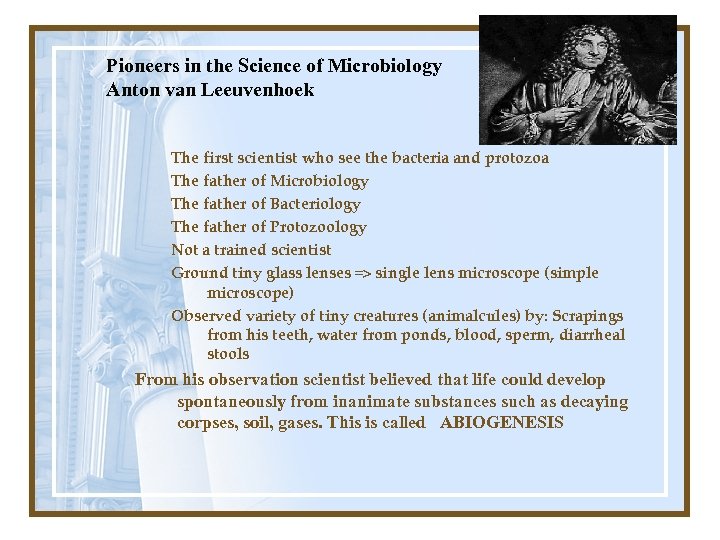
Pioneers in the Science of Microbiology Anton van Leeuvenhoek The first scientist who see the bacteria and protozoa The father of Microbiology The father of Bacteriology The father of Protozoology Not a trained scientist Ground tiny glass lenses => single lens microscope (simple microscope) Observed variety of tiny creatures (animalcules) by: Scrapings from his teeth, water from ponds, blood, sperm, diarrheal stools From his observation scientist believed that life could develop spontaneously from inanimate substances such as decaying corpses, soil, gases. This is called ABIOGENESIS
• Abiogenesis Theory (spontaneous generation) : That life can arise spontaneously from nonliving material After 2 centuries scientist discover theory of • Biogenesis Theory : Life can only arise from preexisting life
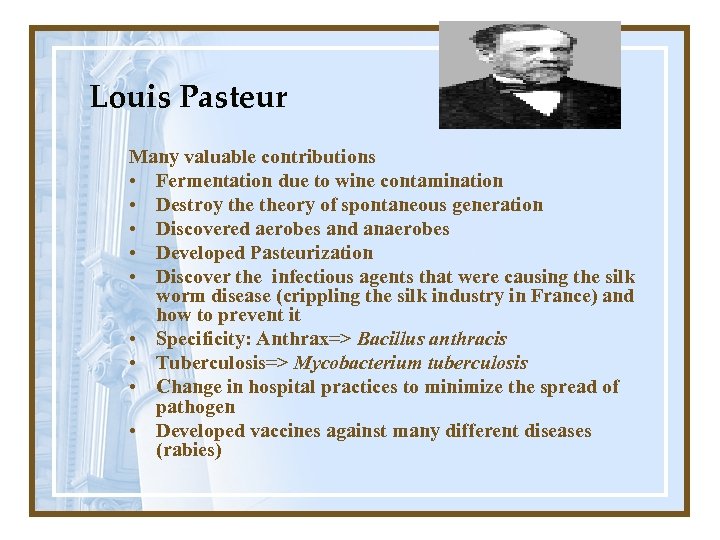
Louis Pasteur Many valuable contributions • Fermentation due to wine contamination • Destroy theory of spontaneous generation • Discovered aerobes and anaerobes • Developed Pasteurization • Discover the infectious agents that were causing the silk worm disease (crippling the silk industry in France) and how to prevent it • Specificity: Anthrax=> Bacillus anthracis • Tuberculosis=> Mycobacterium tuberculosis • Change in hospital practices to minimize the spread of pathogen • Developed vaccines against many different diseases (rabies)
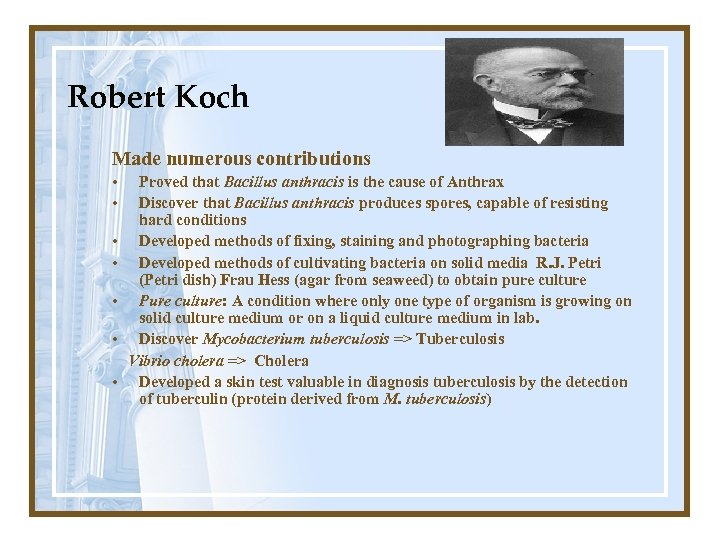
Robert Koch Made numerous contributions • • Proved that Bacillus anthracis is the cause of Anthrax Discover that Bacillus anthracis produces spores, capable of resisting hard conditions Developed methods of fixing, staining and photographing bacteria Developed methods of cultivating bacteria on solid media R. J. Petri (Petri dish) Frau Hess (agar from seaweed) to obtain pure culture Pure culture: A condition where only one type of organism is growing on solid culture medium or on a liquid culture medium in lab. Discover Mycobacterium tuberculosis => Tuberculosis Vibrio cholera => Cholera Developed a skin test valuable in diagnosis tuberculosis by the detection of tuberculin (protein derived from M. tuberculosis)
Koch’s Postulates • Microorganisms must be found in all cases of disease and not present in healthy animals or humans • Microorganisms must be isolated from diseased animal or human and grow in pure culture in the lab. • If inoculated into healthy susceptible lab animals the same disease must be produced • Also must be recovered from this animal and grown again in pure culture
Exceptions to Koch’s Postulates • It is necessary to culture pathogen in the lab (vitro), in or on artificial culture media But 1. Viruses 2. Rickttsias (bacteria) 3. Chlamydias(bac) Are obligate intracellular pathogens or parasites, they can only survive and multiply within living cells (embryonated chicken eggs) e. g. : Leprosy => Mycobacterium lepry Syphilis => Treponema pallidum (spirochetes) • Fastidious : Microorganisms having complex and demanding nutritional requirements (vitamins, amino acids, other nutrients) • Specificity of Microorganisms (No human volunteers)
• Synergistic infections Diseases caused not only by one M. O. Microbiologist cannot obtain this kind of synergism • Some M. O. altered when cultured in vitro and become less pathogenic or nonpathogenic and the infected animals are no longer pathogens after being cultured. • Not all diseases caused by M. O. Inherited => abnormalities in chromosomes e. g. sickle cell anemia Diabetes => malfunction of liver Lung and skin cancer => environmental factors
CHAPTER 2 Tools for investigating Microorganisms
The Metric System ( to express the sizes of microorganisms) • • Meter (M) = 39. 4 inches; 3. 4 inches > yard 1 M = 10 decimeter 1 M = 100 cm 1 M = 1000 mm 1 M = 1000, 000 µm 1 M =1000, 000 nm 1 M =10, 000, 000 A • • Coccus , cocci = Bacillus, bacilli = but virus = Protozoa = Yeast = Septate hyphae = Aseptate hyphae = Chlamydomonas = 1µm 1 µm wide and 3 µm long 10 -300 nm 2000µm 3 -5 µm 2 -15 µm 10 -30 µm 5 -12 µm
Microscopes A microscope is an optical instrument that is used to observe tiny objects, often objects that cannot be seen at all with unaided eye. Types of Microscopes • Simple Microscope: A microscope containing only one magnifying lens. 3 -20 times magnification. • Compound Microscope: A microscope that contains more than one magnification lens. 1000 times
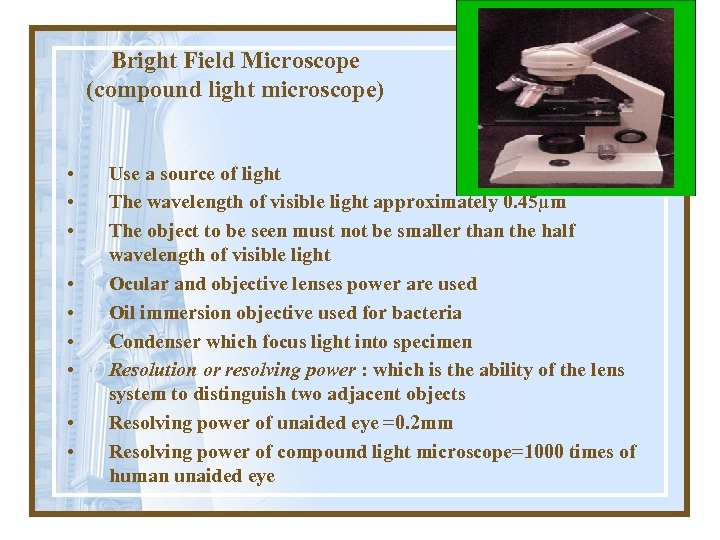
Bright Field Microscope (compound light microscope) • • • Use a source of light The wavelength of visible light approximately 0. 45µm The object to be seen must not be smaller than the half wavelength of visible light Ocular and objective lenses power are used Oil immersion objective used for bacteria Condenser which focus light into specimen Resolution or resolving power : which is the ability of the lens system to distinguish two adjacent objects Resolving power of unaided eye =0. 2 mm Resolving power of compound light microscope=1000 times of human unaided eye
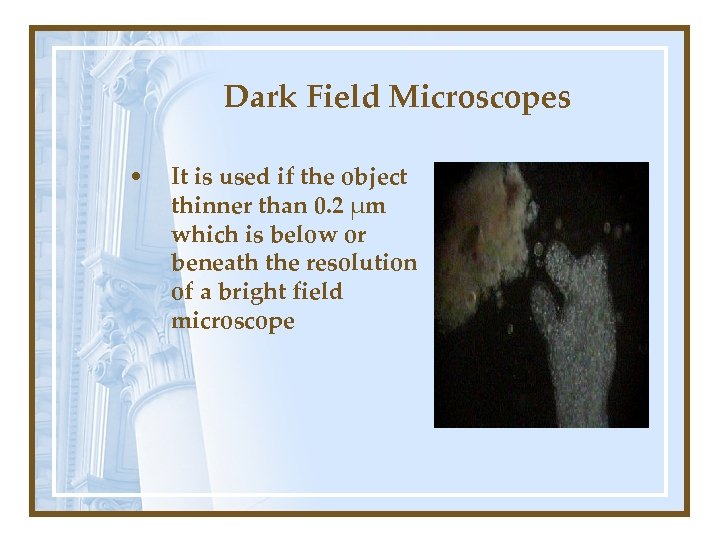
Dark Field Microscopes • It is used if the object thinner than 0. 2 µm which is below or beneath the resolution of a bright field microscope
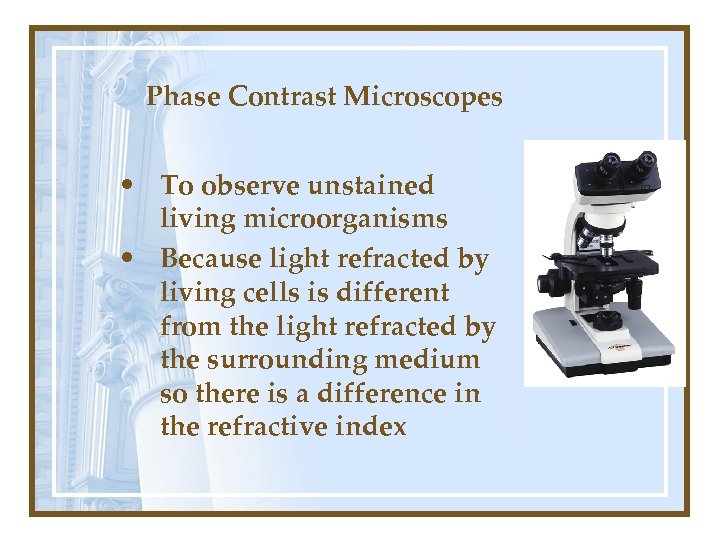
Phase Contrast Microscopes • To observe unstained living microorganisms • Because light refracted by living cells is different from the light refracted by the surrounding medium so there is a difference in the refractive index
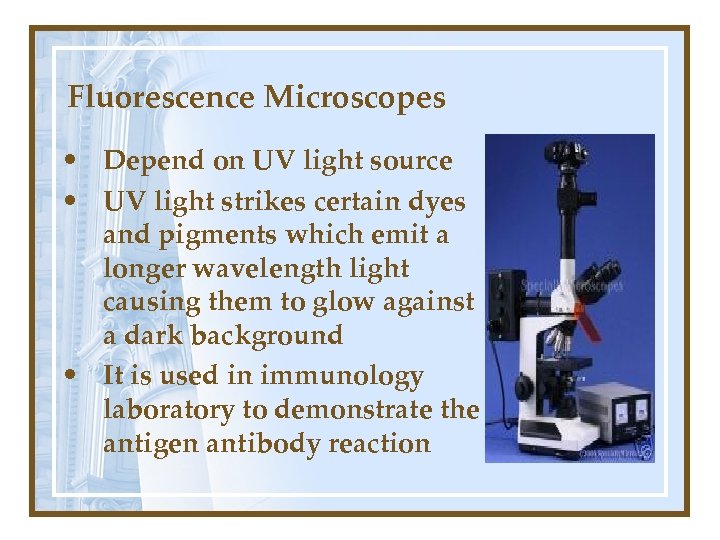
Fluorescence Microscopes • Depend on UV light source • UV light strikes certain dyes and pigments which emit a longer wavelength light causing them to glow against a dark background • It is used in immunology laboratory to demonstrate the antigen antibody reaction
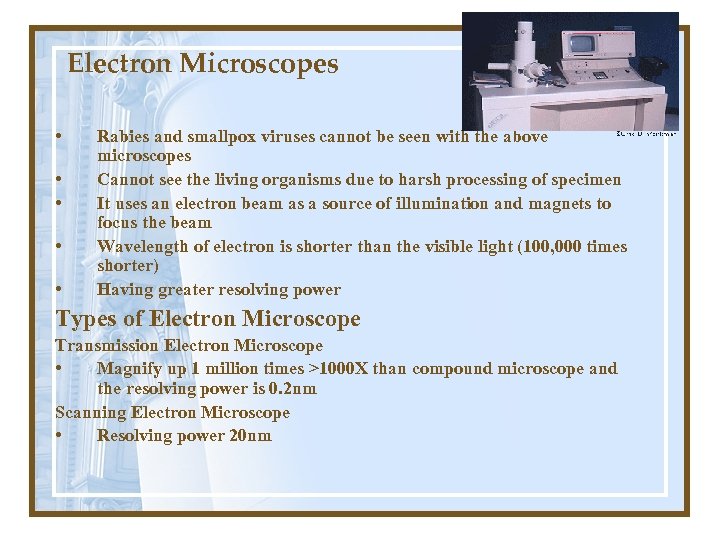
Electron Microscopes • • • Rabies and smallpox viruses cannot be seen with the above microscopes Cannot see the living organisms due to harsh processing of specimen It uses an electron beam as a source of illumination and magnets to focus the beam Wavelength of electron is shorter than the visible light (100, 000 times shorter) Having greater resolving power Types of Electron Microscope Transmission Electron Microscope • Magnify up 1 million times >1000 X than compound microscope and the resolving power is 0. 2 nm Scanning Electron Microscope • Resolving power 20 nm
Chapter 3 Cell Structure and Taxonomy
Cell: • Is the fundamental living unit of any organism because the cell exhibits the basic characteristics of life • It obtains food (nutrients) from the environment to produce energy for metabolism and other activities • Metabolism : is all the chemical reactions that occur within a cell, to be able to grow and reproduce and respond to stimuli (light, heat, cold…. ). • A cell can mutate (change genetically) in the DNA that makes the genes of its chromosome • Cell doesn’t have a complex system of membrane and organelle Organelles: tiny organ-like structures • Important to study the cell to affect the microbe not the cell
Types of Cells – Prokaryotes (prokaryotic cells) e. g. : Bacteria, Achaean – Eukaryotes (eukaryotic cells) e. g. : algae, protozoa, fungi, plants, animals – Viruses: • Composed of few genes protected by a protein coat • Viruses depend on the energy and metabolic machinery of a host cell in order to reproduce • Viruses are acellular (not composed of cells) so they are not even prokaryotes Cytology: Is the study of the structure and function of cells
Eucaryotic Cell Structure Eucaryotes (eu= true; caryo= nucleus) • Means have a true nucleus • Their DNA is enclosed by a nuclear membrane • Diameter 10 -30µm, 10 times larger than prokaryote
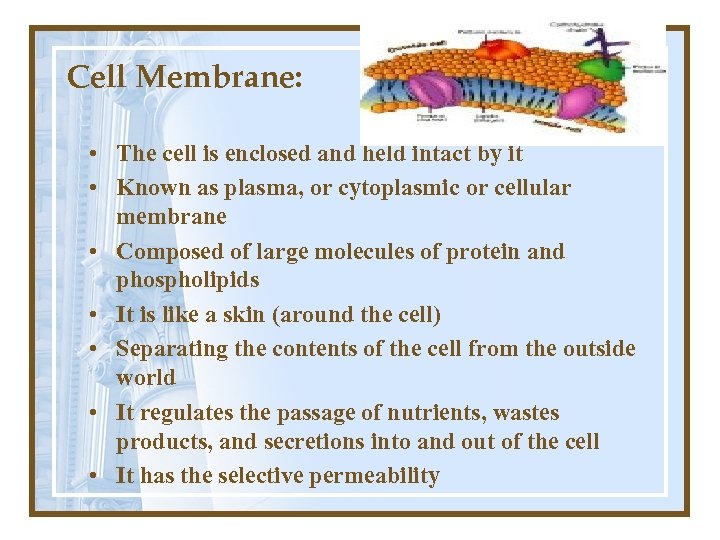
Cell Membrane: • The cell is enclosed and held intact by it • Known as plasma, or cytoplasmic or cellular membrane • Composed of large molecules of protein and phospholipids • It is like a skin (around the cell) • Separating the contents of the cell from the outside world • It regulates the passage of nutrients, wastes products, and secretions into and out of the cell • It has the selective permeability
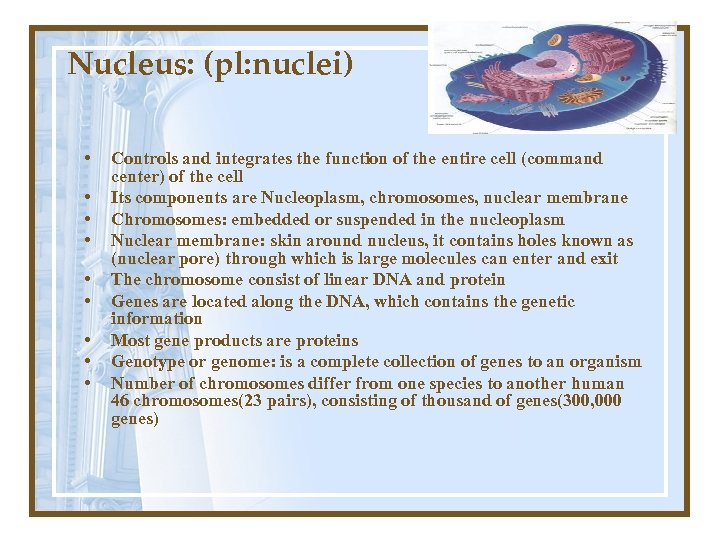
Nucleus: (pl: nuclei) • • • Controls and integrates the function of the entire cell (command center) of the cell Its components are Nucleoplasm, chromosomes, nuclear membrane Chromosomes: embedded or suspended in the nucleoplasm Nuclear membrane: skin around nucleus, it contains holes known as (nuclear pore) through which is large molecules can enter and exit The chromosome consist of linear DNA and protein Genes are located along the DNA, which contains the genetic information Most gene products are proteins Genotype or genome: is a complete collection of genes to an organism Number of chromosomes differ from one species to another human 46 chromosomes(23 pairs), consisting of thousand of genes(300, 000 genes)
Cytoplasm • Most of the cell metabolic reactions occur in it • A semifluid, gelatinous, nutrient matrix • A type of protoplasm • Within the cytoplasm are found storage granules and organelles(endoplasmic reticulum, ribosomes, Golgi complexes, mitochondria, centrioles, microtubules, lysosomes • These organelles has a highly specific function • All the functions are interrelated to maintain the cell to perform its activities
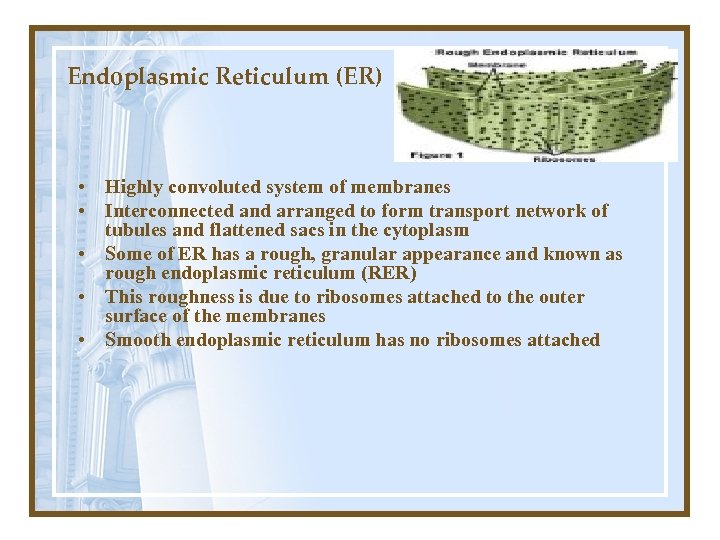
Endoplasmic Reticulum (ER) • Highly convoluted system of membranes • Interconnected and arranged to form transport network of tubules and flattened sacs in the cytoplasm • Some of ER has a rough, granular appearance and known as rough endoplasmic reticulum (RER) • This roughness is due to ribosomes attached to the outer surface of the membranes • Smooth endoplasmic reticulum has no ribosomes attached
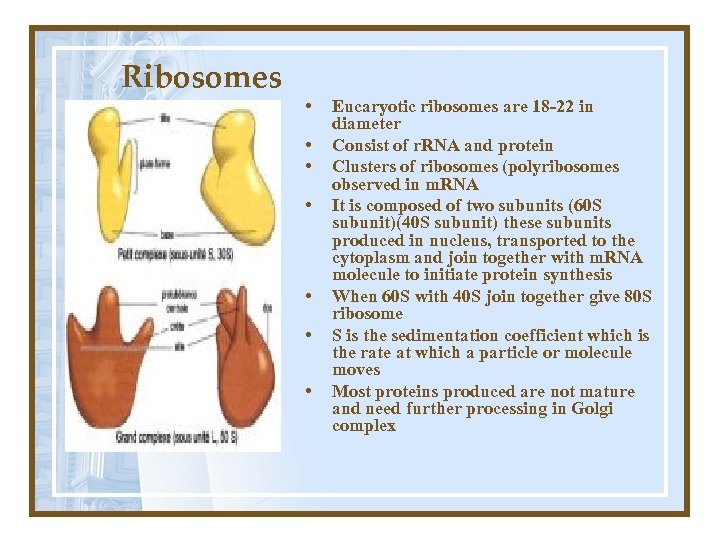
Ribosomes • • Eucaryotic ribosomes are 18 -22 in diameter Consist of r. RNA and protein Clusters of ribosomes (polyribosomes observed in m. RNA It is composed of two subunits (60 S subunit)(40 S subunit) these subunits produced in nucleus, transported to the cytoplasm and join together with m. RNA molecule to initiate protein synthesis When 60 S with 40 S join together give 80 S ribosome S is the sedimentation coefficient which is the rate at which a particle or molecule moves Most proteins produced are not mature and need further processing in Golgi complex
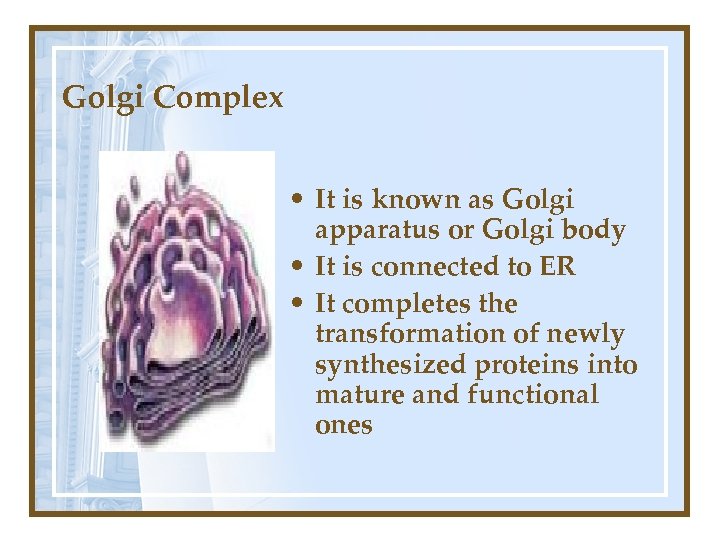
Golgi Complex • It is known as Golgi apparatus or Golgi body • It is connected to ER • It completes the transformation of newly synthesized proteins into mature and functional ones
Lysosomes and Peroxisomes Lysosomes: • Small vesicles that originate at the Golgi complex • Contain lysozyme and other digestive enzymes • These enzymes breakdown foreign material taken into the cell by phagocytosis • Phagocytosis: engulfing of large particles by amebas and certain types of white blood cells (phagocytes) • These enzymes are also responsible for autolysis • Lysosomes are found in all eukaryotic cells
Peroxisomes: • Are membrane – bound vesicles • It contain the enzyme catalase which catalyses the breakdown of hydrogen peroxide to water and oxygen • Are found in all eukaryotic cells especially in mammalian liver cells
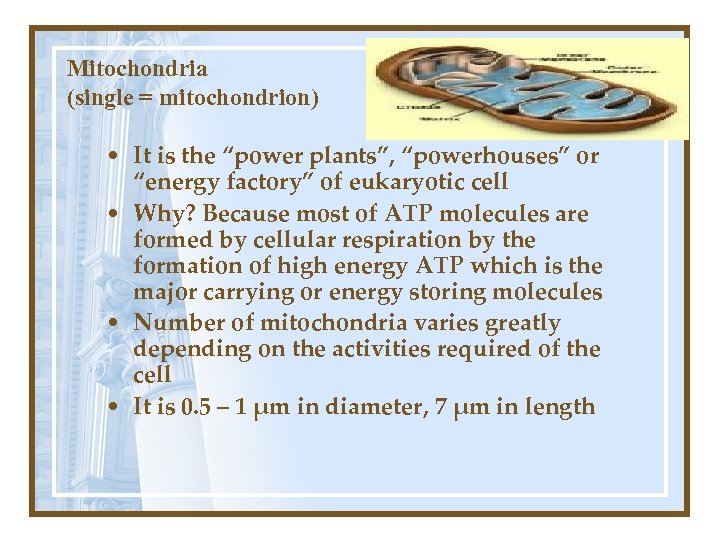
Mitochondria (single = mitochondrion) • It is the “power plants”, “powerhouses” or “energy factory” of eukaryotic cell • Why? Because most of ATP molecules are formed by cellular respiration by the formation of high energy ATP which is the major carrying or energy storing molecules • Number of mitochondria varies greatly depending on the activities required of the cell • It is 0. 5 – 1 µm in diameter, 7 µm in length
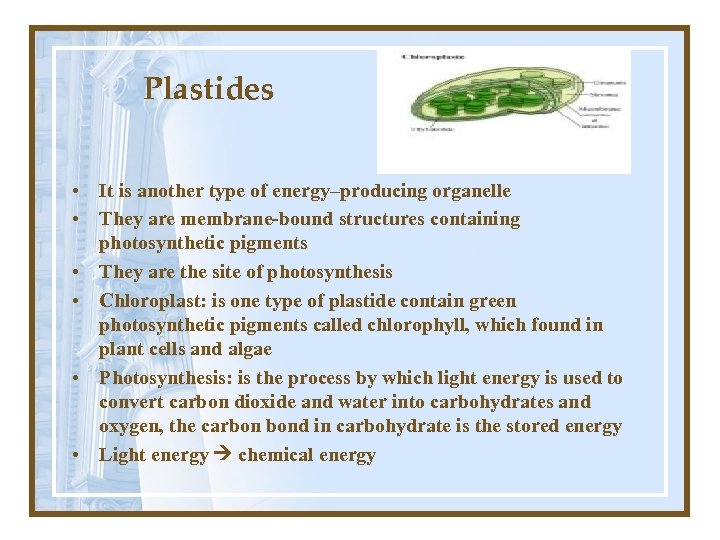
Plastides • It is another type of energy–producing organelle • They are membrane-bound structures containing photosynthetic pigments • They are the site of photosynthesis • Chloroplast: is one type of plastide contain green photosynthetic pigments called chlorophyll, which found in plant cells and algae • Photosynthesis: is the process by which light energy is used to convert carbon dioxide and water into carbohydrates and oxygen, the carbon bond in carbohydrate is the stored energy • Light energy chemical energy
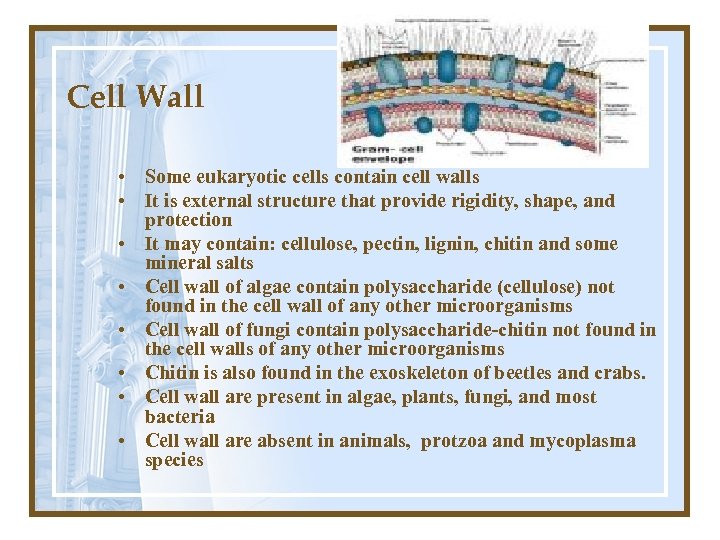
Cell Wall • Some eukaryotic cells contain cell walls • It is external structure that provide rigidity, shape, and protection • It may contain: cellulose, pectin, lignin, chitin and some mineral salts • Cell wall of algae contain polysaccharide (cellulose) not found in the cell wall of any other microorganisms • Cell wall of fungi contain polysaccharide-chitin not found in the cell walls of any other microorganisms • Chitin is also found in the exoskeleton of beetles and crabs. • Cell wall are present in algae, plants, fungi, and most bacteria • Cell wall are absent in animals, protzoa and mycoplasma species
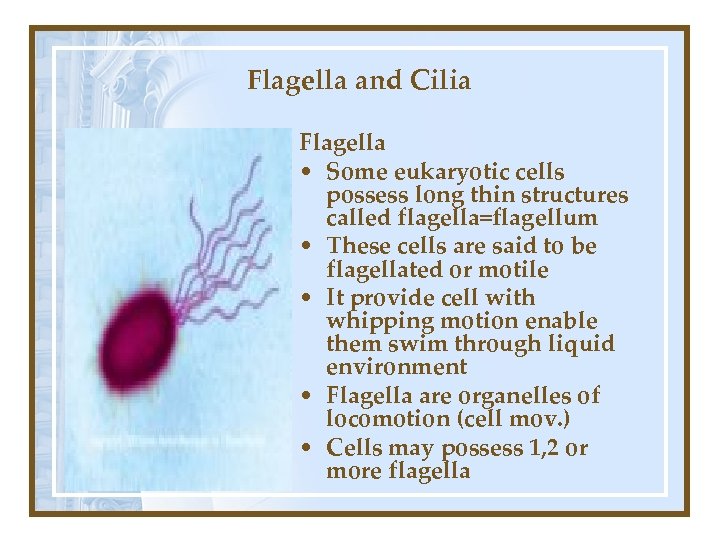
Flagella and Cilia Flagella • Some eukaryotic cells possess long thin structures called flagella=flagellum • These cells are said to be flagellated or motile • It provide cell with whipping motion enable them swim through liquid environment • Flagella are organelles of locomotion (cell mov. ) • Cells may possess 1, 2 or more flagella
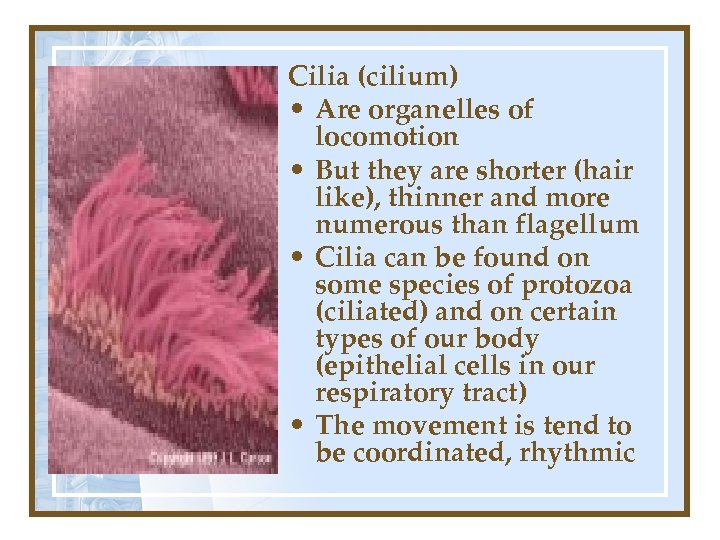
Cilia (cilium) • Are organelles of locomotion • But they are shorter (hair like), thinner and more numerous than flagellum • Cilia can be found on some species of protozoa (ciliated) and on certain types of our body (epithelial cells in our respiratory tract) • The movement is tend to be coordinated, rhythmic
Procaryotic Cell Structure • Procaryotic cells are about 10 times small than eukaryotic cell • E. coli is 1µm wide and 2 -3 µm long • Procaryotic cells are very simple cells compared to eukaryotic cells • They reproduce by binary fission which is defined as a simple division of one cell into two cells, following DNA replication and the formation of a separating membrane and cell wall • All bacteria and archaens are prokaryotes • Within the cytoplasm are a chromosome, ribosomes and other cytoplasmic particles • The cytoplasm is surrounded by a cell membrane, a cell wall and sometimes a capsule or a slime layer all the above three called envelope
Cell Membrane (Plasma, Cytoplasmic, Cellular) • • • Enclosing the cytoplasm of a prokaryotic cell Similar in structure and function to the eukaryotic cell membrane Plasma membrane consists of proteins and phospholipids Selectively permeable to control which substances may enter or leave the cell Flexible and so thin that it cannot be seen with a compound light microscope Enzymes are attached to the cell membrane, and also a variety of metabolic reactions There are inward foldings called mesosomes, where cellular respiration takes place in bacteria (same as mitochondria of eukaryotes where nutrients are broken down to produce energy in the form ATP) In cyanobacteria and other photosynthetic bacteria contain infoldings in the cell membrane contain chlorophyll and other pigments Not contain endoplasmic reticulum, Golgi complex, membrane bound organelles or vesicles
Chromosome • Usually consist of a single long, supercoiled, circular DNA which is the control center of the bacterial cell, and capable of duplicating itself, guiding cell division and directing cellular activities • Doesn’t contain nucleoplasm nor nuclear membrane • Chromosome is suspended or embedded in the cytoplasm • E. coli chromosome 1. 5 mm long and 2 nm wide, while E. coli is 2 -3 µm long so the chromosome is 500 -750 times longer than the cell itself • Bacterial chromosomes contains genetic information to code between 850 -6500 gene products(enzymes, other proteins, r. RNA, t. RNA) • Plasmid is a small circular molecules of double stranded DNA and it is not part of chromosome (extrachromosomal DNA or plasmid)
Cytoplasm • It is semiliquid • Consist of water, enzymes, dissolved oxygen, waste products, essential nutrients, proteins, carbohydrates, lipids Cytoplasmic Particles – Ribosomes • Occurring in clusters called polyribosomes or polysomes • Procaryotic ribosomes are smaller than eukaryotic ribosomes • But they have the same function sites of protein synthesis • 70 S prokaryotic ribosome composed of 30 S subunit and 50 S subunit • E. coli contain 15, 000 ribosomes
Bacterial Cell Wall • • • Rigid exterior cell wall Defines the shape of bacterial cells Its structure different from that of eukaryotic cell wall It has the same function: providing rigidity, strength, protection The main constituents of bacterial cell walls is peptidoglycan(murein layer) polysaccharide connected by peptide bond This layer is only found in bacteria Gram positive have thick murein layer The genus Mycoplasma do not have cell wall Archaeans have cell walls but its cell wall doesn’t contain peptidoglycan
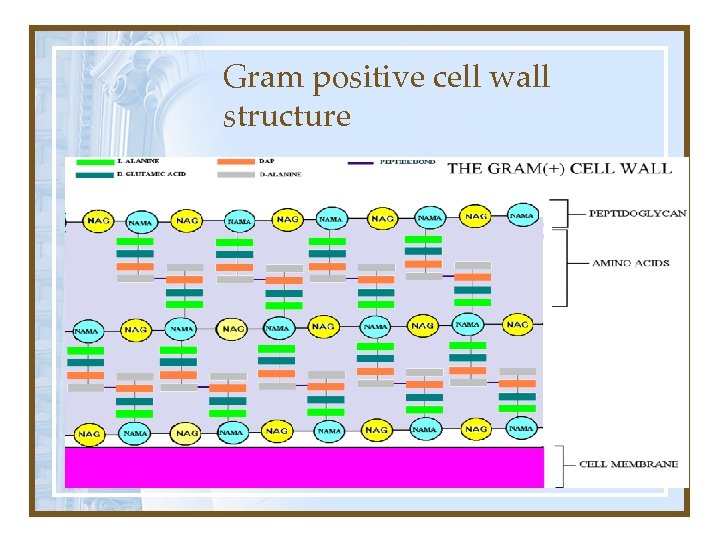
Gram positive cell wall structure
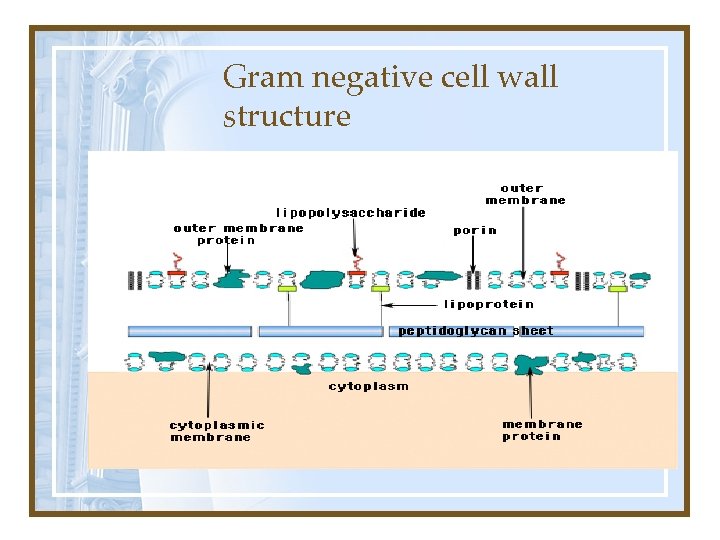
Gram negative cell wall structure
Glycocalyx (slime layers and capsules) Glycocalyx • A thick layer located outside their cell wall • Slimy, gelatinous material produced by cell membrane and secreted outside the cell wall – Slime Layer: • not highly organized • not firmly attached to the cell wall • It is easily detached from the cell wall e. g: Pseudomonas (slime layer is the cause of disease
Capsule: – highly organized – firmly attached to the cell wall – consists usually of polysaccharides sometimes combined with lipids and proteins – we could differentiate between bacteria (to vaccine the encapsulated bacteria) – can be detected by negative stain – Encapsulated bacteria usually produce colonies on nutrient agar are smooth, mucoid, glistening known as S colonies – non capsulated dry, rough called R colonies – capsule serve as antiphagocytic
Flagella (flagellum) • Are Threadlike protein appendages that enable bacteria to move • Flagellated bacteria are said to be motile • non flagellated bacteria are non motile • bacterial flagella are about 10 -20 nm thick, too thin to be seen under the microscope • the number and arrangement of flagella are characteristic to a certain species and can be used for classification and identification:

– Peritrichous bacteria: bacteria possessing flagella are over their entire surface – Lophotrichous bacteria: bacteria with a tuft of flagella at one end – Amphitrichous bacteria: bacteria having one or more flagella at each end – Monotrichous bacteria: bacteria possessing a single polar flagellum Structurally; bacterial flagella consist of three, four or more threads of protein called flagellin
Pili (Fimbriae) (sing. Pilus and Fimbria) • • • Hair like structures Often observed on Gram-negative bacteria Composed of polymerized protein (pilin) Pili are much thinner than flagella Have a rigid structure and are not associated with motility • Arise from cytoplasm and extend through plasma membrane, cell wall and capsule • There are two types: a. pilus: enables bacteria to adhere or attach to surfaces b. Sex pilus: enables transfer of genetic material from one bacterial cell to another
• Bacteria possess pili are able to cause disease while if the same bacteria doesn’t have pili so it cannot cause disease • Bacterial cells possessing sex pilus (called donor cell) while bacteria able to attach (recipient bacteria) • Conjugation to plasmid transfer is occur in the presence of sex pilus
Spores (Endospores) • Bacillus and Clostridium are capable of forming thickwalled spores • Called endospores is produced by sporulation • During sporulation, a copy of the chromosome and some of the surrounding cytoplasm becomes enclosed in several thick protein coats • Spores are resistant to heat, drying and most chemicals • Spores have been survive many years in soil or dust and some are quite resistant to disinfectant and boiling • When a dried spore lands on a moist, nutrient-rich surface it germinate to a new vegetative cell • Spore stain terminal and subterminal and central • Sporulation is not a process of reproduction
Reproduction of Organisms and their Cells • Reproduction: is the term in which organisms reproduce, while cell reproduction is the process which individual cells reproduce
Asexual Reproduction • • • A single organism is the sole parent It passes copies of all of its genes to its offspring Some single-celled eukaryotes can reproduce by mitotic cell division a process by which their chromosomes are copied and allocated equally to two daughter cells Sexual reproduction • • • Two parents give rise to offspring that have unique combinations of genes inherited from both parents Miosis and fertilization is common to all organisms that reproduce sexually A zygote(fertilized egg) is formed by the fusion of gametes Life Cycle: can be defined as the generation-to-generation sequence of stages to occur in the reproductive history of an organism Human life cycle: production of haploid gametes by miosis----- fusion of gametes to produce a diploid zygote-------mitotic division of the zygote to produce a multicellular organism( haploid cells contain only one set of chromosomes, while diploid cells contain two sets of chromosomes
Eucaryotic Cell Reproduction Mitosis: – Refers to nuclear division which is the equal division of one nucleus into two genetically identical nuclei Meiosis: – Diploid cells are changed into haploid cells – Human diploid cells 46 chromosomes, whereas human haploid cells (sperm cell and ova) contain 23 – Meiosis is the processes by which gametes are produced
Procaryotic Cell Reproduction • • • Is quite simple when compared to eukaryotic cell division It is reproduce by binary fission, where one cell (the parent cell splits in half to become two daughter cells) Before division, its chromosome must be duplicated so each daughter cell will pocess the same genetic information as the parent cell The time it takes for binary fission to occur (the time it takes for one prokaryotic cell to become two cells) is called the generation time The generation time varies from one bacterial species to another and also depends on the growth condition (p. H, temperature, availability of nutrients) e. g E. coli have generation time 20 minutes
Taxonomy Is the science of classification, nomenclature and identification 1. Classification is the arrangement of organisms into taxonomic groups Kingdoms------Divisions or Phyla-------Classes------Orders-----Families-----Genera-----Species 2. Nomenclature is the assignment of names to the various taxa according to international rules 3. Identification is the process of determining whether an isolate belongs to one taxa or unidentified species
Microbial Classification – Binomial – Categories of organisms into 5 kingdoms • Kingdom Procaryote (Monera) Bacteria and Archaeans • Kingdom Protista(Protists) Algae and Protozoa • Kingdom Fungi • Kingdom Plantae Plants • Kingdom Animalia Human and Animals Viruses are not included because they are not living cells (acellular)
Chapter 4 Diversity of Microorganisms Acellular and Procaryotic Microbes
Acellular Infectious Agents Viruses The Main Characteristics of Viruses • They Possess either DNA or RNA, unlike living cells which possess both • They are unable to replicate on their own: their replication is directed by the viral nucleic acid once it is introduced into a host cell • Unlike cells, they do not divide by binary fission, mitosis, or meiosis • They lack the genes and enzymes necessary for energy production • They depend on the ribosomes, enzymes and metabolites (building blocks) of the host cell for protein and nucleic acid production
Classification of Viruses are classified by the following characteristics: • Type of genetic material (either DNA or RNA) • Shape of the capsid • Number of capsomeres • Size of capsid • Presence or absence of an envelop • Type of host that it infects • Type of disease produced • Target cell • Immunologic preparation
Bacteriophages • Viruses that infect bacteria are known as bacteriophage • Obligate intracellular pathogens • It must enter a bacterial cell in order to replicate There are three categories – Icosahedron bacteriophages: spherical shape, 20 triagonal faces, the smallest icosahedron phage are 25 nm in diameter – Filamentous bacteriophages: long tube, formed by capsid proteins, helical structure, 900 nm long – Complex bacteriophage: icosahedral heads attached to helical tails
Types of Bacteriophade • Virulent bacteriophage: always cause the lytic cycle which ends the destruction (lysis) of bacterial cell • Temperate phages (lysogenic phages): Do not immediately initiate the lytic cycle, but their DNA remains integrated into the bacterial cell chromosome, generation after generation.
*Animal Viruses • Infect humans and animals • Some animal viruses are DNA and others are RNA viruses • May consist of nucleic acid surrounded by protein coat or be more complex. *Latent Virus Infections • Infected persons harbor the latent virus in nerve cells • Fever, stress, or excessive sunlight can trigger the viral genes to take over the cell and produce more viruses, and cells destroyed. *Antiviral *Oncogenic Viruses: Viruses that cause cancer
Human Immunodefficiency Viruses (HIV) • Cause (AIDS) acquired immune deficiency syndrome • Envelop- double stranded RNA virus • Member of a genus Lentiviruses, family Retroviruses • HIV destroy CD 4 and helper T cell (important cells in the immune system)
*Viroids and Prions • Viroids and prions smaller and less complex infectious agents • Viroids consist of short naked fragments of SSRNA • A viroids are transmitted between plants • NB : A virion : is a complete viral particle • Prions: are small infectious proteins that cause fatal neurologic diseases in animals ( sheep, goats)
The Domain Bacteria
Atmospheric Requirements • It is useful to classify bacteria on the basis of their relationship to oxygen and/or carbon dioxide – – – Obligate aerobes (20 -21% oxygen) Microaerophilic aerobes (microaerophiles) Facultative anaerobes (0 -20% oxygen) Aerotolerant anaerobes Obligate anaerobes Capnophiles increased concentration of CO 2
Nutritional Requirements • All bacteria need some form of the elements C, H, O, S, P, N for growth • Special elements K, Ca, Fe, Mn, Mg, Co, Cu, Zn, are needed by certain bacteria • Some microbes have specific vitamin requirements • Some microbes have specific organic substances secreted by other living microorganisms • Fastidious organisms: organisms with especially demanding nutritional requirements
Pathogenicity • The characteristics that enable bacteria to cause disease • Many pathogens are able to cause disease because they possess capsules, pili, or endotoxins, or secrete exotoxins and exoenzymes that damage cells and tissues
Unique Bacteria • Rickettsias, Chlamydias, and Mycoplasmas are Gram negative bacteria • They do not possess all the attributes of typical bacterial cell • So small and difficult to isolate • Formerly it is thought to be viruses
Rickettisias – They are Gram negative – Obligate intracellular pathogens that cause disease in humans and other animals – To grow in vitro must be inoculated into embryonated chicken eggs, laboratory animals or cell cultures – All diseases caused by Rickettisia species are transmitted by arthropod vector (carriers) transmit reckettisias from one host to another (fleas, ticks) and cause typhus and typhus-like disease
Chlamydias – It is called the “energy parasites”, energy-storing or energy- carrying molecules of the cells. – Pathogens are transferred by inhalation of aerobes or by direct contact, cause trachoma (the leading cause of blindness) as well conjunctivitis (eye disease)
Mycoplasmas – Are the smallest of the cellular microbes – They lack cell walls, so they assume many shapes from coccoid to filamentous (pleomorphic) differ than that L form (which lost the cell wall) – Gram negative – In human pathogenic mycoplasmas cause atypical pneumonia and genitourinary infections – They are resistant to treatment with penicillin – They could be treated with tetracycline
Photosynthetic Bacteria • • • – Include purple bacteria, green, and cyanobacteria – Use light as an energy source – Some of them produce oxygen (oxygenic photosynthesis) e. g cyanobacteria – Some of them does not produce oxygen (anoxygenic photosynthesis) – In algae and plants photosynthesis takes place in plastids – In cyanobacteria photosynthesis takes place in thylakoids – Cyanobacteria are able for blooming – Cyanobacteria are able for nitrogen fixation – Some cyanobacteria produce toxin (poisons)such as: Neurotoxins => affect the cental nervous system Hepatotoxins => affect the liver Cytotoxins => affect other types of cells – Toxins are harmful to : birds, domestic animals, wild animals, zooplankton – Certain cyanobacterial toxins may contribute to cause cancer
The Domain Archaea • They were referred as archaebacteria • Now it is known archae • Ancient (thought it is developed earlier than bacteria) • Vary in shape (some cocci, some bacilli, some long filaments) • Extremophiles: they live in extreme environment such as acidic, hot, salty, and extreme pressure • Some live in the bottom of the ocean and near thermal vents • Other archaeans called methanogens which produce methane • Their cell wall has no peptidoglycan
Chapter 5 Diversity of Microorganisms Eucaryotic Microbes
1. Algae (sing. Alga) Characteristics and Classification • Are photosynthetic, eukaryotic organism belong to kingdom Protista • All algal cells consist of cytoplasm, cell wall, cell membrane, nucleus, plastids, ribosomes, mitochondria and Golgi bodies • Sometimes cells have pellicle (a thickened cell membrane) and a stigma (eye spot), and/or flagella • They are not plants • Algae range in size from tiny, unicellular, microscopic organisms to large multicellular plant like seaweeds
Medical Significance • One genus of algae (Prototheca) cause human infection which present in soil and enter the human body through wounds in feet, it causes lesion, if the organism reach the lymphatic system it may be fatal especially to immunosuppressed individuals • Algae in several other genera secrete substances (phycotoxins) • Phycotoxicoses (sing. Phycotoxicosis) are diseases caused by phycotoxins, and they are example of microbial intoxication
2. Protozoa(sing. Protozoan) Characteristics • Are eukaryotic organisms belong to kingdom Protista • Most protozoa are unicellular, ranging in length 32000µm • Are free living organisms • Found in soil and water • Protozoal cells are animal-like • Protozoal cells possess cell membrane, nuclei, endoplasmic reticulum, mitochondria, Golgi bodies, lysosomes, centrioles and food vacuoles • Some protozoa possess pellicles, cytosomes, contractile vacuoles, pseudopodia, cilia and/or flagella • Have no chlorophyll, cannot make their own food by photosynthesis
• Some ingest algae, yeast, bacteria as nutrient others live on dead or decaying organic matter • Contractile vacuole: an organelle which pump water out of the cell • During life cycle 2 stages occur – Trophozoite: is the motile, feeding, dividing stage in protozoan’s life cycle – Cyst is the dormant, survival stage (like bacterial spore) • Many protozoa are pathogens cause Malaria, giardiasis, amebic dysentery • Other protozoa have symbiotic relationship (e. g Termite and intestinal protozoa digest wood)
Classification and Medical Significance 1. Sarcodina=>move by pseudopodia=>engulf and the digestive enzymes released from lysosomes (as well white blood cells) Medically-----Entamoeba histolytica-----cause amebic dysentery, amebiasis and extraintestinal amebic abscesses 2. Mastigophora Trypanosoma transmitted by the tsetse fly, causes African sleeping sickness in humans
3. Ciliophora Paramecium transmitted to human via drinking water has been contaminated by swine feces and cause dysentery 4. Sporozoea Plasmodium transmitted by female Anopheles mosquitoes which become infected when they take a blood meal from a person of Malaria • NB Affect badly on immunosuppressed persons
Fungi (sing. Fungus) • • Characteristics Belong to the kingdom fungi Cell wall made of chitin Many fungi are unicellular(yeast) others are filaments hyphae(sing. hypha) which form mycelium (plural mycelia) Some filamentous fungi are septate and some others are aseptate hyphae
• • • Reproduction Fungal cells can reproduce by budding, hyphal extension, or the formation of spores There are two general categories of fungal spores: sexual spores and asexual spores Sexual spores produced by the fusion of gametes Classification See Book
d. Medical Significance • Mycotoxicoses (sing. Mycotoxicosis) – Mycotoxins: are complex metabolites that are harmful to humans and animals – Mycotoxins symptoms may include vomiting, diarrhea, thirst, hallucination, high fever, gangarene of the limbs and death – Aflatoxin is a kind of mycotoxin, it is carcinogenic (cancer causing), ingestion of aflatoxin cause liver damage and hepatic cancer – Some fungi produce only a single mycotoxin or more – Mycotoxicoses: Common in domestic animals than humans because animal ingest fungal-contaminated foods
Fungal Infections of Humans Fungal infections are known as mycoses (sing. mycosis) Categories of fungal infection • Superficial and cutaneous mycoses – Fungal infection of the outermost area of the human body e. g: hair, fingernails, toenails and the dead outermost layers of the skin • Cutaneous mycoses – Fungal infections of the living layers of the skin(the dermis) e. g: tinea infections, Candida albicans(opportunistic pathogens) • Subcutaneous and systemic mycoses They are more severe types of mycoses • Subcutaneous: fungal infections of the dermis and underlying tissues e. g: Madura foot • Systemic: fungal infections of internal organs, 2 or more different organs e. g: spores in the respiratory system by inhaling
• Mycoses are treated with antifungal agents like nystatin, these chemotherapeutic agents may be toxic to humans, they are prescribed with due consideration and caution
Dimorphic Fungi • A few fungi, including some human pathogens, can live either as yeasts or as molds depending on growth conditions this phenomenon is called dimorphism • grown in vitro at body temperature(37 o. C) ---unicellular yeast • grown in vivo in human body-----exist as yeast • grown in vitro at room temperature(25 o. C)---as molds(mycelium) cause disease
Lichens • They appear as colored, circular patches on tree trunks and rocks • Lichen are combination of two organisms an algae and a fungus close to each other as symbiotic relationships
Slime Molds • Are found in soil and on rotting • Have both characteristics of both fungal and protozoa • It start out in life as independent amebae ingesting bacteria and fungi by phagocytosis • When run out of food they fuse together to form a motile, multicellular form, then it becomes fruiting body contain spore which is able to grow to amebae
Chapter 6 Biochemistry: The Chemistry of life
• Organic Chemistry: Is the study of compounds that contain carbon • Inorganic Chemistry: Involves all other chemical reactions • Biochemistry: Is the chemistry of living cells or it is the study of biology at the molecular level, or the chemistry of life, or the study of the biomolecules that are present within living organisms
Carbon bond (Covalent bond) • Single bond----- e. g methane • Double bond---- e. g ethylene • Triple bond----- e. g acetylene Hydrocarbon: is an organic molecule that contains only carbon and hydrogen atoms Cyclic Compound: when carbon atom link to other carbon atom to close the chain forming ring or cyclic compound
Carbohydrates: are biomolecules composed of carbon, hydrogen and oxygen in the ratio 1: 2: 1 e. g---- glucose, fructose, sucrose, lactose, maltose, starch, cellulose, glycogen • Monosaccharides: are sugars composed of only one ring e. g: glucose • Disaccharides( sucrose, lactose, maltose) – Are double-ringed sugars that result from the combination of two monosaccharides during this process a removal of water molecule occur by dehydration synthesis reaction
The bond holding the two monosaccharides together is glycosidic bond Hydrolysis reaction: Disaccharide + water=> two monosaccharides • Sucrose + water => glucose + fructose • Lactose + water => glucose + galactose • Maltose + water =>glucose + glucose Peptidoglycan: is composed of a repeating disaccharide attached by polypeptides (effect of antibiotic) • 3 monosaccharides =>Trisaccharide • 4 monosaccharides=>Tetrasaccharide • 5 monosaccharides=>Pentasaccharid Polysaccharides: are defined as carbohydrate polymers containing many monosaccharides
• Polymers: molecules consisting of many similar subunits • Glycogen: is the common storage molecule in animals and bacteria and found in the liver and in muscles • Starch : is the common storage molecule in plants and algae, it is found in potatoes, vegetables and seeds Hydrolysis of starch Starch(polysaccharide) maltose(disaccharide) α glucose(monosaccharide) glucose + Protein => glucoseamine
Lipids: • Constitute an important class of biomolecules • Most lipids are insoluble • But soluble in fat solvents such as ether, chloroform and benzene • Fatty acids: are the building blocks of lipids Lipids---- fatty acids • Glycolipids: glucose + lipid
Proteins • Is the most essential chemicals in all living cells • Proteins are polymers of amino acid • Proteins contain C, H, O, N and sometimes S Protein => amino acids • 2 amino acids----- dipeptide • 3 amino acids----- tripeptide • Polymer or chain------ polypeptide • Enzymes: are protein molecules produced by living cells and it is known the biological catalyst • Catalyst: an agent that speeds up a chemical reaction without being consumed in the process Substrate=> Products
Nucleic acids • Are polymers, composed of nucleotides(building blocks of nucleic acids), nucleotides in a single strand are held together by covalent bond • The two categories of nucleic acids are deoxyribonucleic acid (DNA the hereditary molecule) and ribonucleic acid (RNA) • There are three types of RNA, messenger RNA (m. RNA), transfer RNA (t. RNA) and ribosomal RNA (r. RNA) • In a double-stranded DNA molecule, the nucleotides in one strand are connected to nucleotides in the other strand by hydrogen bond • DNA is the primary component of chromosomes. Genes are located along the DNA molecule • DNA molecules are used as templates to produce other DNA molecules by the process known as DNA replication
• The most important enzyme in DNA replication is DNA polymerase • The flow of genetic information within a cell follows the sequence DNA---m. RNA----protein. This is known as central dogma • The information (genetic code) in one gene of a DNA molecule is used to produce a m. RNA molecule, this process is known as transcription, the most important enzyme in transcription is RNA polymerase • Information in one m. RNA molecule is used to produce a protein, this process is translation (protein synthesis) and occurs at a ribosome
• Transfer RNA(t. RNA) molecules activate amino acids and transfer them to the growing protein chain. Specific amino acids are added at the correct locations because three-nucleotide sequences (anticodons) on t. RNA molecules recognize three-nucleotide sequences(codons) on m. RNAmolecule.
Chapter 7 Microbial Physiology and Genetics
Nutritional Requirements: Categorizing microorganisms according to their energy and carbon sources: • Phototrophs…… organisms that use light as an energy source • Chemotrophs…. . organisms that use chemicals as an energy source • Autotrophs……. organisms use carbon dioxide as a carbon source • Heterotrophs…… organisms that use organic compounds other than carbon dioxide as a carbon source – Photoautotrophs…. . algae, plants, some photosynthetic bacteria (cyanobacteria) – Photoheterotrophs…. some photosynthetic bacteria – Chemoautotrophs…. . some bacteria – Chemoheterotrophs…protozoa, fungi, animals, most bacteria
Metabolism: • All the chemical reactions occurring within a cell Metabolites: • Is any molecule that is a nutrient, an intermediate product or an end product in a metabolic reaction Types of Metabolism • Catabolism: – The breaking down of larger molecules into smaller molecules, requiring the breaking of bonds, and then release energy • Anabolism: The assembly of smaller molecules into larger molecules, requiring the formation of bonds, and hence energy required for bond formation
• Nucleotide + nucleotide => nucleic acid • Monosaccharide+ monasaccharide => disaccharide • Amino acid +amino acid => polypeptide NB: Energy that is released during catabolic reactions is used to drive anabolic reactions. • Energy obtained from sun rays or by catabolic reaction is stored as ATP molecules (adenosine triphosphate) which are the major energy-storing in a cell ATP=> ADP=>AMP
Aerobic Respiration of Glucose • The complete catabolism of glucose by the process known as aerobic respiration occurs in three phases or chemical pathway: • Glycolysis=> anaerobic process • Krebs cycle=>aerobic • The electron transport chain=> aerobic
Fermentation of glucose: Fermentation usually take place in anaerobic environment • Glucose =>fermentationglycolysis=>pyruvic acid +2 ATP • Pyruvic acid=>yeast(saccharomyces)or Zymomonas=>ethyl alcohol+carbon dioxide • Pyruvic acid =>bacteria=>lactic acid (cheese, yogurt, pickles, cured sausages) • Pyruvic acid=>Lactic acid in muscles (bad) • Glucose =>oral bacteria streptococcus =>lactic acid (eat the enamel leads to tooth decay) • Lactose=>lactic acid bacteria=>curd and whey • Pyruvicacid=>propionibacterium=>propionic acid (swiss cheese) flavor + CO 2 holes
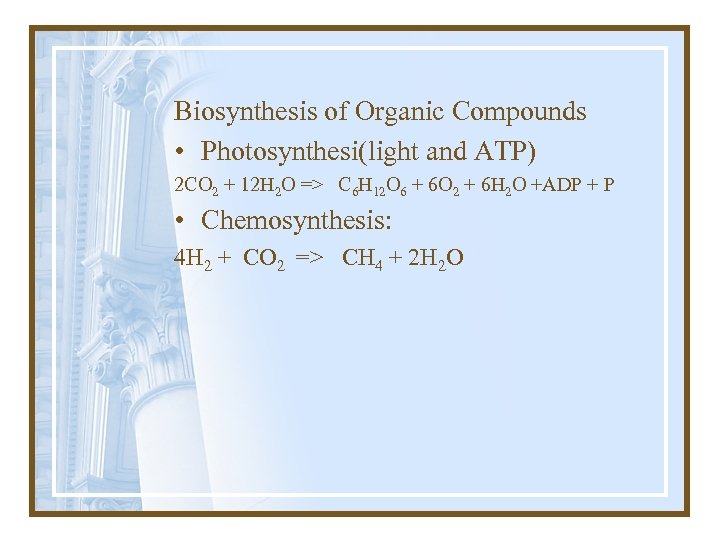
Biosynthesis of Organic Compounds • Photosynthesi(light and ATP) 2 CO 2 + 12 H 2 O => C 6 H 12 O 6 + 6 O 2 + 6 H 2 O +ADP + P • Chemosynthesis: 4 H 2 + CO 2 => CH 4 + 2 H 2 O
Bacterial Genetics • Genetics: The study of heredity: DNA, genes, the genetic code, chromosomes, DNA replication, transcription, translation • Genotype (genome): complete collection of genes or the genetic makeup of an organism • Phenotype: physical expression of the genotype In human (hair, eye, skin, color) In bacteria (presence or absence of enzyme, capsules, flagella, pili) Phenotype depend on genotype
A mutation A change in the characteristics of a cell caused by a change in the DNA molecules (genetic alteration) that is transmissible to the offspring. • Beneficial mutation: enables the organism to survive in an environment where organisms without mutation would die (resistant to antibiotic) • Harmful mutation: leads to the production of a nonfunctional enzyme which is unable to catalyze a chemical reaction essential to the life of the cells, (the cell will die…. Lethal mutation)
• Silent mutation: neutral mutation, which mean have no effect on the cell – Spontaneous mutation: mutation which occur randomly throughout a bacterial genome with no mutagen(x-rays, U. V. light, radioactive substance) – Induced mutation: are produced by agents called mutagens which increase the rate of mutation
Ways in which bacteria acquire new genetic information Gene transfer: movement of genetic information between organisms • Vertical gene transfer: passes genes from parent to offspring during cell division • Lateral gene transfer: passes genes to other cells. In bacteria it occurs by any of the following mechanisms:
• • • Transformation: release of DNA fragments and their uptake by other cells Transduction: transfer of genes (parts of DNA) by a prophage from a cell that was lysogenic to another cell that gets infected with this phage Conjugation: transfer of large quantity of DNA from one living cell to another by direct contact
Genetic Engineering An array of techniques to transfer eukaryotic genes, particularly human genes, into other easily cultured cells to facilitate the large scale production of important gene product (e. g Insulin) Genetic engineering can be achieved by one of the following techniques: 1. Genetic fusion 2. Protoplast fusion 3. Gene amplification 4. Recombinant DNA: is DNA from two different species of organisms
Steps: • Identification of the desired gene on the DNA of the donor organism • Culturing of the desired gene • Transfer of the desired gene to a vector (a virus or plasmid) • Insertion of the gene into the DNA of the recipient organism Some application Production of human insulin Some bacteria are engineered to control insects that destroy crops (not polluted)
Chapter 8 Controlling Microbial Growth in Vitro
Factors that affect microbial growth Microbial growth is affected by many different environmental factors including: • Availability of nutrients • Moisture • Temperature • p. H • Osmotic pressure • Barometric pressure
Terms related to optimum environmental factors: • Thermophiles: Microorganisms that prefer to live in hot temperature(minimum: 25 o. C, optimum: 50 o. C-60 o. C, maximum: 113 o. C) • Mesophiles: microorganisms prefer moderate temperature(minimum: 20 o. C, optimum: 20 o. C-40 o. C, maximum: 45 o. C) • Psychrophiles: microorganisms prefer cold temperature(minimum: -5 o. C, optimum 10 o. C-20 o. C, maximum: 30 o. C) NB: Psychrotrophs are a group of psychrophiles that prefer to live at refrigerator temperature 4 o. C
• Acidophiles: microorganisms live in acidic environment(p. H<7) • Alkaliphiles: microorganisms live in alkaline environment(p. H>7) NB: neutral environment p. H= 7 • Halophiles: microorganisms that live in salty environment • Haloduric : microorganisms that do not prefer to live in salty environments but are capable of surviving there • Barophiles: microorganisms that live where there is high baromatic pressure (atmospheric pressure)
Osmotic pressure: • Is the pressure that is affect on a cell membrane by solutions both inside and outside the cell. Osmosis: • Is defined as the movement of a solvent(water) through a permeable membrane, from a solution having a lower concentration of solute to a solution having a high concentration of solute
Hypertonic solution: When the concentration of solutes in the environment outside of a cell is greater than the concentration of solutes inside the cell • Human red blood cell=> loss of water=> cell shrink • Shrinkage=> crenation • Cell=> crenated • In plant cell=> cell wall not changed but cell membrane shrink (plasmolysis) Hypotonic solution: concentration of solutes outside a cell is less than the concentration of solutes inside the cell • Human red blood cells=> burst or lysis ( hemolysis) • Plant cell=> not burst but pressure increase but with time cell ruptures (plasmoptysis) Isotonic solution: The concentration of solutes inside and outside the cell is equal
Bacterial Population Growth Curve Lag phase: is the first phase of the growth curve, during which the bacteria absorb nutrients, synthesize enzymes, and prepare to cell division. No increase in number in this phase Log phase(exponential): is the second phase of the growth curve. In this phase the bacteria multiply so rapidly Stationary phase: when the nutrients in the liquid medium are used up and the concentration of toxic waste products of bacteria increase so the rate of divisions slows, and the number of bacteria that are dividing equals the number that are dying Death phase: As overcrowding occurs, the concentration of toxic waste products increase and the nutrient supply decreases the microorganisms then die at a rapid rate
Many industries use the chemostat (microorganisms are cultured continuously in a controlled environment, which regulate the supply of nutrients and the removal of waste products • Yeast=>beer and wine • Bacteria- Fungi=> antibiotics
Inhibiting the growth of microbiology in vitro Definition of terms • Sterilization: is the complete destruction of all living organisms including spores and viruses – Dry heat – Autoclaving (steam under pressure) – Gas (ethylene oxide) – Chemicals (formaldehyde) – Radiation (U. V. and γrays) • Disinfection: is the destruction or removal of pathogens from nonliving objects by physical or chemical methods • Pasteurization: is a method of disinfecting liquids and it is used today to eliminate pathogens from milk and beverages, and it is not a sterilization because not all microbes are destroyed
• Disinfectants: chemical agents used to eliminate pathogens • Antiseptics: are solutions used to disinfect skin and other living tissue • Sanitization: is the reduction of microbial populations to levels considered safe by Public Health Standards (e. g Restaurants) • Lyphilization(freeze-drying): using liquid nitrogen, are microbistatic techniques that are used to preserve microbes for future use or study • Sepsis: refer to the presence of pathogens in blood or tissues • Asepsis: means the absence of pathogens • Aseptic techniques: are employed to eliminate pathogen (e. g hand washing- sterile gloves- masks- gowns) • Antisepsis: is the prevention of infection • Antiseptic technique: refers to the use of antiseptics. • Sterile technique: it is used to exclude all microorganisms from a particular area to be sterile
• Bactericidal agents (bactericides): are disinfectants that kill bacteria but not endospores (spore coat are thick and resistant) Sporicidal – Fungicidal - Algicidal- Viricidal. Pseudomonicidal – Tuberculocidal • Bacteriostatic: drug or chemical that inhibits growth and reproduction of bacteria
Using chemical agents to inhibit microbial growth Factors affect the efficiency of disinfectants • Prior cleaning of the object or surface to be disinfected • Presence of organic materials (feces-blood-vomits-pus) on the materials being treated • Bioburden: mean the type and level of microbial contamination • The concentration of the disinfectant • The contact time (the amount of time that the disinfectant must remain in contact with organisms in order to kill them) • The physical nature of the object being disinfected (smooth or rough surface) • Temperature and p. H
Characteristics of ideal chemical antimicrobial agent • It should have a wide or broad spectrum (should kill a wide variety of microorganisms) • Fast acting (the contact time should be short) • Should not be affected by the presence of organic matter • Must be nontoxic to human tissues, noncorrosive and nondestructive to materials • Should be soluble in water and easy to apply • Should be inexpensive and easy to prepare • Should leave residual antimicrobial film on the treated surface • Should be stable as concentrate and dilution • Should be odorless
Chapter 9 Using antimicrobial agents to control microbial growth in vivo
The father of chemotherapy is Paul Ehrlich, he use chemicals to affect bacterial cell not human cell Antimicrobial agent: • Antibacterial agents => kills bacteria • Antifungal agents => kills fungi • Antiprotozoal agents => kills protozoa • Antiviral agents => kills virus
The first who discover antibiotics is Alexander Fleming
Ideal qualities of an antimicrobial agents • • • Kill or inhibit the growth of pathogens Cause no damage to the host Cause no allergic reaction in the host Be stable when stored in solid or liquid form Remain in specific tissues in the body long enough to be effective • Kill the pathogens before they mutate and become resistant to it
How antimicrobial agents work • Inhibition of cell wall synthesis • Damage of cell membranes • Inhibition of nucleic acid synthesis (either DNA or RNA synthesis) • Inhibition of protein synthesis • Inhibition of enzyme activity
How bacteria become resistant to drugs: • Intrinsic resistance: bacteria are naturally resistant to a particular antimicrobial agent because they lack the specific target (Mycoplasmas no cell wall) or the drug is unable to cross the organisms cell wall or cell membrane and thus cannot reach its site of action • Acquired resistance: bacteria were once susceptible to a particular drug to become resistant to it by the following (Table 9 -5)
Chapter 10 Environmental Microbiology Microbial Ecology
Microbial Ecology: Is the study of the interrelationships among microorganism and the living and non-living world around them
Symbiotic Relationships involving Microorganisms • Symbiosis (Symbiotic relationships): is defined as the living together or close association of two different species and the organism in this relationships is known as symbionts
• Neutralism: a symbiotic relationship in which neither symbiont is affected by the relationship • Commensalism: a symbiotic relationship that is beneficial to one symbiont and is neither beneficial nor harmful to the other (indigenous microflora of humans) • Mutualism: is a symbiotic relationship that is beneficial to both symbionts – E. coli=> vitamin K (blood clotting factor) to the host (human) – Termite and protozoa • Parasitism: a symbiotic relationship that is beneficial to one symbiont (the parasite) and harmful to the other symbiont NB: A host can harbor a parasite without the parasite causing harm to the host • There are 2 kinds of parasites: Smart parasite=> do not cause disease but take only nutrients Dumb parasite=> kills their hosts then they must either find a new host or die
• Synergism (synergistic infections): sometimes, two or more microorganisms may “team up” to produce a disease that neither could cause by itself
Chapter 11 Epidemiology and Public Health
• Communicable Disease: infectious disease is transmissible from one human to another(person to person) e. g Gonorrhea • Contagious disease: infectious disease is easily transmitted from one person to another e. g influenza (movie and theatre) • Zoonotic diseases: infectious diseases that humans acquire from animal sources • Incidence and Morbidity rate: is defined as the number of new cases of that disease in a defined population over a specific period
• Prevalence • Period prevalence of a particular disease is the number of cases of the disease existing in a given population during a specific period • Point prevalence of a particular disease: is the number of cases of the disease existing in a given population at a particular moment in time • Mortality rate (death rate): is the ratio of the number of people who died of a particular disease during a specified period per a specified population • Sporadic diseases: Is one that occurs only within the population of a particular geographic area
Endemic diseases: • Are diseases that are always present within the population of a particular geographic area. The number of cases of the disease may fluctuate over time, but the disease never dies out completely, e. g Tuberculosis, Staphylococcus, Streptococcus, Gonorrhea and Syphilis Epidemic diseases(or outbreak): • Is defined as a greater than usual number of cases of a disease in a particular region Pandemic disease: • Is a disease that is occurring in epidemic proportions in many countries simultaneously sometimes worldwide • HIV/AIDS- Tuberculosis- Malaria
Reservoirs of Infection Is any site where the pathogen can multiply or merely survive until it is transferred to a host Living Reservoirs 1. Human Carrier A carrier is a person who is colonized with a particular pathogen but the carrier not causing disease in that person – Passive carriers: carry the pathogen without ever having had the disease – Incubatory carrier: is a person who is capable of transmitting a pathogen during the incubation period of an infectious disease – Active carriers: have completely recovered from the disease but continue to harbor the pathogen (typhoid Mary the cook)
2. Animal Carriers: diseases that humans acquire it from animal sources are zoonotic diseases or zoonoses (rabies, toxoplasmosis from protozoa) 3. Arthropods Carriers (vector) (Insects--mosquitoes, biting flies, lice, fleas) (Arachnids---mites and ticks) A vector first take a blood meal from an infected person or animal and then transfers the pathogens to a healthy individual
Non-Living Reservoirs • Non- living or inanimate reservoirs of infection include air, soil, dust, food, milk, water, and fomites NB: Fomites are: patients gowns, bedding, towels, eating and drinking utensils and hospital equipment…etc Modes of Transmission See Figure 11 -4 and Table 11 -5 World Health Organization (WHO) See Table 11 -6
Bioterrorist and Biological Warfare: • Biological warfare: pathogenic microorganisms sometimes are used to cause harm to others • Biological warfare agents: microbes used in this process • Terrorist use pathogens to create fear, chaos, illness, and death and use bioterrorist agents (dead bodies in wells)
Water Supplies and Sewage Disposal • Water is the most essential resource necessary for the survival of humanity • Lakes, rivers, reservoirs and groundwater are the main sources of community water supplies There are two kinds of pollution: – Chemical pollution: industrial installation dump waste products into local waters without proper pretreatment or pesticides – Biological pollution: waste product of humans (fecal materials and garbage) the main cause of epidemics
Water Treatment • • • Filtration: water first filtered to remove large pieces of debris Sedimentation or settling: water remain in holding tanks to complete settles of debris to the bottom Coagulation: addition of Alum[aluminium potassium sulphate] to coagulate small pieces of debris, which settle to the bottom Filtration through sand filter to remove bacteria, protozoa cysts Chlorination: 0. 2 -1. 0 ppm to kill most bacteria, some use O 3 or U. V. light
Sewage Treatment 1. Primary Sewage Treatment – Screening: large debris filtered out, remove floating grease and oil and debris is ground – Sedimentation – Coagulation: to complete settlement – Accumulation of primary sludge at the bottom 2. Secondary Sewage Treatment - The liquid undergo aeration or trickling filtration NB: aeration is to encourage the growth of aerobic microorganism which oxidize the dissolved organic matter to CO 2 and H 2 O -The activated sludge is transferred to a settling tank -The remaining liquid is filtered and disinfected by chlorination the effluent pass to rivers or oceans
3. Tertiary Sewage Treatment In some desert cities where water is in shortage the effluent water from sewage is further treated to be returned directly to drinking water system which is very expensive
Chapter 12 Healthcare Epidemiology Nosocomial Infections and Infection Control
• Nosocomial Infection (hospital-acquired infections): infectious diseases that are acquired within hospitals or other healthcare facilities • Community-Acquired Infections: infectious diseases are acquired outside of healthcare facilities • Iatrogenic Infections: diseases are results of medical or surgical treatment caused by surgeons
Pathogens most often involved in Nosocomial infections • Gram-positive cocci – Staphylococcus aureus – Coagulase-negative staphylococci – Enterococcus spp. • Gram-negative bacilli – E. coli – Pseudomonas aeruginosa – Enterobacter spp. – Klebsiella spp.
Most Common Types of Nosocomial Infections • Urinary tract infection (UTIs) • Surgical wound infections • Lower respiratory tract infections (pneumonia) • Bloodstream infections (septicemia)
Patients most likely to develop Nosocomial infections • Elderly patients • Women in labor and delivery • Premature infants and newborns • Surgical and burn patients • Diabetic and cancer patients • Patients receiving treatment with steroids, anticancer drugs, antilymphocyte serum, radiation • Immunosuppressed patients (patients whose immune systems are not function properly) • Patients who are paralyzed or are undergoing renal dialysis or catheterization (normal defense mechanisms are not functioning properly)
Major factors contributing to Nosocomial infections • An increasing number of the drug resistant pathogens • The failure of healthcare personnel to follow infection control guidelines • An increased number of immunocompromised patients • The bad use of antimicrobial agents • Over crowding of hospitals and healthcare facilities • Overuse and improper use of indwelling medical devices
What can be done to reduce the number of Nosocomial infections Hand washing is the single most important measure to reduce the risks of transmitting pathogens from one patient to another or from one anatomical site to another on the same patient Wash your hands before you: • Prepare or eat food • Treat a cut or wound to someone who is sick • Insert or remove contact lenses Wash your hands after: • Use the rest room • Handle the uncooked food (raw meat- poultry or fish) • Change a diaper • Cough- sneeze or blow your nose • Touch a pet • Handle garbage
Wash your hands in the following manner: • • Use warm or hot, running water Use soap (preferably an antibacterial soap) Wash all surfaces of your hands Rub hands together for at least 10 -15 seconds
Medical Asepsis • Medical asepsis: clean technique to reduce the numbers and transmission or pathogens • Medical aseptic techniques: hand washing, personal grooming, proper cleaning of techniques, disinfection, proper disposal of needles, contaminated materials. • Surgical asepsis: or sterile technique to keep objects and area sterile (free of microorganisms) Joseph Lister a British surgeon: contribution in the area of antisepsis
Source Isolation: patients with tuberculosis or other contagious diseases are placed into isolation to protect other people from becoming infected
Chapter 13 Diagnosing Infectious Diseases
Proper selection, collection, and transport clinical specimens: • The specimen must be of appropriate type for diagnosis of the suspected infectious disease • The specimen must be properly and carefully collected • Material should be collected from a site where the suspected pathogen is found and the least contamination occur • Specimens should be obtained before antimicrobial therapy has begun, or should the lab know what antimicrobial obtained • Acute stage is the appropriate time for specimen collection
• Specimen should be performed with care and no harm and instruction for sample collection in the case of urine and sputum • Sufficient quantity of the specimen must be obtained • Specimen should be placed or collected into a sterile container • Specimen should be protected from heat and cold • Sterile, disposable specimen containers should be used • Specimen container must be properly labeled • Specimen should be collected and delivered to the lab as early in the day as possible
Types of clinical specimens usually required to diagnose infectious disease: 1. 2. 3. 4. 5. 6. 7. 8. Blood Urine (clean-catch, mid-stream urine CCMS urine) Cerebrospinal fluid Sputum Throat swabs Wound specimens GC (gonococci) Fecal specimens.
• Bacterimia=> presence of bacteria in blood stream • Bacteuria=> presence of bacteria in urine • Septicemia=>bacterial toxins in blood stream(serious disease) chills, fever
The pathology department (the lab) • Pathology: is the study of the structural and functional manifestations of disease • Pathologist: A physician who has had extensive, specialized training in pathology Clinical Microbiology Laboratory See Figure 13 -4
Chapter 14 Pathogenesis of Infectious Disease
• Localized infections: Disease may remain localized to one site or it may spread e. g: boils, abscesses, pimples • Systemic infections or generalized infection: When infection has spread throughout the body by way of lymph, blood • Acute disease: has a rapid onset, followed by a rapid recovery e. g: measles, mumps, influenza • Chronic disease: has a slow onset and lasts a long time e. g: tuberculosis, leprosy, syphilis
• Symptomatic disease or clinical disease: a disease in which the patient is experiencing symptoms • Asymptomatic disease (subclinical): a disease that the patient is unaware of because he or she is not experiencing any symptoms • Sign of a disease: type of objective evidence of a disease abnormal heart or breath sounds, blood pressure, pulse rate, enlarged liver (hepatomegaly) or spleen (splenomegaly)
• Latent infections: disease may go from symptomatic to asymptomatic and some time later go back to being symptomatic • Primary infection: one infection disease may commonly follow another, the first disease is primary infection and the secondary infection
Steps in the pathogenesis of infectious diseases 1. Entry=> penetration of skin, or mucous membranes, inhalation, arthropods 2. Attachment of pathogen to some tissue 3. Multiplication of the pathogen (localized or systemic) 4. Invasion/spread of the pathogen 5. Evasion of host defenses 6. Damage the host tissue
• Virulent strains: are capable of causing disease • Avirulent strain: are not capable of causing disease Virulence factors (enable pathogens to attack, escape, destruction and cause disease
Chapter 15 Nonspecific Host Defense Mechanisms
Host defense mechanism: Ways in which the body protects itself from pathogens 1. Nonspecific host defense: • First line: skin, mucus membranes, dryness, p. H, temperature, digestive enzymes, acidity of stomach (p. H 1. 5), alkalinity of the intestines, microbial antagonism(competition for colonization site, for nutrients, production of substances to kill other bacteria)
2. Second line: – Transferin: prevent pathogen of essential nutrient – Fever: stimulation white blood cells to destroy invador – Interferon: antiviral(interfere with viral replication) – inflammation (redness, heat, swelling and pain, pus formation) • localize an infection • prevent the spread of microbial infection • neutralize any toxins being produced at the site • aid in the repair of damage tissue – Phagocytosis (white blood cells are phage cytes) surround and engulf foreign material
Chapter 16 Specific Host Defense Mechanisms: An Introduction to Immunology
• Immunology: is the scientific study of the immune system and immune responses • Immunity: is the condition of being immune or resistant to a particular infectious disease Acquired Immunity 1. Active acquired immunity a. Natural active acquired immunity (response of actual infection) b. Artificial active acquired immunity (vaccines) 2. Passive acquired immunity a. b. Natural passive acquired immunity (mother to fetus) Artificial passive acquired immunity (receiving antibodies
Vaccine: material that can artificially induce immunity to an infectious disease, following injection, or ingestion of the material
Types of Vaccines • Variety of materials are used in vaccines • Most vaccines are made from living or dead or attenuated pathogens • Or from certain toxins they produce See page 408 An ideal vaccine – Contains enough antigens – Contains antigens from all the strains of pathogens (polio 3 strains) – Has few side effects – Does not cause disease in the vaccinated person
• Antigens (immunogen): any foreign organic substance that is large enough to stimulate the production of antibodies • Antibodies: are glycoproteins produced by lymphocytes in response to the presence of antigen Antibodies found in=>tears, saliva, mucous membranes, colostrum, lymph, blood plasma • Ig. G------remote infection • Ig. M------recent infection • Autoimmune disease: when a person’s immune system no longer recognizes certain body tissues and attempt to destroy those tissues as foreign
• Immunocompetent person: a person’s immune system is functioning properly • Immunosuppressed person or immunocompromised or immunodepressed: a person’s immune system is not functioning properly Acquired immuno deficiencies caused by drugs (cancer chemotherapeutic agents, transplant patients) irradiation, HIV infection Immunodiagnostic Procedures Serologic procedures See Figure 16 -11
Скачать презентацию CHAPTER 1 MICROBIOLOGY FOR THE HEALTH SCIENCES
1d124ebdc2ca63648ef9b5bdc3e0761f.ppt