 Скачать презентацию Chaos Waiting for Bad Luck Medication Reconciliation Should
0ca5db8c81decea7582a9a1e1cdcb8d7.ppt
- Количество слайдов: 16



Chaos Waiting for Bad Luck? Medication Reconciliation Should Be Mandatory Roni Cohen, B. Sc. , Inbal Yifrach-Damari, M. Sc. * Dr. Meir Frankel, Prof. Mayer Brezis Hadassah-Hebrew University Hospital, Jerusalem, Israel * Clinical Pharmacist, Pharmacy Division Supported by a joint non-restricted educational grant established by Pfizer, Hadassah Medical Organization and the Hebrew University School of Pharmacy Pharm-D student, School of Pharmacy, Hebrew University With Help From Joint Commission International
Medication Errors · Medication errors are the fourth leading cause of death or major permanent loss of function in hospital patients. · The majority of problems with patient safety occur during the transition from one care setting to another. · Ambulatory-hospital lack of communication is responsible for 50% of medical errors. · To improve patient safety, the Joint Commission on Accreditation of Healthcare Organizations now recommends a procedure designed to minimize errors.
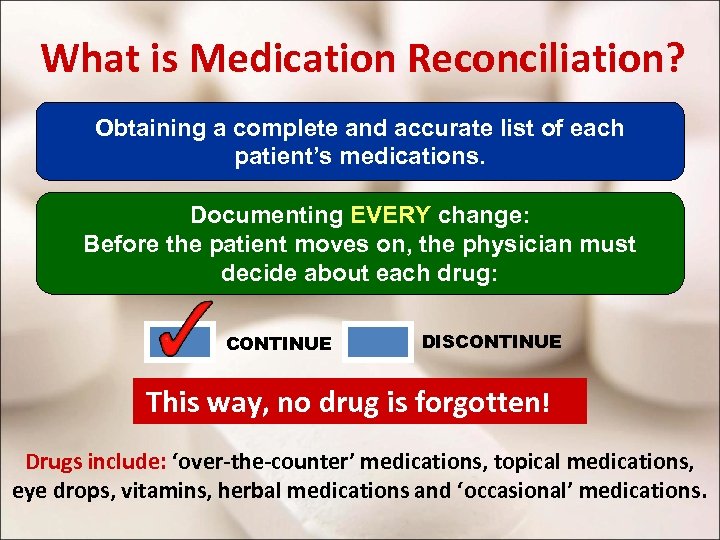
What is Medication Reconciliation? Obtaining a complete and accurate list of each patient’s medications. Documenting EVERY change: Before the patient moves on, the physician must decide about each drug: CONTINUE DISCONTINUE This way, no drug is forgotten! Drugs include: ‘over-the-counter’ medications, topical medications, eye drops, vitamins, herbal medications and ‘occasional’ medications.
Methods for current project · Over 100 adult patients admitted to the ER, on at least 5 regular drugs, underwent medication reconciliation. · Review of medications with patient, family, primary physician and/or database of HMOs (sick funds). · After 24 -48 hours, we checked the list of medications prescribed to the patient by the ward staff. · Our list was then compared with the list in the ward. · If any discrepancy was observed or an error was suspected, the staff was approached to clarify the reason for the change.
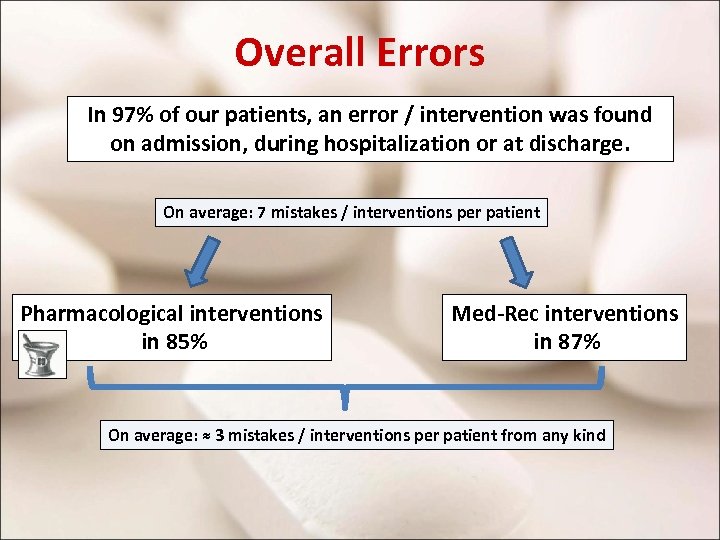
Overall Errors In 97% of our patients, an error / intervention was found on admission, during hospitalization or at discharge. On average: 7 mistakes / interventions per patient Pharmacological interventions in 85% Med-Rec interventions in 87% On average: ≈ 3 mistakes / interventions per patient from any kind
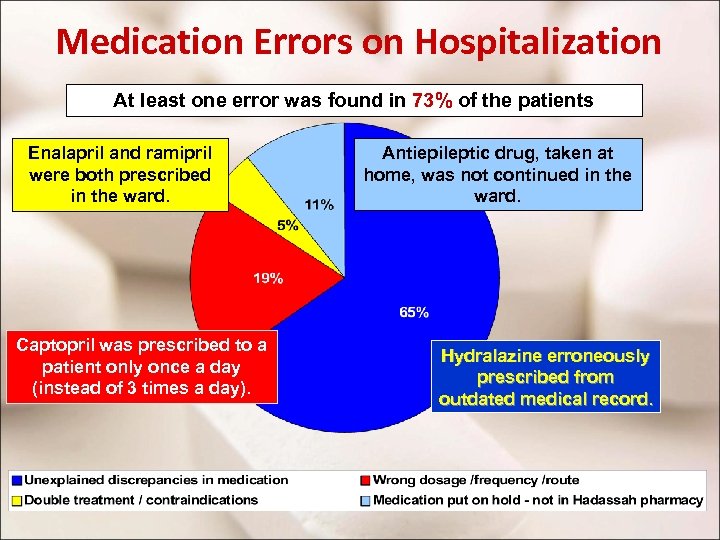
Medication Errors on Hospitalization At least one error was found in 73% of the patients Enalapril and ramipril were both prescribed in the ward. Captopril was prescribed to a patient only once a day (instead of 3 times a day). Antiepileptic drug, taken at home, was not continued in the ward. Hydralazine erroneously prescribed from outdated medical record.
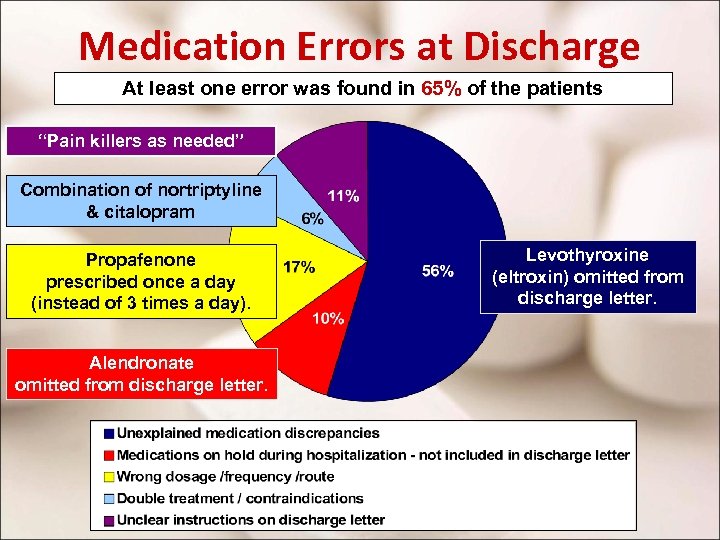
Medication Errors at Discharge At least one error was found in 65% of the patients “Pain killers as needed” Combination of nortriptyline & citalopram Propafenone prescribed once a day (instead of 3 times a day). Alendronate omitted from discharge letter. Levothyroxine (eltroxin) omitted from discharge letter.
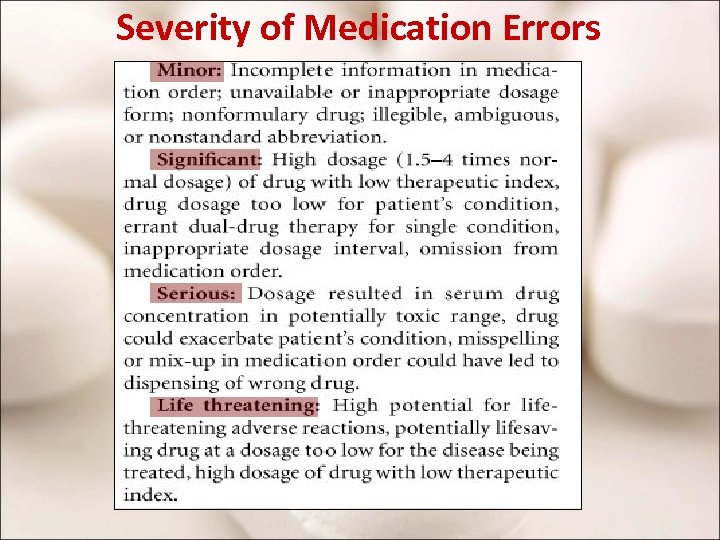
Severity of Medication Errors
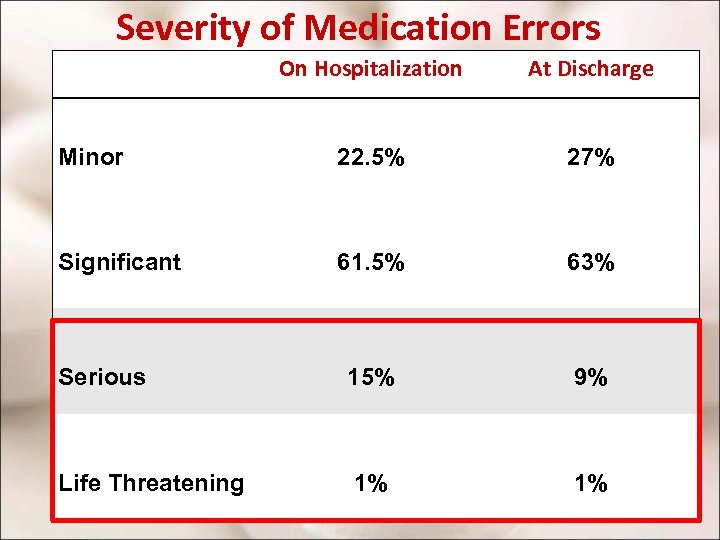
Severity of Medication Errors On Hospitalization At Discharge Minor 22. 5% 27% Significant 61. 5% 63% Serious 15% 9% Life Threatening 1% 1%
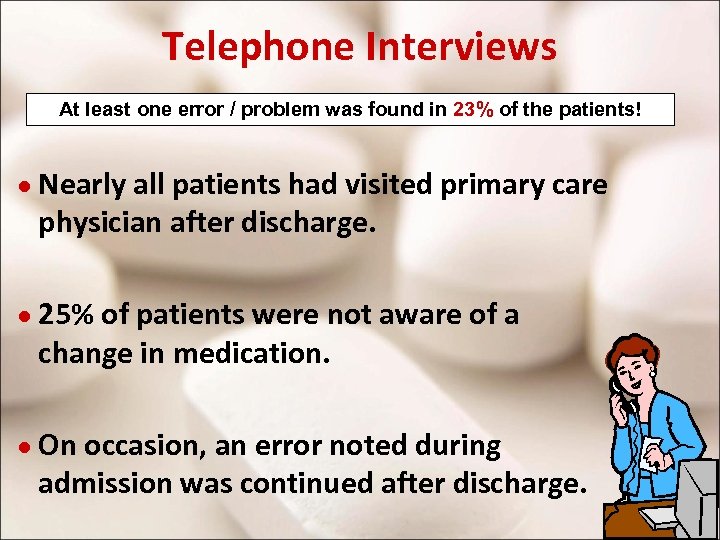
Telephone Interviews At least one error / problem was found in 23% of the patients! ● Nearly all patients had visited primary care physician after discharge. ● 25% of patients were not aware of a change in medication. ● On occasion, an error noted during admission was continued after discharge.
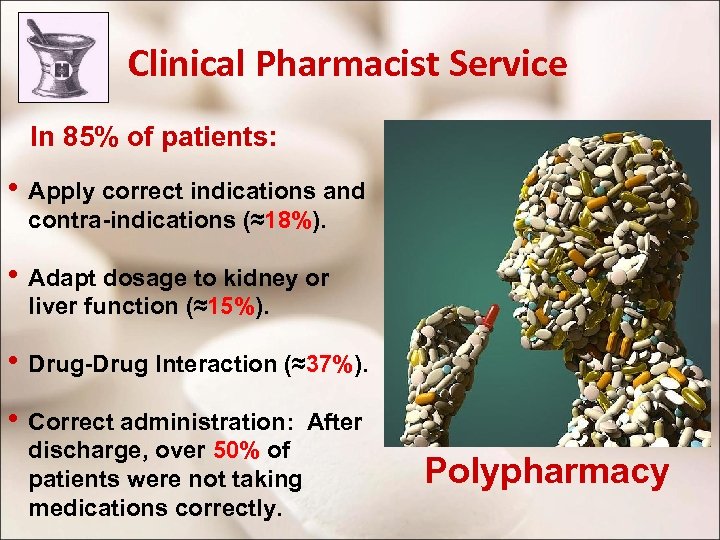
Clinical Pharmacist Service In 85% of patients: • Apply correct indications and contra-indications (≈18%). • Adapt dosage to kidney or liver function (≈15%). • Drug-Drug Interaction (≈37%). • Correct administration: discharge, over 50% of patients were not taking medications correctly. After Polypharmacy
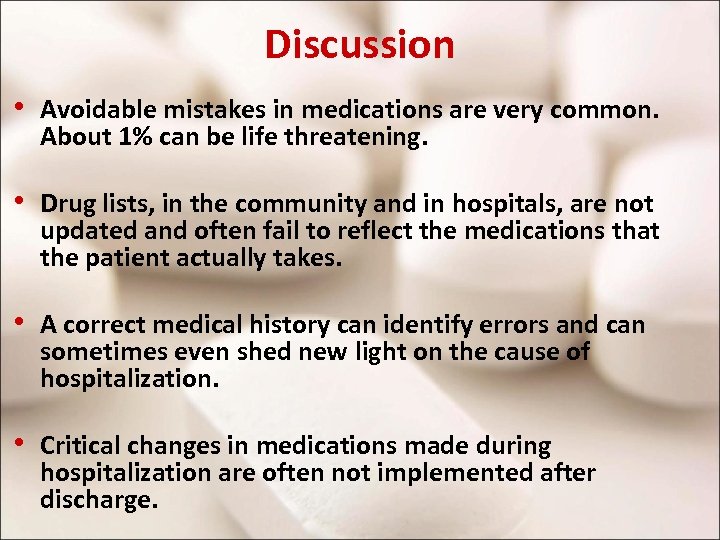
Discussion • Avoidable mistakes in medications are very common. About 1% can be life threatening. • Drug lists, in the community and in hospitals, are not updated and often fail to reflect the medications that the patient actually takes. • A correct medical history can identify errors and can sometimes even shed new light on the cause of hospitalization. • Critical changes in medications made during hospitalization are often not implemented after discharge.
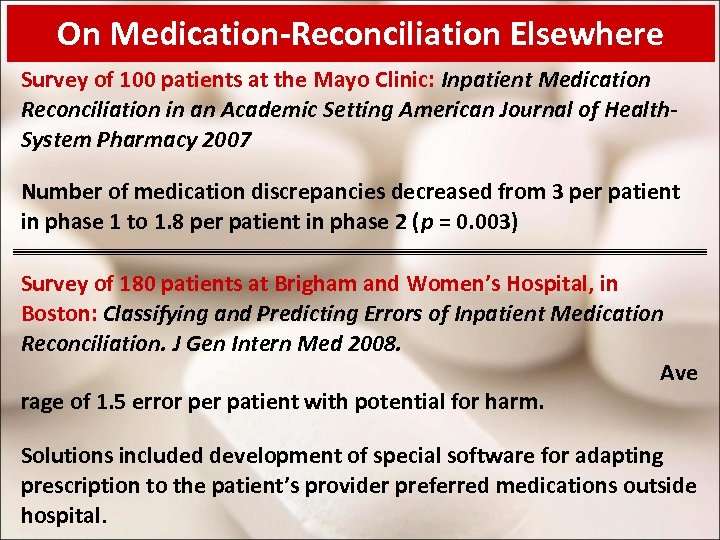
On Medication-Reconciliation Elsewhere Survey of 100 patients at the Mayo Clinic: Inpatient Medication Reconciliation in an Academic Setting American Journal of Health. System Pharmacy 2007 Number of medication discrepancies decreased from 3 per patient in phase 1 to 1. 8 per patient in phase 2 (p = 0. 003) Survey of 180 patients at Brigham and Women’s Hospital, in Boston: Classifying and Predicting Errors of Inpatient Medication Reconciliation. J Gen Intern Med 2008. Ave rage of 1. 5 error per patient with potential for harm. Solutions included development of special software for adapting prescription to the patient’s provider preferred medications outside hospital.
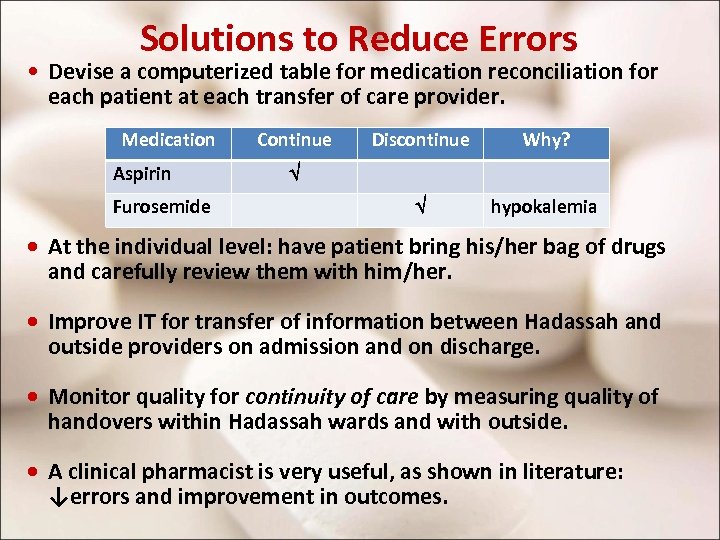
Solutions to Reduce Errors • Devise a computerized table for medication reconciliation for each patient at each transfer of care provider. Medication Aspirin Furosemide Continue Discontinue Why? hypokalemia · At the individual level: have patient bring his/her bag of drugs and carefully review them with him/her. · Improve IT for transfer of information between Hadassah and outside providers on admission and on discharge. · Monitor quality for continuity of care by measuring quality of handovers within Hadassah wards and with outside. · A clinical pharmacist is very useful, as shown in literature: ↓errors and improvement in outcomes.
Conclusion Medication Reconciliation Should Be Mandatory!
Special thanks to Ms. Lois Gordon for graphics assistance.
Скачать презентацию Chaos Waiting for Bad Luck Medication Reconciliation Should
0ca5db8c81decea7582a9a1e1cdcb8d7.ppt