 Скачать презентацию CHANNELS OF DISTRIBUTION What is a Channel
800efa3cabd79e3230ab36de00793ae4.ppt
- Количество слайдов: 27



CHANNELS OF DISTRIBUTION
What is a Channel of Distribution? • The path a product takes from the producer or manufacturer to the final user. • PLACE decision of the 4 P’s. • Begins and ends with one product
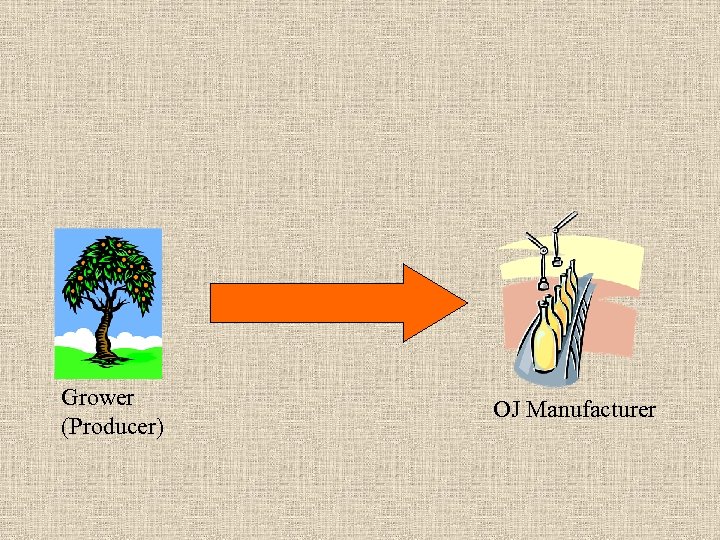
Grower (Producer) OJ Manufacturer
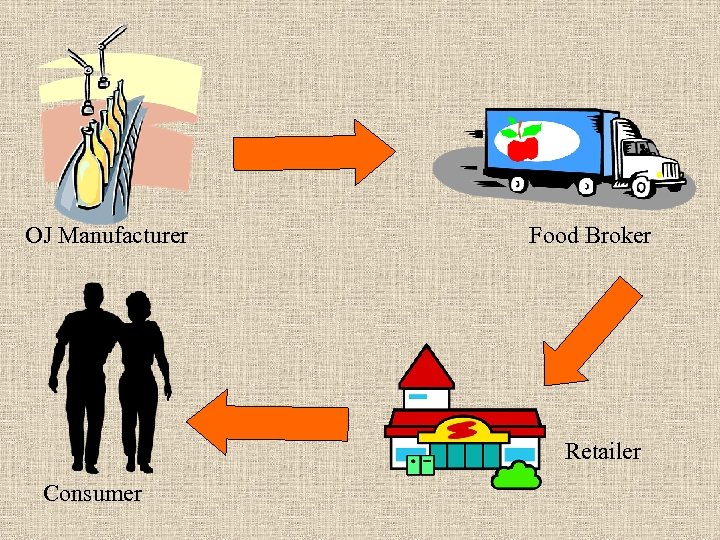
OJ Manufacturer Food Broker Retailer Consumer
Channel Members
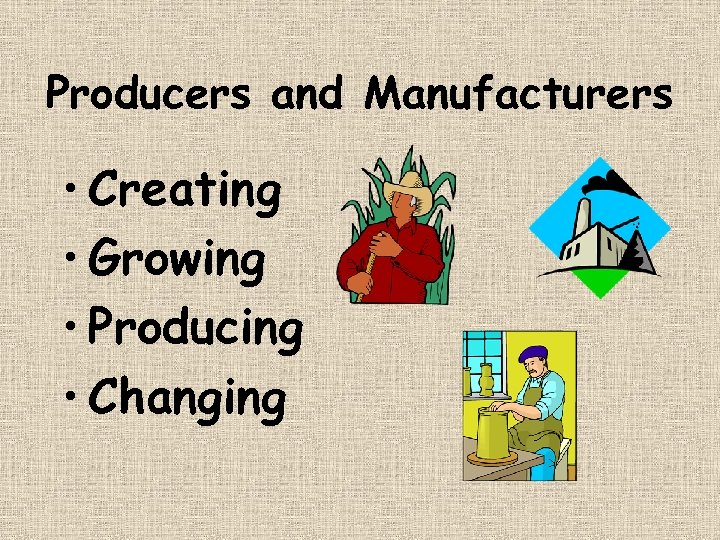
Producers and Manufacturers • Creating • Growing • Producing • Changing
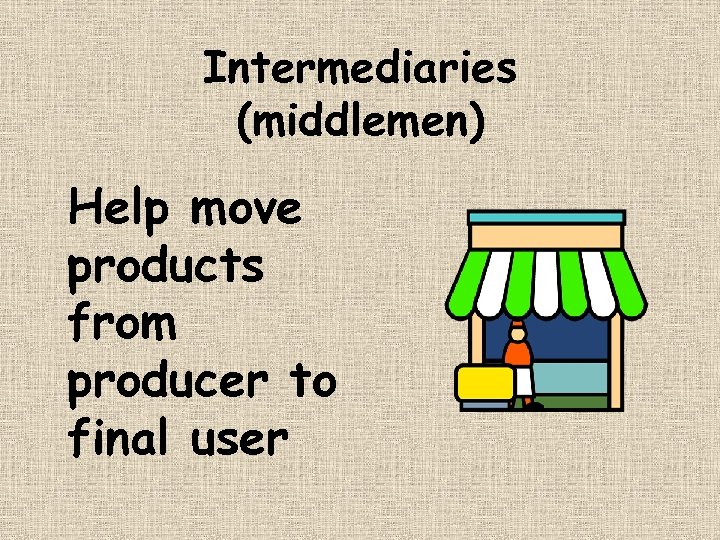
Intermediaries (middlemen) Help move products from producer to final user
Types of Intermediaries • Merchant intermediaries • Wholesalers • Buy large quantities from producer • Store the goods • Resell to retailers or other wholesalers
Types of Intermediaries • Merchant intermediaries –Wholesalers • • • Retailers Buy from producer or wholesaler Resell to final consumer Storefront Electronic (TV, internet) Vending
Types of Intermediaries • Merchant intermediaries – Wholesalers – Retailers • Agents –Do not buy; only negotiate the sale between producer and other intermediary
Types of Intermediaries • Merchant intermediaries – Wholesalers – Retailers • Agents –Independent manufacturer’s agents • Represent several related noncompeting manufacturers within an industry
Types of Intermediaries • Merchant intermediaries – Wholesalers – Retailers • Agents – Independent manufacturer’s agents –Broker • Same as independent but gets more involved in promotions – may set up displays in store
End or Final User (Consumer) Industrial OR Consumer
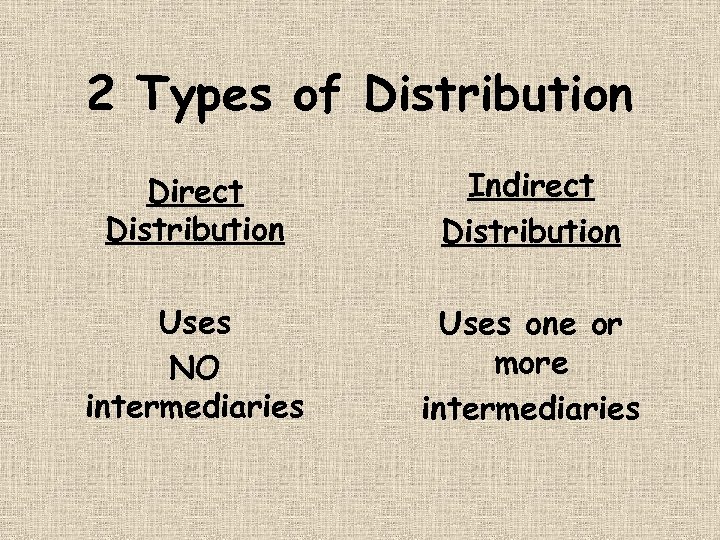
2 Types of Distribution Direct Distribution Indirect Distribution Uses NO intermediaries Uses one or more intermediaries
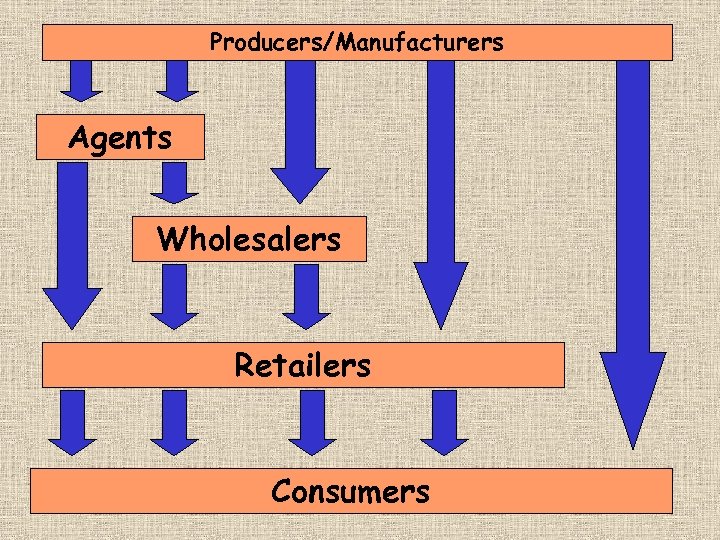
Producers/Manufacturers Agents Wholesalers Retailers Consumers

Selection of Channels
Question: Your own sales force OR Hire outside agents?
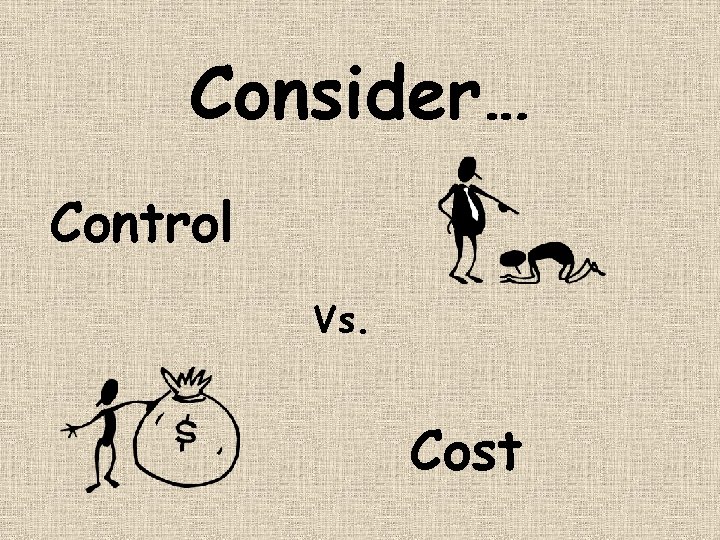
Consider… Control Vs. Cost
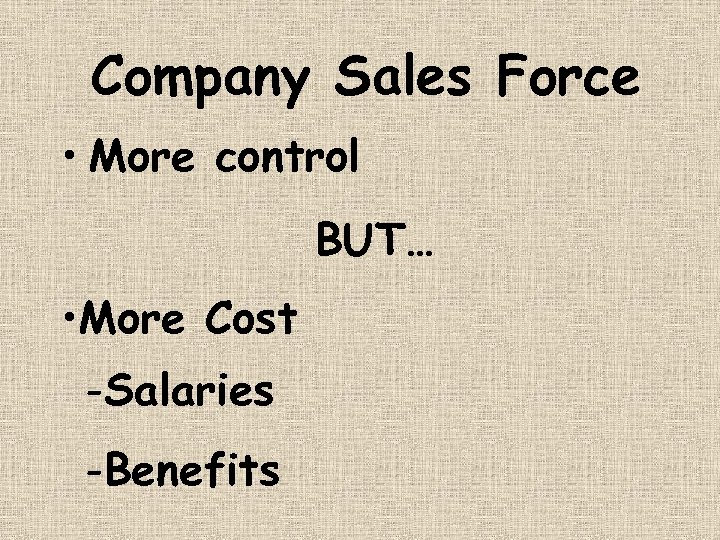
Company Sales Force • More control BUT… • More Cost -Salaries -Benefits
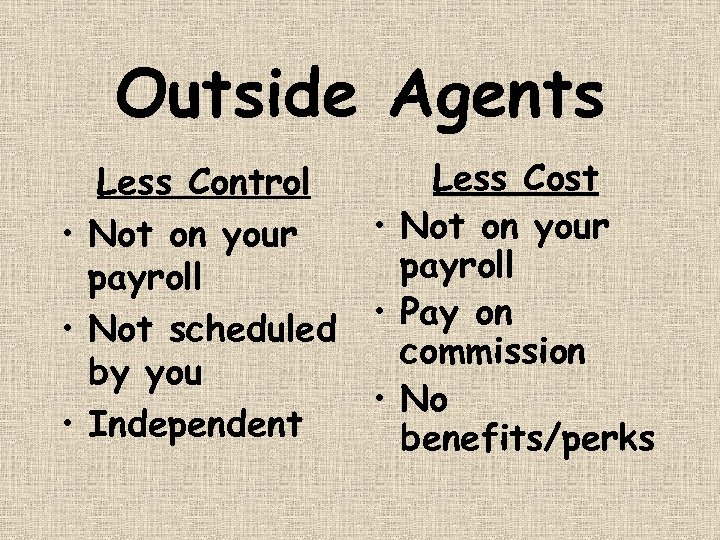
Outside Agents Less Control • Not on your payroll • Not scheduled by you • Independent Less Cost • Not on your payroll • Pay on commission • No benefits/perks
Question: What stores or outlets should you use to market your products?
Answer: Determine the level of intensity your products need
Intensive Distribution • Using ALL suitable outlets • Highly competitive products • Frequently purchased products • Convenience goods (“everyday” goods)
Selective Distribution • Use of limited outlets within a given geographic area • Regional malls (Town Center) • Department Stores (J. C. Penney) • Moderate to high-end consumer products • Clothing, appliances, furnishings
Exclusive Distribution • Using only one intermediary within a geographic area • Franchises • Car dealerships
Integrated Distribution • Manufacturer owns and runs retail outlet • Outlet stores Nike Outlet
Скачать презентацию CHANNELS OF DISTRIBUTION What is a Channel
800efa3cabd79e3230ab36de00793ae4.ppt