 Скачать презентацию Changing trends in epidemiology of type 1 diabetes
c26543dbc6b010cffa67b750fd0338ec.ppt
- Количество слайдов: 40



Changing trends in epidemiology of type 1 diabetes mellitus throughout the world: How far have we come and where do we go from here Ingrid Libman, M. D. , Ph. D. Ronald La. Porte, Ph. D. University of Pittsburgh
Objectives * Counting diabetes: Historical background * Diabetes Registries: What have we learned? * Challenges ahead: Where do we go from here?
Objectives * Counting diabetes: Historical background * Diabetes Registries: What have we learned? * Challenges ahead: Where do we go from here?
Need to count disease, specifically diabetes, started a long time ago……. .
Counting diabetes: Why is it important? Prevention Reducing the incidence of disease (primary prevention) Reducing the prevalence of disease (secondary prevention) Control Ongoing operations or programs aimed at reducing the incidence and/or prevalence of disease Last, Dictionary of Epidemiology
Counting diabetes… …“diarrhea of the urine”…. . “the thirsty disease”… …“rare”…. …“only seen two cases”…. . Galen, disciple of Hippocrates Second century AD
…. “Diabetes is a wonderful affection, not very frequent among men, being a melting down of the flesh and limbs into urine”…… …”the patient is short-lived if the constitution of the disease be completely established”… Aretaeus the Cappadocian Disciple of Hippocrates Second century AD
…”diabetes seldom seen in cold Europe and frequently encountered in warm Africa”… …” have not seen in the West”… …” here, in Egypt, in the course of 10 years, I have seen more than twenty people who suffer this illness”…. Maimonides 1135 -1204 AD
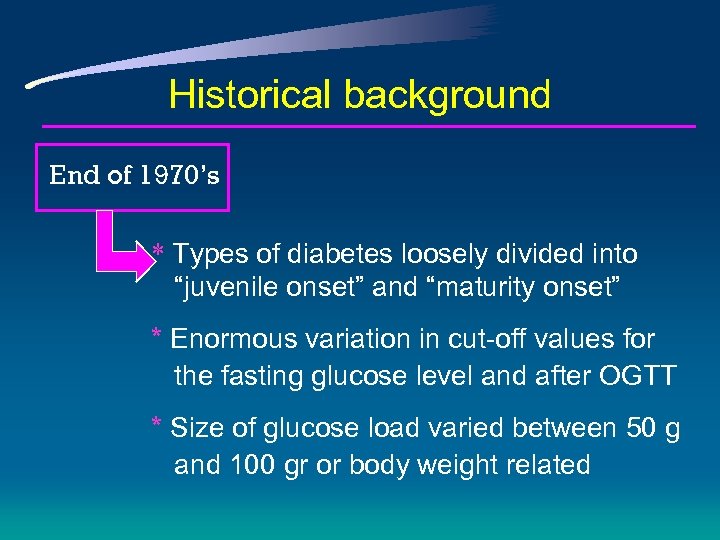
Historical background End of 1970’s * Types of diabetes loosely divided into “juvenile onset” and “maturity onset” * Enormous variation in cut-off values for the fasting glucose level and after OGTT * Size of glucose load varied between 50 g and 100 gr or body weight related
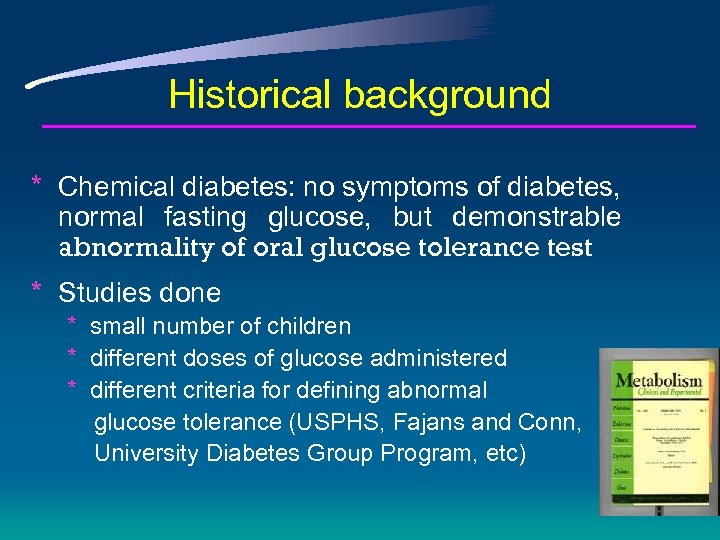
Historical background * Chemical diabetes: no symptoms of diabetes, normal fasting glucose, but demonstrable abnormality of oral glucose tolerance test * Studies done * small number of children * different doses of glucose administered * different criteria for defining abnormal glucose tolerance (USPHS, Fajans and Conn, University Diabetes Group Program, etc)
It took many centuries…. Book summarizing contributions, clinical and population-based on the subject of diabetes epidemiology and highlighted the many gaps in our diabetes epidemiology knowledge at that time Kelly West, 1978 "Epidemiology of Diabetes and its Vascular Complications"
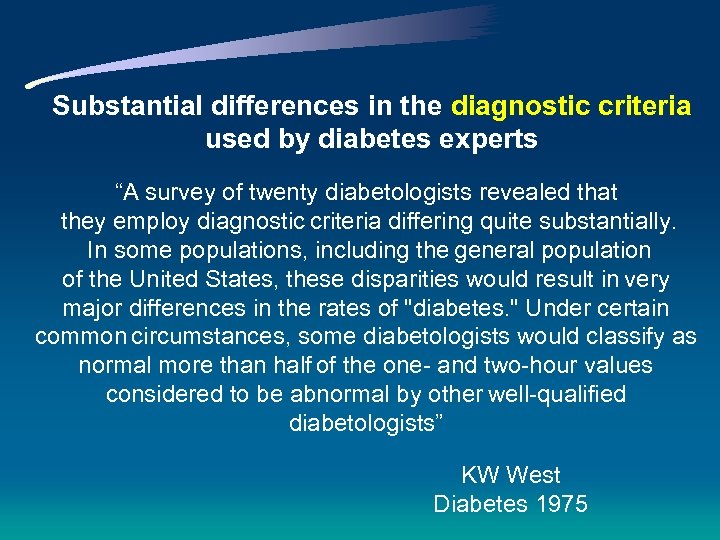
Substantial differences in the diagnostic criteria used by diabetes experts “A survey of twenty diabetologists revealed that they employ diagnostic criteria differing quite substantially. In some populations, including the general population of the United States, these disparities would result in very major differences in the rates of "diabetes. " Under certain common circumstances, some diabetologists would classify as normal more than half of the one- and two-hour values considered to be abnormal by other well-qualified diabetologists” KW West Diabetes 1975
Historical background 1979 & 1980 * IDDM and NIDDM defined * 75 gr oral glucose tolerance test (OGTT) became the gold standard with fasting and 2 hour values defined * Category of IGT added (metabolic stage intermediate between normal glucose homeostasis and diabetes)
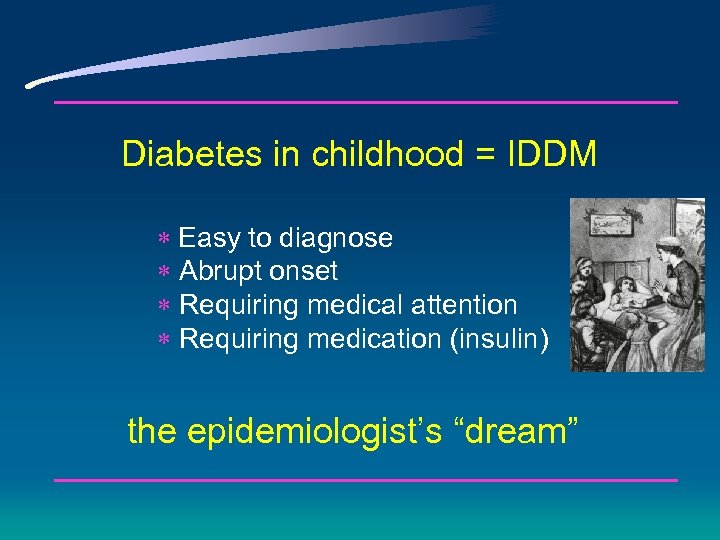
Diabetes in childhood = IDDM * Easy to diagnose * Abrupt onset * Requiring medical attention * Requiring medication (insulin) the epidemiologist’s “dream”
By the 1980’s …. . * Few registries monitoring IDDM incidence * Limited information but geographical differences in incidence identified * However, lack of standardization: - different case definition - different ages - different degrees of ascertainment
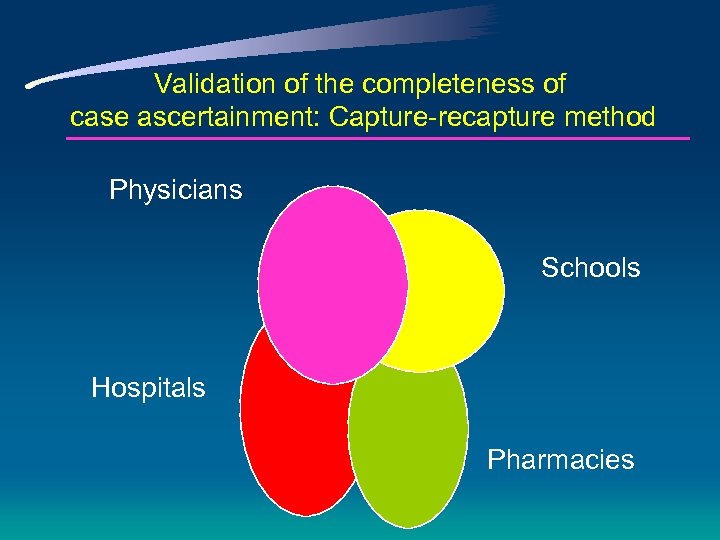
1983 “Registries of Persons with IDDM” (International Workshop on the Epidemiology of IDDM) *An international collaborative IDDM registry group should be established to develop standardized norms *Validation of the completeness of case ascertainment should be required *Investigators should share their patient intake forms *Plan for sharing of data between registries should be established La. Porte R et al. Diabetes Care 1985
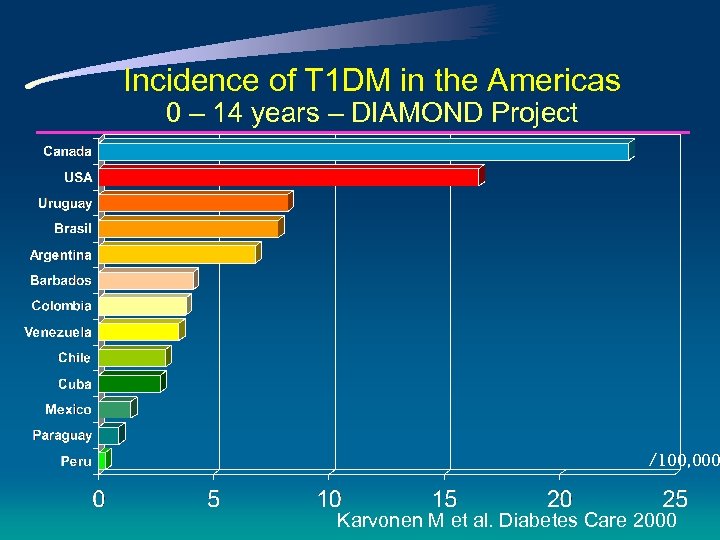
Diabetes in Childhood: IDDM Registries § Establishment of population-based registries around the world § Monitor the global pattern of the disease § Provide a basis for standardized studies of risk factors Karvonen M et al. Diabetes Care 2000
DIAMOND Project Countries participating Argelia, Argentina, Antigua, Australia, Austria, Bahamas, Barbados, Belgium, Brazil, Bulgaria, Chile, China, Colombia, Costa Rica, Croatia, Cuba, Czech Republic, Denmark, Dominican Republic, Egypt, Estonia, Finland, France, Germany, Greece, Hong Kong, Hungary, Iceland, India, Ireland, Israel, Italy, Japan, Korea, Kuwait, Lithuania, Malta, Mauritius, Mexico, Netherlands, New Zealand, Norway, Paraguay, Peru, Poland, Portugal, Romania, Russia, Saint Kitts, Slovakia, Slovenia, Spain, Sudan, Sweden, Switzerland, Taiwan, Tanzania, Thailand, Tunisia, United Kingdom, Uruguay, USA, Venezuela
DIAMOND Project Algeria: Dr. K. Bessaoud (Oran). Argentina: Dr. M. Molinero de Ropolo (Cordoba); Dr. M. de Sereday, M. L. Marti, Dr. M. Damiano, and Dr. M. Moser (Avellaneda); Dr. S. Lapertosa (Corrientes), Dr. A. Libman (Rosario), Dr. O. Ramos (Buenos Aires). Australia: Dr. C. Verge and Dr. N. Howard (New South Wales). Austria: Dr. E. Schober. Barbados: Dr. O. Jordan. Belgium: Dr. I. Weets, Dr. C. Vandevalle, Dr. I. De Leeuw, Dr. F. Gorus, Dr. M. Coeckelberghs, and Dr. M. Du Caju (Antwerp region). Brazil: Dr. L. J. Franco and Dr. S. R. G. Ferreira (3 centers, state of Sao Paulo). Bulgaria: Dr. R. Savova and Prof. V. Christov (West Bulgaria) and Dr. V. Iotova and Prof. Valentina Tzaneva (Varna). Canada: Dr. E. Toth (Alberta) and Dr. M. H. Tan (Prince Edward Island). Chile: Dr. E. Carrasco and Dr. G. Lopez (Santiago). China: Dr. Yang Ze (Henan, Dalian, Guilin, Jilin, Nanning, and Zunyi); Dr. Bo Yang (Tieling); Dr. Chen Shaohua and Dr. Fu Lihua (Jinan); Dr. Deng Longqi (Sichuan); Dr. Shen Shuixian (Shanghai); Dr. Teng Kui (Wulumuqi); Dr. Wang Chunjian, Dr. H. Jian, and Dr. J. Ju (Zhengzhou); Dr. Yan Chun and Dr. Y. Ze (Beijing); Dr. Deng Yibing and Dr. Li Cai (Changchun); Dr. Ying-Ting Zhang (Jilin province); Dr. Liu Yuqing and Dr. Long Xiurong (Shenyang); Dr. Zhaoshou Zhen (Huhehot); Dr. Zhiying Sun (Dalian); Prof. Wang Binyou (Harbin); and Dr. Gary Wing-Kin Wong (Hong Kong). Colombia: Dr. P. Aschner (Santafè de Bogotà, D. C. ). Cuba: Dr. O. Mateo de Acosta, Dr. I. Hernández Cuesta, Dr. F. Collado Mesa, and Dr. O. Diaz-Diaz. Denmark: Dr. B. S. Olsen, Dr. A. J. Svendsen, Dr. J. Kreutzfeldt, and Dr. E. Lund (4 counties). Dominica: Dr. E. S. Tull. Estonia: Dr. T. Podar. Finland: Prof. J. Tuomilehto and Dr. M. Karvonen. France: Dr. C. Levy-Marchal and Dr. P. Czernichow (4 regions). Germany: Dr. A. Neu (Baden-Wuerttemberg). Greece: Dr. C. Bartsocas, Dr. K. Kassiou, Dr. C. Dacou-Voutetaki, Dr. A. C. Kafourou, Dr. Al Al-Qadreh, and Dr. C. Karagianni (Attica region). Hungary: Dr. Gyula Soltesz (18 counties). Israel: Prof. Z. Laron, Dr. O. Gordon, Dr. Y. Albag, and Dr. I. Shamis. Italy: Dr. F. Purrello, Dr. M. Arpi, Dr. G. Fichera, Dr. M. Mancuso, and Dr. C. Lucenti (eastern Sicily); Prof. G. Chiumello (Lombardia region); Dr. G. Bruno and Prof. G. Pagano (Turin province); Dr. M. Songini, Dr. A. Casu, Dr. A. Marinaro, Dr. R. Ricciardi, Dr. M. A. Zedda, and Dr. A. Milia (Sardinia); Dr. M. Tenconi and Dr. G. Devoti (Pavia province); Prof. P. Pozzilli, Dr. N. Visalli, Dr. L. Sebastiani, Dr. G. Marietti, and Dr. R. Buzzetti (Lazio region); and Dr. V. Cherubini (Region Marche). Japan: Dr. A. Okuno, Dr. S. Harada, and Dr. N. Matsuura (Hokkaido); Dr. E. Miki, Dr. S. Miyamoto, and Dr. N. Sasaki (Chiba); and Dr. G. Mimura (Okinawa). Kuwait: Dr. A. Shaltout and Dr. Mariam Qabazrd. Latvia: Dr. G. Brigis. Lithuania: Dr. B. Urbonaite. Luxembourg: Dr. C. de Beaufort. Mauritius: Dr. H. Gareeboo. Mexico: Dr. O. Aude Rueda (Veracruz). The Netherlands: Dr. M. Reeser (5 regions). New Zealand: Dr. R. Elliott (Auckland) and Dr. R. Scott, Dr. J. Willis, and Dr. B. Darlow (Canterbury). Norway: Dr. G. Joner (8 counties). Pakistan: Dr. G. Rafique (Karachi). Paraguay: Dr. J. Jimenez, Dr. C. M. Palaeios, Dr. F. Canete, Dr. J. Vera, and Dr. R. Almiron. Peru: Dr. S. Seclén (Lima). Poland: Dr. D. Woznicka, Dr. P. Fichna (Wielkopolska) and Dr. Z. Szybinski (Cracow). Portugal: Dr. C. Menezes (Portalegre), Dr. E. A. Pina (Algarve region), Dr. M. M. A. Ruas and Dr. F. J. C. Rodrigues (Coimbra), and Dr. S. Abreu (Madeira Island). Romania: Dr. C. Ionescu-Tirgoviste (Bucharest region). Russia: Dr. E. Shubnikof (Novosibirsk). Slovakia: Dr. D. Michalkova. Slovenia: Prof. C. Krzisnik, Dr. N. Bratina-Ursic, Dr. T. Battelino, and Dr. P. Brcar-Strukelj. Spain: Dr. A. Goday, Dr. C. Castell, and Dr. C. Lloveras (Catalonia). Sudan: Dr. M. Magzoub (Gezira province). Sweden: Prof. G. Dahlquist. Tunisia: Dr. K. Nagati (Kairouan) and Dr. F. B. Khalifa (Gafsa, Beja, Monastir). U. K. : Dr. A. Burden and N. Raymond (Leicestershire); Dr. B. A. Millward and Dr. H. Zhao (Plymouth); Dr. C. C. Patterson, Dr. D. Carson, and Prof. D. Hadden (N. Ireland); Dr. P. Smail and Dr. B. Mc. Sporran (Aberdeen); and Dr. P. Bingley (Oxford region). U. S. : Dr. E. S. Tull (Virgin Islands), Dr. R. E. La. Porte and Dr. I. Libman (Allegheny County, PA), Dr. J. Roseman and Dr. S. M. Atiqur Rahman (Jefferson County, AL), Dr. T. Frazer de Llado (Puerto Rico), and Dr. R. Lipton (Chicago). Uruguay: Dr. A. M. Jorge (Montevideo). Venezuela: Dr. P. Gunczler and Dr. R. Lanes (Caracas, second center), Dr. H. King (WHO, Geneva, Switzerland).
Historical background late 1990’s * Type 1 and type 2 diabetes defined * Lowered criteria for diagnosis of diabetes to fasting plasma glucose 126 mg * Category of IFG added (plasma glucose 110 mg/dl and < 126 mg/dl)
Objectives * Counting diabetes: Historical background * Diabetes Registries: What have we learned? * Challenges ahead: Where do we go from here?
“One of the fundamental necessities of cancer surveillance is for users of cancer information to be assured that case definitions, data collection, is standardized. This enables compilation of case -specific information into useful and meaningful registers. It also enables meaningful comparison of data across different registries” North American Association of Central Cancer Registries
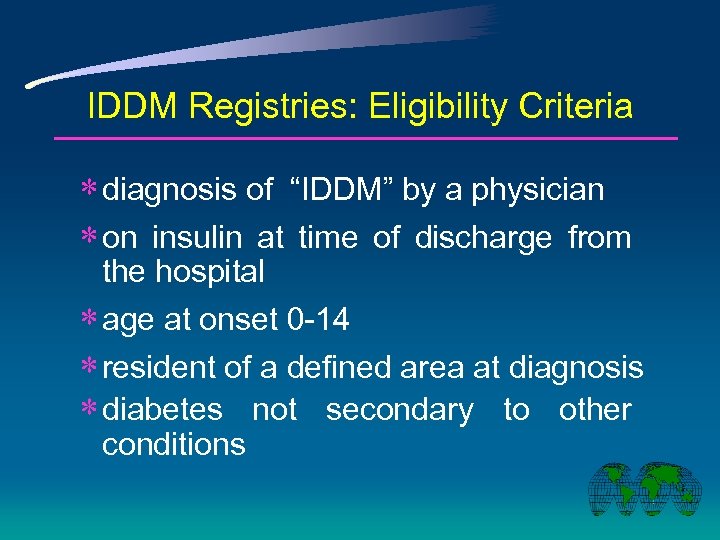
IDDM Registries: Eligibility Criteria * diagnosis of “IDDM” by a physician * on insulin at time of discharge from the hospital * age at onset 0 -14 * resident of a defined area at diagnosis * diabetes not secondary to other conditions
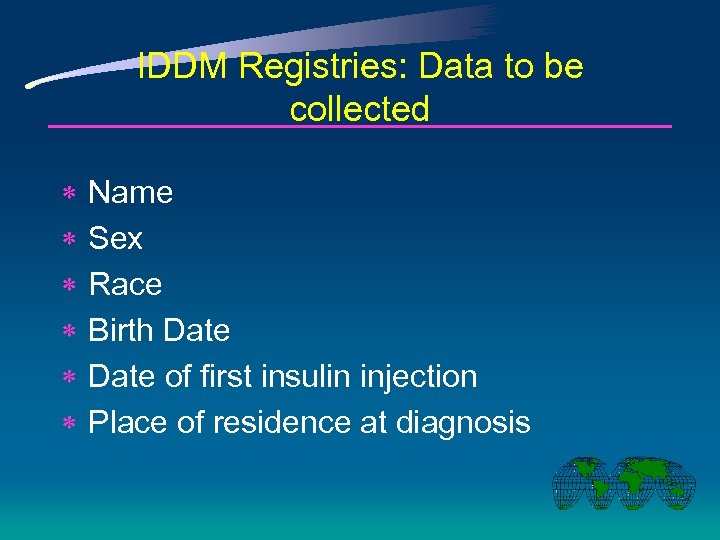
IDDM Registries: Data to be collected * * * Name Sex Race Birth Date of first insulin injection Place of residence at diagnosis

Validation of the completeness of case ascertainment: Capture-recapture method Physicians Schools Hospitals Pharmacies
Incidence of T 1 DM in the Americas 0 – 14 years – DIAMOND Project /100, 000 Karvonen M et al. Diabetes Care 2000

Important geographic differences
T 1 DM Incidence in Santiago, Chile 1986 - 2000 /100, 000 p<0. 001 Carrasco E et al. Diabetes et Metabolism 2003
Incidence of T 1 DM in Finland Children < 15 years, 1987 -1996 100, 000/year Tuomilehto et al. Diabetologia 1999
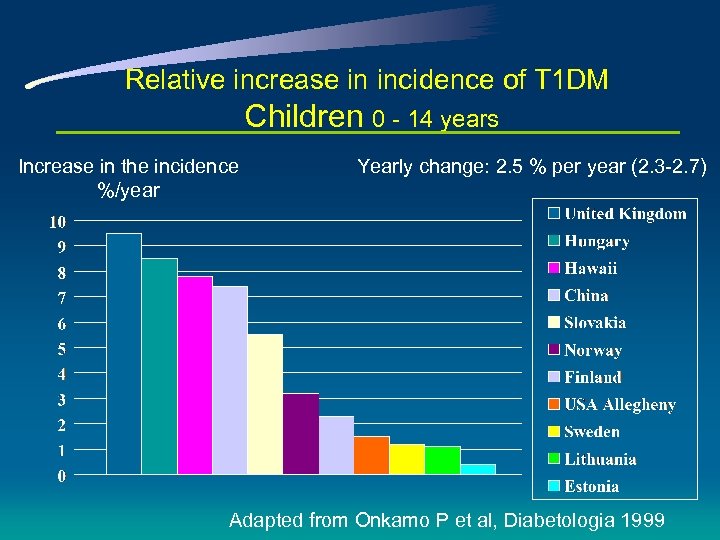
Relative increase in incidence of T 1 DM Children 0 - 14 years Increase in the incidence %/year Yearly change: 2. 5 % per year (2. 3 -2. 7) Adapted from Onkamo P et al, Diabetologia 1999
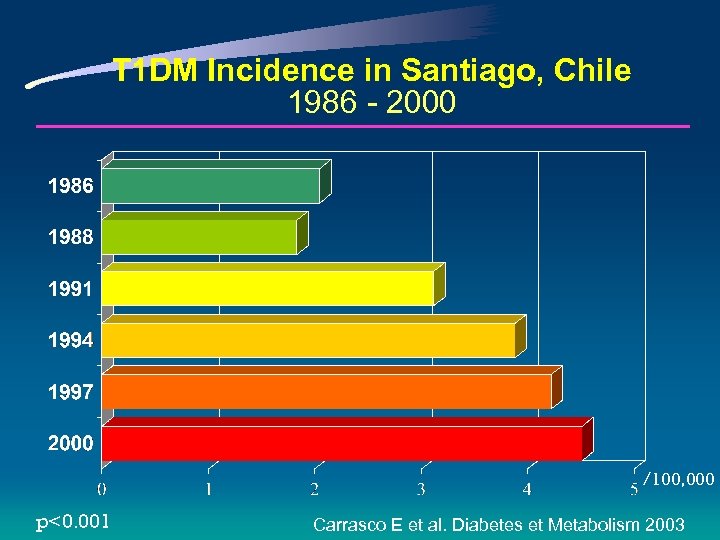
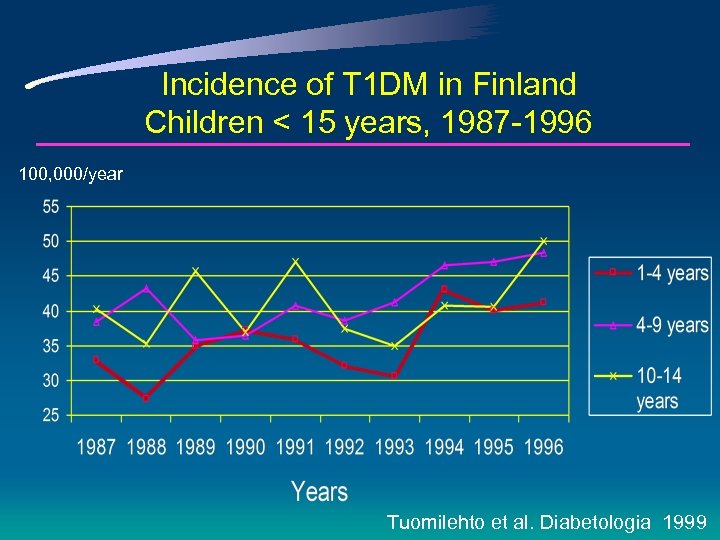
Important temporal changes
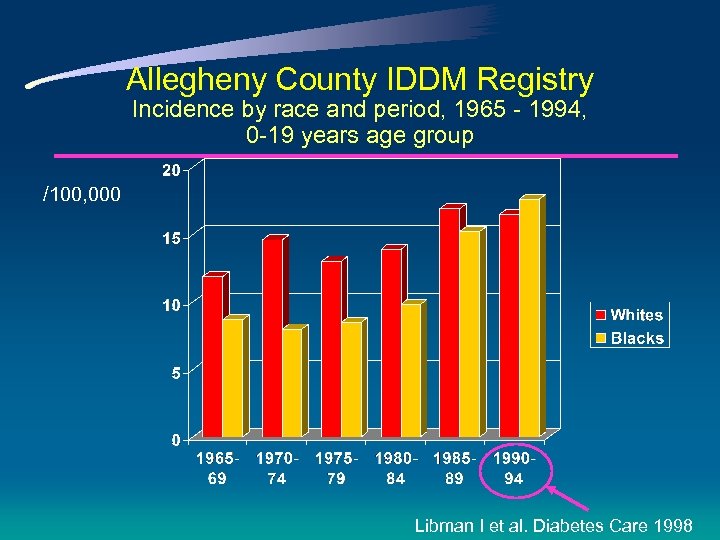
Allegheny County IDDM Registry Incidence by race and period, 1965 - 1994, 0 -19 years age group /100, 000 Libman I et al. Diabetes Care 1998
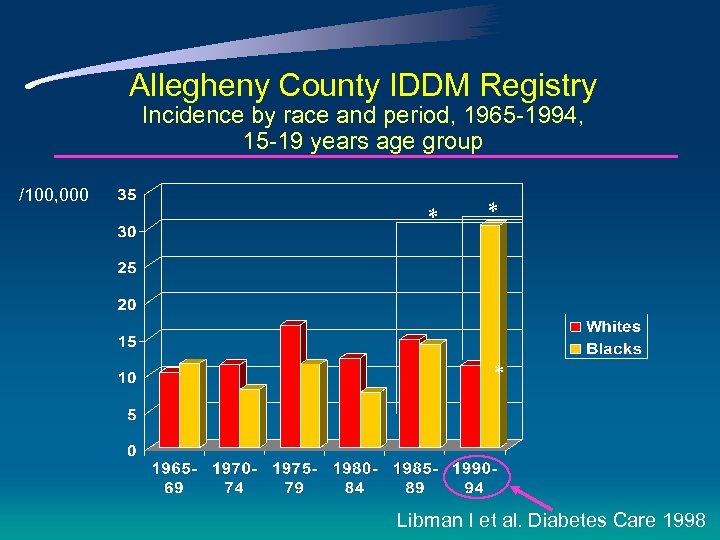
Allegheny County IDDM Registry Incidence by race and period, 1965 -1994, 15 -19 years age group /100, 000 * * * Libman I et al. Diabetes Care 1998
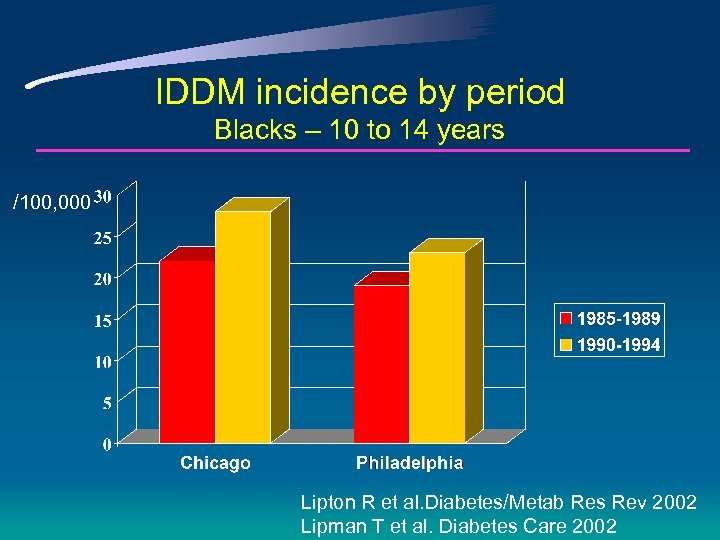
IDDM incidence by period Blacks – 10 to 14 years /100, 000 Lipton R et al. Diabetes/Metab Res Rev 2002 Lipman T et al. Diabetes Care 2002

Objectives * Counting diabetes: Historical background * Diabetes Registries: What have we learned? * Challenges ahead: Where do we go from here?
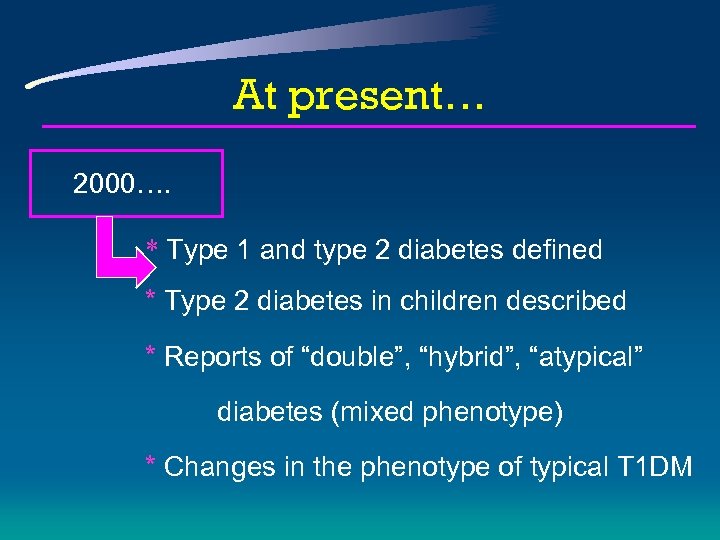
At present… 2000…. * Type 1 and type 2 diabetes defined * Type 2 diabetes in children described * Reports of “double”, “hybrid”, “atypical” diabetes (mixed phenotype) * Changes in the phenotype of typical T 1 DM
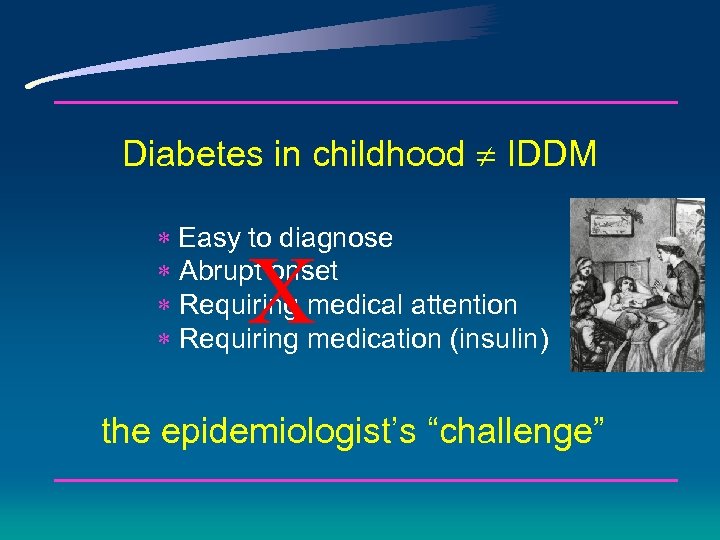
Diabetes in childhood IDDM * Easy to diagnose * Abrupt onset * Requiring medical attention * Requiring medication (insulin) X the epidemiologist’s “challenge”
Diabetes in Childhood Efforts such as DIAMOND and EURODIAB should continue
Скачать презентацию Changing trends in epidemiology of type 1 diabetes
c26543dbc6b010cffa67b750fd0338ec.ppt