 Скачать презентацию Changes in Consumer Knowledge Behavior and Confidence Since
- Количество слайдов: 17



Changes in Consumer Knowledge, Behavior, and Confidence Since the 1996 PR/HACCP Final Rule Presented at Thinking Globally — Working Locally: A Conference on Food Safety Education Presented by Sheryl Cates Orlando, FL September 18, 2002 P. O. Box 12194 · 3040 Cornwallis Road · Research Triangle Park, NC 27709 Phone: 919 -541 -6810 · Fax: 919 -541 -6683 · scc@rti. org · www. rti. org 1
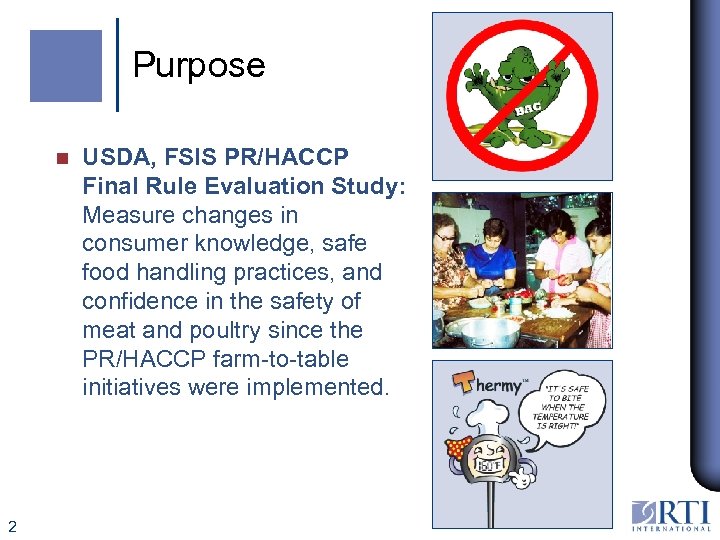
Purpose n 2 USDA, FSIS PR/HACCP Final Rule Evaluation Study: Measure changes in consumer knowledge, safe food handling practices, and confidence in the safety of meat and poultry since the PR/HACCP farm-to-table initiatives were implemented.
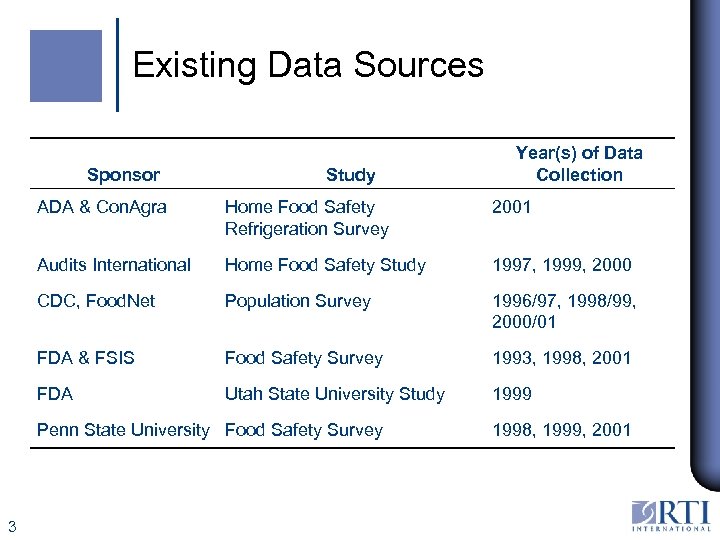
Existing Data Sources Sponsor Study Year(s) of Data Collection ADA & Con. Agra Home Food Safety Refrigeration Survey 2001 Audits International Home Food Safety Study 1997, 1999, 2000 CDC, Food. Net Population Survey 1996/97, 1998/99, 2000/01 FDA & FSIS Food Safety Survey 1993, 1998, 2001 FDA Utah State University Study 1999 Penn State University Food Safety Survey 3 1998, 1999, 2001
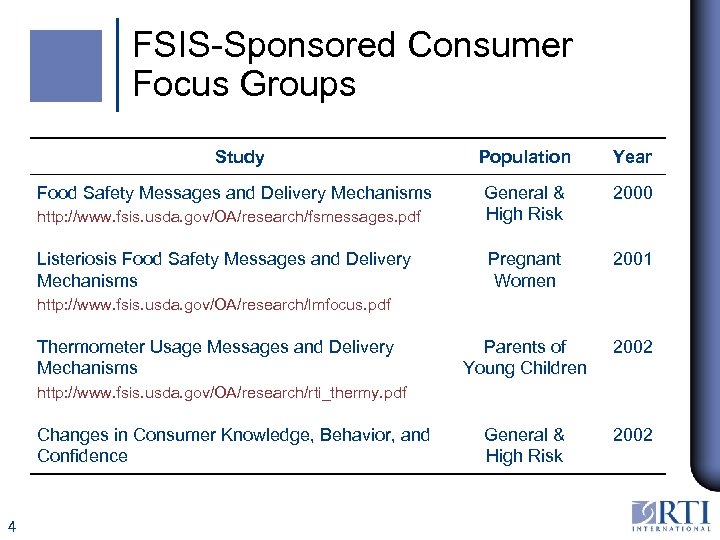
FSIS-Sponsored Consumer Focus Groups Study Population Year Food Safety Messages and Delivery Mechanisms 2000 http: //www. fsis. usda. gov/OA/research/fsmessages. pdf General & High Risk Listeriosis Food Safety Messages and Delivery Mechanisms Pregnant Women 2001 Parents of Young Children 2002 General & High Risk 2002 http: //www. fsis. usda. gov/OA/research/lmfocus. pdf Thermometer Usage Messages and Delivery Mechanisms http: //www. fsis. usda. gov/OA/research/rti_thermy. pdf Changes in Consumer Knowledge, Behavior, and Confidence 4
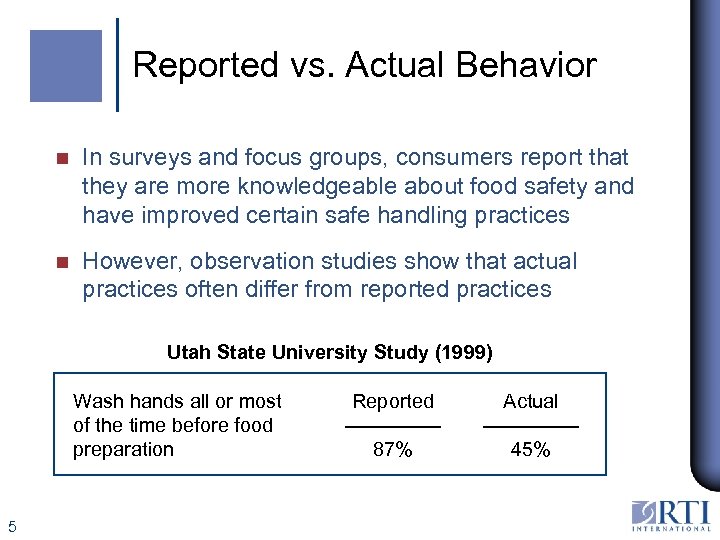
Reported vs. Actual Behavior n In surveys and focus groups, consumers report that they are more knowledgeable about food safety and have improved certain safe handling practices n However, observation studies show that actual practices often differ from reported practices Utah State University Study (1999) Wash hands all or most of the time before food preparation 5 Reported Actual 87% 45%
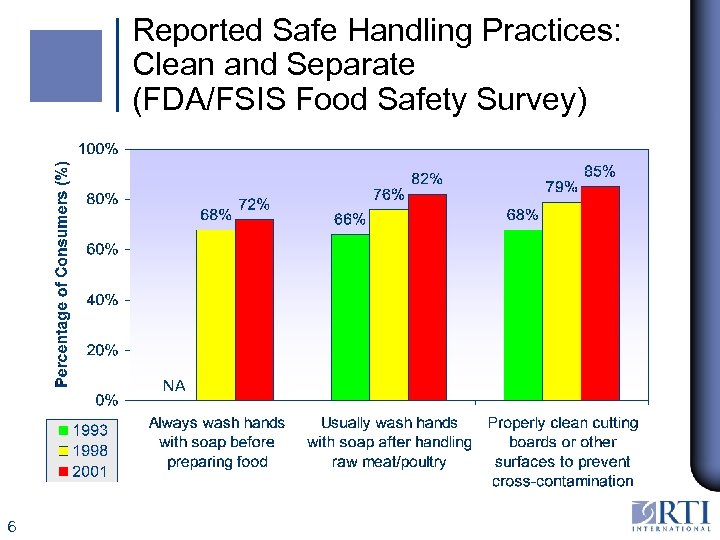
Reported Safe Handling Practices: Clean and Separate (FDA/FSIS Food Safety Survey) NA 6
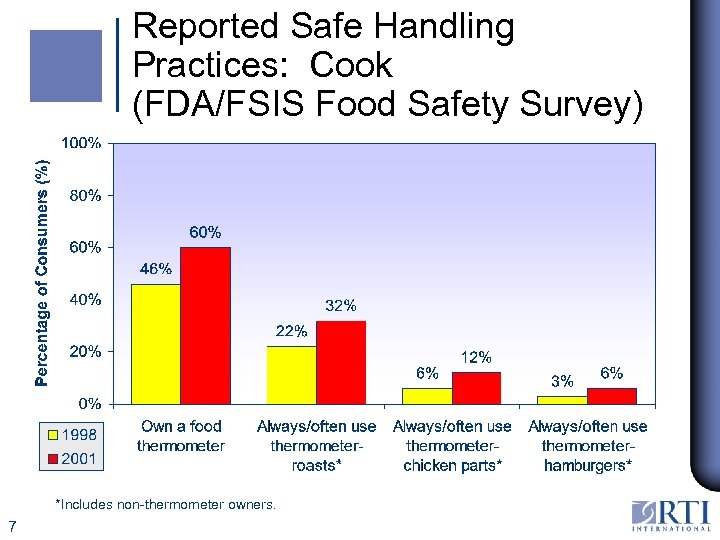
Reported Safe Handling Practices: Cook (FDA/FSIS Food Safety Survey) *Includes non-thermometer owners. 7
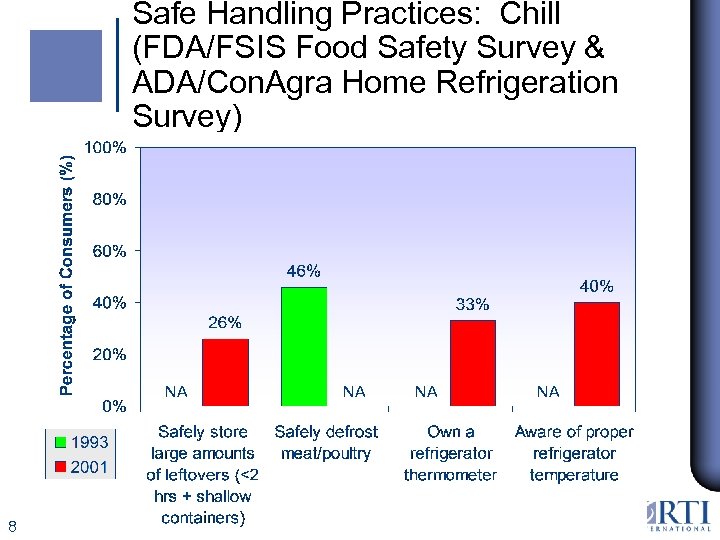
Safe Handling Practices: Chill (FDA/FSIS Food Safety Survey & ADA/Con. Agra Home Refrigeration Survey) NA 8 NA NA NA
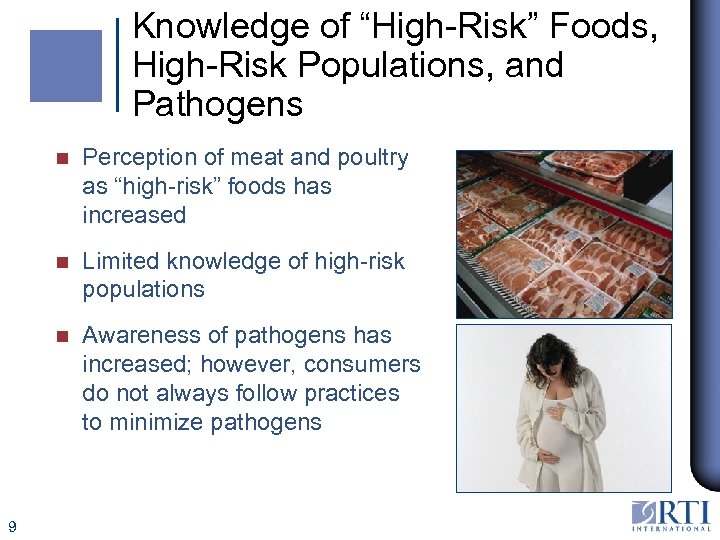
Knowledge of “High-Risk” Foods, High-Risk Populations, and Pathogens n n Limited knowledge of high-risk populations n 9 Perception of meat and poultry as “high-risk” foods has increased Awareness of pathogens has increased; however, consumers do not always follow practices to minimize pathogens
![Awareness of Foodborne Pathogens (FDA/FSIS Food Safety Survey) Have you ever heard of [pathogen]](https://present5.com/presentation/219af5861746d8ef0a9bd3cea05a0f61/image-10.jpg "Awareness of Foodborne Pathogens (FDA/FSIS Food Safety Survey) Have you ever heard of [pathogen]")
Awareness of Foodborne Pathogens (FDA/FSIS Food Safety Survey) Have you ever heard of [pathogen] as a problem in food? NA 10
Focus Group Findings on Changes in Consumer Knowledge and Behavior n Reported changes l Switch from wood to plastic cutting boards l Defrost foods in refrigerator l More conscientious about hand washing l Overcook meat and poultry l Use food thermometer n n 11 Participants attribute behavioral changes to media coverage of food safety Many participants rely on food labels for food safety information
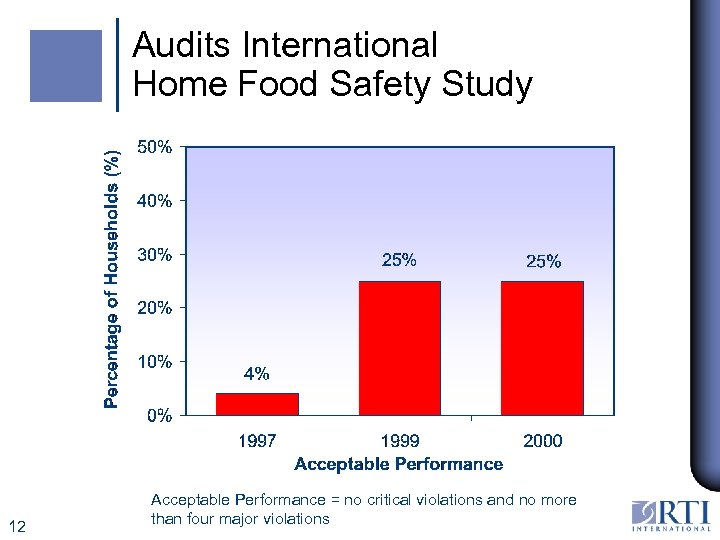
Audits International Home Food Safety Study 12 Acceptable Performance = no critical violations and no more than four major violations
Focus Group Findings on Changes in Consumer Confidence n n Participants attribute their increased confidence to media coverage of food safety n Participants think the government is doing an adequate job keeping meat and poultry safe n 13 Participants’ confidence in the safety of meat and poultry has increased or remained about the same Most participants think the government has not improved its performance in the past 5 years
Consumer Confidence in the Safety of Meat and Poultry n Most consumers willingly accept responsibility for ensuring that the food they eat is safe n Most consumers are confident that the meat and poultry they prepare at home is safe to eat n Consumers worry more about how meat and poultry are handled prior to purchase than about how they handle it at home l l Concerns about antibiotic residues l 14 Believe foodborne illness originates in food processing plants and restaurants, not their homes Concerns about food transportation
Conclusions (I) n Consumers’ reported knowledge and use of safe handling practices have increased; however, when observed consumers do not always follow safe practices n Although the self-reported use of some practices has increased, additional improvements are warranted l l Safely storing leftovers l 15 Food thermometer use Safely thawing meat/poultry
Conclusions (II) n n Consumer confidence in the safety of meat and poultry has increased or remained about the same n 16 Consumers have some knowledge about foodborne pathogens, “high-risk” foods, and high-risk populations, but their knowledge is sometimes wrong or incomplete Consumers are satisfied with the government’s performance at ensuring the safety of meat and poultry

Thinking Globally -Working Locally A Conference on Food Safety Education 17
Скачать презентацию Changes in Consumer Knowledge Behavior and Confidence Since