


 Скачать презентацию Changes in Acute and Chronic Kidney Disease and
6d4ec2a2574a46531ca403e08950c295.ppt
- Количество слайдов: 62
 Changes in Acute and Chronic Kidney Disease and Staging of Kidney Disease Jeffrey J. Kaufhold, MD FACP 20 th Annual Family Practice Review and Reunion February 2015
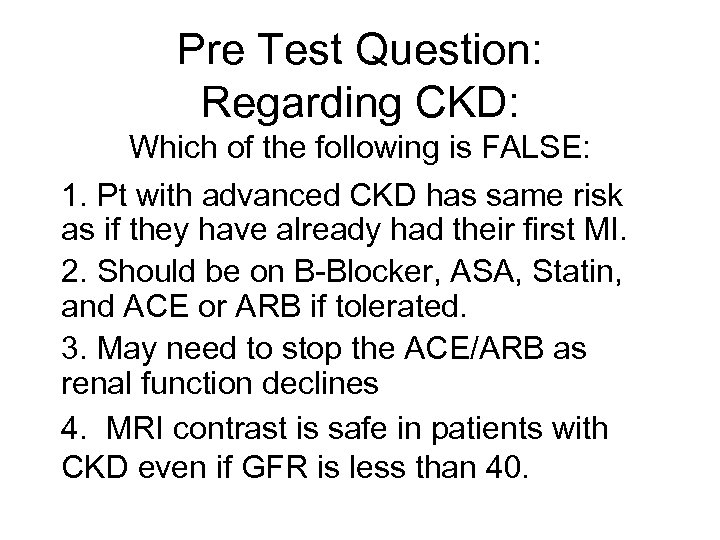 Pre Test Question: Regarding CKD: Which of the following is FALSE: 1. Pt with advanced CKD has same risk as if they have already had their first MI. 2. Should be on B-Blocker, ASA, Statin, and ACE or ARB if tolerated. 3. May need to stop the ACE/ARB as renal function declines 4. MRI contrast is safe in patients with CKD even if GFR is less than 40.
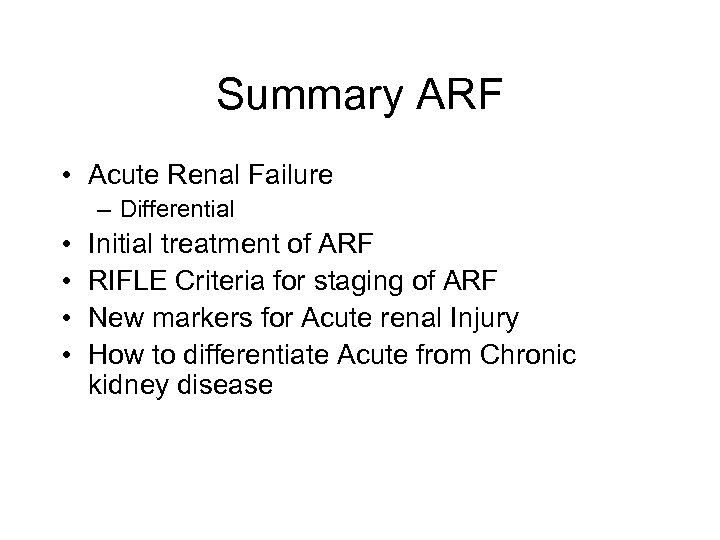 Summary ARF • Acute Renal Failure – Differential • • Initial treatment of ARF RIFLE Criteria for staging of ARF New markers for Acute renal Injury How to differentiate Acute from Chronic kidney disease
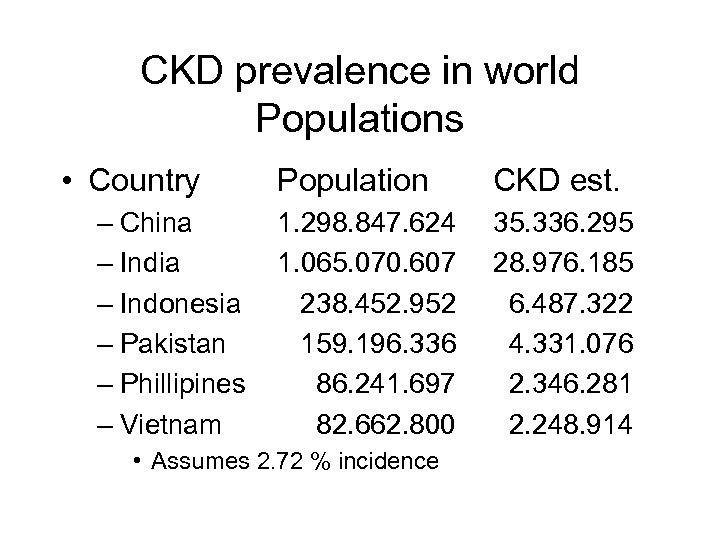
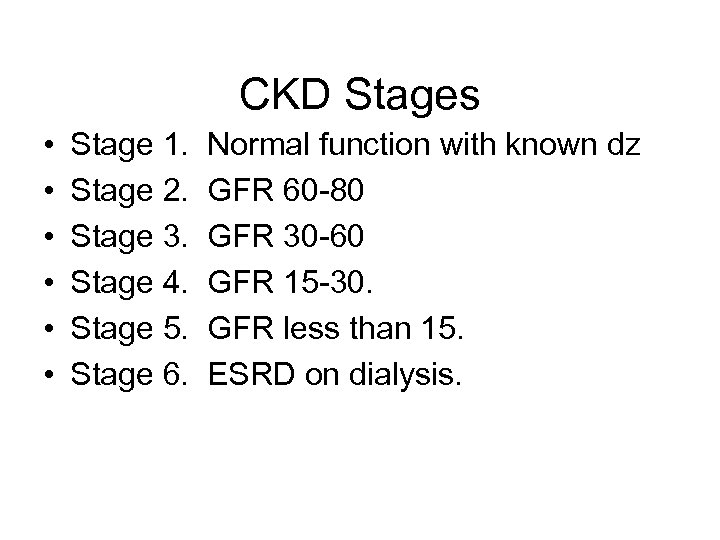
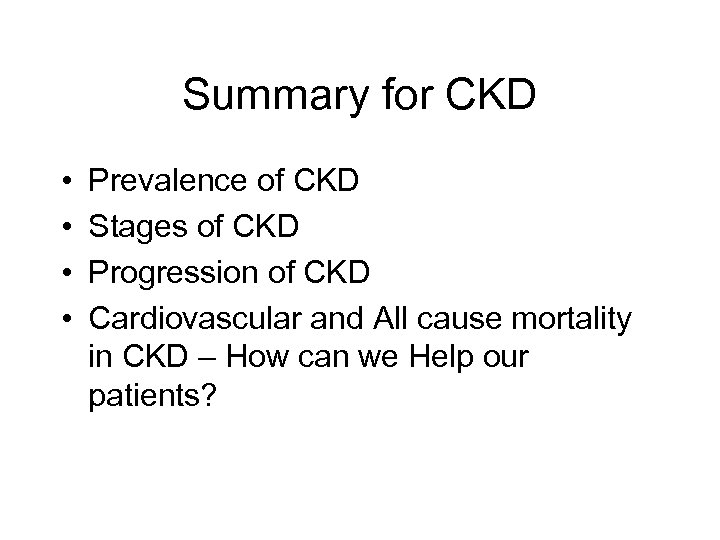 Summary for CKD • • Prevalence of CKD Stages of CKD Progression of CKD Cardiovascular and All cause mortality in CKD – How can we Help our patients?
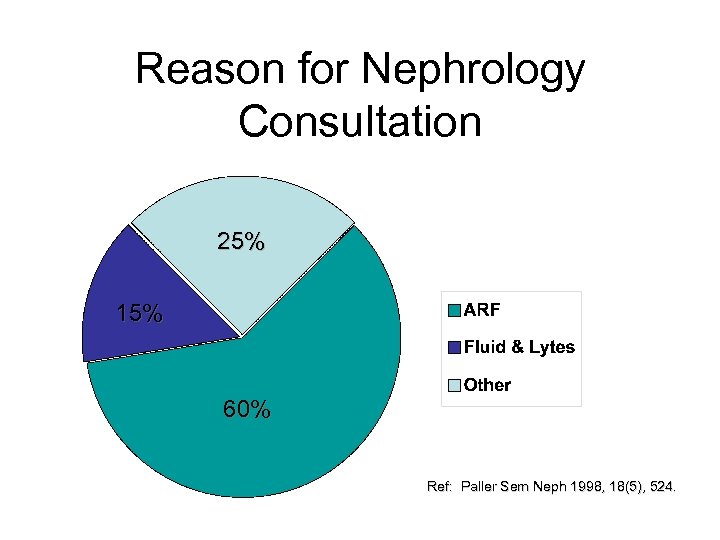 Reason for Nephrology Consultation 25% 15% 60% Ref: Paller Sem Neph 1998, 18(5), 524.
 Approach to ARF • • Pseudo-ARF Pre-Renal Intra-Renal Post- Renal
 Approach to ARF • Pseudo-ARF – Pt hosp for liver lac, allowed to go home on weekends. Normal renal function. – First weekend, creat bumped to 1. 5, noticed – 2 nd weekend, creat up to 1. 8, hydrated and came down. – 3 rd weekend, creat over 2. 0, so we were consulted. – What was happening?
 Approach to ARF • Pseudo-ARF – Pt was eating steak dinners at home/restaurant – Texan so steak was WELL done – Creatine in muscle converted to Creatinine. • Creatinine production also much higher in Rhabdomyolysis, so BUN / Creat ratio may be less than 10.
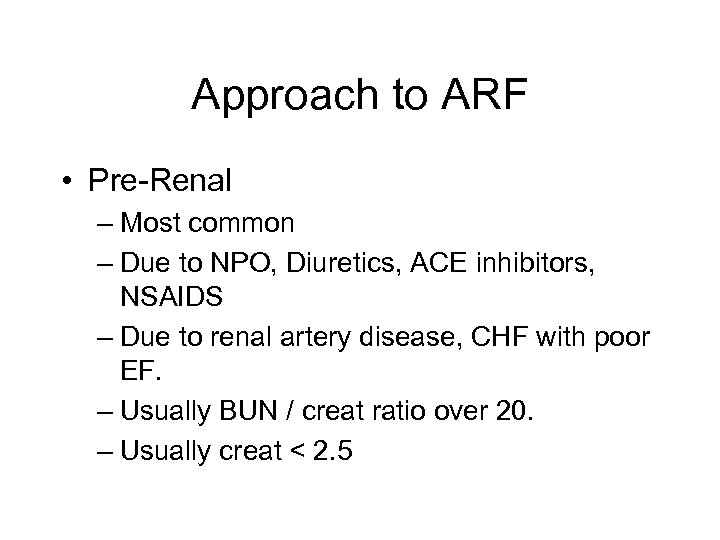 Approach to ARF • Pre-Renal – Most common – Due to NPO, Diuretics, ACE inhibitors, NSAIDS – Due to renal artery disease, CHF with poor EF. – Usually BUN / creat ratio over 20. – Usually creat < 2. 5
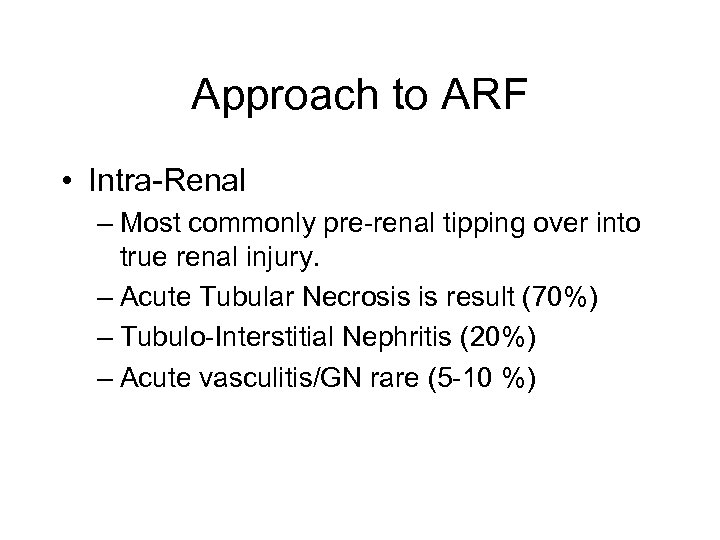 Approach to ARF • Intra-Renal – Most commonly pre-renal tipping over into true renal injury. – Acute Tubular Necrosis is result (70%) – Tubulo-Interstitial Nephritis (20%) – Acute vasculitis/GN rare (5 -10 %)
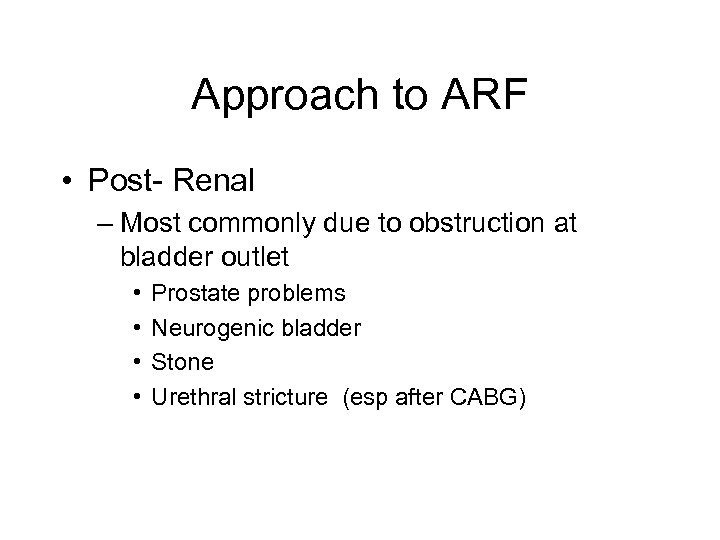 Approach to ARF • Post- Renal – Most commonly due to obstruction at bladder outlet • • Prostate problems Neurogenic bladder Stone Urethral stricture (esp after CABG)
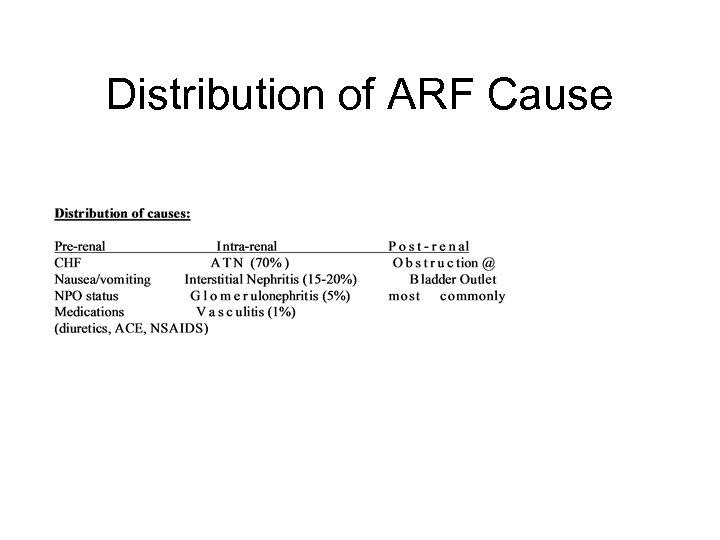 Distribution of ARF Cause
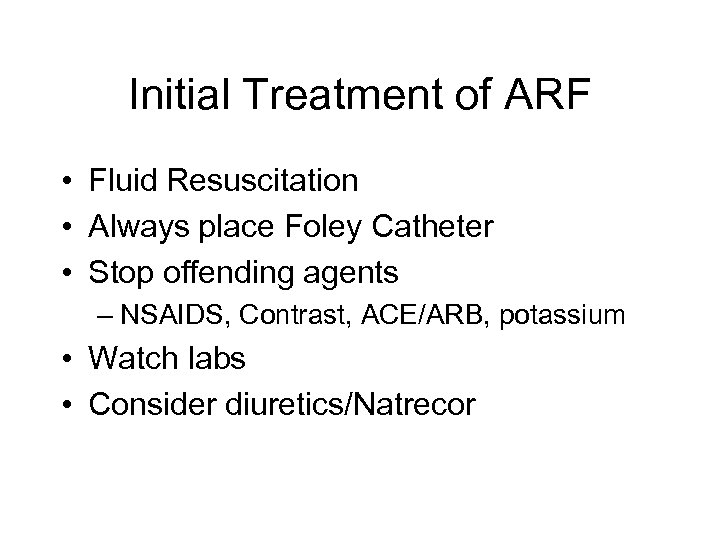 Initial Treatment of ARF • Fluid Resuscitation • Always place Foley Catheter • Stop offending agents – NSAIDS, Contrast, ACE/ARB, potassium • Watch labs • Consider diuretics/Natrecor
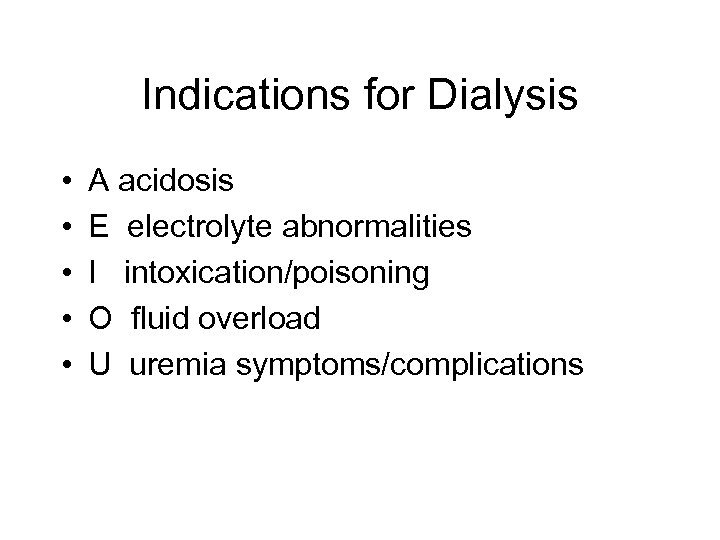 Indications for Dialysis • • • A acidosis E electrolyte abnormalities I intoxication/poisoning O fluid overload U uremia symptoms/complications
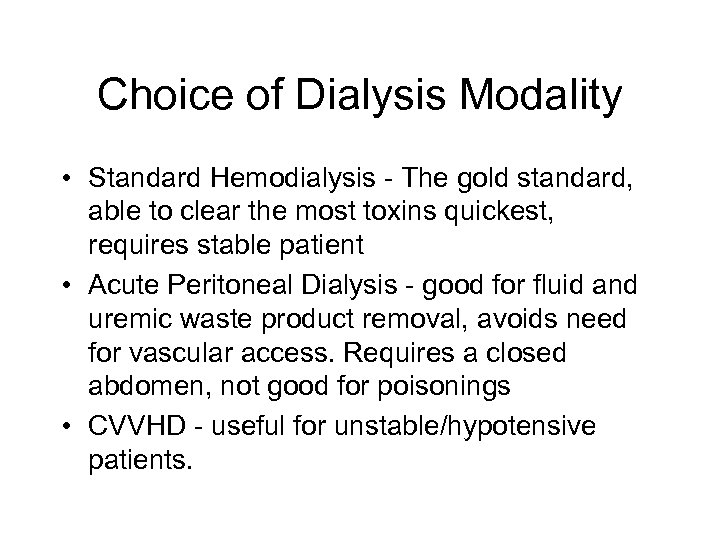 Choice of Dialysis Modality • Standard Hemodialysis - The gold standard, able to clear the most toxins quickest, requires stable patient • Acute Peritoneal Dialysis - good for fluid and uremic waste product removal, avoids need for vascular access. Requires a closed abdomen, not good for poisonings • CVVHD - useful for unstable/hypotensive patients.
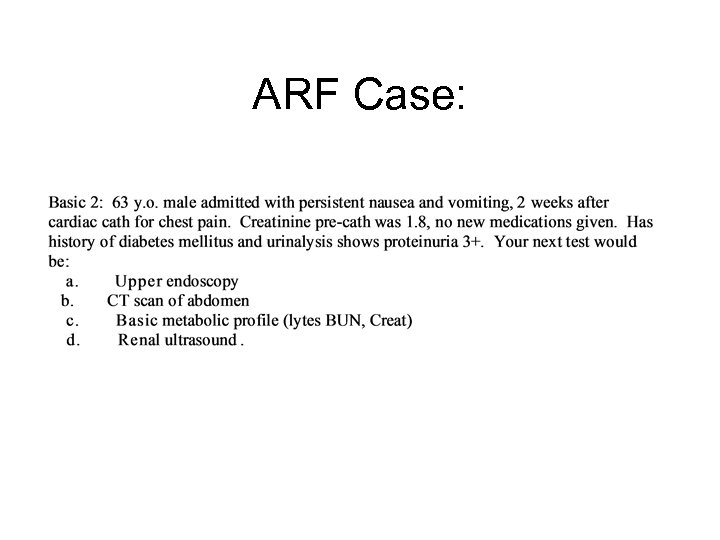 ARF Case:
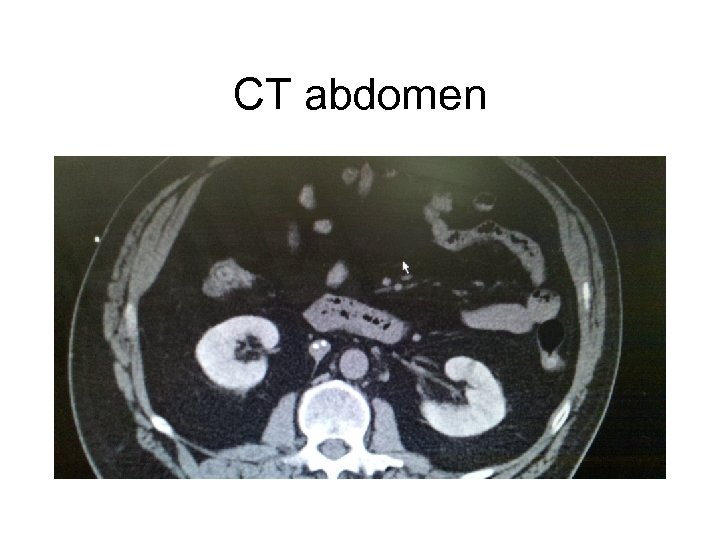 CT abdomen
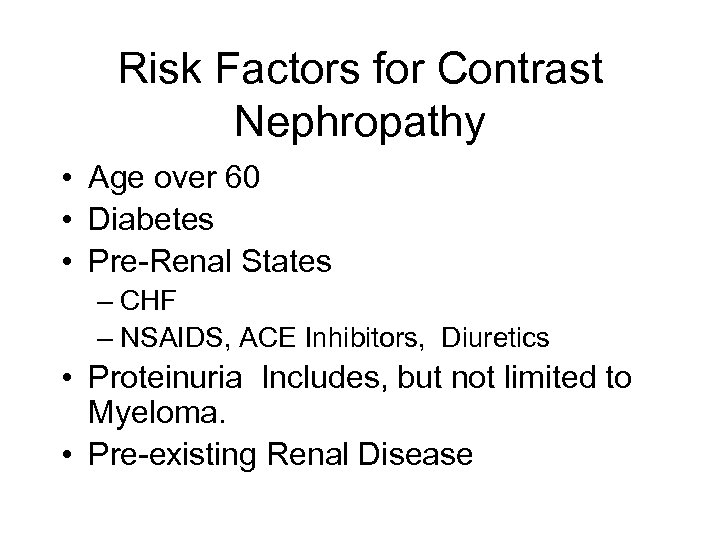 Risk Factors for Contrast Nephropathy • Age over 60 • Diabetes • Pre-Renal States – CHF – NSAIDS, ACE Inhibitors, Diuretics • Proteinuria Includes, but not limited to Myeloma. • Pre-existing Renal Disease
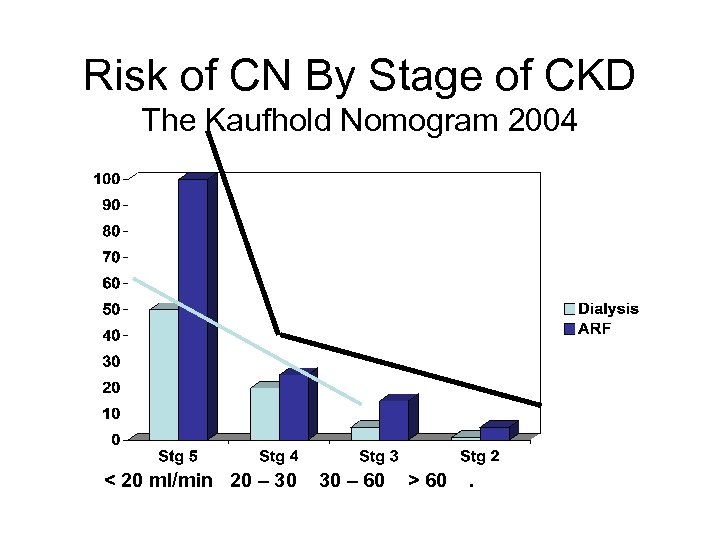 Risk of CN By Stage of CKD The Kaufhold Nomogram 2004 < 20 ml/min 20 – 30 30 – 60 > 60 .
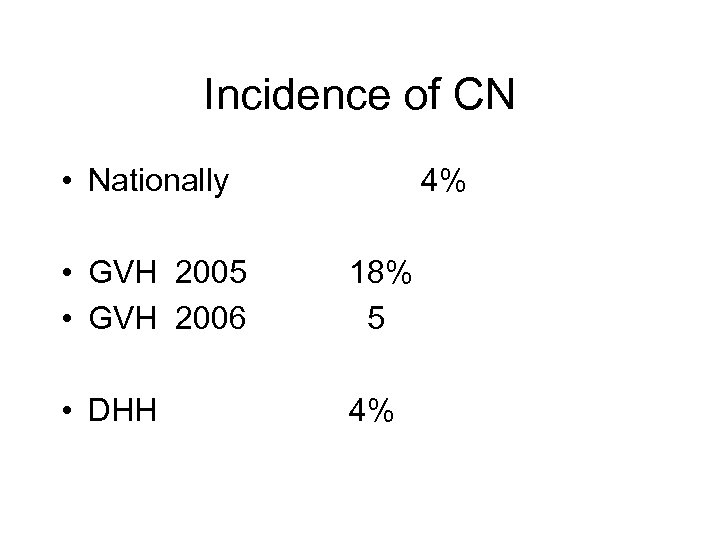 Incidence of CN • Nationally 4% • GVH 2005 • GVH 2006 18% 5 • DHH 4%
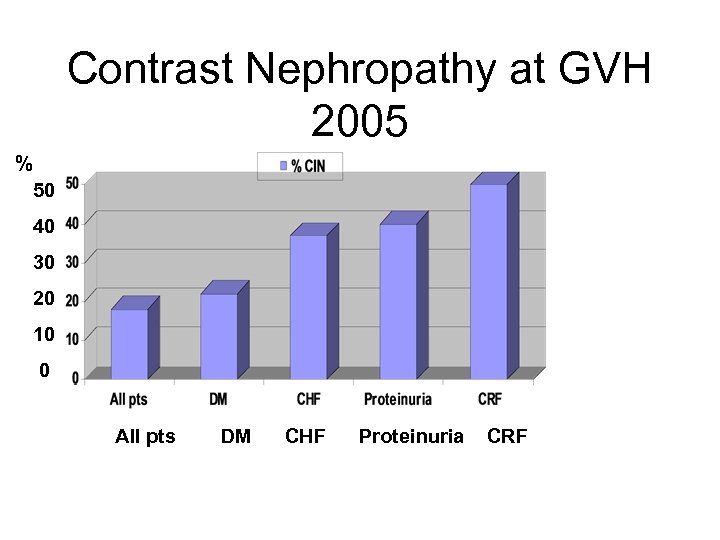 Contrast Nephropathy at GVH 2005 % 50 40 30 20 10 0 All pts DM CHF Proteinuria CRF
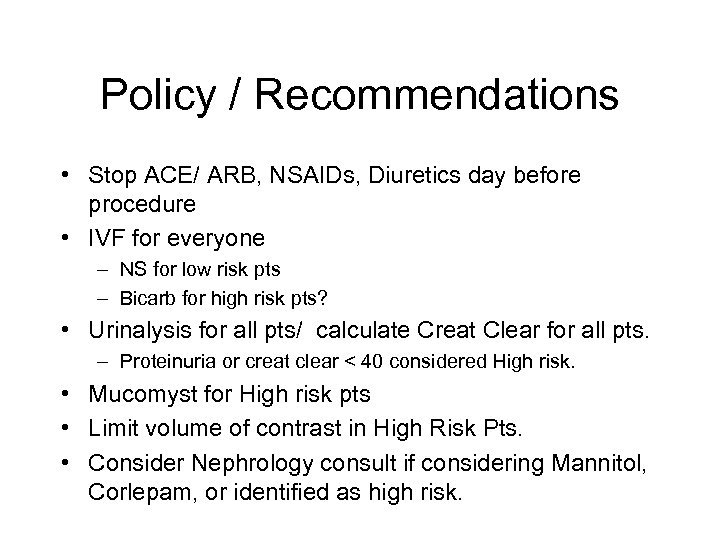 Policy / Recommendations • Stop ACE/ ARB, NSAIDs, Diuretics day before procedure • IVF for everyone – NS for low risk pts – Bicarb for high risk pts? • Urinalysis for all pts/ calculate Creat Clear for all pts. – Proteinuria or creat clear < 40 considered High risk. • Mucomyst for High risk pts • Limit volume of contrast in High Risk Pts. • Consider Nephrology consult if considering Mannitol, Corlepam, or identified as high risk.
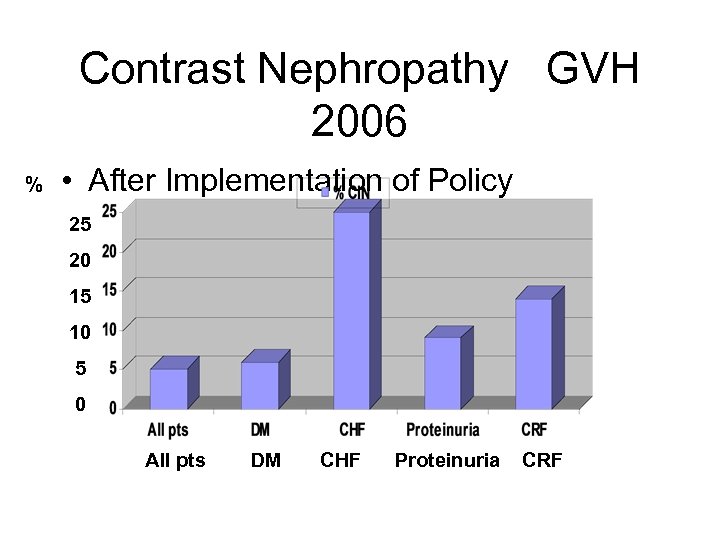 Contrast Nephropathy GVH 2006 % • After Implementation of Policy 25 20 15 10 5 0 All pts DM CHF Proteinuria CRF
 Staging for Acute renal Failure • RIFLE criteria • ADQI stages 1, 2 , 3 correspond to RIF of the RIFLE criteria.
 Acute Dialysis Quality Initiative • RIFLE Criteria Helps risk stratify patients with acute renal failure. • Increased mortality seen with increases in creatinine of 0. 3 to 0. 5 mg/dl (70 % increase for all pts, 300 % increase in cardiac surgery pts
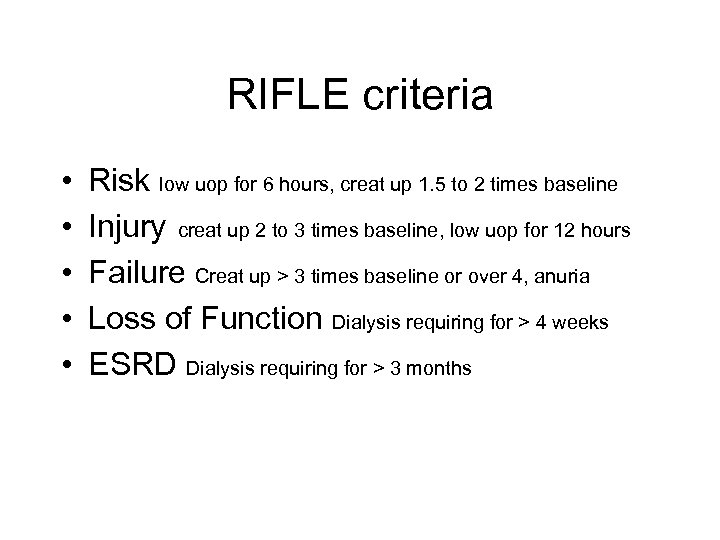 RIFLE criteria • • • Risk low uop for 6 hours, creat up 1. 5 to 2 times baseline Injury creat up 2 to 3 times baseline, low uop for 12 hours Failure Creat up > 3 times baseline or over 4, anuria Loss of Function Dialysis requiring for > 4 weeks ESRD Dialysis requiring for > 3 months
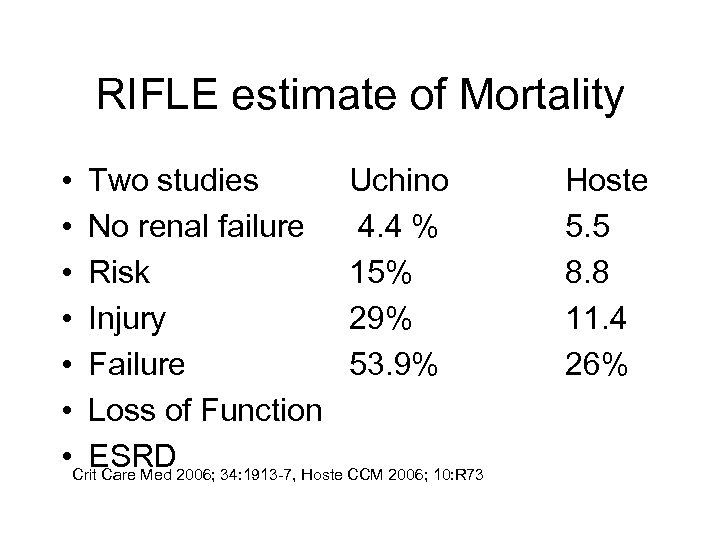 RIFLE estimate of Mortality • Two studies Uchino • No renal failure 4. 4 % • Risk 15% • Injury 29% • Failure 53. 9% • Loss of Function • Crit Care Med 2006; 34: 1913 -7, Hoste CCM 2006; 10: R 73 ESRD Hoste 5. 5 8. 8 11. 4 26%
 RIFLE criteria • When markers of severity of illness are looked at excluding renal data, no difference in groups is seen.
 New markers for ARF • Creatinine is not very sensitive • Cystatin C identifies ARF 1. 5 days earlier than creatinine – KI 2004; 60: 1115 -1122 • KIM-1 – an adhesion molecule • NGAL – another adhesion molecule – Shows up in urine and blood after tubular injury
 New markers for ARF • Insulin like growth Factor 7 in urine • Tissue inhibitor of metalloproteinases also in urine • Can rapidly identify patients at risk for ARF in 76 -92% of cases • False positive in half of patients in the ICU who do not develop ARF • Offered by Nephro. Check – ACP Hospitalist, Nov 2014, pg 45
 Agents to Treat ARF • Lasix still improves urine output, but may worsen mortality – Intensive care Med. 2005; 31: 79 -85, JAMA 2002; 288: 2547 -2553 • Fenoldapam may be helpful, especially in cardiac surgery pts – Am. JKid Dis 2005; 46: 26 -34 • Atrial Natriuretic Peptide may reduce need for dialysis and mortality – Crit Care Med 2004; 32: 1310 -5. • Dopamine still doesn’t work – Ann Int Med 2005; 142: 510 -24.
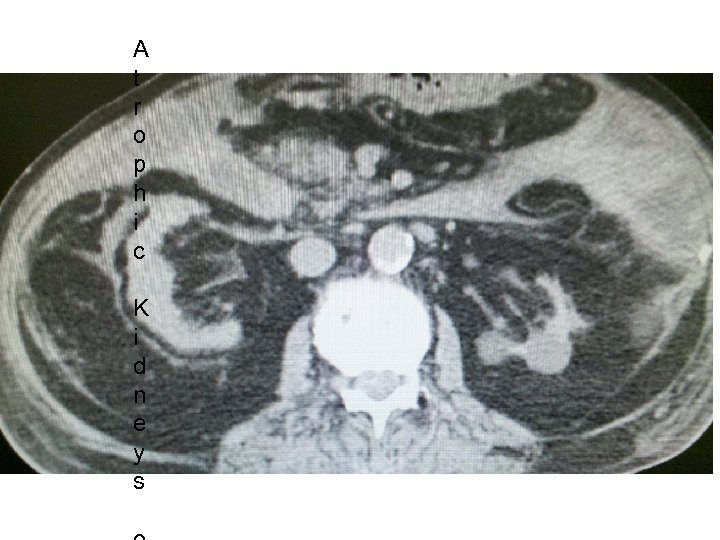
 How do you differentiate ARF from CRF. • What physical exam finding tells you the pt has Chronic Kidney Disease? • What Would you see on renal Imaging for a pt with CKD?
 Lindsey’s Nails
 A t r o p h i c K i d n e y s
 CKD prevalence in world Populations • Country – China – India – Indonesia – Pakistan – Phillipines – Vietnam Population CKD est. 1. 298. 847. 624 1. 065. 070. 607 238. 452. 952 159. 196. 336 86. 241. 697 82. 662. 800 35. 336. 295 28. 976. 185 6. 487. 322 4. 331. 076 2. 346. 281 2. 248. 914 • Assumes 2. 72 % incidence
 CKD Stages • • • Stage 1. Stage 2. Stage 3. Stage 4. Stage 5. Stage 6. Normal function with known dz GFR 60 -80 GFR 30 -60 GFR 15 -30. GFR less than 15. ESRD on dialysis.
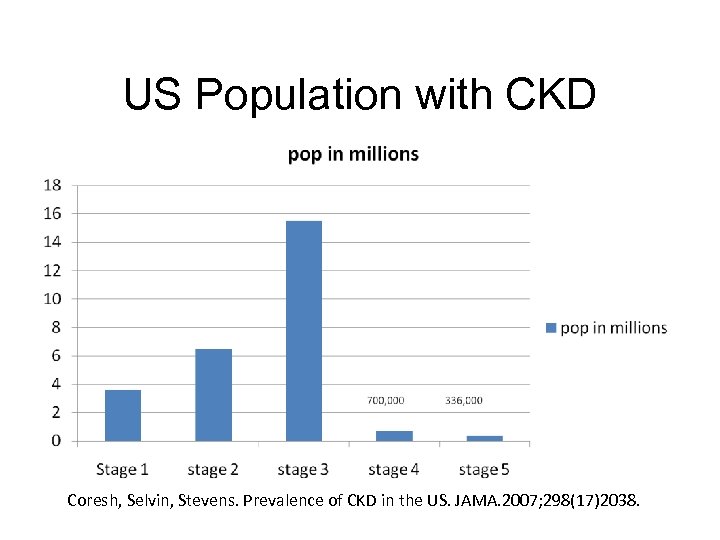 US Population with CKD Coresh, Selvin, Stevens. Prevalence of CKD in the US. JAMA. 2007; 298(17)2038.
 US Population with CKD • Most people will age into Stage 3, and do not have progressive renal disease. • A subgroup of people do have a progressive kidney disease, and these should be seeing a Nephrologist. • Some authors assign a Stage 3 a and 3 b with 3 b being those with evidence of renal disease (proteinuria etc)
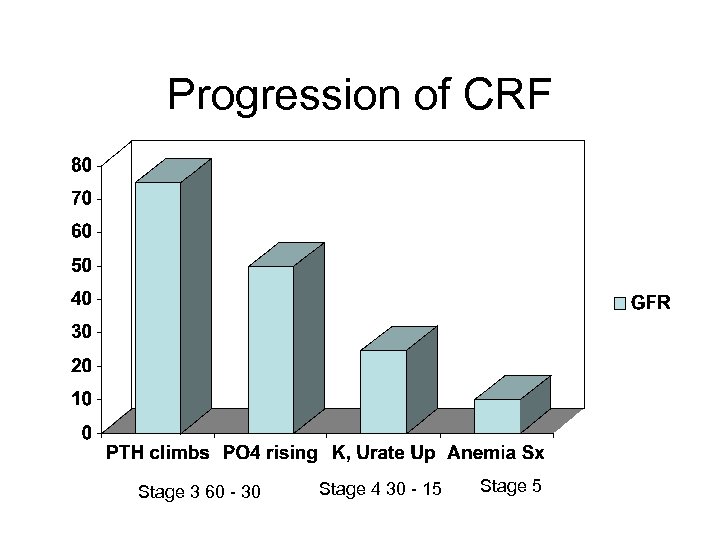 Progression of CRF Stage 3 60 - 30 Stage 4 30 - 15 Stage 5
 Preparation of the Patient • Manage CRF • Control BP • Control glucose – Careful with oral agents! • Prevent Hyper PTH – Vit D – Calcium acetate – Phosphate binder • Diet Education
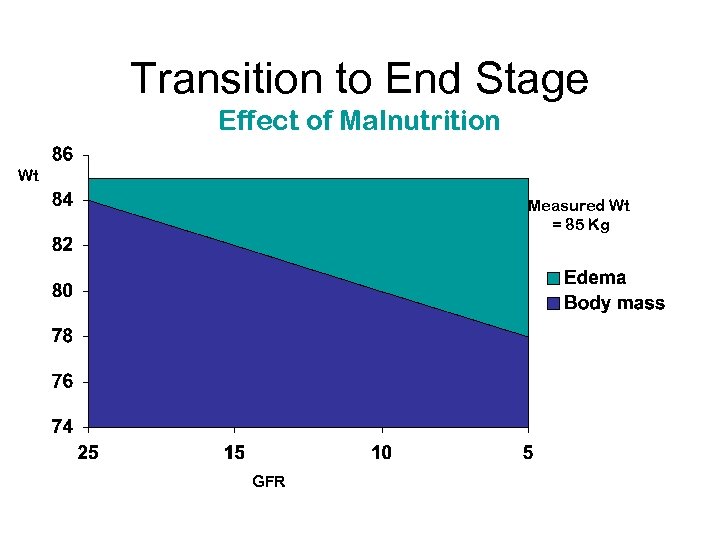
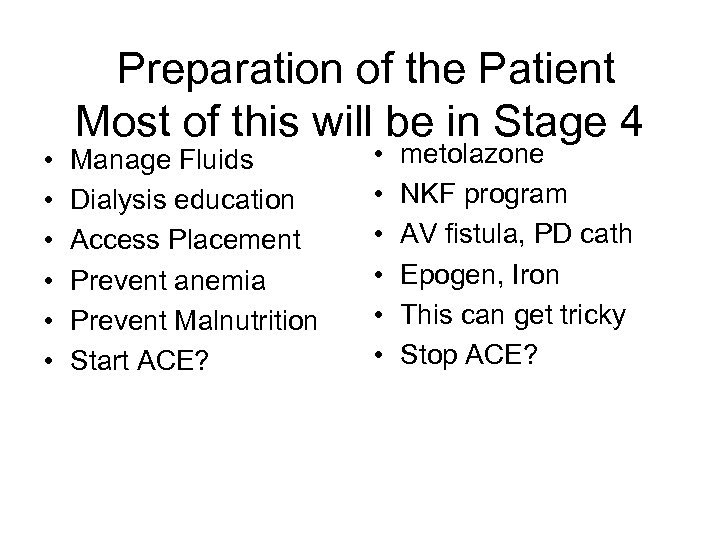 • • • Preparation of the Patient Most of this will be in Stage 4 Manage Fluids Dialysis education Access Placement Prevent anemia Prevent Malnutrition Start ACE? • • • metolazone NKF program AV fistula, PD cath Epogen, Iron This can get tricky Stop ACE?
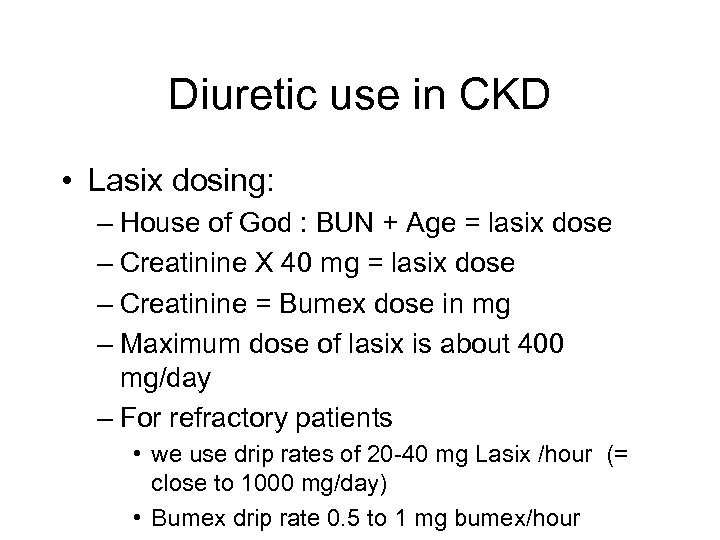 Diuretic use in CKD • Lasix dosing: – House of God : BUN + Age = lasix dose – Creatinine X 40 mg = lasix dose – Creatinine = Bumex dose in mg – Maximum dose of lasix is about 400 mg/day – For refractory patients • we use drip rates of 20 -40 mg Lasix /hour (= close to 1000 mg/day) • Bumex drip rate 0. 5 to 1 mg bumex/hour
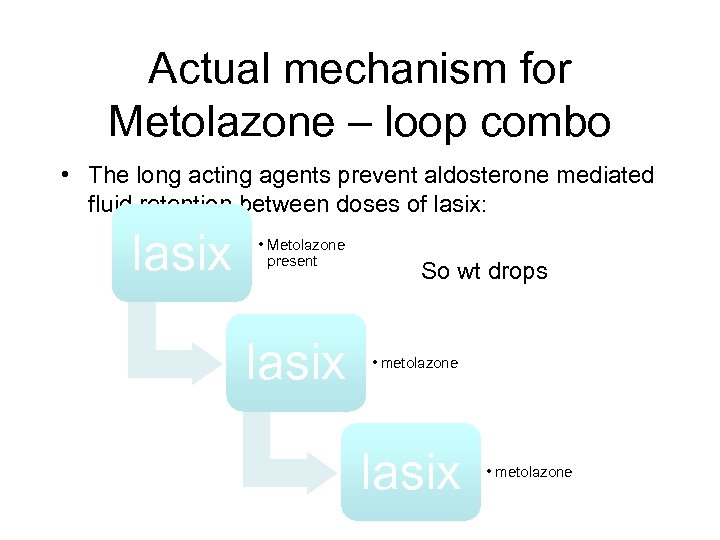
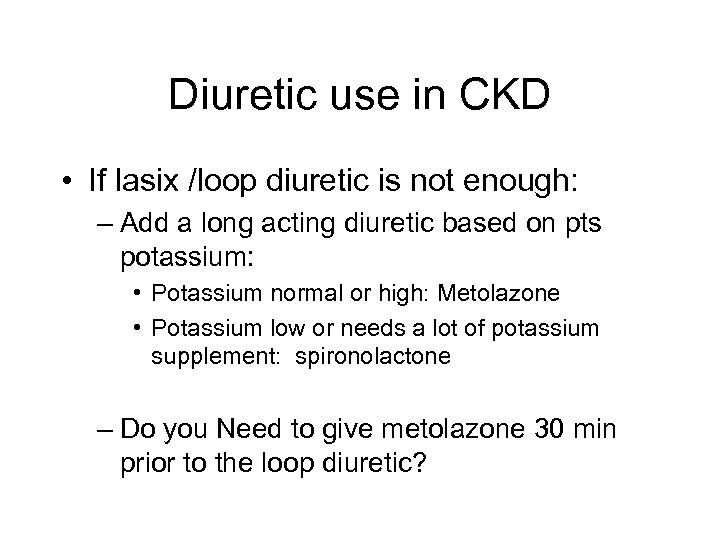 Diuretic use in CKD • If lasix /loop diuretic is not enough: – Add a long acting diuretic based on pts potassium: • Potassium normal or high: Metolazone • Potassium low or needs a lot of potassium supplement: spironolactone – Do you Need to give metolazone 30 min prior to the loop diuretic?
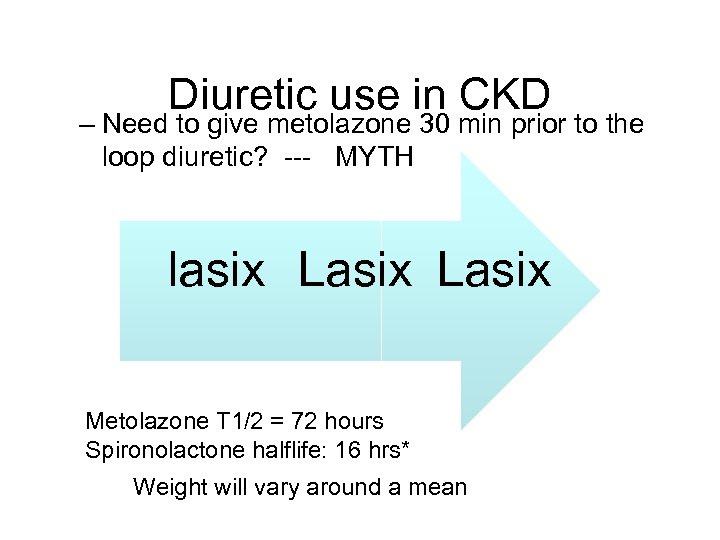 Diuretic use in CKD – Need to give metolazone 30 min prior to the loop diuretic? --- MYTH lasix Lasix Metolazone T 1/2 = 72 hours Spironolactone halflife: 16 hrs* Weight will vary around a mean
 Actual mechanism for Metolazone – loop combo • The long acting agents prevent aldosterone mediated fluid retention between doses of lasix: lasix • Metolazone present lasix So wt drops • metolazone lasix • metolazone
 Transition to End Stage Effect of Malnutrition Wt Measured Wt = 85 Kg GFR
 Relative Contraindications to starting dialysis • • • Alzheimer’s disease Multi-infarct Dementia Hepatorenal syndrome Advanced cirrhosis with encephalopathy Advanced malignancy HIV with dementia
 Cardiovascular events by Stage of CKD NKF KDOQI guidelines www. kidney. org/professionals/KDOQI/guidelines_ckd/toc. htm
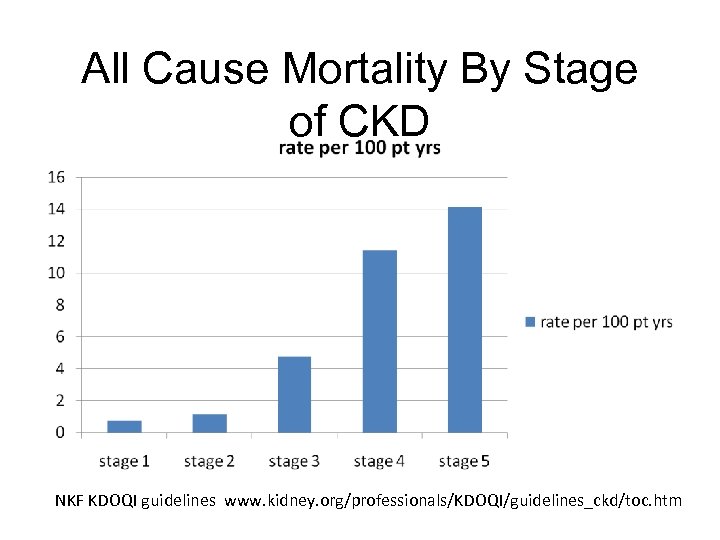 All Cause Mortality By Stage of CKD NKF KDOQI guidelines www. kidney. org/professionals/KDOQI/guidelines_ckd/toc. htm
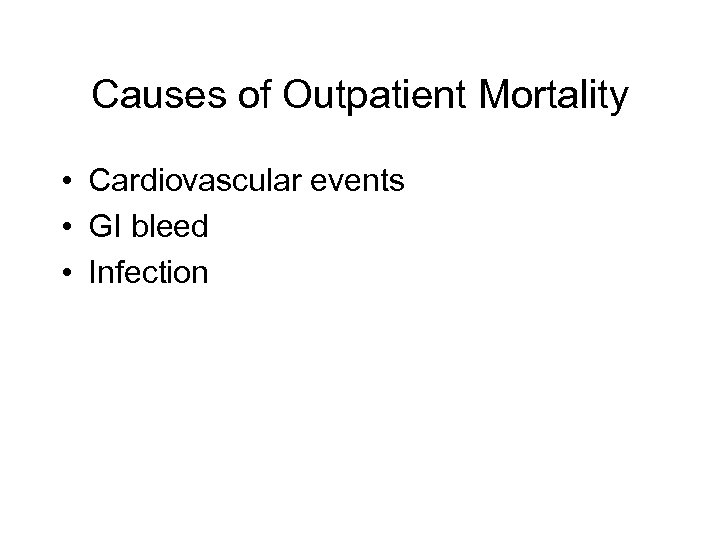 Causes of Outpatient Mortality • Cardiovascular events • GI bleed • Infection
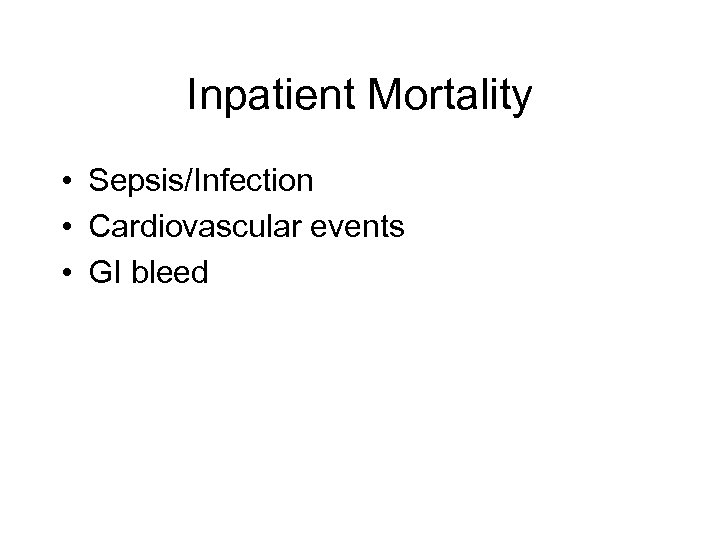 Inpatient Mortality • Sepsis/Infection • Cardiovascular events • GI bleed
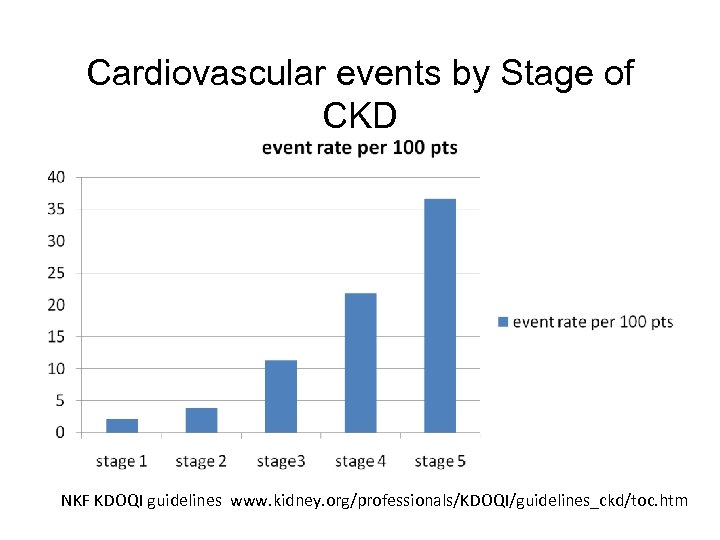
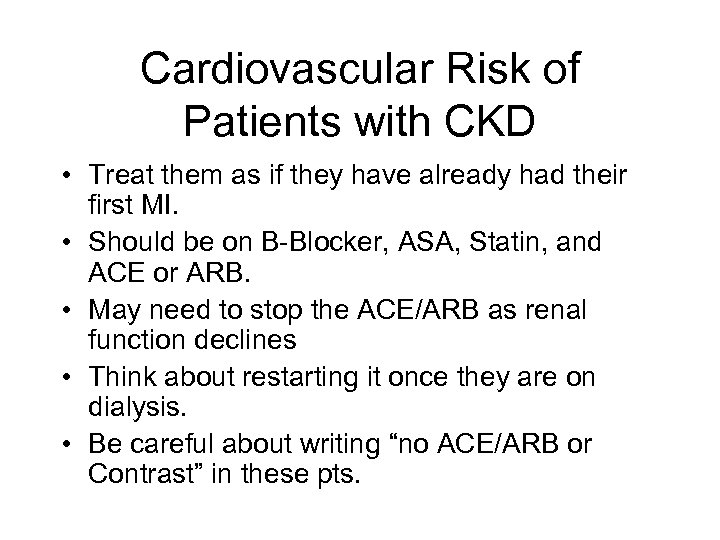 Cardiovascular Risk of Patients with CKD • Treat them as if they have already had their first MI. • Should be on B-Blocker, ASA, Statin, and ACE or ARB. • May need to stop the ACE/ARB as renal function declines • Think about restarting it once they are on dialysis. • Be careful about writing “no ACE/ARB or Contrast” in these pts.
 Reminders • When you evaluate a patient keep in mind that CKD and HD patients are different • These patients need the same workup for the same complaints • Your differential will be the same • Your treatment may be modified
 Meds to Think about/ adjust or avoid • Demerol – avoid below GFR of 30 • Morphine – Dose adjust • NSAID’s – avoid below GFR of 30 and try to limit in patients with progressive disease • ACEI / ARBS – stop when potassium or creatinine start rising too much • Glucophage – stop below GFR of 40. • Antibiotics – dose adjust
 Meds to Avoid/Think About • Contrast- IV contrast can be given in dialysis patients • Keep in mind that the osmotic effects of contrast can shift fluid into the intravascular space and cause pulmonary edema • MRI contrast (Gadolinium etc) should be avoided over creat of 2. 0 or GFR less than 40 ml/min
 Advances in Artificial Kidneys • Membraneless artificial kidney – Uses fluid layer in microtubule for solute exchange – Worn on arm, connected to avf continuously – The fluid layer collects wastes and is exchanged periodically – Infoscitex Inc and Columbia University – Reach market in 2015?
 Wearable Artificial Kidney • Miniaturized dialysis machine worn around waist. Wt 5 lbs. • Utilizes a unique battery powered pump for blood and dialysate • Sorbent cartridge based dialysate • Already proven for SCUF in CHF pts. • UCLA Victor Gura, MD
 Human Nephron Filter • Nanomembrane technology • May be able to tailor dialysis • Would lend itself to wearable, continuous modalities • Philtre, Alan Nissenson, MD
 Bioartificial Kidney • Uses cloned renal tubular cells from unusable donor kidneys • Cells line capillary tubules in a kidney similar to conventional dialysis kidney • Renal Assist Device can assume endocrine and metabolic functions • In phase II study reduced mortality in ICU ARF pts from 61 to 34 %. • University of Michigan David Humes, MD
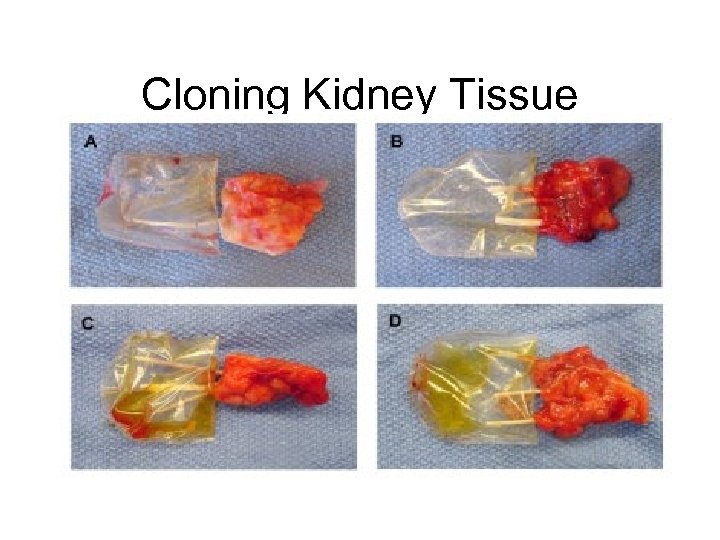 Cloning Kidney Tissue
 Resources • This lecture and other materials at – www. Jeffkaufhold. com/Family
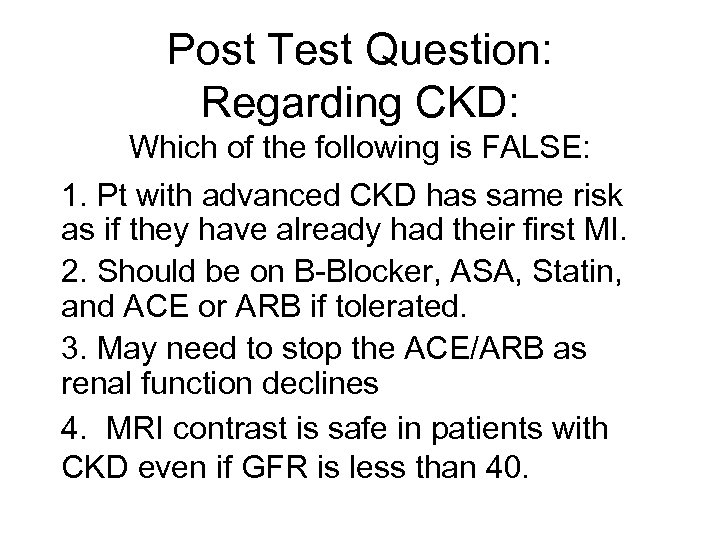 Post Test Question: Regarding CKD: Which of the following is FALSE: 1. Pt with advanced CKD has same risk as if they have already had their first MI. 2. Should be on B-Blocker, ASA, Statin, and ACE or ARB if tolerated. 3. May need to stop the ACE/ARB as renal function declines 4. MRI contrast is safe in patients with CKD even if GFR is less than 40.