


 Скачать презентацию Challenging Cases in Hepatology and Gastroenterology Sanjiv Chopra
ee1096aca20fd0de30faf6d020da3d4c.ppt
- Количество слайдов: 47
 Challenging Cases in Hepatology and Gastroenterology Sanjiv Chopra, M. D. , MACP Professor of Medicine Faculty Dean, Continuing Education Harvard Medical School Senior Consultant in Hepatology Beth Israel Deaconess Medical Center Boston, Massachusetts
 We have no financial relationships I have no financial relationships with commercial entities producing, marketing, re-selling, or distributing health care goods or services consumed by, or used on, patients relevant to the content I am presenting
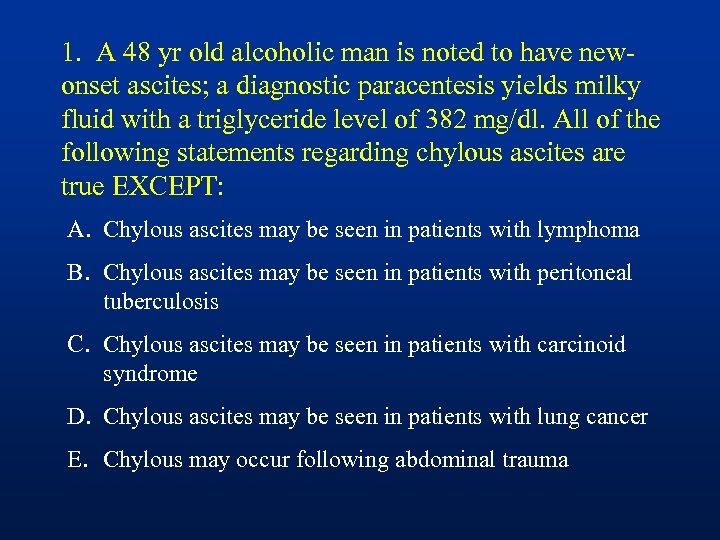 1. A 48 yr old alcoholic man is noted to have newonset ascites; a diagnostic paracentesis yields milky fluid with a triglyceride level of 382 mg/dl. All of the following statements regarding chylous ascites are true EXCEPT: A. Chylous ascites may be seen in patients with lymphoma B. Chylous ascites may be seen in patients with peritoneal tuberculosis C. Chylous ascites may be seen in patients with carcinoid syndrome D. Chylous ascites may be seen in patients with lung cancer E. Chylous may occur following abdominal trauma
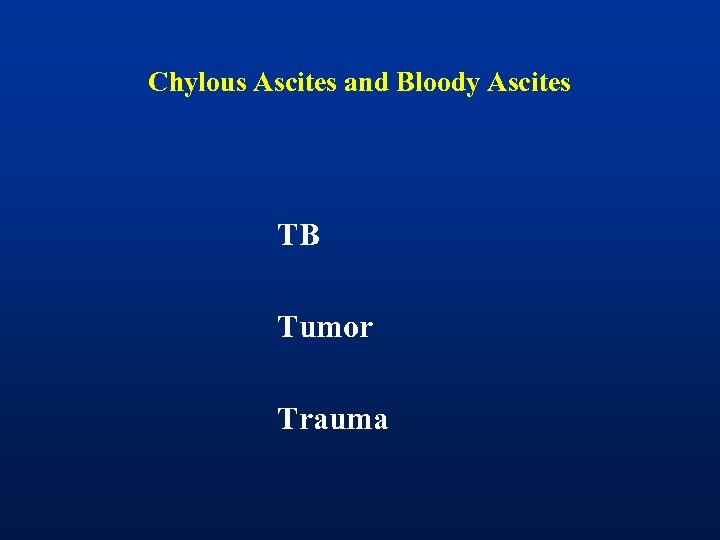 Chylous Ascites and Bloody Ascites TB Tumor Trauma
 Chylous Ascites and Secretory Diarrhea Carcinoid Syndrome
 2. A 32 yr old woman complains of fevers, drenching night sweats, arthralgias and weakness for 2 weeks. She had a similar episode 2 years earlier. She reports that at that time she had abnormal “LFT’s” but no definitive diagnosis was made. Laboratory data from 2 years ago showed: Serum ALT 348 IU/L, AST 329 IU/L, alkaline phosphatase 392 IU/L, total bilirubin 5. 8, direct bilirubin 3. 9, albumin 3. 0, PT 13. 1. WBC 1500; 50 polys, 0 bands, 40 lymphs. Bone marrow biopsy normal. Hepatitis A, B, and C serologies negative.
 Continued The patient has no prior history of surgery or no known drug allergies. She does not smoke, but has one Gin and tonic every night. Medications include oral contraceptive pills and Omeprazole. She is an RN and works in medical marketing. Physical examination is notable for a jaundiced woman in no acute distress. Her temperature is 102 F, BP 100/64 mm of Hg, pulse rate of 98 per minute. Cardiovascular, pulmonary and abdominal exam are within normal limits and she has no peripheral stigmata of chronic liver disease.
 Continued Laboratory data: WBC 4000; 64 polys, 32 lymphs. Hct 33%; platelets 150, 000. ALT 198 IU/L. AST 179 IU/L, alkaline phosphatase 163, total bilirubin 4. 8 mg/dl, direct bilirubin 3. 4 mg/dl. Albumin 2. 6, PT 12. 9. ANA 1: 80. Blood cultures negative. Further workup: Serum copper, ceruloplasmin within normal limits. Iron studies normal. Specific autoantibodies negative; SPEP, AMA negative. Abdominal CT and chest x-ray normal. Hepatitis A, B and C serologies are negative.
 Continued A percutaneous liver biopsy is performed and the results will be shown. 1. What are the common causes of this lesion? 2. What workup is indicated? 3. Are there any tantalizing clues in the patient’s history?
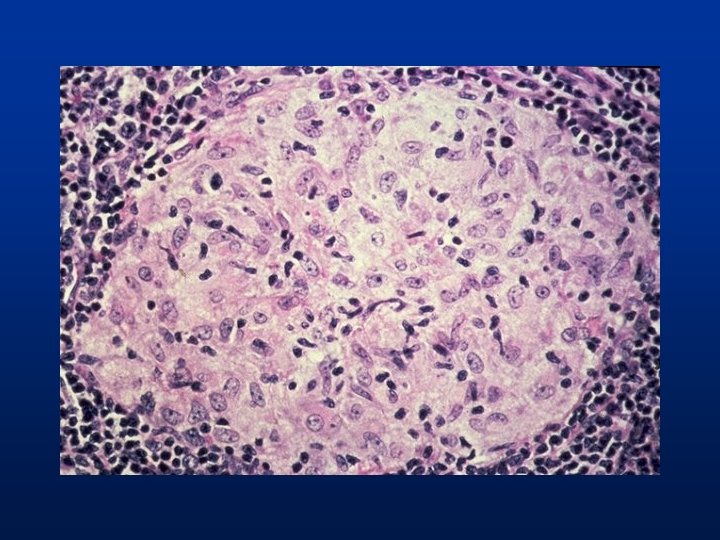
 Granulomas • Specific inflammatory reaction • Circumscribed lesion • Central accumulation of mononuclear cells, primarily macrophages • Macrophages fuse to form multinucleated giant cells • Surrounding rim of lymphocytes, fibroblasts
 Multinucleated giant cells • Fused macrophages • Secrete a variety of proteins: Lysozyme Collagenase ACE
 Varieties of Granulomas • Non-caseating (eg sarcoid) • Caseating, ie central necrosis (TB) • Fibrin ring ( Q fever, HAV, Hodgkin’s, CMV, leishmaniasis, giant cell arteritis) • Lipogranulomas (mineral oil ingestion)
 Disease Categories • Systemic infection • Malignancy • Drug • Autoimmune • Idiopathic
 Infections • TB • AIDS related – MAI – Crypto • Fungal – Histo – Cocci • • Schistosomiasis Leprosy Brucellosis Q Fever Syphilis Cat scratch Whipple’s
 Malignancies • Hodgkin’s Disease • Non Hodgkin’s lumphoma • Renal Cell Carcinoma
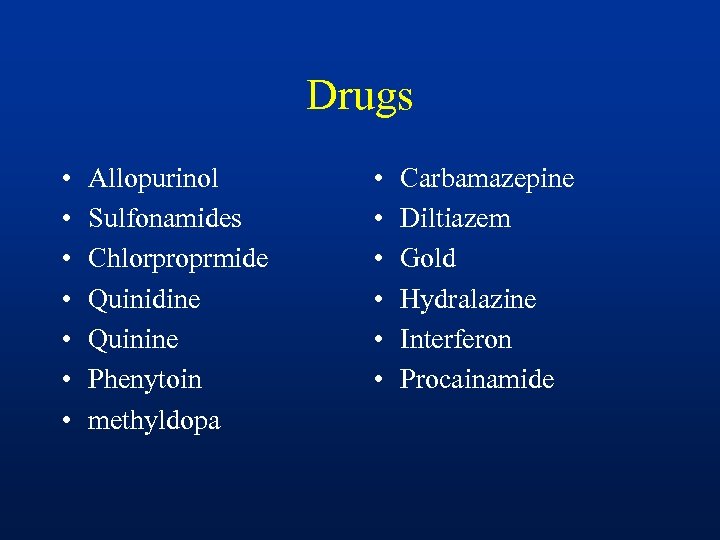 Drugs • • Allopurinol Sulfonamides Chlorproprmide Quinidine Quinine Phenytoin methyldopa • • • Carbamazepine Diltiazem Gold Hydralazine Interferon Procainamide
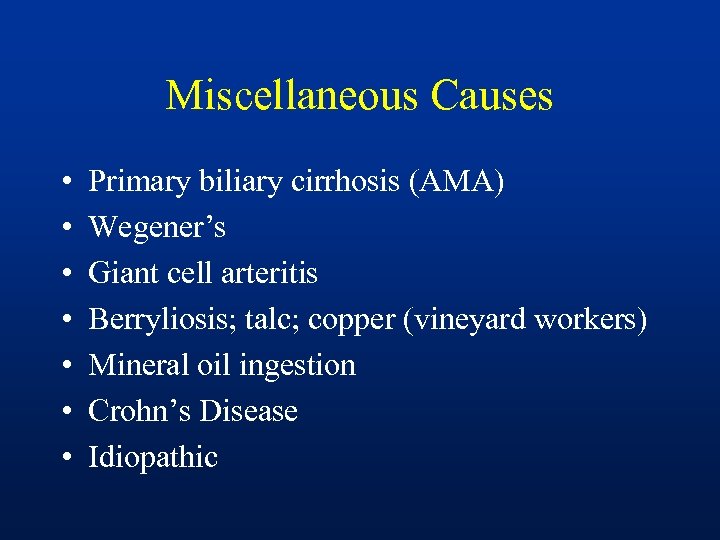 Miscellaneous Causes • • Primary biliary cirrhosis (AMA) Wegener’s Giant cell arteritis Berryliosis; talc; copper (vineyard workers) Mineral oil ingestion Crohn’s Disease Idiopathic
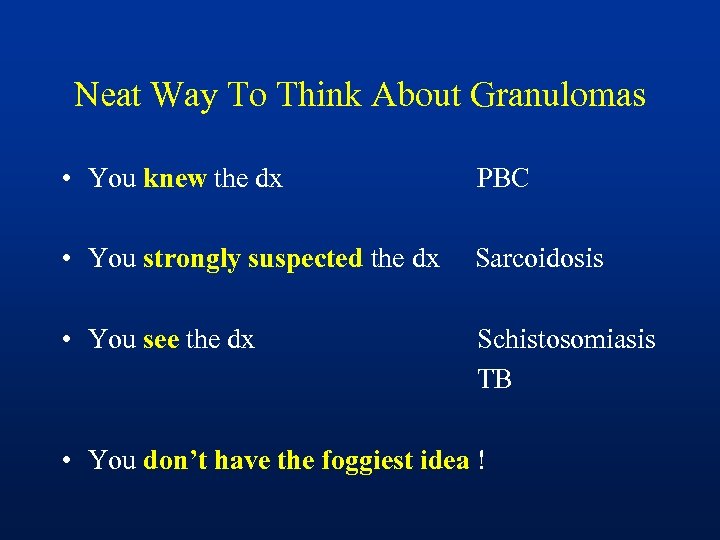 Neat Way To Think About Granulomas • You knew the dx PBC • You strongly suspected the dx Sarcoidosis • You see the dx Schistosomiasis TB • You don’t have the foggiest idea !
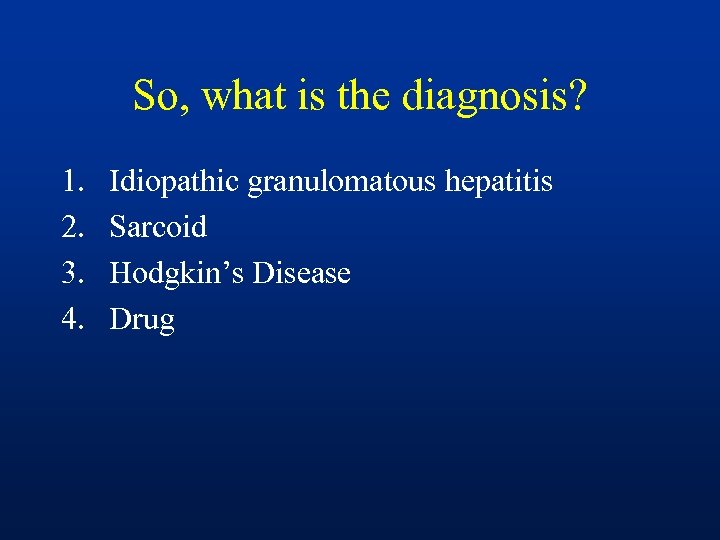 So, what is the diagnosis? 1. 2. 3. 4. Idiopathic granulomatous hepatitis Sarcoid Hodgkin’s Disease Drug
 Her PMH and Social History • • Meds: OCP’s, omeprazole No prior surgery; No known drug allergies Habits- rare cigarettes; 1 G &T nightly Registered nurse working in medical marketing • 2 yrs earlier illness with striking similarities
 Sometimes it takes a hunch…
 A little Pub Med search helped in this case
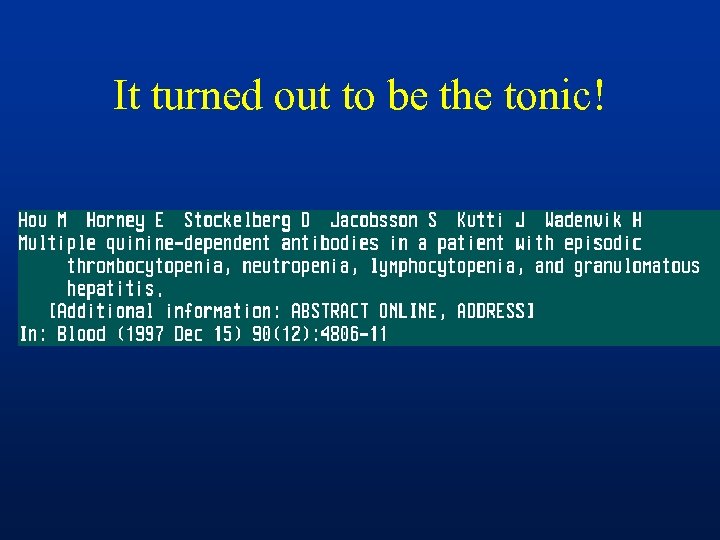 It turned out to be the tonic!
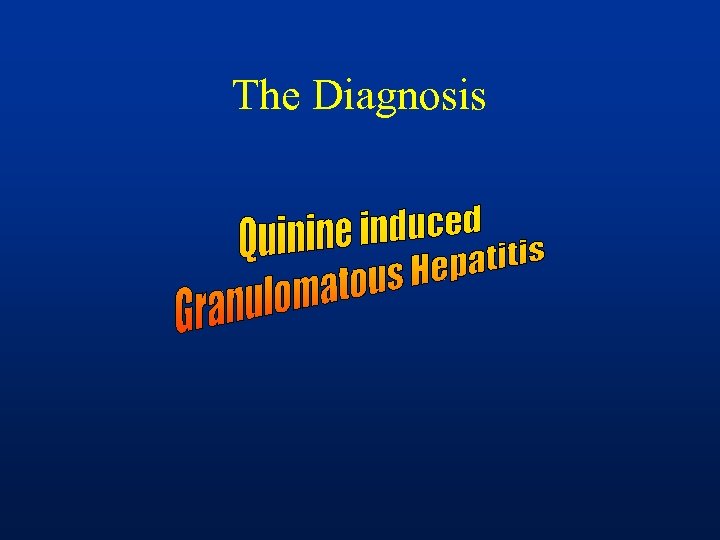 The Diagnosis

 We were able to get copies of her old records • She had a liver biopsy before (which she never told us) • It showed hepatic granulomas • It was 2 yrs earlier and her doctors read the same article we found advised her NOT EVER to drink tonic or take quinine!
 Her Hospital Course • She recalled that she had a biopsy after we asked again • Her fevers disappeared; white count returned to normal and her LFTs all normalized! • She left the hospital after 10 days and did not return for a scheduled f/u appointment.
 Feigned Illnesses • Malingerers (external incentive such as avoiding work) • Somatization disorder (hypochondriasis, conversion reactions) • Factitious disorder
 Factitious Disorders • First recognized in 2 nd century AD • Most extreme form is Munchausen Syndrome

 Munchausen’s Syndrome • Named after Baron Karl Friedrich von Munchausen • Can include extensive travel, multiple procedures and operations • Munchausen by Proxy (fabricating illness in a child)
 Unusual Cause of Jaundice 3. A 63 year old man is referred for worsening jaundice of unclear etiology. He first noticed his eyes were yellow three weeks earlier. No past history of jaundice or liver disease. No new medicines. He does not drink any alcohol and takes no medicine other than Vitamin D 3 and a daily aspirin. Family history is unremarkable. He has noted a lack of appetite and a seven pound weight loss.
 At physical examination, he is clearly jaundiced but has no peripheral stigmata of chronic liver disease. There is no hepatosplenomegaly or ascites and no discernible lymphadenopathy. There are no features of portal hypertension or hepatic encephalopathy.
 Laboratory Data reveal a normal CBC, PT, platelet count. His total bilirubin is 22 with a direct fraction of 15. His ALT is 68, AST 64, alkaline phosphatase 142. Serum albumin is 4. 0. Hepatitis serologies are unremarkable. Iron studies are normal. ANA, smooth muscle antibody, Ig. G, Ig. M and AMA are negative or normal.
 Ultrasound shows no gallstones and no biliary dilatation. A CT scan of the abdomen is normal. A liver biopsy is performed and reveals cholestasis and no definitive diagnosis. He is referred for an ERCP.
 How would you define cholestasis? Should the ERCP be performed ?
 A diagnostic procedure is performed. What is it ?
 Answer: Chest X-ray !
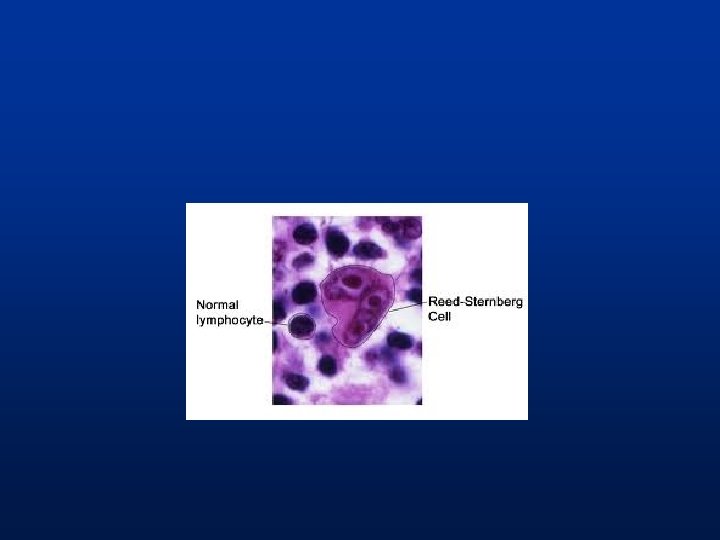
 Chest x-ray reveals mediastinal lymphadenopathy. Biopsy of lymph nodes reveals Hodgkin’s lymphoma.
 Mechanisms of Jaundice in Hodgkin’s 1. 2. 3. 4. 5. Mets to the porta hepatis Massive intrahepatic metastasis Hemolysis Vanishing bile duct syndrome Paraneoplastic phenomena
 Jaundice can also be seen as a paraneoplastic phenomenon in patients with Hypernephroma. This is referred to as Nephrogenic Hepatic Dysfunction Syndrome or Staufer’s Syndrome.
 4. When is jaundice a medical emergency?
 3 Situations in Adults 1. Acute Cholangitis 2. Massive hemolysis 3. Fulminant hepatic failure
 Causes of AFHF A B C D E F G H I HAV, Autoimmune Hepatitis HBV HCV Drugs and toxins (numerous) HEV and an Esoteric disease – Wilson’s Disease Fatty liver (microvesicular – Pregnancy, Reye’s) Herpes Iatrogenic (example chemoembolization)
 What Happened to G ? ! GOD only knows !