


 Скачать презентацию Challenges in 21 st Century Engineering Education Dr
291e3616fabf3b05285bfd8158fde1f5.ppt
- Количество слайдов: 37
 Challenges in 21 st Century Engineering Education Dr. Jonathan Bredow Professor and Chair Department of Electrical Engineering 1
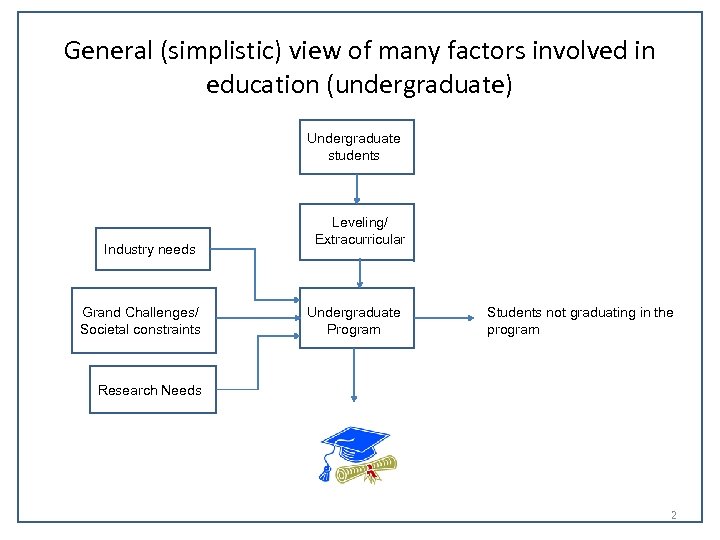 General (simplistic) view of many factors involved in education (undergraduate) Undergraduate students Industry needs Grand Challenges/ Societal constraints Leveling/ Extracurricular Undergraduate Program Students not graduating in the program Research Needs 2
 Undergraduate students 3
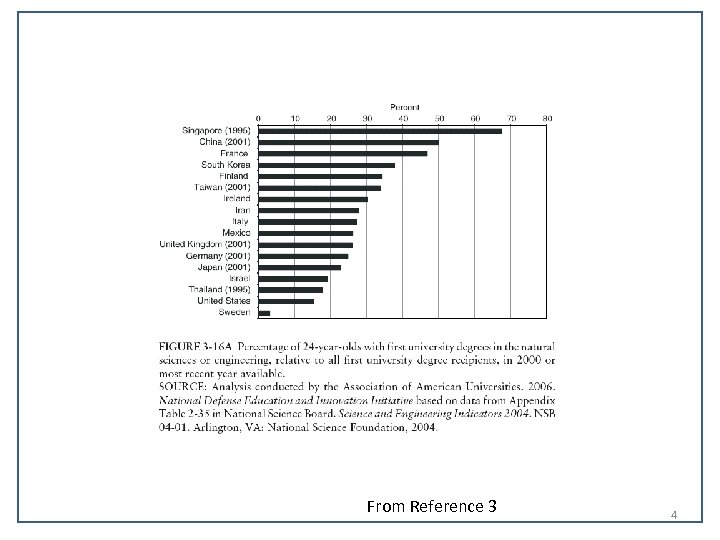 From Reference 3 4
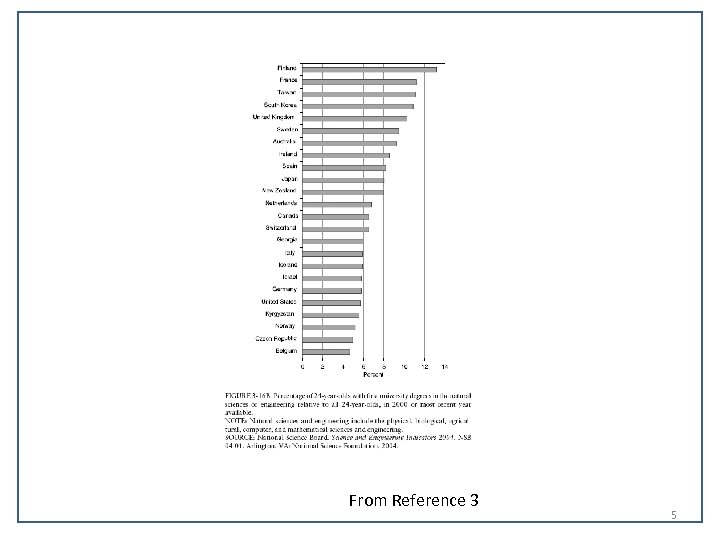 From Reference 3 5
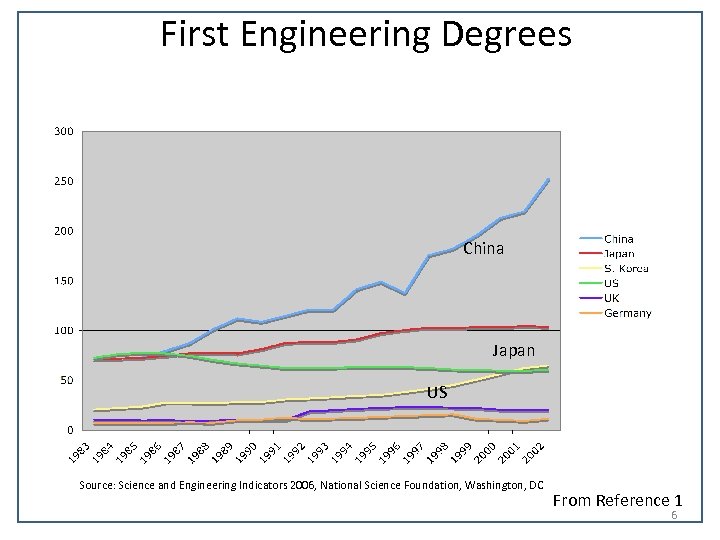 First Engineering Degrees China Japan US Source: Science and Engineering Indicators 2006, National Science Foundation, Washington, DC From Reference 1 6
 Undergraduate student attention items • Outreach to develop the pool of recruits is critical • Recruiting and retention are challenging • Transfer student issues • Focus on applications/systems • Focus on “hands-on” and active learning 7
 Many needs in student development, beyond the technical education • • • Nano-Bio-Info Large Complex Systems An entire new life-science base Astounding computation and storage capabilities Globalization Innovation Leadership Teamwork across disciplines, fields, nations and cultures Experiential Learning: Conceive / Design / Implement / Operate. Entrepreneurship Product Development and Manufacturing Sustainable Development From Reference 1 8
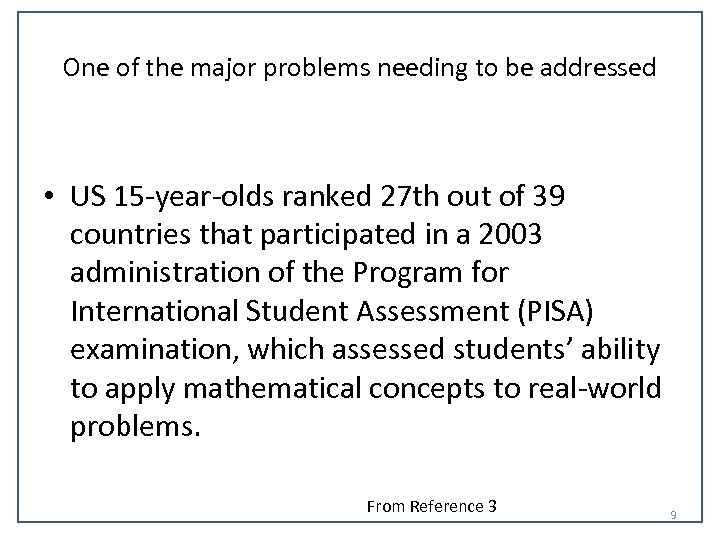 One of the major problems needing to be addressed • US 15 -year-olds ranked 27 th out of 39 countries that participated in a 2003 administration of the Program for International Student Assessment (PISA) examination, which assessed students’ ability to apply mathematical concepts to real-world problems. From Reference 3 9
 Leveling/Extracurricular activities 10
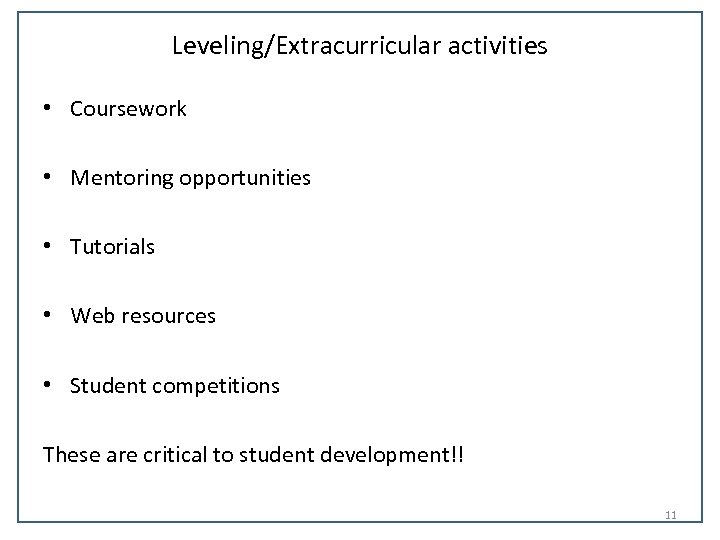 Leveling/Extracurricular activities • Coursework • Mentoring opportunities • Tutorials • Web resources • Student competitions These are critical to student development!! 11
 Industry Needs 12
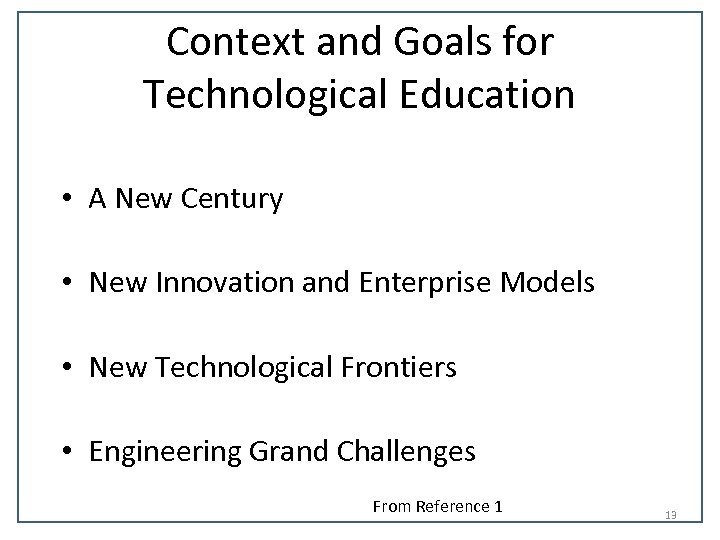 Context and Goals for Technological Education • A New Century • New Innovation and Enterprise Models • New Technological Frontiers • Engineering Grand Challenges From Reference 1 13
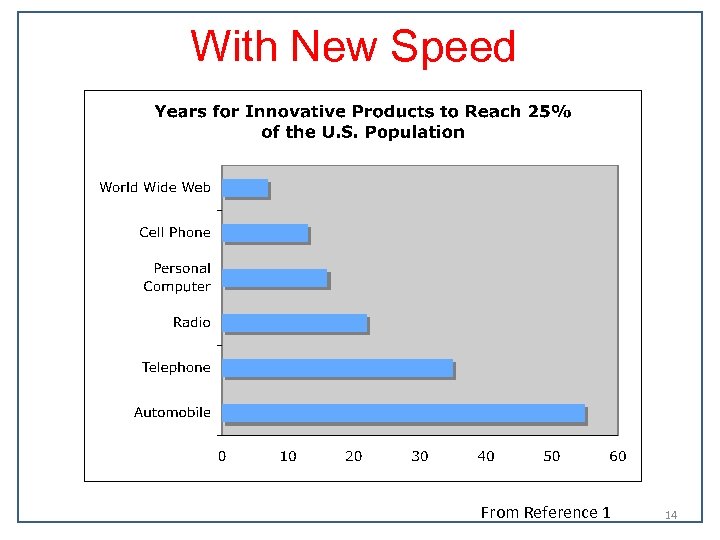 With New Speed From Reference 1 14
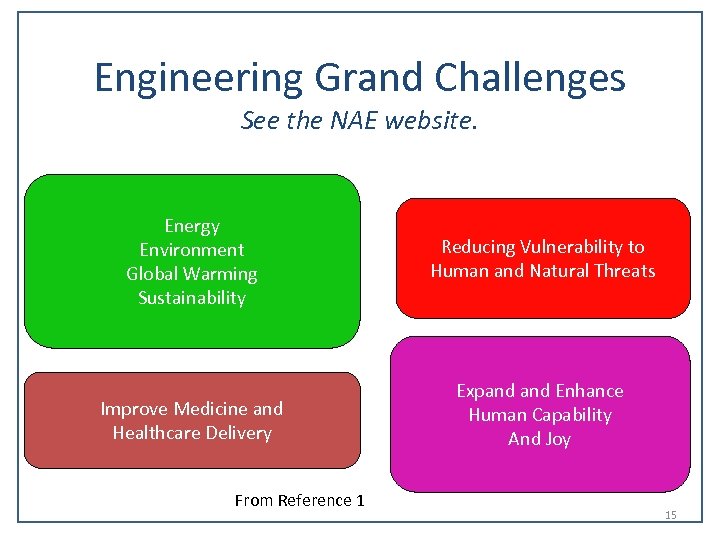 Engineering Grand Challenges See the NAE website. Energy Environment Global Warming Sustainability Reducing Vulnerability to Human and Natural Threats Improve Medicine and Healthcare Delivery Expand Enhance Human Capability And Joy From Reference 1 15
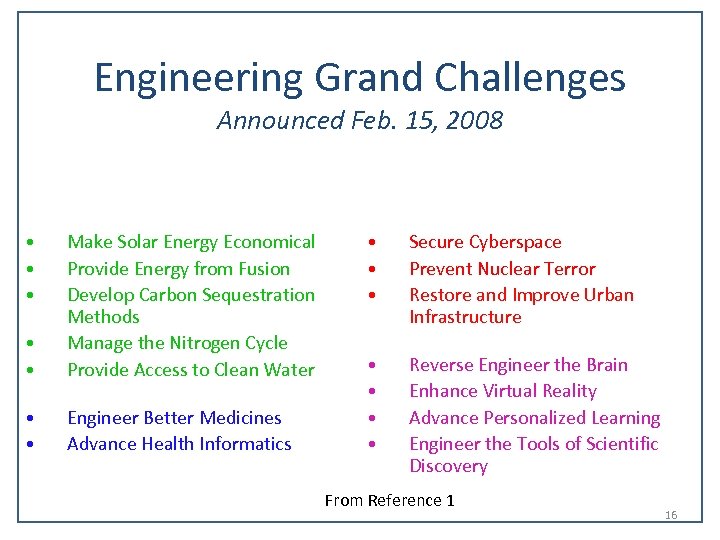 Engineering Grand Challenges Announced Feb. 15, 2008 • • • Make Solar Energy Economical Provide Energy from Fusion Develop Carbon Sequestration Methods Manage the Nitrogen Cycle Provide Access to Clean Water • • Engineer Better Medicines Advance Health Informatics • • • Secure Cyberspace Prevent Nuclear Terror Restore and Improve Urban Infrastructure • • Reverse Engineer the Brain Enhance Virtual Reality Advance Personalized Learning Engineer the Tools of Scientific Discovery From Reference 1 16
 Research Needs 17
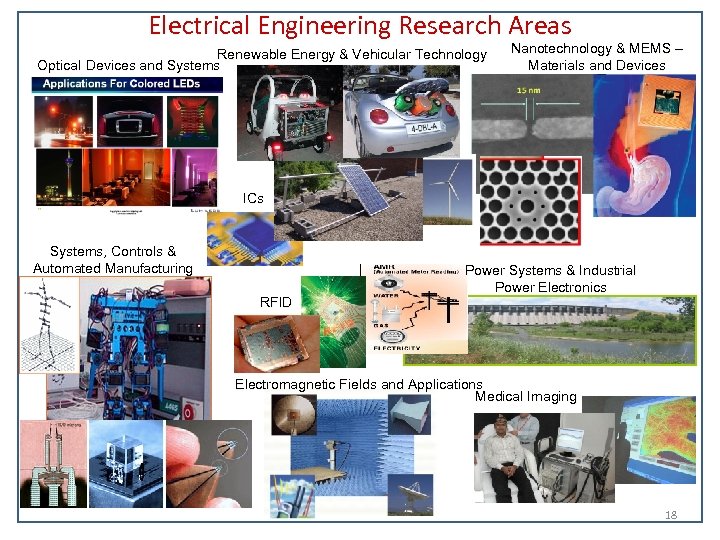 Electrical Engineering Research Areas Renewable Energy & Vehicular Technology Optical Devices and Systems Nanotechnology & MEMS – Materials and Devices ICs Systems, Controls & Automated Manufacturing RFID Power Systems & Industrial Power Electronics Electromagnetic Fields and Applications Medical Imaging 18
 Undergraduate Program 19
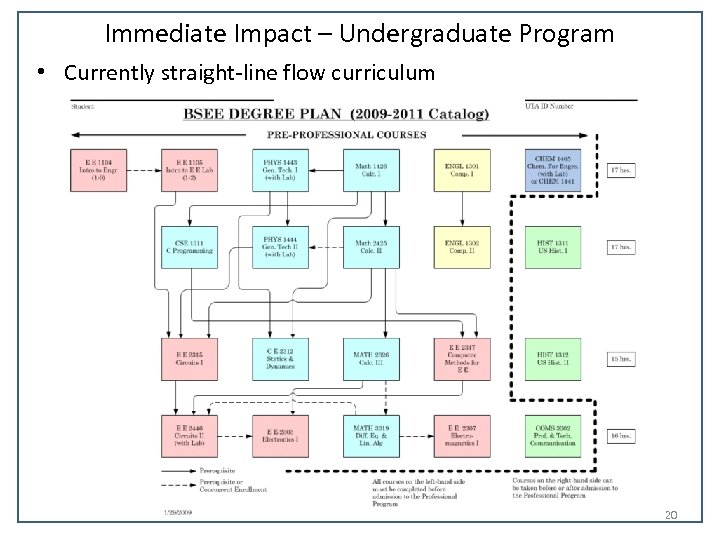 Immediate Impact – Undergraduate Program • Currently straight-line flow curriculum 20
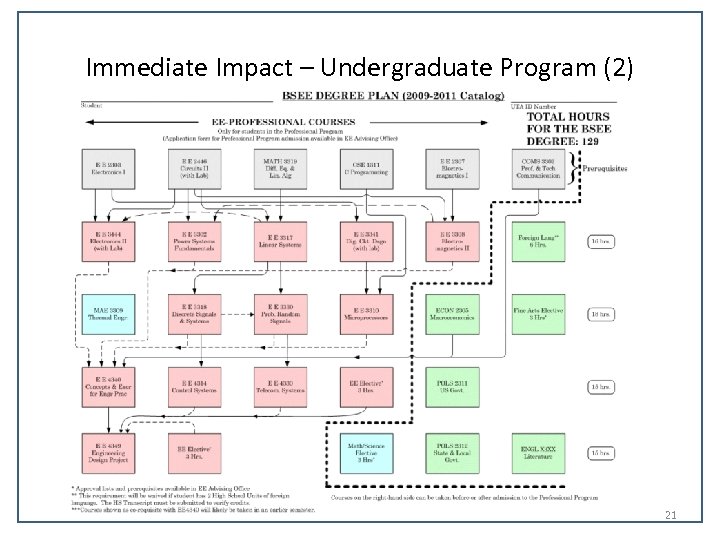 Immediate Impact – Undergraduate Program (2) 21
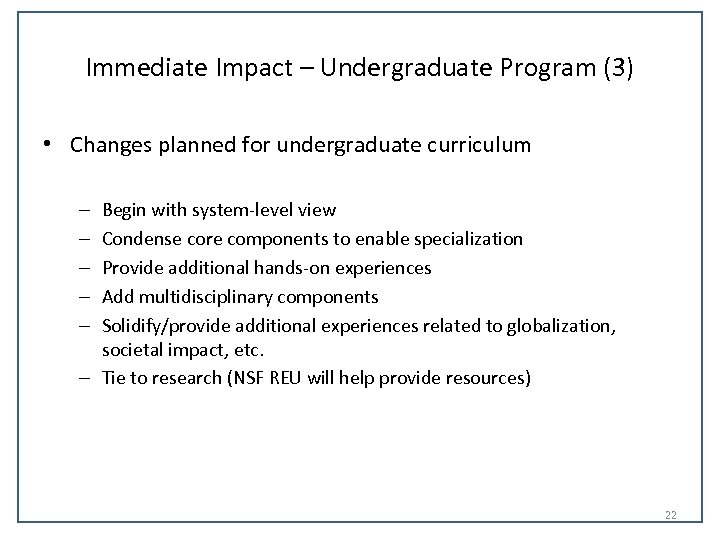 Immediate Impact – Undergraduate Program (3) • Changes planned for undergraduate curriculum Begin with system-level view Condense core components to enable specialization Provide additional hands-on experiences Add multidisciplinary components Solidify/provide additional experiences related to globalization, societal impact, etc. – Tie to research (NSF REU will help provide resources) – – – 22
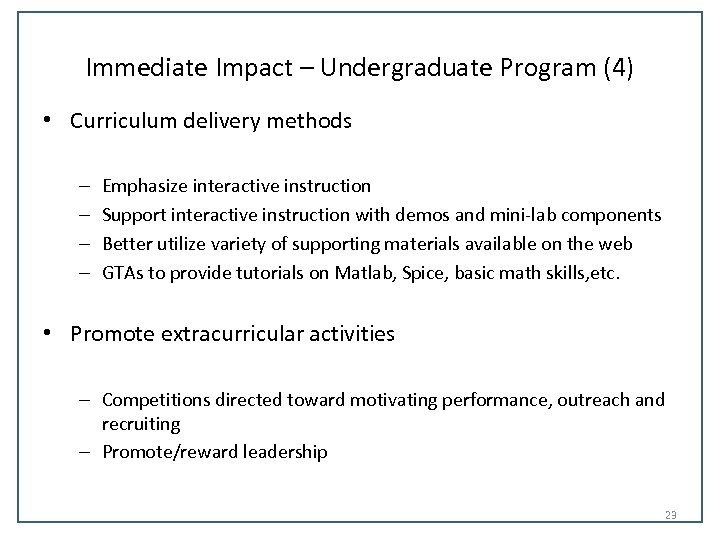 Immediate Impact – Undergraduate Program (4) • Curriculum delivery methods – – Emphasize interactive instruction Support interactive instruction with demos and mini-lab components Better utilize variety of supporting materials available on the web GTAs to provide tutorials on Matlab, Spice, basic math skills, etc. • Promote extracurricular activities – Competitions directed toward motivating performance, outreach and recruiting – Promote/reward leadership 23
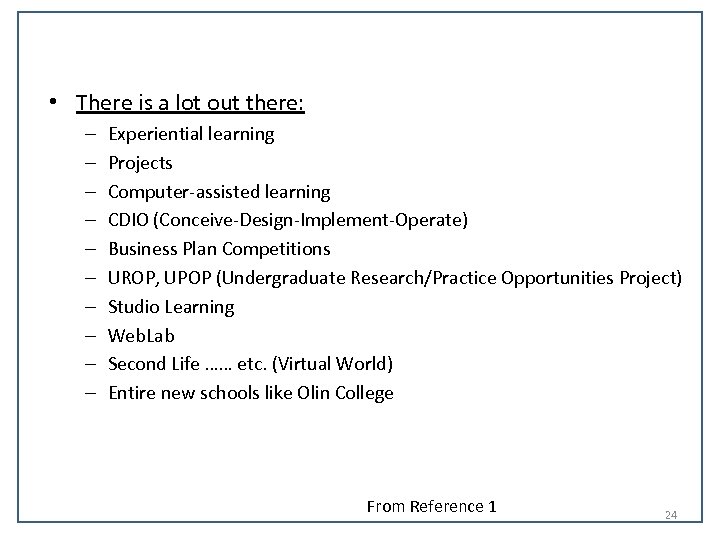 • There is a lot out there: – – – – – Experiential learning Projects Computer-assisted learning CDIO (Conceive-Design-Implement-Operate) Business Plan Competitions UROP, UPOP (Undergraduate Research/Practice Opportunities Project) Studio Learning Web. Lab Second Life …… etc. (Virtual World) Entire new schools like Olin College From Reference 1 24
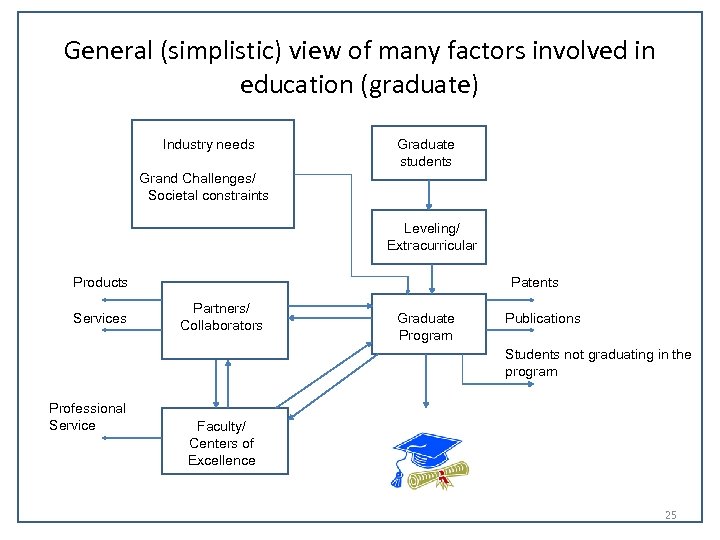 General (simplistic) view of many factors involved in education (graduate) Industry needs Graduate students Grand Challenges/ Societal constraints Leveling/ Extracurricular Products Services Patents Partners/ Collaborators Graduate Program Publications Students not graduating in the program Professional Service Faculty/ Centers of Excellence 25
 Graduate students 26
 From Reference 2 27
 From Reference 2 28
 Partners/Collaborators 29
 • The power of regional innovation clusters • Proximity of small companies and corporate labs to universities • Venture capital networks CV-Important roles of a Tier 1 institution 30
 Centers of Excellence 31
 Impact • Necessary for going beyond incremental advances • Facilitates bringing together highly skilled teams to solve big problems • Serves as a magnet to attract major resources 32
 Graduate Program 33
 • Competitions • Promote centers of excellence • Promote spin-offs 34
 Challenges • Other players in the area • Emphasis on research/graduate program while also providing solid undergraduate instruction • Connecting/partnering with industry • Context of Tier-1 35
 Suggestions • Better understanding of the value-added concept • Skills in teaming (especially team-forming) • Understand makeup of teams required to accomplish different sets of tasks • Understanding relationships between value-added and sets of tasks 36
 References 1. Vest, Charles M. , President, National Academy of Engineering, “Engineering Education for the 21 st Century, ASEE Annual Conference, Pittsburgh, PA, June 23, 2008 2. NDEA 21: A Renewed Commitment to Graduate Education, The Council of Graduate Schools, Final Statement November 2005. 3. Rising Above the Gathering Storm: Energizing and Employing America for a Brighter Economic Future, Committee on Prospering in the Global Economy of the 21 st Century: An Agenda for American Science and Technology, National Academy of Sciences, National Academy of Engineering, Institute of Medicine, 2007. 37