


 Скачать презентацию Challenges and Success Factors ETM 5361 MSIS 5600 Managing
49f7afe9988ff02f26a4910703ff5ade.ppt
- Количество слайдов: 23
 Challenges and Success Factors ETM 5361/MSIS 5600 Managing Virtual Project Teams Nicholas C. Romano, Jr. , Ph. D. Nicholas-Romano@mstm. okstate. edu Paul E. Rossler, Ph. D. , P. E. prossle@okstate. edu 1
 Overview • What challenges do managers face in the use of teams? • Which of these challenges becomes even more challenging in a virtual team environment? • Does virtual teaming add any new challenges? • What are the critical success factors in the use of virtual teams? 2
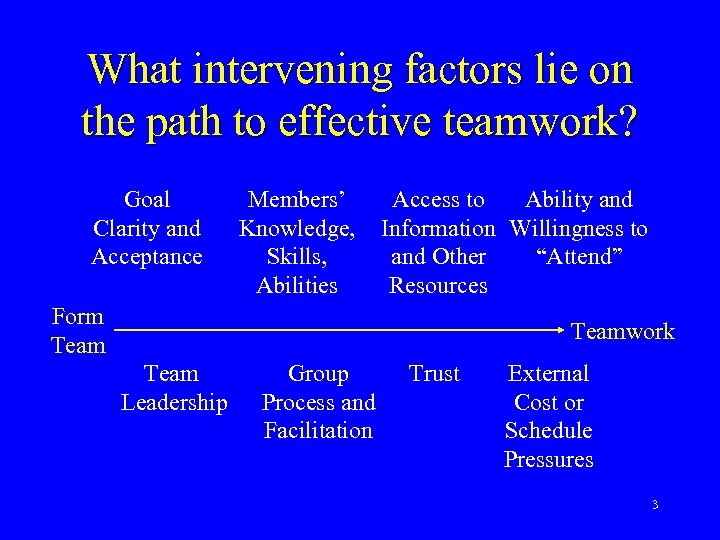 What intervening factors lie on the path to effective teamwork? Goal Clarity and Acceptance Members’ Knowledge, Skills, Abilities Access to Ability and Information Willingness to and Other “Attend” Resources Form Teamwork Team Leadership Group Process and Facilitation Trust External Cost or Schedule Pressures 3
 Intervening factors create challenges for management • Creating buy-in to and ownership of team goals • Ensuring the right training, the right tools • Fostering a climate of trust, sense of team • Buffering team members from organizational politics or undue pressure • Rewarding team performance • Dealing with different personalities 4
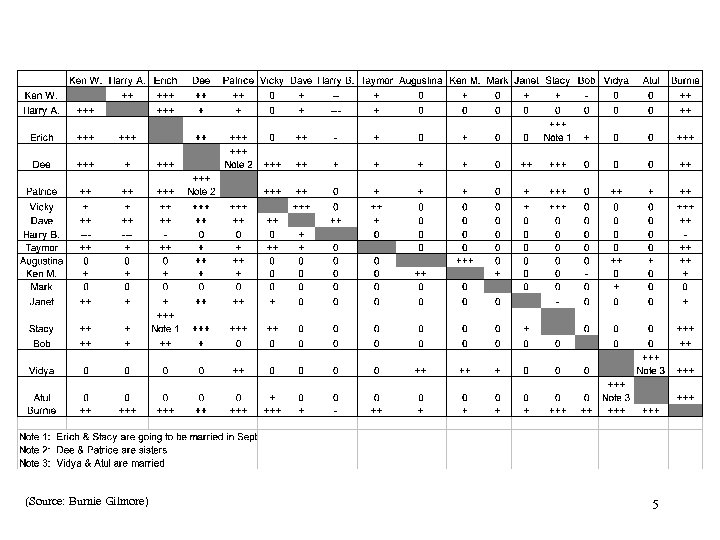 (Source: Burnie Gilmore) 5
 Virtual teams come with some additional challenges • Making isolated team members feel as if they are part of a team • Dealing with what are often significant differences in time zones, culture, networks, computer literacy • Evaluating team and team member performance • Selecting and providing access to the right collaborative technology • Ensuring members have skill in, and comfort with, that collaborative technology 6
 A key challenge involves increasing intellectual bandwidth “The ability of an organization to bring intellectual capital to bear when addressing a particular issue. ” A function of the success with which an organization deploys and uses Knowledge Management Systems and Collaborative Technology
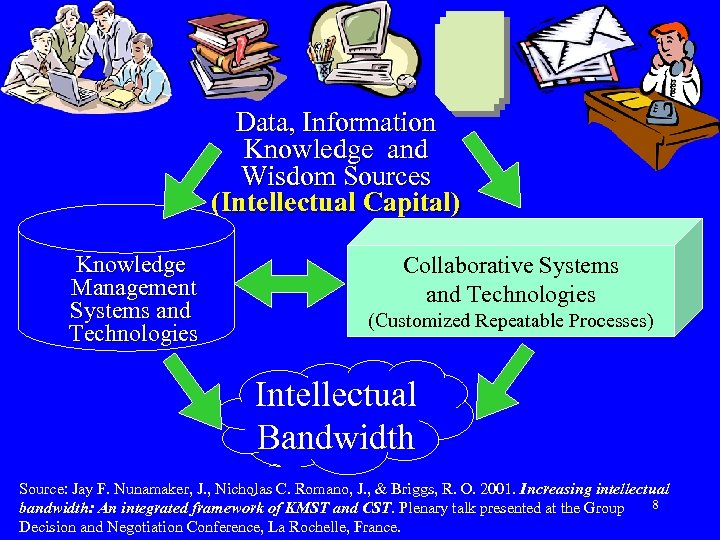 Data, Information Knowledge and Wisdom Sources (Intellectual Capital) Knowledge Management Systems and Technologies Collaborative Systems and Technologies (Customized Repeatable Processes) Intellectual Bandwidth Source: Jay F. Nunamaker, J. , Nicholas C. Romano, J. , & Briggs, R. O. 2001. Increasing intellectual 8 bandwidth: An integrated framework of KMST and CST. Plenary talk presented at the Group Decision and Negotiation Conference, La Rochelle, France.
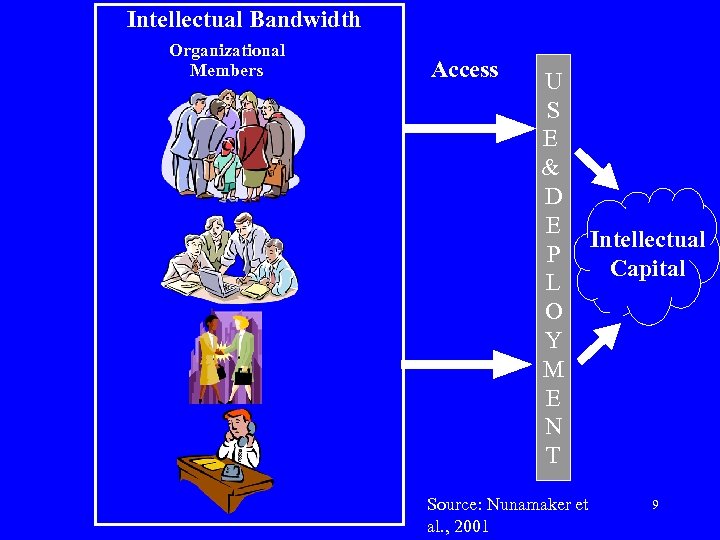 Intellectual Bandwidth Organizational Members Access U S E & D E P L O Y M E N T Source: Nunamaker et al. , 2001 Intellectual Capital 9
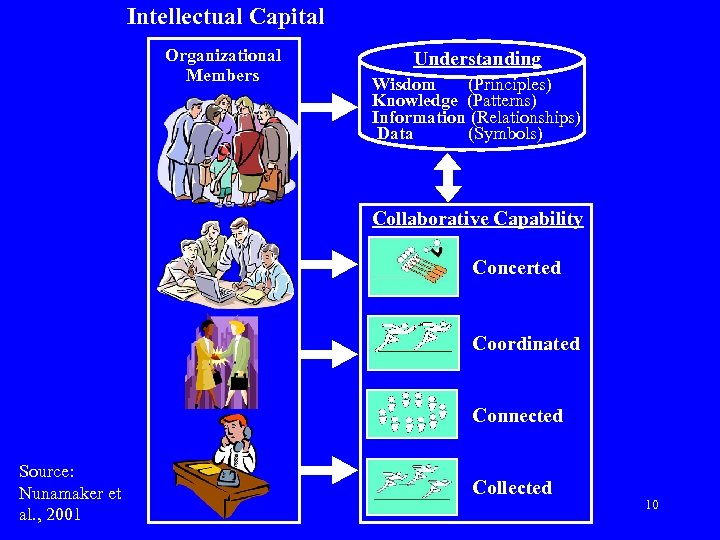 Intellectual Capital Organizational Members Understanding Wisdom (Principles) Knowledge (Patterns) Information (Relationships) Data (Symbols) Collaborative Capability Concerted Coordinated Connected Source: Nunamaker et al. , 2001 Collected 10
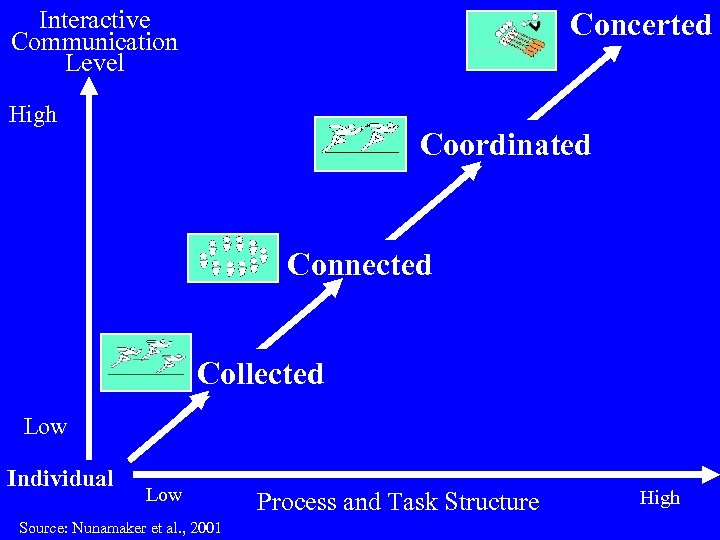 Interactive Communication Level Concerted High Coordinated Connected Collected Low Individual Low Source: Nunamaker et al. , 2001 Process and Task Structure High
 Some paradoxes of virtual team collaboration • Collaborative technologies in virtual environments enable better face-to-face meetings • Cultural differences increase the resolve to connect in virtual collaborations • Simple and adaptable technologies enable more complex virtual collaboration Source: Quereshi, S. and I. Zigurs, Paradoxes and Prerogatives in Global Virtual Collaboration. Communications of the ACM, 2001, 44 (12 December): p. 85 -88 12
 Technology, while important, is only one of many success factors • Human resource policies and practices that support and reward virtual teamwork • Access to training and development resources and mechanisms for sharing lessons learned • Use of standard organizational processes for both technical and social issues Duarte, D. L. , & Snyder, N. T. 2001. Mastering Virtual Teams (2 nd Ed. ). San Francisco: Jossey-Bass. 13
 • Resources for and access to the appropriate collaboration technology • A culture or climate that fosters trust and teamwork and values diversity • Leaders who set high expectations, model good behavior, and provide the needed resources and support 14
 • Team leaders and members who have experience working in virtual environments 15
 Lessons from Sabre, Inc. 1. Trust based on performance consistency rather than social bonds • • • Rapid response Establish communication norms Reinforce timeliness and consistency Source: Kirkman, B. L. , et al. 2002. Five challenges to virtual team success: Lessons from Sabre, Inc. Academy of Management Executive, 16(3): 67 -79. 16
 2. Training in virtual teamwork helps overcome process losses • • Focus on leadership, conflict management, meeting management Make use of decision-making and problemsolving software specifically designed for virtual teamwork 17
 3. Create an environment of inclusiveness and involvement • • Consider individual preferences for working virtually Give members a realistic preview of the potential for feeling detached Maintain continuous contact with members Provide face-to-face opportunities 18
 4. Identify members who have a healthy balance of technical and social skills • • Use interviewing techniques and simulations that consider social skills Use panels of current team members to recruit and select new members 19
 5. Establish metrics and develop creative approaches for feedback and coaching • • • Use a balanced scorecard approach Monitor communications Use peer reviews Use “richer” communication media Identify on-line training and development resources 20
 Other lessons learned • Management motivation has a direct effect on virtual collaboration. • Collaborative roles emerge, but must be made more explicit. • Tasks that benefit most from virtual collaboration are those requiring knowledge sharing, structure, and detailed teamwork. Source: Quereshi, S. and I. Zigurs, Paradoxes and Prerogatives in Global Virtual Collaboration. Communications of the ACM, 2001, 44 (12 December): p. 85 -88 21
 • Cultural diversity can enhance the value of virtual collaboration. • Training is important for successful virtual collaboration. – Successful training programs put work practices at the forefront. • Technology is a device, not a driver, of virtual collaboration. 22
 Summary • A number of intervening factors create challenges for management in both face-toface and virtual settings • Virtual teamwork comes with some additional challenges • The knowledge to date suggests a number of practices that increase the likelihood of success 23