


 Скачать презентацию Challenges and progress with the development of a
f68008a4bd5659848b351cd3d2cf2cb3.ppt
- Количество слайдов: 25
 Challenges and progress with the development of a Lunar Laser Ranger for South Africa Ludwig Combrinck Roelf Botha ludwig@hartrao. ac. za Space Geodesy Programme Hartebeesthoek Radio Astronomy Observatory In collaboration with Observatoire de la Côte d’Azur 18 th International Workshop on Laser Ranging - Pursuing Ultimate Accuracy & Creating New Synergies 11 -15 November 2013 Fujiyoshida, Japan
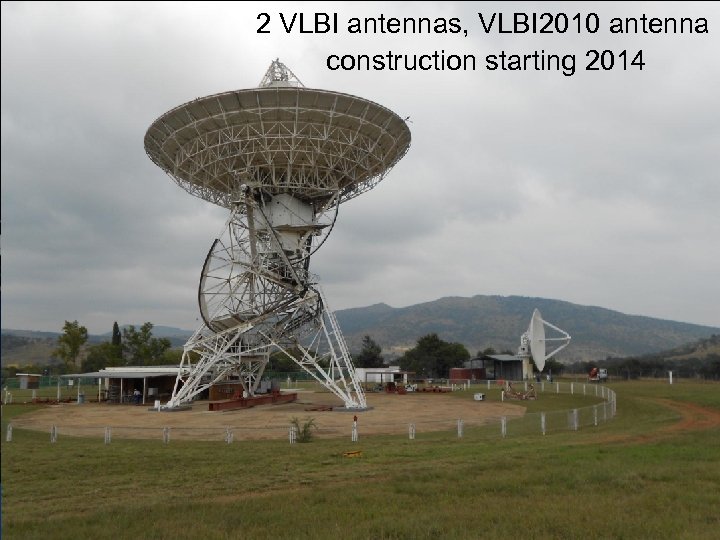 Space Geodesy at Hart. RAO 2 VLBI antennas, VLBI 2010 antenna SLR, VLBI, GNSS, DORIS, construction Geophysical instruments…. now LLR in development starting 2014 VLBI 2010 2014 -2016 MOBLAS-6, part of NASA SLR network, 100 m. J, 200 pico-second pulse, precision about 1. 5 cm Cannot do Lunar Laser Ranging, system too weak and not designed for LLR Japan, November 2013 2
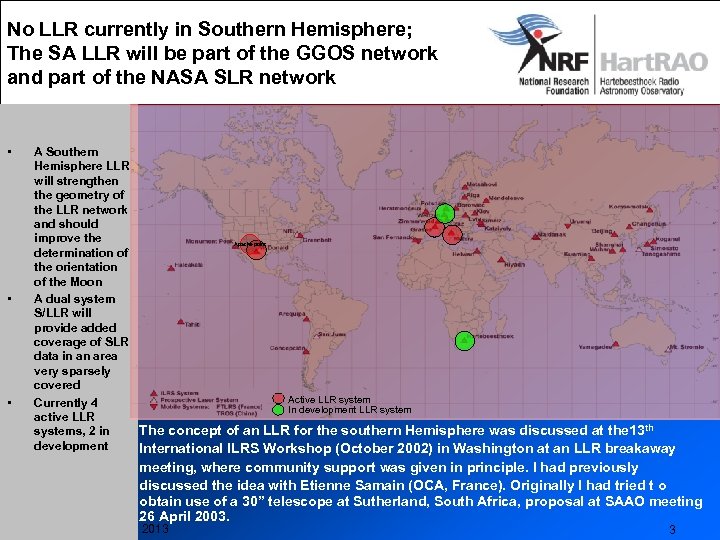 No LLR currently in Southern Hemisphere; The SA LLR will be part of the GGOS network and part of the NASA SLR network • • • A Southern Hemisphere LLR will strengthen the geometry of the LLR network and should improve the Apache point determination of the orientation of the Moon A dual system S/LLR will provide added coverage of SLR data in an area very sparsely covered Active LLR system Currently 4 In development LLR system active LLR The concept of an LLR for the southern Hemisphere was discussed at the 13 th systems, 2 in development International ILRS Workshop (October 2002) in Washington at an LLR breakaway meeting, where community support was given in principle. I had previously discussed the idea with Etienne Samain (OCA, France). Originally I had tried t o obtain use of a 30” telescope at Sutherland, South Africa, proposal at SAAO meeting 26 April 2003. Japan, November 2013 3
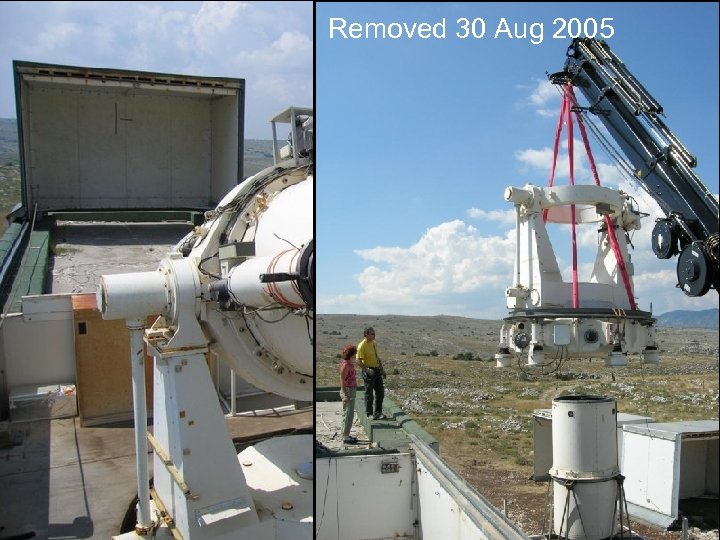 Removed 30 Aug 2005 Ex-Observatoire de la Cote d’Azur 1 -m SLR telescope FTLRS 1 -m SLR LLR Japan, November 2013 4
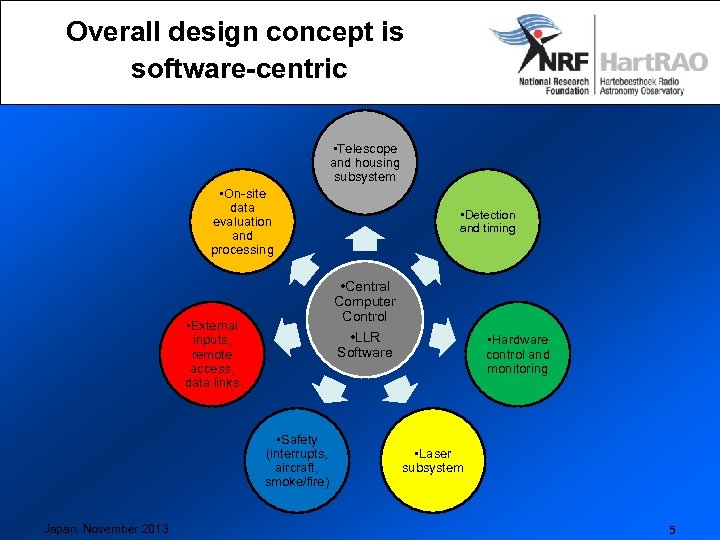 Overall design concept is software-centric • Telescope and housing subsystem • On-site data evaluation and processing • Central Computer Control • LLR Software • External inputs, remote access, data links • Safety (interrupts, aircraft, smoke/fire) Japan, November 2013 • Detection and timing • Hardware control and monitoring • Laser subsystem 5
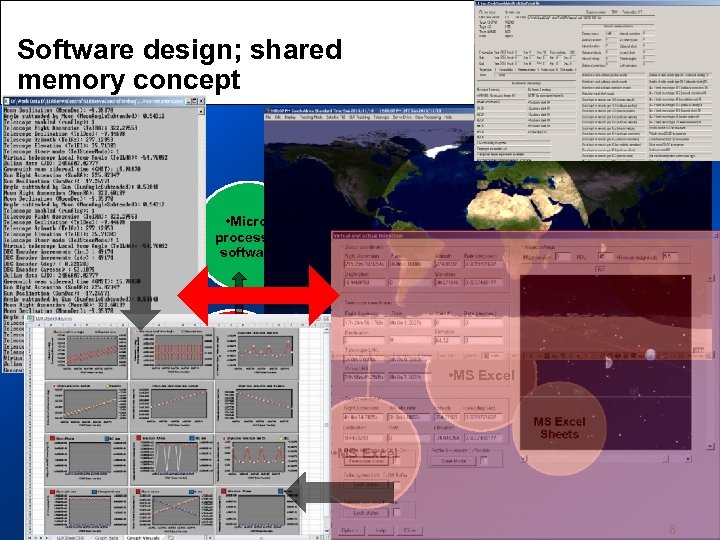 Software design; shared memory concept • LLRSteer • LLRServo. Control • Microprocessor software • Dynamic Data Exchange • Hardware Control • MS Excel Japan, November 2013 6
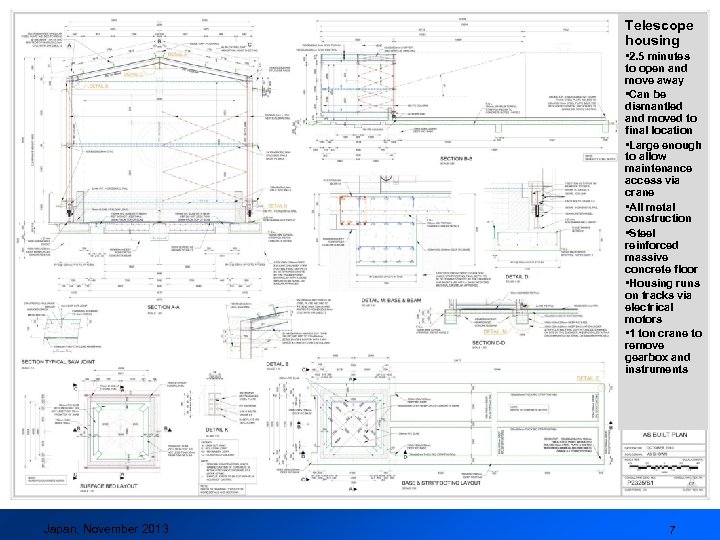 Telescope housing • 2. 5 minutes to open and move away • Can be dismantled and moved to final location • Large enough to allow maintenance access via crane • All metal construction • Steel reinforced massive concrete floor • Housing runs on tracks via electrical motors • 1 ton crane to remove gearbox and instruments Japan, November 2013 7
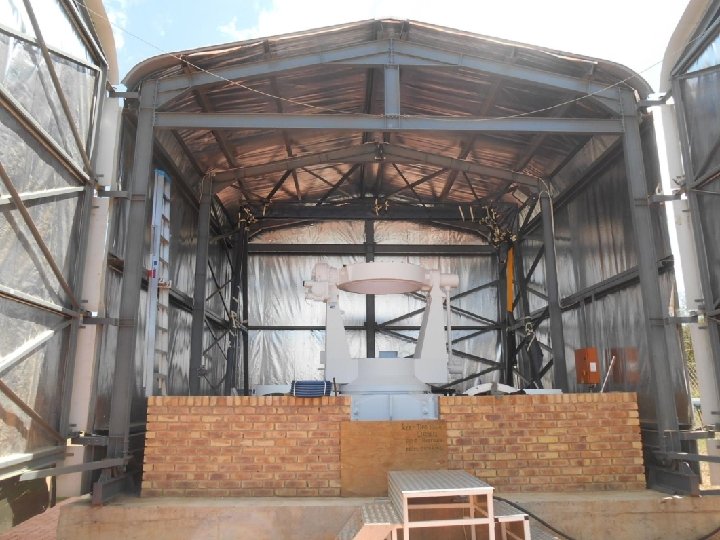
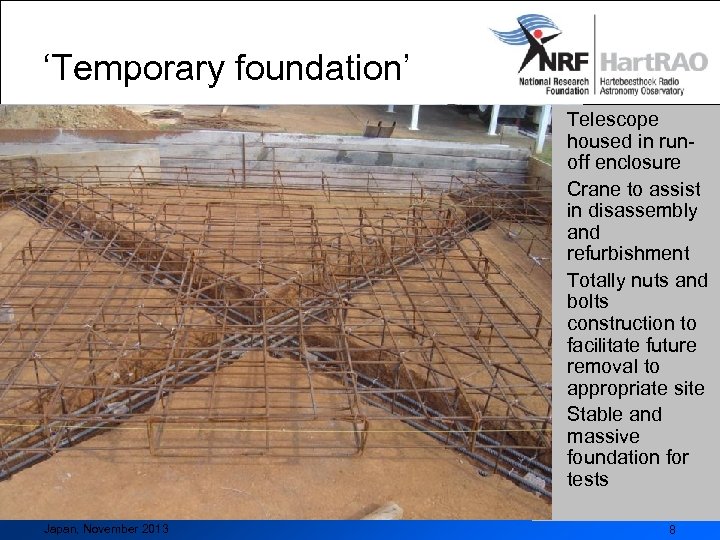 ‘Temporary foundation’ • Telescope housed in runoff enclosure • Crane to assist in disassembly and refurbishment • Totally nuts and bolts construction to facilitate future removal to appropriate site • Stable and massive foundation for tests Japan, November 2013 8
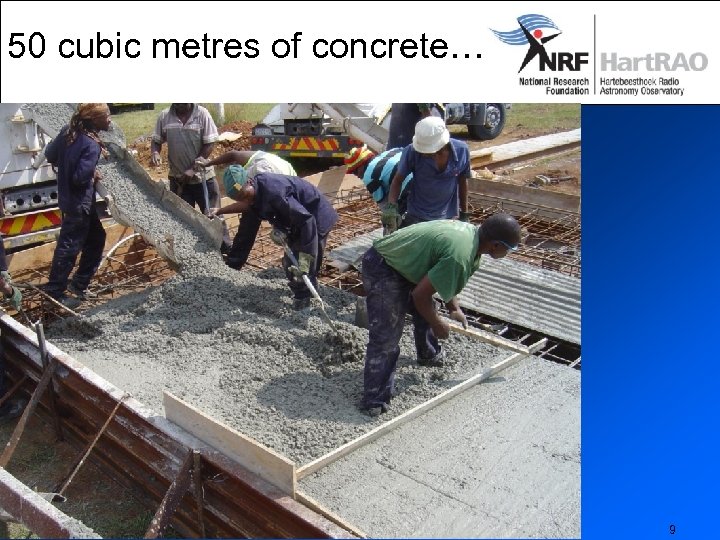 50 cubic metres of concrete… Japan, November 2013 9
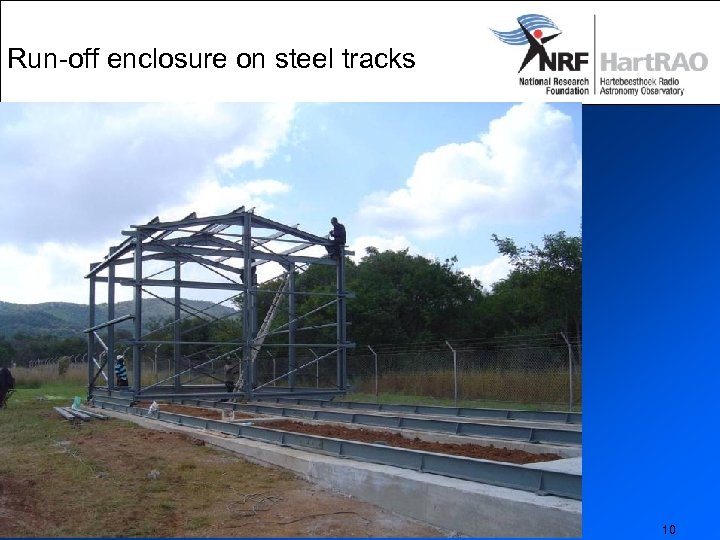 Run-off enclosure on steel tracks Japan, November 2013 10
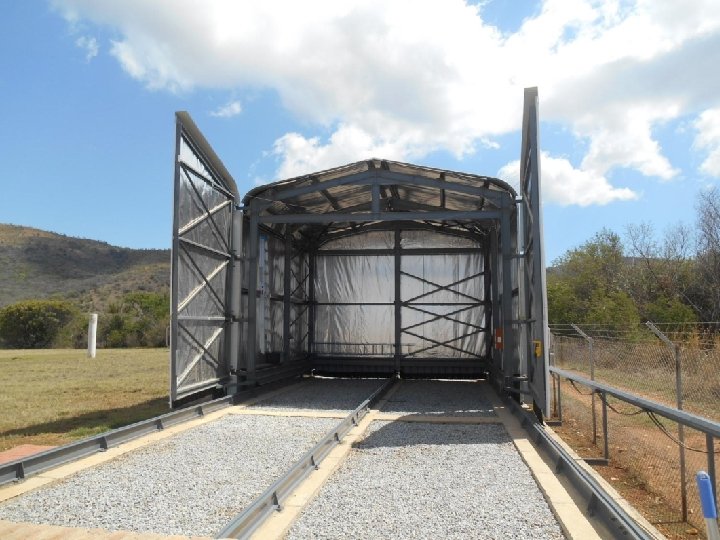 Japan, November 2013 11
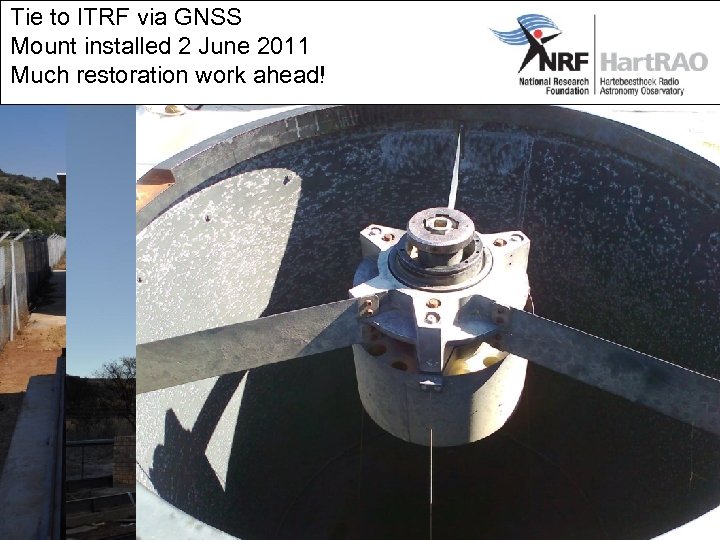 Tie to ITRF via GNSS Mount installed 2 June 2011 Much restoration work ahead! Japan, November 2013 12
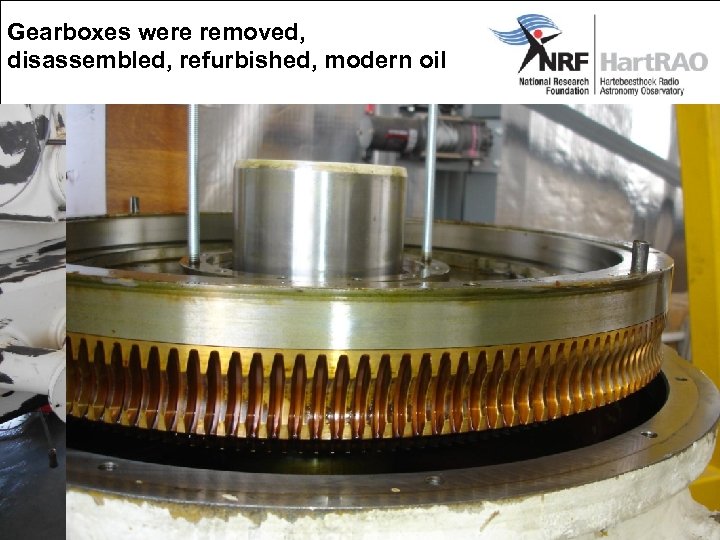 Gearboxes were removed, disassembled, refurbished, modern oil Japan, November 2013 13
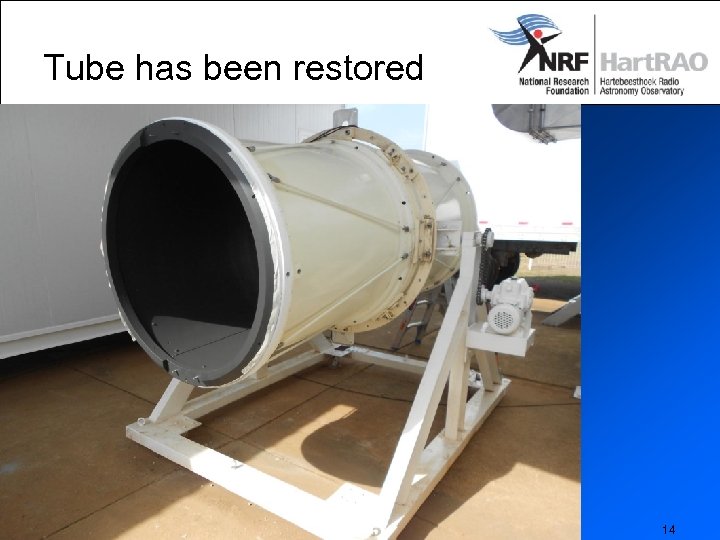 Tube has been restored Japan, November 2013 14
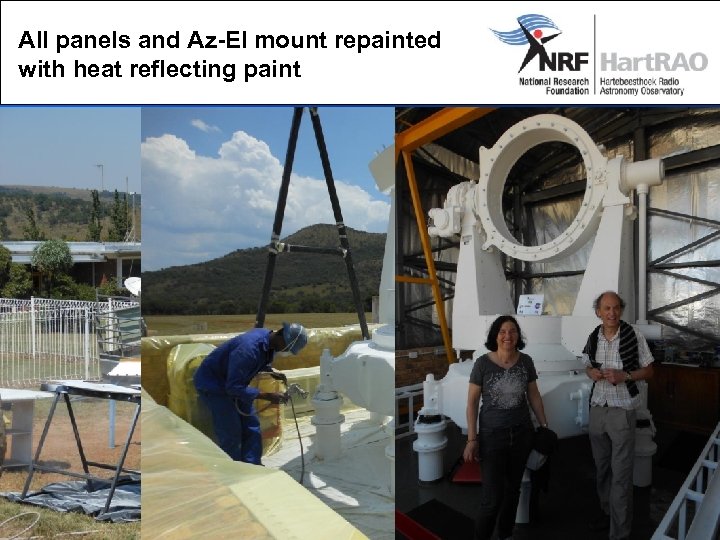 All panels and Az-El mount repainted with heat reflecting paint Japan, November 2013 15
 Japan, November 2013 16
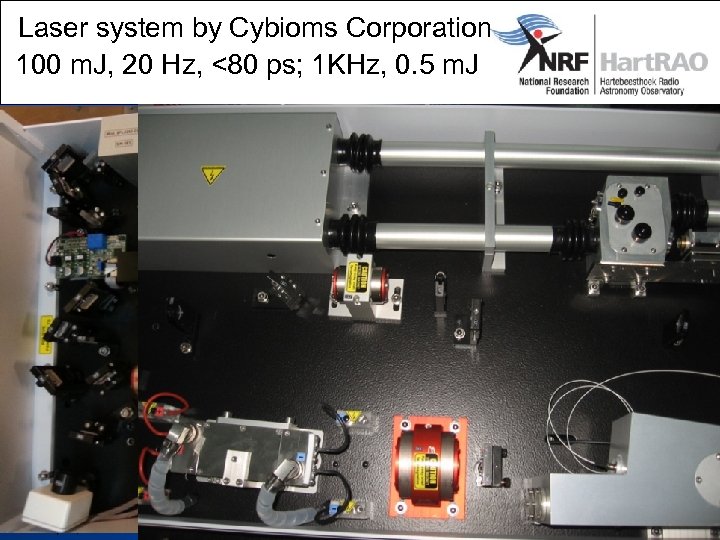 Laser system by Cybioms Corporation 100 m. J, 20 Hz, <80 ps; 1 KHz, 0. 5 m. Ja Japan, November 2013 17
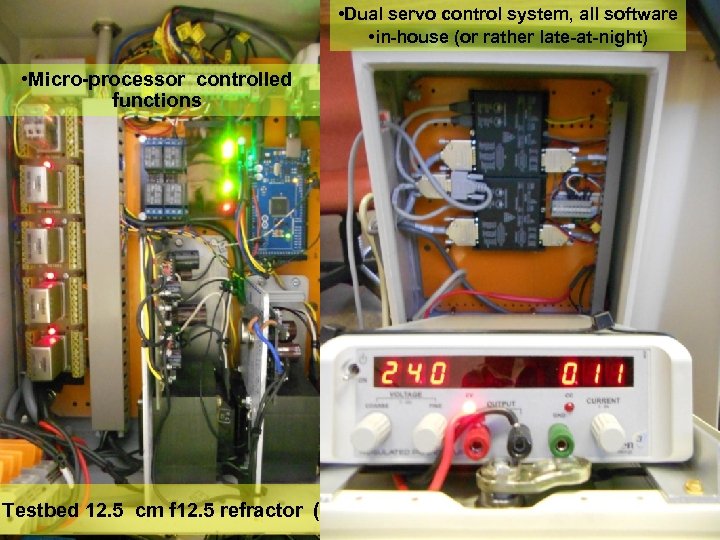 • Dual servo control system, all software • in-house (or rather late-at-night) • Micro-processor controlled functions Testbed 12. 5 cm f 12. 5 refractor (i. e. what my lunch times are spent on)
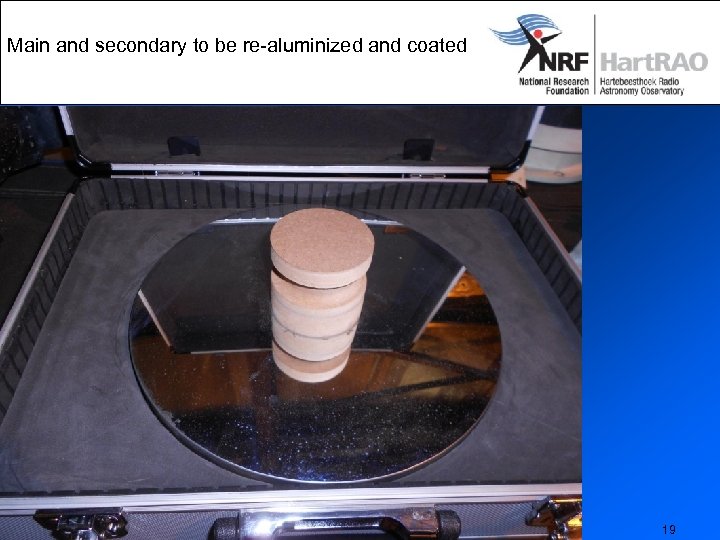 Main and secondary to be re-aluminized and coated Japan, November 2013 19
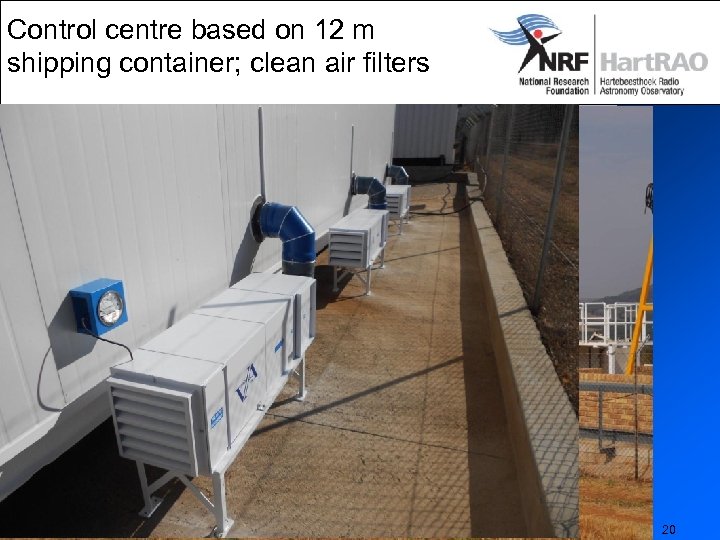 Control centre based on 12 m shipping container; clean air filters • Located next to MOBLAS-6 • Curved roof to provide shade Japan, November 2013 20
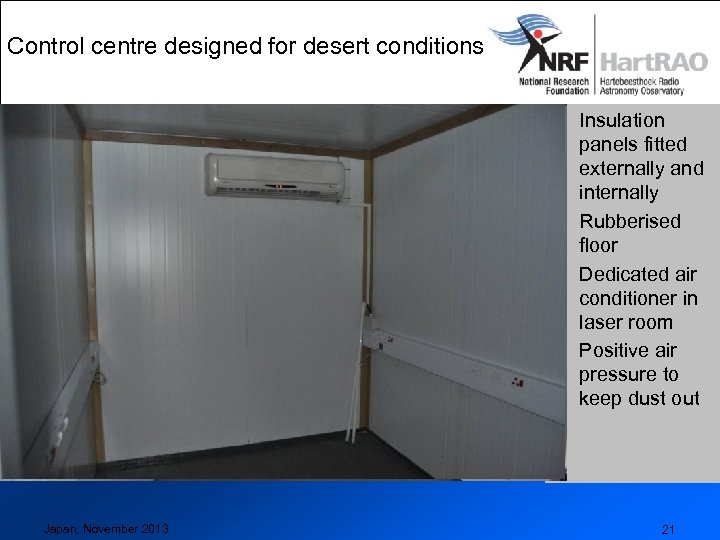 Control centre designed for desert conditions • Insulation panels fitted externally and internally • Rubberised floor • Dedicated air conditioner in laser room • Positive air pressure to keep dust out Japan, November 2013 21
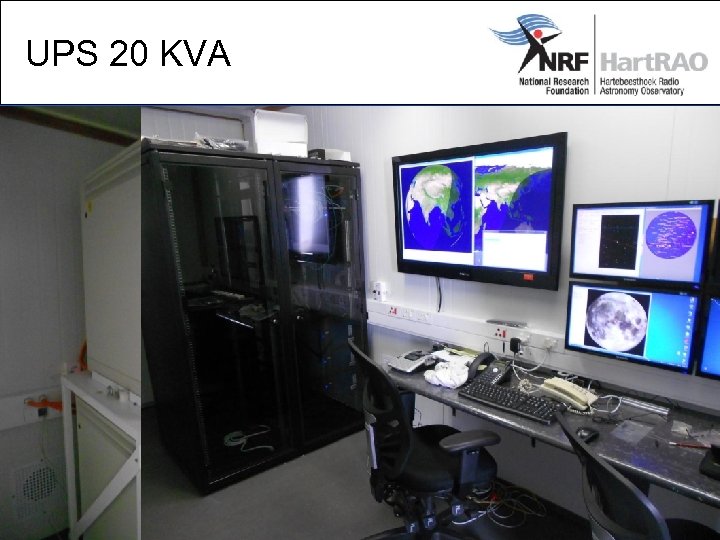 UPS 20 KVA Japan, November 2013 22
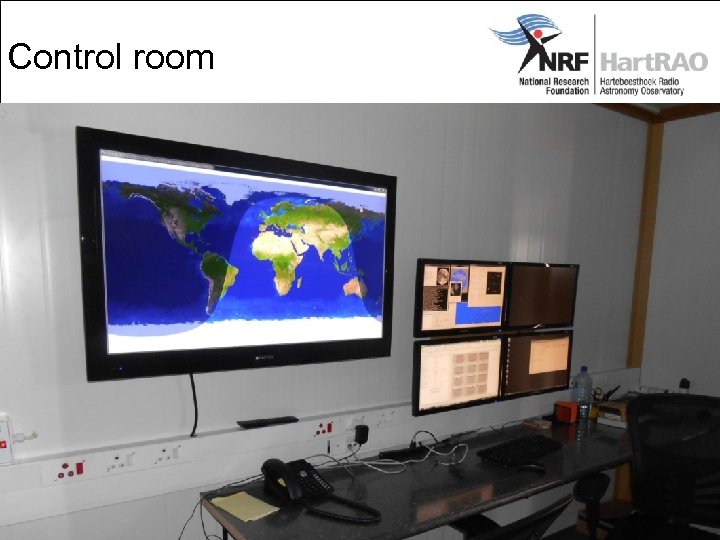 Control room Japan, November 2013 23
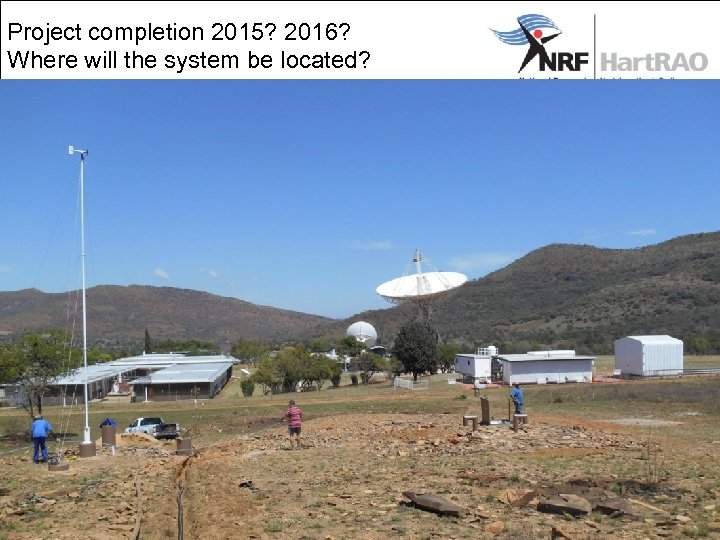 Project completion 2015? 2016? Where will the system be located? Japan, November 2013 24
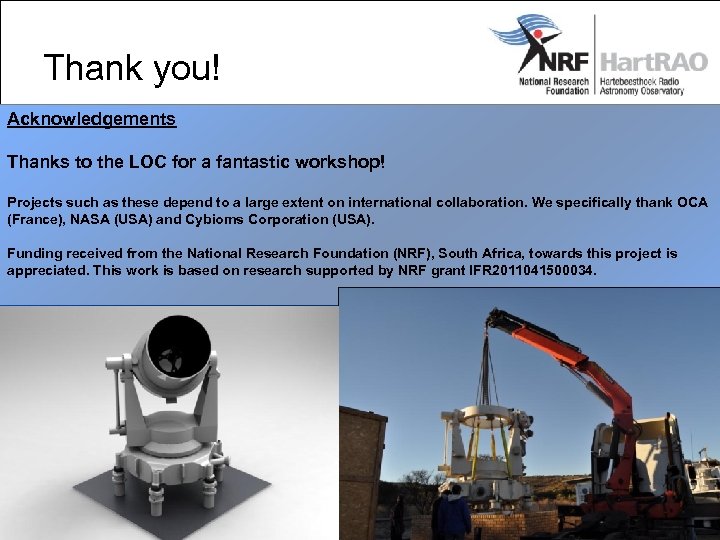 Thank you! Acknowledgements Thanks to the LOC for a fantastic workshop! Projects such as these depend to a large extent on international collaboration. We specifically thank OCA (France), NASA (USA) and Cybioms Corporation (USA). Funding received from the National Research Foundation (NRF), South Africa, towards this project is appreciated. This work is based on research supported by NRF grant IFR 2011041500034. Japan, November 2013 25