 Скачать презентацию Challenges and opportunities in ensuring sustainable urban mobility
Georgiadis_Presentation_Irkutsk_10-11 September 2015_3.pptx
- Количество слайдов: 17



Challenges and opportunities in ensuring sustainable urban mobility: A comparative view George G. Georgiadis, Secretary, Inland Transport Committee, Sustainable Transport Division, UNECE THE PEP annual International Conference (relay race/staffette) 10 -12 September 2015, Irkutsk, Russian Federation.
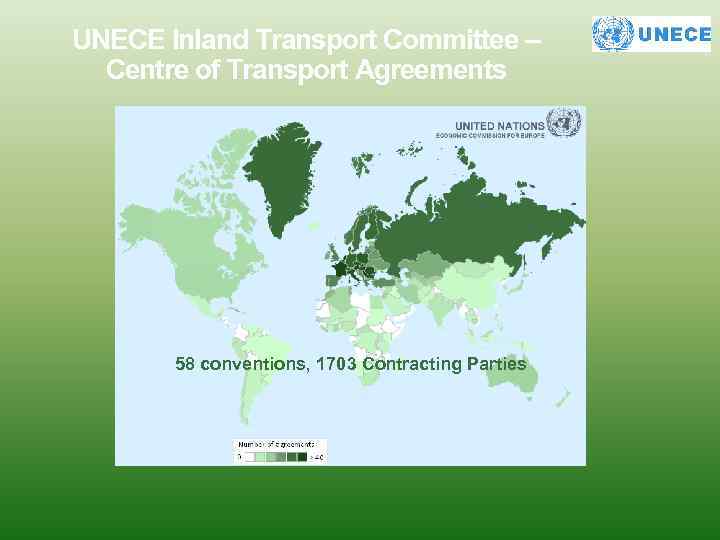
UNECE Inland Transport Committee – Centre of Transport Agreements 58 conventions, 1703 Contracting Parties
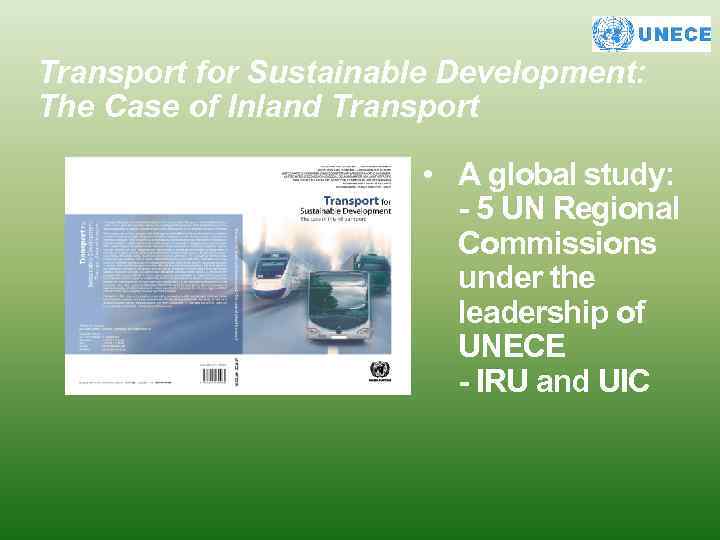
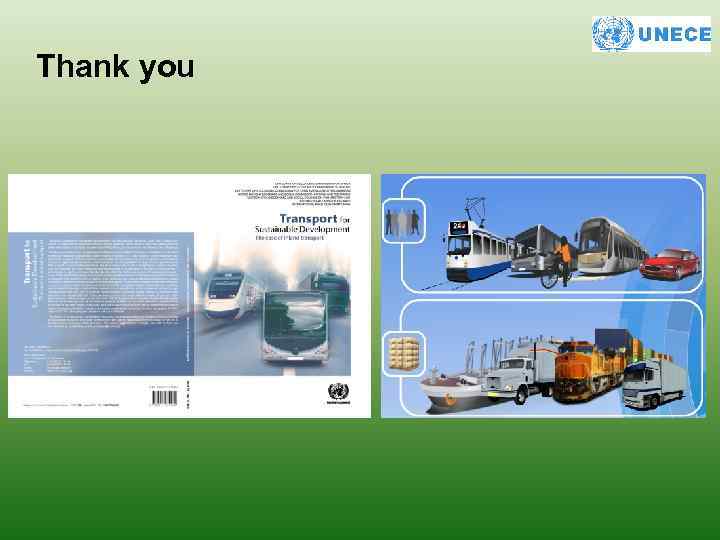
Transport for Sustainable Development: The Case of Inland Transport • A global study: - 5 UN Regional Commissions under the leadership of UNECE - IRU and UIC
Title, subtitle and content layout Subtitle is blue Arial 22 pt • First level bulleted text is Arial 20 pt – Second level text (press tab key) is 18 pt • Arial is the only font used in the template • All bulleted text is sentence case (capitalize first letter of first word) • Use bold, blue or both to highlight text
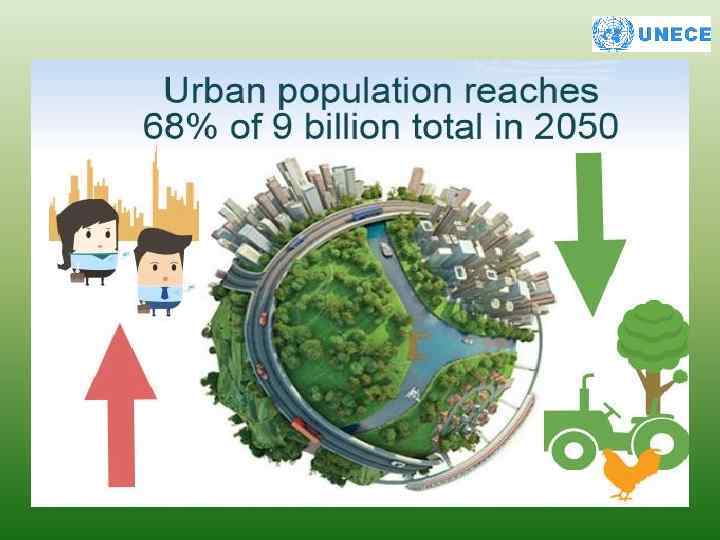
Two content, subtitle and headings Subtitle is blue Arial 24 pt Heading • First level text is Arial 20 pt. – Second level text (press tab key) is 18 pt. • Arial is the only font used in the template • All bulleted text is sentence case (capitalize first letter of first word) • Use bold, blue or both to highlight text
Defining dimensions of Sustainable Transport ACCESSIBILITY
Defining dimensions of Sustainable Transport ACCESSIBILITY AFFORDABILITY
Defining dimensions of Sustainable Transport ACCESSIBILITY AFFORDABILITY SAFETY
Defining dimensions of Sustainable Transport ACCESSIBILITY AFFORDABILITY SAFETY SECURITY
Defining dimensions of Sustainable Transport ACCESSIBILITY AFFORDABILITY SAFETY SECURITY ENVIRONMENTAL SUSTAINABILITY
ACCESSIBILITY Challenges • Rural accessibility is a challenge in all regions; • Fast urbanization worldwide calls for redesigning urban mobility conditions; • Insufficient access to public transport in many urban areas; • Walking and cycling is often rendered impossible or not safe due to lack of appropriate sidewalks and cycling lanes; • Transport infrastructure quality is unsatisfactory in several countries of the world; • Persons with reduced mobility require appropriate infrastructure; • Congestion is an increasing challenge in urban and sub-urban areas
AFFORDABILITY Challenges • • • • National and local government capacity to offer affordable public transport is diminished by lack of availability of public funds; High income inequality is omnipresent an issue in all regions; Transport expenses represent a high proportion of household expenditures of the middle class and even more of the poor; Low-income groups are particularly dependent on the availability of public transport. Pressure on transport infrastructure capacity; Public funds are scarce; more rigorous assessment of feasibility is warranted. (no “white elephant” investments); Transport projects are long term and politically less interesting.
SAFETY Challenges • • • At the global level, overall development of transport safety is slow. High rate of trespassing incidents particularly in railways leading to fatalities; Inadequate recognition of the need for a high level of safety in transportation of dangerous goods; Underreporting and insufficient harmonization in statistics is a serious issue across the board. ROAD SAFETY At the global level, road safety is hardly improving; Inefficient road safety management, weak regulatory framework and underfunded road safety programmes at national and local levels in several countries; Keeping vehicles safe throughout their lifetime – lack of vehicle maintenance challenges safety; Motorcycle casualties are overrepresented in road accidents; still they lack adequate attention.
SECURITY Challenges • High rate of transport related crime in many parts of the world; • Enhance collaboration between state security services and transport systems operators; • Balance between personal freedoms and collective security • Due to their open areas, inland transport systems are relatively unprotected from security threats in comparison with ports and airports; • Strengthening analytical and statistical information on transport related crime (freight theft, vehicles theft, etc. ); • Boosting international cooperation in coordination of responsive action towards cross-border transport related crime.
ENVIRONMENTAL Challenges • Despite energy efficiency improvements, energy consumption in transport is increasing; • Environmental impacts of new technologies are not fully understood yet; • Greenhouse gas emissions from transport are increasing; • Keeping vehicles environmentally friendly throughout their lifetime; • Modal split is not in favour of environmentally friendly modes; • Noise from transport is affecting large numbers of people in agglomerations; • Transport infrastructure is vulnerable to the effects of climate change induced natural disasters.
The way forward and the role of the UN • Promote the UN Transport Conventions and other legal instruments; • Provide platforms of cooperation to connect regions and continents, and share best practices; • Define regulations limiting the maximum admissible level of vehicle emissions; • Encourage governments to pursue an integrated approach to transport policy; • Promote the use of tools such as the “For Future Inland Transport Systems” (For. FITS) CO 2 reduction scenario builder; • Provide technical assistance and capacity building. • Provide statistical and analytical information that assists governments
Thank you
Скачать презентацию Challenges and opportunities in ensuring sustainable urban mobility
Georgiadis_Presentation_Irkutsk_10-11 September 2015_3.pptx