 Скачать презентацию Challenges and Benefits of a Unified Synchronism Network
6ee6fc73bde2c2bab4ec11fef8e3ed5b.ppt
- Количество слайдов: 32



Challenges and Benefits of a Unified Synchronism Network Rodrigo Leal, Msc Engineer Colloquium on Smart Grid November 13 -15, 2013 MYSORE – KARNATAKA - INDIA
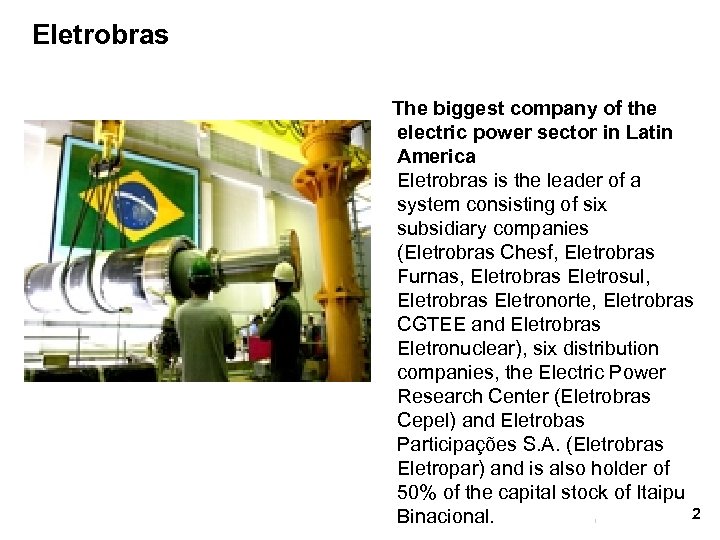
Eletrobras The biggest company of the electric power sector in Latin America Eletrobras is the leader of a system consisting of six subsidiary companies (Eletrobras Chesf, Eletrobras Furnas, Eletrobras Eletrosul, Eletrobras Eletronorte, Eletrobras CGTEE and Eletrobras Eletronuclear), six distribution companies, the Electric Power Research Center (Eletrobras Cepel) and Eletrobas Participações S. A. (Eletrobras Eletropar) and is also holder of 50% of the capital stock of Itaipu 2 Binacional.
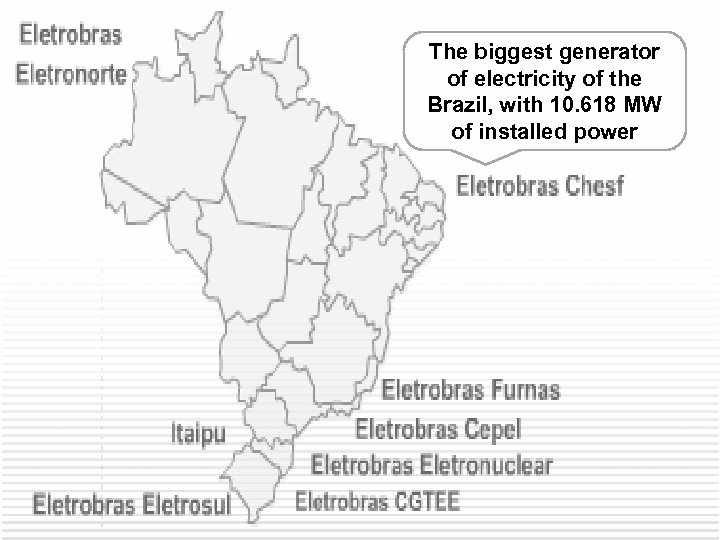
The biggest generator of electricity of the Brazil, with 10. 618 MW of installed power 3
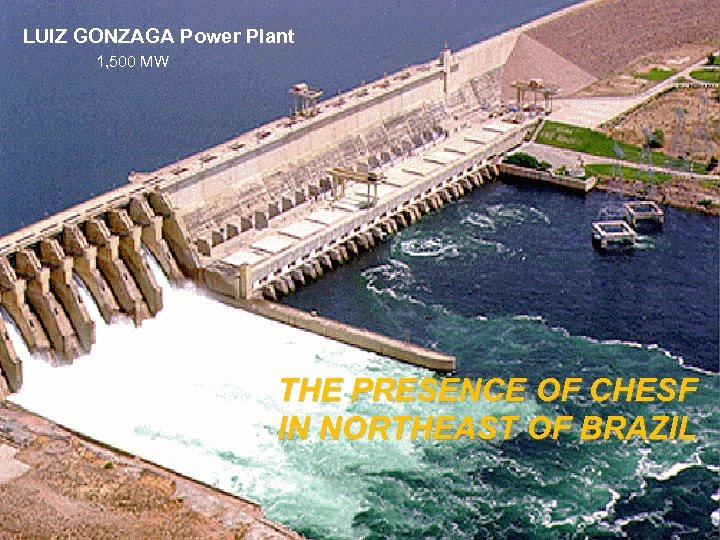
LUIZ GONZAGA Power Plant 1, 500 MW THE PRESENCE OF CHESF IN NORTHEAST OF BRAZIL 4

Planning TELECOMMUNICATION BUSINESS PLAN HORIZON 2018 5
Scope The Telecommunication Business Plan considered the transformation of the several systems in compliance with all requirements of Electric Sector and of the new services demands. § Transport Network § Synchronism § Wide Area Network (WAN) § Unified Communications (UC) § Video Surveillance § Wireless Network (Wi. Fi) § Security § Quality of Service 6
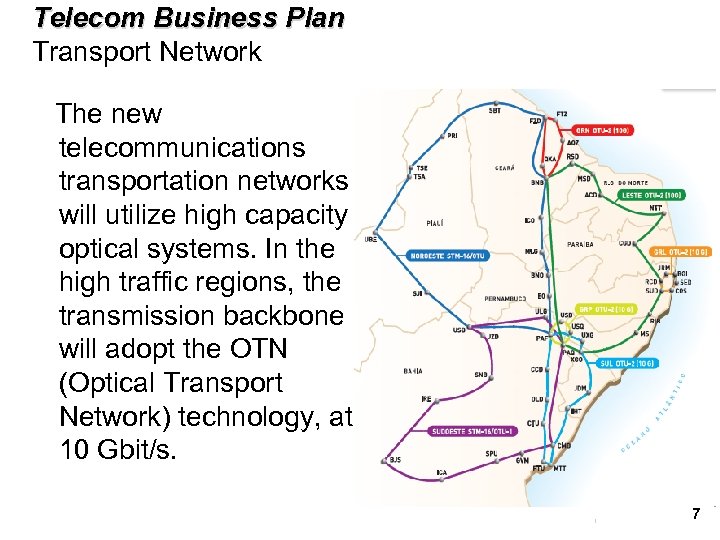
Telecom Business Plan Transport Network The new telecommunications transportation networks will utilize high capacity optical systems. In the high traffic regions, the transmission backbone will adopt the OTN (Optical Transport Network) technology, at 10 Gbit/s. 7
In the design of networks should be considered the new needs such as IPv 6, high availability, Qo. S, security, load balancing, multicast, and others. 8
Introduction GENERAL ASPECTS OF SMART GRID 9
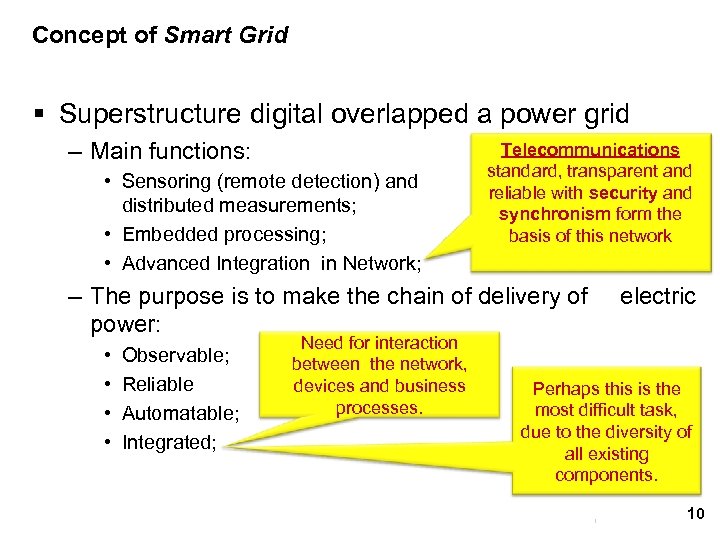
Concept of Smart Grid § Superstructure digital overlapped a power grid – Main functions: • Sensoring (remote detection) and distributed measurements; • Embedded processing; • Advanced Integration in Network; Telecommunications standard, transparent and reliable with security and synchronism form the basis of this network – The purpose is to make the chain of delivery of electric power: • • Observable; Reliable Automatable; Integrated; Need for interaction between the network, devices and business processes. Perhaps this is the most difficult task, due to the diversity of all existing components. 10
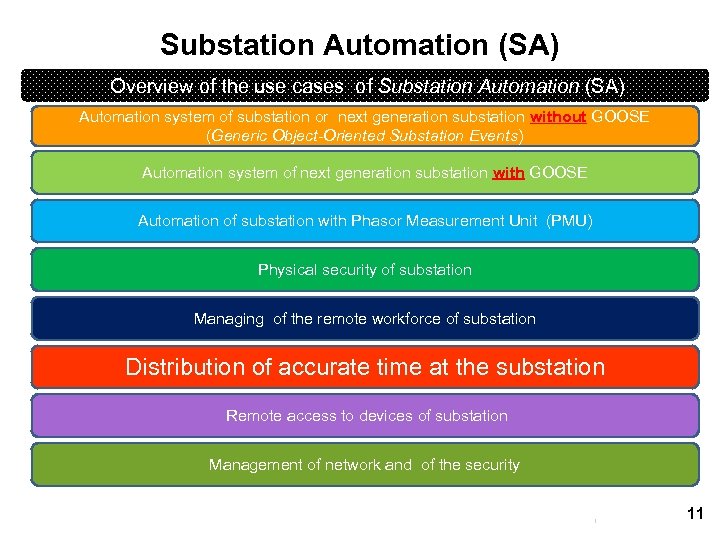
Substation Automation (SA) Overview of the use cases of Substation Automation (SA) Automation system of substation or next generation substation without GOOSE (Generic Object-Oriented Substation Events) Automation system of next generation substation with GOOSE Automation of substation with Phasor Measurement Unit (PMU) Physical security of substation Managing of the remote workforce of substation Distribution of accurate time at the substation Remote access to devices of substation Management of network and of the security 11
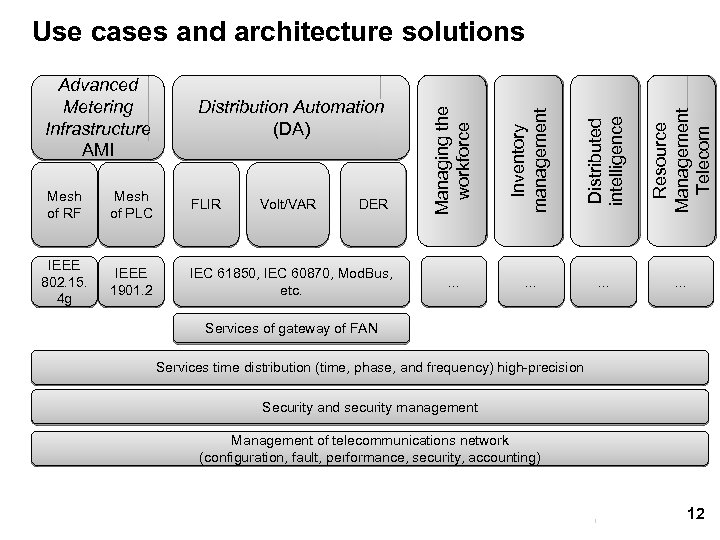
Mesh of PLC FLIR IEEE 802. 15. 4 g IEEE 1901. 2 IEC 61850, IEC 60870, Mod. Bus, etc. Volt/VAR DER Resource Management Telecom Mesh of RF Distributed intelligence Distribution Automation (DA) Inventory management Advanced Metering Infrastructure AMI Managing the workforce Use cases and architecture solutions . . . Services of gateway of FAN Services time distribution (time, phase, and frequency) high-precision Security and security management Management of telecommunications network (configuration, fault, performance, security, accounting) 12
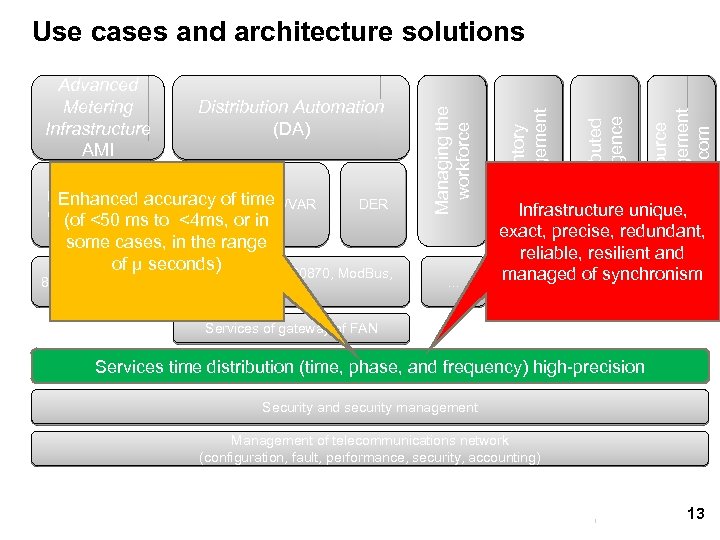
DER (of <50 ms to <4 ms, or in some cases, in the range of µ seconds) IEEE IEC 61850, IEC 60870, Mod. Bus, 802. 15. 4 g 1901. 2 etc. . Resource Management Telecom Mesh Enhanced accuracy of time Volt/VAR FLIR of RF of PLC Distributed intelligence Distribution Automation (DA) Inventory management Advanced Metering Infrastructure AMI Managing the workforce Use cases and architecture solutions Infrastructure unique, exact, precise, redundant, reliable, resilient and managed of synchronism. . Services of gateway of FAN Services time distribution (time, phase, and frequency) high-precision Security and security management Management of telecommunications network (configuration, fault, performance, security, accounting) 13
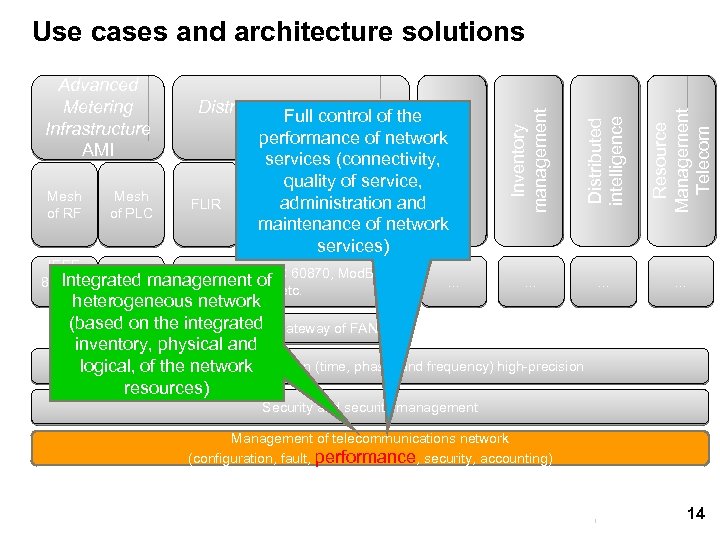
Use cases and architecture solutions Resource Management Telecom IEEE IEC 61850, IEC 60870, Mod. Bus, Integrated management of 802. 15. 1901. 2 etc. 4 gheterogeneous network Distributed intelligence Mesh of PLC Inventory management Mesh of RF Distribution Automation Full control of the (DA) performance of network services (connectivity, quality of service, administration and Volt/VAR FLIR DER maintenance of network services) Managing the workforce Advanced Metering Infrastructure AMI . . . (based on the integrated Services of gateway of FAN inventory, physical and Services time distribution (time, phase, and frequency) high-precision logical, of the network resources) Security and security management Management of telecommunications network (configuration, fault, performance, security, accounting) 14
Current Situation SYNCHRONISM OF THE NETWORK 15
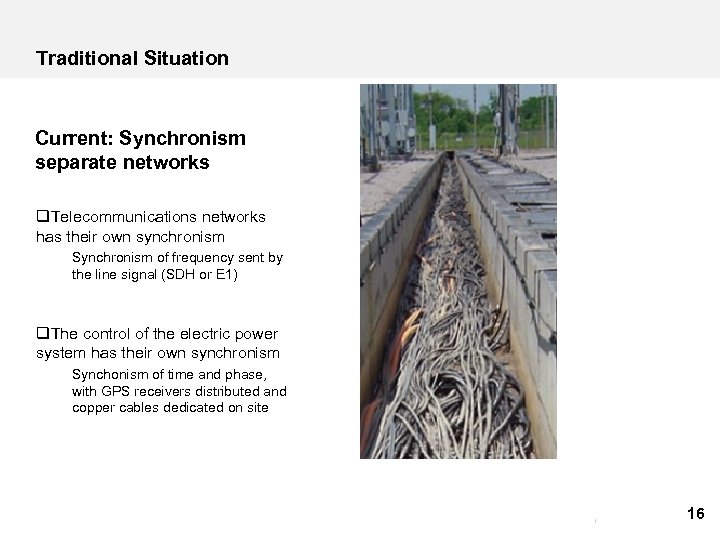
Traditional Situation Current: Synchronism separate networks q. Telecommunications networks has their own synchronism Synchronism of frequency sent by the line signal (SDH or E 1) q. The control of the electric power system has their own synchronism Synchonism of time and phase, with GPS receivers distributed and copper cables dedicated on site 16
Current Synchronism Network § The synchronism network consists of the distribution of frequency from a network of clocks spread all over the area of CHESF. § The synchronism network uses a hierarchical structure with the primary reference clocks (PRC), that provide reference to the rubidium clocks and quartz by the network. § The primary reference originates from seven GPS own and each of the GPS serves, currently, no more than five SDH network elements (NEs), cascaded. 17
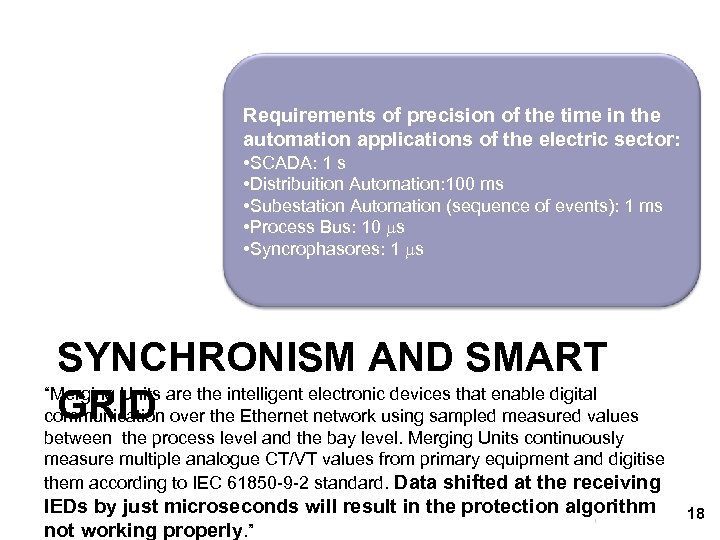
Requirements of precision of the time in the automation applications of the electric sector: • SCADA: 1 s • Distribuition Automation: 100 ms • Subestation Automation (sequence of events): 1 ms • Process Bus: 10 ms • Syncrophasores: 1 ms SYNCHRONISM AND SMART “Merging Units are the intelligent electronic devices that enable digital GRID communication over the Ethernet network using sampled measured values between the process level and the bay level. Merging Units continuously measure multiple analogue CT/VT values from primary equipment and digitise them according to IEC 61850 -9 -2 standard. Data shifted at the receiving IEDs by just microseconds will result in the protection algorithm not working properly. ” 18
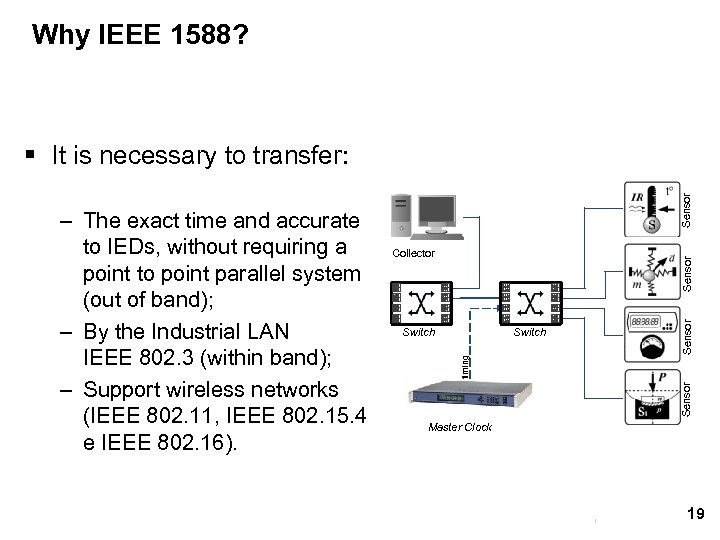
Why IEEE 1588? Switch Sensor Collector Sensor timing – The exact time and accurate to IEDs, without requiring a point to point parallel system (out of band); – By the Industrial LAN IEEE 802. 3 (within band); – Support wireless networks (IEEE 802. 11, IEEE 802. 15. 4 e IEEE 802. 16). Sensor § It is necessary to transfer: Master Clock 19
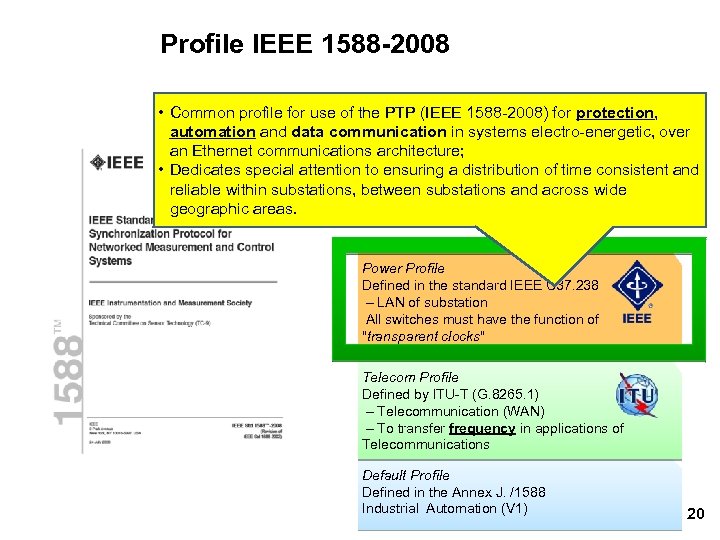
Profile IEEE 1588 -2008 • Common profile for use of the PTP (IEEE 1588 -2008) for protection, • IEEE 1588 -2008 … automation and data communication in systems electro-energetic, over an Ethernet communications architecture; • Dedicates special attention to ensuring a distribution of time consistent and reliable within substations, between substations and across wide geographic areas. Power Profile Defined in the standard IEEE C 37. 238 – LAN of substation All switches must have the function of "transparent clocks" Telecom Profile Defined by ITU-T (G. 8265. 1) – Telecommunication (WAN) – To transfer frequency in applications of Telecommunications Default Profile Defined in the Annex J. /1588 Industrial Automation (V 1) 20
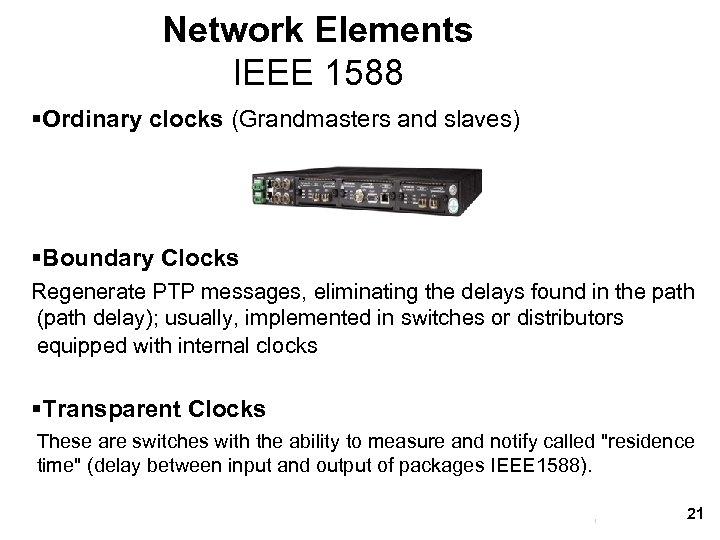
Network Elements IEEE 1588 §Ordinary clocks (Grandmasters and slaves) §Boundary Clocks Regenerate PTP messages, eliminating the delays found in the path (path delay); usually, implemented in switches or distributors equipped with internal clocks §Transparent Clocks These are switches with the ability to measure and notify called "residence time" (delay between input and output of packages IEEE 1588). 21
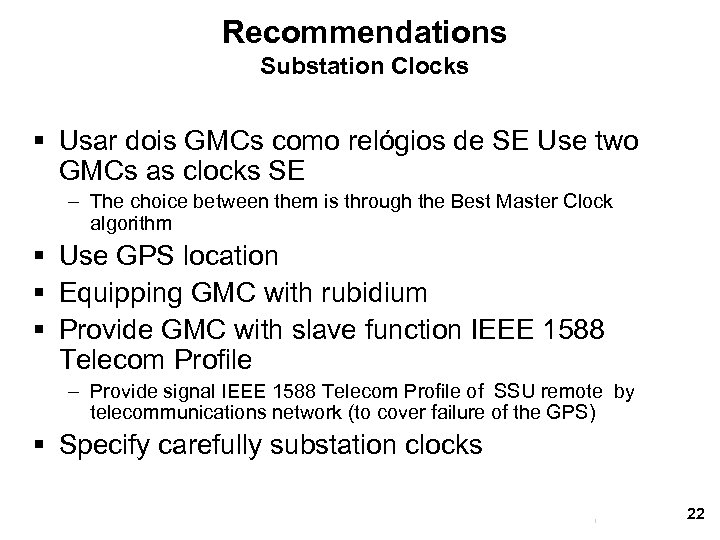
Recommendations Substation Clocks § Usar dois GMCs como relógios de SE Use two GMCs as clocks SE – The choice between them is through the Best Master Clock algorithm § Use GPS location § Equipping GMC with rubidium § Provide GMC with slave function IEEE 1588 Telecom Profile – Provide signal IEEE 1588 Telecom Profile of SSU remote by telecommunications network (to cover failure of the GPS) § Specify carefully substation clocks 22
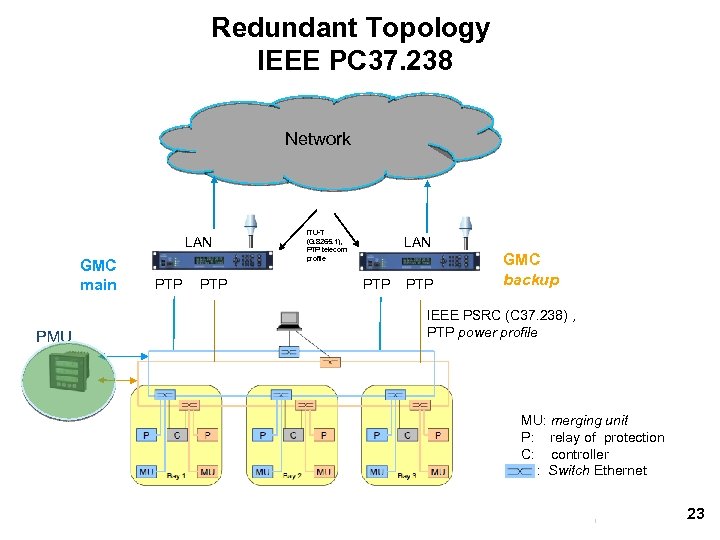
Redundant Topology IEEE PC 37. 238 Network LAN GMC main PMU PTP ITU-T (G. 8265. 1), PTP telecom profile LAN PTP GMC backup IEEE PSRC (C 37. 238) , PTP power profile MU: merging unit P: relay of protection C: controller : Switch Ethernet 23
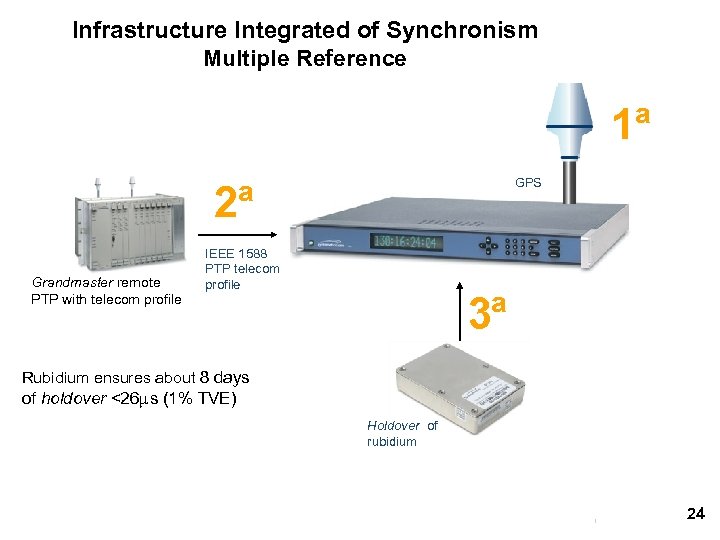
Infrastructure Integrated of Synchronism Multiple Reference 1ª GPS 2ª Grandmaster remote PTP with telecom profile IEEE 1588 PTP telecom profile 3ª Rubidium ensures about 8 days of holdover <26μs (1% TVE) Holdover of rubidium 24
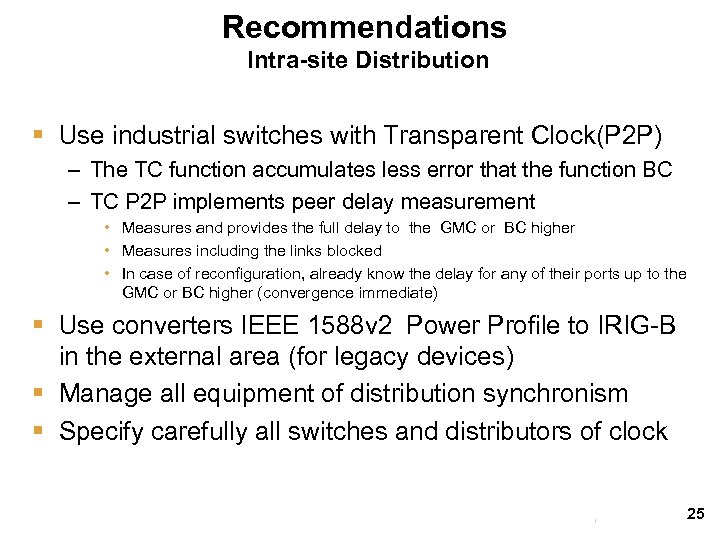
Recommendations Intra-site Distribution § Use industrial switches with Transparent Clock(P 2 P) – The TC function accumulates less error that the function BC – TC P 2 P implements peer delay measurement • Measures and provides the full delay to the GMC or BC higher • Measures including the links blocked • In case of reconfiguration, already know the delay for any of their ports up to the GMC or BC higher (convergence immediate) § Use converters IEEE 1588 v 2 Power Profile to IRIG-B in the external area (for legacy devices) § Manage all equipment of distribution synchronism § Specify carefully all switches and distributors of clock 25
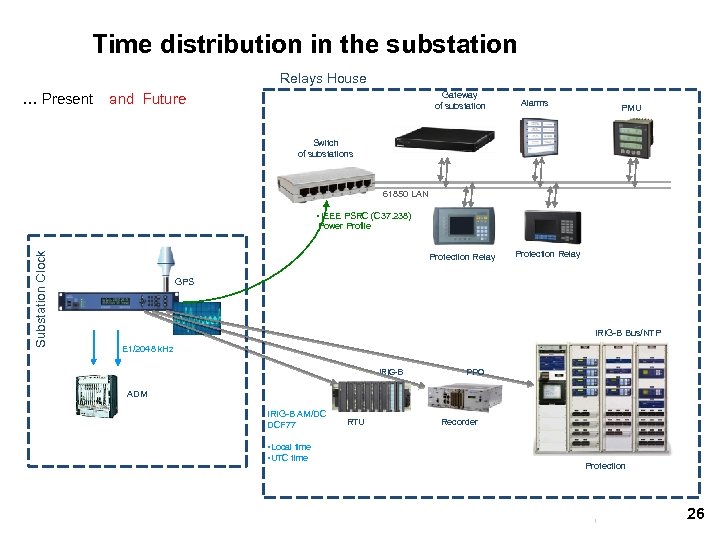
Time distribution in the substation Relays House … Present Gateway of substation and Future Alarms PMU Switch of substations 61850 LAN • IEEE PSRC (C 37. 238) Substation Clock Power Profile Protection Relay GPS IRIG-B Bus/NTP E 1/2048 k. Hz IRIG-B PPO ADM IRIG-B AM/DC DCF 77 • Local time • UTC time RTU Recorder Protection 26
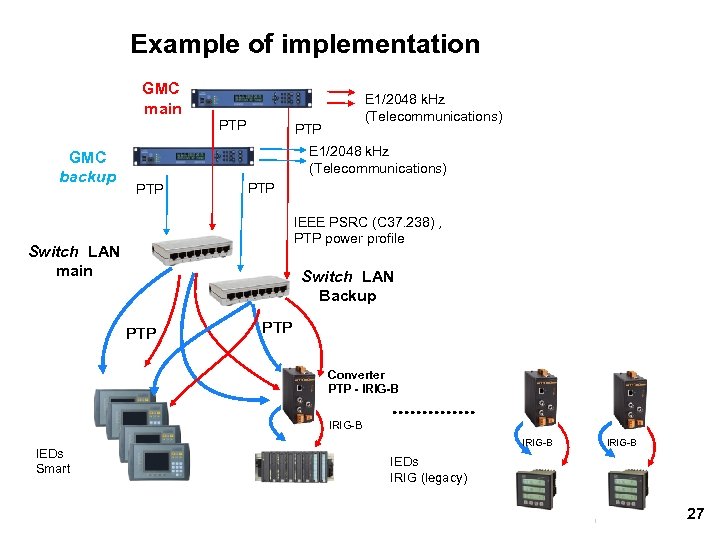
Example of implementation GMC main PTP GMC backup PTP E 1/2048 k. Hz (Telecommunications) PTP IEEE PSRC (C 37. 238) , PTP power profile Switch LAN main Switch LAN Backup PTP Converter PTP - IRIG-B IEDs Smart IRIG-B IEDs IRIG (legacy) 27
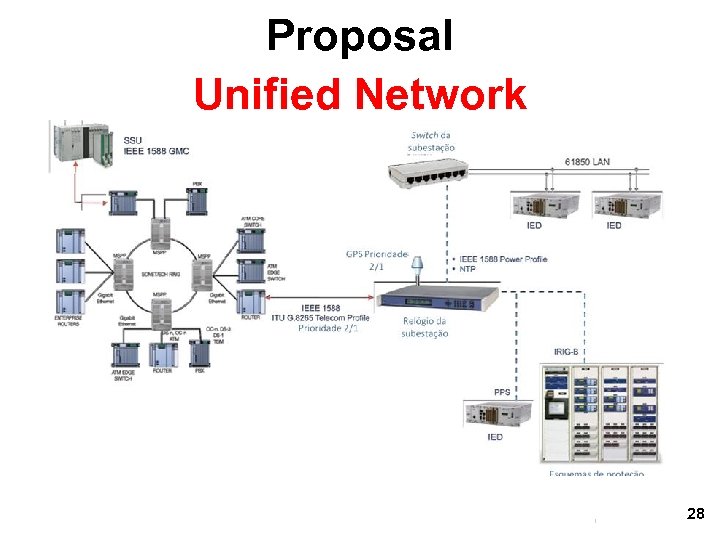
Proposal Unified Network 28
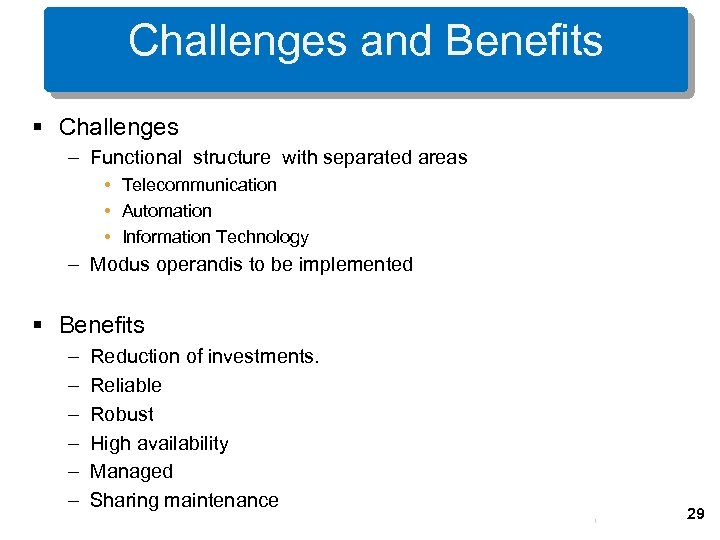
Challenges and Benefits § Challenges – Functional structure with separated areas • Telecommunication • Automation • Information Technology – Modus operandis to be implemented § Benefits – – – Reduction of investments. Reliable Robust High availability Managed Sharing maintenance 29
Conclusion Suggested that the synchronism network operated by telecommunications can also be used, with clear advantages for other sectors of the company, and be prepared to attend the new requirements, with optimization of investment, improvements in the operation and sharing maintenance of the network, and consequent cost reduction. 30
Thanks 31

Thank you! धनयव द Rodrigo Leal de Siqueira rodrigol@chesf. gov. br Tel: +55 (81) 3229. 4319 32
Скачать презентацию Challenges and Benefits of a Unified Synchronism Network
6ee6fc73bde2c2bab4ec11fef8e3ed5b.ppt