


 Скачать презентацию Chagas Disease Clues to the Magnitude of the
a240e1cae056a88f26f696b90a315ad1.ppt
- Количество слайдов: 47
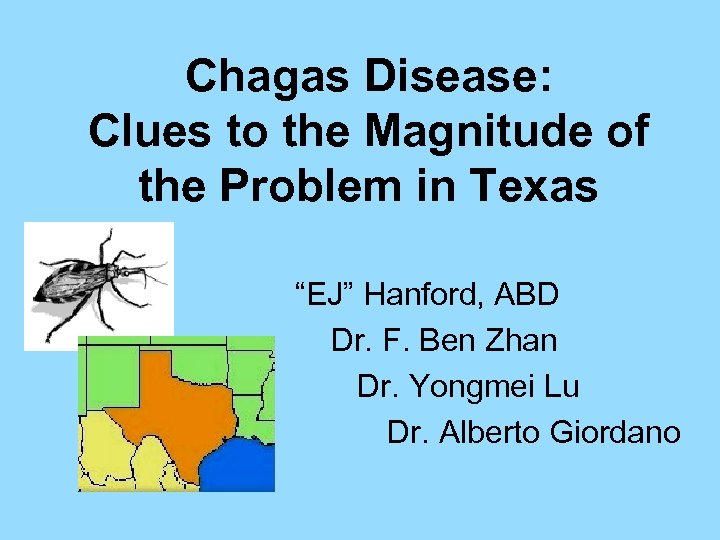 Chagas Disease: Clues to the Magnitude of the Problem in Texas “EJ” Hanford, ABD Dr. F. Ben Zhan Dr. Yongmei Lu Dr. Alberto Giordano
 Research Support & Funding Ø Texas State University Center for Geographic Information Science Ø Border Health Initiative Project Effort sponsored in part by the 311 th Human Systems Wing PIA FA 8909 -04 -3 -5000 Brooks City-Base Foundation, Inc.
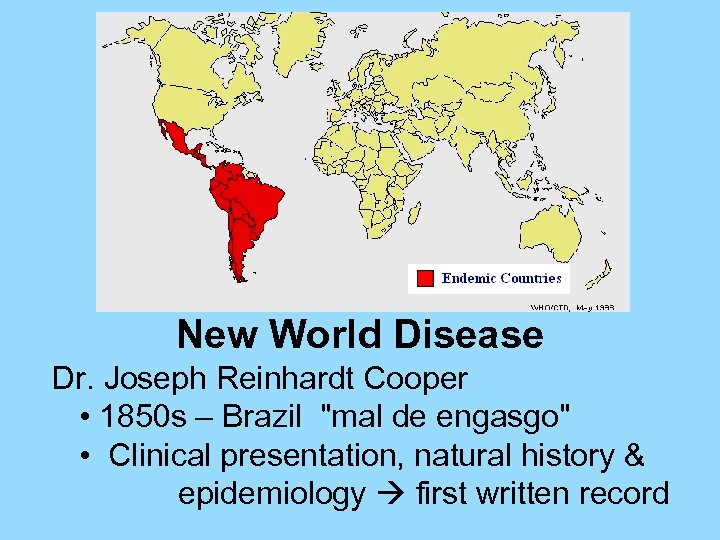 New World Disease Dr. Joseph Reinhardt Cooper • 1850 s – Brazil "mal de engasgo" • Clinical presentation, natural history & epidemiology first written record
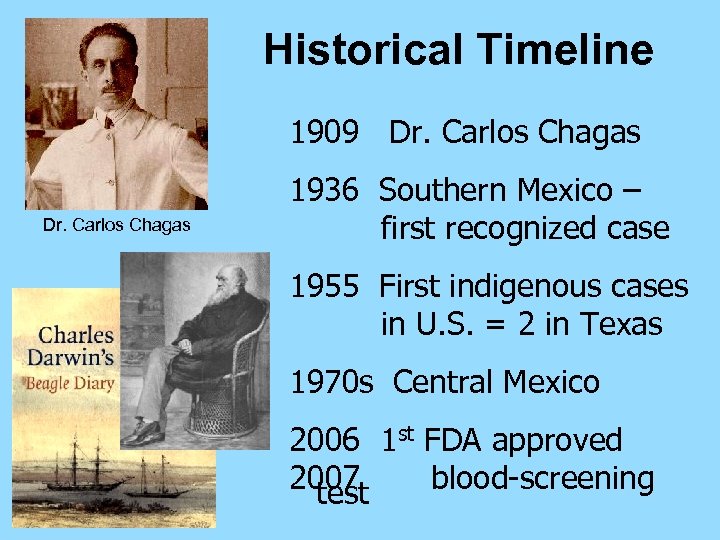 Historical Timeline 1909 Dr. Carlos Chagas 1936 Southern Mexico – first recognized case 1955 First indigenous cases in U. S. = 2 in Texas 1970 s Central Mexico 2006 1 st FDA approved 2007 blood-screening test
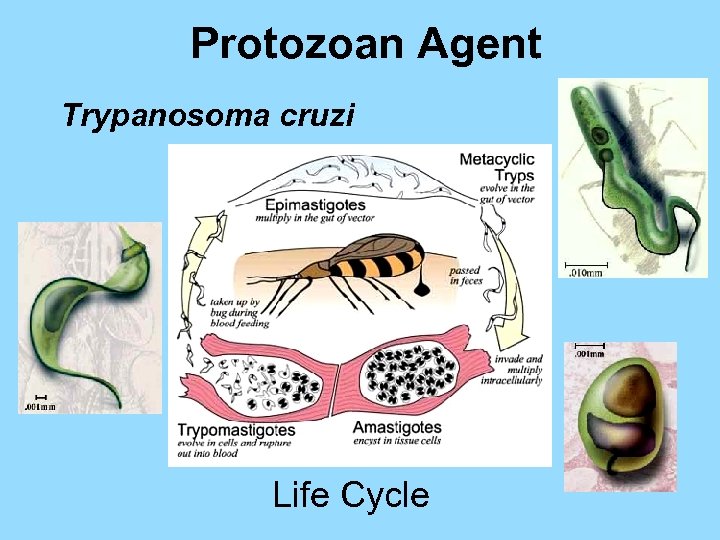 Protozoan Agent Trypanosoma cruzi Life Cycle
 Diagnostic Techniques • Clinical Evaluations & … • Demonstration of Parasite – – – Direct microscopic examination Xenodiagnosis Lab animal inoculation Hemoculture (less sensitive) PCR • Serologic Testing – CF, IH, DA, IIF – ELISA (Cross reactions can occur to Leishmaniasis, Blastomycosis, and Toxoplasmosis)
 Transmission to Humans • Fecal contamination • enters Triatomid bite • through mucosal tissue (eye) • through open wound • within consumed food or water • • • Blood transfusion from infected person Organ donation from infected person Vertical transmission (Congenital multigen. ) Laboratory-acquired (? ) Oral transmission Other ?
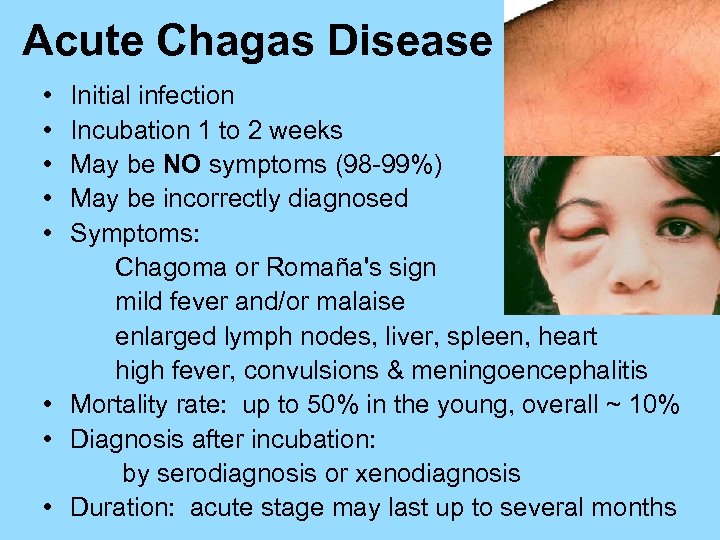 Acute Chagas Disease • • • Initial infection Incubation 1 to 2 weeks May be NO symptoms (98 -99%) May be incorrectly diagnosed Symptoms: Chagoma or Romaña's sign mild fever and/or malaise enlarged lymph nodes, liver, spleen, heart high fever, convulsions & meningoencephalitis • Mortality rate: up to 50% in the young, overall ~ 10% • Diagnosis after incubation: by serodiagnosis or xenodiagnosis • Duration: acute stage may last up to several months
 Latent Stage Chagas Disease • Outwardly asymptomatic • May have subtle changes in – sympathetic & parasympathetic nervous system – internal organs • Duration: decades till death from other cause or till evolution to chronic stage • Diagnosis by serological testing (15% prevalence DNA in sero-neg endemic pop. )
 Chronic Chagas Disease • Evolves in 20 to 40 % of infected persons – – Repeated re-infections Genetic polymorphism of T. cruzi Variation in host susceptibility Immuno-compromised by disease / drugs • Cardiomyopathy or Congestive Heart Failure – typically involves right bundle branch block – arrhythmias • Enlarged colon or esophagus • Ischemic stroke • Diagnosis by serological testing & clinical evaluation
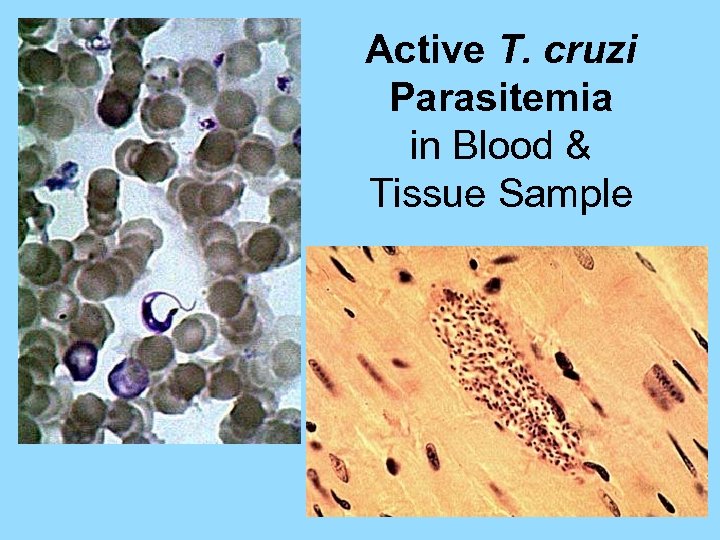 Active T. cruzi Parasitemia in Blood & Tissue Sample
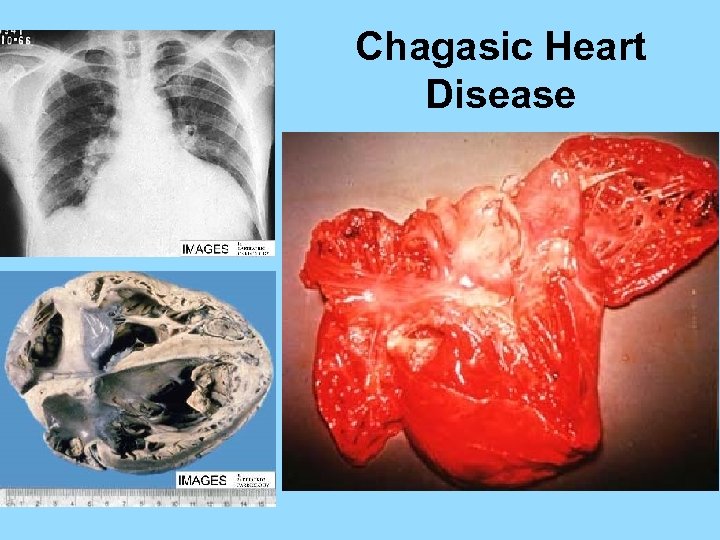 Chagasic Heart Disease
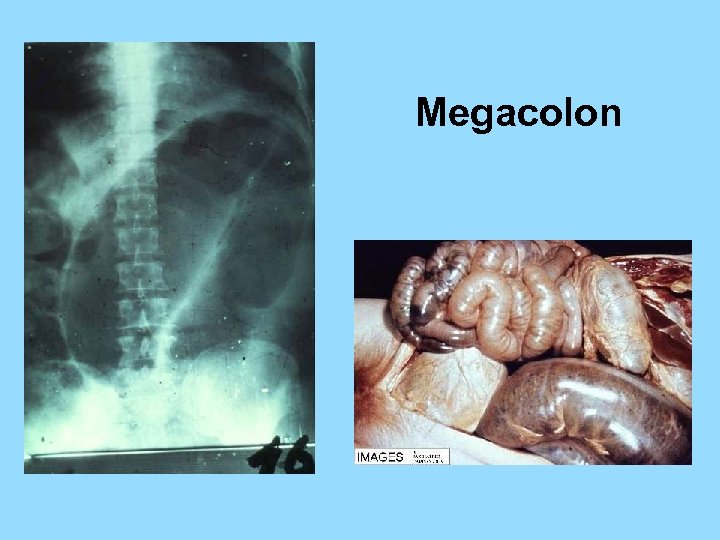 Megacolon
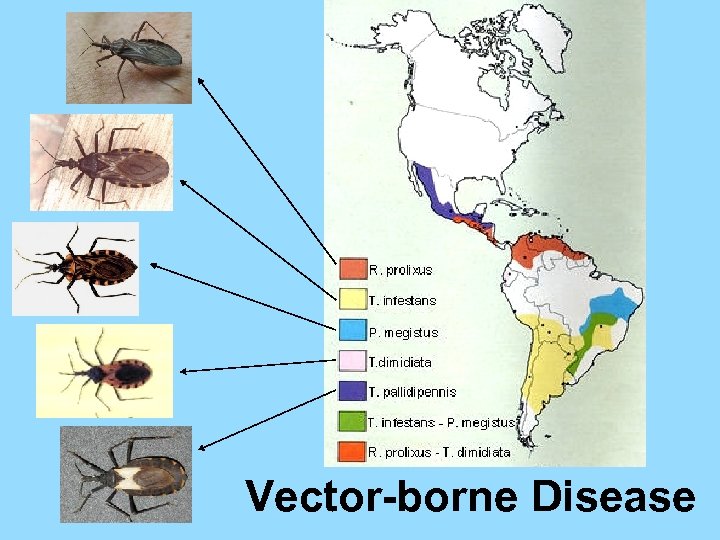 Vector-borne Disease
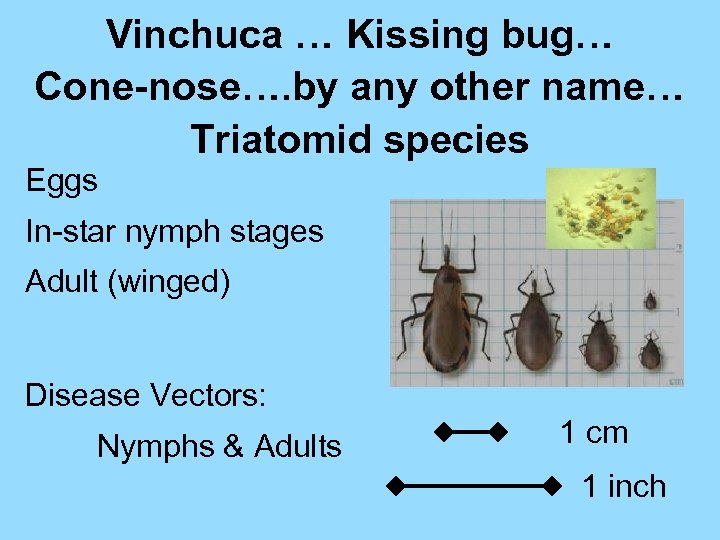 Vinchuca … Kissing bug… Cone-nose…. by any other name… Triatomid species Eggs In-star nymph stages Adult (winged) Disease Vectors: Nymphs & Adults 1 cm 1 inch
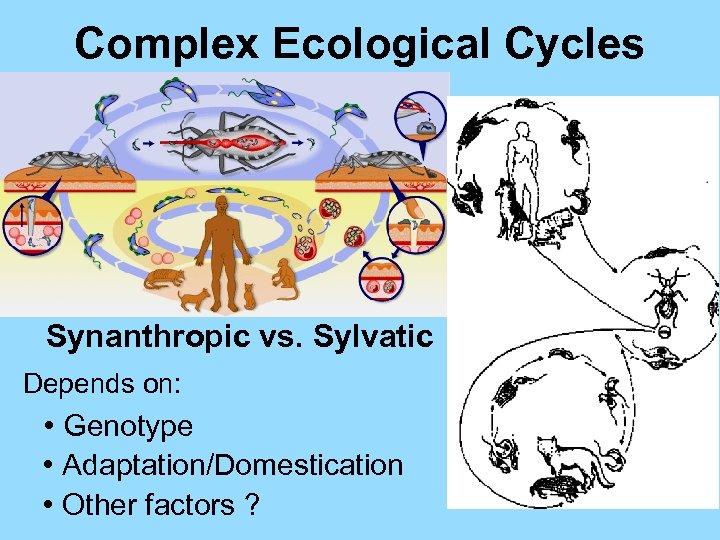 Complex Ecological Cycles Synanthropic vs. Sylvatic Depends on: • Genotype • Adaptation/Domestication • Other factors ?
 Chagas Disease in Humans • Become infected for life • Potentially progresses through 3 stages Acute Latent/Indeterminate Chronic • Fatal in acute and/or chronic stages & debilitating • Higher risk for immuno-compromised persons • MYTH = a disease only of the rural poor • NO vaccine • NO cure • US FDA approved ELISA blood-screening test
 But NOT in Texas ? ? • Lower virulence • Lower vector density • Different vector habits – Less frequent domestication – Significantly longer feed-defecation response • Lack of ‘trypanosomiasis consciousness’ – Fail to diagnose nondescript acute infections
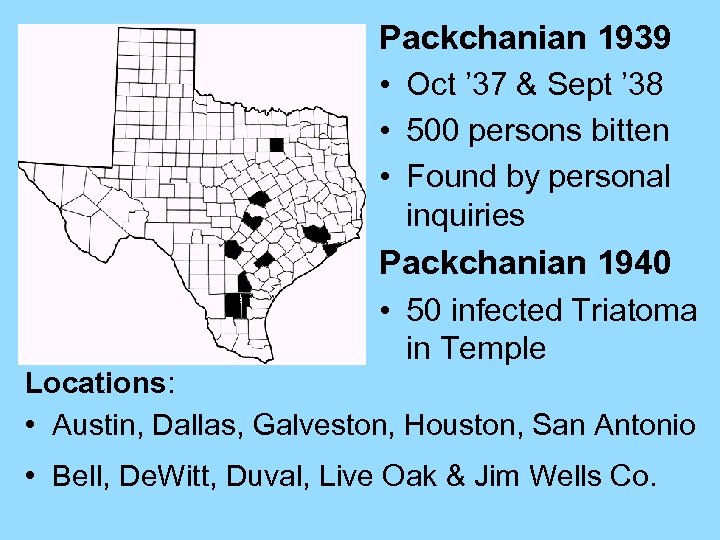 Packchanian 1939 • Oct ’ 37 & Sept ’ 38 • 500 persons bitten • Found by personal inquiries Packchanian 1940 • 50 infected Triatoma in Temple Locations: • Austin, Dallas, Galveston, Houston, San Antonio • Bell, De. Witt, Duval, Live Oak & Jim Wells Co.
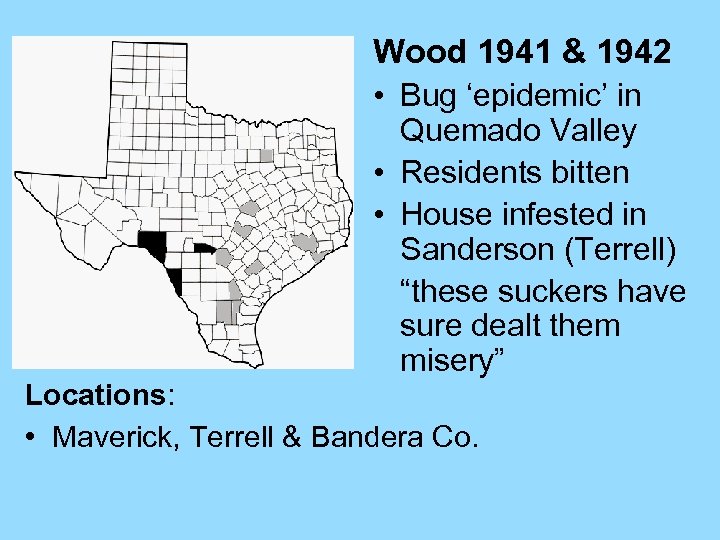 Wood 1941 & 1942 • Bug ‘epidemic’ in Quemado Valley • Residents bitten • House infested in Sanderson (Terrell) “these suckers have sure dealt them misery” Locations: • Maverick, Terrell & Bandera Co.
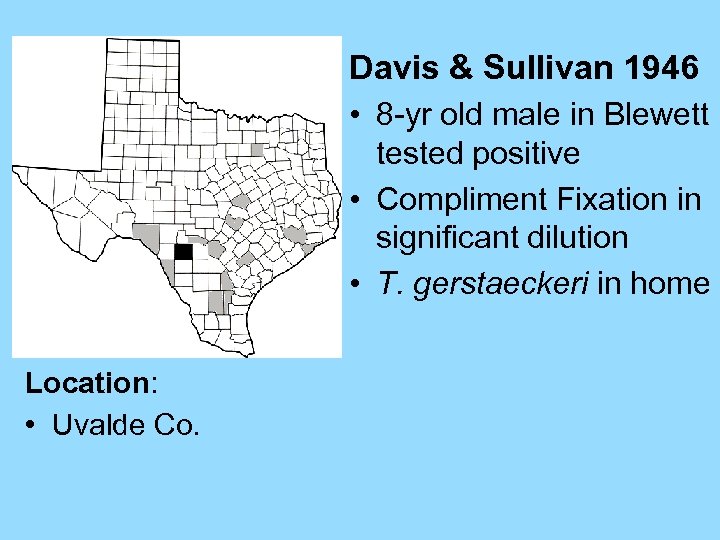 Davis & Sullivan 1946 • 8 -yr old male in Blewett tested positive • Compliment Fixation in significant dilution • T. gerstaeckeri in home Location: • Uvalde Co.
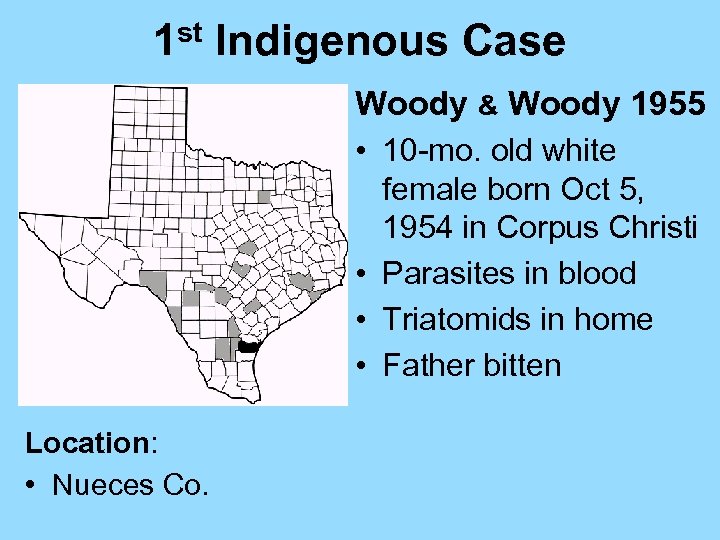 1 st Indigenous Case Woody & Woody 1955 • 10 -mo. old white female born Oct 5, 1954 in Corpus Christi • Parasites in blood • Triatomids in home • Father bitten Location: • Nueces Co.
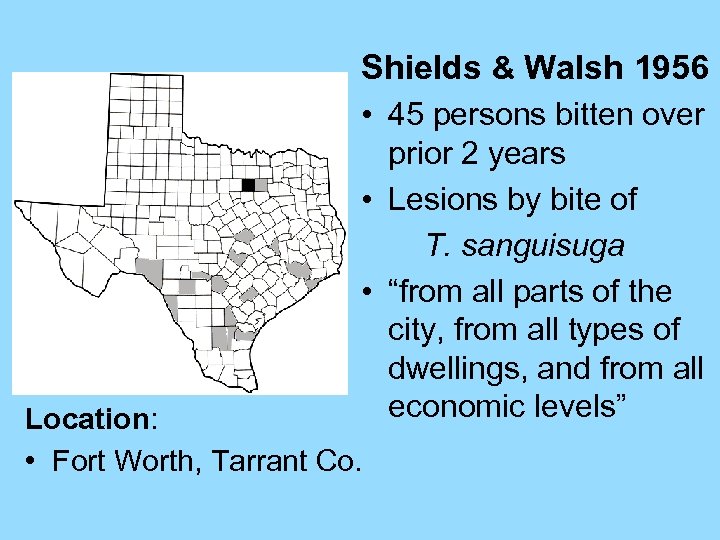 Shields & Walsh 1956 • 45 persons bitten over prior 2 years • Lesions by bite of T. sanguisuga • “from all parts of the city, from all types of dwellings, and from all economic levels” Location: • Fort Worth, Tarrant Co.
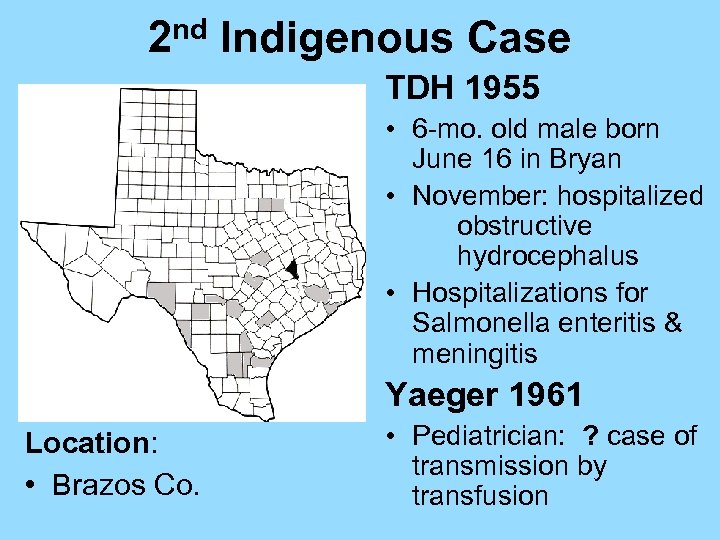 nd 2 Indigenous Case TDH 1955 • 6 -mo. old male born June 16 in Bryan • November: hospitalized obstructive hydrocephalus • Hospitalizations for Salmonella enteritis & meningitis Yaeger 1961 Location: • Brazos Co. • Pediatrician: ? case of transmission by transfusion
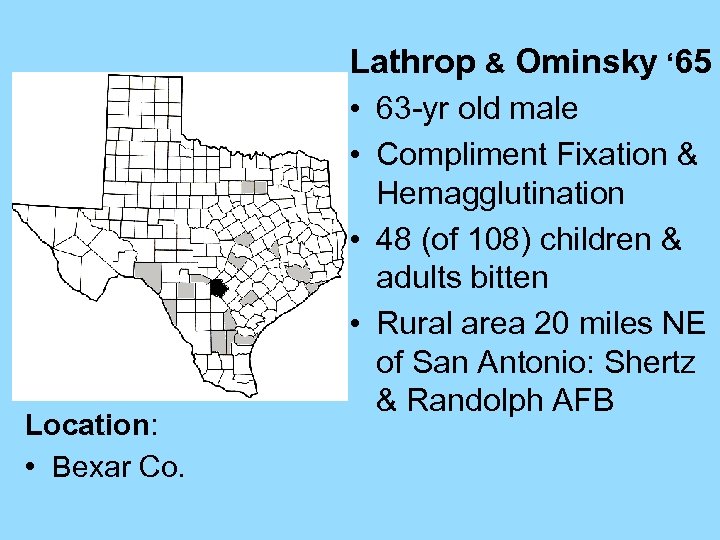 Lathrop & Ominsky ‘ 65 • 63 -yr old male • Compliment Fixation & Location: • Bexar Co. Hemagglutination • 48 (of 108) children & adults bitten • Rural area 20 miles NE of San Antonio: Shertz & Randolph AFB
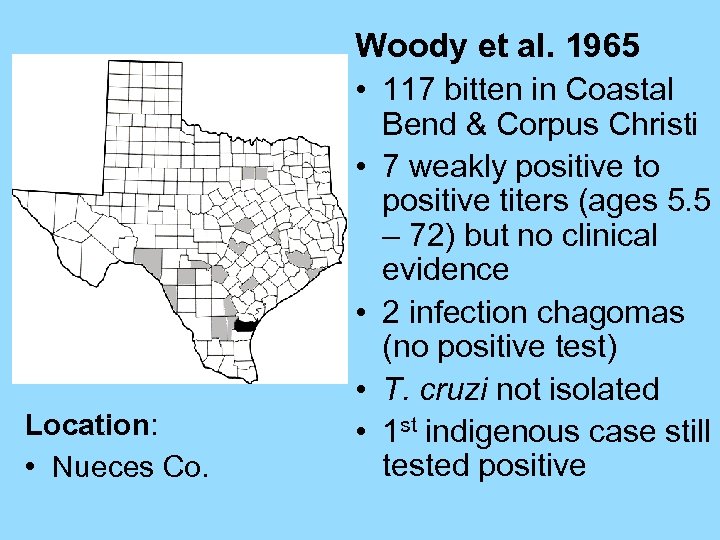 Woody et al. 1965 • 117 bitten in Coastal • • Location: • Nueces Co. • • Bend & Corpus Christi 7 weakly positive to positive titers (ages 5. 5 – 72) but no clinical evidence 2 infection chagomas (no positive test) T. cruzi not isolated 1 st indigenous case still tested positive
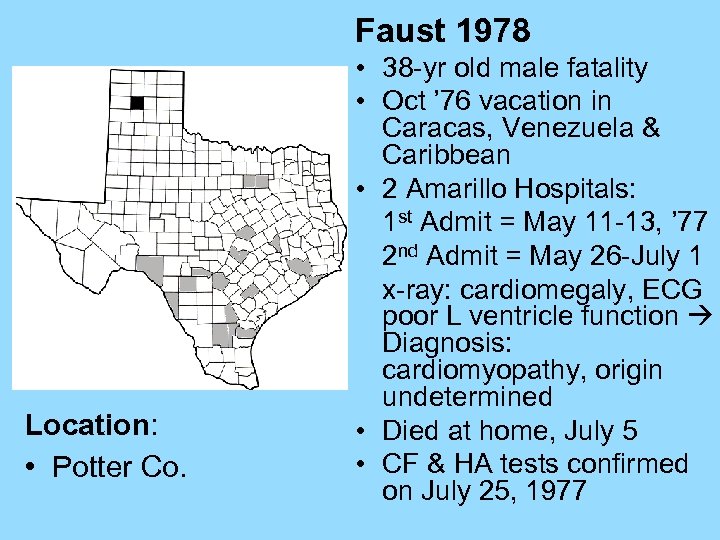 Faust 1978 Location: • Potter Co. • 38 -yr old male fatality • Oct ’ 76 vacation in Caracas, Venezuela & Caribbean • 2 Amarillo Hospitals: 1 st Admit = May 11 -13, ’ 77 2 nd Admit = May 26 -July 1 x-ray: cardiomegaly, ECG poor L ventricle function Diagnosis: cardiomyopathy, origin undetermined • Died at home, July 5 • CF & HA tests confirmed on July 25, 1977
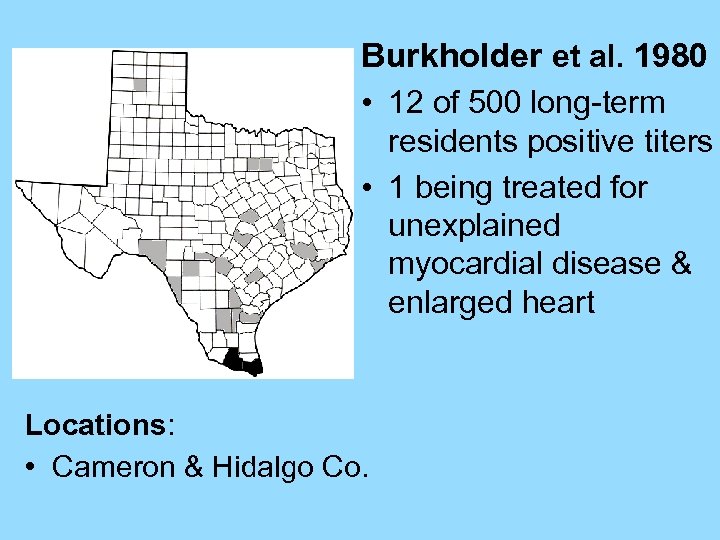 Burkholder et al. 1980 • 12 of 500 long-term residents positive titers • 1 being treated for unexplained myocardial disease & enlarged heart Locations: • Cameron & Hidalgo Co.
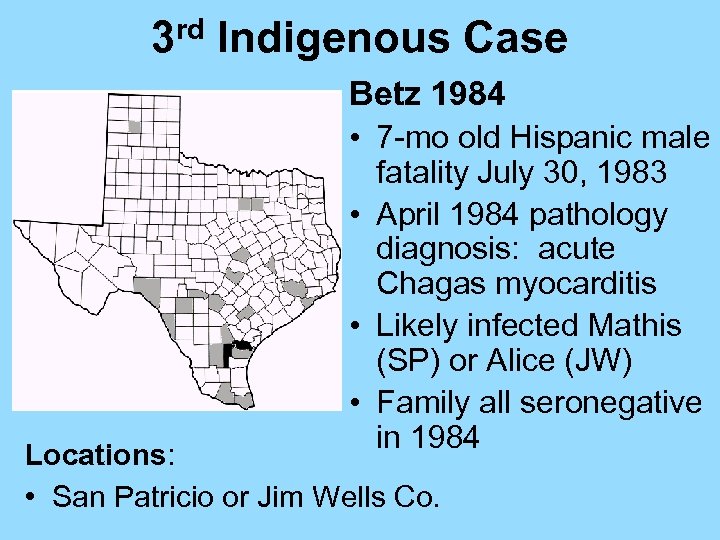 rd 3 Indigenous Case Betz 1984 • 7 -mo old Hispanic male fatality July 30, 1983 • April 1984 pathology diagnosis: acute Chagas myocarditis • Likely infected Mathis (SP) or Alice (JW) • Family all seronegative in 1984 Locations: • San Patricio or Jim Wells Co.
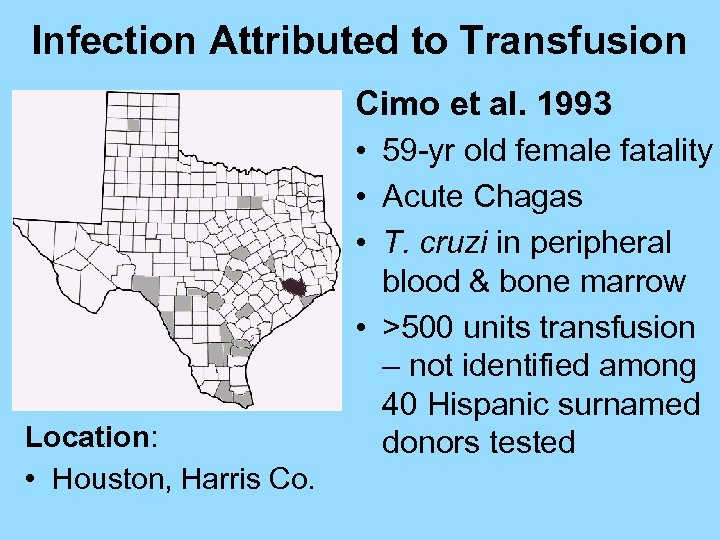 Infection Attributed to Transfusion Cimo et al. 1993 • 59 -yr old female fatality • Acute Chagas • T. cruzi in peripheral Location: • Houston, Harris Co. blood & bone marrow • >500 units transfusion – not identified among 40 Hispanic surnamed donors tested
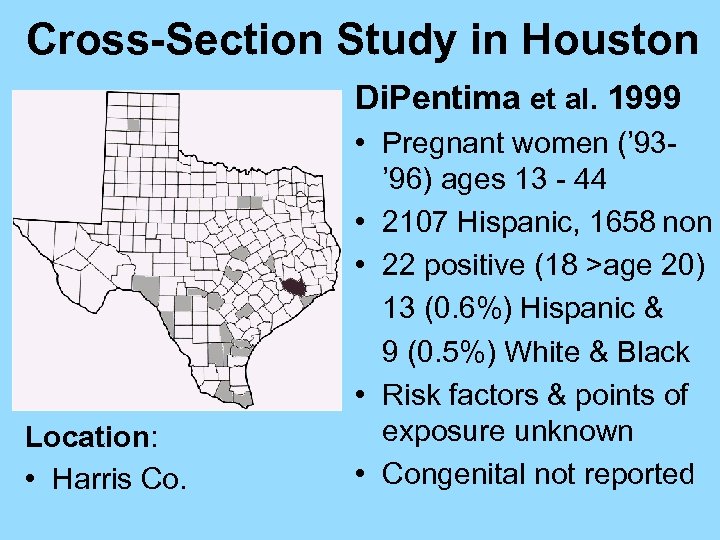 Cross-Section Study in Houston Di. Pentima et al. 1999 Location: • Harris Co. • Pregnant women (’ 93’ 96) ages 13 - 44 • 2107 Hispanic, 1658 non • 22 positive (18 >age 20) 13 (0. 6%) Hispanic & 9 (0. 5%) White & Black • Risk factors & points of exposure unknown • Congenital not reported
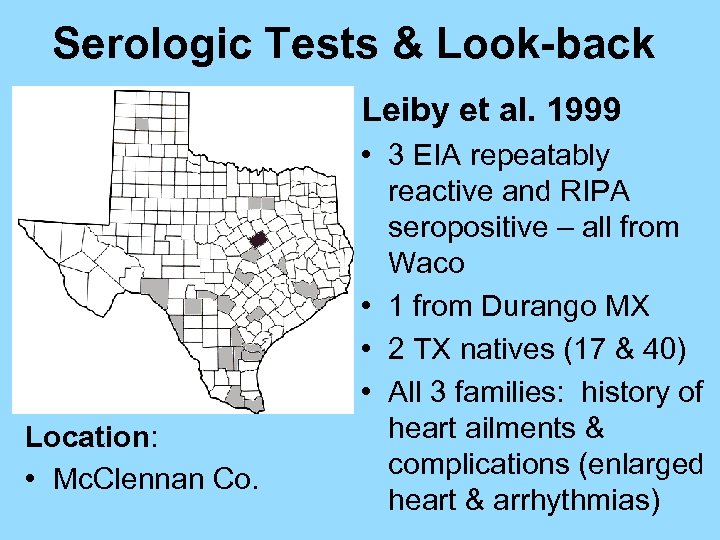 Serologic Tests & Look-back Leiby et al. 1999 Location: • Mc. Clennan Co. • 3 EIA repeatably reactive and RIPA seropositive – all from Waco • 1 from Durango MX • 2 TX natives (17 & 40) • All 3 families: history of heart ailments & complications (enlarged heart & arrhythmias)
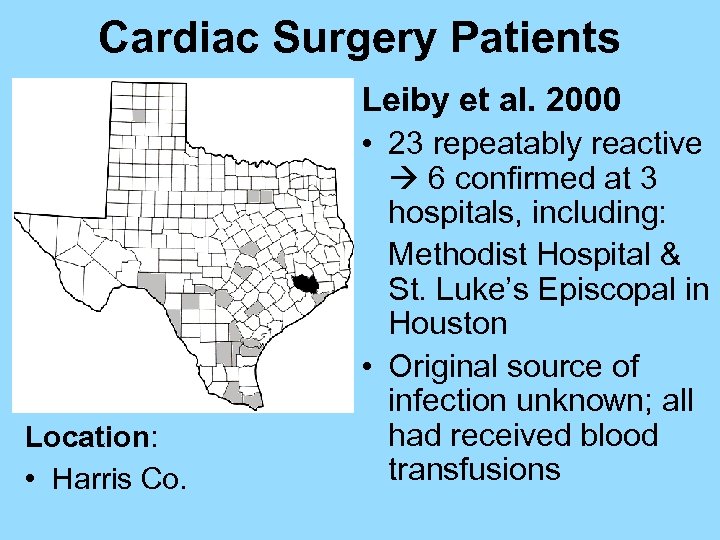 Cardiac Surgery Patients Leiby et al. 2000 • 23 repeatably reactive Location: • Harris Co. 6 confirmed at 3 hospitals, including: Methodist Hospital & St. Luke’s Episcopal in Houston • Original source of infection unknown; all had received blood transfusions
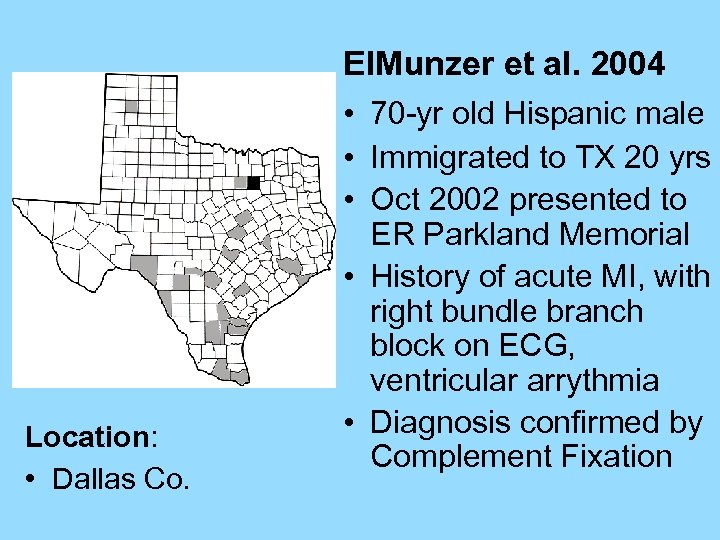 El. Munzer et al. 2004 • 70 -yr old Hispanic male • Immigrated to TX 20 yrs • Oct 2002 presented to Location: • Dallas Co. ER Parkland Memorial • History of acute MI, with right bundle branch block on ECG, ventricular arrythmia • Diagnosis confirmed by Complement Fixation
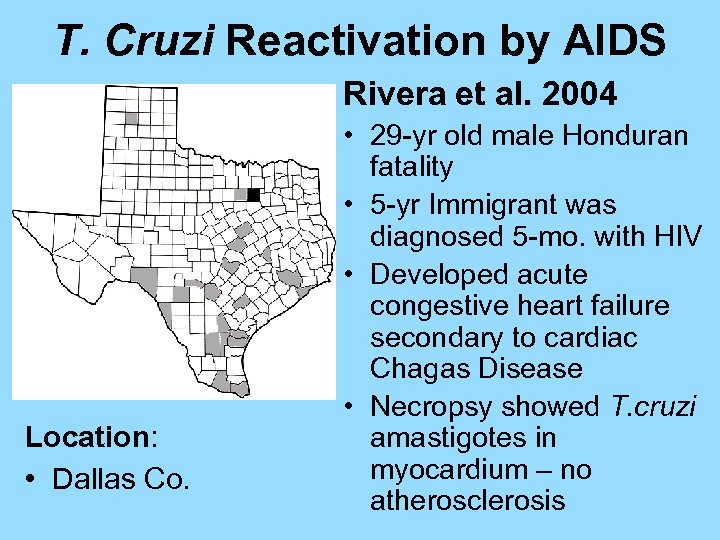 T. Cruzi Reactivation by AIDS Rivera et al. 2004 Location: • Dallas Co. • 29 -yr old male Honduran fatality • 5 -yr Immigrant was diagnosed 5 -mo. with HIV • Developed acute congestive heart failure secondary to cardiac Chagas Disease • Necropsy showed T. cruzi amastigotes in myocardium – no atherosclerosis
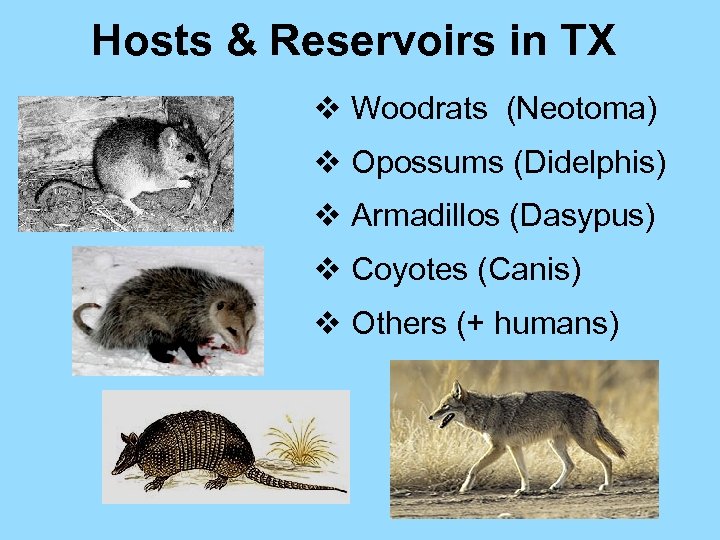 Hosts & Reservoirs in TX v Woodrats (Neotoma) v Opossums (Didelphis) v Armadillos (Dasypus) v Coyotes (Canis) v Others (+ humans)
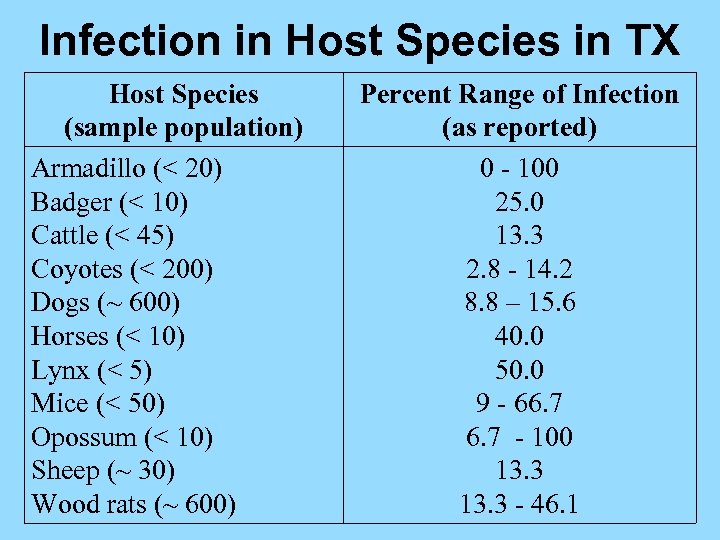 Infection in Host Species in TX Host Species (sample population) Armadillo (< 20) Badger (< 10) Cattle (< 45) Coyotes (< 200) Dogs (~ 600) Horses (< 10) Lynx (< 5) Mice (< 50) Opossum (< 10) Sheep (~ 30) Wood rats (~ 600) Percent Range of Infection (as reported) 0 - 100 25. 0 13. 3 2. 8 - 14. 2 8. 8 – 15. 6 40. 0 50. 0 9 - 66. 7 - 100 13. 3 - 46. 1
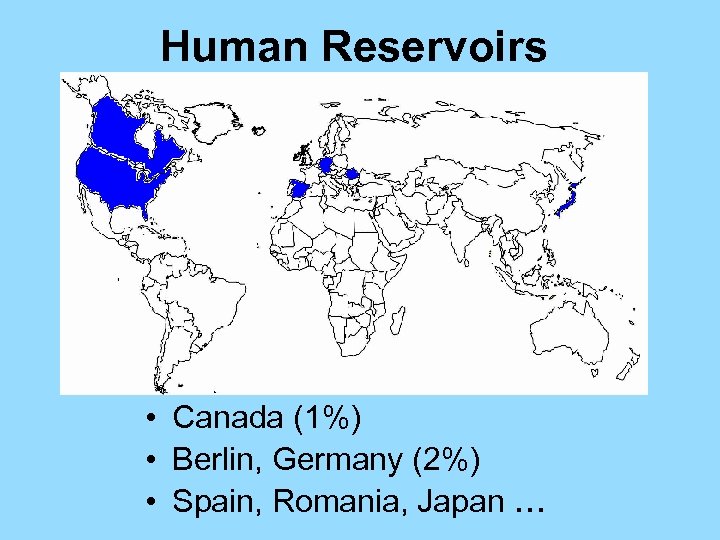 Human Reservoirs • Canada (1%) • Berlin, Germany (2%) • Spain, Romania, Japan …
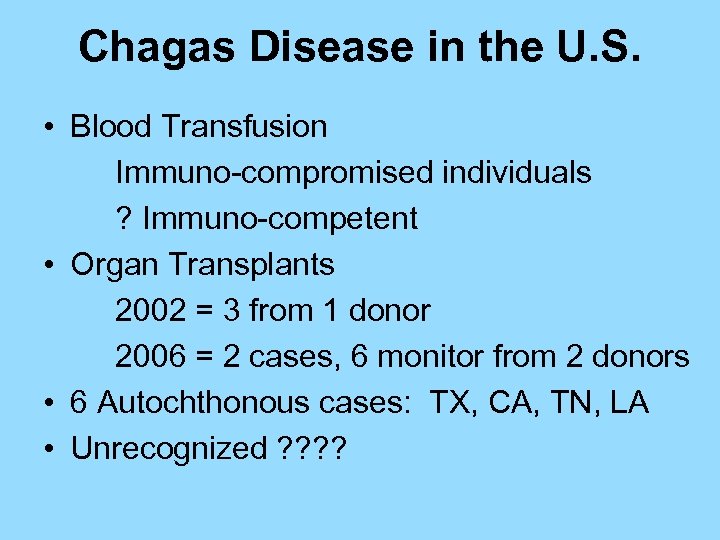 Chagas Disease in the U. S. • Blood Transfusion Immuno-compromised individuals ? Immuno-competent • Organ Transplants 2002 = 3 from 1 donor 2006 = 2 cases, 6 monitor from 2 donors • 6 Autochthonous cases: TX, CA, TN, LA • Unrecognized ? ?
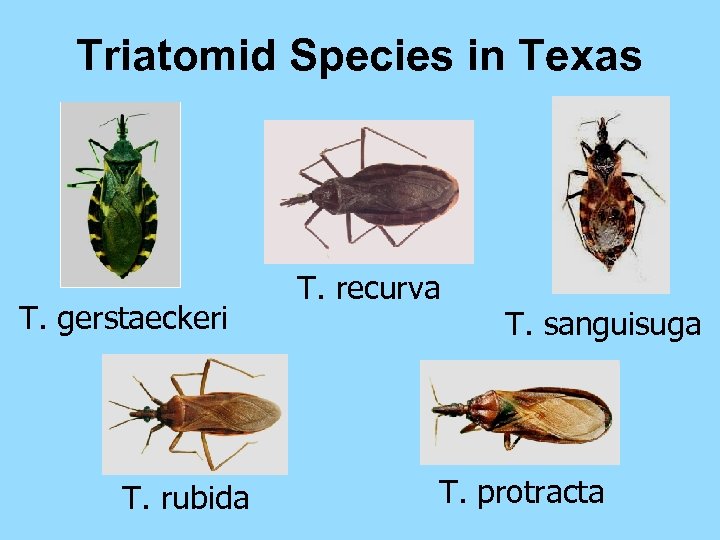 Triatomid Species in Texas T. gerstaeckeri T. rubida T. recurva T. sanguisuga T. protracta
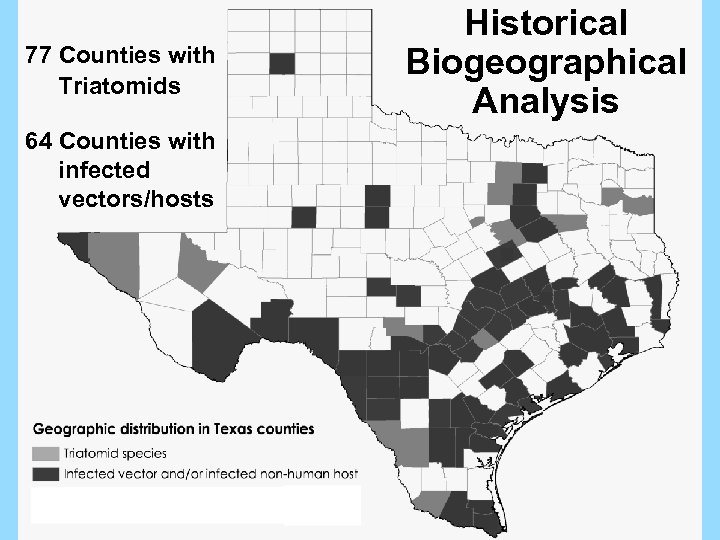 77 Counties with Triatomids 64 Counties with infected vectors/hosts Historical Biogeographical Analysis
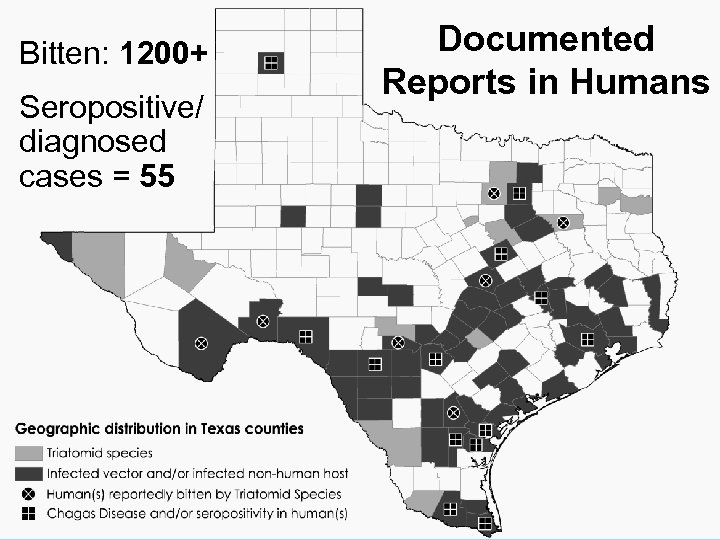 Bitten: 1200+ Seropositive/ diagnosed cases = 55 Documented Reports in Humans
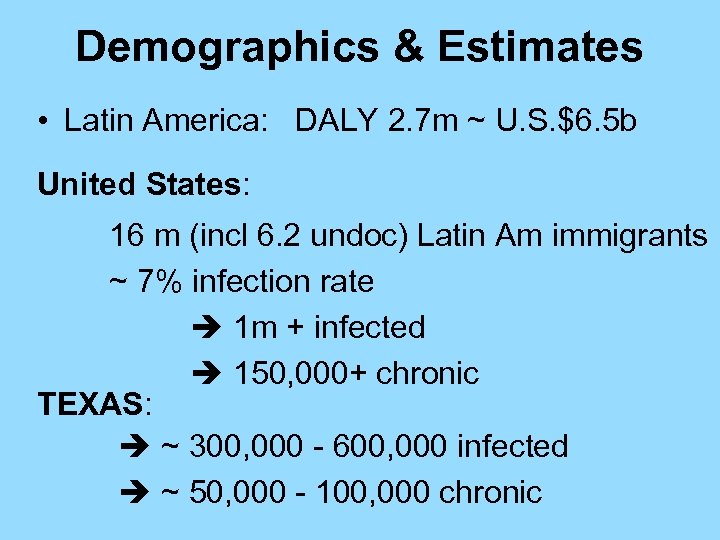 Demographics & Estimates • Latin America: DALY 2. 7 m ~ U. S. $6. 5 b United States: 16 m (incl 6. 2 undoc) Latin Am immigrants ~ 7% infection rate 1 m + infected 150, 000+ chronic TEXAS: ~ 300, 000 - 600, 000 infected ~ 50, 000 - 100, 000 chronic
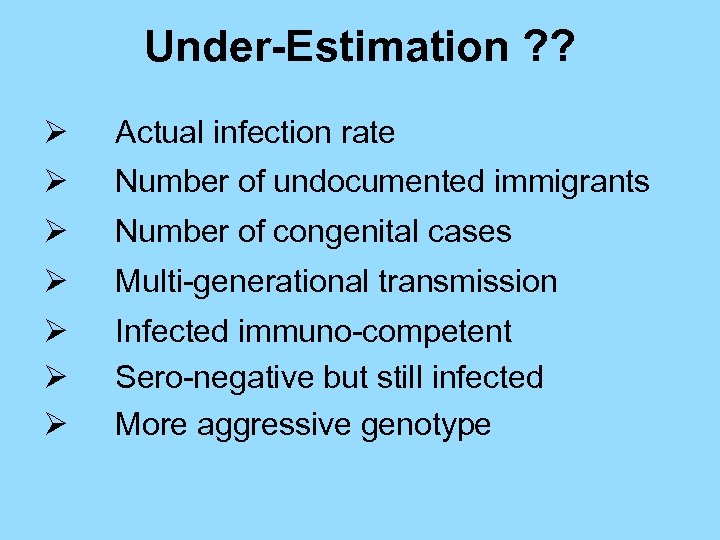 Under-Estimation ? ? Ø Actual infection rate Ø Number of undocumented immigrants Ø Number of congenital cases Ø Multi-generational transmission Ø Ø Ø Infected immuno-competent Sero-negative but still infected More aggressive genotype
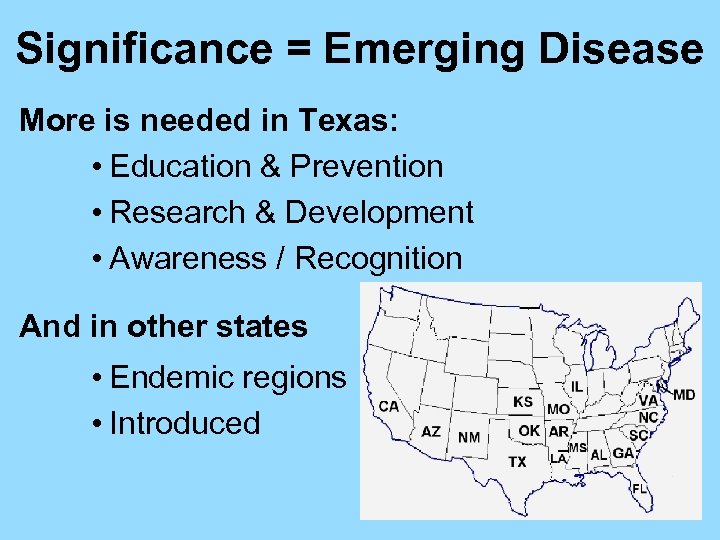 Significance = Emerging Disease More is needed in Texas: • Education & Prevention • Research & Development • Awareness / Recognition And in other states • Endemic regions • Introduced
 Research & Development • Improved understanding of environmental ecology of vectors & hosts (adaptability) • Field studies to determine infection rates and ranges of endemic vector and host species • Field studies to monitor introduced/migrating vectors and hosts & interactions with native species • FDA-approved tests for diagnosis & screening of blood supply & donor organs • Preventative vaccine • Pharmaceuticals to control disease progression or to produce a “cure”
 What is needed… Recognition as – endemic zoonotic risk for humans – introduced disease associated with changing human demographics & genotypes Education Prevention & Awareness – public health, physicians & cardiologists – veterinary & animal care workers Recommendations – Inclusion as Communicable / Reportable to TDSHS – Serologic screening test