


 Скачать презентацию Ch 9 10 11 Political Parties Election Voting
aafd8da6cdd425a01887b8500bc6a9c1.ppt
- Количество слайдов: 55
 Ch. 9, 10, 11 Political Parties, Election, Voting, and Interest Groups Civics Ms. Stacks
 Political Parties
 Political Parties • organizations that promote political beliefs and sponsor candidates (people running for political office) under the organization’s name
 Multi-Party System • many political parties that hold government seats – for example, the Netherlands, Israel, and Denmark • In multi-party system, parties are given representation in government proportional to the number of votes they receive in an election • Parties only need to receive a plurality vote, rather than a majority vote, to remain in power
 Majority Vote • When a party must win the majority of votes cast in order to win the election (more than half of the votes)
 Plurality Vote • When a party does not need to win a majority of votes; it simply needs to win more than the other parties in order to be victorious in an election and hold the most influence.
 Democrats • One of the major parties in US politics. Democrats, in general, tend to be more liberal.
 Republicans • The other major party in US politics. Republicans, in general, tend to be more conservative
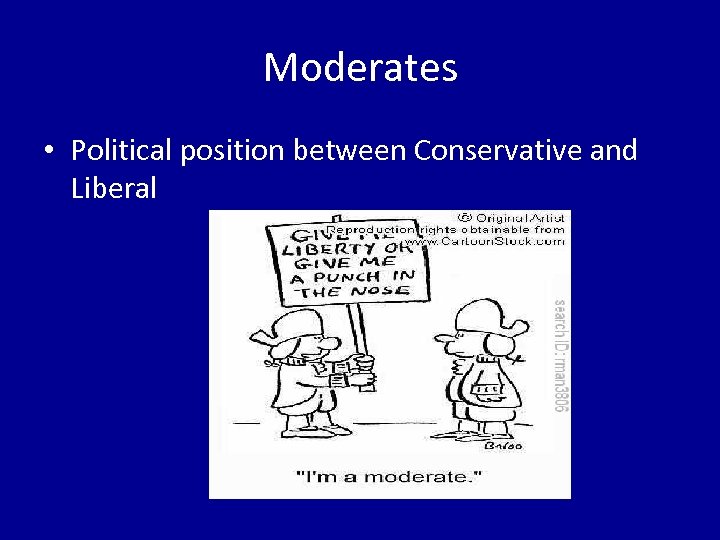 Moderates • Political position between Conservative and Liberal
 Third Parties • Parties other than the Republicans and Democrats
 One-Party System • System in which only one party is allowed to operate. Citizens’ ability to have a say in their government is greatly limited under such a system.
 Structure and Function of Political Parties
 Functions • nominate candidates for office, structure the voting choice (limit the list of candidates to those who have a real chance of winning – usually the Republican and Democratic candidates, coordinate the actions of government officials (i. e. facilitate the different branches of government working together), and establish party platforms
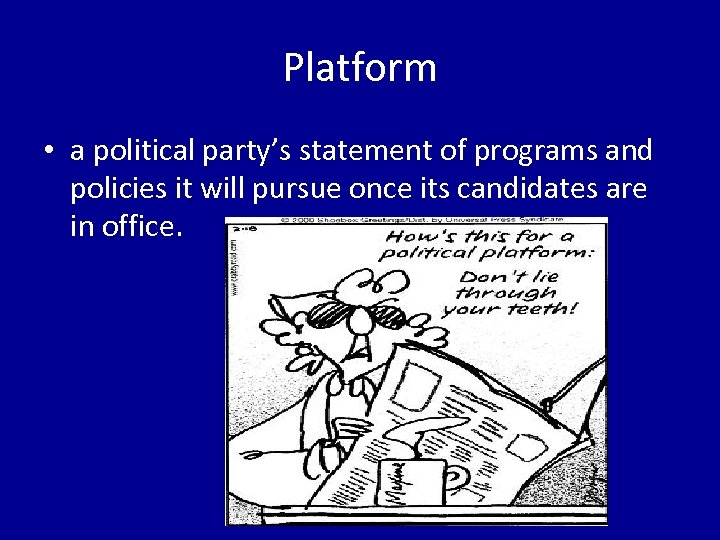 Platform • a political party’s statement of programs and policies it will pursue once its candidates are in office.
 Planks • An individual policy within a political party’s platform
 National Convention • National meeting held by the major political parties every four years which consists of delegates (representatives) from each state and US territories that meet to nominate (choose) candidates for president and vie president, as well as draft the party’s platform.
 Organization of Political Parties • • National Level Each party has a national committee made of representatives from every state National convention: held every 4 years, each party chooses its delegates through combination of primary elections and caucuses Nominating the Candidates Campaign committees • • State Level Each major party has 50 state committees or organizations Some states the parties are well organized, have large staffs, and spend a lot of money each year Work to get candidate’s victory during campaign Precinct: geographic area that contains specific number of voters
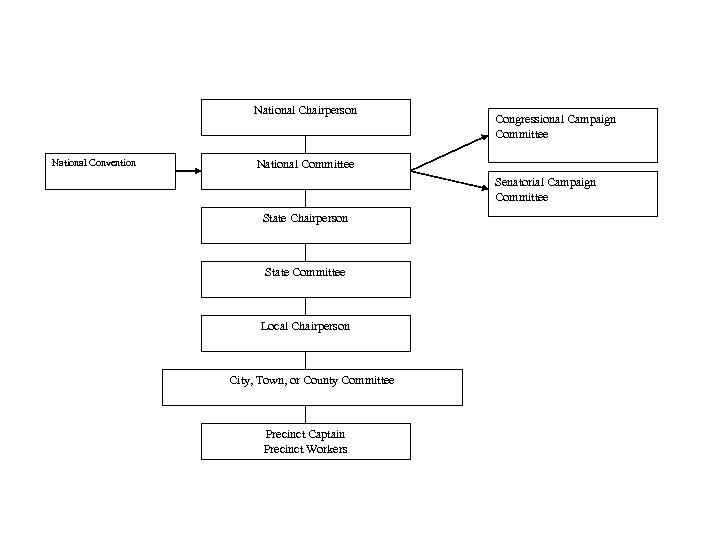 National Chairperson National Convention Congressional Campaign Committee National Committee Senatorial Campaign Committee State Chairperson State Committee Local Chairperson City, Town, or County Committee Precinct Captain Precinct Workers
 Civic Participation in Campaigning • Initiative: when citizens force a vote on a particular issue by getting enough citizens to sign a petition. • Proposition: elections in which citizens decide whether or not they support a certain policy or changes in the law. • Referendum: submitting to popular vote a measure passed on or proposed by a legislative body or by popular initiative.
 Elections
 General Election • These elections are held in November of an election year (usually even numbered). This is the time in which voters choose between the Republican, Democratic, and any third party/independent candidates for public office.
 Primary Elections • Voters choose between candidates within the same party. The candidate who wins the most votes receives the party’s nomination.
 Run-Off Elections • Election held between the top vote getters in a general or primary election if there are several candidates running and no one wins a clear majority. In this case, the top vote getter in the run-off election wins.
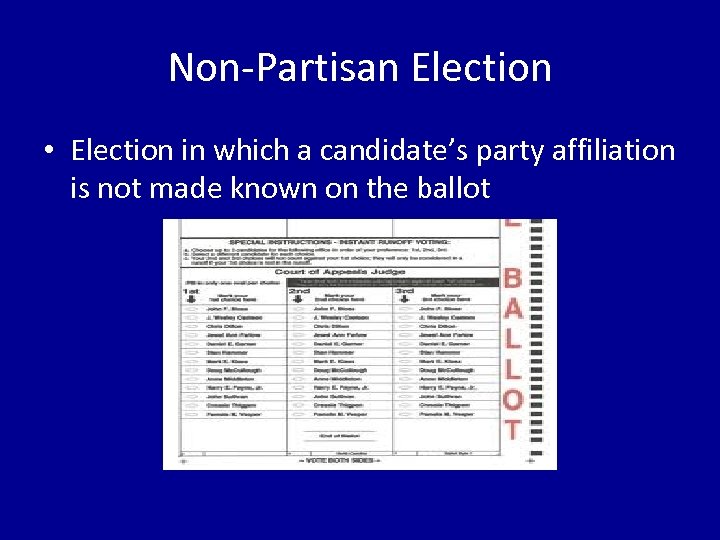 Non-Partisan Election • Election in which a candidate’s party affiliation is not made known on the ballot
 Recall Election • An election that is called to determine if voters want to remove a sitting official from office before his/her elected term is up
 Coalitions • The banding together of different groups for the purpose of achieving political success
 Radical • people holding extreme political views.
 Reactionary • Someone whose political tendency is to react to what they view as radical changes or movements. Reactionary groups tend to value the status quo or want to see a return to more traditional ways.
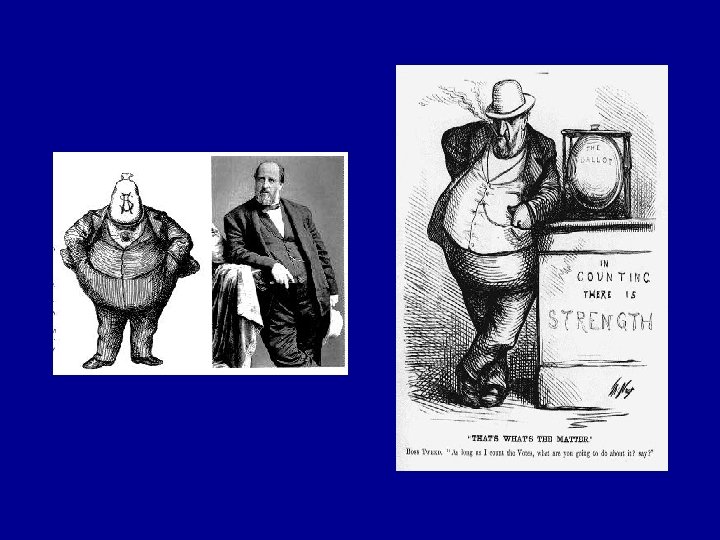
 Political Machines • Originally, political machines were state and local party organizations that chose party candidates and greatly influenced the outcome of elections. Often corrupt, they played a major role in politics during the late nineteenth and early twentieth centuries. Today, however, these machines have less direct say over the outcome of elections and focus mainly on mobilizing voters who will support their candidates
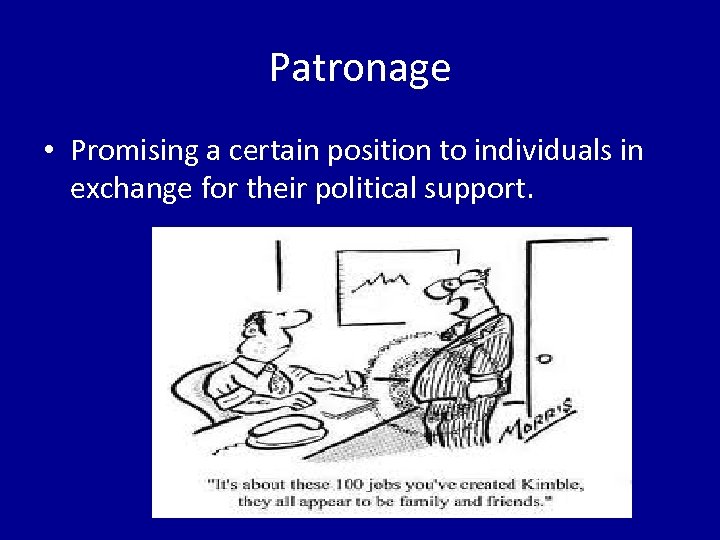 Patronage • Promising a certain position to individuals in exchange for their political support.
 “Grassroots” • Campaign efforts made by volunteer and local party members who actively educate, campaign, and encourage citizens to get out and vote for the party’s candidates. Although their labor is “unseen, ” it is crucial for effective campaigns
 Caucus • Method for choosing party nominees for office in which party members hold local meetings to choose delegates. These delegates, in turn, choose other delegates to vote in favor of nominating a certain candidate at the national convention.
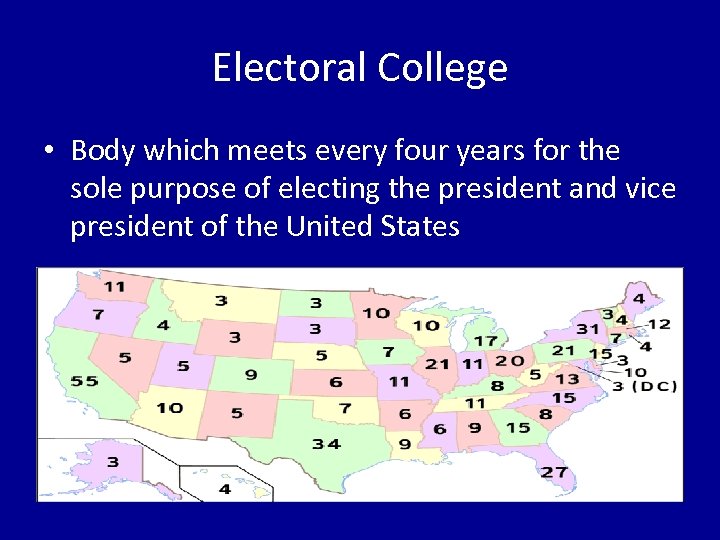 Electoral College • Body which meets every four years for the sole purpose of electing the president and vice president of the United States
 Campaigns
 • In order to win an election, a candidate must have an effective campaign (strategy for winning/process of running for office). • Campaigns are supported by political action committees (PACS) – contribute money to campaigns of candidates they support
 Private Resources • Most funding for campaigns come from private donors and PACs
 Public Funding • Funding that comes from the government. Candidates must demonstrate that they have broad support and raise a certain amount of money privately first. Once these conditions are met, candidates in both the primary and general elections may accept public funds; but to do so, they must agree to limit their campaign spending.
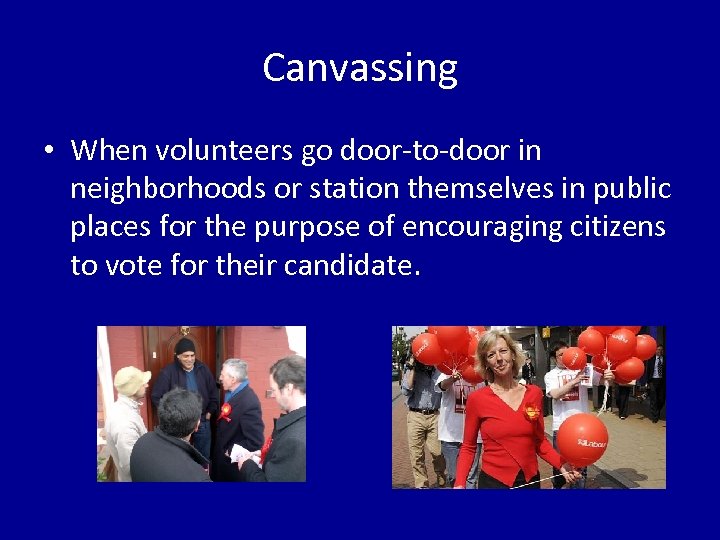 Canvassing • When volunteers go door-to-door in neighborhoods or station themselves in public places for the purpose of encouraging citizens to vote for their candidate.
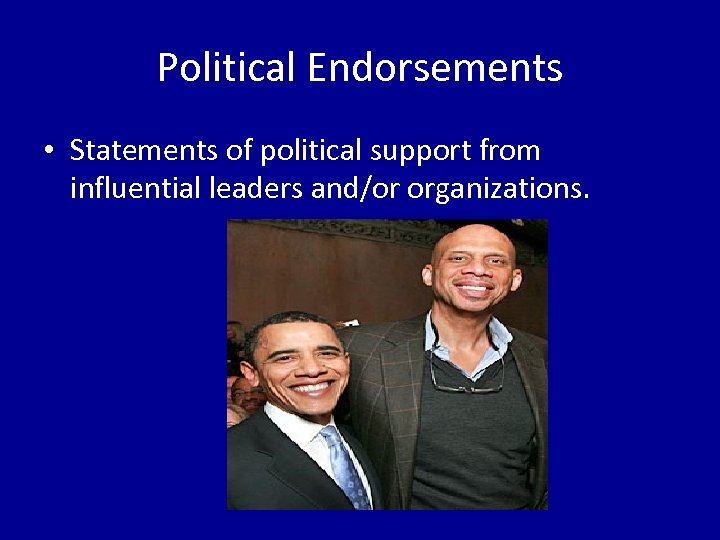 Political Endorsements • Statements of political support from influential leaders and/or organizations.
 Bias • Feelings for or against something
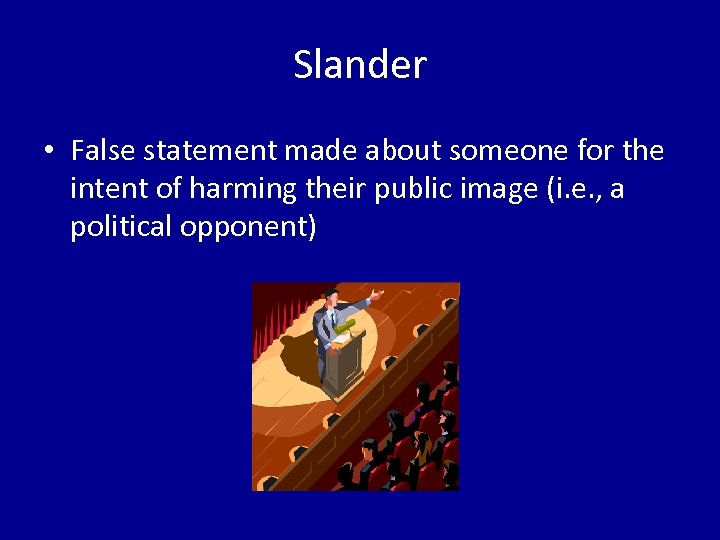 Slander • False statement made about someone for the intent of harming their public image (i. e. , a political opponent)
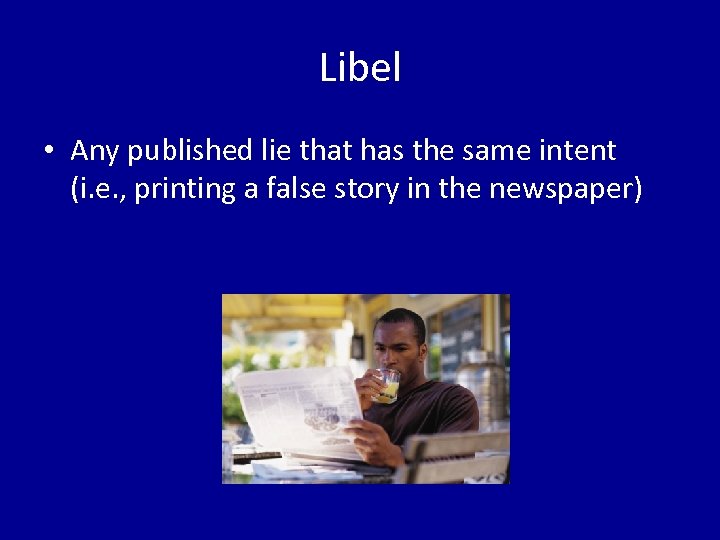 Libel • Any published lie that has the same intent (i. e. , printing a false story in the newspaper)
 Propaganda • information meant to influence voters to support a specific candidate over another. • Information may or may not be true, since it is always biased (meant to favor one candidate) http: //www. teachertube. com/view. Video. php? video_id=81472&title=What_is_Propaganda
 “Stacking Cards” • is related to a magician’s card trick using a deck of cards - can take the form of television, radio, or printed ads
 Image Molding • propaganda can be focused on positive or negative image molding. It can focus on molding a positive public perception of the candidate it supports, or a negative public perception of the candidate it is aimed at defeating
 “Just Plain Folk” • candidate wants to be seen as relatable, and “just like” the voters themselves http: //www. livingroomcandidate. org/commer cials/1952/the-man-from-abilene http: //www. livingroomcandidate. org/commercials/2008/co untry-i-love
 Mudslinging • Form of negative campaigning where the candidates will call each other names.
 “Glittering Generalities” • in order to avoid alienating voters, candidates often speak in “glittering generalities” during election campaigns. • They say things that appeal to emotions or are consistent with popularly held values without getting so specific as to offend voters
 Voting
 Qualifications to pre register to vote in North Carolina • A person who is at least 16 years of age but will not be 18 years of age by the date of the next election and who is otherwise qualified to register may preregister to vote. Preregistration allows an individual to become automatically registered upon reaching the age of eligibility. In order to preregister to vote, a person must sign a voter declaration attesting that: • I am a U. S. citizen. • I am at least 16 years of age and understand that I must be 18 years of age on or before Election Day of the general election in order to vote.
 Qualifications to vote in NC To register to vote in this State, a person must sign a voter declaration attesting that: • I am a U. S. citizen. • I will have been a resident of North Carolina and this county for 30 days before the election. • I will be at least 18 years old by the next general election. • I am not registered nor will I vote in any other county or state. • If I have been convicted of a felony, my rights of citizenship have been restored.
 Deadlines to Register to vote in North Carolina • The deadline to register to vote in this State is 25 days before the day of the election. Forms that are received by the county board of elections office or postmarked by the deadline are accepted as valid applications for the upcoming election. Also, agency and DMV voter registration transactions that are completed by the deadline are accepted as valid for the upcoming election. Applicants will be notified by the county board of elections of their precinct and polling place assignments. • Individuals who miss the registration deadline, if qualified, may register in person and then vote at a one-stop voting site in the person’s county of residence during the one-stop absentee voting period, which begins the third Thursday before an election and goes through the last Saturday before an election.
 Voting Process • 1. Register to vote with SBOE (State Board of Elections) • 2. Go to polling place and verify your information • 3. Place your vote • *Optional: Exit polls – tell campaign worker or news media who you voted for as you leave polling place
 Apathy • Voting: lack of interest in voting during elections