 Скачать презентацию Ch 13 Service Supply Relationships 1 實務問題
449840db92fe913a2b346e23c256a512.ppt
- Количество слайдов: 19



Ch. 13 Service Supply Relationships 1
實務問題 1. 2. 3. transaction business VS. relationship business Supply Chain Management → Service Industry outsourcing: uncertainty 2
Learning Objectives 1. supply chain management 2. bidirectional service supply relationship 3. sources of value in SSR 4. outsourcing services 3
1. Supply chain management (1) Total systems view of the entire supply chain. “Bullwhip effect” (2) Network of value-adding materialprocessing stages. (3) Uncertainty: supplier delivery performance, manufacturing reliability, customer demand. (4) Buffered by inventory stocks. 4
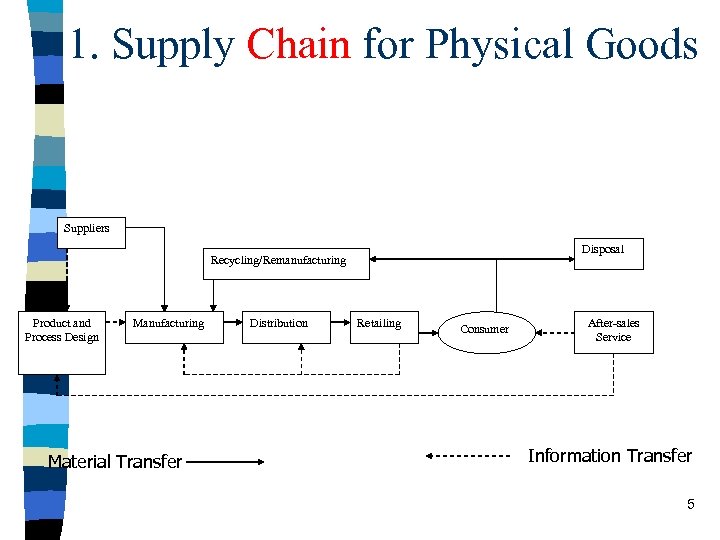
1. Supply Chain for Physical Goods Suppliers Disposal Recycling/Remanufacturing Product and Process Design Manufacturing Material Transfer Distribution Retailing Consumer After-sales Service Information Transfer 5
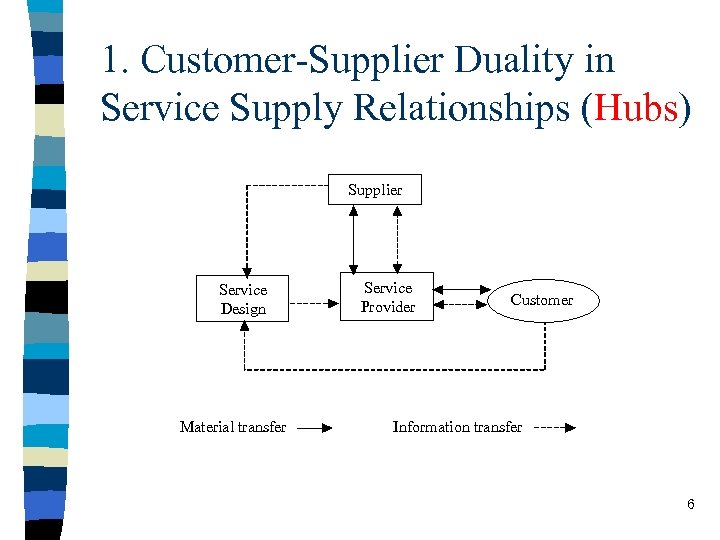
1. Customer-Supplier Duality in Service Supply Relationships (Hubs) Supplier Service Design Material transfer Service Provider Customer Information transfer 6
1. Strategy of postponement (1) Partially completed product is held until a customer order is received. (2) Fast-food restaurants: assemble-to-order. VS make-to-order. (3) Dell computer: “service-like” goods producer. 7
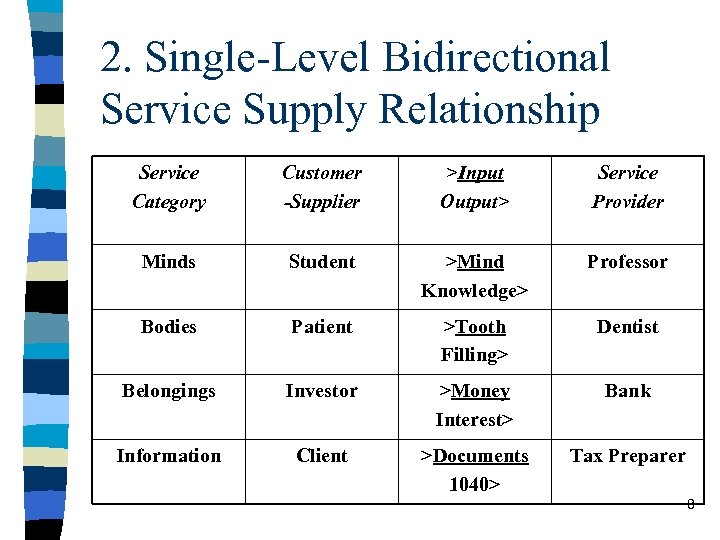
2. Single-Level Bidirectional Service Supply Relationship Service Category Customer -Supplier >Input Output> Service Provider Minds Student >Mind Knowledge> Professor Bodies Patient >Tooth Filling> Dentist Belongings Investor >Money Interest> Bank Information Client >Documents 1040> Tax Preparer 8
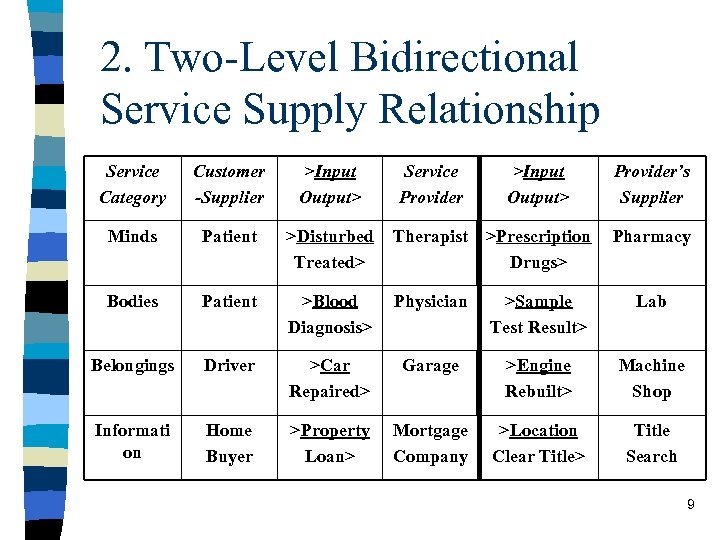
2. Two-Level Bidirectional Service Supply Relationship Service Category Customer -Supplier >Input Output> Service Provider >Input Output> Provider’s Supplier Minds Patient >Disturbed Treated> Therapist >Prescription Drugs> Bodies Patient >Blood Diagnosis> Physician >Sample Test Result> Lab Belongings Driver >Car Repaired> Garage >Engine Rebuilt> Machine Shop Informati on Home Buyer >Property Loan> Mortgage Company >Location Clear Title> Title Search Pharmacy 9
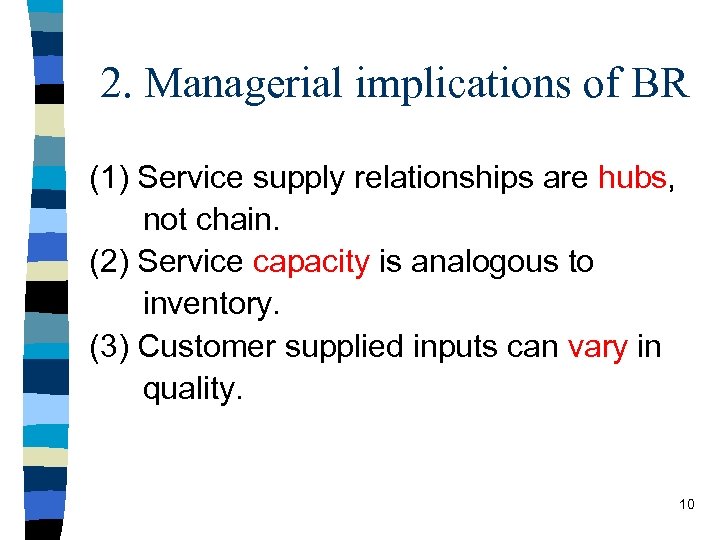
2. Managerial implications of BR (1) Service supply relationships are hubs, not chain. (2) Service capacity is analogous to inventory. (3) Customer supplied inputs can vary in quality. 10
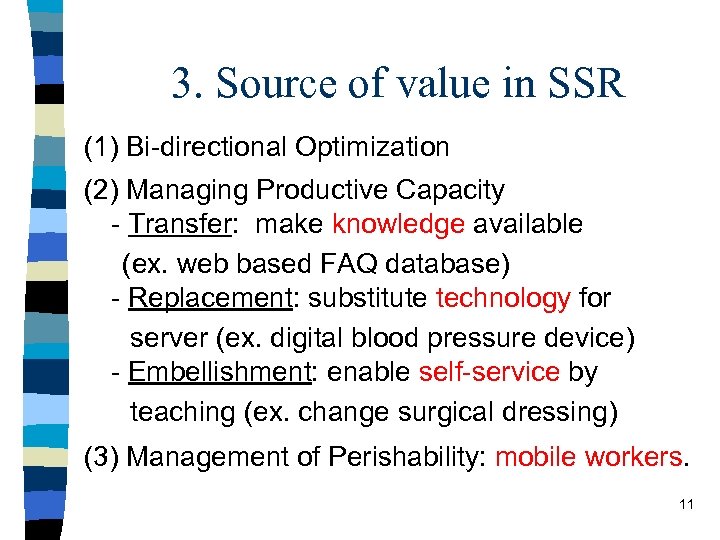
3. Source of value in SSR (1) Bi-directional Optimization (2) Managing Productive Capacity - Transfer: make knowledge available (ex. web based FAQ database) - Replacement: substitute technology for server (ex. digital blood pressure device) - Embellishment: enable self-service by teaching (ex. change surgical dressing) (3) Management of Perishability: mobile workers. 11
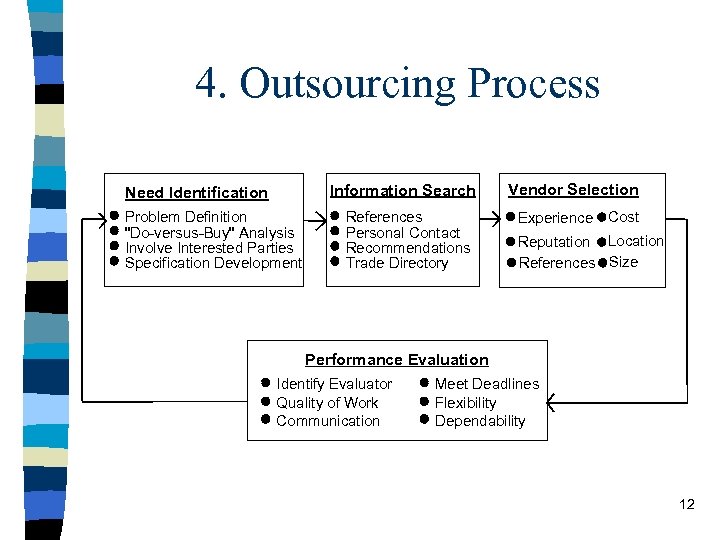
4. Outsourcing Process Information Search Need Identification Problem Definition "Do-versus-Buy" Analysis Involve Interested Parties Specification Development References Personal Contact Recommendations Trade Directory Vendor Selection Experience Cost Reputation Location References Size Performance Evaluation Identify Evaluator Quality of Work Communication Meet Deadlines Flexibility Dependability 12
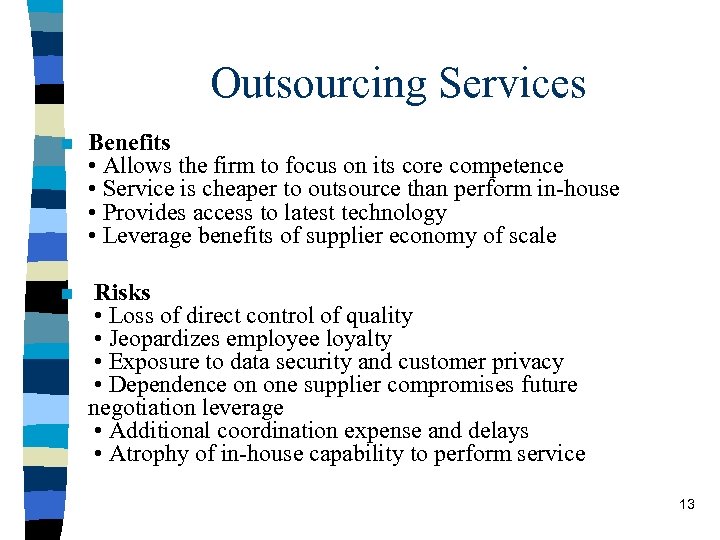
Outsourcing Services n Benefits • Allows the firm to focus on its core competence • Service is cheaper to outsource than perform in-house • Provides access to latest technology • Leverage benefits of supplier economy of scale n Risks • Loss of direct control of quality • Jeopardizes employee loyalty • Exposure to data security and customer privacy • Dependence on one supplier compromises future negotiation leverage • Additional coordination expense and delays • Atrophy of in-house capability to perform service 13
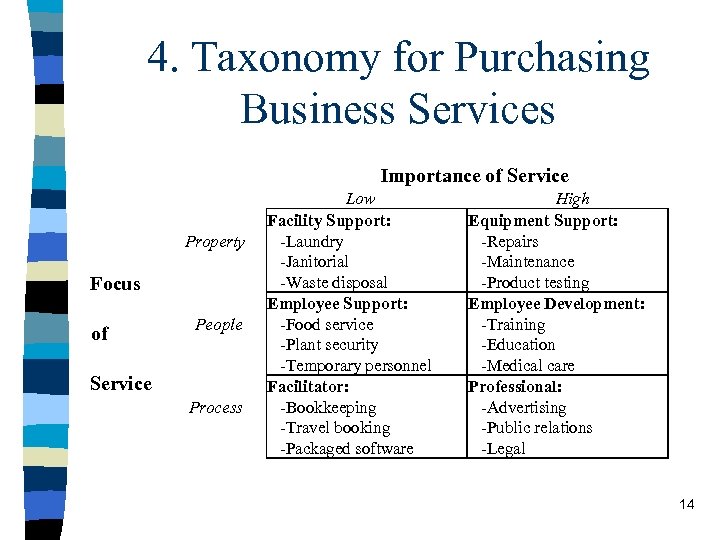
4. Taxonomy for Purchasing Business Services Importance of Service Property Focus of People Service Process Low Facility Support: -Laundry -Janitorial -Waste disposal Employee Support: -Food service -Plant security -Temporary personnel Facilitator: -Bookkeeping -Travel booking -Packaged software High Equipment Support: -Repairs -Maintenance -Product testing Employee Development: -Training -Education -Medical care Professional: -Advertising -Public relations -Legal 14
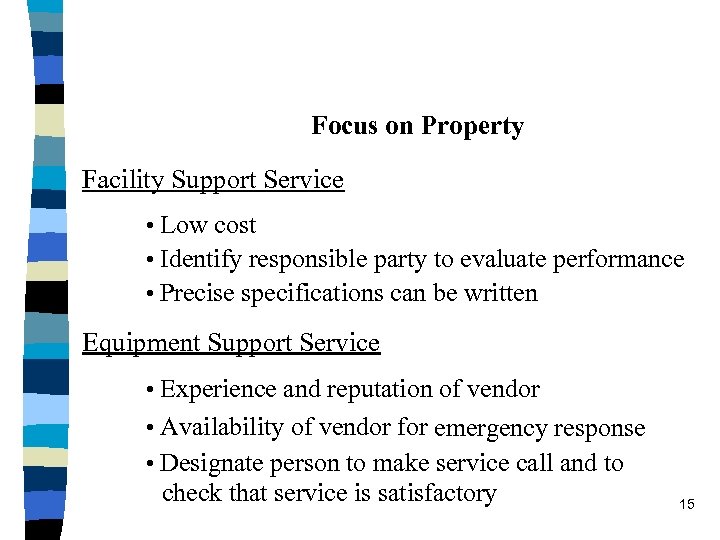
Focus on Property Facility Support Service • Low cost • Identify responsible party to evaluate performance • Precise specifications can be written Equipment Support Service • Experience and reputation of vendor • Availability of vendor for emergency response • Designate person to make service call and to check that service is satisfactory 15
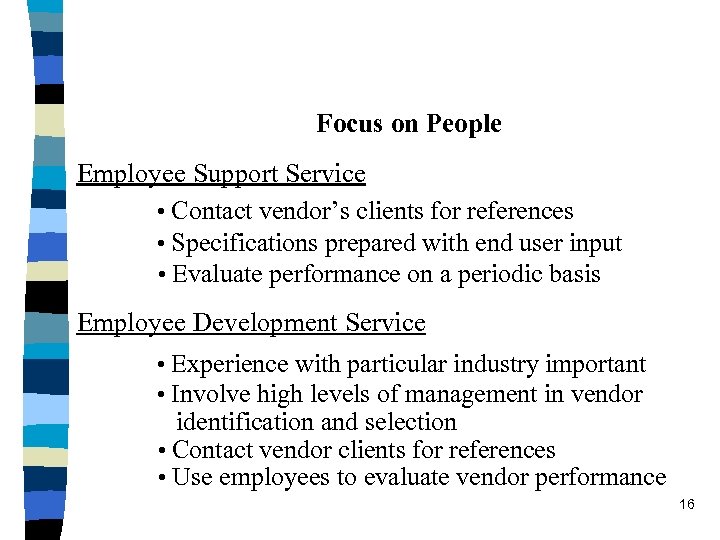
Focus on People Employee Support Service • Contact vendor’s clients for references • Specifications prepared with end user input • Evaluate performance on a periodic basis Employee Development Service • Experience with particular industry important • Involve high levels of management in vendor identification and selection • Contact vendor clients for references • Use employees to evaluate vendor performance 16
Focus on Process Facilitator Service • Knowledge of alternate vendors important • Involve end user in vendor identification • References or third party evaluations useful • Have user write detailed specifications Professional Service • Involve high level management in vendor identification and selection • Reputation and experience very important • Performance evaluation by top management 17
Topics for Discussion n What are some possible disadvantages associated with the product postponement strategy? n Discuss the similarities and differences in the product postponement strategy used by Hewlett -Packard and Taco Bell? n Speculate on the effect that the Internet will have on the process of business-to-business purchase of services? 18
Interactive Exercise The class divides into small groups and members come up with examples of multilevel bidirectional service relationships (i. e, service supplier relationships with three or more levels). Be prepared to argue why such service relationships are so rare. 19
Скачать презентацию Ch 13 Service Supply Relationships 1 實務問題
449840db92fe913a2b346e23c256a512.ppt