Скачать презентацию CH 04 Capturing the Requirements Understanding what
c7d8e798f267bbdf38f5e5b2015bdd1b.ppt
- Количество слайдов: 68
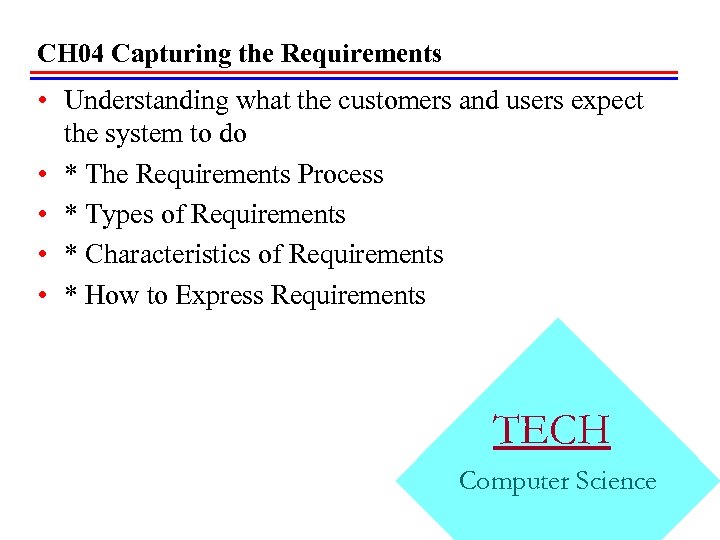 CH 04 Capturing the Requirements • Understanding what the customers and users expect the system to do • * The Requirements Process • * Types of Requirements • * Characteristics of Requirements • * How to Express Requirements TECH Computer Science
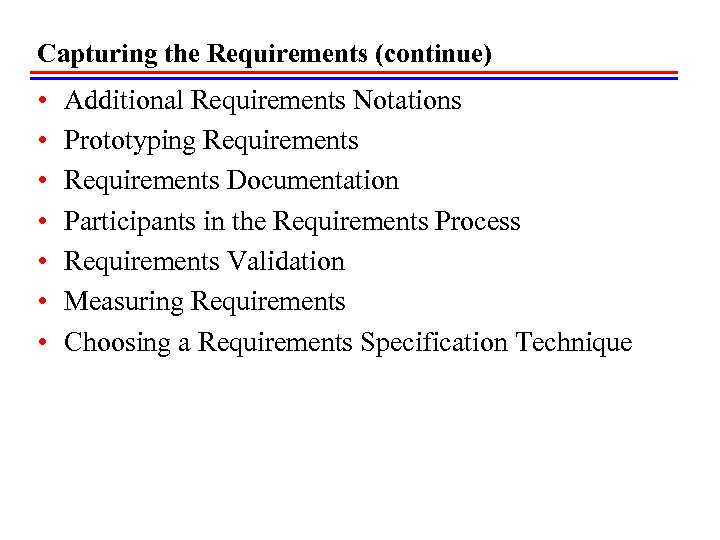 Capturing the Requirements (continue) • • Additional Requirements Notations Prototyping Requirements Documentation Participants in the Requirements Process Requirements Validation Measuring Requirements Choosing a Requirements Specification Technique
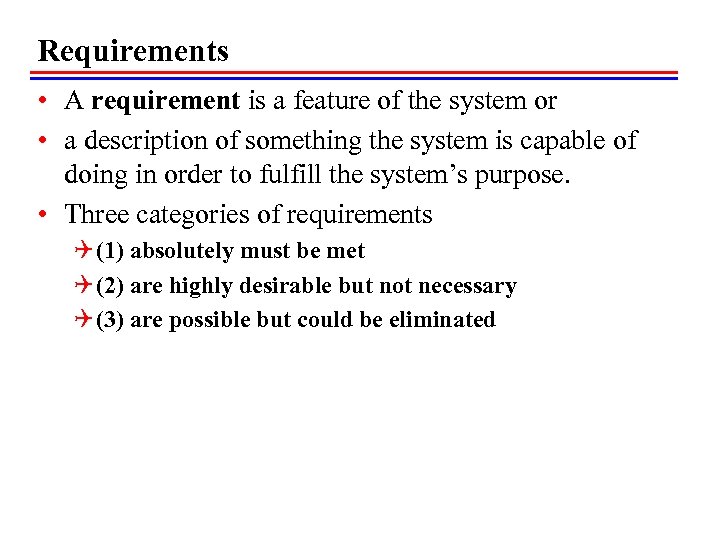 Requirements • A requirement is a feature of the system or • a description of something the system is capable of doing in order to fulfill the system’s purpose. • Three categories of requirements Q (1) absolutely must be met Q (2) are highly desirable but not necessary Q (3) are possible but could be eliminated
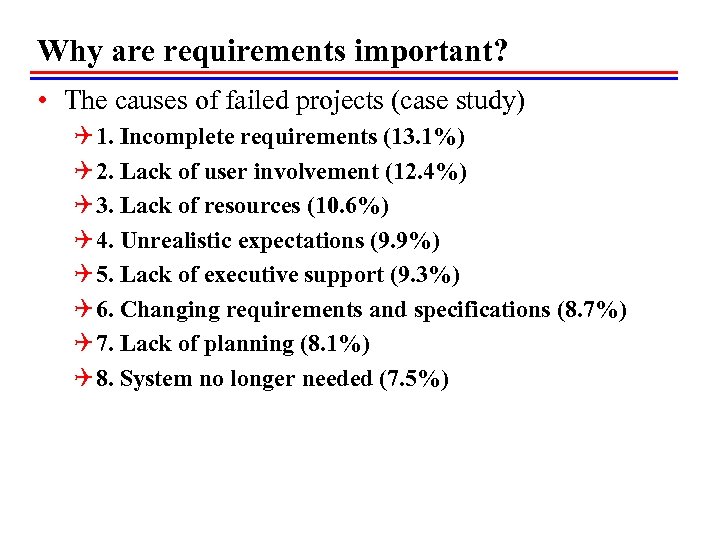 Why are requirements important? • The causes of failed projects (case study) Q 1. Incomplete requirements (13. 1%) Q 2. Lack of user involvement (12. 4%) Q 3. Lack of resources (10. 6%) Q 4. Unrealistic expectations (9. 9%) Q 5. Lack of executive support (9. 3%) Q 6. Changing requirements and specifications (8. 7%) Q 7. Lack of planning (8. 1%) Q 8. System no longer needed (7. 5%)
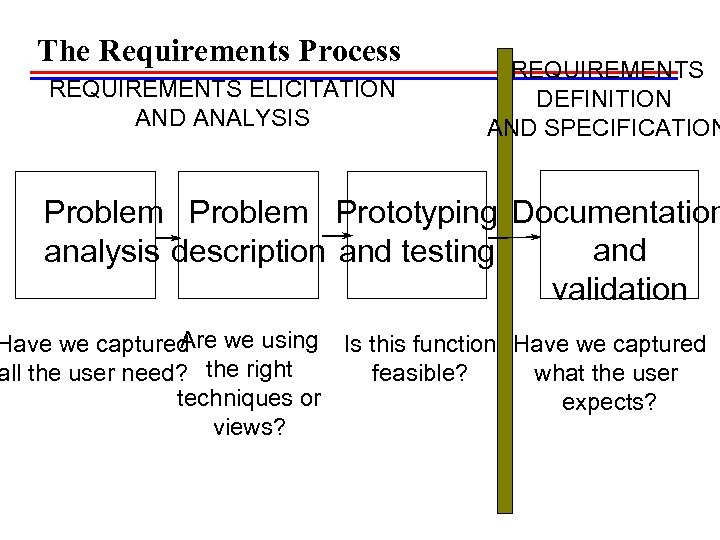 The Requirements Process REQUIREMENTS ELICITATION AND ANALYSIS REQUIREMENTS DEFINITION AND SPECIFICATION Problem Prototyping Documentation and analysis description and testing validation Are Have we captured we using Is this function Have we captured all the user need? the right feasible? what the user techniques or expects? views?
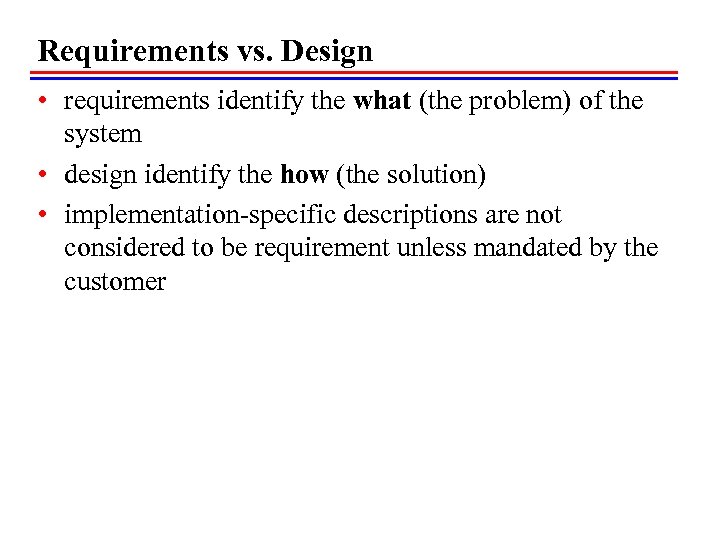 Requirements vs. Design • requirements identify the what (the problem) of the system • design identify the how (the solution) • implementation-specific descriptions are not considered to be requirement unless mandated by the customer
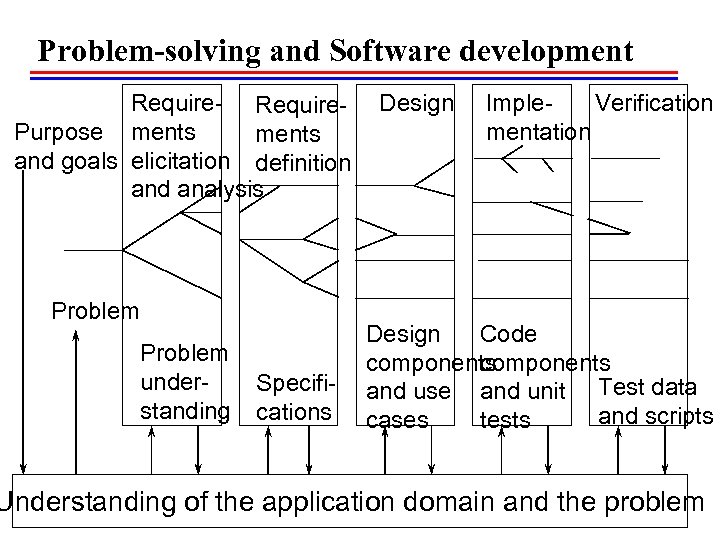 Problem-solving and Software development Require- Require. Purpose ments and goals elicitation definition and analysis Problem understanding Specifications Design Imple. Verification mentation Design Code components and use and unit Test data and scripts cases tests Understanding of the application domain and the problem
 Configuration Management • Tracing the correspondences in the development process Q requirements that define what the system should do Q design modules that are generated from the requirements Q program code that implements the design Q tests that verify the functionality of the system Q the documents that describe the system
 Functional and Nonfunctional Requirements • A functional requirement describes an interaction between the system and its environment. • A nonfunctional requirement or constraint describes a restriction on the system that limits our choices for constructing a solution to the problem.
 Requirements Documents • Requirements definition is a complete listing of everything the customer expects the proposed system to do. • Requirements specification restates the requirements definition in technical terms appropriate for the development of a system design. • Formal requirements elicitation, using the same language and the same meanings
 Making Requirements Testable • Specify a quantitative description for each adverb and adjective so that the meaning of qualifiers is clear and unambiguous. • Replace pronouns with specific names of entities. • Make sure that every noun is defined in exactly one place in the requirements documents.
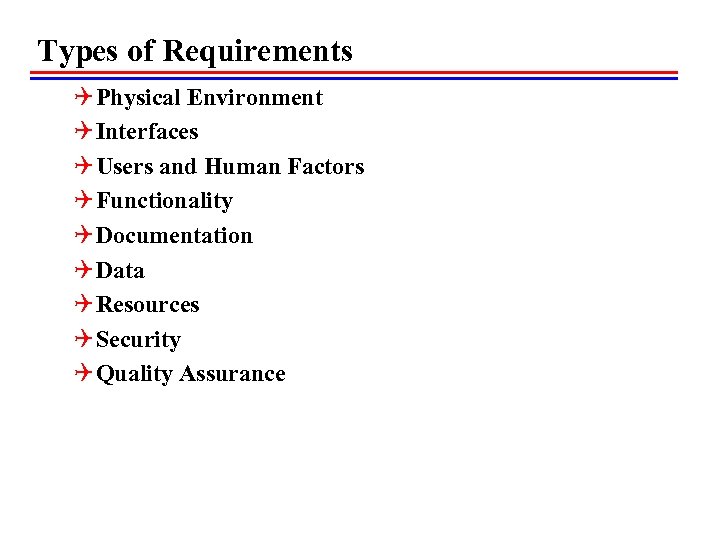 Types of Requirements Q Physical Environment Q Interfaces Q Users and Human Factors Q Functionality Q Documentation Q Data Q Resources Q Security Q Quality Assurance
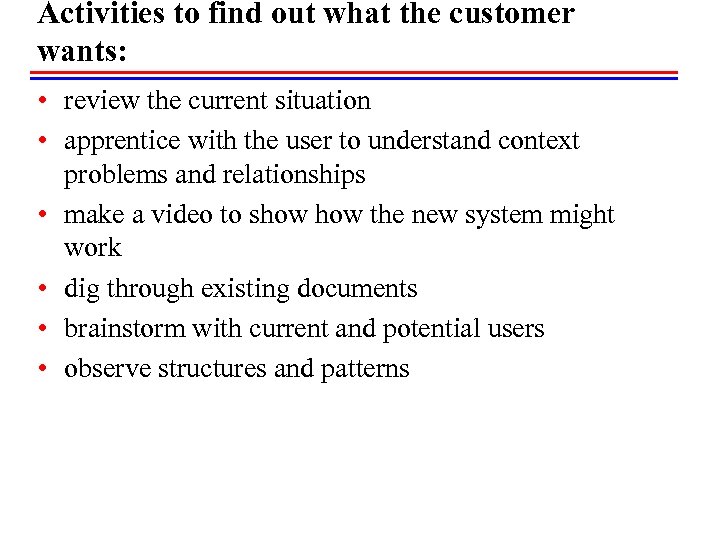 Activities to find out what the customer wants: • review the current situation • apprentice with the user to understand context problems and relationships • make a video to show the new system might work • dig through existing documents • brainstorm with current and potential users • observe structures and patterns
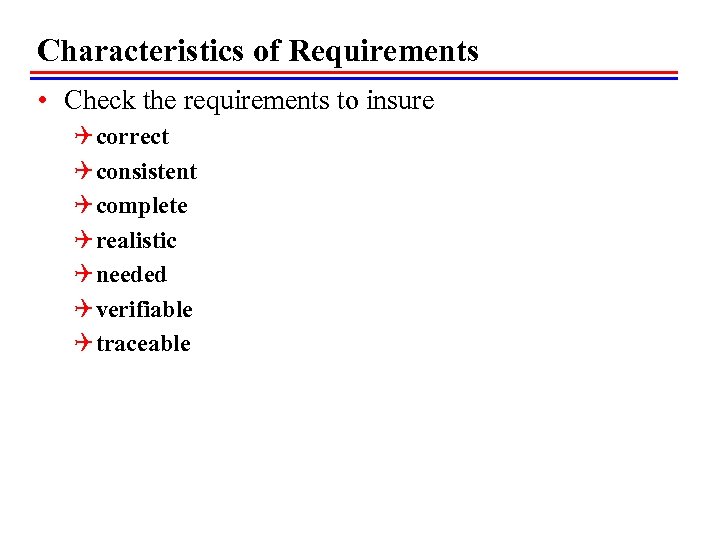 Characteristics of Requirements • Check the requirements to insure Q correct Q consistent Q complete Q realistic Q needed Q verifiable Q traceable
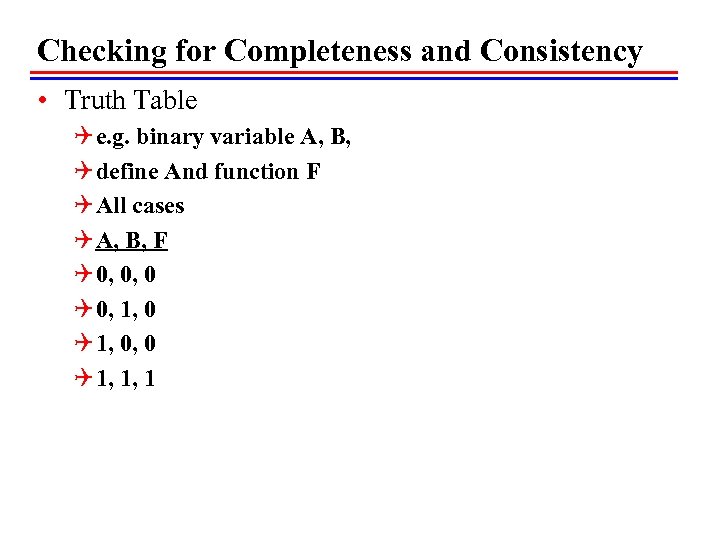 Checking for Completeness and Consistency • Truth Table Q e. g. binary variable A, B, Q define And function F Q All cases Q A, B, F Q 0, 0, 0 Q 0, 1, 0 Q 1, 0, 0 Q 1, 1, 1
 How to Express Requirements • Use formal notation to describe the system to be built • Static Descriptions Q specify objects and their relationships with each other • Dynamic Descriptions Q specify states and transitions between states over time
 Static Descriptions • • • Indirect Reference Recurrence Relations Axiomatic Definition Expression as a Language Data Abstraction
 Indirect Reference • implied but not stated directly • Pointing to pointer, e. g. Q A points to P Q where P is a pointer to something
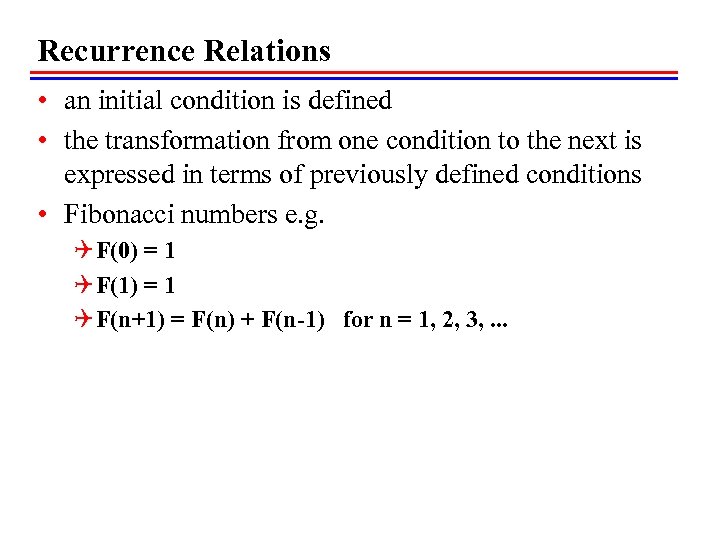 Recurrence Relations • an initial condition is defined • the transformation from one condition to the next is expressed in terms of previously defined conditions • Fibonacci numbers e. g. Q F(0) = 1 Q F(1) = 1 Q F(n+1) = F(n) + F(n-1) for n = 1, 2, 3, . . .
 Axiomatic Definition • Axiom Q a set of objects Q a set of operations • Generate Theorems Q use axiom to generate more objects • Prove Theorems Q reduce (trace) a theorem down to axiom
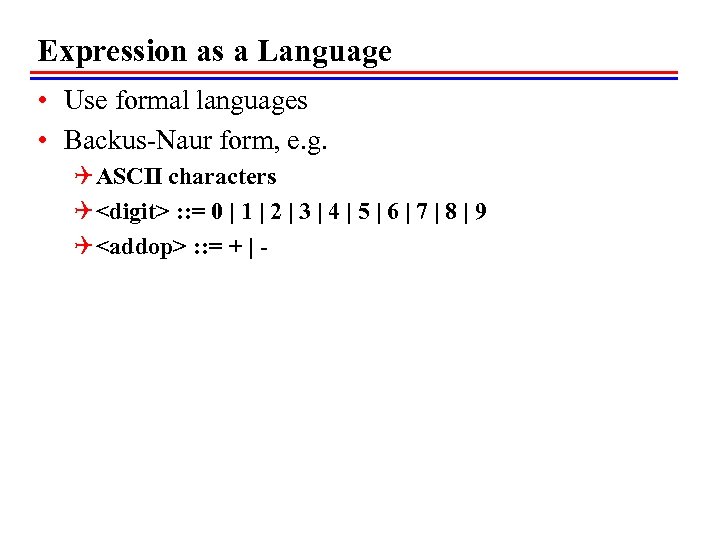 Expression as a Language • Use formal languages • Backus-Naur form, e. g. Q ASCII characters Q
 Data Abstraction • Data manipulated by a system determine the kinds of actions taken • Data abstraction is a technique to describing what data are for. • To categorize data (objects) and group like elements together forming data types (class) • Each object is then considered to be an instance of the class to which it belongs.
 Methods • • • actions permissible with the data and data types methods manipulate the data: states in which the data can be, operations to establish new states probes to report information about state
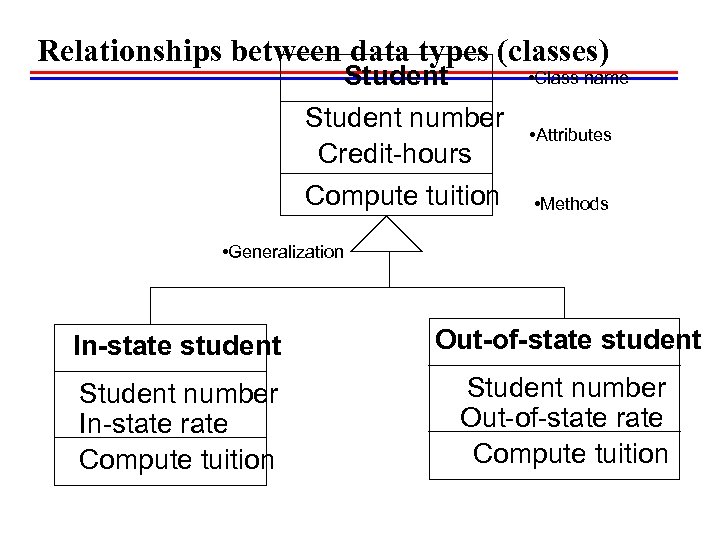 Relationships between data types (classes) Student number Credit-hours Compute tuition • Class name • Attributes • Methods • Generalization In-state student Out-of-state student Student number In-state rate Compute tuition Student number Out-of-state rate Compute tuition
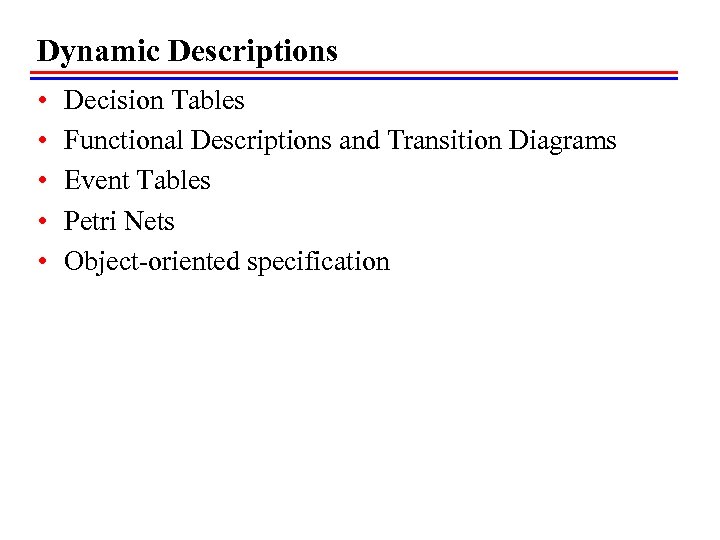 Dynamic Descriptions • • • Decision Tables Functional Descriptions and Transition Diagrams Event Tables Petri Nets Object-oriented specification
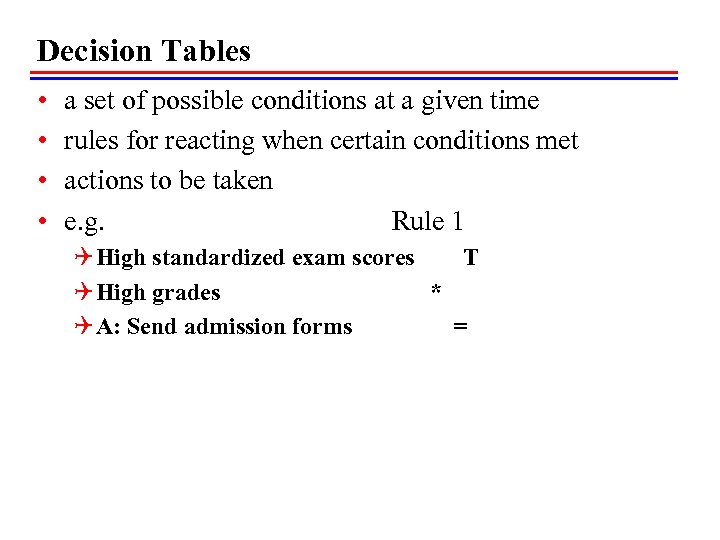 Decision Tables • • a set of possible conditions at a given time rules for reacting when certain conditions met actions to be taken e. g. Rule 1 Q High standardized exam scores T Q High grades * Q A: Send admission forms =
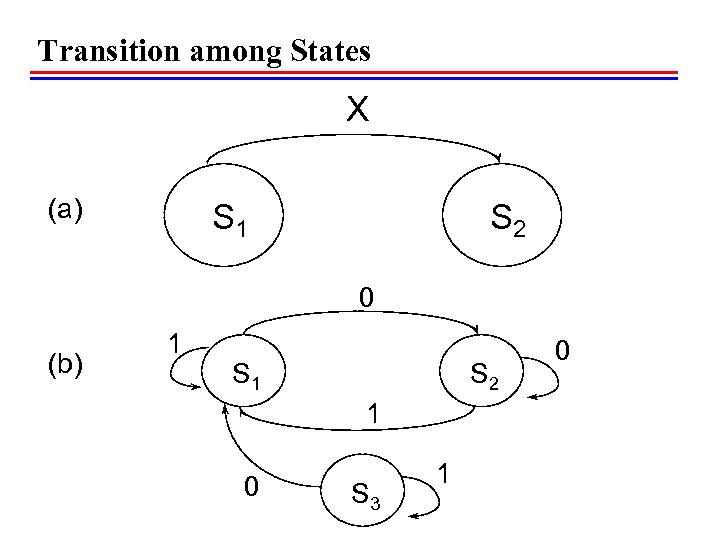
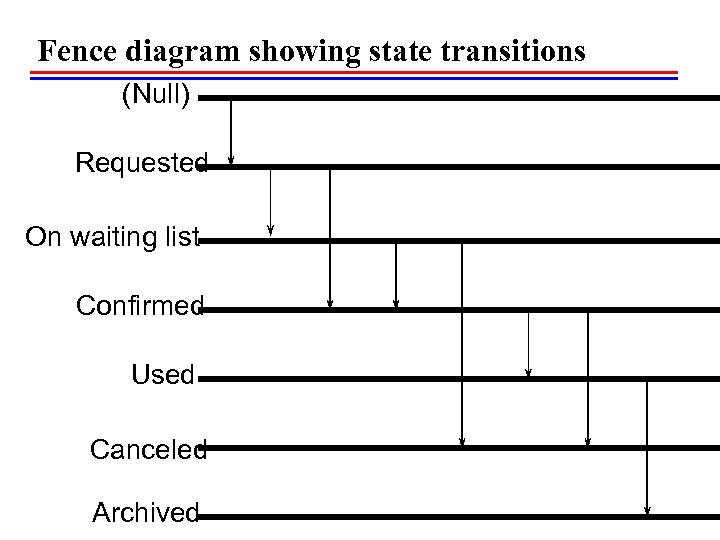
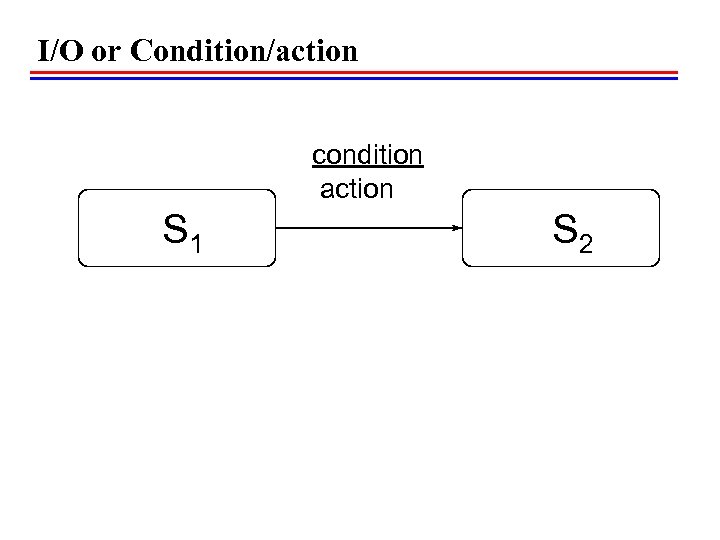
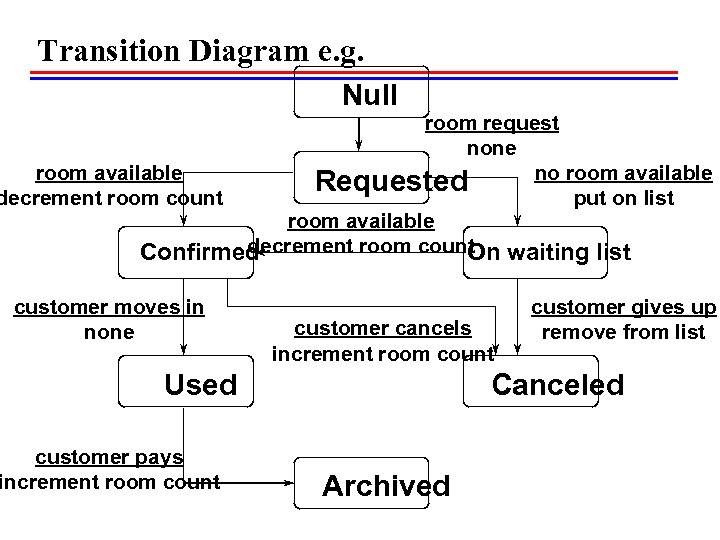
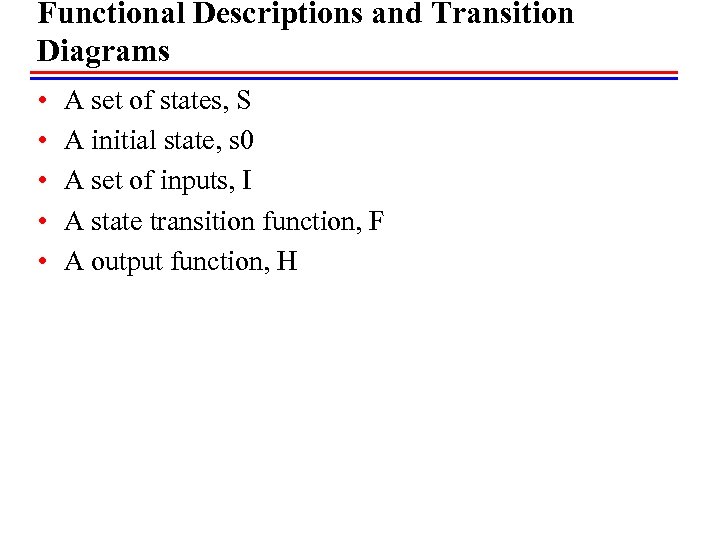 Functional Descriptions and Transition Diagrams • • • A set of states, S A initial state, s 0 A set of inputs, I A state transition function, F A output function, H
 Transition among States X (a) S 1 S 2 0 (b) 1 S 2 1 0 S 3 1 0
 Fence diagram showing state transitions (Null) Requested On waiting list Confirmed Used Canceled Archived
 I/O or Condition/action condition action S 1 S 2
 Transition Diagram e. g. Null room request none room available no room available Requested decrement room count put on list room available decrement room count Confirmed On waiting list customer moves in none customer cancels increment room count Used customer pays increment room count customer gives up remove from list Canceled Archived
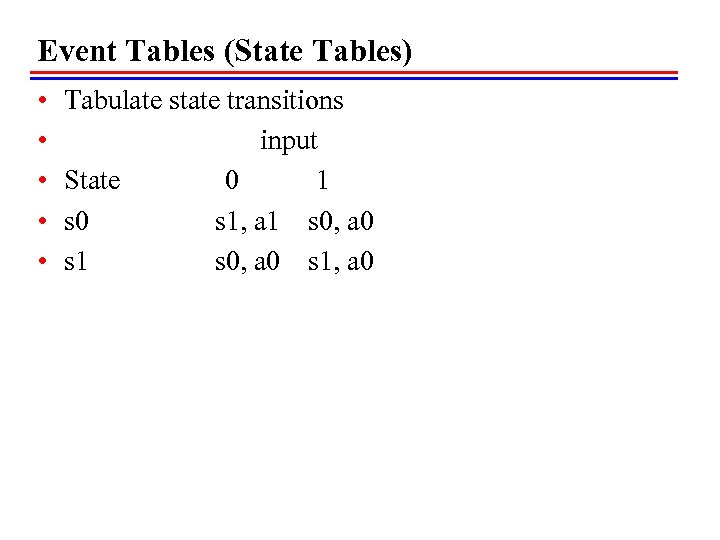 Event Tables (State Tables) • • • Tabulate state transitions input State 0 1 s 0 s 1, a 1 s 0, a 0 s 1, a 0
 Petri Nets • • describe parallel processing describe synchronization tokens: each state is associated with a set of tokens firing rules: each firing rule expresses how tokens are associated with a state; when the correct number and type of tokens are present in one state, tokens are released to travel to another state.
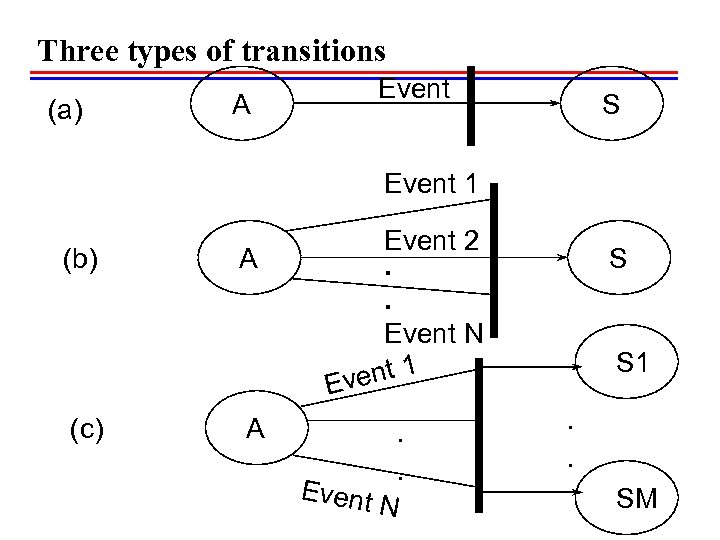 Three types of transitions (a) Event A S Event 1 (b) (c) A Event 2. . Event N ent 1 Ev A Event . . N S S 1 . . SM
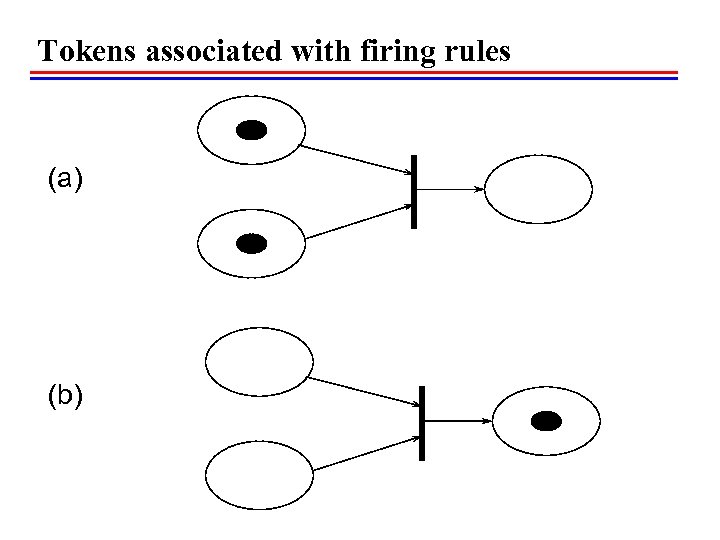 Tokens associated with firing rules (a) (b)
 Object-oriented specification • focuses on the entities involved rather than on input/output transformation. • Extending data-abstraction to ask Q What data structures define an entity? Q How does an entity’s state evolve over time? Q What aspects of entities are persistent over time?
 Object and Method • Each entity in the system is an object. • A method is an action that either can be performed by the object or can happen to the object. • Only the methods of an object can change the state of the object. • A method can be invoked only by sending the object a message. • Encapsulation, Class Hierarchies, Inheritance, and Polymorphism.
 Encapsulation • forming a protective boundary • one object has no access to internal representation of other objects • objects “talk” to other objects by message
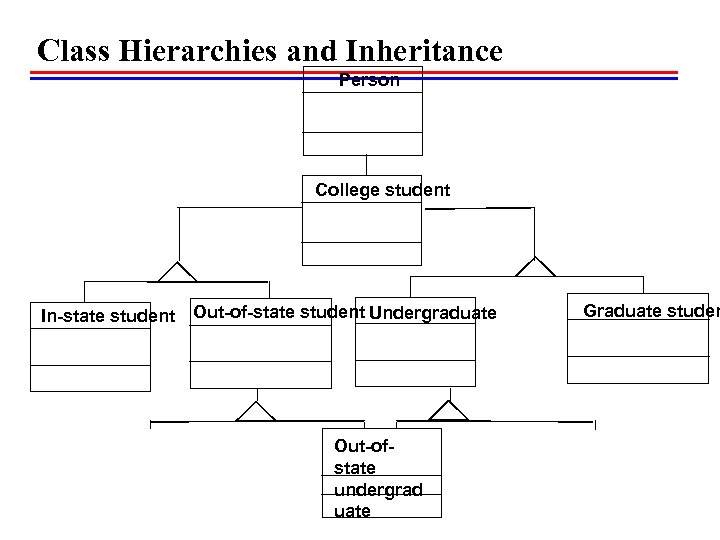 Class Hierarchies and Inheritance Person College student In-state student Out-of-state student Undergraduate Out-ofstate undergrad uate Graduate studen
 Polymorphism // • A method is polymorphic if it is defined for more than one object. • One method for computing area, e. g. Q for triangle objects Q for circle objects
 Additional Requirements Notations • • • Hierarchical Techniques Data Flow Diagrams Software Requirements Engineering Methodology Structured Analysis and Design Technique Z
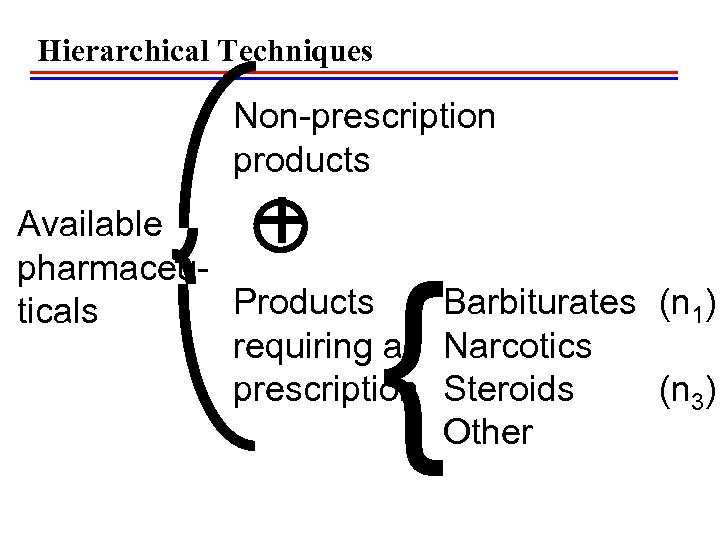 Hierarchical Techniques Non-prescription products + Available pharmaceu. Barbiturates (n 1) Products ticals requiring a Narcotics (n 3) prescription Steroids Other {
 Data Flow Diagrams • considering the system as a transformer of data Q how data flow into the system, Q how they are transformed, and Q how they leave the system • data store is a database • An actor is an entity that provides or receives data
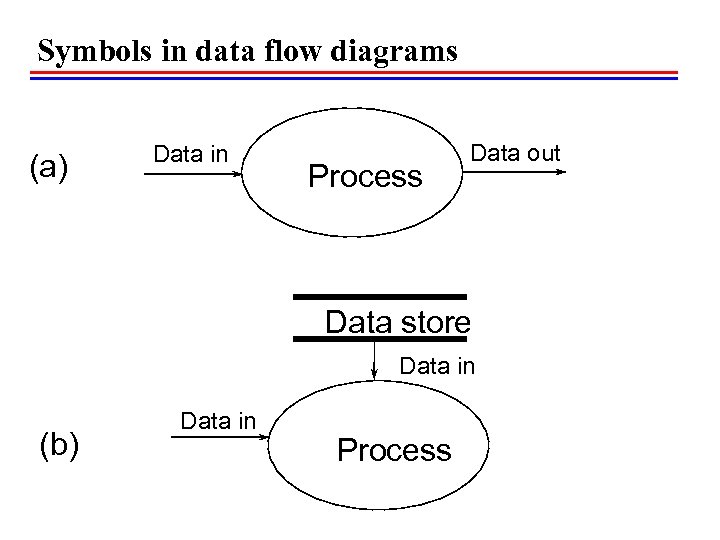 Symbols in data flow diagrams (a) Data in Process Data out Data store Data in (b) Data in Process
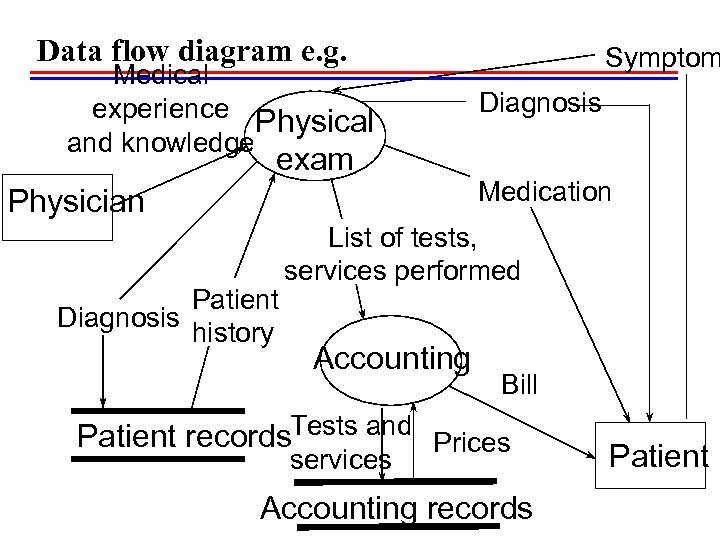 Data flow diagram e. g. Medical experience Physical and knowledge exam Physician Patient Diagnosis history Symptom Diagnosis Medication List of tests, services performed Accounting Bill Patient records. Tests and Prices services Accounting records Patient
 Software Requirements Engineering Methodology • views the system as a finite-state machine • writing requirements using a Requirements Statement Language Q describes the flow of processing in terms of what events initiate which processes • analyzing the requirements using Requirements Engineering Validation System Q produces variety of reports, simulates the critical processing of the system
 Requirements Statement Language • first uses a flow-chart type graph called R-net to Q (plus) indicates a condition for branch Q (ampersand) indicates parallel processing in any order Q (triangles) indicates points of synchronization Q (validation point*) indicates a point for taking measurement • next translate the components of R-net into statements
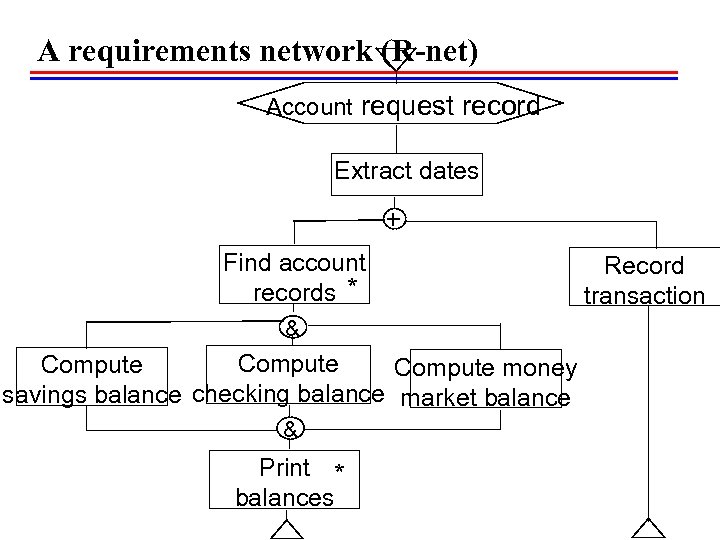 A requirements network (R-net) Account request record Extract dates + Find account records * & Compute money savings balance checking balance market balance & Print * balances Record transaction
 Requirements Engineering Validation System • simulates the processing of the system • depicts flow of data with a graphics package • produces variety of reports
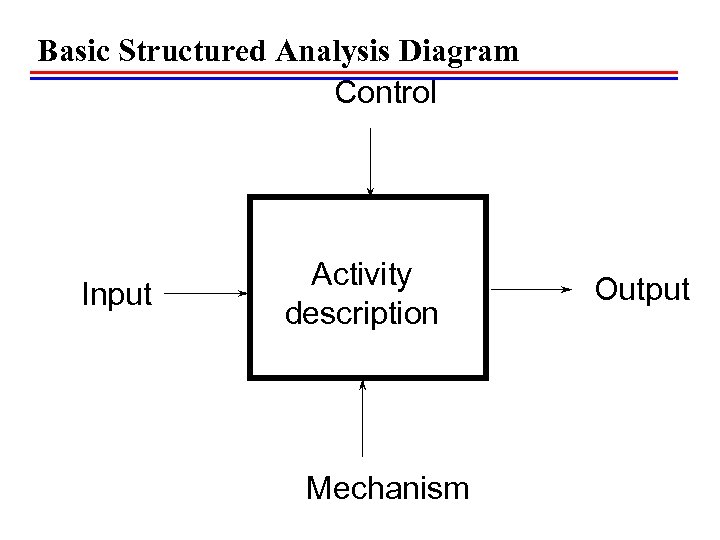
 Structured Analysis and Design Technique • Structured Analysis represents a system with an ordered set of diagrams Q each diagram represents a transformation, and at most six diagrams are used to describe a function • Design Technique explains how to interpret the diagrams
 Basic Structured Analysis Diagram Control Input Activity description Mechanism Output
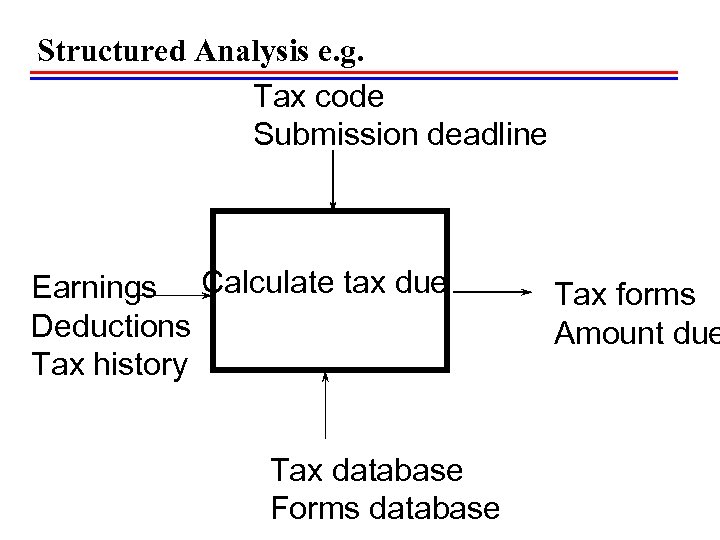 Structured Analysis e. g. Tax code Submission deadline Earnings Calculate tax due Deductions Tax history Tax database Forms database Tax forms Amount due
 Structured Analysis hierarchy • high-level diagram is rewritten as several lower-level diagrams • boxes within boxes (sub-boxes) • forming a hierarchy of activities that describe all the steps our system is required to take
 Z formal specification languages • • • express requirements in a mathematical way evaluate using proofs and automated techniques provides a notation (its syntactic domain) provides a universe of objects (its semantic domain) provides a precise rule defining which objects satisfy each specification
 Z “Zed” language • combines abstract data modeling with set theory, and first-order predicate logic • used to specify system states and valid state changes • automated tools Q check for incompleteness and inconsistency Q find reachable states Q check for deadlocks and non-determinism Q generate a finite-state machine that implements the specification
 Prototyping Requirements • Rapid prototyping: build sections (small piece)(usually user interface) of the proposed system to determine the necessity, desirability, or feasibility of requirements. • throw-away, or evolutionary • “Look and feel” of user interface.
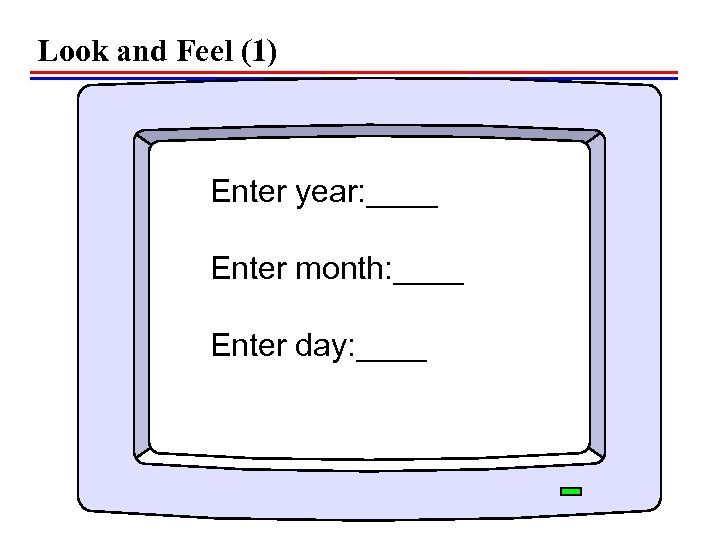 Look and Feel (1) Enter year: ____ Enter month: ____ Enter day: ____
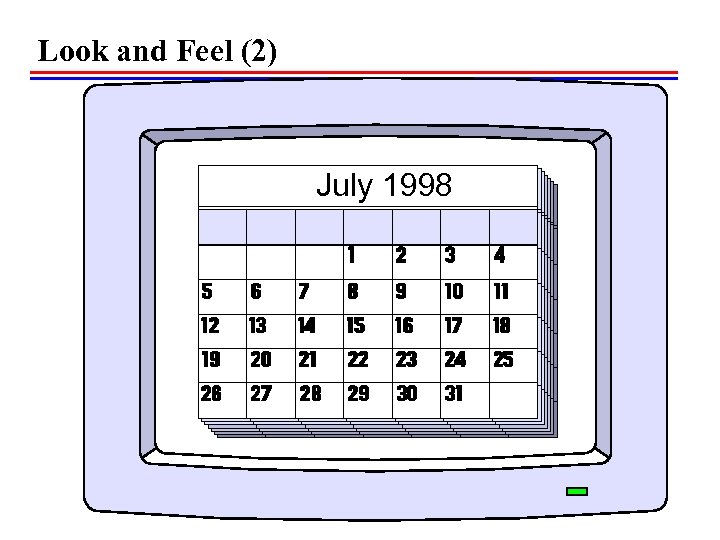 Look and Feel (2) July 1998
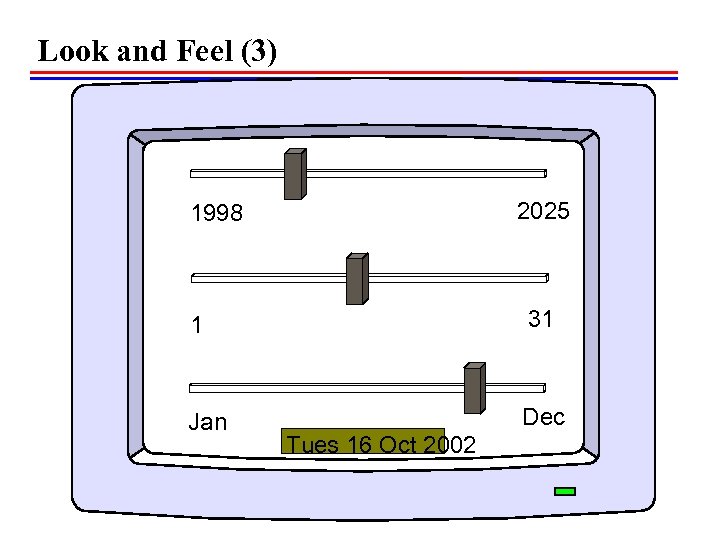 Look and Feel (3) 2025 1998 1 31 Jan Dec Tues 16 Oct 2002
 Requirements Documentation • A complete listing of everything the customer expects the proposed system to do. • Numbering each requirement, allows cross-reference, and tracking • Requirements Definition Document • Requirements Specification Document
 Requirements Definition Document • Record of requirements in the customer’s terms Q 1. Outline the general purpose of the system. Q 2. Describe the background and objectives of system development. Q 3. Outline approach (in general) Q 4. Define detailed characteristics of the proposed system, define system boundary and interfaces. Q 5. Discuss the environment in which the system will operate, e. g. hardware.
 Guideline for writing requirements • Number each requirement • Each clause should contain only one requirement. • Avoid having one requirement refer to another requirement • Collect like requirements together • Testable • Consult standards from IEEE
 Requirements Specification Document// • written from the developer’s perspective • may use technique notations
 Participants in the Requirements Process • • • Contract monitors Customers and users Business managers Designers Testers
 Requirements Validation • Provides a way for customers and developers to agree on what it is the system is to do. • Manual techniques Q Reading, Manual cross-referencing, Q Interviews, Reviews, Checklists Q Manual Models to check functions and relationships Q Mathematical proofs • Automated Techniques
 Measuring Requirements • number of changes to requirements • rate each requirements on a scale, by designers, by testers
 Choosing a Requirements Specification Technique • No one approach is universally applicable to all systems • May be necessary in some cases to combine several approaches to define the requirements completely. • Master some tools and use them when the time is right!