


 Скачать презентацию CGE Greenhouse Gas Inventory Hands-on Training Workshop AGRICULTURE
bfe8014f58202d7c93264b0e527f038b.ppt
- Количество слайдов: 116
 CGE Greenhouse Gas Inventory Hands-on Training Workshop AGRICULTURE SECTOR 3 A. 1
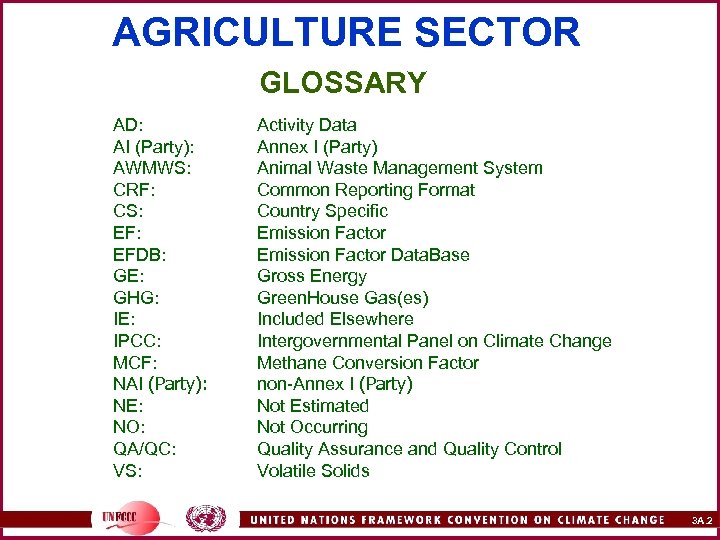 AGRICULTURE SECTOR GLOSSARY AD: AI (Party): AWMWS: CRF: CS: EFDB: GE: GHG: IE: IPCC: MCF: NAI (Party): NE: NO: QA/QC: VS: Activity Data Annex I (Party) Animal Waste Management System Common Reporting Format Country Specific Emission Factor Data. Base Gross Energy Green. House Gas(es) Included Elsewhere Intergovernmental Panel on Climate Change Methane Conversion Factor non-Annex I (Party) Not Estimated Not Occurring Quality Assurance and Quality Control Volatile Solids 3 A. 2
 CONTENT n n PART 1. GUIDELINES OVERVIEW PART 2. INVENTORY ELABORATION SIMULATION 3 A. 3
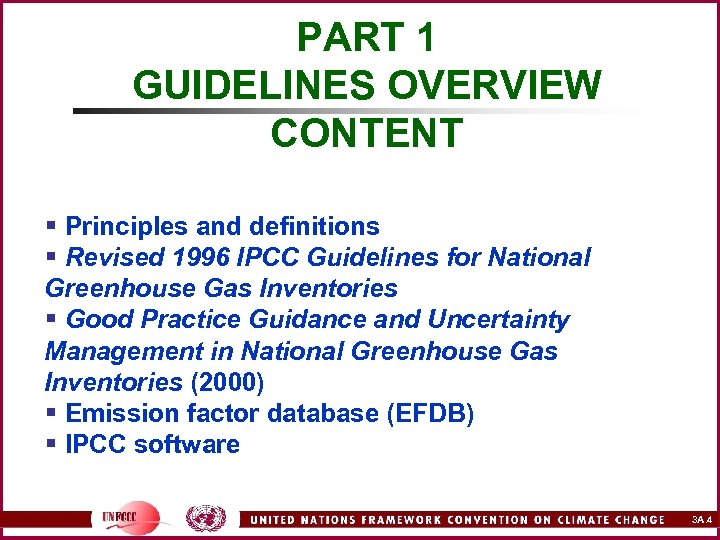 PART 1 GUIDELINES OVERVIEW CONTENT § Principles and definitions § Revised 1996 IPCC Guidelines for National Greenhouse Gas Inventories § Good Practice Guidance and Uncertainty Management in National Greenhouse Gas Inventories (2000) § Emission factor database (EFDB) § IPCC software 3 A. 4
 Principles and Definitions Inventory Training Workshop, Agriculture Sector 3 A. 5
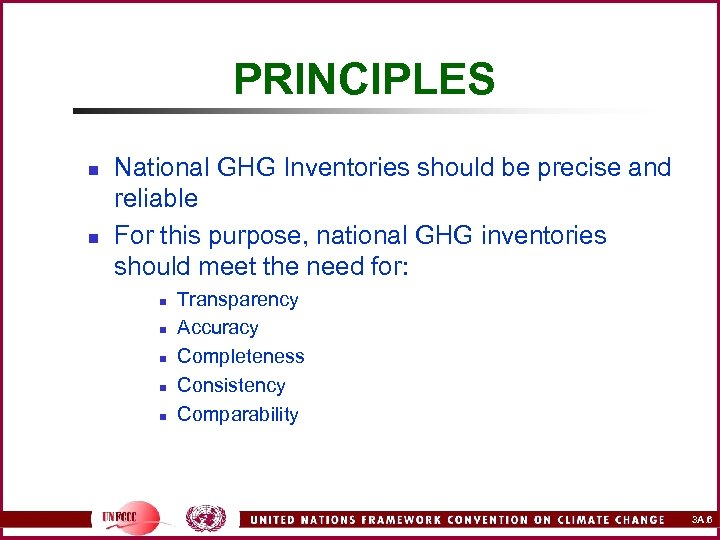 PRINCIPLES n n National GHG Inventories should be precise and reliable For this purpose, national GHG inventories should meet the need for: n n n Transparency Accuracy Completeness Consistency Comparability 3 A. 6
 PRINCIPLES n n Transparency: assumptions and methodologies, clearly explained to facilitate replication and assessment by users of the reported information Consistency: inventory internally consistent in all its elements with inventories of other years (same methodologies for the base year and all subsequent years; consistent data sets to estimate emissions/removals from sources/sinks) 3 A. 7
 PRINCIPLES n n Comparability: emissions/removals estimates reported by AI Parties, comparable among them (methodologies and formats agreed by the Conference of the Parties (COP); allocation of source/sink categories, following the Revised 1996 IPCC Guidelines) Completeness: all sources/sinks and all gases included in the IPCC Guidelines, other existing relevant source/sink categories specific to an AI Party and full geographic coverage of sources/sinks of an AI Party 3 A. 8
 PRINCIPLES § Accuracy: relative measure of the exactness of emission/removal estimate. Estimates are systematically neither over nor under true emissions/removals, as far as can be judged, and uncertainties reduced as far as practicable. Appropriate methodologies used, in accordance with the IPCC Good Practice Guidance 3 A. 9
 SOURCE CATEGORIES n Only Source Categories: n n Related to animal production: n Enteric Fermentation (4 A): CH 4 emissions from ruminants and nonruminants n Manure Management (4 B 1): CH 4 emissions from manure managed under anaerobic conditions n Manure Management (4 B 2): N 2 O emissions from manure when treated under different treatment systems Related to cropping systems: Rice cultivation (4 C): CH 4 emissions from the surface of soils kept under anaerobic conditions to cultivate rice Related to croplands: Agricultural Soils (4 D): N 2 O emissions from the surface of cropped soils due to anthropogenic N inputs; direct (primary) and indirect (secondary) emissions are considered Use of fire: n Prescribed burning of savannas (4 E): non-CO 2 gas emissions due to savanna biomass burning n Crop residue burning (4 F): non-CO 2 gas emissions due to dead biomass burning 3 A. 10
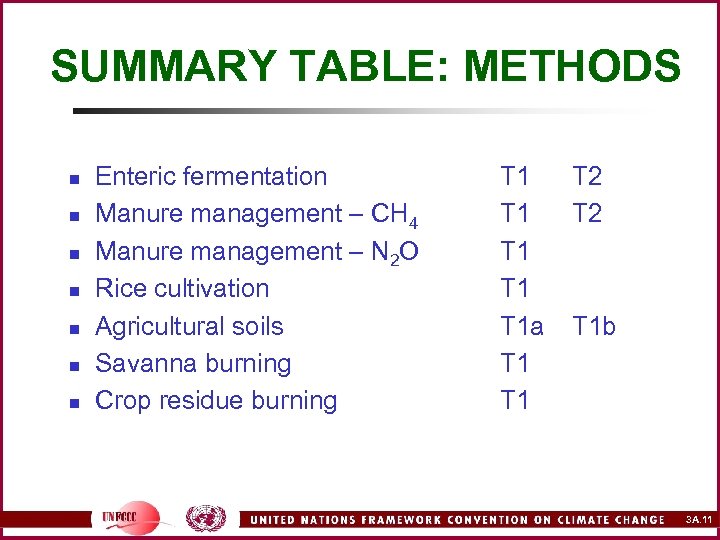 SUMMARY TABLE: METHODS n n n n Enteric fermentation Manure management – CH 4 Manure management – N 2 O Rice cultivation Agricultural soils Savanna burning Crop residue burning T 1 T 1 T 1 a T 1 T 2 T 1 b 3 A. 11
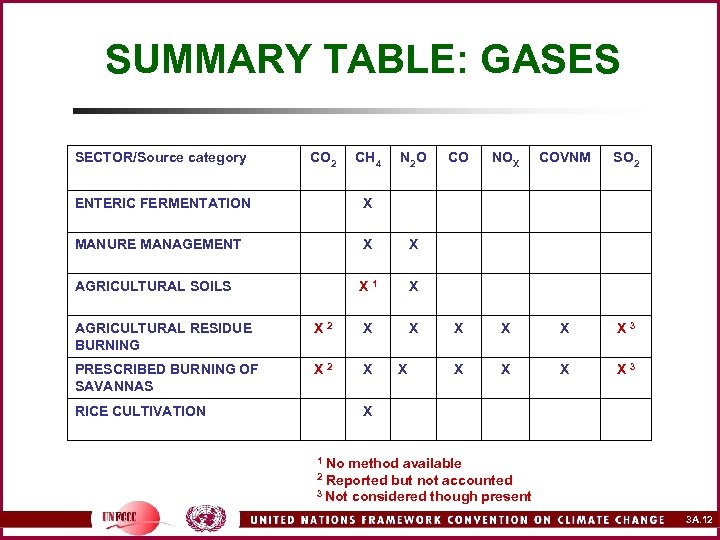 SUMMARY TABLE: GASES SECTOR/Source category CO 2 CH 4 N 2 O ENTERIC FERMENTATION X SO 2 X X X X 3 X X COVNM X X 1 NOX X MANURE MANAGEMENT CO AGRICULTURAL SOILS AGRICULTURAL RESIDUE BURNING X 2 X PRESCRIBED BURNING OF SAVANNAS X 2 X RICE CULTIVATION X X No method available 2 Reported but not accounted 3 Not considered though present 1 3 A. 12
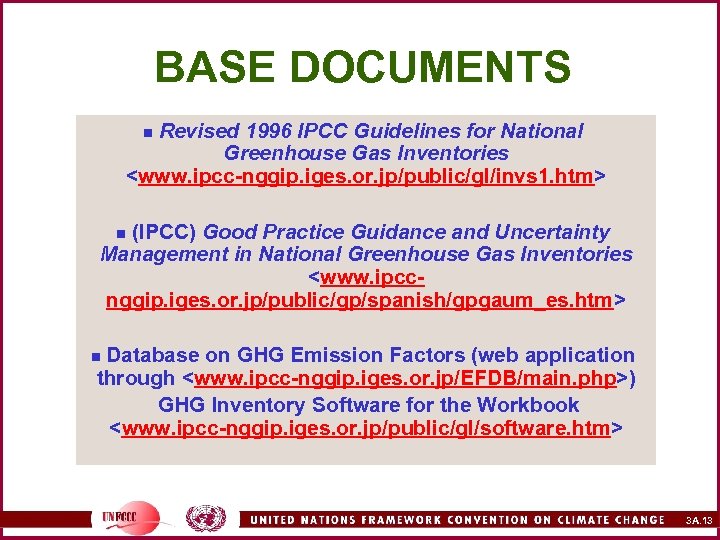 BASE DOCUMENTS Revised 1996 IPCC Guidelines for National Greenhouse Gas Inventories
 Revised 1996 IPCC Guidelines for National Greenhouse Gas Inventories Inventory Training Workshop, Agriculture Sector 3 A. 14
 REVISED 1996 IPCC GUIDELINES n NAI Parties should use Revised 1996 IPCC Guidelines for estimating and reporting their GHG inventories n n Structure: n n Volume 1: GHG Inventory Reporting Instructions Volume 2: GHG Inventory Workbook Volume 3: GHG Inventory Reference Manual Complementary Resources: n n n
 REVISED 1996 IPCC GUIDELINES n General Notes on Guidelines (Agriculture) n n n Scope: anthropogenic emissions from agricultural sources, within national territories Data Quality and Time Frame: data of relatively poor quality compared to other sectors; thus, annual figures of 3 -year averages are preferred Default Method: IPCC-GL provides default methodologies, assumptions and data, but national assumptions and data are always preferred. n Uncertainties reported as point estimates rather than as ranges of values 3 A. 16
 REVISED 1996 IPCC GUIDELINES n Basic Principles Underlying the Guidelines (1) n Documentation Standards: Besides reporting tables, report all worksheets used (with assumptions, AD, EF), and any country specific methods used, definitions, etc. n Important for transparency and completeness 3 A. 17
 REVISED 1996 IPCC GUIDELINES n Basic Principles Underlying the Guidelines (2) n Verification and Uncertainty Assessment: Reporting instructions recommend inventory verification by a set of simple checks (to be performed by the Party) and to conduct an uncertainty assessment n Important for completeness and accuracy 3 A. 18
 REVISED 1996 IPCC GUIDELINES n Methodologies and Reporting (1) n n Methods: based on various “tiers”: n Tier 1 is the default method n For some sink/source categories, IPCC-GL provides higher tier methods n National methodologies, if consistent with IPCC, are recommended over the default method Activity Data and Emission Factors: most methods are based on multiplication of AD by one or more EFs. n Tier 1 methods include default EF and even default AD n NAI Parties, encouraged to use agroecological unit/ national/regional EFs 3 A. 19
 REVISED 1996 IPCC GUIDELINES n Methodologies and Reporting (2) n n Worksheets: provided in Vol. 2. With aid of IPCC software, data from worksheets is automatically converted into sectoral and summary tables. Notation Key: NAI countries are encouraged to use a notation key (i. e. NO, NE, NA, IE, C). Overview Table (8 A): should be used to summarize assessment of completeness (e. g. partial, full estimate, not estimated) and quality (high, med. , low) Data Completeness: in all tables, footnotes should be added to indicate the completeness of the estimates. 3 A. 20
 REVISED 1996 IPCC GUIDELINES n Methodologies and Reporting (3) n n Uncertainties: possible causes and how to manage them are explained in Vol. 1, Annex 1. Documentation: Reports should include: n n Information to enable reconstruction of inventory All worksheets used in preparing the inventory Explanation and documentation of any national methods/data used instead of IPCC default A written summary of verification procedures used, and an assessment of quality/completeness of estimates. 3 A. 21
 REVISED 1996 IPCC GUIDELINES n Agriculture Sector Sink/Source Categories (1) n Enteric Fermentation (4 A): CH 4 emissions by ruminants and non-ruminants n n n Information organized by animal species Tier 1 method based on multiplication of number of animals in each category by an EF Tier 2 method (cattle only) uses enhanced characterization of livestock, which results in estimation of annual feed intake (parameter used to estimate specific EFs) 3 A. 22
 REVISED 1996 IPCC GUIDELINES n Agriculture Sector Sink/Source Categories (2) n Manure Management (4 B): CH 4 (4 Ba) and N 2 O (4 Bb) emissions from decomposition of manure during storage n n n Information organized by animal groups and manure management systems (MMS) Tier 1 method requires livestock population data by climate region and animal waste management system and uses default EFs. Tier 2 method estimates EF from manure characteristics (VS, Bo, MCF) (for CH 4 emissions from cattle, swine and sheep) 3 A. 23
 REVISED 1996 IPCC GUIDELINES n Agriculture Sector Sink/Source Categories (3) n Rice Cultivation (4 C): CH 4 emissions from anaerobic decomposition of organic materials in flooded fields. Any N 2 O emissions reported under 4 D. n Only one method provided n AD: harvested area by rice ecosystem and water management type, use of organic amendments n Basic EF estimated for permanent flooding and no organic amendments n Scaling of basic EF to account for crop practices, multiple cropping, ecosystem type, water regime, addition of organic amendments, soil type 3 A. 24
 REVISED 1996 IPCC GUIDELINES n Agriculture Sector Sink/Source Categories (4) n Agricultural Soils (4 D): covers N 2 O emissions only (no methods are provided for CH 4 emissions and removals, or for N 2 O removals). Tier 1 method for both direct/indirect emissions n Direct N 2 O emissions: requires AD (use of fertilizers and manure, amount of N fixed by crops, amount of crop residues returned to soil, N-fixing crops, area of cultivated histosols) and 2 EFs (one for N inputs into soil and one for cultivation of organic soils) n Indirect N 2 O emissions: 3 sources: (a) volatilization and deposition of N in fertilizers/manure; (b) leaching and run-off of applied fertilizers/manure; (c) discharge of human sewage into rivers or estuaries 3 A. 25
 REVISED 1996 IPCC GUIDELINES n Agriculture Sector Sink/Source Categories (4) n Prescribed burning of savannas (4 E): Covers N 2 O, CH 4, CO and NOx emissions from the burning of savannas n Tier 1 methods, based on estimation of AD and EF for every gas, are provided 3 A. 26
 REVISED 1996 IPCC GUIDELINES n Agriculture Sector Sink/Source Categories (4) n Field burning of agricultural residues (4 F): covers N 2 O and CH 4 emissions for on-site burning of crop residues n Tier 1 method similar to prescribed burning of savannas is provided n Other uses of crop residues (burning off-site, application to soils or as animal forage) are excluded n Submodules: n n n Cereals (wheat, barley, oats, rye, rice, maize) Pulse (peas, lentils, beans, fabas) Tuber and Root (potatoes, beets) Sugar Cane Others (fruit trees, forest trees) 3 A. 27
 Good Practice Guidance and Uncertainty Management in National Greenhouse Gas Inventories (2000) Inventory Training Workshop, Agriculture Sector 3 A. 28
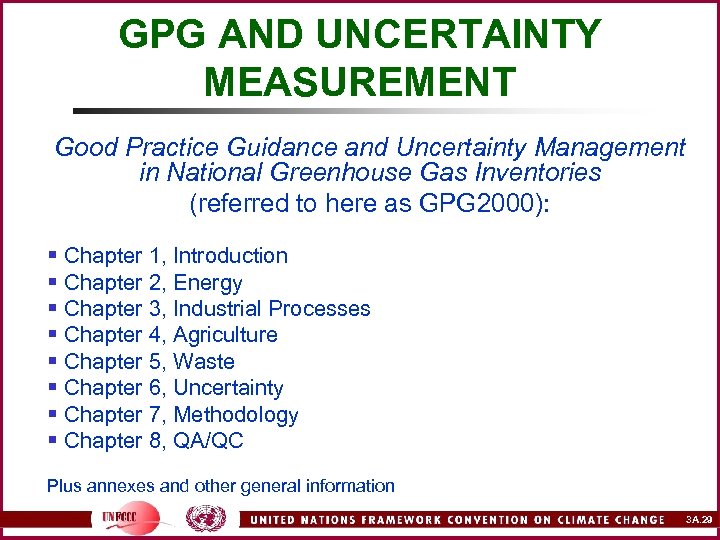 GPG AND UNCERTAINTY MEASUREMENT Good Practice Guidance and Uncertainty Management in National Greenhouse Gas Inventories (referred to here as GPG 2000): § Chapter 1, Introduction § Chapter 2, Energy § Chapter 3, Industrial Processes § Chapter 4, Agriculture § Chapter 5, Waste § Chapter 6, Uncertainty § Chapter 7, Methodology § Chapter 8, QA/QC Plus annexes and other general information 3 A. 29
 GPG AND UNCERTAINTY MEASUREMENT n n n GHG 2000 complements the Revised 1996 IPCC Guidelines GHG 2000 includes cross-cutting issues to ensure the fulfilment of the quality requisites Quality requisites are compulsory for AI Parties and recommendable for NAI Parties 3 A. 30
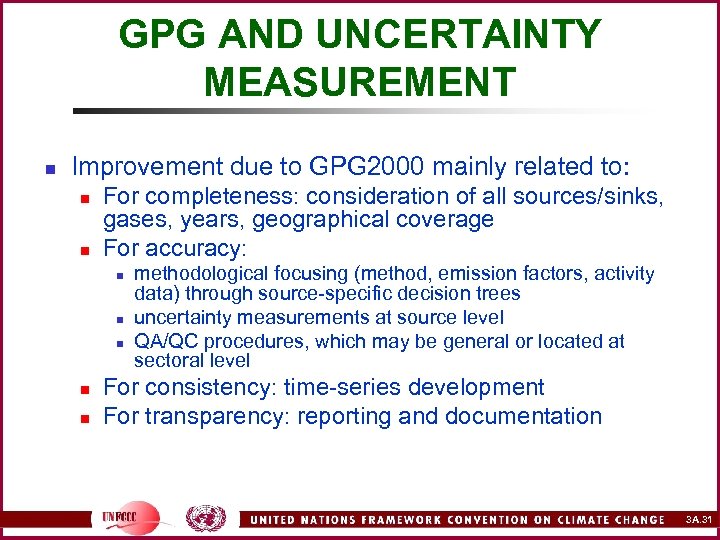 GPG AND UNCERTAINTY MEASUREMENT n Improvement due to GPG 2000 mainly related to: n n For completeness: consideration of all sources/sinks, gases, years, geographical coverage For accuracy: n n n methodological focusing (method, emission factors, activity data) through source-specific decision trees uncertainty measurements at source level QA/QC procedures, which may be general or located at sectoral level For consistency: time-series development For transparency: reporting and documentation 3 A. 31
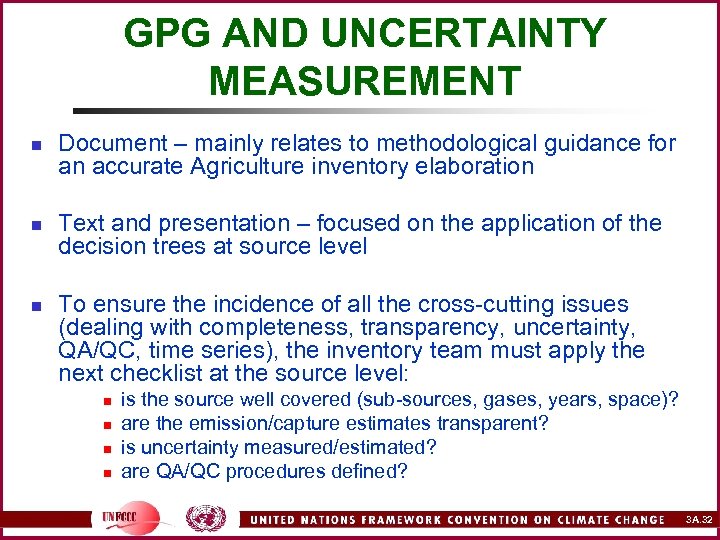 GPG AND UNCERTAINTY MEASUREMENT n n n Document – mainly relates to methodological guidance for an accurate Agriculture inventory elaboration Text and presentation – focused on the application of the decision trees at source level To ensure the incidence of all the cross-cutting issues (dealing with completeness, transparency, uncertainty, QA/QC, time series), the inventory team must apply the next checklist at the source level: n n is the source well covered (sub-sources, gases, years, space)? are the emission/capture estimates transparent? is uncertainty measured/estimated? are QA/QC procedures defined? 3 A. 32
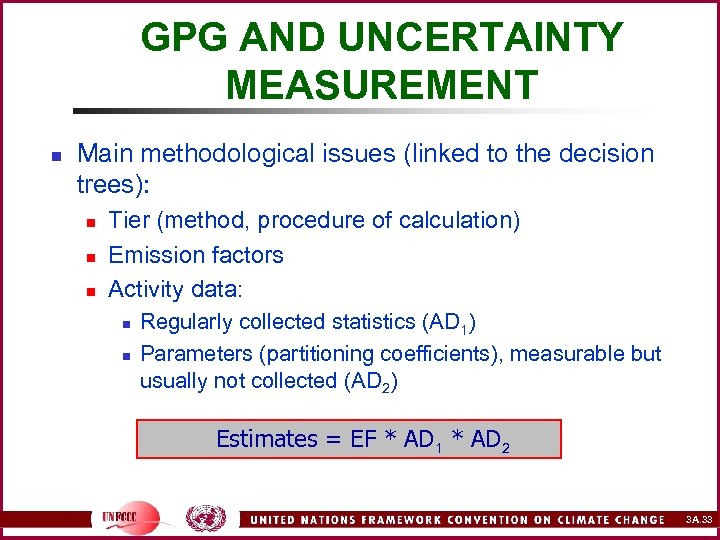 GPG AND UNCERTAINTY MEASUREMENT n Main methodological issues (linked to the decision trees): n n n Tier (method, procedure of calculation) Emission factors Activity data: n n Regularly collected statistics (AD 1) Parameters (partitioning coefficients), measurable but usually not collected (AD 2) Estimates = EF * AD 1 * AD 2 3 A. 33
 GPG AND UNCERTAINTY MEASUREMENT n It is good practice to: n n n use country-specific tiers along with countryspecific emission factors, to better reflect national conditions have emission factor per each environmental unit of the Party use systematically and regularly published activity data (AD 1) and experimentally measured parameters (AD 2) 3 A. 34
 GPG AND UNCERTAINTY MEASUREMENT n n n EMISSION FACTORS: Development highly costly and not easy Very few NAI Parties investing in developing some emission factors Majority of NAI Parties to use default emission factors Preference should be given to regionally obtained emission factors 3 A. 35
 GPG AND UNCERTAINTY MEASUREMENT n n n ACTIVITY DATA Main barrier for many NAI Parties: lack of proper activity data (updated, detailed, checked, published) Key time for NAI Parties to improve collection systems provided they are important for national planning Option for collectable data (AD 1): database of international organizations (FAO, IRRI) Option for non-collectable data (AD 2): IPCC defaults, values from other countries of the region, national experts’ opinion 3 A. 36
 PREVIOUS STEPS: KEY SOURCE DEFINITION (1) n First step in producing national GHG inventory: Key source definition (level, trend) produced at national level n n For key sources, it is good practice to estimate emissions/captures applying CS or tier 2 methods and CS emission factors It allows better focusing of the financial and human resources invested in the inventory 3 A. 37
 PREVIOUS STEPS: KEY SOURCE DEFINITION (2) n n NAI Parties are encouraged to fulfil this condition only if they have the AD needed for the use of a detailed methodological approach or can collect them without jeopardizing the financial resources for the whole inventory process If not, the level of detail must be reduced until a balance with the available AD is reached 3 A. 38
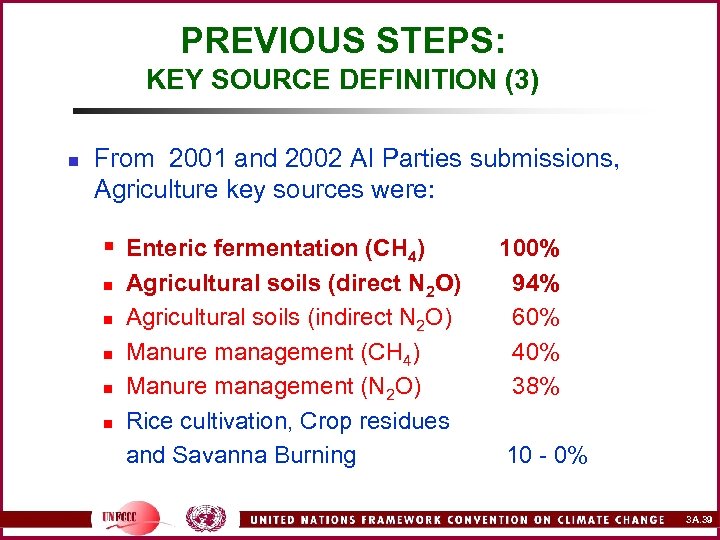 PREVIOUS STEPS: KEY SOURCE DEFINITION (3) n From 2001 and 2002 AI Parties submissions, Agriculture key sources were: § Enteric fermentation (CH 4) n n n Agricultural soils (direct N 2 O) Agricultural soils (indirect N 2 O) Manure management (CH 4) Manure management (N 2 O) Rice cultivation, Crop residues and Savanna Burning 100% 94% 60% 40% 38% 10 - 0% 3 A. 39
 PREVIOUS STEPS: KEY SOURCE DEFINITION (4) n n If no previous information, NAI Party inventory team should assume that: n CH 4 emissions from Enteric Fermentation and direct N 2 O emissions from Agricultural Soils are most likely to be key sources, and n indirect N 2 O emissions from Agricultural Soils will likely be a key source, devoting the best efforts to them However, some source categories may be relevant for some groups of NAI Parties: n savanna burning for tropical countries with dry season n crop residues burning for countries with Mediterranean climate n rice production for Asian countries Inventory team should know the characteristics of the Agriculture Sector to better target the always scarce financial resources Opinion of national experts highly desirable and appreciated 3 A. 40
 PREVIOUS STEPS: Mass balances for shared items (1) n Some source categories are linked: n n “Enteric Fermentation”, “Manure Management” and “Agricultural Soils” (for animal population and manure final uses) “Agricultural Soils” and “Burning of Agricultural Residues” (crop residue final uses) Some activity data are shared (single livestock characterization, as the best way to ensure consistency) Some activity data must be properly disaggregated to avoid double counting of emissions (manure and crop residues produced) 3 A. 41
 PREVIOUS STEPS: Mass balances for shared items (2) n Consequently: n n Mass balance for crop residues (fractioning according to different end uses) Mass balance for animal manure produced (direct grazing and confinement, confined manure disaggregated by AWMS) 3 A. 42
 PREVIOUS STEPS: Estimation of significance of sub-sources (1) n Consequently: n n Quick assessment (under tier 1) of significance of: n animal species for CH 4 -Enteric Fermentation n animal species for CH 4 -Manure Management n anthropogenic N inputs for Agricultural Soils Single livestock characterization, applying the detail level (basic, enhanced) suggested by the species significance for the source categories 3 A. 43
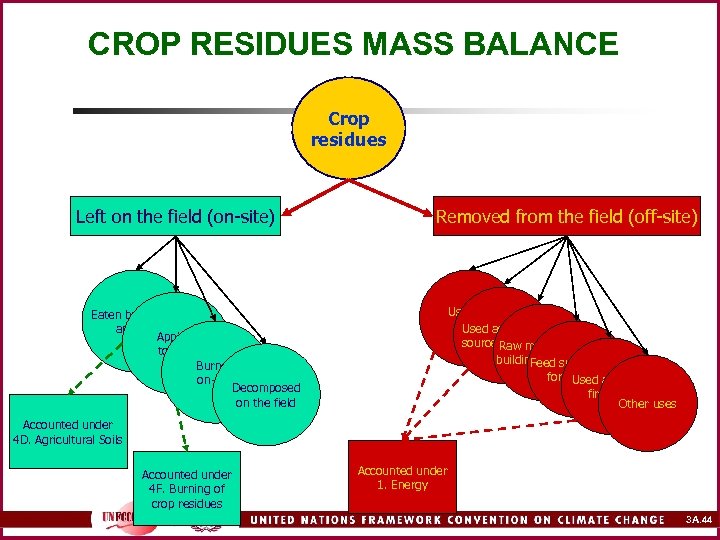 CROP RESIDUES MASS BALANCE Crop residues Left on the field (on-site) Eaten by grazing animals Applied to soils Removed from the field (off-site) Used as fuel as energy Used source Raw material for (biogas) building materials Feed suplemental for animals house Used as firewood Other uses Burned on-site Decomposed on the field Accounted under 4 D. Agricultural Soils Accounted under 4 F. Burning of crop residues Accounted under 1. Energy 3 A. 44
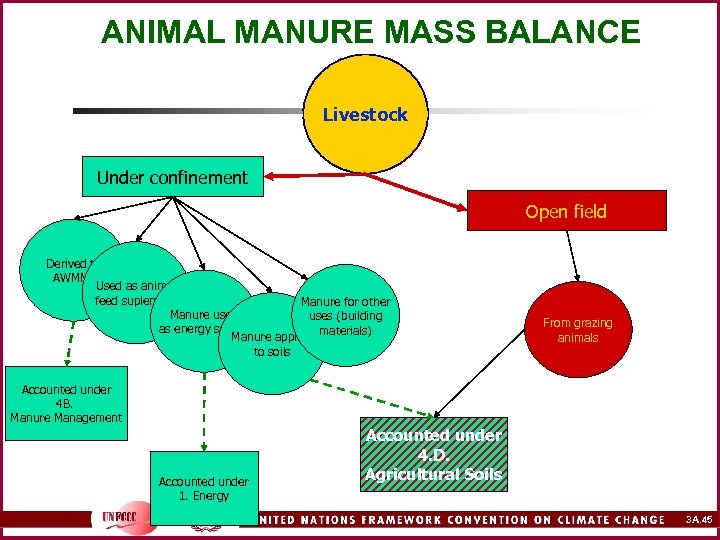 ANIMAL MANURE MASS BALANCE Livestock Under confinement Open field Derived to AWMMs Used as animal feed suplement Manure for other Manure used uses (building as energy source materials) Manure applied to soils From grazing animals Accounted under 4 B. Manure Management Accounted under 1. Energy Accounted under 4. D. Agricultural Soils 3 A. 45
 SINGLE LIVESTOCK CHARACTERIZATION n Livestock data, needed for several source categories: n n n CH 4 emissions from enteric fermentation CH 4/N 2 O emissions from manure management, and N 2 O emissions from agricultural soils Parties with important livestock activity should produce a single characterization (enhanced/basic) of the animal species It is also good practice to n n include all the animal species existing in the Party assess the contribution of each animal species to the total emission of the individual source category (enteric fermentation and/or manure management) 3 A. 46
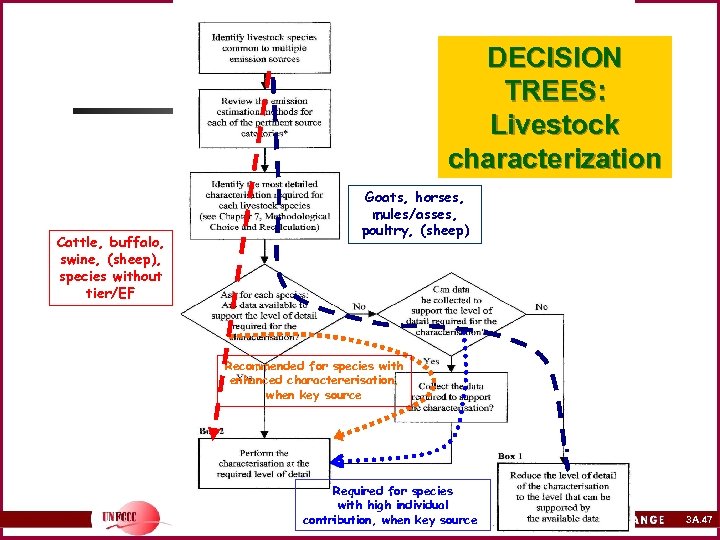 DECISION TREES: Livestock characterization Cattle, buffalo, swine, (sheep), species without tier/EF Goats, horses, mules/asses, poultry, (sheep) Recommended for species with enhanced charactererisation, when key source Required for species with high individual contribution, when key source 3 A. 47
 SINGLE LIVESTOCK CHARACTERIZATION n For animal species with a significant contribution to the source emissions (25% or more), it is good practice to apply: n enhanced (detailed) characterization – country-specific method/tier 2 – nationally disaggregated emission factors provided there is no restriction of activity data n The non-significant animal species: n n basic (not detailed) characterization – tier 1 – default emission factors Recommendation: always enhanced characterization for cattle and swine; buffalo and sheep may be included here depending on national circumstances 3 A. 48
 SINGLE LIVESTOCK CHARACTERIZATION n Basic Characterization n n list of livestock species and categories annual population data, by species and category average annual milk production of dairy cows percentage of animals per climate region existing in the Party 3 A. 49
 SINGLE LIVESTOCK CHARACTERIZATION n Enhanced Characterization: in addition, n n disaggregation of species population into homogeneous groups of animals (country-specific variations in age structure and animal performance) livestock population by species, category and subcategory feed intake estimates for a typical animal in each subcategory (used in the tier 2 enteric fermentation emissions for cattle, buffalo, and sheep) estimates should be used to harmonize the estimated manure and N excretion rates for CH 4 and N 2 O emissions from manure management and direct/indirect N 2 O agricultural soil emissions 3 A. 50
 SINGLE LIVESTOCK CHARACTERIZATION n Enhanced Characterization n n Animal performance, used to estimate gross energy (GE) intake: amount of energy (MJ/day) an animal needs to perform activities such as growth, lactation and pregnancy It is good practice to estimate GE intake based on animal performance data If no activity data available, a survey should be conducted to determine regional livestock production patterns and regional animal distributions If not enough resources, assumptions may be based upon the opinions of experts 3 A. 51
 SINGLE LIVESTOCK CHARACTERIZATION n Characterization of animal species without emission estimation method n n Some countries may have domesticated animals for which IPCC has not reported methods (llamas, alpacas, wapiti, emus, ostriches, deer, others) The IPCC good practice guidance recommends that emission estimates should be based on country-specific emission factors when they are likely to be significant emission sources 3 A. 52
 ENTERIC FERMENTATION n CH 4 emissions n The decision tree for estimating CH 4 emissions from enteric fermentation (Figure 4. 2 in IPCC Good Practice Guidance) defines the route the individual Party should follow to produce accurate emission estimates 3 A. 53
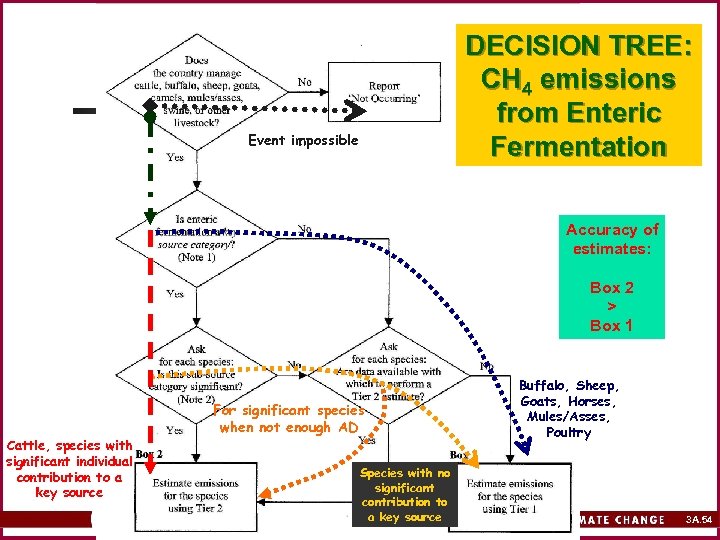 DECISION TREE: CH 4 emissions from Enteric Fermentation Event impossible Accuracy of estimates: Box 2 > Box 1 Cattle, species with significant individual contribution to a key source For significant species when not enough AD Species with no significant contribution to a key source Buffalo, Sheep, Goats, Horses, Mules/Asses, Poultry 3 A. 54
 ENTERIC FERMENTATION n n if there is no domestic animal production, not occurring (NO) if enteric fermentation occurs but not key source, the recommended approach for all the species is: basic characterization – tier 1 – default EF n n n however, it is recommended to use enhanced characterization and tier 2 for cattle, provided the Party has the necessary data if enteric fermentation occurs and key source, the recommended approach for the significant animal species (cattle and others) is: enhanced characterization – tier 2 – CS EF if enteric fermentation occurs and key source, the nonsignificant animal species can receive the basic approach: basic characterization – tier 1 – default EF 3 A. 55
 ENTERIC FERMENTATION n Two methods for estimating emissions from enteric fermentation: n n Tier 1, simplified approach, relies on default EFs drawn from previous studies Tier 2, complex approach, requires detailed CS data on nutrient requirements, feed intake and CH 4 conversion rates for specific feed types, to develop CS EFs for country-defined livestock categories n CS EFs, derived from enhanced characterization. The IPCC good practice guidance provides information to develop EF for cattle and sheep (for buffalo, approach described for cattle can be applied) 3 A. 56
 MANURE MANAGEMENT n CH 4 emissions n n n single livestock characterization provides the data to support the estimates default or CS EFs (based on manure characteristics, Bo, VS, MCF, and manure management systems), depends on the species significance decision tree defines the route the Party should follow to produce accurate estimates (Figure 4. 3 in the IPCC good practice guidance) 3 A. 57
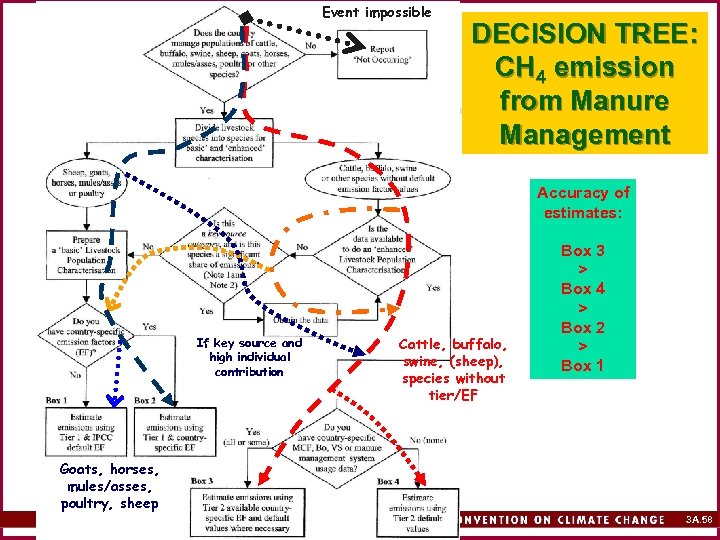 Event impossible DECISION TREE: CH 4 emission from Manure Management Accuracy of estimates: If key source and high individual contribution Cattle, buffalo, swine, (sheep), species without tier/EF Box 3 > Box 4 > Box 2 > Box 1 Goats, horses, mules/asses, poultry, sheep 3 A. 58
 MANURE MANAGEMENT n From the decision tree: n if no domestic animal production, then “not occurring” (NO) n if the source occurs but not key source, emission estimates from all the species may be computed from the next approach: basic characterization – tier 1 – default EF n if the source occurs and key source: n for the significant species (normally cattle, sheep, swine): enhanced characterization – tier 2 – CS EFs n for the non-significant species (normally, goats, camels, horses, asses, mules, poultry): basic characterization – tier 1 – default EF 3 A. 59
 MANURE MANAGEMENT n n Tier 1 method requires livestock population data by animal species, category, and climate region (i. e. cool, temperate, warm) Tier 2 method requires detailed information on animal characteristics and the manner the manure is managed; activity data are: n n volatile solid (VS) excretion rates; Country-specific VS values are based on estimated daily average feed intake, digestible energy of the feed, and ash content of the manure maximum CH 4 producing capacity of the manure (Bo), and CH 4 conversion factor (MCF) Level depending on data availability and natural circumstances. Parties should make their best for tier 2 3 A. 60
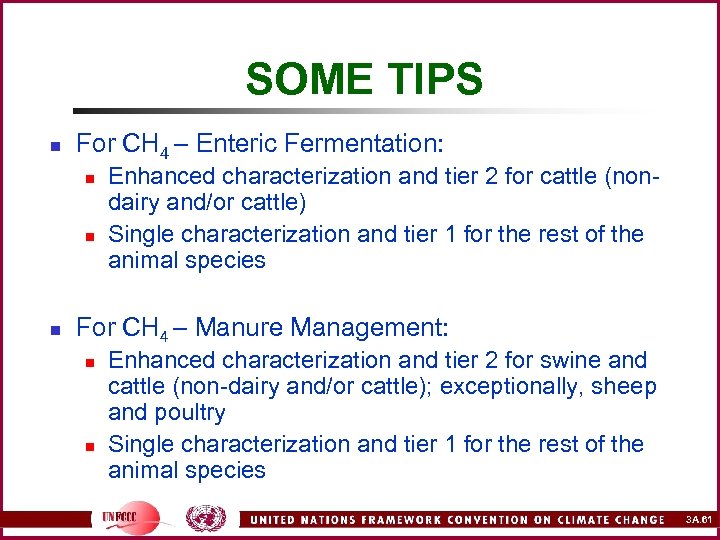 SOME TIPS n For CH 4 – Enteric Fermentation: n n n Enhanced characterization and tier 2 for cattle (nondairy and/or cattle) Single characterization and tier 1 for the rest of the animal species For CH 4 – Manure Management: n n Enhanced characterization and tier 2 for swine and cattle (non-dairy and/or cattle); exceptionally, sheep and poultry Single characterization and tier 1 for the rest of the animal species 3 A. 61
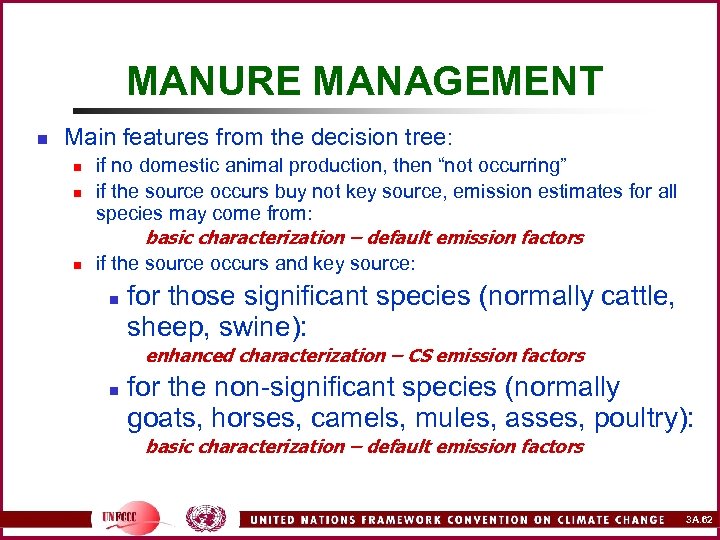 MANURE MANAGEMENT n Main features from the decision tree: n n n if no domestic animal production, then “not occurring” if the source occurs buy not key source, emission estimates for all species may come from: basic characterization – default emission factors if the source occurs and key source: n for those significant species (normally cattle, sheep, swine): enhanced characterization – CS emission factors n for the non-significant species (normally goats, horses, camels, mules, asses, poultry): basic characterization – default emission factors 3 A. 62
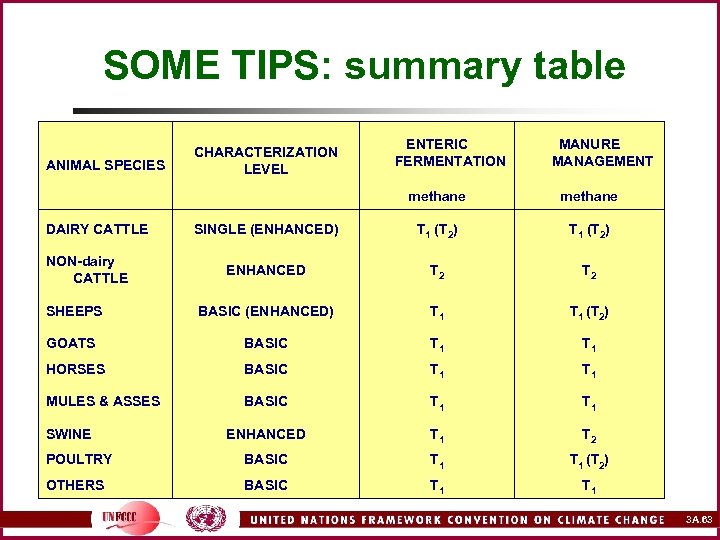 SOME TIPS: summary table ANIMAL SPECIES CHARACTERIZATION LEVEL ENTERIC FERMENTATION MANURE MANAGEMENT methane SINGLE (ENHANCED) T 1 (T 2) ENHANCED T 2 SHEEPS BASIC (ENHANCED) T 1 (T 2) GOATS BASIC T 1 HORSES BASIC T 1 MULES & ASSES BASIC T 1 ENHANCED T 1 T 2 POULTRY BASIC T 1 (T 2) OTHERS BASIC T 1 DAIRY CATTLE NON-dairy CATTLE SWINE 3 A. 63
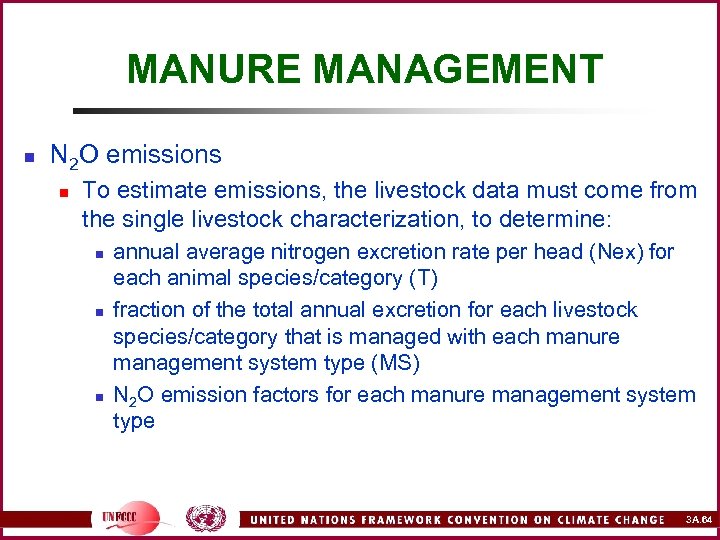 MANURE MANAGEMENT n N 2 O emissions n To estimate emissions, the livestock data must come from the single livestock characterization, to determine: n n n annual average nitrogen excretion rate per head (Nex) for each animal species/category (T) fraction of the total annual excretion for each livestock species/category that is managed with each manure management system type (MS) N 2 O emission factors for each manure management system type 3 A. 64
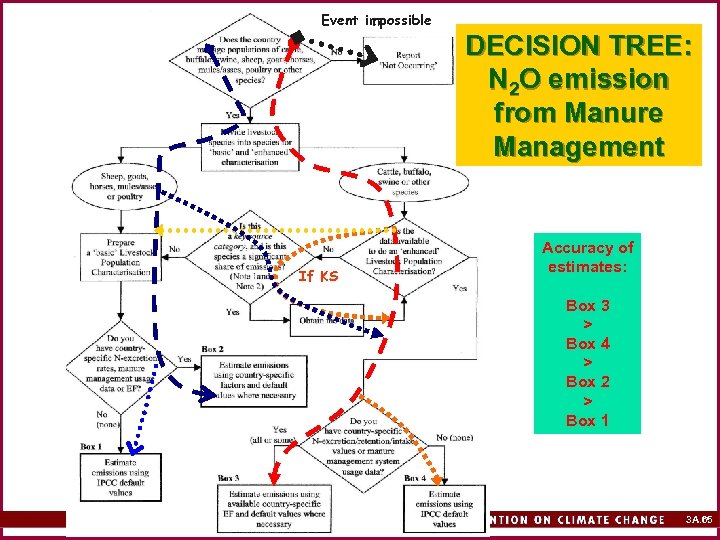 Event impossible DECISION TREE: N 2 O emission from Manure Management If KS Accuracy of estimates: Box 3 > Box 4 > Box 2 > Box 1 3 A. 65
 MANURE MANAGEMENT n Activity data – required in addition to those necessary for the livestock characterization – are: n n n annual average N excretion per head/category/species fraction of total annual excretion for each livestock species/category that is managed in a manure management system If no available data on the distribution of manure management systems, the Party should conduct a survey If not possible, values can be derived from expert opinions Parties are also encouraged to disaggregate the activity data for each major climatic zone 3 A. 66
 PRESCRIBED BURNING of SAVANNAS n Prescribed Burning of Savannas n n IPCC describes one method to estimate non-CO 2 gas emissions from savanna burning. Default activity data and emission factors are available in the Revised 1996 IPCC Guidelines Among AI Parties, key source only for Australia, but very likely to be key source for many NAI Parties 3 A. 67
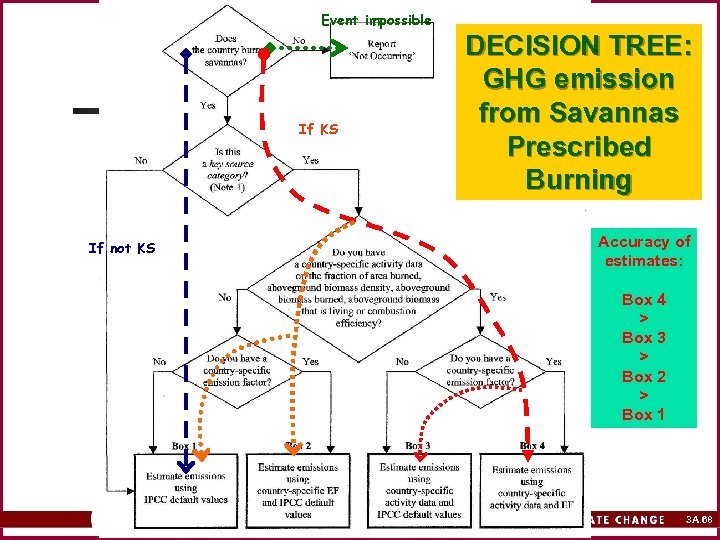 Event impossible If KS If not KS DECISION TREE: GHG emission from Savannas Prescribed Burning Accuracy of estimates: Box 4 > Box 3 > Box 2 > Box 1 3 A. 68
 PRESCRIBED BURNING OF SAVANNAS n Main features of the decision tree (Figure 4. 5 in the IPCC good practice guidance) are: n n n if savannas do not exist, then “not occurring” if savanna burning occurs, but not key source, emissions can be estimated using default factor values if savanna burning occurs and key source, emissions must be estimated using CS activity data and emission factors, provided the activity data are available and/or can be collected 3 A. 69
 PRESCRIBED BURNING of SAVANNAS n IPCC method requires: n n n n n value for the living fraction of aboveground biomass value for dead fraction of aboveground biomass value for the oxidized fraction after burning carbon fraction of living and dead biomass nitrogen/carbon ratio in the biomass combustion efficiency (molar ratio of emitted CO 2 concentrations to the sum of emitted CO and CO 2 concentrations from savanna fires) Non-collectable activity data (parameters): field measurements, expert judgment, default values IPCC good practice guidance refers to the IPCC Guidelines for this source category Additional information, provided in Appendix 4 A. 1 of the IPCC good practice guidance (describes some details of a possible future revision of the methodology) 3 A. 70
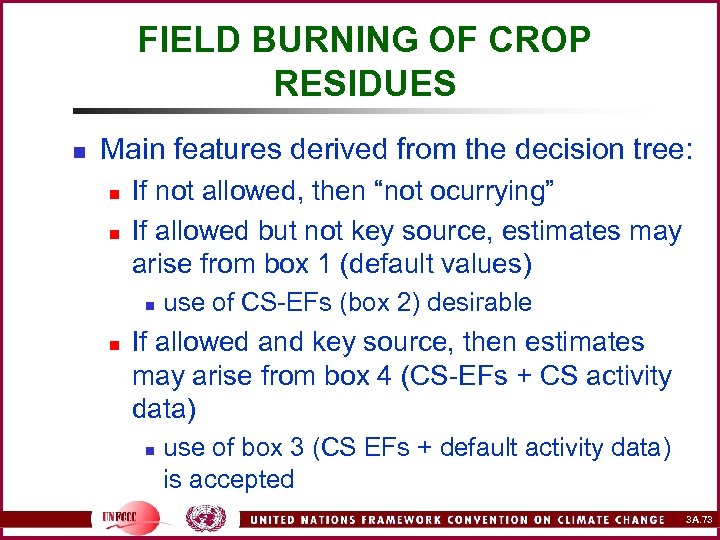
 FIELD BURNING OF CROP RESIDUES n n n One method available to estimate non-CO 2 gas emissions from agricultural residue burning When available, preference should be given to CS activity data and emission factors Default activity data and emission factors, available in the IPCC Guidelines and FAO database Primary uncertainty in estimating emissions of CH 4 and N 2 O from agricultural residue burning is the fraction of residue burned in the field Avoid double counting of residue burned off-field as energy source or other uses IPCC good practice guidance refers to the IPCC Guidelines for this source category; additional information, in GPGAppendix 4 A. 2, for future revision of the methodology 3 A. 71
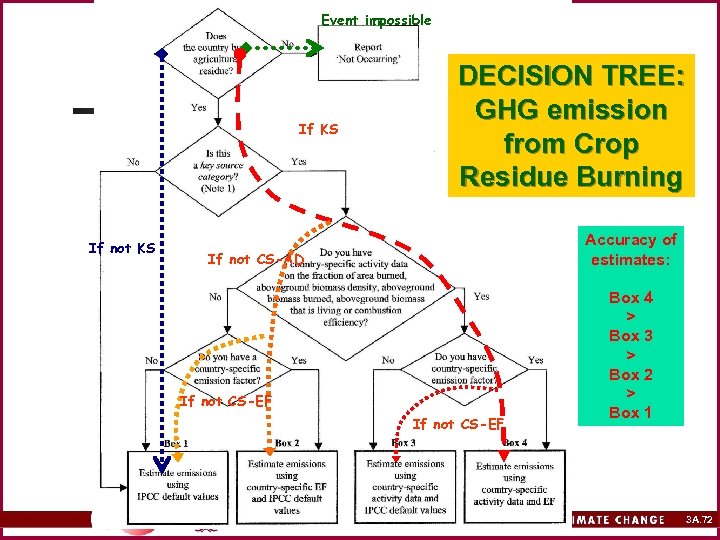 Event impossible If KS If not KS DECISION TREE: GHG emission from Crop Residue Burning Accuracy of estimates: If not CS-AD If not CS-EF Box 4 > Box 3 > Box 2 > Box 1 3 A. 72
 FIELD BURNING OF CROP RESIDUES n Main features derived from the decision tree: n n If not allowed, then “not ocurrying” If allowed but not key source, estimates may arise from box 1 (default values) n n use of CS-EFs (box 2) desirable If allowed and key source, then estimates may arise from box 4 (CS-EFs + CS activity data) n use of box 3 (CS EFs + default activity data) is accepted 3 A. 73
 AGRICULTURAL SOILS n N inputs (origin of direct N 2 O emissions): n n n n application of synthetic fertilizers (FSN) application of animal manure (FAM) cultivation of nitrogen-fixing crops (FBN) incorporation of crop residues into soils (FCR) soil N mineralization due to cultivation of organic soils (FOS) other sources, such as sewage sludge The inventory team must avoid double counting of emissions from synthetic fertilizer, animal manure, and other sources 3 A. 74
 Event impossible DECISION TREE: Direct N 2 O emission from Agricultural Soils Accuracy of estimates: FAMSS NFCCR Box 5 Box 3 > > Box 4 Box 2 > > Box 1 If not KS If KS 3 A. 75
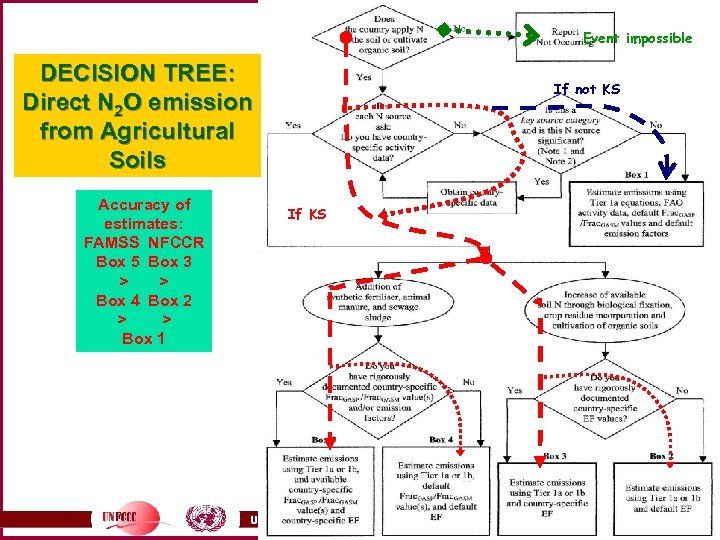
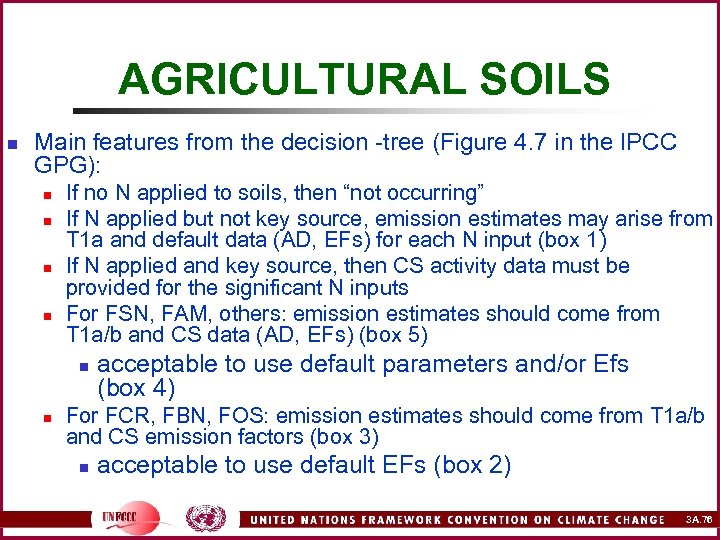 AGRICULTURAL SOILS n Main features from the decision -tree (Figure 4. 7 in the IPCC GPG): n n If no N applied to soils, then “not occurring” If N applied but not key source, emission estimates may arise from T 1 a and default data (AD, EFs) for each N input (box 1) If N applied and key source, then CS activity data must be provided for the significant N inputs For FSN, FAM, others: emission estimates should come from T 1 a/b and CS data (AD, EFs) (box 5) n n acceptable to use default parameters and/or Efs (box 4) For FCR, FBN, FOS: emission estimates should come from T 1 a/b and CS emission factors (box 3) n acceptable to use default EFs (box 2) 3 A. 76
 AGRICULTURAL SOILS n n n n Only one tier for this source Two variations: 1 a and 1 b, depending on the expansion of the equations Use of tier 1 a or tier 1 b is not related to the importance of the source but to the availability of activity data Preference should be given to tier 1 b equations, which expand the number of terms in the equations For Parties with no necessary data, the simpler tier 1 a equations are acceptable Estimating emissions combining tier 1 a and tier 1 b equations for different N inputs is also acceptable For some N inputs, no tier 1 b equations available 3 A. 77
 AGRICULTURAL SOILS n n Great volume of activity data. Highly unlikely that any Party would fulfill all the requirements Activity data (collectable, field measurement): n nitrogen content of substrates (manure, crop residues, sewage sludges) n synthetic fertilizers: amount of nitrogen applied to soils n animal manure: n nitrogen fixing crops: n n area of cultivated histosols sewage sludge: n n n area of residue-producing crops, residue/crop ratios and residue percentage which is applied to soils histosols: n n area of nitrogen fixing crops (pulses) and nitrogen fixing forage crops residue/crop ratios crop residues: n n total amount produced, disaggregated by confinement and direct grazing destination: 1) treated in animal waste management system (emissions from manure management), 2) from grazing animals (emissions from animal production), 3) manure used as fuel, 4) manure used as animal food, 5) manure applied to soils amount of sewage sludge applied to soils nitrogen content in sewage sludge partition coefficients: FRACGASF, FRACGASM, FRACPRP, FRACSEWSLUDGE, FRACFUEL-AM, FRACFEED-AM, FRACCONST-AM, FRACNCRBF, FRACDM, FRACNCRO, FRACBURN, FRACFUEL-CR 3 A. 78
 AGRICULTURAL SOILS n Indirect N 2 O emissions n n n atmospheric deposition on soils of NOX and NH 4+ associated with N from the different inputs (method available for synthetic fertilizers and animal manure) leaching and run-off of the N applied to soils (method available for synthetic fertilizers and animal manure) disposal of sewage N (method available for discharge of sewage N into rivers or estuaries) formation of N 2 O in the atmosphere from NH 3 emissions originating from anthropogenic activities (no method available) disposal of effluents from food processing and other operations (no method available) 3 A. 79
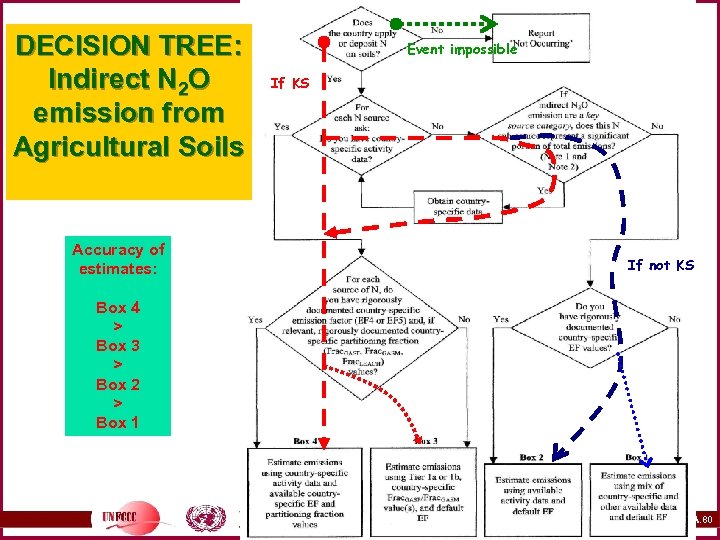 DECISION TREE: Indirect N 2 O emission from Agricultural Soils Accuracy of estimates: Event impossible If KS If not KS Box 4 > Box 3 > Box 2 > Box 1 3 A. 80
 AGRICULTURAL SOILS n Main features derived from the decision tree (Figure 4. 8 in the IPCC good practice guidance): n n If no N application, then “not occurring” If yes but not key source, emission estimates can derive from the use of default ADs and EFs (box 1) n n Recommended to apply CS AD and EFs (box 2) If yes and key source, emission estimates must derive from the use of CS AD, EFs and partitioning parameters (box 4) n Accepted to use default emission factors (box 3) 3 A. 81
 AGRICULTURAL SOILS n Activity data (collectable, field measurement): n n n Nitrogen content in manures and sewage synthetic fertilizers: amount of nitrogen applied as fertilizers animal manure: n total amount of animal manure produced n amount of animal manure for other uses: 1) treated in animal waste management systems, accounted under manure management; 2) manure from grazing animals, accounted for under animal production; 3) manure used as fuel; and 4) manure used as animal food for sewage sludge: amount applied to soils partition coefficients: FRACGASF, FRACGASM, and FRACLEACH 3 A. 82
 AGRICULTURAL SOILS n N 2 O emissions from animal production (pasture, range, and paddock) n Three potential sources of N 2 O emissions relating to animal production: n n n animals themselves (not accounted, assumed negligible) animal wastes during storage and treatment (accounted for under manure management) dung and urine deposited by free-range grazing animals (accounted for here) 3 A. 83
 AGRICULTURAL SOILS n Activity data can be taken from agricultural soils and manure management: n n n the data required to estimate N 2 O emissions from each relevant animal waste management system used by the Party fraction of animal populations managed as direct grazing, per animal species, and nitrogen excretion rates per animal species Methodology for N 2 O emissions from animal production is addressed in the IPCC good practice guidance under Manure Management It is also important that activity data come from a single livestock characterization 3 A. 84
 RICE PRODUCTION n n IPCC provides one method for estimating CH 4 emissions from rice production Method uses annual harvested areas and area-based seasonally integrated emission factors. In its simplest form, the IPCC method can be implemented using national activity data (i. e. national total area harvested) and a single emission factor Method can be modified to account for the variability in growing conditions by disaggregating national total harvested area into sub-units (e. g. harvested areas under different water management regimes), provided specific emission factors are available Decision tree defines the route Parties should follow to produce accurate estimates (Figure 4. 9 in the IPCC good practice guidance) 3 A. 85
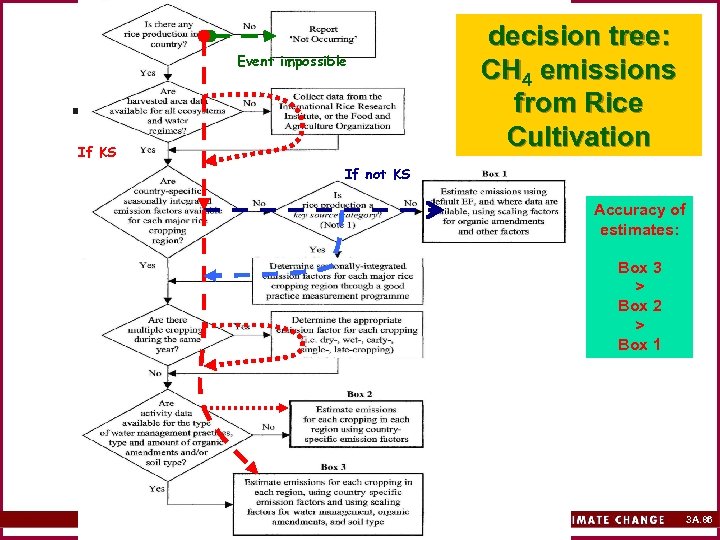 Event impossible If KS decision tree: CH 4 emissions from Rice Cultivation If not KS Accuracy of estimates: Box 3 > Box 2 > Box 1 3 A. 86
 RICE PRODUCTION n Main features derived from the decision tree: n n if no rice cultivation, then “not occurring” if yes but not key source, emissions can be estimated using default emission factors (box 1) n n recommended to use scaling factors for other factors including organic amendments if yes and key source, emissions should be estimated based on data from each cropping region, CS emission factors, and scaling factors for water management, organic amendments and soil type (box 3) n accepted not to use scaling factors (box 2) 3 A. 87
 RICE PRODUCTION n n Activity data on rice production and harvested area should be available in most Parties’ national statistics Alternate options: n n FAO website: http: //www. fao. org/ag/agpc/doc IRRI's World Rice Statistics (e. g. IRRI, 1995) As cultivation area statistics may be biased, Parties are encouraged to verify their harvested area statistics with remote sensing data Parties are encouraged to complete a survey of cropping practices to obtain data on the type and amount of organic amendments applied 3 A. 88
 IPCC Software Inventory Training Workshop, Agriculture Sector 3 A. 89
 IPCC software n n n Intended to help in preparing GHG inventories Based on Revised 1996 IPCC Guidelines Available at: n n n www. ipcc-nggip. iges. or. jp/public/gl/software. htm Contains the same worksheets as in IPCC Guidelines Workbook (Microsoft Excel environment) Main advantage: automation of calculations and preparation of reporting tables 3 A. 90
 IPCC software n n Structure: Program is organized in several workbooks, corresponding to ‘Overview’ and each of 6 sectoral modules Overview Workbook n n n Contains 18 sheets corresponding to basic inventory data, sectoral reports, Summary Report and Overview Table Sheets can either be filled in manually (if country does not use IPCC methodology) or automatically updated with information introduced into sectoral worksheets Overview tables (Table 8 A) must be filled in manually 3 A. 91
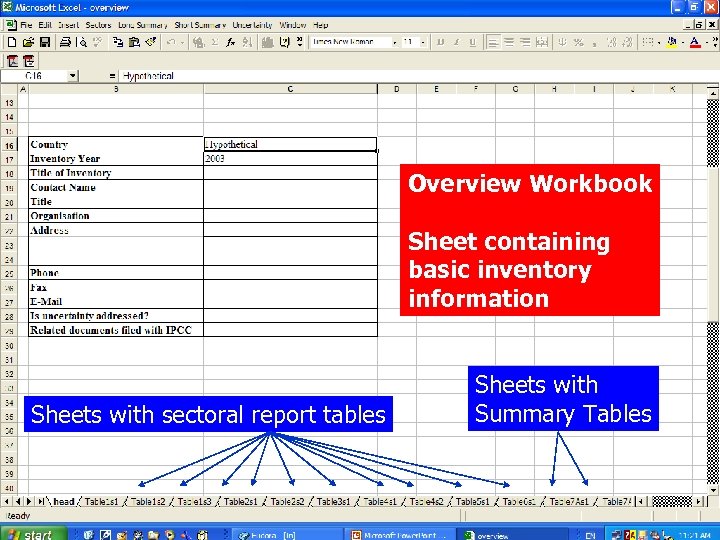 IPCC software Overview Workbook Sheet containing basic inventory information Sheets with sectoral report tables Sheets with Summary Tables
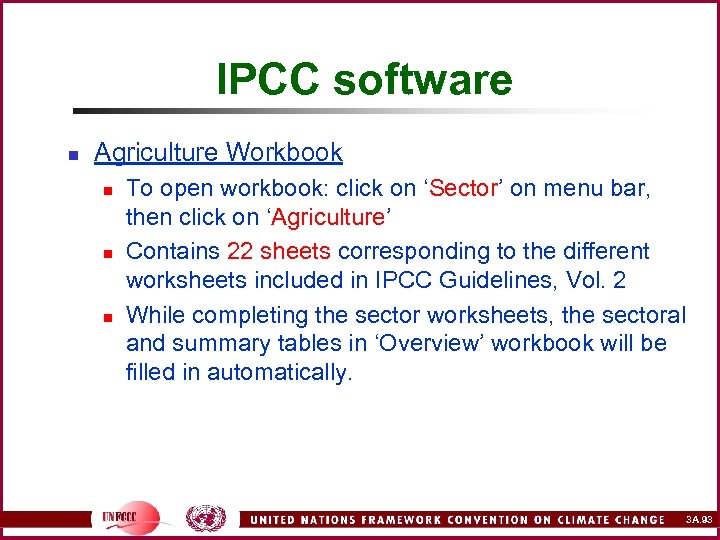 IPCC software n Agriculture Workbook n n n To open workbook: click on ‘Sector’ on menu bar, then click on ‘Agriculture’ Contains 22 sheets corresponding to the different worksheets included in IPCC Guidelines, Vol. 2 While completing the sector worksheets, the sectoral and summary tables in ‘Overview’ workbook will be filled in automatically. 3 A. 93
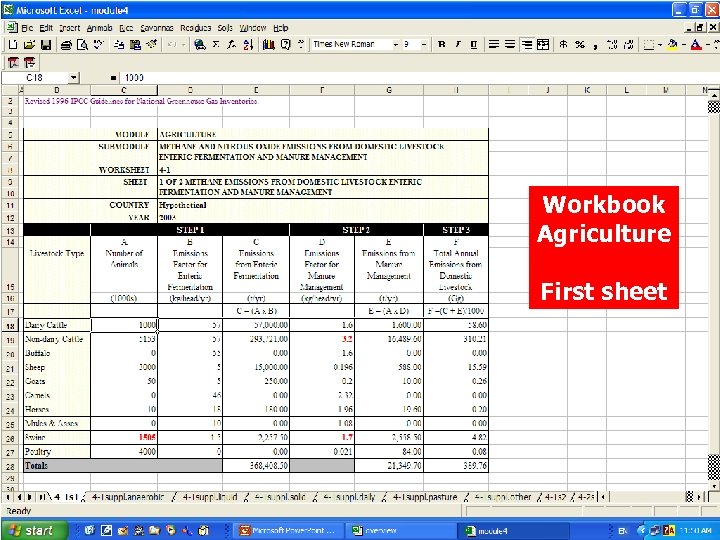 IPCC software Workbook Agriculture First sheet
 Emission Factor Database (EFDB) Inventory Training Workshop, Agriculture Sector 3 A. 95
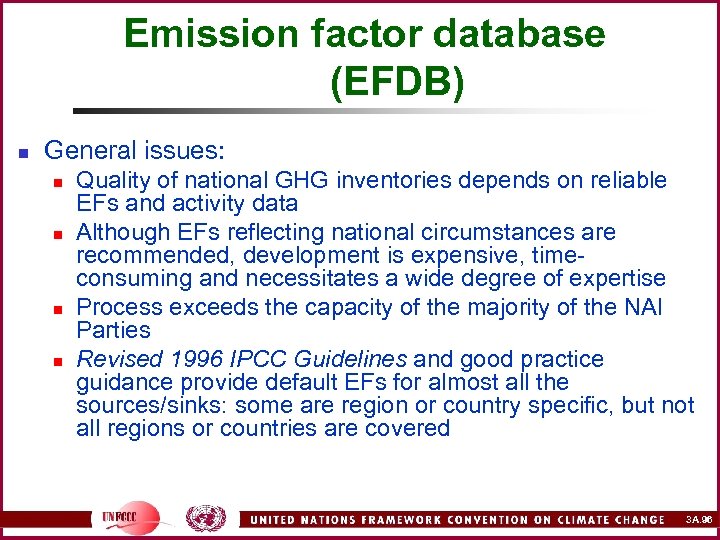 Emission factor database (EFDB) n General issues: n n Quality of national GHG inventories depends on reliable EFs and activity data Although EFs reflecting national circumstances are recommended, development is expensive, timeconsuming and necessitates a wide degree of expertise Process exceeds the capacity of the majority of the NAI Parties Revised 1996 IPCC Guidelines and good practice guidance provide default EFs for almost all the sources/sinks: some are region or country specific, but not all regions or countries are covered 3 A. 96
 Emission factor database (EFDB) n General issues n Sharing of research information would enable countries to use or develop EFs more applicable to specific circumstances than the IPCC defaults without bearing the associated research costs n Many countries indicated that an easily accessible public database on GHG EFs with supporting scientific information would improve the quality of the inventories in a cost-effective way and support the future review/update of the IPCC Guidelines n This project was initiated in 2000 and a prototype database was constructed in January 2002 n Prototype subjected to pilot testing by a number of inventory experts from different countries and improvement 3 A. 97
 Emission factor database (EFDB) n Objectives n n n to be a recognized library of GHG emission factors and other parameters to contain background documentation or technical references of emission factors and other parameters to serve as a communication platform for distribution and commenting on new data from research and measurement 3 A. 98
 Emission factor database (EFDB) n n Researchers and the members of the scientific community may incorporate their own findings, such as emission factors and other parameters For that, contact the Task Force Bureau Technical Support Unit (TSU) at ipcc-efdb@iges. or. jp New data will be evaluated for acceptance by the EFDB Editorial Board In the end, the responsibility for using this information appropriately will always remain with the users themselves 3 A. 99
 Emission factor database (EFDB) n Criteria for Inclusion of new data n n n robustness: value unlikely to change, within the accepted uncertainty, if original measurement programme or modelling activity is repeated applicability: an EF can only be applicable if the source and its mix of technology, operating and environmental conditions and abatement and control technologies are clear and allow the user to see how it can be applied documentation: access information to the original technical reference is provided to evaluate the robustness and applicability as described above 3 A. 100
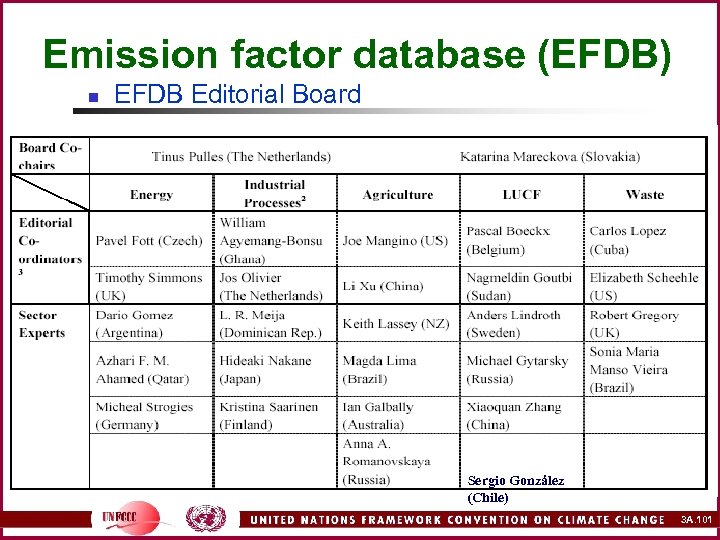 Emission factor database (EFDB) n EFDB Editorial Board Sergio González (Chile) 3 A. 101
 Emission factor database (EFDB) n Data contained in the EFDB n n At present, EFDB contains only the IPCC default data and data from CORINAIR 94 For Agriculture, data come mainly from the IPCC: n Total of 1, 387 inputs n 1, 303 inputs from IPCC n 84 inputs from CORINAIR 94 n 87. 2% devoted to CH 4 and N 2 O n New data will be provided by the scientific and inventory community, and evaluated for acceptance by the EFDB Editorial Board 3 A. 102
 Emission factor database (EFDB) n Data in the EFDB 3 A. 103
 Emission factor database (EFDB) n Ways to access n Web application http: //www. ipcc-nggip. iges. or. jp/EFDB/main. php n for all users to carry out on-line searches n for data providers to submit new EFs or other parameters n core of this system and new data will be made available here first n CD-ROM n for all users (in particular those who have difficulty with Internet connection) to carry out off-line searches 3 A. 104
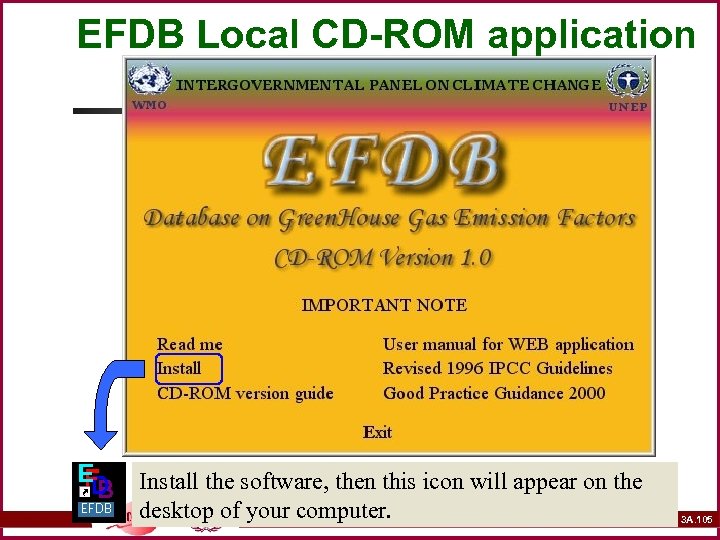 EFDB Local CD-ROM application Install the software, then this icon will appear on the desktop of your computer. 3 A. 105
 EFDB local CD-ROM application n n EFDB local CD-ROM application works with Microsoft Access MDB file, which contains the copy of the on-line web database The latest MDB file will be made available n n Through the Internet: At the "Downloads" section of the web application In the form of CD-ROM: Will be distributed annually or biannually, possibly on the occasion of sessions of SBSTA or COP 3 A. 106
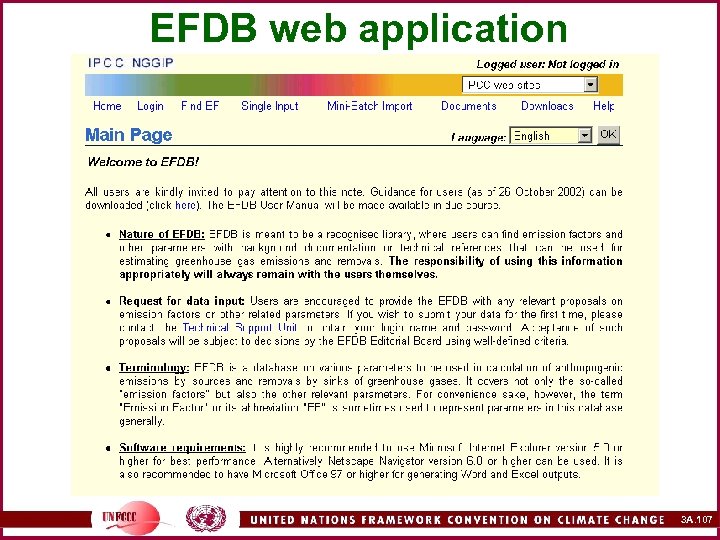 EFDB web application 3 A. 107
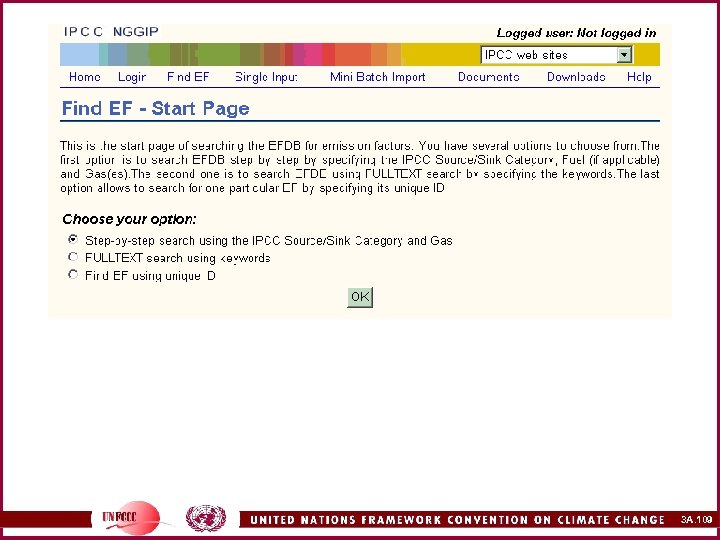
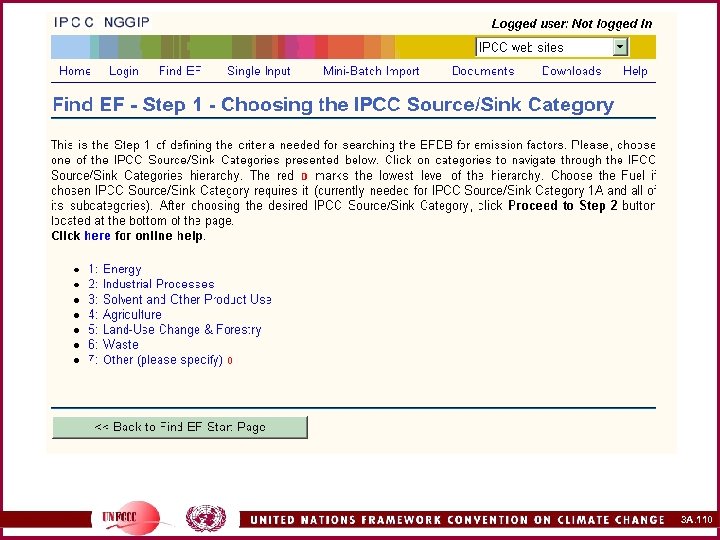
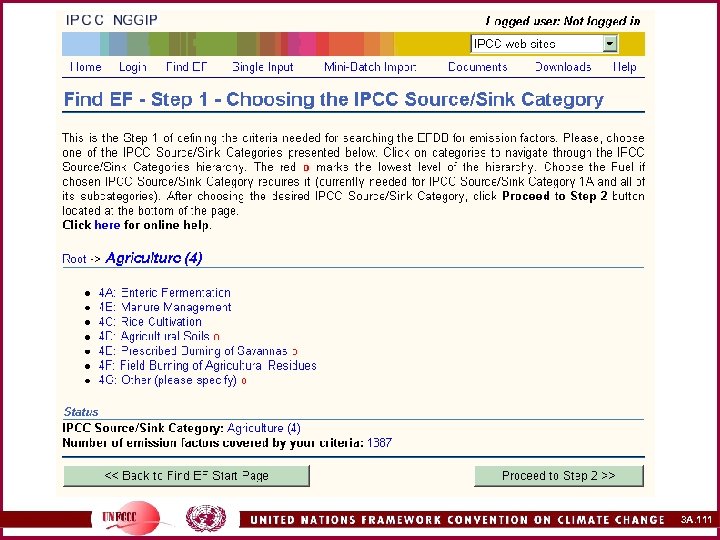
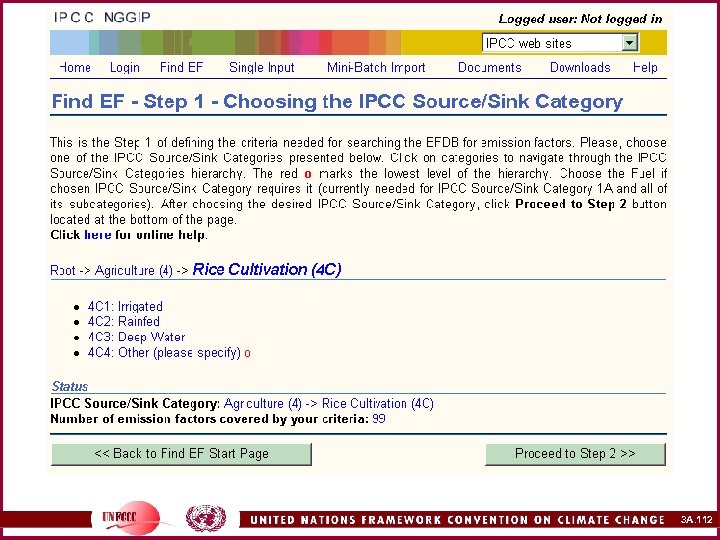
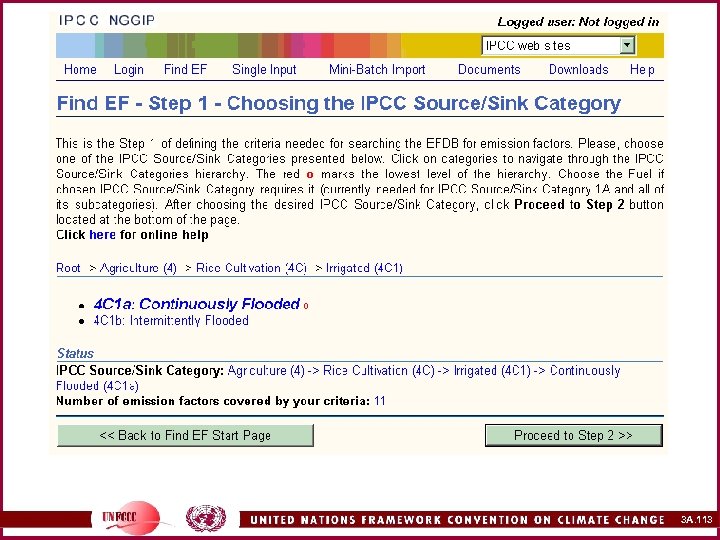
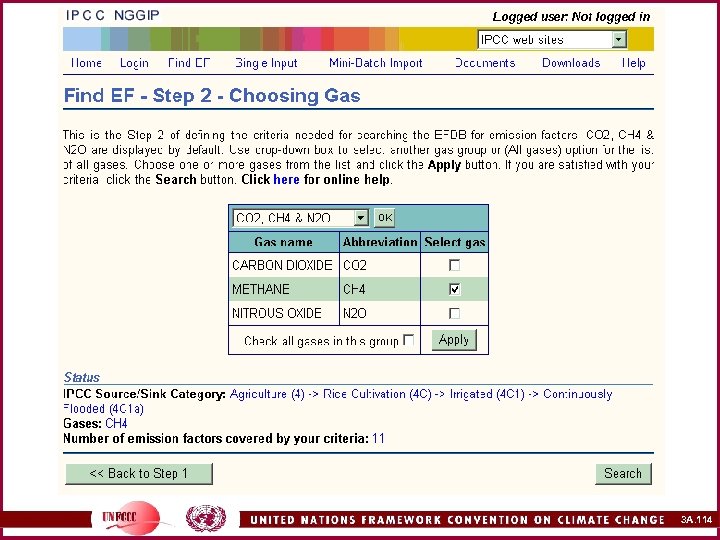
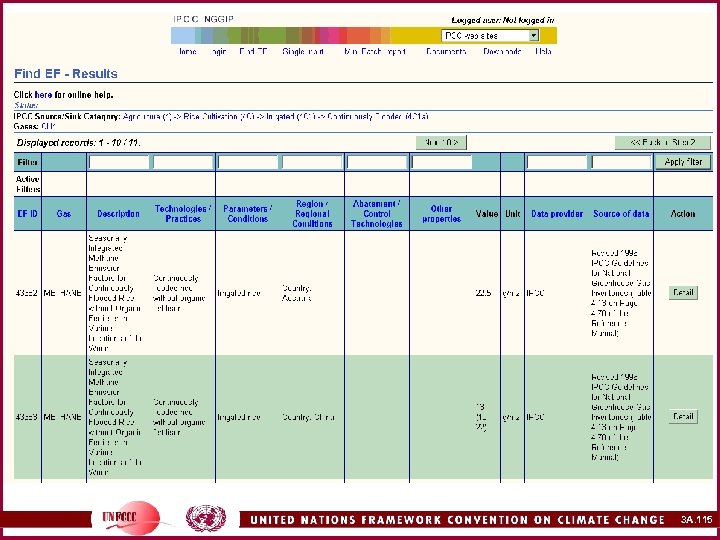
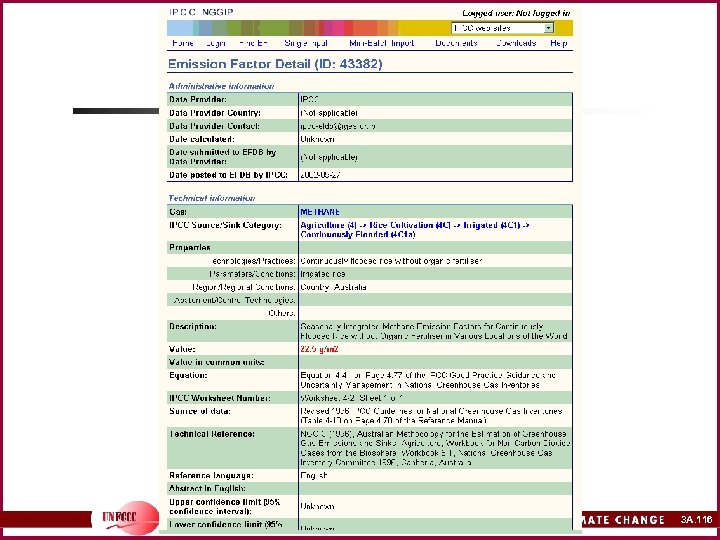
 EFDB web application Search Function: Find EF 3 A. 108
 3 A. 109
 3 A. 110
 3 A. 111
 3 A. 112
 3 A. 113
 3 A. 114
 3 A. 115
 3 A. 116