 Скачать презентацию CEREBRAL VASCULAR ACCIDENTS Pediatric Critical Care Medicine Emory
43b655a9062dc438138a0974f5c3f5c3.ppt
- Количество слайдов: 47



CEREBRAL VASCULAR ACCIDENTS Pediatric Critical Care Medicine Emory University Children’s Healthcare of Atlanta
Objectives • • 2 Epidemiology Risk factors Catergories Treatments
Epidemiology • 2. 52/100, 000/yr – children thru 14 yrs – 1. 89/100, 000/yr – hemorrhagic – 0. 65/100, 000/yr - ischemic • As common as brain tumors • Neonatal strokes 28/100, 000 live births 3
Epidemiology • Increased awareness & reporting • Improved imagings • Better survival of underlying diseases 4
Epidemiology • Impacts of strokes – Mortality 6 -40% (hemorrhagic 2 x ischemic) – Morbidity » Neurological disability – 60% » Seizures – 15% » Headaches 5
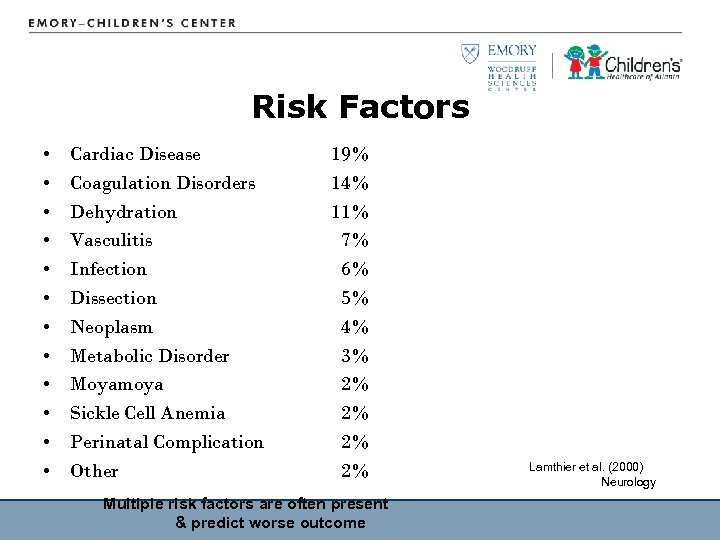
Risk Factors • • • Cardiac Disease Coagulation Disorders Dehydration Vasculitis Infection Dissection Neoplasm Metabolic Disorder Moyamoya Sickle Cell Anemia Perinatal Complication Other 19% 14% 11% 7% 6% 5% 4% 3% 2% 2% Multiple risk factors are often present & predict worse outcome Lamthier et al. (2000) Neurology
Risk factors • Congenital Heart Disease – Asymptomatic aortic valvular disease » Associated with dissection » Undiagnosed cardiac disease (PFO)- rare – Inherited connective tissue diseases » Marfan » Erlos-Danlos 7
Risk factors • Coagulation disorders – Factor V Leiden » common in Caucasian » most common cause of activated Protein C resistance – Prothrombin 20210 mutation » Neonatal & childhood CSVT • Infection, Inflammation, Immune Deficiency – 1/3 cases associated with infection (esp vacicella within the previous year) – High WBC (in association with SCD) increase recurrence – Inflammation: harmful effects on the endothelium 8
Risk factors • Sickle Cell Disease – 25 % with stroke by the age 45 – Ischemic stroke predominantly in childhood » Hemorrhagic with steroid and Hypertension » Sinovenous thrombosis, posterior leukoencephalopathy, watershed ischemia » Silent infarcts – Hemorrhagic (ICH or SAH) in adult secondary to aneurysm – High WBC associated with infection can precipitate CVD – indicate chronic infection 9
Risk factors • Anemias – Hemolytic anemias: thalassemia, hereditary spherocytosis & paroxysmal nocturnal hemoglobinuria • Metabolic disorders – Homocysteinemia: predispose to vessel abn. – Lipid abnormality: » Elevation in Cholesterol (9%), TG (31%), Lipoprotein (22%) » Apolipoprotein abnormality 10
Risk factors • Vascular abnormality – Vascular adhesion » Adhesion of WBC, RBC, platelets causing endothelial damage • Hypertension – – 11 Highest risk in young adult & elderly Largely ignored in pediatric population ½ strokes with SBP>90 th percentile Abnormality of angiotensinogen gene: 4 X increase in risk of strokes in SCD
Pediatric Arterial Ischemic Strokes (AIS) • • • 12 Primary Hemiparesis: new focal deficits Ataxic gait Chorea Vertigo Speech and visual disturbance Headaches with neurological deficits
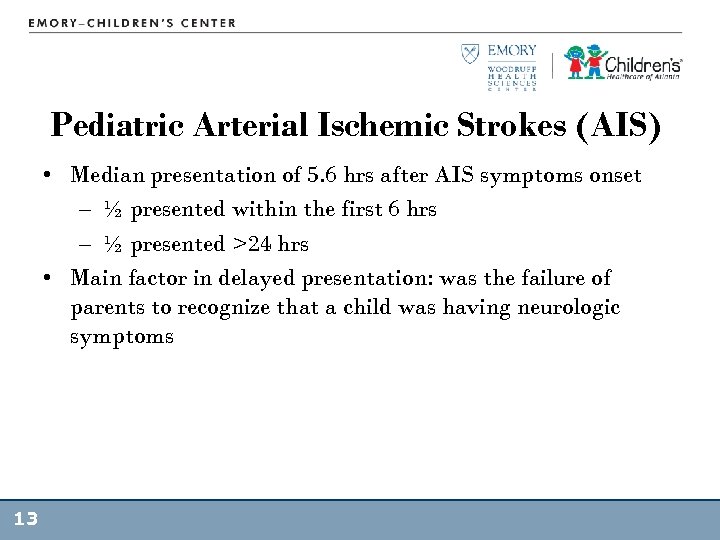
Pediatric Arterial Ischemic Strokes (AIS) • Median presentation of 5. 6 hrs after AIS symptoms onset – ½ presented within the first 6 hrs – ½ presented >24 hrs • Main factor in delayed presentation: was the failure of parents to recognize that a child was having neurologic symptoms 13
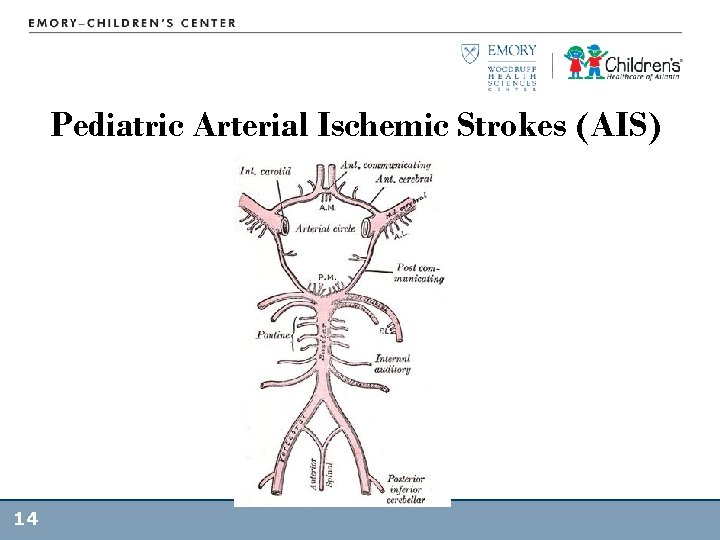
Pediatric Arterial Ischemic Strokes (AIS) 14
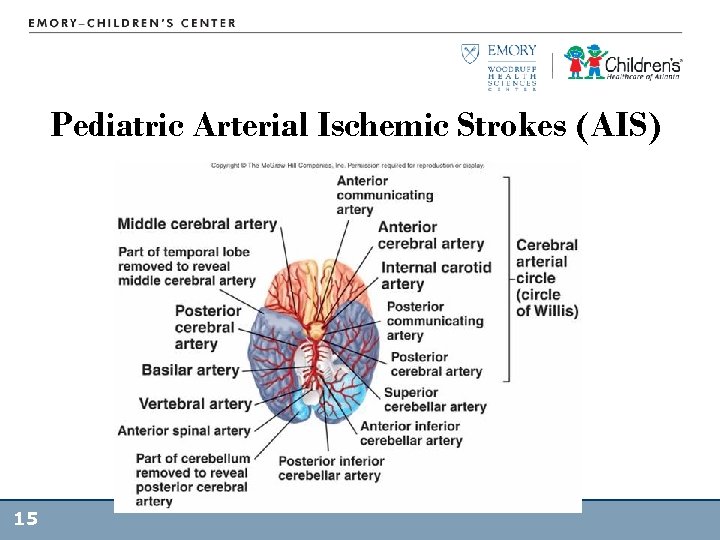
Pediatric Arterial Ischemic Strokes (AIS) 15
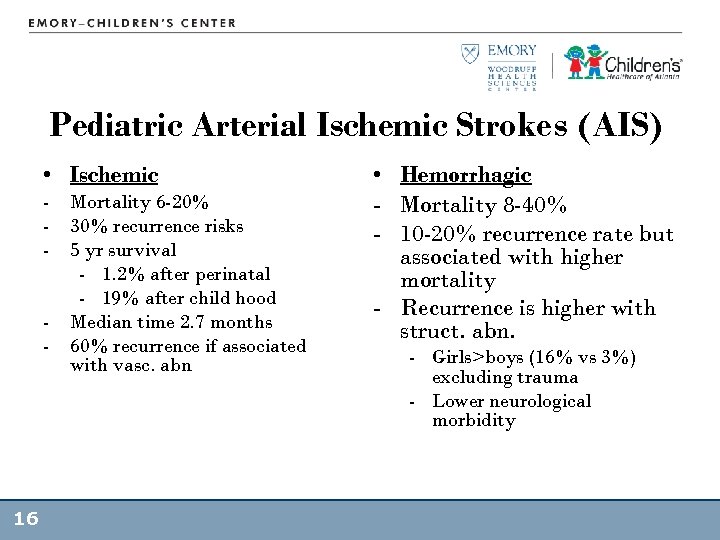
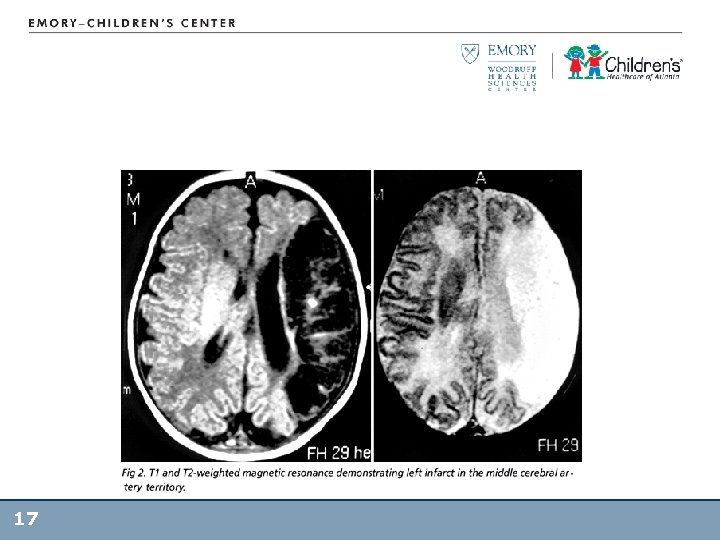
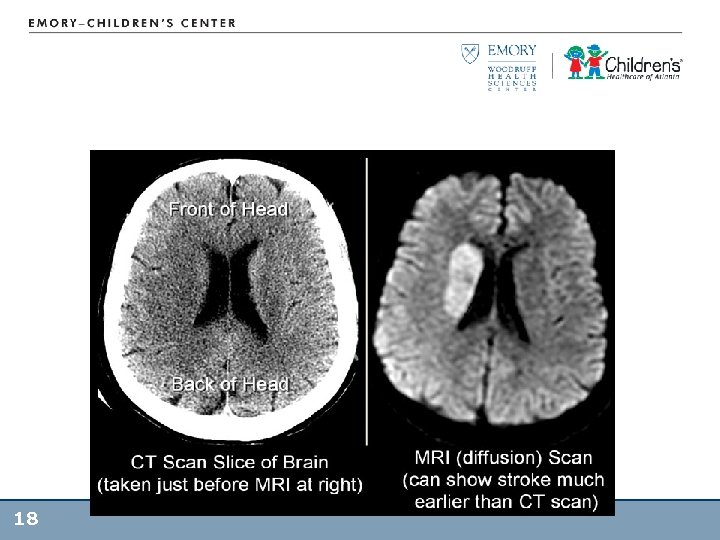
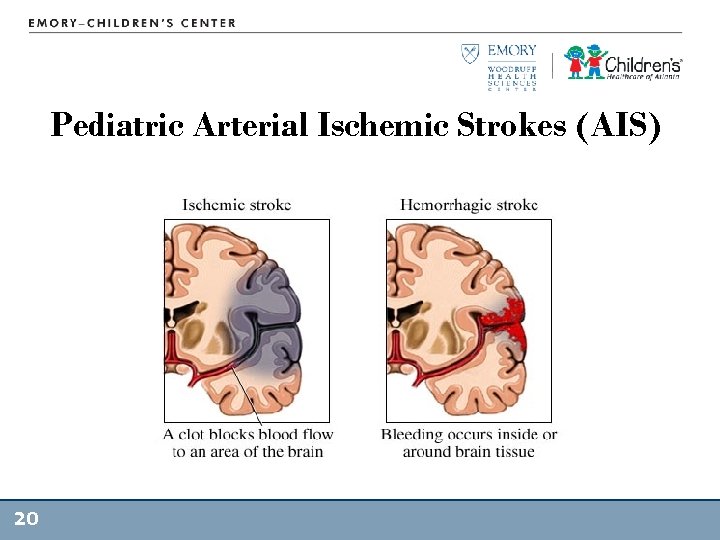
Pediatric Arterial Ischemic Strokes (AIS) • Ischemic - Mortality 6 -20% - 30% recurrence risks - 5 yr survival - 1. 2% after perinatal - 19% after child hood - Median time 2. 7 months - 60% recurrence if associated with vasc. abn 16 • Hemorrhagic - Mortality 8 -40% - 10 -20% recurrence rate but associated with higher mortality - Recurrence is higher with struct. abn. - Girls>boys (16% vs 3%) excluding trauma - Lower neurological morbidity
17
18
19
Pediatric Arterial Ischemic Strokes (AIS) 20
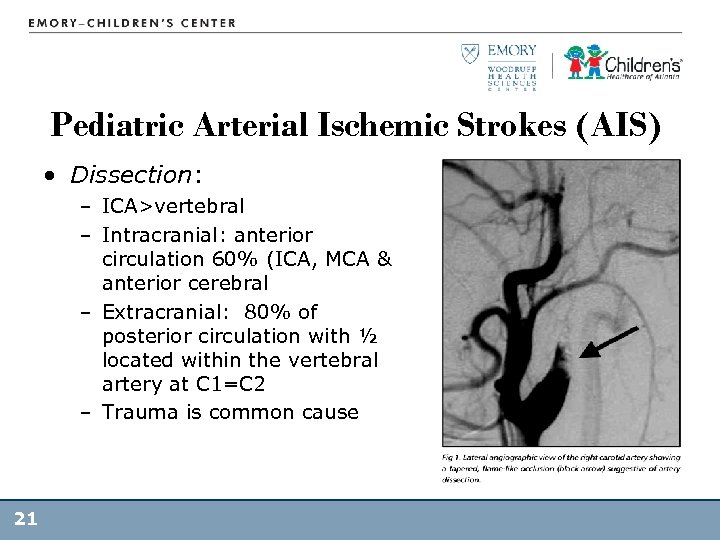
Pediatric Arterial Ischemic Strokes (AIS) • Dissection: – ICA>vertebral – Intracranial: anterior circulation 60% (ICA, MCA & anterior cerebral – Extracranial: 80% of posterior circulation with ½ located within the vertebral artery at C 1=C 2 – Trauma is common cause 21
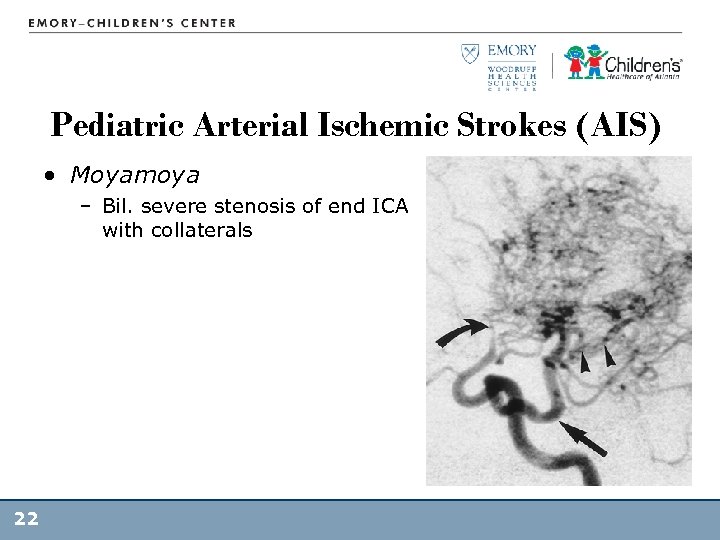
Pediatric Arterial Ischemic Strokes (AIS) • Moyamoya – Bil. severe stenosis of end ICA with collaterals 22
Pediatric Arterial Ischemic Strokes (AIS) • Transient Cerebral arteriopathy – Inflammatory response to infection (varicell, Borrelia or tonsilitis – Multi-focal lesions – Most cases stabilize but some progress to recurrent strokes 23
Pediatric Arterial Ischemic Strokes (AIS) • Sickle Cell Disease – – – Narrowing of distal ICA & proximal MCA, anterior cerebral arteries Gradual progression to occlusion Endothelial proliferation Silent infarcts occur in MCA territory or in border zones High recurrence rate 25% with CVD by age 45 » Ischemic in children » Hemorrhagic in adults 24
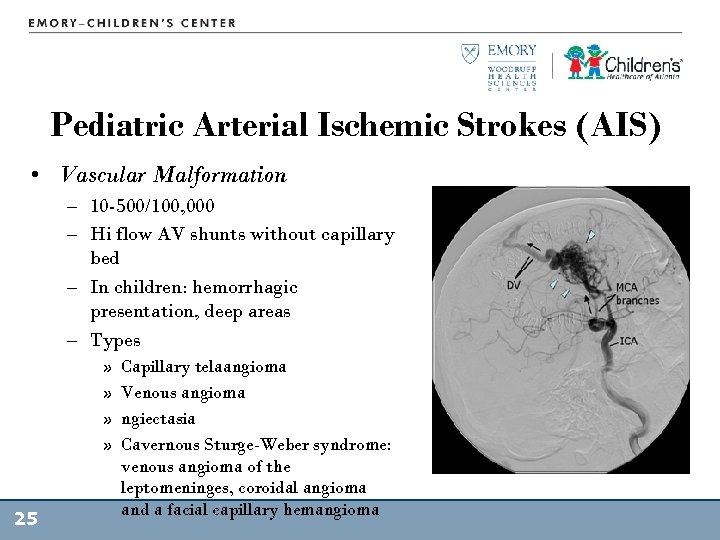
Pediatric Arterial Ischemic Strokes (AIS) • Vascular Malformation – 10 -500/100, 000 – Hi flow AV shunts without capillary bed – In children: hemorrhagic presentation, deep areas – Types » » 25 Capillary telaangioma Venous angioma ngiectasia Cavernous Sturge-Weber syndrome: venous angioma of the leptomeninges, coroidal angioma and a facial capillary hemangioma
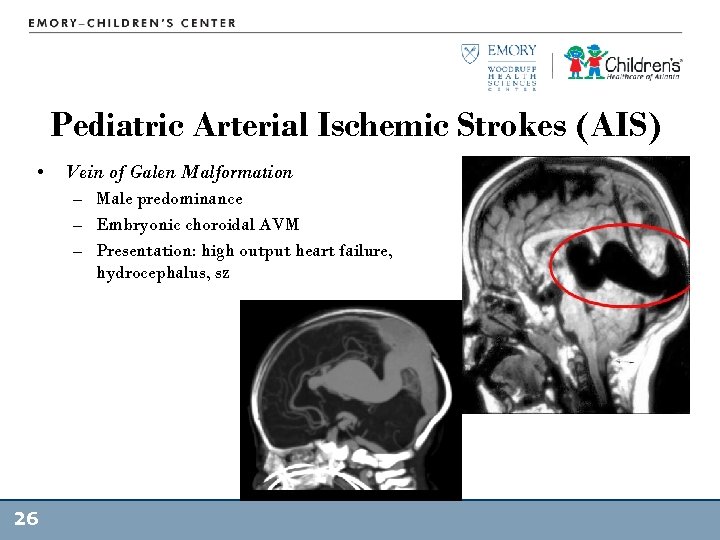
Pediatric Arterial Ischemic Strokes (AIS) • Vein of Galen Malformation – Male predominance – Embryonic choroidal AVM – Presentation: high output heart failure, hydrocephalus, sz 26
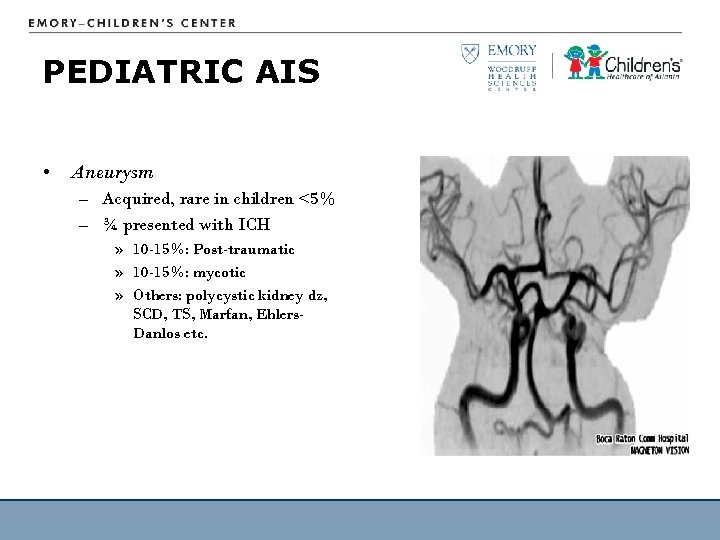
PEDIATRIC AIS • Aneurysm – Acquired, rare in children <5% – ¾ presented with ICH » 10 -15%: Post-traumatic » 10 -15%: mycotic » Others: polycystic kidney dz, SCD, TS, Marfan, Ehlers. Danlos etc.
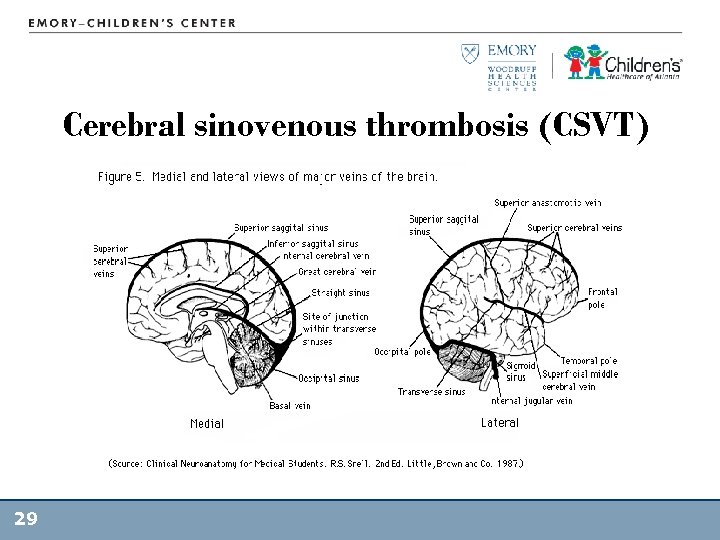
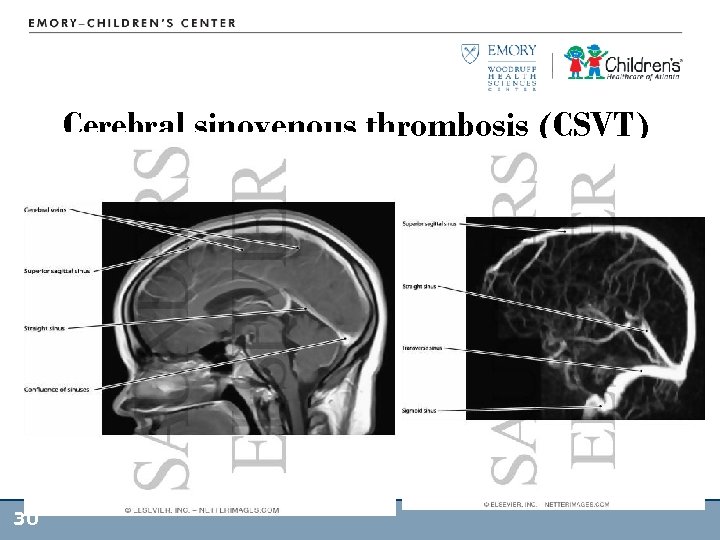
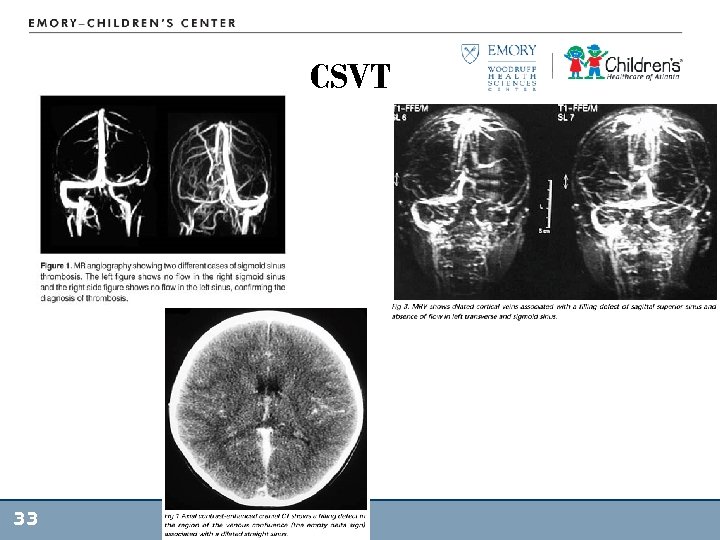
Cerebral sinovenous thrombosis (CSVT) • Superficial & Deep – Superficial: cortical veins superior sagittal sinus right lateral sinus – Deep: inferior sagittal sinus & paired internal cerebral veins, join to form v. of Galen & straight sinus • Flow is highly responsive to changes in MAP which can cause reversal of flow • Relative low thrombomodulin prothrombotic 28
Cerebral sinovenous thrombosis (CSVT) 29
Cerebral sinovenous thrombosis (CSVT) 30
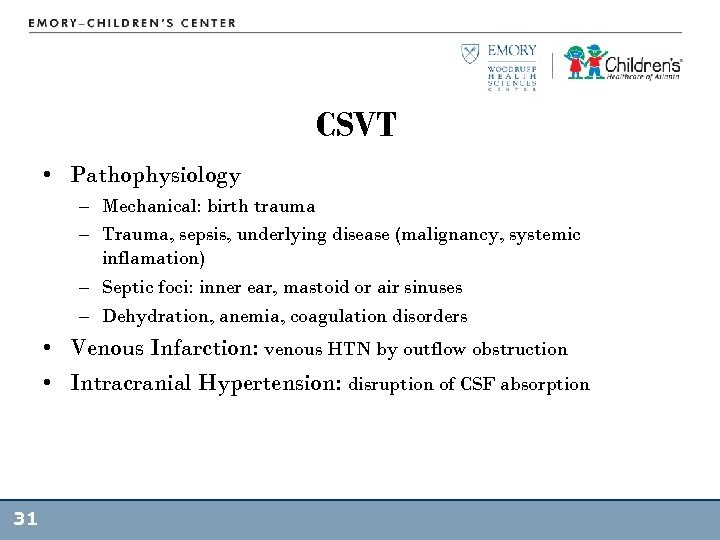
CSVT • Pathophysiology – Mechanical: birth trauma – Trauma, sepsis, underlying disease (malignancy, systemic inflamation) – Septic foci: inner ear, mastoid or air sinuses – Dehydration, anemia, coagulation disorders • Venous Infarction: venous HTN by outflow obstruction • Intracranial Hypertension: disruption of CSF absorption 31
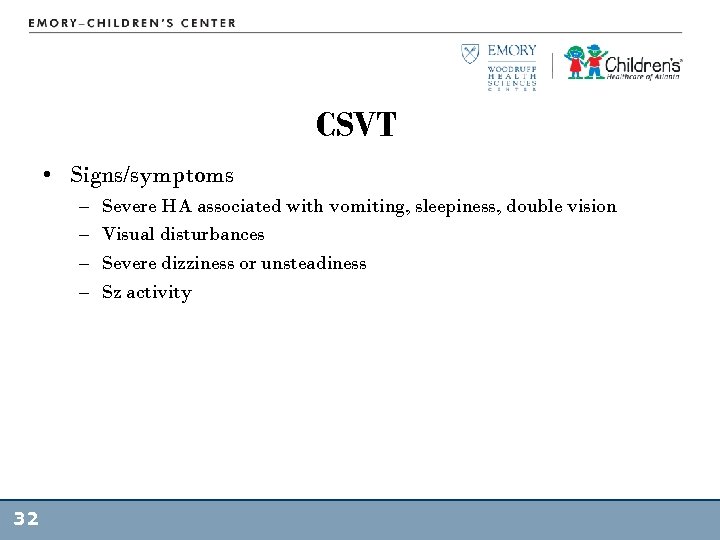
CSVT • Signs/symptoms – – 32 Severe HA associated with vomiting, sleepiness, double vision Visual disturbances Severe dizziness or unsteadiness Sz activity
CSVT 33
Other Strokes Mimics • Posterior Circulation Arterial Strokes – Posterior infarction of cerebellum, brain stem – Boys>girls – Trauma, subluxation of cervical spines causing arterial dissection • Reversible Posterior Leukoencephalopathy – Sx: sz, AMS, disorder of consciousness, visual abn. , HA – Predominant post. White matter abn. – Clinical condition: HTN encephalopathy, eclampsia, AC in SCD, immunosuppression – Acute hypotension (poor cardiac fxn/anemia) – Rapid resolution: vasogenic cerebral edema prob secondary to autoregulation & endothelial injury • Acute Disseminated Encephalomyelitis 34
Other Strokes Mimics • Metabolic Strokes: Diabetes, inborn errors of metabolism – Vascular injury » Homocysteine: direct endothelial injury » Fabry: lysosomal storage with accumulation and deposition of glycosphingolipid in blood vessels endothelial cells » Menkes: deficiency in copper; obliteration of intracranial vasculature – Non-vascular injury: diabetes, organic acidemias, Urea cycle defects etc. » MILAS (mitochondrial dz with LA and stroke like sx): lacking of energy supply with generation of oxygen free radicals » Others: accumulation of toxic substances 35
Diagnosis – w/o SCD • First 24 hours – – Angiogram MRA Blood cultures if febrile Toxicology screen • 24 -72 hours – Echo with bubble study – Limited initial pro-thrombotic evaluation – Lupus anticoagulants, antiphospholipid abs, lipid profile, lipoprotein A, Homocysteine, gene mutation – Systemic inflammatory disease evaluation: ANA, ESR, CRP, UA Rollins N, Dowling M, Booth T, Purdy P, AJNR, 2000 substances 36
Diagnosis – w/o SCD • After acute setting – Further prothrombotic evaluation » » Protein C & S Antithrombin Factor VIII Confirmation of early abnormal tests Rollins N, Dowling M, Booth T, Purdy P, AJNR, 2000 substances 37
Ischemic Stroke Treatments • General management – Normo-thermia – Normal oxygen saturation – Cerebral protection with the presence of increase ICP • Specific management – Early neurosurgery consult as indicated 38
Stroke Treatments • Anticoagulation – Commonly use in: » AIS: Heparin or LMWH for 5 -7 days until cardioembolic stroke and dissection are excluded » CSVT: 3 -6 months of therapy reduced risk of recurrent systemic or cerebral thrombosis » High risk of embolism with underlying disease » Dissection: 3 -6 months with extracranial dissection. » Known prothrombotic abnormalities – With cardiac embolism: controversial – Balance of risk with precipitate hemorrhage vs recurrence embolic event (lower risk in children for progression to hemorrhage) 39
Stroke Treatments • Anticoagulation: • 115 w/ first AIS treated by standardized guidelines – Warfarin: 44 pts 2 (4. 5%) major bleed (non-fatal) » Keep INR 2 -3 – LMWH: 51 pts for 7 -14 days no major bleed – ASA: 103 pts (3 -5 mg/kg/day) no major bleed, no Reye’s syndrome 40
Stroke Treatments • Aspirin therapy – – Efficacy and dose are unknown Usual dose 5 mg/lg/day Long term prophylaxis dose may be lower No report case of Rye’s syndrome » One case in adult when the pt increased ASA dosage with flu like sx 41
Stroke Treatments • Thrombolytic agents: urokinase & streptokinase – No evidence to support efficacy- 203 (pooled literature) for noncerebral thrombotic complication » 80% thrombus cleared » 54% minor bleeding (no transfusion needed) » 1 pt with intra-cranial hemorrhage – Toronto: 29 pts treated with t. PA (0. 5 mg/kg) » 79% - clot was dissolved » ¼ of the pts had bleeding required transfusion – No good data regarding outcomes, therefore treatment is controversial 42
Stroke Treatments - SCD • ½ will have another stroke • Urgent exchange transfusion (Hb. S <30% or Hg. B 10=12. 5) • Top off transfusion if exchange transfusion is delayed or severe anemia • Chronic exchange transfusion – – Keep Hg. S <50% Relapse if stop even with period of symptoms free Risk: iron overload treated with chelation Use of hydroxyurea to prevent stroke » Induction of Hb. F » Generation of Nitric Oxide 43
Intracranial Hemorrhage • Risk factors – – – – 44 AV malformation 25% Hematologic anomalies 10 -13% Brain tumors Cavernous Hemangiomas Vasculopathy Vasculitis Infection Illicit drug uses
Intracranial Hemorrhage • Non traumatic SAH mostly caused by aneurysms • 10% are secondary to CSVT – Controversial in anti-coag of CSVT with hemorrhage • 25% mortality with 42% significant disability • No standard management and treatm 45
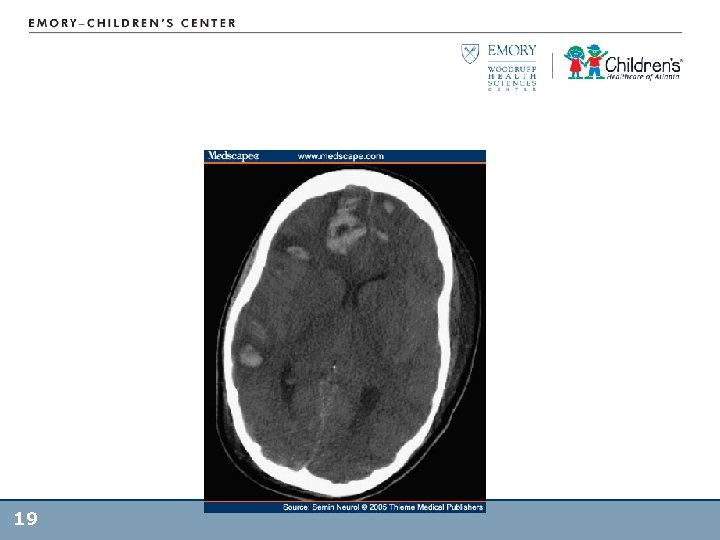
Treatments: ICH • Treat ICP, cerebral protection • Reverse coagulopathy – Recombinant activated Factor VII within the first 4 hrs: limited growth of hematoma, reduced mortality, improved functional outcomes • Treat space occupying lesion • Treat associated vasospasm (SAH) with Triple H therapy • Supportive treatment 46
Treatments: SAH • Vasospasm associated with 20 -30% of aneurysmal SAH • Related to spasmogenic substances generated during lysis of subarachnoid blood clots • Present no earlier than day 3, peak day 7 -8 • Triple-H therapy – Moderate hemodilution – Hypertension – Hypervolumia • Nimodipine: selective cerebral vessel Ca channel blocker, start within 4 days 47 – Decrease morbidity and mortality – Potential for systemic effect causing severe hypotension
Скачать презентацию CEREBRAL VASCULAR ACCIDENTS Pediatric Critical Care Medicine Emory
43b655a9062dc438138a0974f5c3f5c3.ppt