


 Скачать презентацию CEOP AEGIS Hydrology and Climatology of South and
f342ce60f6c68633050e5eaa2b34bab6.ppt
- Количество слайдов: 21
 CEOP AEGIS Hydrology and Climatology of South and East Asia Massimo Menenti – TU Delft NL Li Jia – WUR Alterra NL Jerome Colin – Univ. Strasbourg F 1
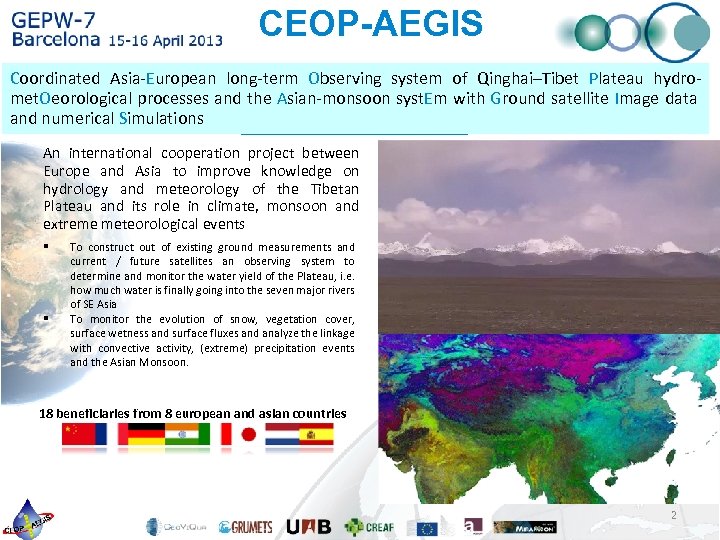 CEOP-AEGIS Coordinated Asia-European long-term Observing system of Qinghai–Tibet Plateau hydromet. Oeorological processes and the Asian-monsoon syst. Em with Ground satellite Image data and numerical Simulations An international cooperation project between Europe and Asia to improve knowledge on hydrology and meteorology of the Tibetan Plateau and its role in climate, monsoon and extreme meteorological events § § To construct out of existing ground measurements and current / future satellites an observing system to determine and monitor the water yield of the Plateau, i. e. how much water is finally going into the seven major rivers of SE Asia To monitor the evolution of snow, vegetation cover, surface wetness and surface fluxes and analyze the linkage with convective activity, (extreme) precipitation events and the Asian Monsoon. 18 beneficiaries from 8 european and asian countries 2
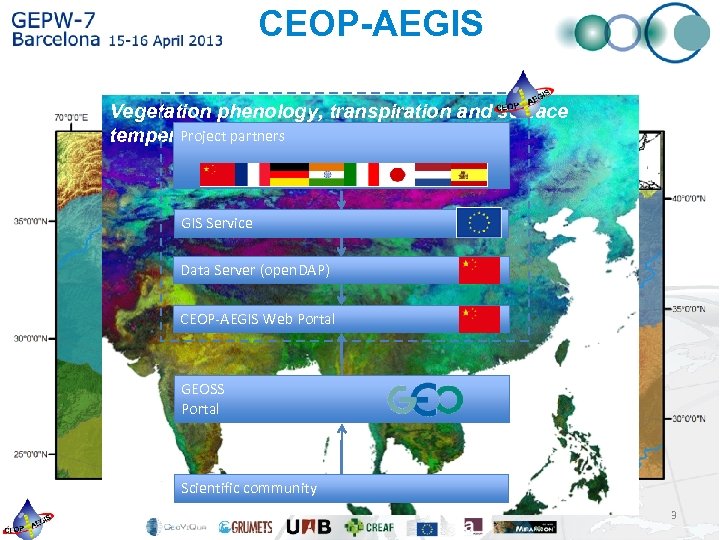 CEOP-AEGIS Vegetation phenology, transpiration and surface Project temperature partners GIS Service Data Server (open. DAP) CEOP-AEGIS Web Portal GEOSS Portal Scientific community 3
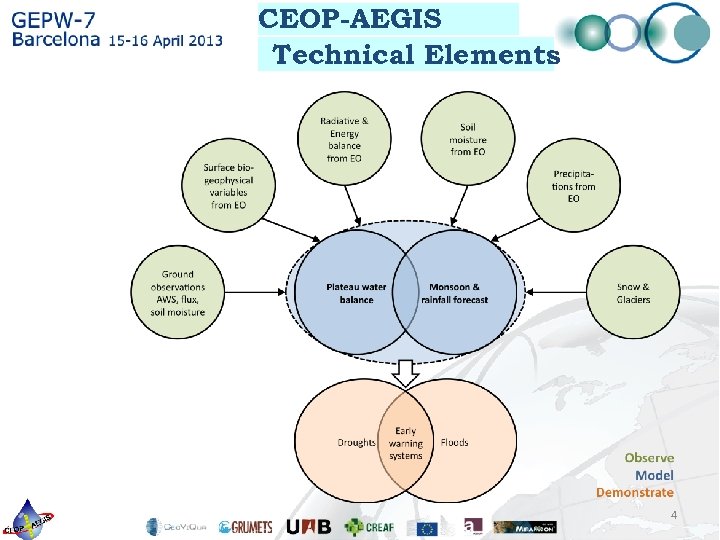 CEOP-AEGIS Technical Elements 4
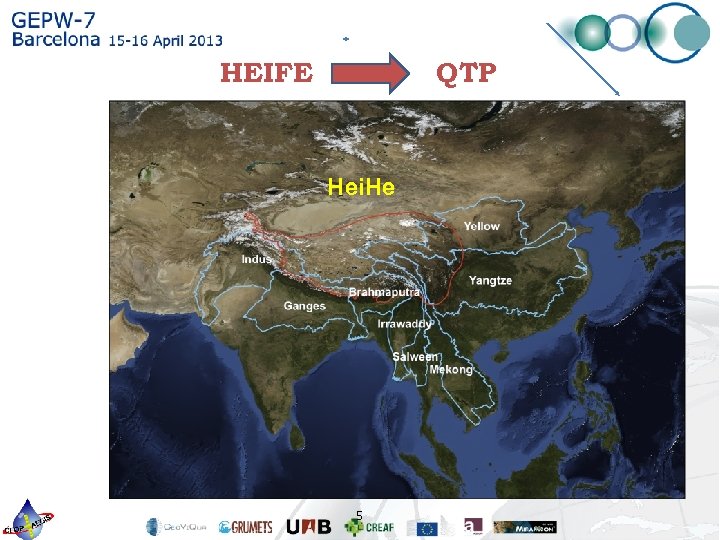 HEIFE QTP Hei. He 5
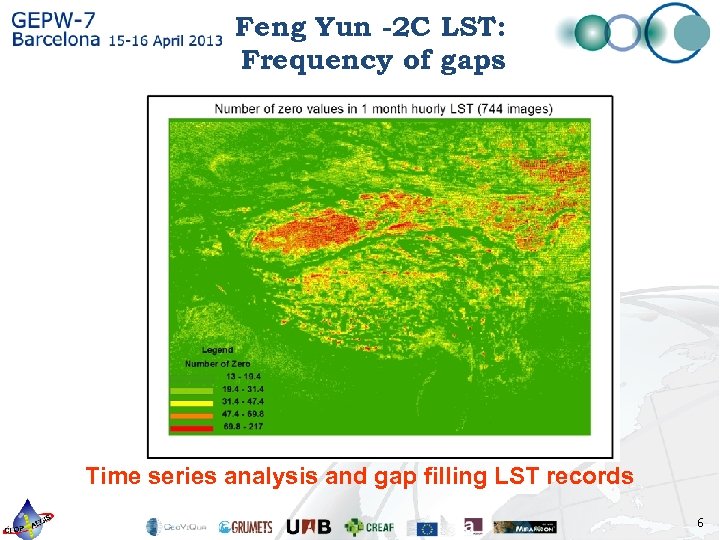 Feng Yun -2 C LST: Frequency of gaps Time series analysis and gap filling LST records 6
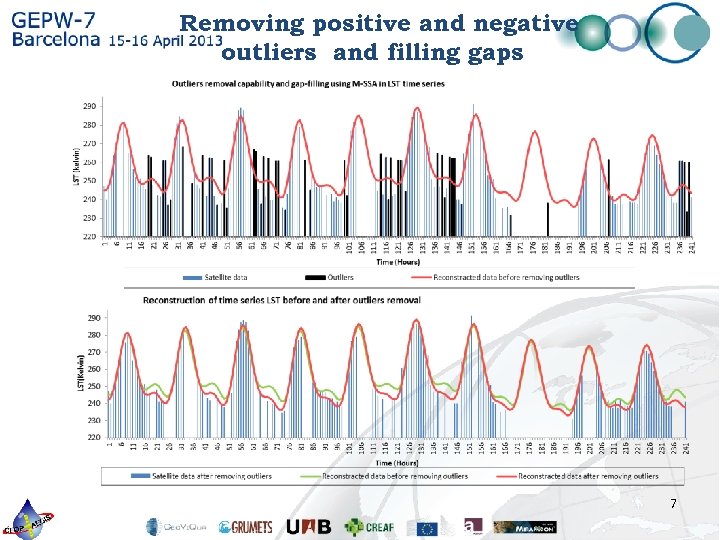 Removing positive and negative outliers and filling gaps 7
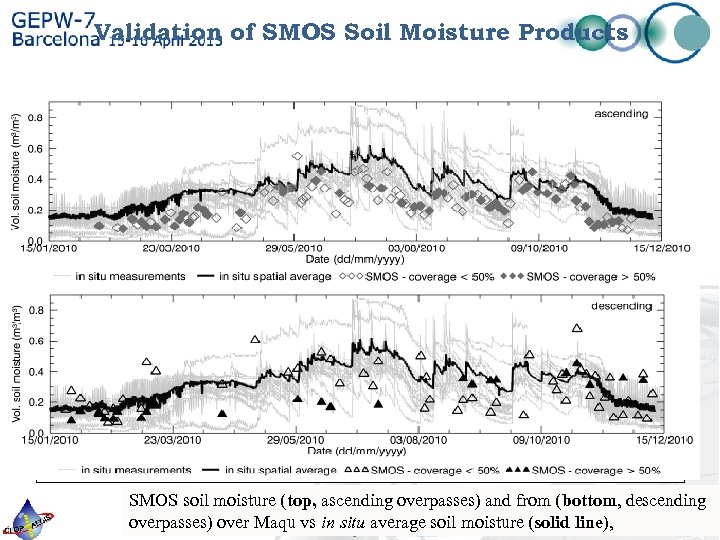 Validation of SMOS Soil Moisture Products SMOS soil moisture (top, ascending overpasses) and from (bottom, descending overpasses) over Maqu vs in situ average soil moisture (solid line), 8
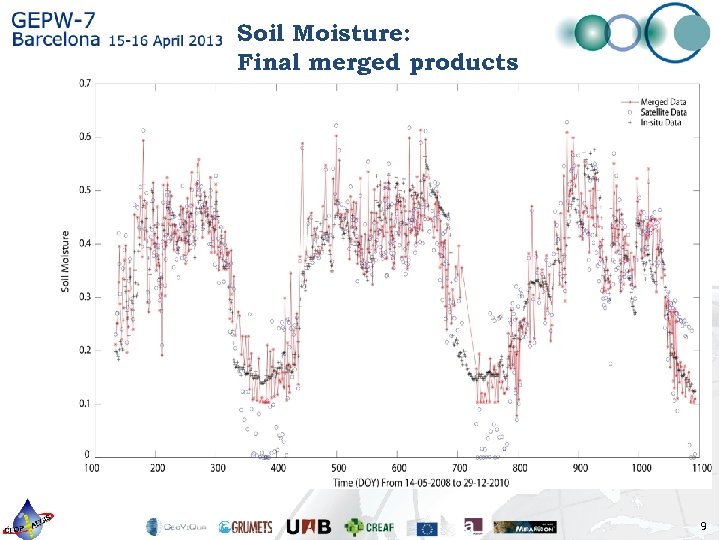 Soil Moisture: Final merged products 9
 Precipitation TP-averaged daily mean
 Total precipitation – different data products 2004 -2009, May-Oct.
 ICESat elevations over Mekong river 9 th AARSE El Jadida November 1 st 2012
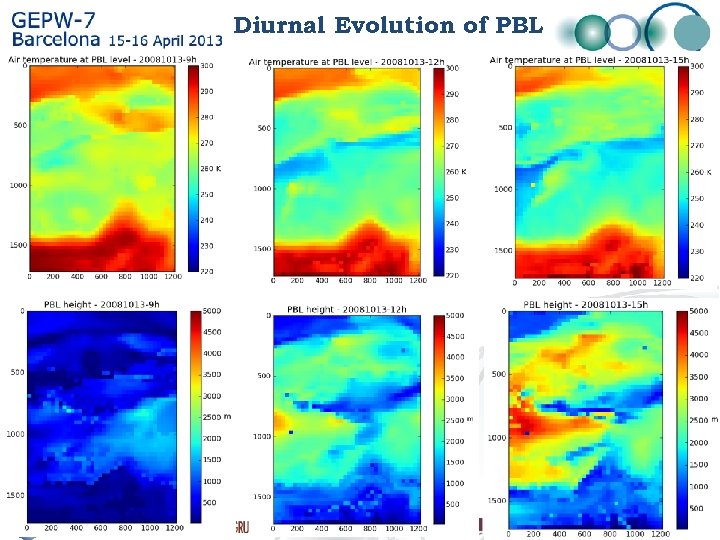 Diurnal Evolution of PBL ABL Workshop Lanzhou 13 October 27 th 2012
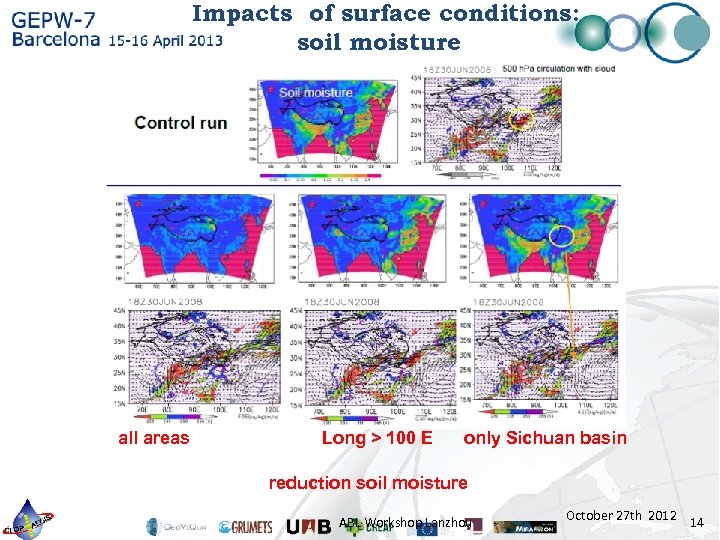 Impacts of surface conditions: soil moisture all areas Long > 100 E only Sichuan basin reduction soil moisture ABL Workshop Lanzhou October 27 th 2012 14
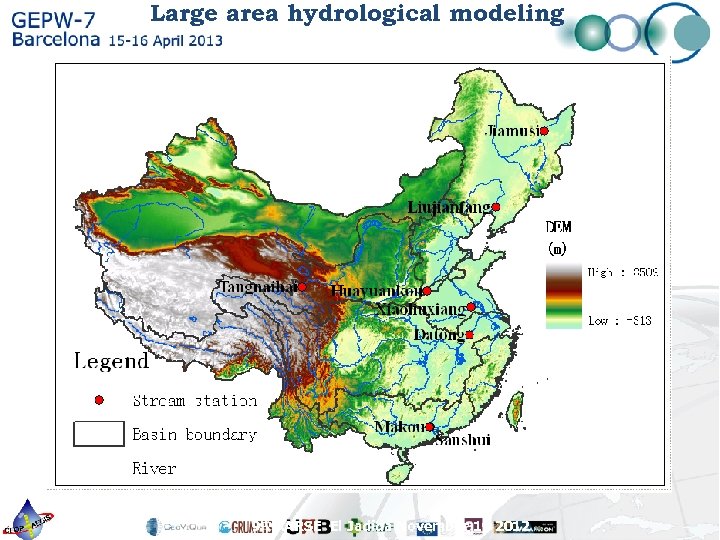 Large area hydrological modeling 9 th AARSE El Jadida November 1 st 2012
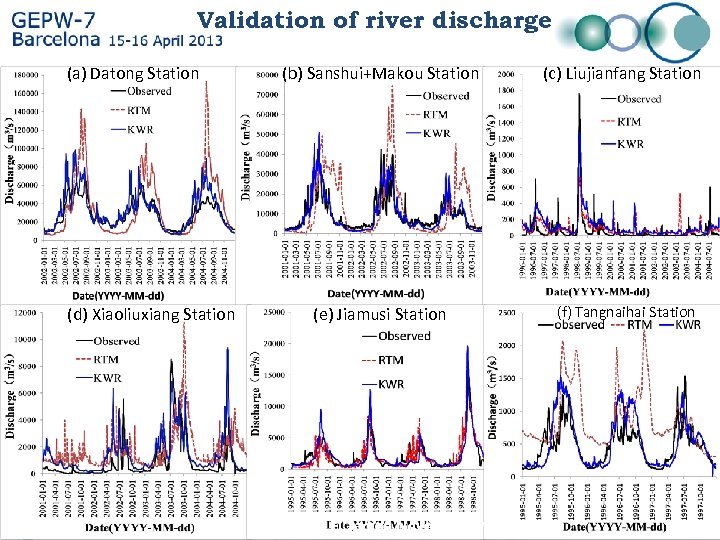 Validation of river discharge (a) Datong Station (d) Xiaoliuxiang Station (b) Sanshui+Makou Station (c) Liujianfang Station (e) Jiamusi Station (f) Tangnaihai Station 9 th AARSE El Jadida November 1 st 2012
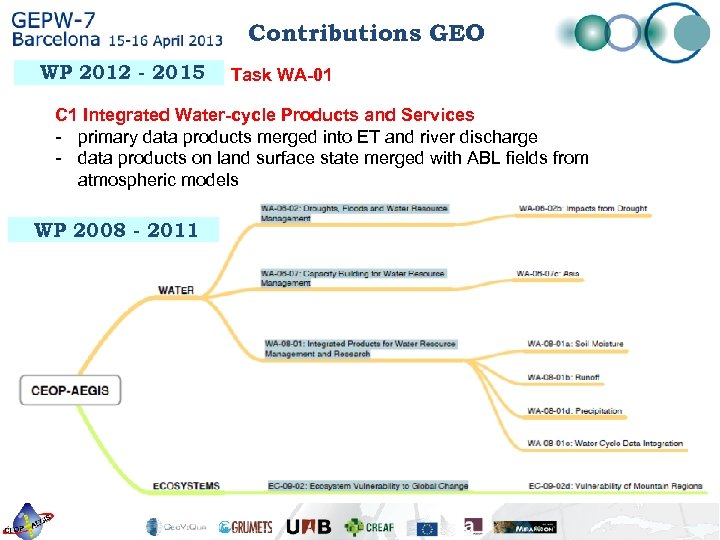 Contributions GEO WP 2012 - 2015 Task WA-01 C 1 Integrated Water-cycle Products and Services - primary data products merged into ET and river discharge - data products on land surface state merged with ABL fields from atmospheric models WP 2008 - 2011
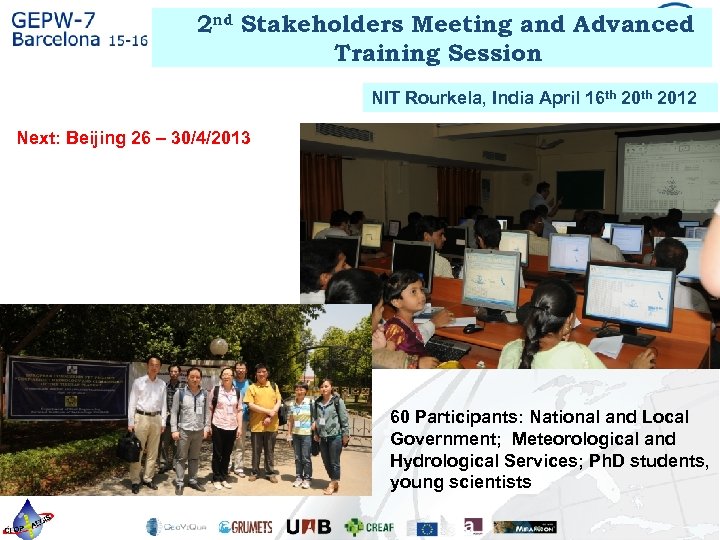 2 nd Stakeholders Meeting and Advanced Training Session NIT Rourkela, India April 16 th 2012 Next: Beijing 26 – 30/4/2013 60 Participants: National and Local Government; Meteorological and Hydrological Services; Ph. D students, young scientists
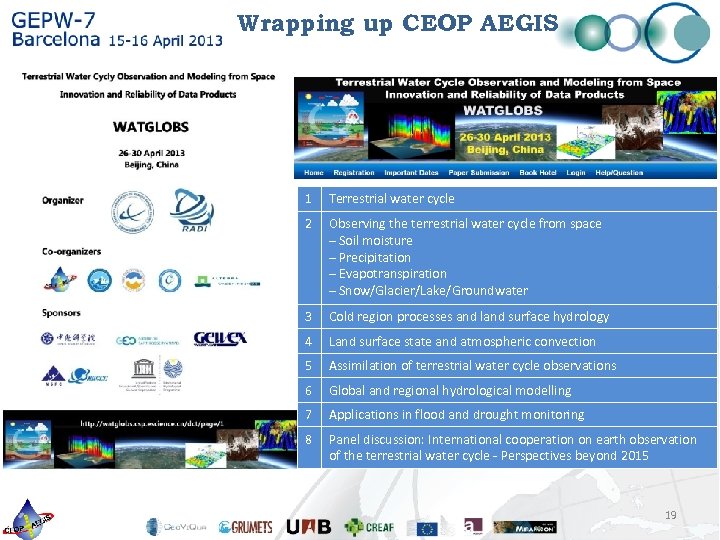 Wrapping up CEOP AEGIS 1 Terrestrial water cycle 2 Observing the terrestrial water cycle from space – Soil moisture – Precipitation – Evapotranspiration – Snow/Glacier/Lake/Groundwater 3 Cold region processes and land surface hydrology 4 Land surface state and atmospheric convection 5 Assimilation of terrestrial water cycle observations 6 Global and regional hydrological modelling 7 Applications in flood and drought monitoring 8 Panel discussion: International cooperation on earth observation of the terrestrial water cycle - Perspectives beyond 2015 19
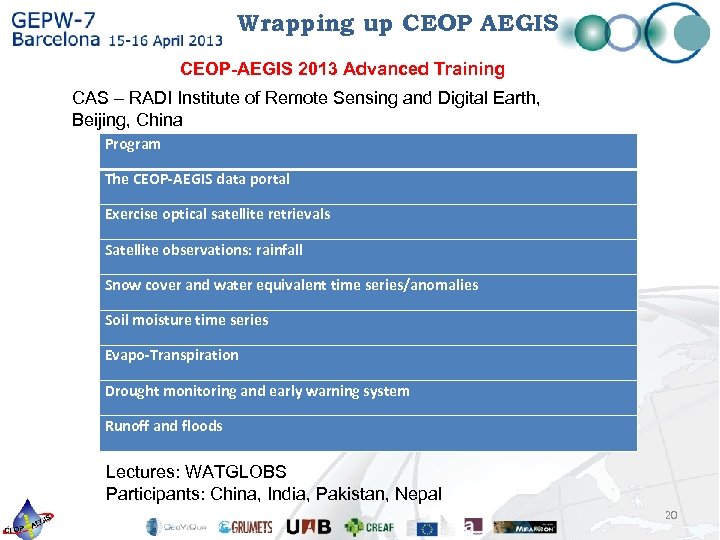 Wrapping up CEOP AEGIS CEOP-AEGIS 2013 Advanced Training CAS – RADI Institute of Remote Sensing and Digital Earth, Beijing, China Program The CEOP-AEGIS data portal Exercise optical satellite retrievals Satellite observations: rainfall Snow cover and water equivalent time series/anomalies Soil moisture time series Evapo-Transpiration Drought monitoring and early warning system Runoff and floods Lectures: WATGLOBS Participants: China, India, Pakistan, Nepal 20
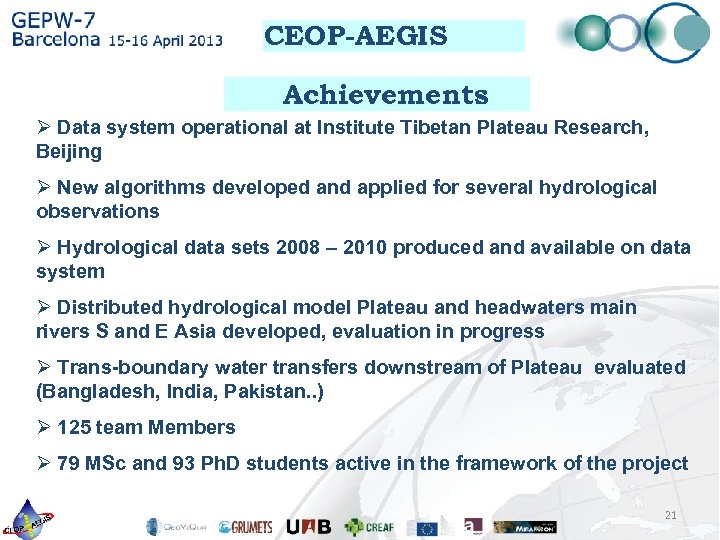 CEOP-AEGIS Achievements Ø Data system operational at Institute Tibetan Plateau Research, Beijing Ø New algorithms developed and applied for several hydrological observations Ø Hydrological data sets 2008 – 2010 produced and available on data system Ø Distributed hydrological model Plateau and headwaters main rivers S and E Asia developed, evaluation in progress Ø Trans-boundary water transfers downstream of Plateau evaluated (Bangladesh, India, Pakistan. . ) Ø 125 team Members Ø 79 MSc and 93 Ph. D students active in the framework of the project 21