


 Скачать презентацию Centre for Demography Population and Migration Seeking your
07920e301674524e287982ef9833e817.ppt
- Количество слайдов: 164
 Centre for Demography Population and Migration Seeking your views Welcome and introductions
 Centre for Demography Population and Migration Welcome and Introduction ONS Centre for Demography
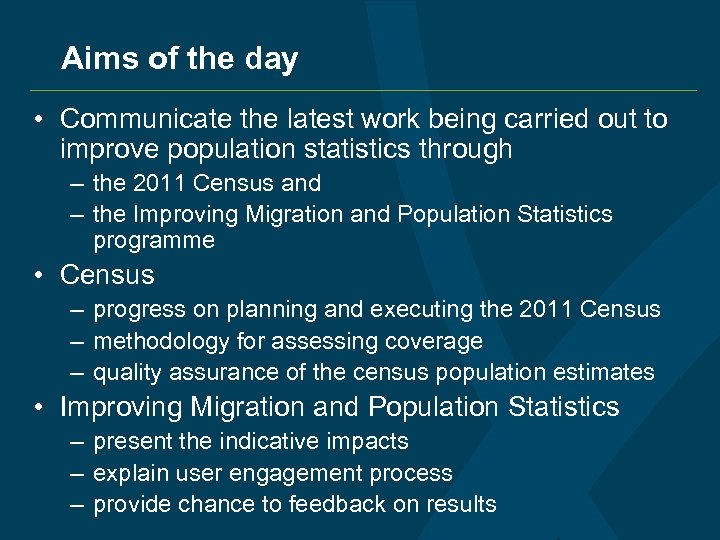 Aims of the day • Communicate the latest work being carried out to improve population statistics through – the 2011 Census and – the Improving Migration and Population Statistics programme • Census – progress on planning and executing the 2011 Census – methodology for assessing coverage – quality assurance of the census population estimates • Improving Migration and Population Statistics – present the indicative impacts – explain user engagement process – provide chance to feedback on results
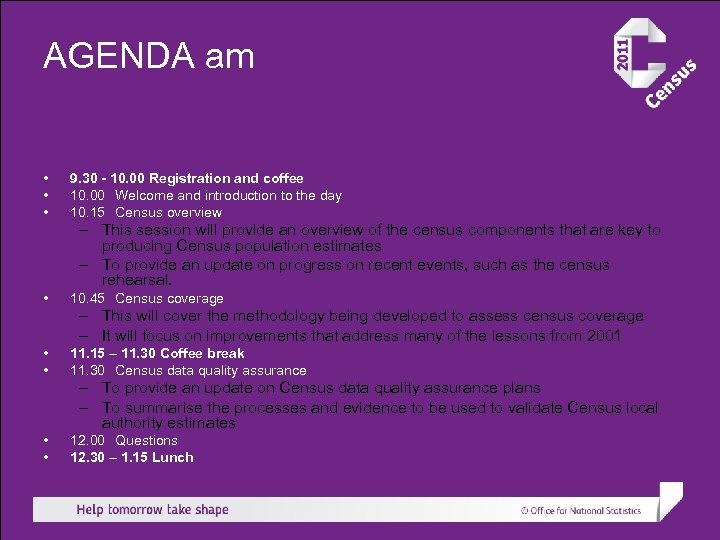 AGENDA am • • • 9. 30 - 10. 00 Registration and coffee 10. 00 Welcome and introduction to the day 10. 15 Census overview – This session will provide an overview of the census components that are key to producing Census population estimates – To provide an update on progress on recent events, such as the census rehearsal. • 10. 45 Census coverage – This will cover the methodology being developed to assess census coverage – It will focus on improvements that address many of the lessons from 2001 • • 11. 15 – 11. 30 Coffee break 11. 30 Census data quality assurance – To provide an update on Census data quality assurance plans – To summarise the processes and evidence to be used to validate Census local authority estimates • • 12. 00 Questions 12. 30 – 1. 15 Lunch
 Agenda pm • 12. 30 – 1. 15 Lunch • 1. 15 Improving Migration and Population Statistics Session I – Introduction and Background – User engagement – Indicative Impacts • 2. 30 – 2. 45 Tea Break • 2. 45 Improving Migration and Population Statistics Session II – Open discussion • 4: 00 Close
 High level timetable • 18 January 2010 – Final date for comments • 27 May 2010 – Revised 2002 -08 population estimate for LAs – 2008 -based Subnational Population Projections • 27 March 2011 – Census day
 Domestics • Fire Exits • Fire Alarm • Refreshments Tea and Coffee about 11: 15 Lunch at about 12: 30 Tea and Coffee about 2: 30 Close at about 4: 00 • Toilets • Delegate Packs • Questions
 2011 Census Overview Garnett Compton ONS Demography Seminar - December 2009
 Introduction • Reminder – key design changes • Where are we now? • • • Census rehearsal Census address register Census legislation Census stakeholder engagement Census outputs • Key milestones
 What’s new since 2001? • Questions • New Qs on population characteristics • New Qs on population base • Address register • Field operation • Distribution via post • Distribution of field staff • Questionnaire tracking • Internet data capture
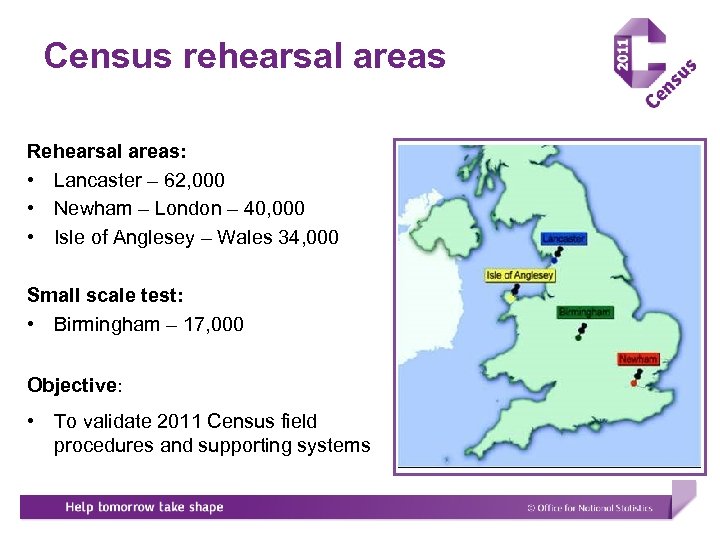 Census rehearsal areas Rehearsal areas: • Lancaster – 62, 000 • Newham – London – 40, 000 • Isle of Anglesey – Wales 34, 000 Small scale test: • Birmingham – 17, 000 Objective: • To validate 2011 Census field procedures and supporting systems
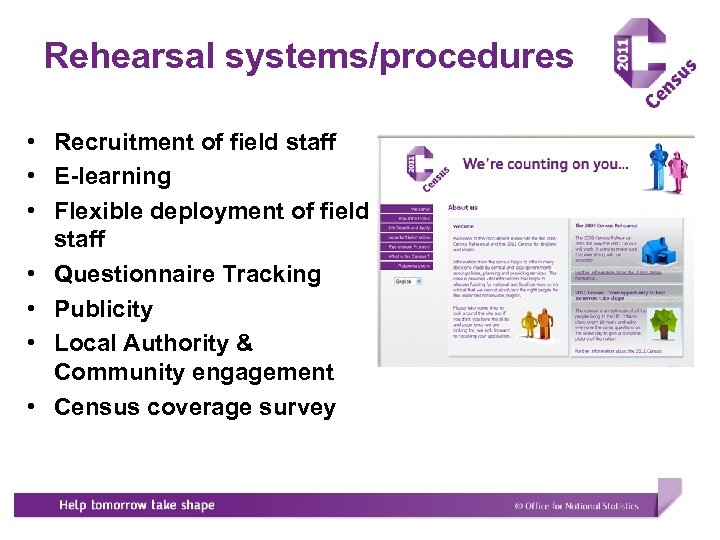 Rehearsal systems/procedures • Recruitment of field staff • E-learning • Flexible deployment of field staff • Questionnaire Tracking • Publicity • Local Authority & Community engagement • Census coverage survey
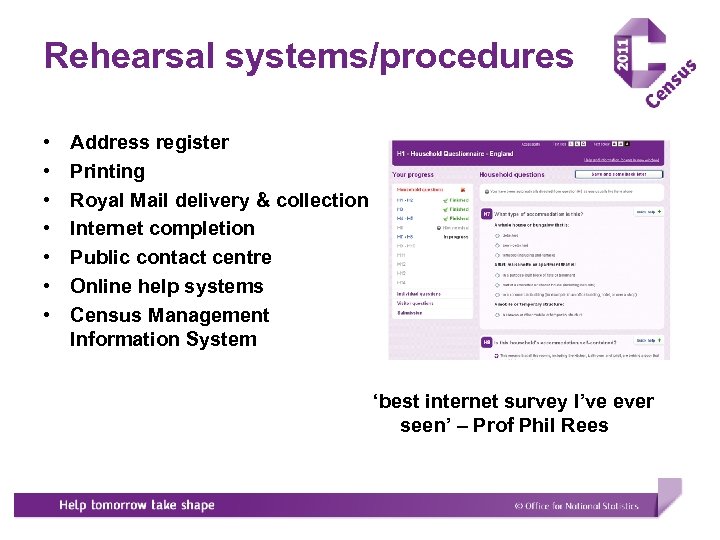 Rehearsal systems/procedures • • Address register Printing Royal Mail delivery & collection Internet completion Public contact centre Online help systems Census Management Information System ‘best internet survey I’ve ever seen’ – Prof Phil Rees
 Rehearsal publicity
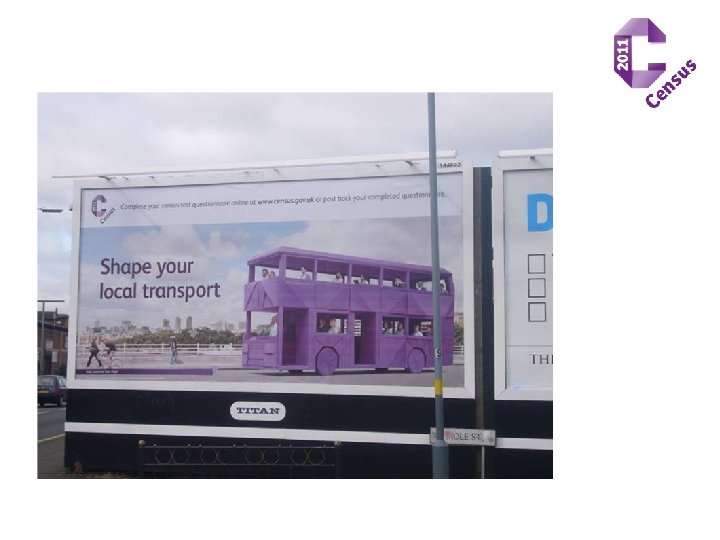
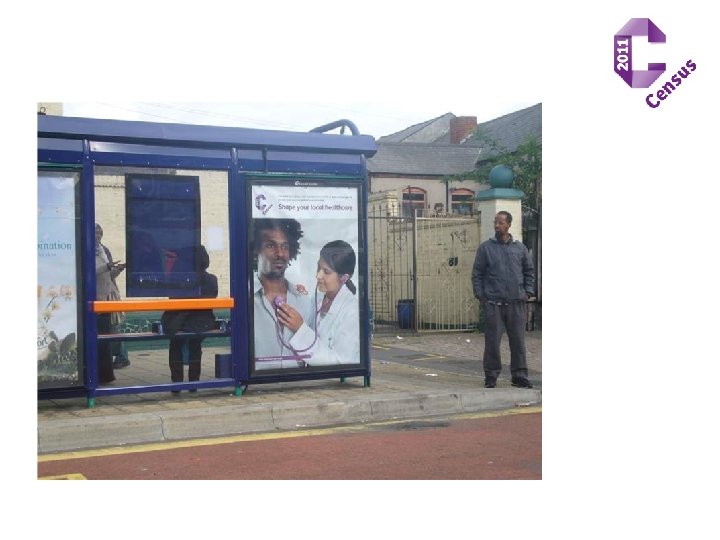
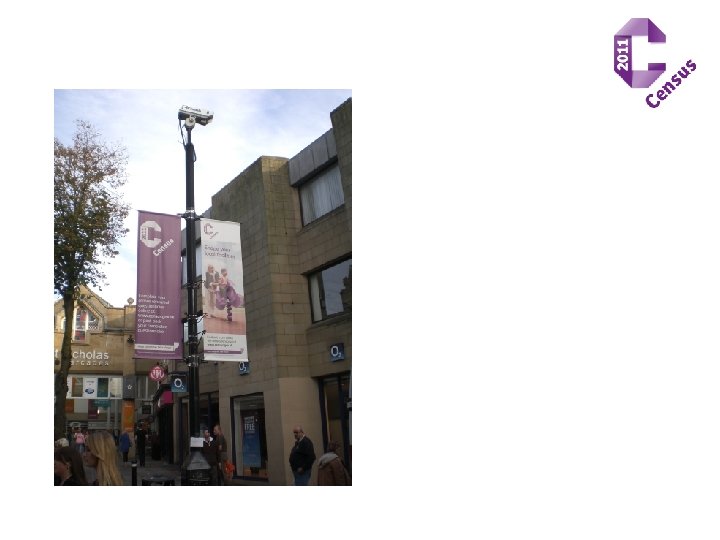
 Engaging Advertising • Reaching students and young people where they spent their time with some engaging advertising
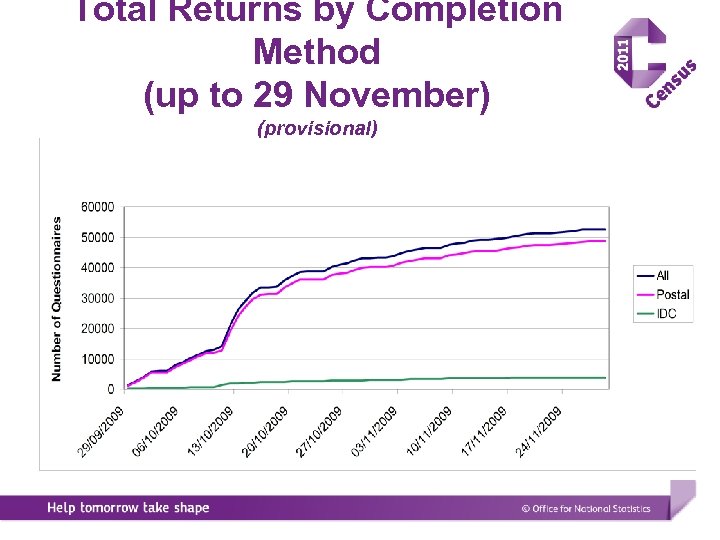 Total Returns by Completion Method (up to 29 November) (provisional)
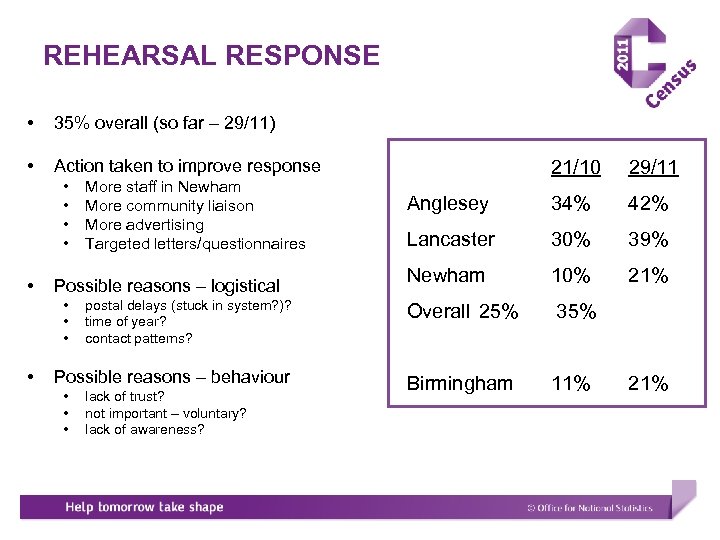 REHEARSAL RESPONSE • 35% overall (so far – 29/11) • Action taken to improve response • • • Possible reasons – logistical • • More staff in Newham More community liaison More advertising Targeted letters/questionnaires postal delays (stuck in system? )? time of year? contact patterns? Possible reasons – behaviour • • • lack of trust? not important – voluntary? lack of awareness? 21/10 29/11 Anglesey 34% 42% Lancaster 30% 39% Newham 10% 21% Overall 25% 35% Birmingham 11% 21%
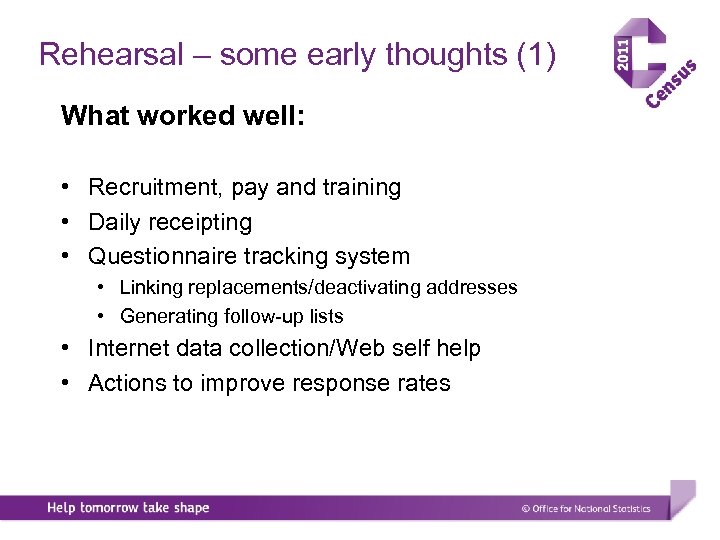 Rehearsal – some early thoughts (1) What worked well: • Recruitment, pay and training • Daily receipting • Questionnaire tracking system • Linking replacements/deactivating addresses • Generating follow-up lists • Internet data collection/Web self help • Actions to improve response rates
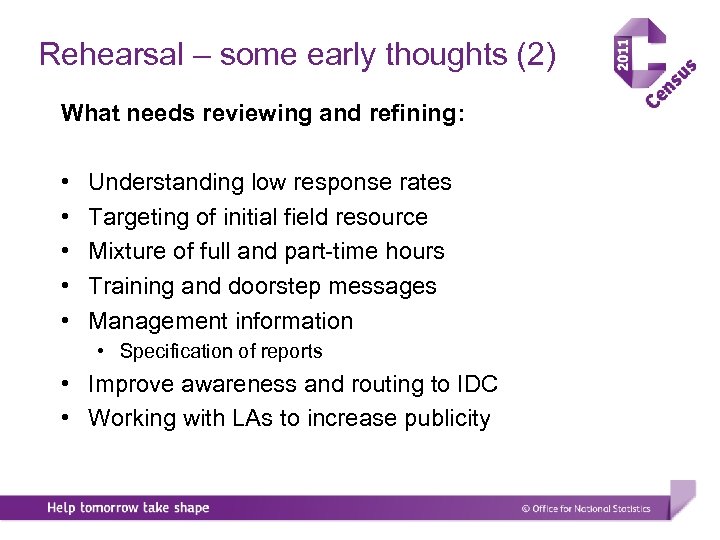 Rehearsal – some early thoughts (2) What needs reviewing and refining: • • • Understanding low response rates Targeting of initial field resource Mixture of full and part-time hours Training and doorstep messages Management information • Specification of reports • Improve awareness and routing to IDC • Working with LAs to increase publicity
 Where are we now
 Address register • Data sent to suppliers for resolution (Royal Mail, Intelligent Addressing) • Unmatched addresses sent to LAs • Address check implementation started • In the field May – Aug 2010 • 15% of postcodes targeted on mismatches and multioccupation • Strong focus now on communal establishments • Prioritised for target populations – 3 rd party suppliers • Special address check staff covering all of E&W
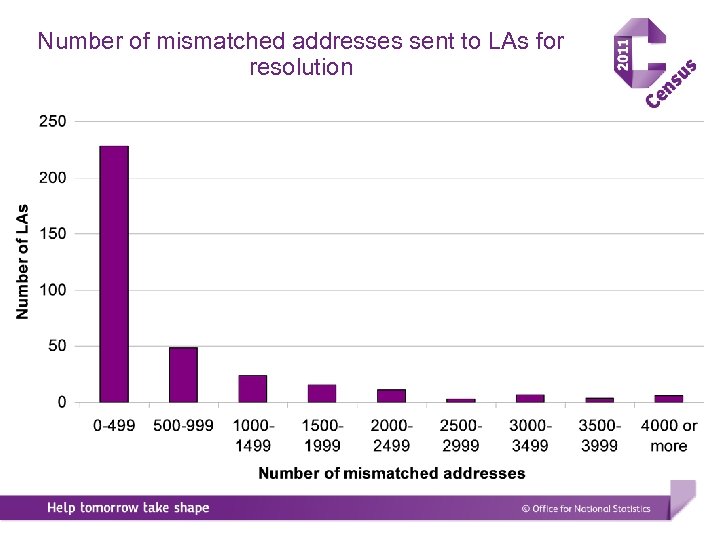 Number of mismatched addresses sent to LAs for resolution
 Census legislation • White Paper - 11 December 2008 • Census Order – tabled 21 October 2009 • Debated by the Delegated Legislation Committee - 30 November • Full Lords debate – 2 December • Privy Council - likely 10 Feb • Census Regulations – March 2010 • EU legislation
 LA engagement - foundations • Stakeholder website launched September • New LA engagement advisory groups initiated • Operational advisory group • Communication advisory group • Local authority partnership guide launched October • Local authority communication toolkit • Regional networks established by many census regional champions • Online communities of practice
 What’s next for LAs? • Second round of regional meetings hosted by CRCs • Regional meetings for LA communication teams to launch toolkit and councillor handbook • Defining the ways of working during the operational phase • Local partnership plans to agree commitments by each party around – Media relations and publicity – Community liaison – Support with logistics – Ongoing contact mechanisms
 Community liaison • Liaison with national organisations representing target population groups continues • Some good offers of help and support • Communication materials for community groups to use being developed for March 2010 • 40 Community advisors start September 2010 to liaise with black and ethnic minority target population groups • Partnership plan with LA will also cover community liaison activities
 Census outputs - vision • Web as the primary dissemination route • Flexibility for end users to create own products • Bulk download of data via the web • • Web functionality provided jointly with external partners 2001 comparisons which exploit stable geography (OAs) Microdata products provided via secure mechanisms UK Wide Approach with common disclosure control
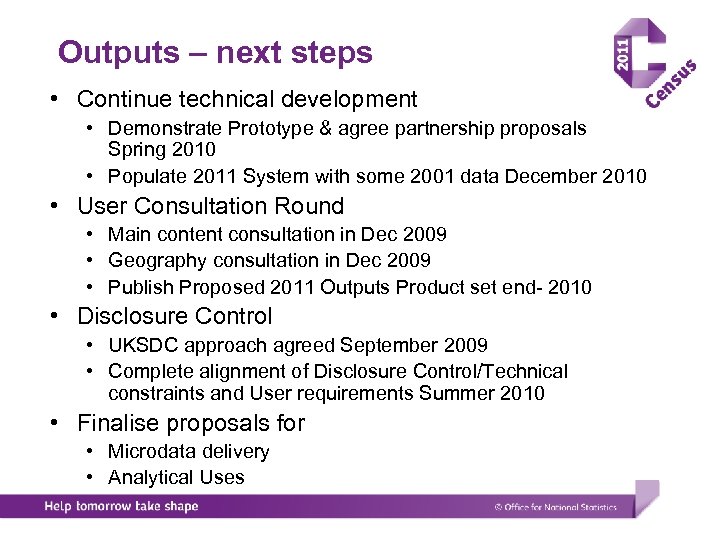 Outputs – next steps • Continue technical development • Demonstrate Prototype & agree partnership proposals Spring 2010 • Populate 2011 System with some 2001 data December 2010 • User Consultation Round • Main content consultation in Dec 2009 • Geography consultation in Dec 2009 • Publish Proposed 2011 Outputs Product set end- 2010 • Disclosure Control • UKSDC approach agreed September 2009 • Complete alignment of Disclosure Control/Technical constraints and User requirements Summer 2010 • Finalise proposals for • Microdata delivery • Analytical Uses
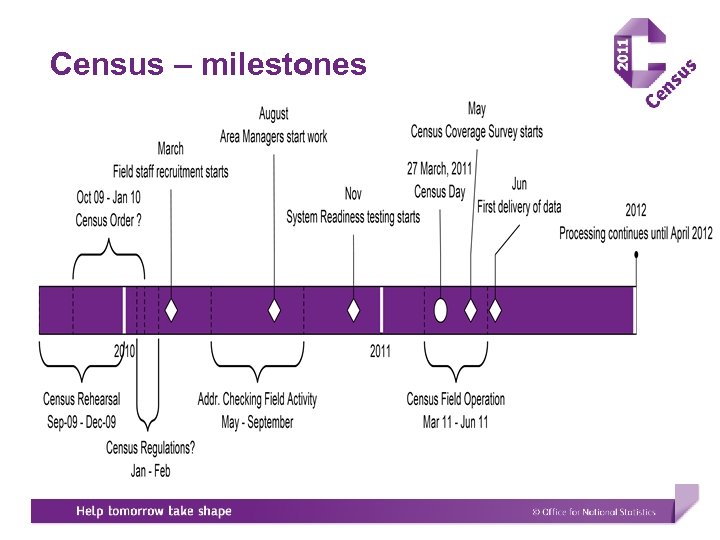 Census – milestones
 Finally …… • Coverage adjustment • Quality assurance • Quality census relies on other key aspects: • • Address register Census Operations: – – Questionnaire tracking Publicity Recruitment Field operations and procedures
 Thank you Questions?
 AGENDA – Census Coverage 1. 2. 3. 4. 5. Background Coverage in the 2001 Census 2011 Methodology overview Key changes Summary
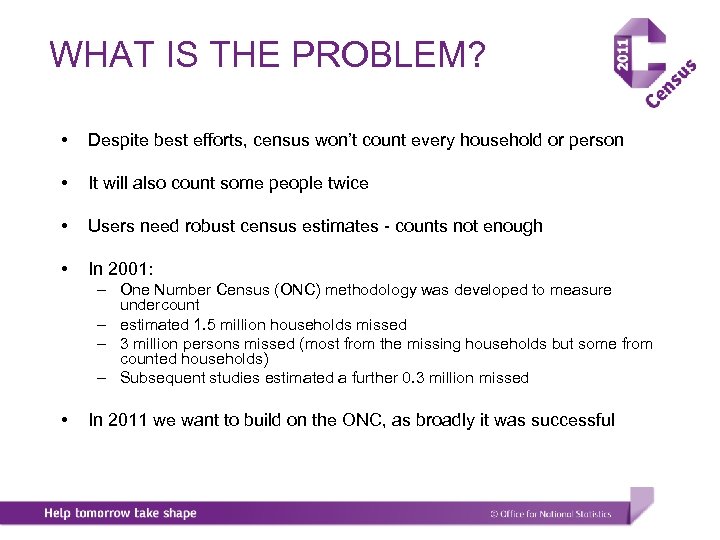 WHAT IS THE PROBLEM? • Despite best efforts, census won’t count every household or person • It will also count some people twice • Users need robust census estimates - counts not enough • In 2001: – One Number Census (ONC) methodology was developed to measure undercount – estimated 1. 5 million households missed – 3 million persons missed (most from the missing households but some from counted households) – Subsequent studies estimated a further 0. 3 million missed • In 2011 we want to build on the ONC, as broadly it was successful
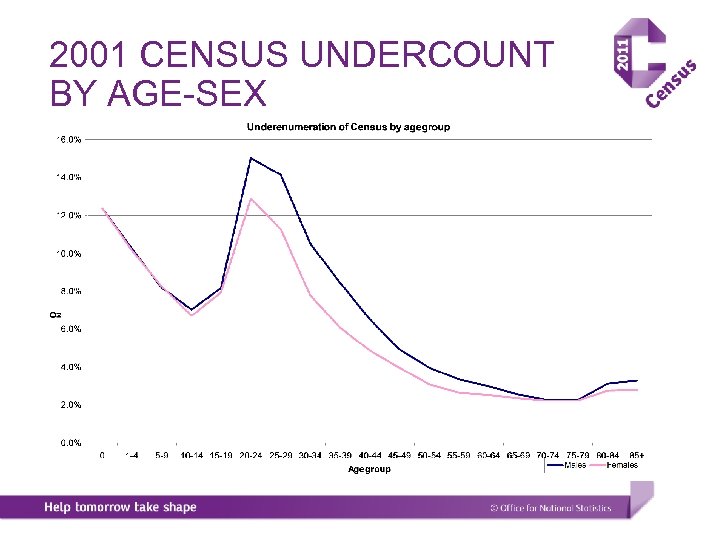 2001 CENSUS UNDERCOUNT BY AGE-SEX
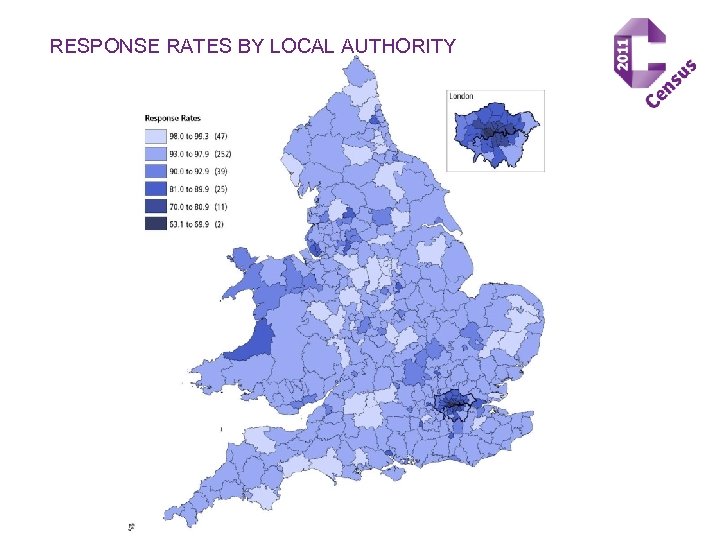 RESPONSE RATES BY LOCAL AUTHORITY
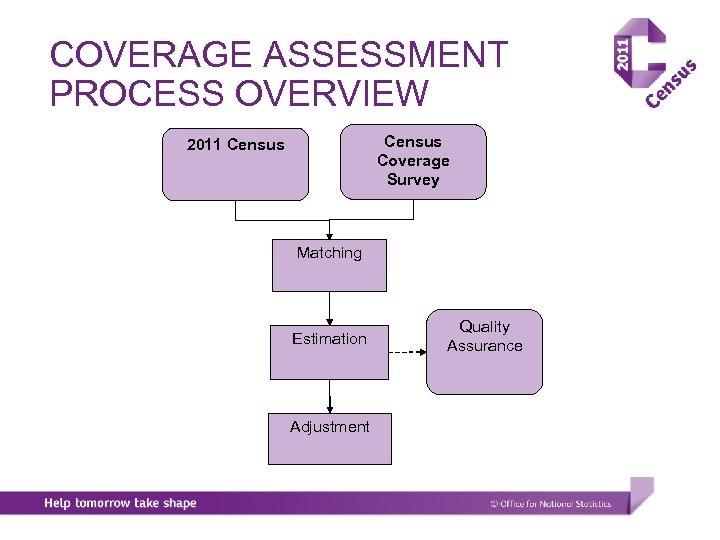 COVERAGE ASSESSMENT PROCESS OVERVIEW Census Coverage Survey 2011 Census Matching Estimation Adjustment Quality Assurance
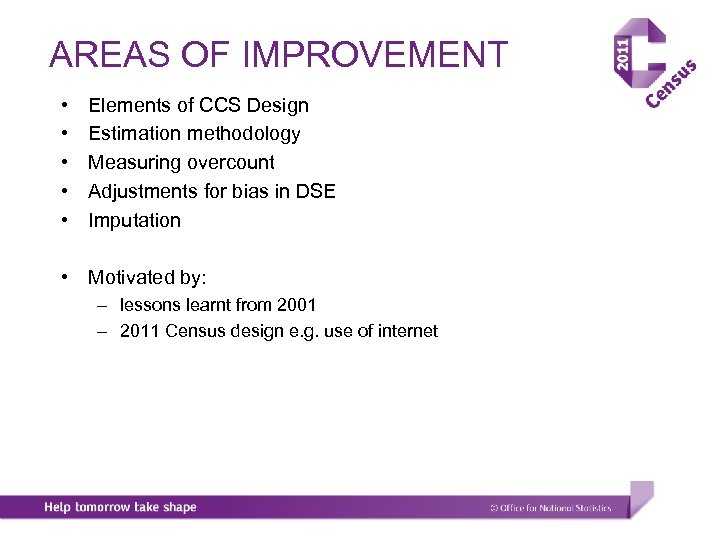 AREAS OF IMPROVEMENT • • • Elements of CCS Design Estimation methodology Measuring overcount Adjustments for bias in DSE Imputation • Motivated by: – lessons learnt from 2001 – 2011 Census design e. g. use of internet
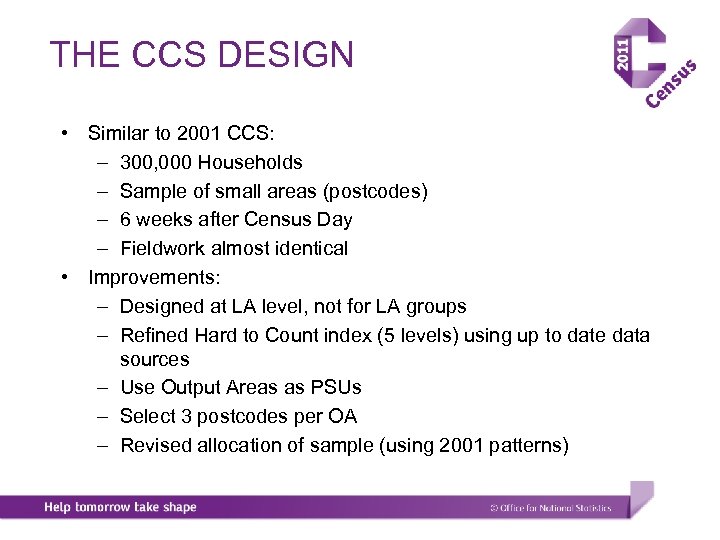 THE CCS DESIGN • Similar to 2001 CCS: – 300, 000 Households – Sample of small areas (postcodes) – 6 weeks after Census Day – Fieldwork almost identical • Improvements: – Designed at LA level, not for LA groups – Refined Hard to Count index (5 levels) using up to date data sources – Use Output Areas as PSUs – Select 3 postcodes per OA – Revised allocation of sample (using 2001 patterns)
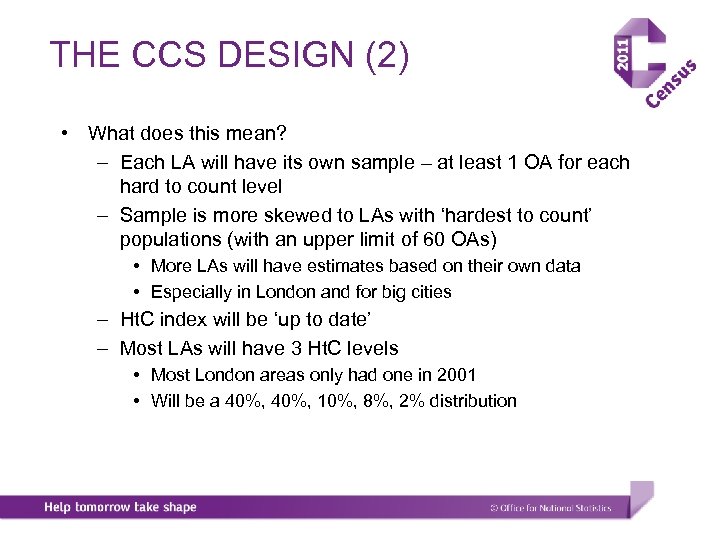 THE CCS DESIGN (2) • What does this mean? – Each LA will have its own sample – at least 1 OA for each hard to count level – Sample is more skewed to LAs with ‘hardest to count’ populations (with an upper limit of 60 OAs) • More LAs will have estimates based on their own data • Especially in London and for big cities – Ht. C index will be ‘up to date’ – Most LAs will have 3 Ht. C levels • Most London areas only had one in 2001 • Will be a 40%, 10%, 8%, 2% distribution
 MATCHING AND ESTIMATION • Estimation based on Dual System Estimation • Used mainly for wildlife applications • Requires two ‘counts’ of the population • Requires the two counts to be matched • Use standard survey estimation techniques to generalise the DSEs to the whole population • Ratio estimator • Trout, Catfish & Roach provides a fishing example of the principles of the method – Available in delegate packs
 ESTIMATION • Obtained lots of data from 2001 to be able to explore whether improvements can be made • One issue was at what level to estimate undercount to best fulfil the assumptions of the methodology (Postcode, Groups of Postcodes) • One key issue was whether we should group LAs by geography or by ‘type’ • Improvements: • • Confirmed that using DSE at OA level is sensible Confirmed that we should group LAs by geography Use simple Ratio estimator Confirmed that 2001 LA estimation method is still best
 ESTIMATION (2) • What does this mean? – The estimation methodology is much the same as it was – Should be slightly easier to explain – We will group LAs that don’t have enough sample with their neighbours until that group has enough sample – More LAs will have enough sample to produce direct estimates
 OVERCOUNT • In 2001, estimated around 0. 4% overcount (duplication) – No adjustments made – Not integrated into methodology • For 2011, expecting overcount to be higher – More complex population – Use of internet in 2011 Census • Strategy is to: – A) Build a process to identify and remove obvious cases (multiple response resolution) – B) measure and make net adjustments on the remainder – i. e. for the latter we are NOT removing duplicates
 OVERCOUNT (2) • Methodology: – Select targeted samples of census records • Second residences • Students • Children – Very large sample (~600, 000 k records) – Automatic matching algorithm to identify duplicates – Clerical checking of matches • expect to see ~13, 000 duplicates • Also use the LS to QA the estimates – Estimation of duplication rates by GOR and characteristics • estimating which is the correct record – Why not do whole database and remove them? • High risk of making false positives and thus removing too many!
 OVERCOUNT (3) • What does this mean? – Population estimates will be reduced where there is overcount – We will be able to say how much adjustment was made due to overcount – The duplicates will still be in the data, we just won’t impute as much for undercount
 DSE BIAS ADJUSTMENTS • Assumptions underpinning DSE: – – • • • Homogeneity Independence Accurate Matching Closure DSEs usually have some bias, mostly due to failure of homogeneity assumption In 2001 Census we made a ‘dependence’ adjustment This showed that we need to have a strategy for measuring this
 DSE BIAS ADJUSTMENTS (2) • • Mitigate as much as possible: i. Post-stratify DSE so heterogeneity is minimised ii. Independence in CCS field processes iii. Design Matching to get accuracy iv. Collect CCS on same basis as Census Measure remaining bias – Specific adjustments – e. g. Movers, Overcount – Residual biases global adjustment • Improved adjustment using Census address register • Looking at improving age-sex distribution
 DSE BIAS ADJUSTMENTS (3) • What does this mean? – We will be making adjustments to the estimates based on plausible external data e. g. • Household counts • Sex ratios – This will be part of the methodology – Also can be used if QA determines estimates are implausible – Haven’t ruled out triple system estimation
 COVERAGE ADJUSTMENT • Imputation methodology had problems converging – Sometimes resulted in poor quality results • Improvements: – Model characteristics at higher geographies – Allows more details to be modelled – Some additional topics in the CCS included in models: • Migration variable (internal, international) • Country of birth (UK and non-UK) – Non-controlled variables imputed by CANCEIS • What does this mean? – Better Imputation quality – Characteristics of imputed improved
 SUMMARY • Coverage assessment is an integral part of the 2011 Census • It will again define the key census outputs (estimates at LA level by age and sex) and adjust the database • We learnt a lot of lessons in 2001 and have been working to address them
 Questions? owen. abbott@ons. gov. uk alan. taylor@ons. gov. uk
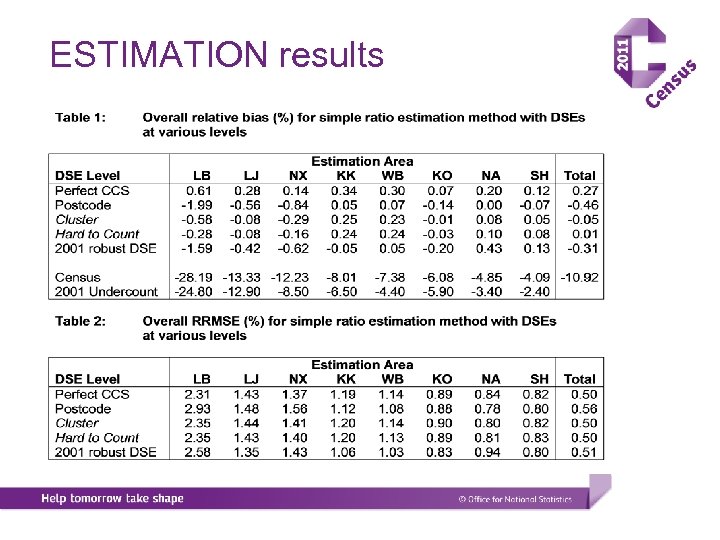 ESTIMATION results
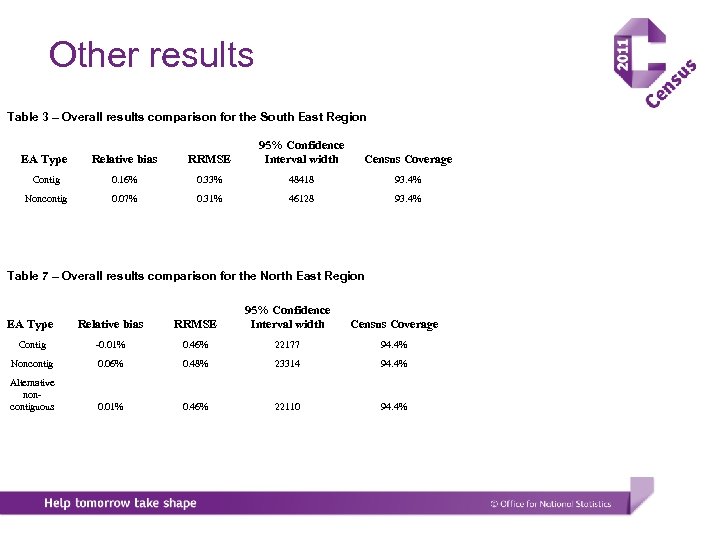 Other results Table 3 – Overall results comparison for the South East Region EA Type Relative bias RRMSE 95% Confidence Interval width Census Coverage Contig 0. 16% 0. 33% 48418 93. 4% Noncontig 0. 07% 0. 31% 46128 93. 4% Table 7 – Overall results comparison for the North East Region EA Type Relative bias RRMSE 95% Confidence Interval width Census Coverage Contig -0. 01% 0. 46% 22177 94. 4% Noncontig 0. 06% 0. 48% 23314 94. 4% Alternative noncontiguous 0. 01% 0. 46% 22110 94. 4%
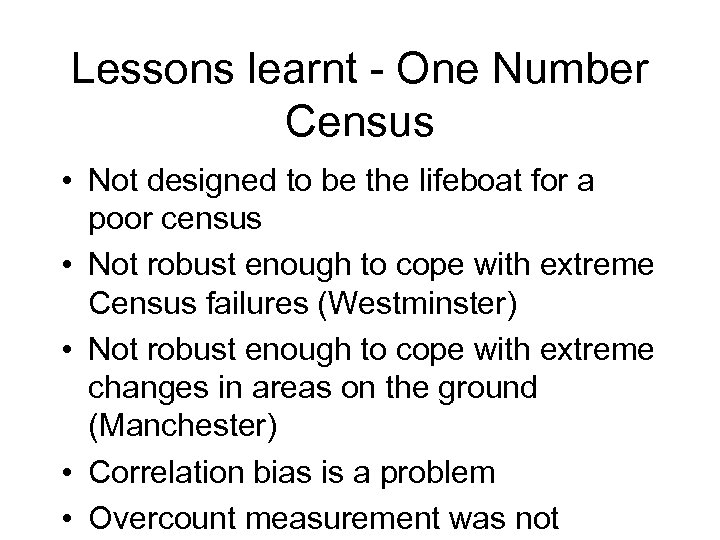 Lessons learnt - One Number Census • Not designed to be the lifeboat for a poor census • Not robust enough to cope with extreme Census failures (Westminster) • Not robust enough to cope with extreme changes in areas on the ground (Manchester) • Correlation bias is a problem • Overcount measurement was not
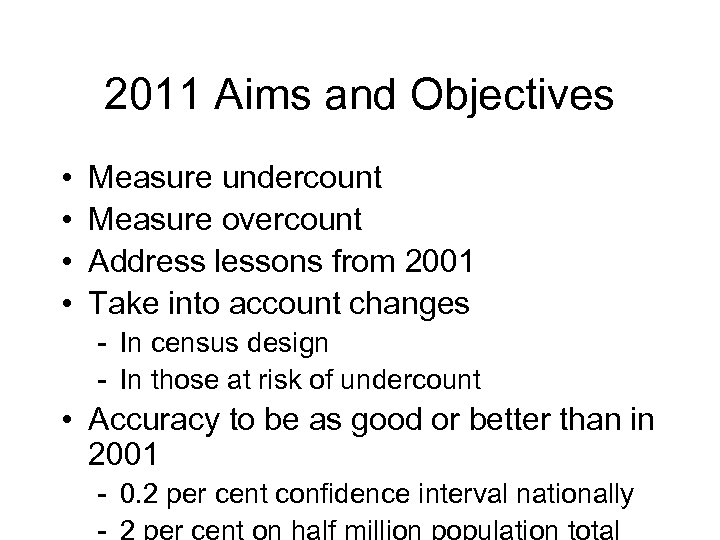 2011 Aims and Objectives • • Measure undercount Measure overcount Address lessons from 2001 Take into account changes - In census design - In those at risk of undercount • Accuracy to be as good or better than in 2001 - 0. 2 per cent confidence interval nationally - 2 per cent on half million population total
 2011 Census data QA: An update on planning and proposals for the validation of LA estimates Louisa Blackwell Paula Guy Glen Doubleday 2011 Census & ONSCD Seminar on Population and Migration December 2009
 Contents • Census data QA objectives • Overview of the data QA: topic and demographic QA • The QA Panel and its role • The process for assessing and approving Census LA estimates; evidence and data • Options for adjusting Census population estimates • The LA consultation pilot • Supporting analysis from 2009 to 2011
 Census data QA objectives • Ensure 2011 Census outputs are fit for purpose and meet user expectations • Understand differences between Census population estimates and rolled-forward mid year estimates • Ensure Census population characteristics are accurate • Transparency • Work in partnership with stakeholders • Metadata including quality measures published with data
 Topic QA To quality assure detailed level Census data to address errors such as respondent or enumerator error or those introduced by processes such as data capture, edit or imputation. Includes item-level data, low level geographies and multivariate analysis of specified population subgroups.
 Demographic QA To quality assure national, regional and Local Authority District census estimates, drawing on external sources, using demographic indicators and guided by the input and direction of an expert QA panel
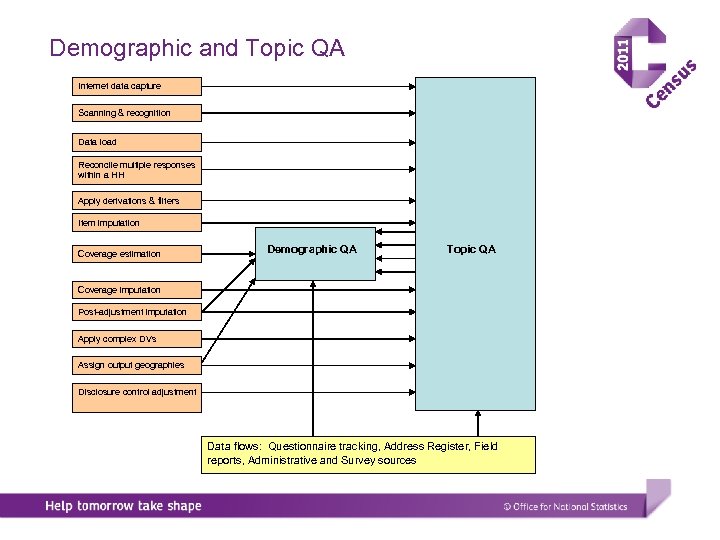 Demographic and Topic QA Internet data capture Scanning & recognition Data load Reconcile multiple responses within a HH Apply derivations & filters Item imputation Coverage estimation Demographic QA Topic QA Coverage imputation Post-adjustment imputation Apply complex DVs Assign output geographies Disclosure control adjustment Data flows: Questionnaire tracking, Address Register, Field reports, Administrative and Survey sources
 The QA Panel and its role Role: To assess Census population estimates at LA / regional / national levels and recommend acceptance / rejection or further research – – – Membership Head of the ONS Census Design Authority (Chair) Head of Census Quality Team Methodology Division experts in coverage adjustment ONS Centre for Demography experts in mid-year population estimation and projection Independent expert demographers Other relevant parties, such as representatives of the LGA, NISRA, GROS, WAG and non-UK member(s)
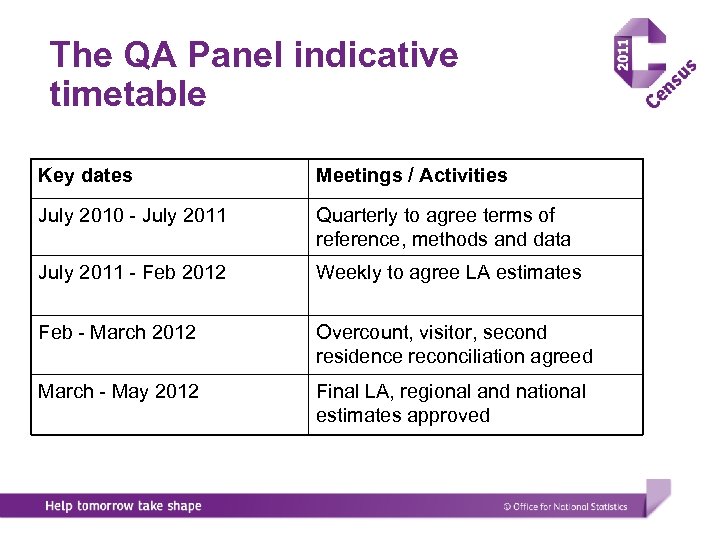 The QA Panel indicative timetable Key dates Meetings / Activities July 2010 - July 2011 Quarterly to agree terms of reference, methods and data July 2011 - Feb 2012 Weekly to agree LA estimates Feb - March 2012 Overcount, visitor, second residence reconciliation agreed March - May 2012 Final LA, regional and national estimates approved
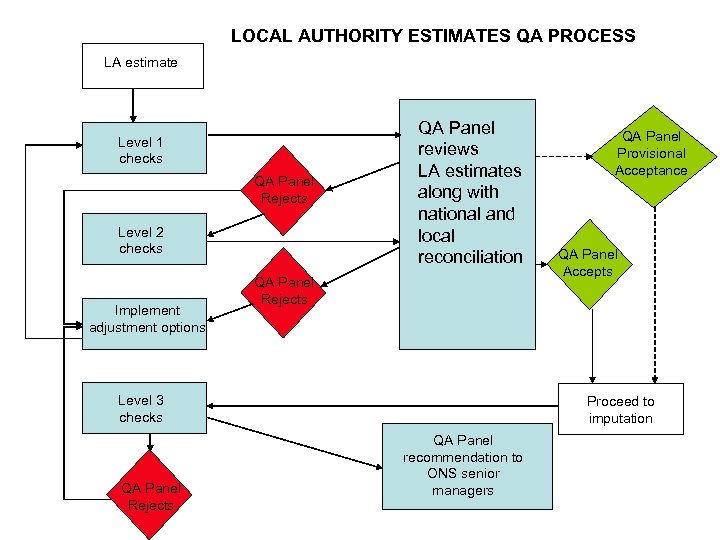
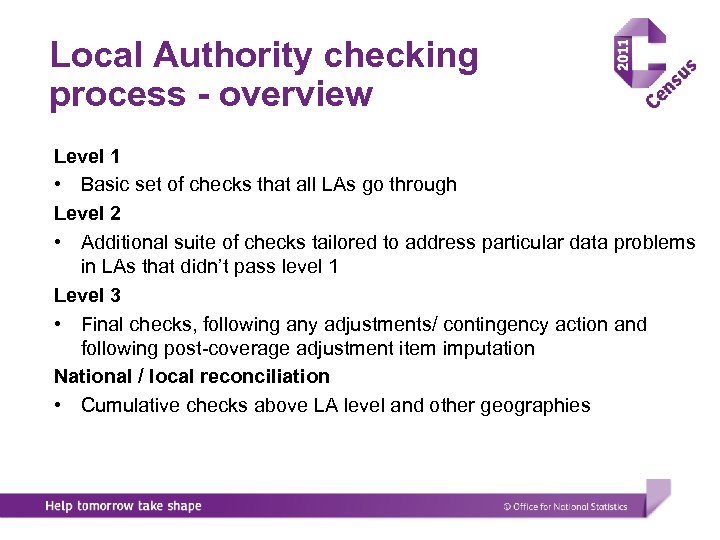 Local Authority checking process - overview Level 1 • Basic set of checks that all LAs go through Level 2 • Additional suite of checks tailored to address particular data problems in LAs that didn’t pass level 1 Level 3 • Final checks, following any adjustments/ contingency action and following post-coverage adjustment item imputation National / local reconciliation • Cumulative checks above LA level and other geographies
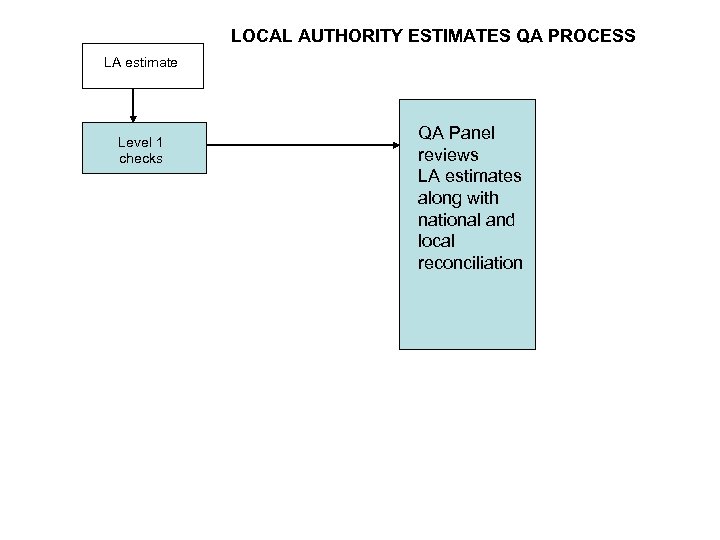 LOCAL AUTHORITY ESTIMATES QA PROCESS LA estimate Level 1 checks QA Panel reviews LA estimates along with national and local reconciliation
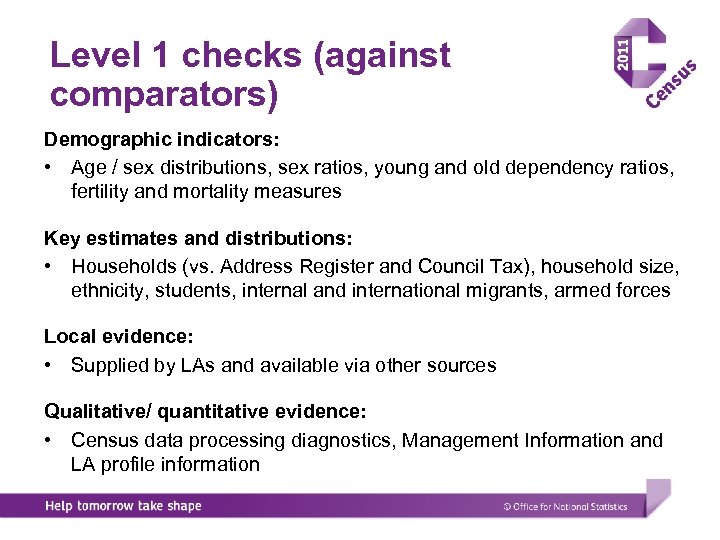 Level 1 checks (against comparators) Demographic indicators: • Age / sex distributions, sex ratios, young and old dependency ratios, fertility and mortality measures Key estimates and distributions: • Households (vs. Address Register and Council Tax), household size, ethnicity, students, internal and international migrants, armed forces Local evidence: • Supplied by LAs and available via other sources Qualitative/ quantitative evidence: • Census data processing diagnostics, Management Information and LA profile information
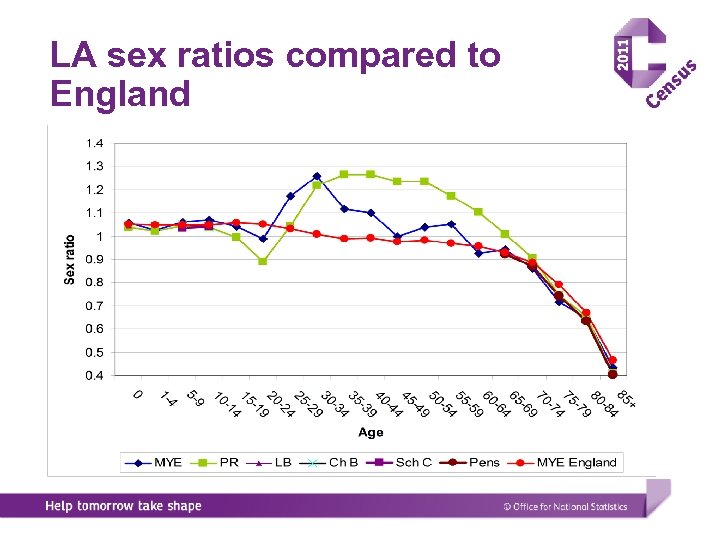 LA sex ratios compared to England
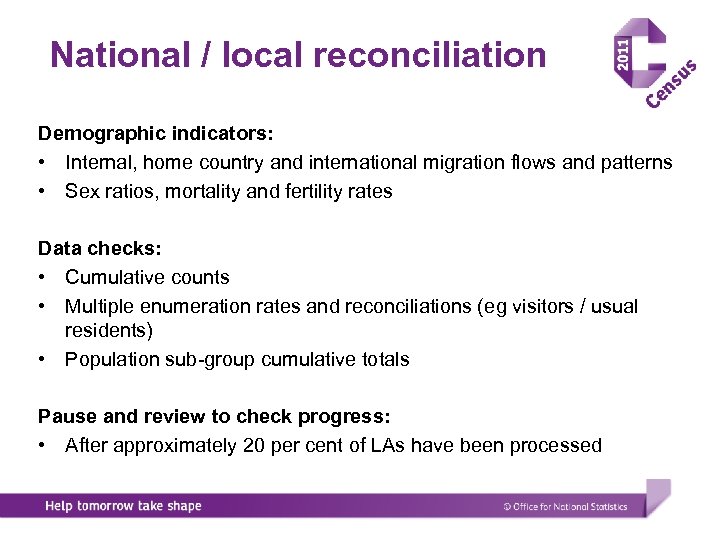 National / local reconciliation Demographic indicators: • Internal, home country and international migration flows and patterns • Sex ratios, mortality and fertility rates Data checks: • Cumulative counts • Multiple enumeration rates and reconciliations (eg visitors / usual residents) • Population sub-group cumulative totals Pause and review to check progress: • After approximately 20 per cent of LAs have been processed
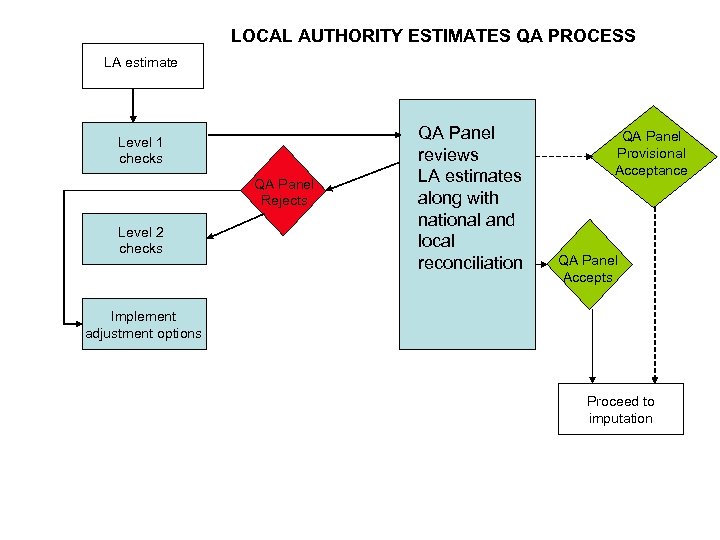 LOCAL AUTHORITY ESTIMATES QA PROCESS LA estimate Level 1 checks QA Panel Rejects Level 2 checks QA Panel reviews LA estimates along with national and local reconciliation QA Panel Provisional Acceptance QA Panel Accepts Implement adjustment options Proceed to imputation
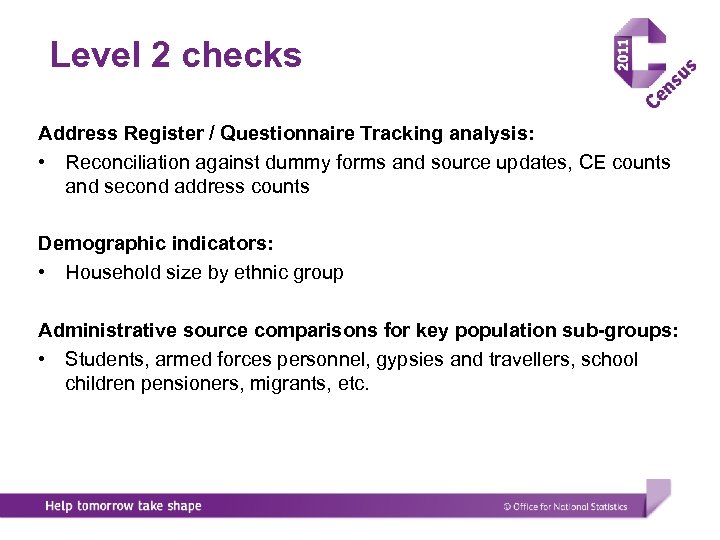 Level 2 checks Address Register / Questionnaire Tracking analysis: • Reconciliation against dummy forms and source updates, CE counts and second address counts Demographic indicators: • Household size by ethnic group Administrative source comparisons for key population sub-groups: • Students, armed forces personnel, gypsies and travellers, school children pensioners, migrants, etc.
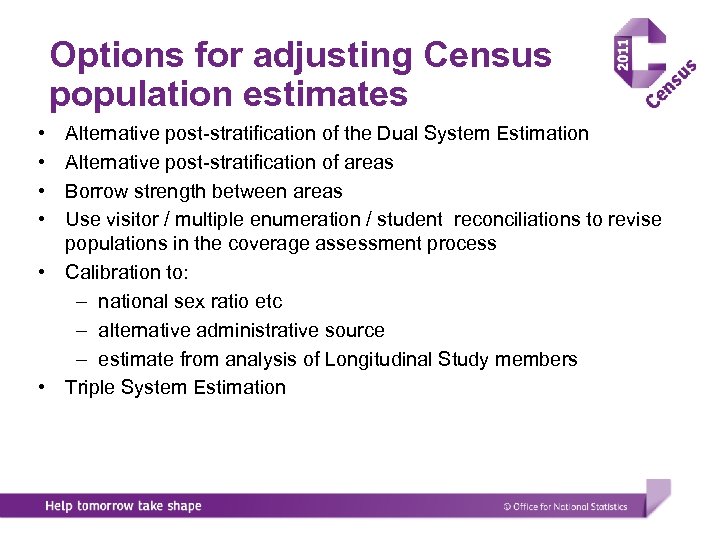 Options for adjusting Census population estimates • • Alternative post-stratification of the Dual System Estimation Alternative post-stratification of areas Borrow strength between areas Use visitor / multiple enumeration / student reconciliations to revise populations in the coverage assessment process • Calibration to: – national sex ratio etc – alternative administrative source – estimate from analysis of Longitudinal Study members • Triple System Estimation
 LOCAL AUTHORITY ESTIMATES QA PROCESS LA estimate Level 1 checks QA Panel Rejects Level 2 checks Implement adjustment options QA Panel reviews LA estimates along with national and local reconciliation QA Panel Rejects Level 3 checks QA Panel Rejects QA Panel Provisional Acceptance QA Panel Accepts Proceed to imputation QA Panel recommendation to ONS senior managers
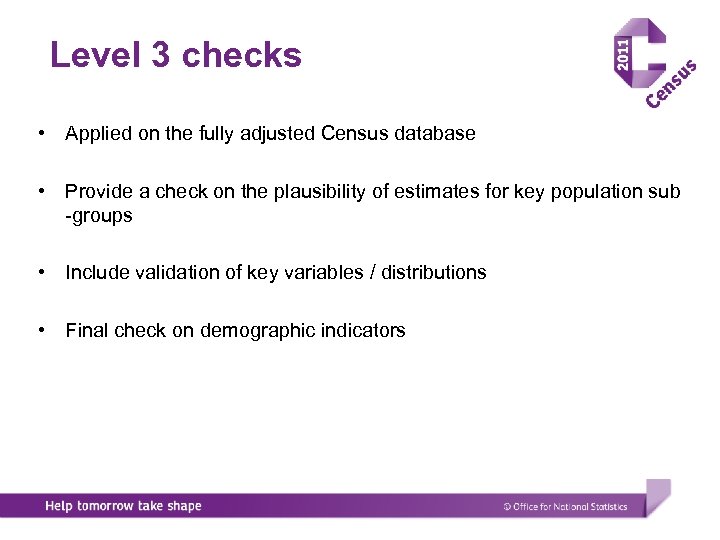 Level 3 checks • Applied on the fully adjusted Census database • Provide a check on the plausibility of estimates for key population sub -groups • Include validation of key variables / distributions • Final check on demographic indicators
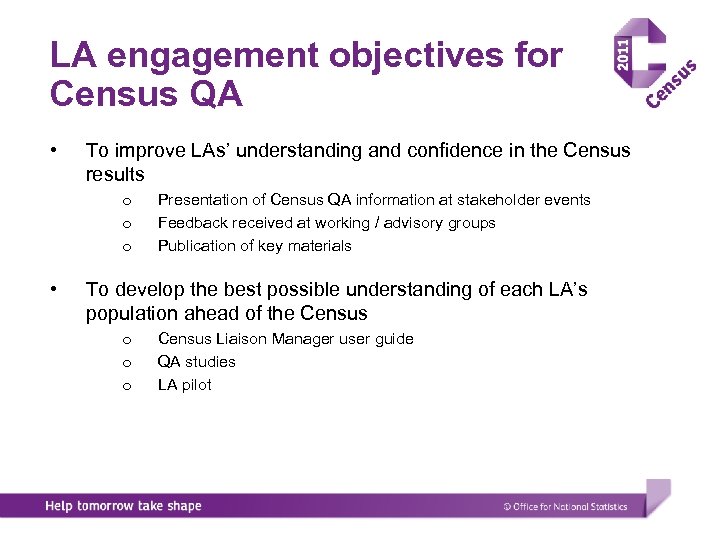 LA engagement objectives for Census QA • To improve LAs’ understanding and confidence in the Census results o o o • Presentation of Census QA information at stakeholder events Feedback received at working / advisory groups Publication of key materials To develop the best possible understanding of each LA’s population ahead of the Census o o o Census Liaison Manager user guide QA studies LA pilot
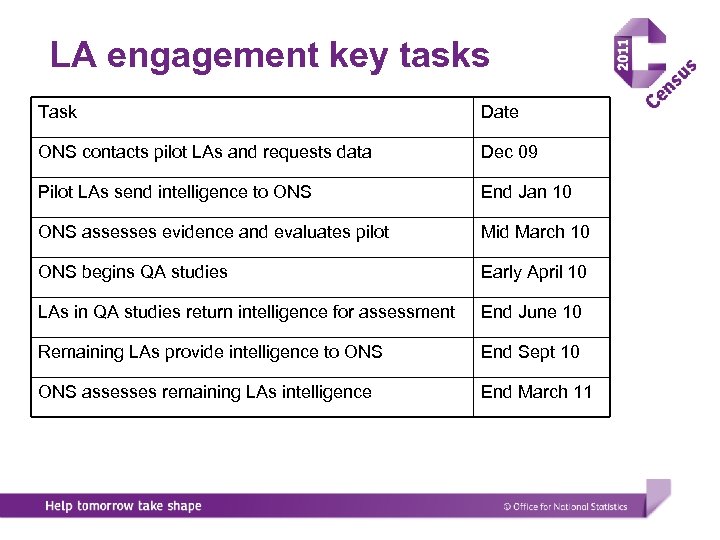 LA engagement key tasks Task Date ONS contacts pilot LAs and requests data Dec 09 Pilot LAs send intelligence to ONS End Jan 10 ONS assesses evidence and evaluates pilot Mid March 10 ONS begins QA studies Early April 10 LAs in QA studies return intelligence for assessment End June 10 Remaining LAs provide intelligence to ONS End Sept 10 ONS assesses remaining LAs intelligence End March 11
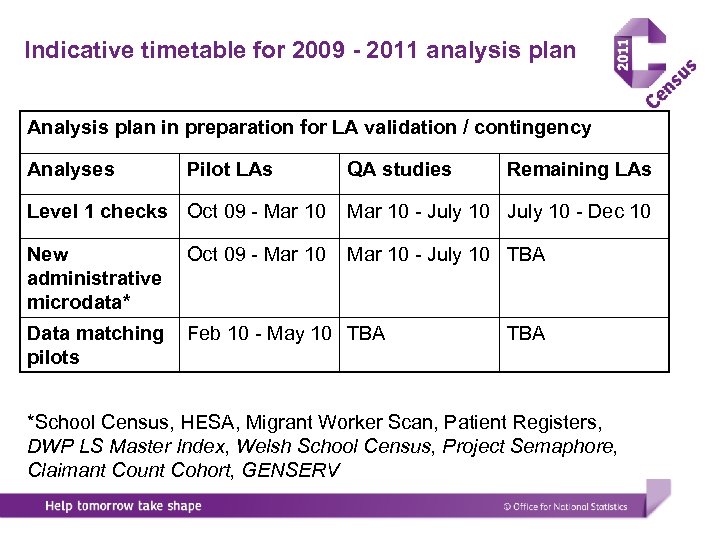 Indicative timetable for 2009 - 2011 analysis plan Analysis plan in preparation for LA validation / contingency Analyses Pilot LAs QA studies Remaining LAs Level 1 checks Oct 09 - Mar 10 - July 10 - Dec 10 New administrative microdata* Oct 09 - Mar 10 - July 10 TBA Data matching pilots Feb 10 - May 10 TBA *School Census, HESA, Migrant Worker Scan, Patient Registers, DWP LS Master Index, Welsh School Census, Project Semaphore, Claimant Count Cohort, GENSERV
 CLOSE
CLOSE
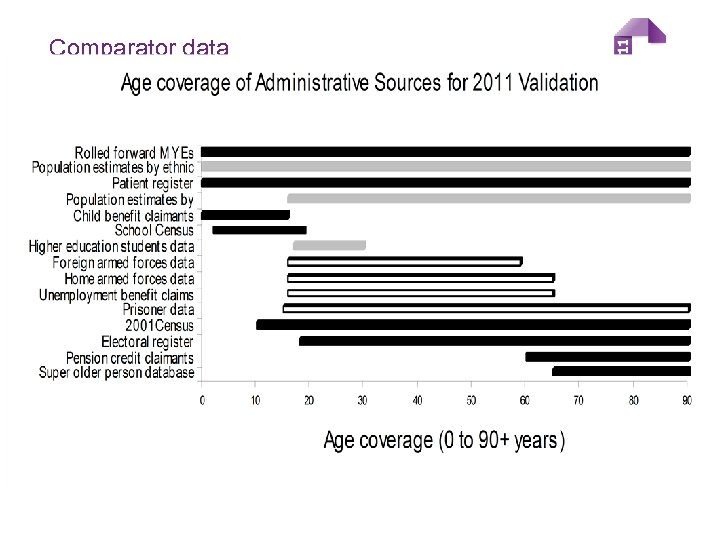 Comparator data
 Centre for Demography Improving Migration Statistics ONS Centre for Demography
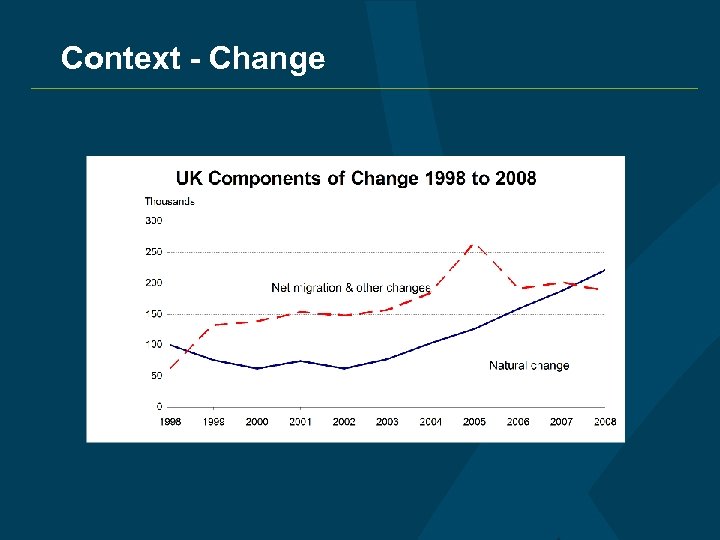
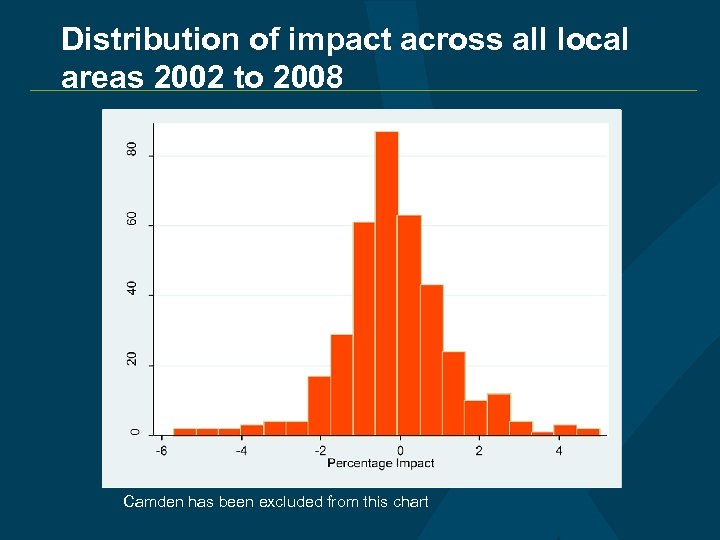
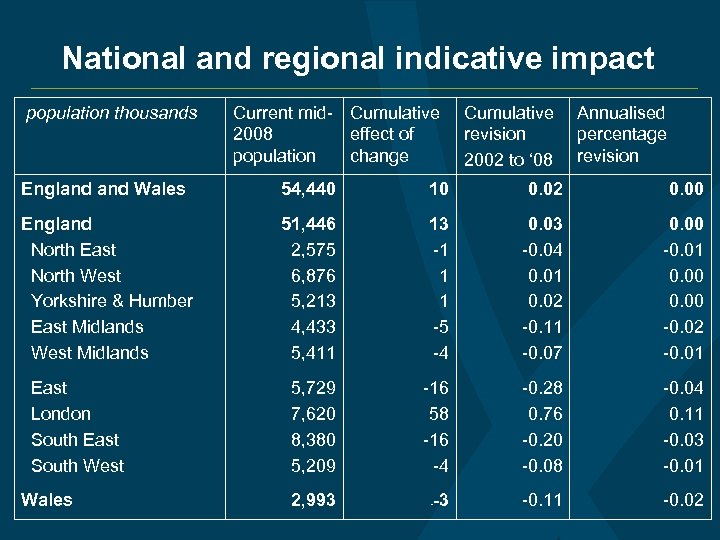
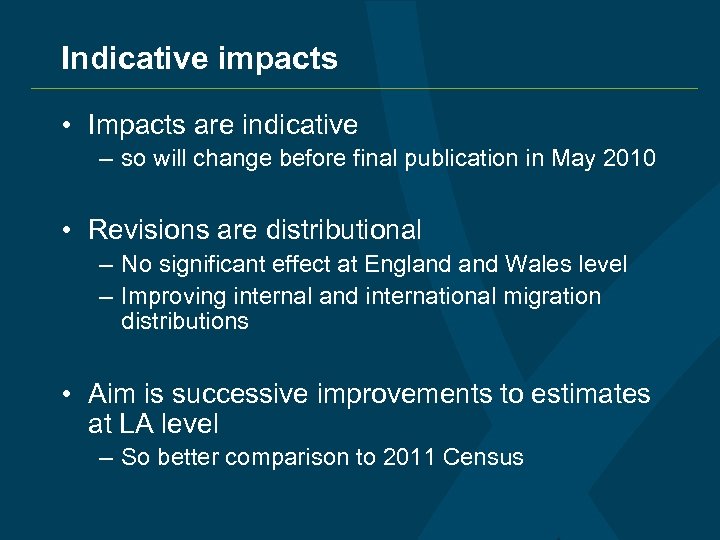 Indicative impacts • Impacts are indicative – so will change before final publication in May 2010 • Revisions are distributional – No significant effect at England Wales level – Improving internal and international migration distributions • Aim is successive improvements to estimates at LA level – So better comparison to 2011 Census
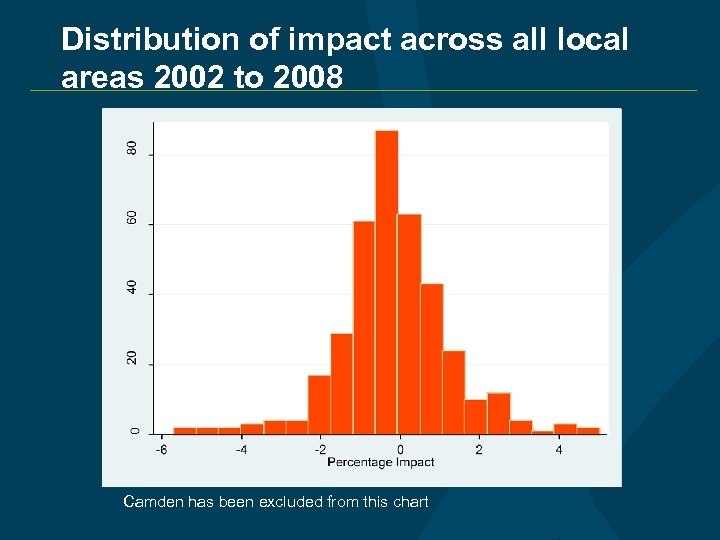 Distribution of impact across all local areas 2002 to 2008 Camden has been excluded from this chart
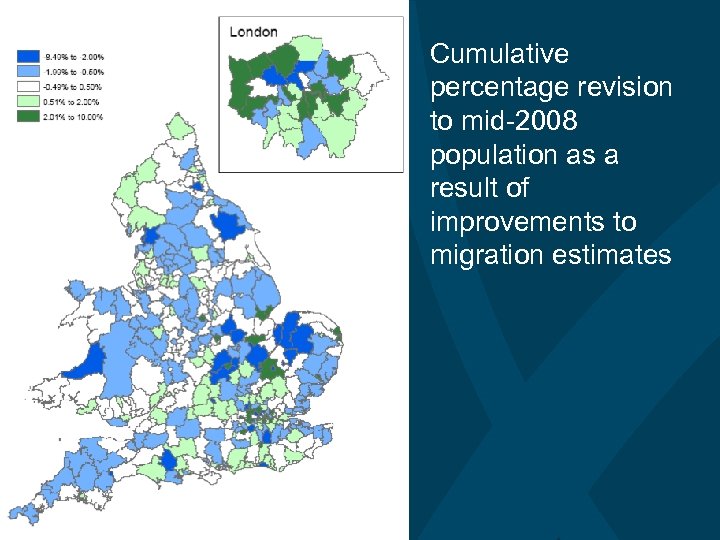
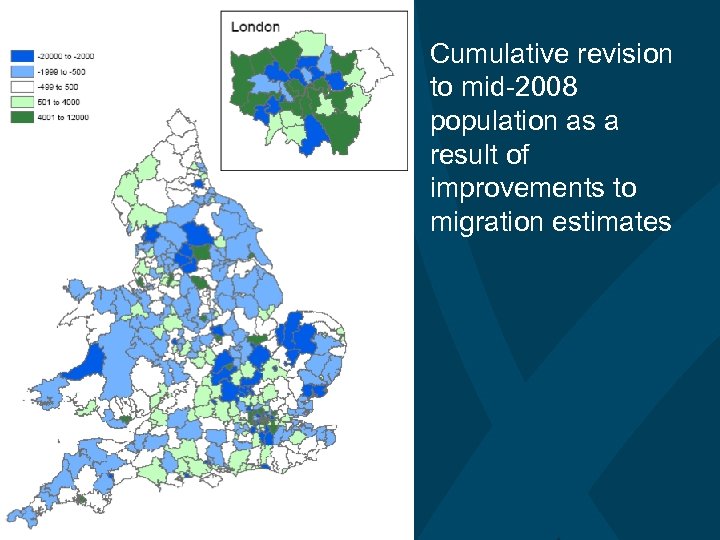
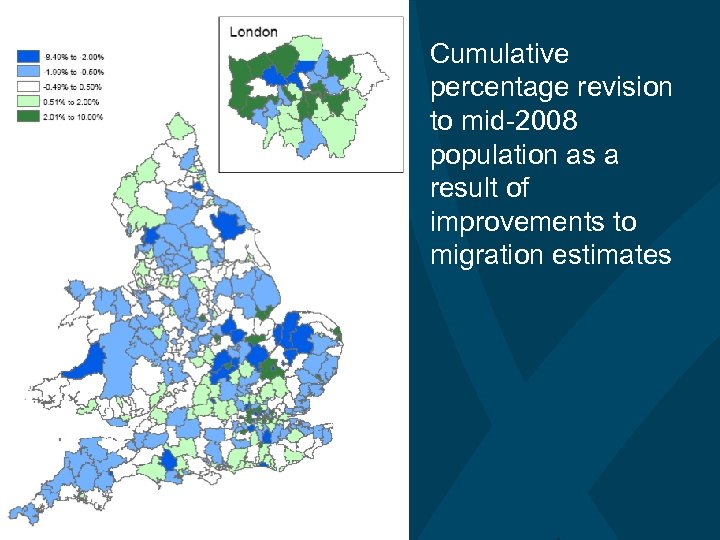 Cumulative percentage revision to mid-2008 population as a result of improvements to migration estimates
 Background • Importance of migration: – Key component of population change – Changing society – Economic situation • Drivers for improvement work: – relevant statistics – multiple purposes and customers – timeliness, quality • Census provides benchmark – Migration estimates used to measure population between censuses
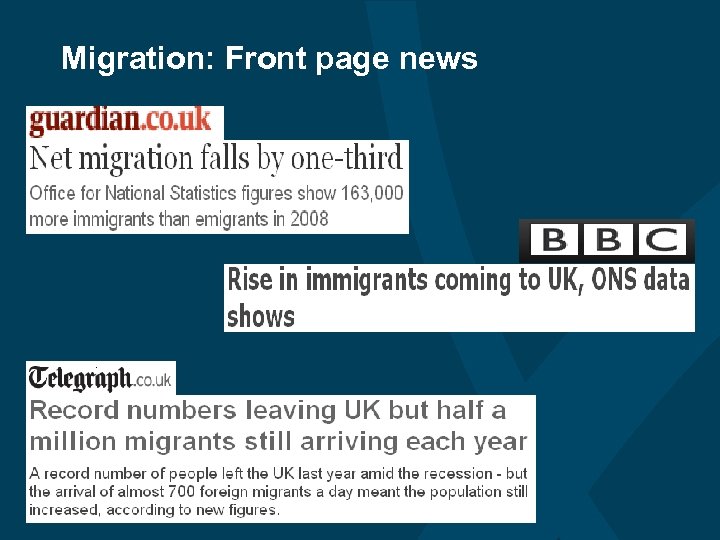 Migration: Front page news
 Context - Change
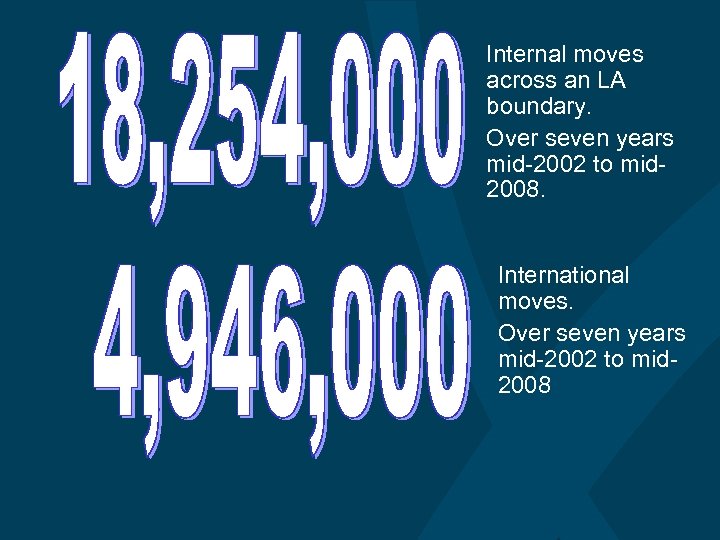 Internal moves across an LA boundary. Over seven years mid-2002 to mid 2008. International moves. Over seven years mid-2002 to mid 2008
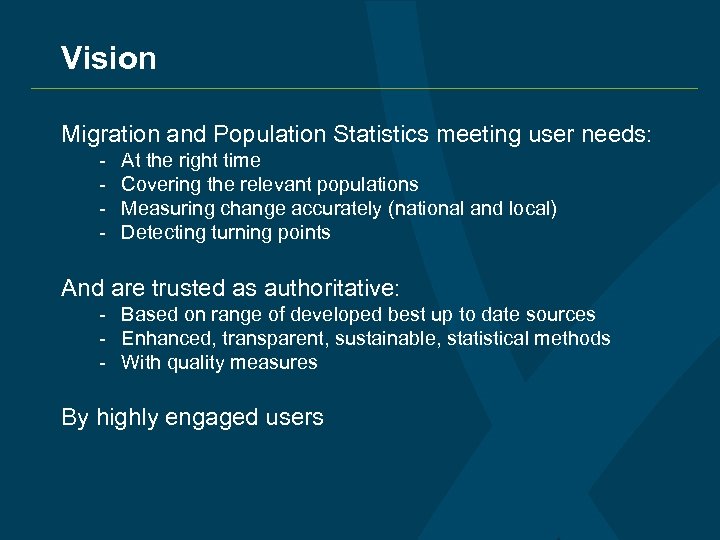 Vision Migration and Population Statistics meeting user needs: - At the right time Covering the relevant populations Measuring change accurately (national and local) Detecting turning points And are trusted as authoritative: - Based on range of developed best up to date sources - Enhanced, transparent, sustainable, statistical methods - With quality measures By highly engaged users
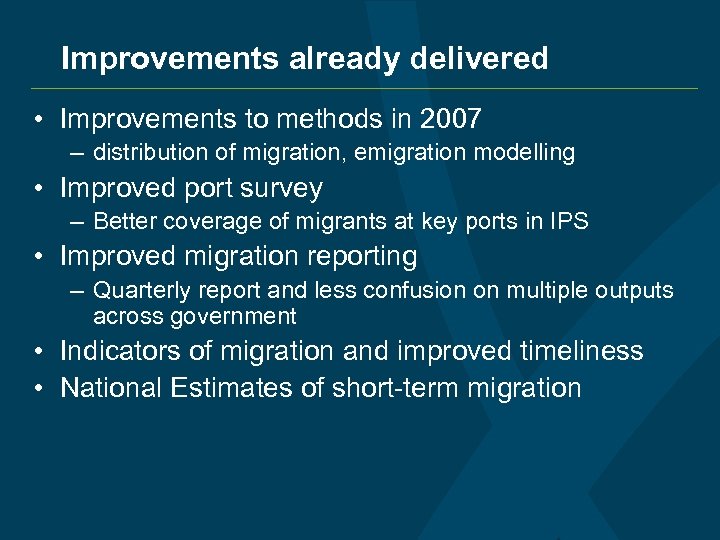 Improvements already delivered • Improvements to methods in 2007 – distribution of migration, emigration modelling • Improved port survey – Better coverage of migrants at key ports in IPS • Improved migration reporting – Quarterly report and less confusion on multiple outputs across government • Indicators of migration and improved timeliness • National Estimates of short-term migration
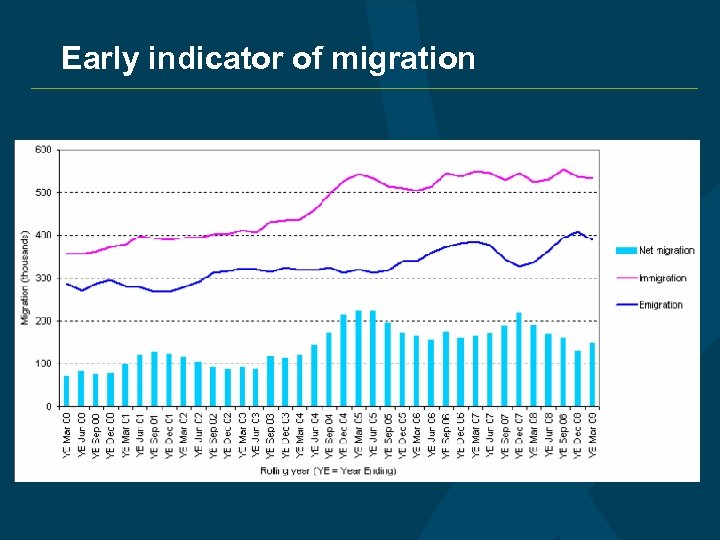 Early indicator of migration
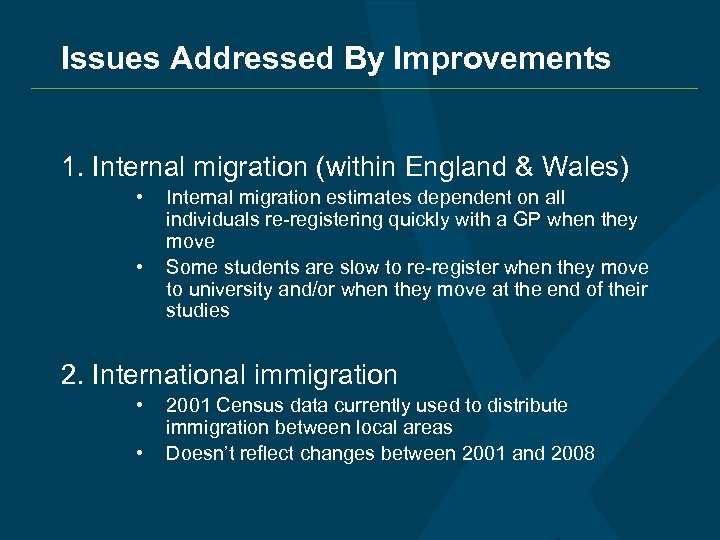 Issues Addressed By Improvements 1. Internal migration (within England & Wales) • • Internal migration estimates dependent on all individuals re-registering quickly with a GP when they move Some students are slow to re-register when they move to university and/or when they move at the end of their studies 2. International immigration • • 2001 Census data currently used to distribute immigration between local areas Doesn’t reflect changes between 2001 and 2008
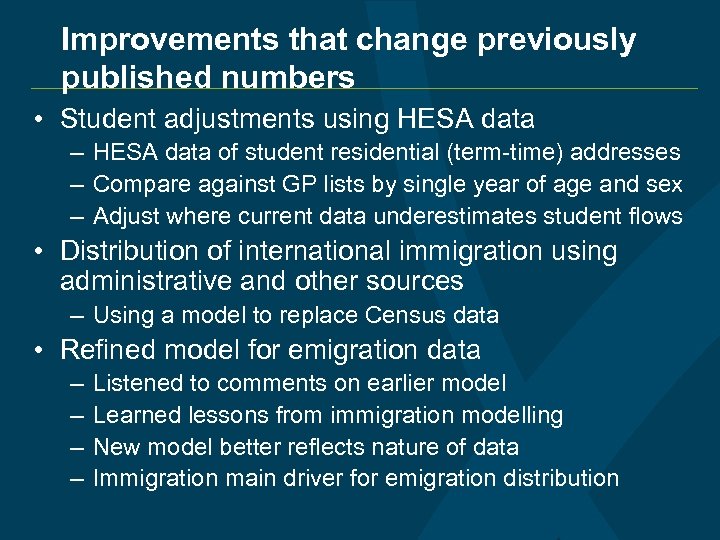 Improvements that change previously published numbers • Student adjustments using HESA data – HESA data of student residential (term-time) addresses – Compare against GP lists by single year of age and sex – Adjust where current data underestimates student flows • Distribution of international immigration using administrative and other sources – Using a model to replace Census data • Refined model for emigration data – – Listened to comments on earlier model Learned lessons from immigration modelling New model better reflects nature of data Immigration main driver for emigration distribution
 The Future • More extensive use of administrative data for statistical purposes – More data sharing gateways – Linking and matching between sources • Use of new data sources – e-Borders roll-out • Better quality measures – Ability to make statements about confidence in figures • 2011 Census – Basis of estimation for the next decade
 Centre for Demography User Engagement
 Overview • • • Aims of user engagement Timetable Supporting material How to respond What we’ve learned from QA groups Refinements
 Aims of user engagement • Provide all users with the opportunity to comment and ask questions • Seek user responses to specific questions • Document clearly the changes being made and the indicative impacts • Concurrent user engagement - Consultation on subnational population projections for England
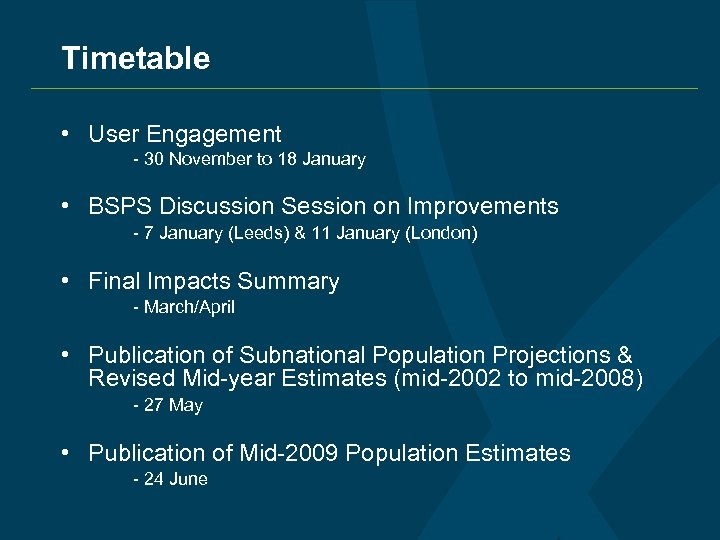 Timetable • User Engagement - 30 November to 18 January • BSPS Discussion Session on Improvements - 7 January (Leeds) & 11 January (London) • Final Impacts Summary - March/April • Publication of Subnational Population Projections & Revised Mid-year Estimates (mid-2002 to mid-2008) - 27 May • Publication of Mid-2009 Population Estimates - 24 June
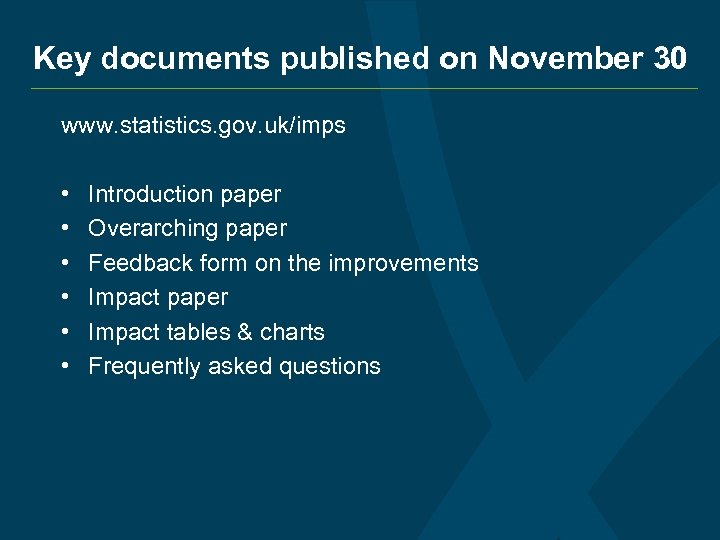 Key documents published on November 30 www. statistics. gov. uk/imps • • • Introduction paper Overarching paper Feedback form on the improvements Impact paper Impact tables & charts Frequently asked questions
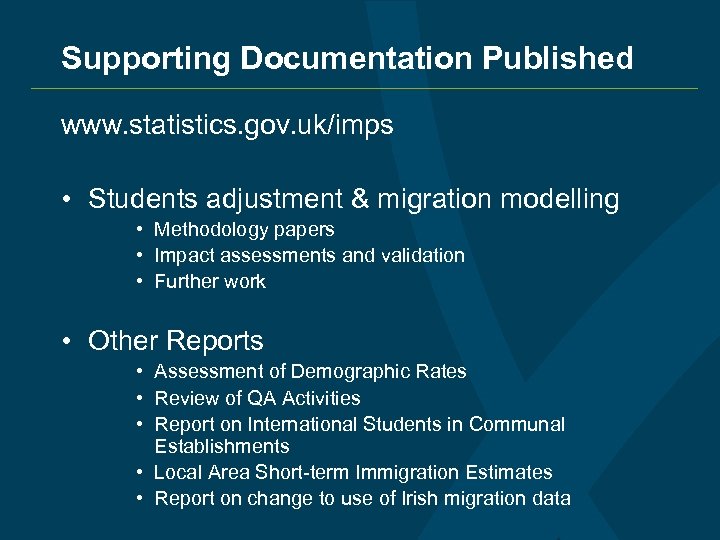 Supporting Documentation Published www. statistics. gov. uk/imps • Students adjustment & migration modelling • Methodology papers • Impact assessments and validation • Further work • Other Reports • Assessment of Demographic Rates • Review of QA Activities • Report on International Students in Communal Establishments • Local Area Short-term Immigration Estimates • Report on change to use of Irish migration data
 How to respond • imps@ons. gov. uk • Feedback questionnaire • Responses supported by relevant information • Questions for clarification
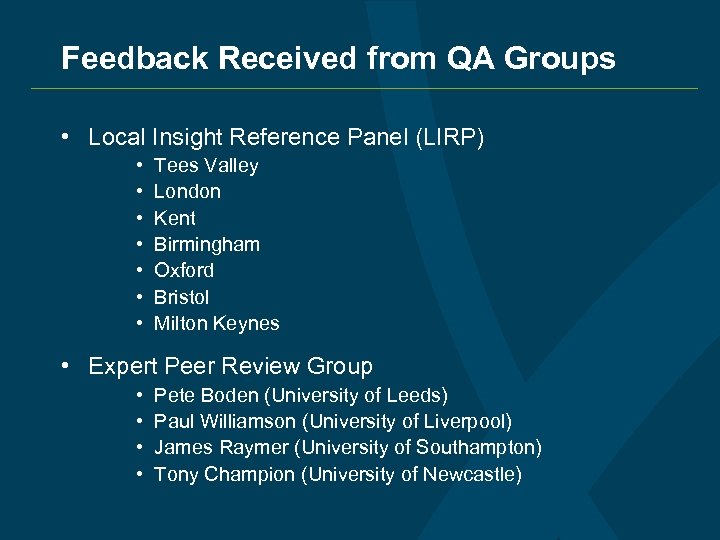 Feedback Received from QA Groups • Local Insight Reference Panel (LIRP) • • Tees Valley London Kent Birmingham Oxford Bristol Milton Keynes • Expert Peer Review Group • • Pete Boden (University of Leeds) Paul Williamson (University of Liverpool) James Raymer (University of Southampton) Tony Champion (University of Newcastle)
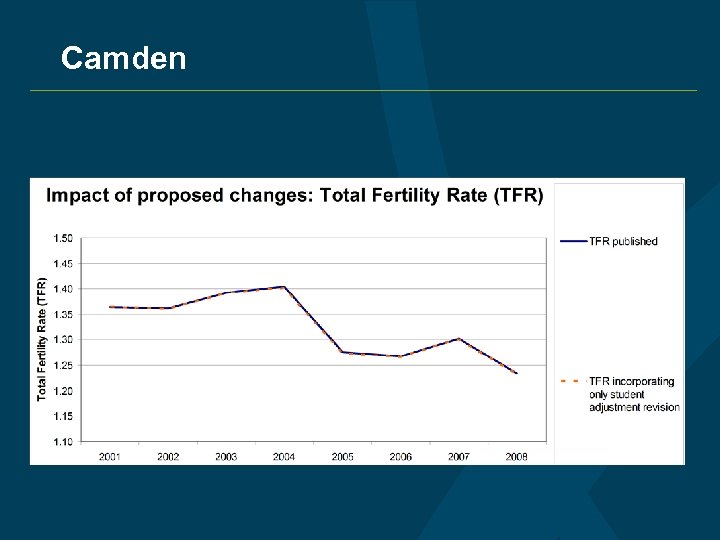
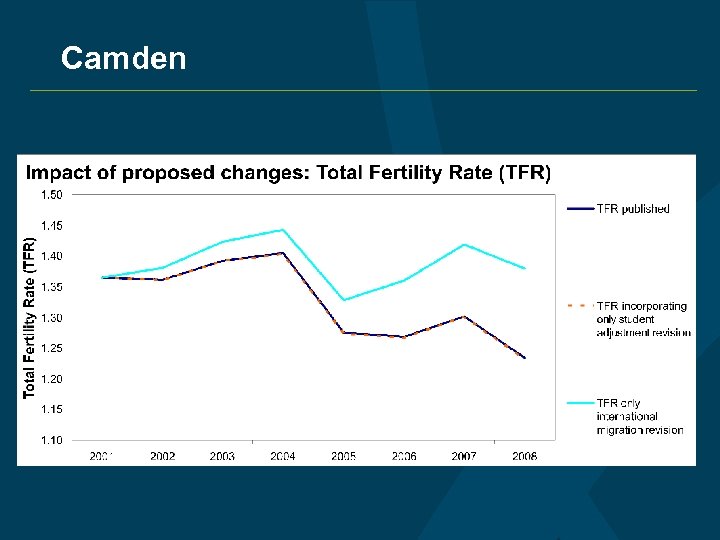
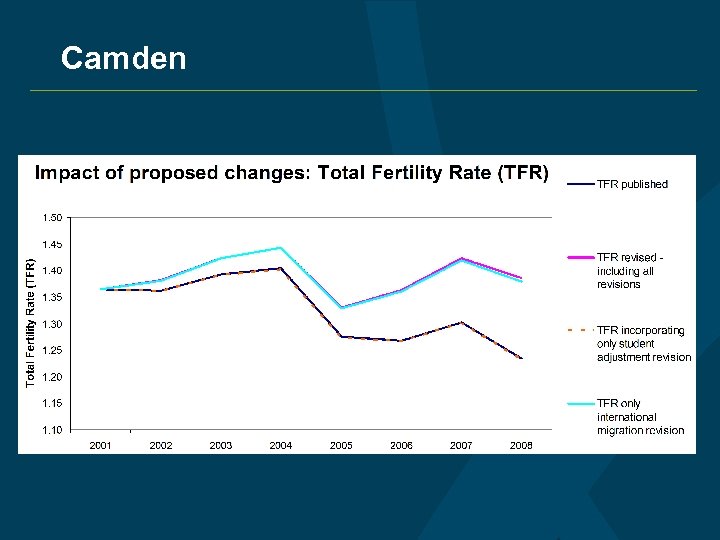
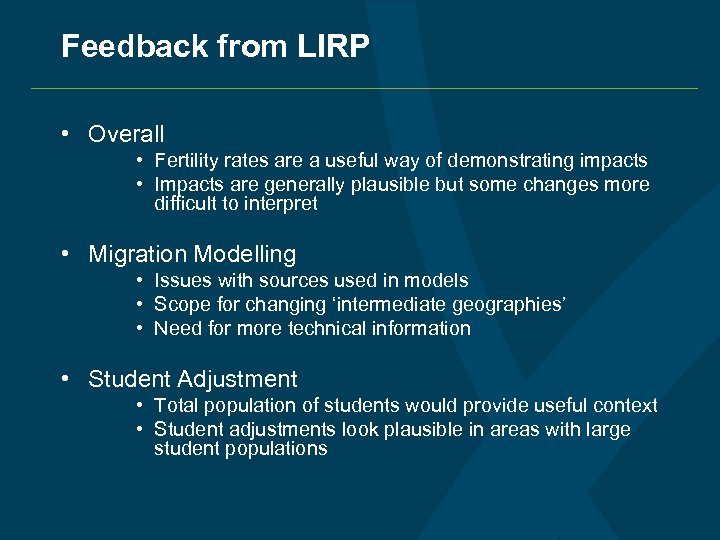 Feedback from LIRP • Overall • Fertility rates are a useful way of demonstrating impacts • Impacts are generally plausible but some changes more difficult to interpret • Migration Modelling • Issues with sources used in models • Scope for changing ‘intermediate geographies’ • Need for more technical information • Student Adjustment • Total population of students would provide useful context • Student adjustments look plausible in areas with large student populations
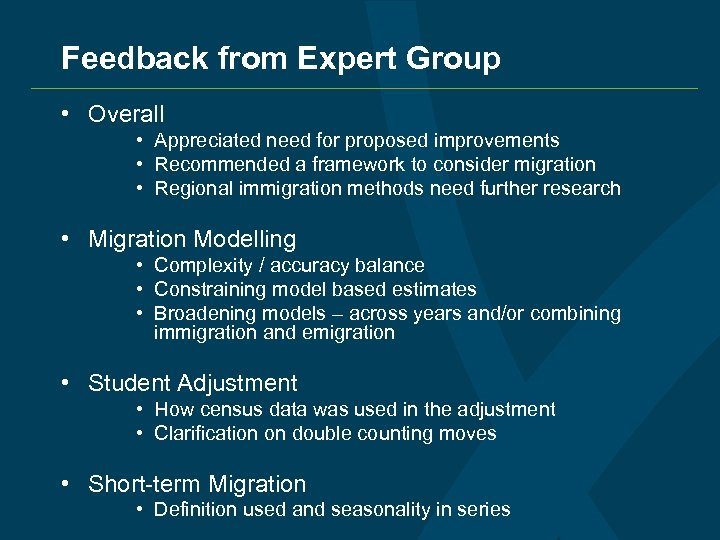 Feedback from Expert Group • Overall • Appreciated need for proposed improvements • Recommended a framework to consider migration • Regional immigration methods need further research • Migration Modelling • Complexity / accuracy balance • Constraining model based estimates • Broadening models – across years and/or combining immigration and emigration • Student Adjustment • How census data was used in the adjustment • Clarification on double counting moves • Short-term Migration • Definition used and seasonality in series
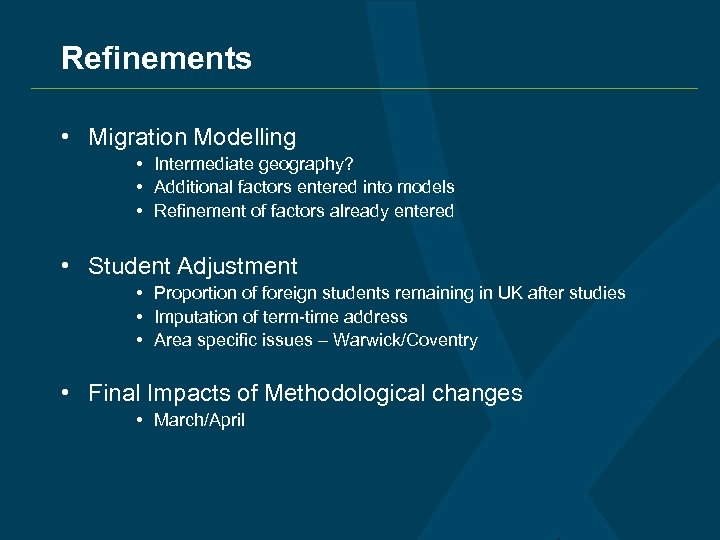 Refinements • Migration Modelling • Intermediate geography? • Additional factors entered into models • Refinement of factors already entered • Student Adjustment • Proportion of foreign students remaining in UK after studies • Imputation of term-time address • Area specific issues – Warwick/Coventry • Final Impacts of Methodological changes • March/April
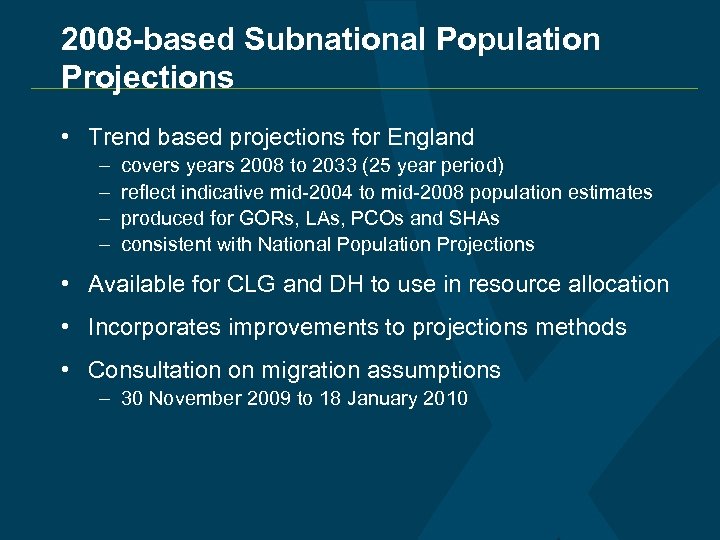 2008 -based Subnational Population Projections • Trend based projections for England – – covers years 2008 to 2033 (25 year period) reflect indicative mid-2004 to mid-2008 population estimates produced for GORs, LAs, PCOs and SHAs consistent with National Population Projections • Available for CLG and DH to use in resource allocation • Incorporates improvements to projections methods • Consultation on migration assumptions – 30 November 2009 to 18 January 2010
 Centre for Demography Improvements to Migration and Population Statistics Indicative impacts
 Indicative impacts • • Indicative impacts How revisions have an effect Distribution of revisions An example of components of change Areas with biggest Changes Camden - a case study Demonstrating an improvement
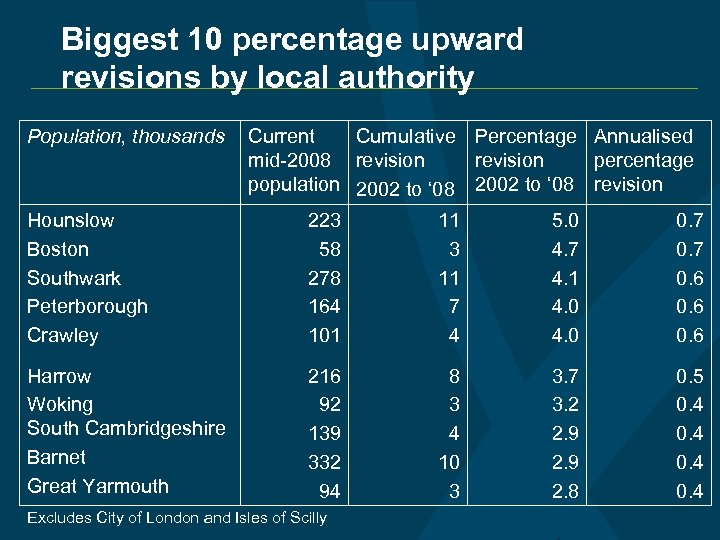
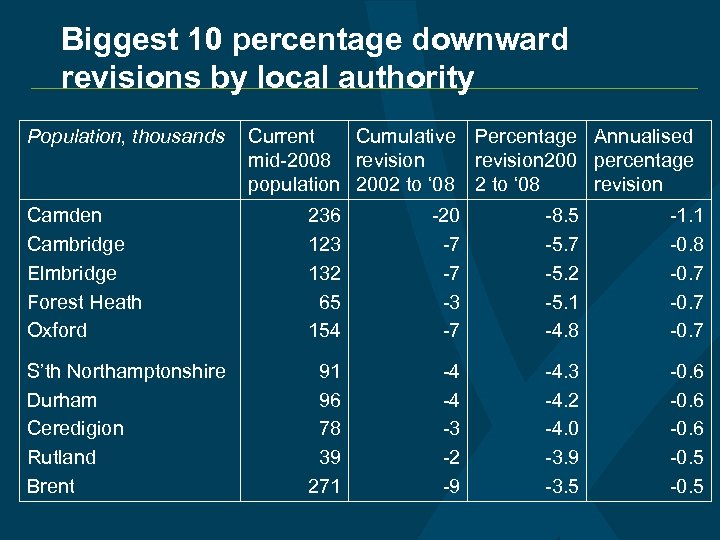
 Indicative impacts • Impacts are indicative – Data will change – Small changes in most areas – Some areas may change substantially • Impacts will change because of – Further work – Results of the comments received – Final LA results • summary will be published March/April 2010 • full results will be published May 27 2010
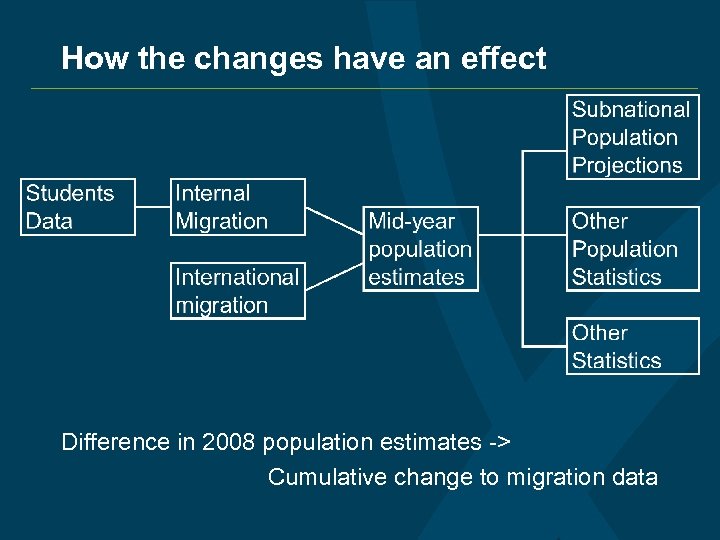 How the changes have an effect Difference in 2008 population estimates -> Cumulative change to migration data
 Components of change • Each revision +ve or –ve • Revisions interact • Changes data from 2002 to 2008 • Students adjustment to internal migration –Moves to university –Moves after university –Double counting adjustment • International migration –Modelling in-migration –Updated out-migration model • Other changes (small)
 Distribution of impact across all local areas 2002 to 2008 Camden has been excluded from this chart
 Cumulative percentage revision to mid-2008 population as a result of improvements to migration estimates
 Cumulative revision to mid-2008 population as a result of improvements to migration estimates
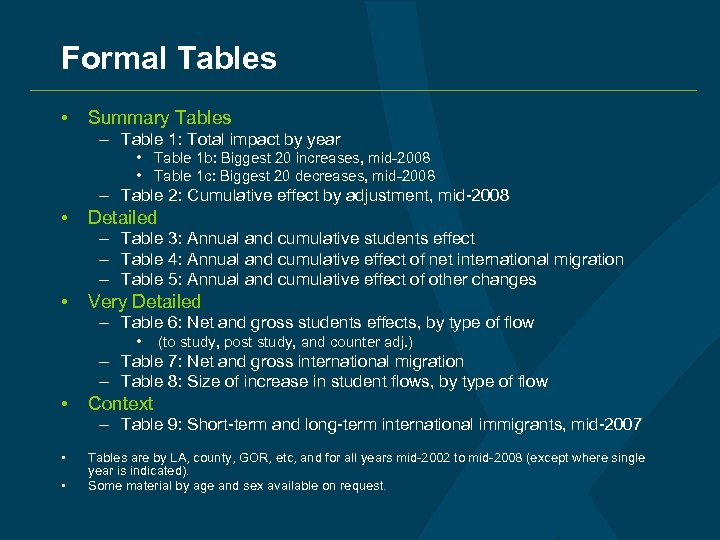
 Changes at local authority level • Changing distribution of internal and international migration at LA level • Biggest cause of change at LA level tends to be international migration redistribution – But notable exceptions • Cause of change shown in Table 2 – In delegate packs.
 Centre for Demography Example – Manchester Cumulative revisions 2002 to 2008
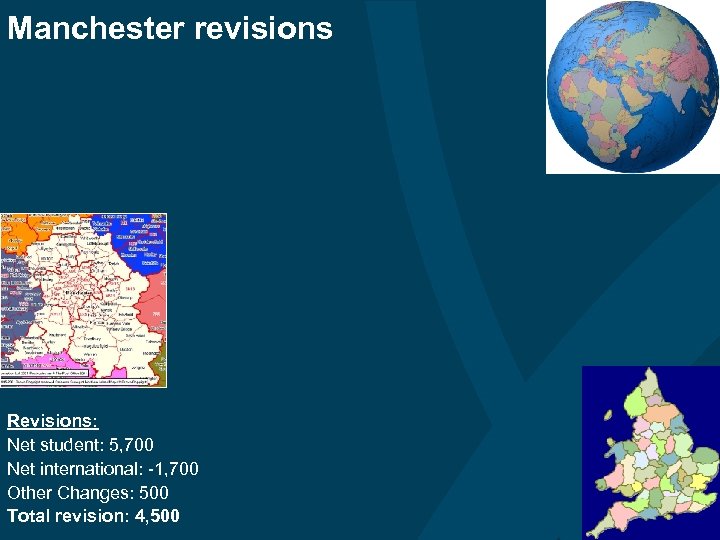 Manchester revisions Revisions: Net student: 5, 700 Net international: -1, 700 Other Changes: 500 Total revision: 4, 500
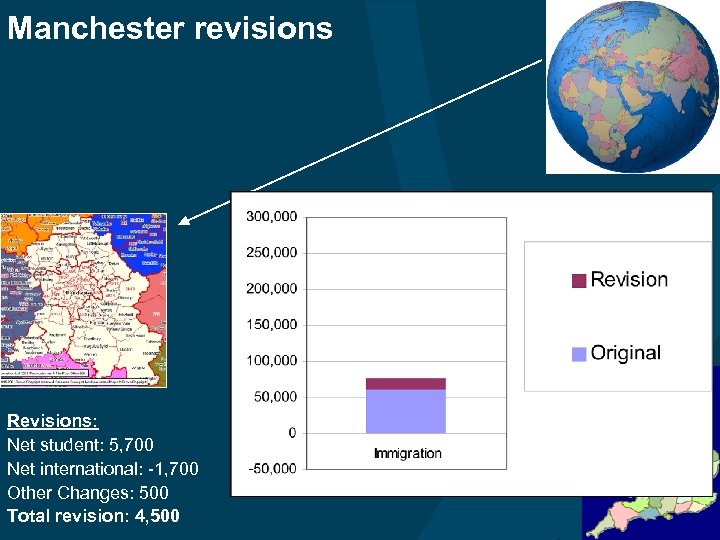 Manchester revisions Revisions: Net student: 5, 700 Net international: -1, 700 Other Changes: 500 Total revision: 4, 500
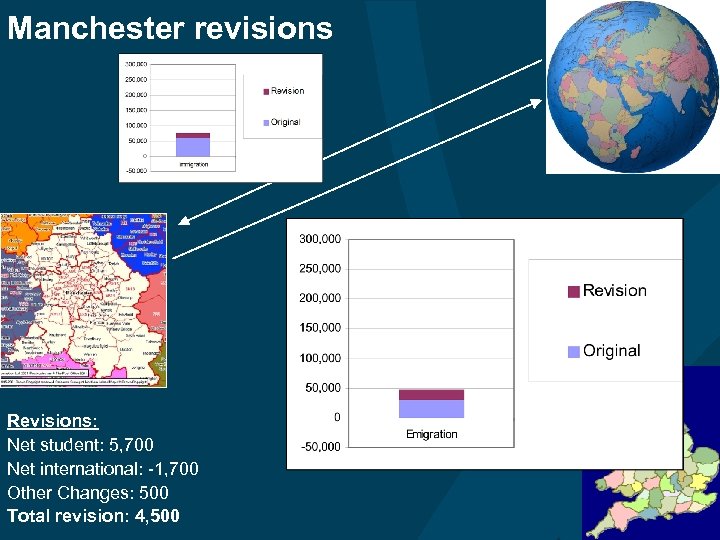 Manchester revisions Revisions: Net student: 5, 700 Net international: -1, 700 Other Changes: 500 Total revision: 4, 500
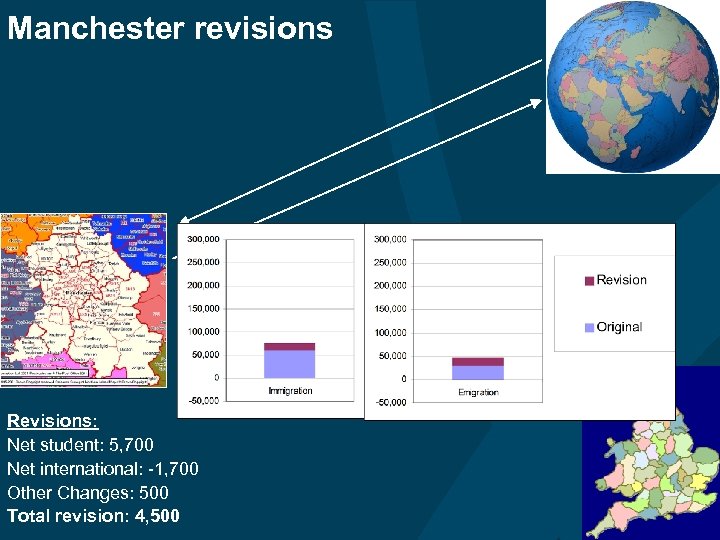 Manchester revisions Revisions: Net student: 5, 700 Net international: -1, 700 Other Changes: 500 Total revision: 4, 500
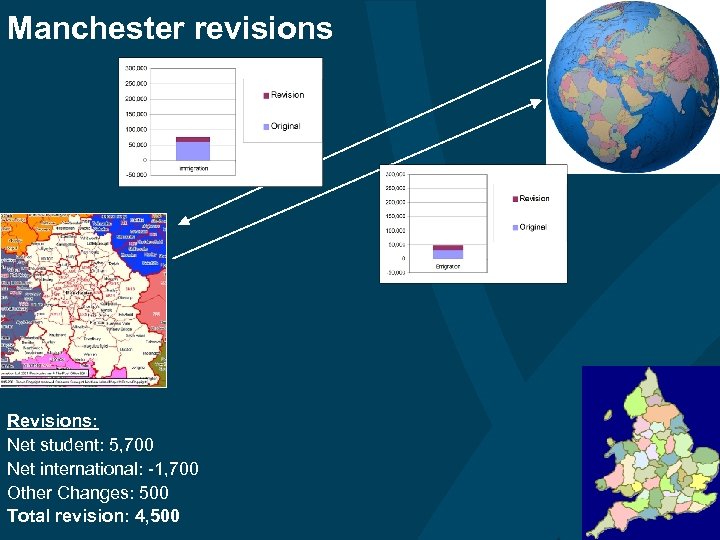 Manchester revisions Revisions: Net student: 5, 700 Net international: -1, 700 Other Changes: 500 Total revision: 4, 500
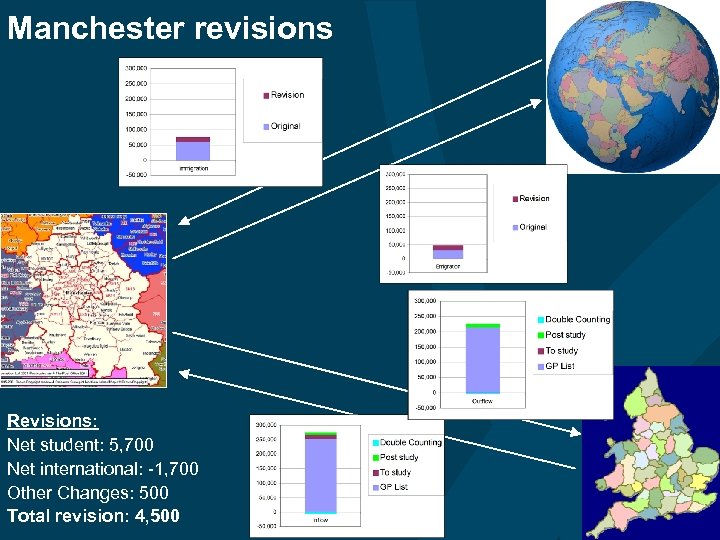 Manchester revisions Revisions: Net student: 5, 700 Net international: -1, 700 Other Changes: 500 Total revision: 4, 500
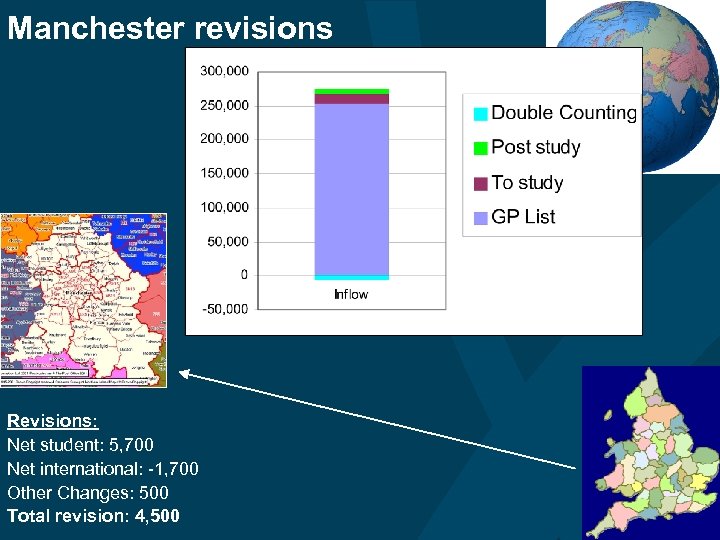 Manchester revisions Revisions: Net student: 5, 700 Net international: -1, 700 Other Changes: 500 Total revision: 4, 500
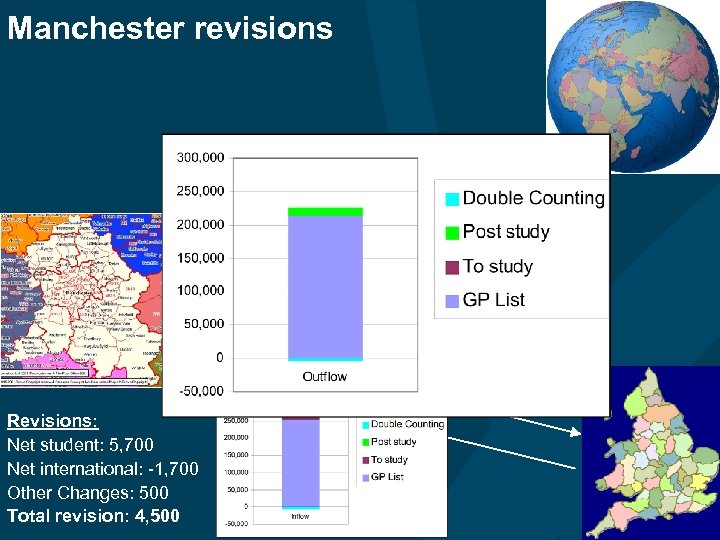 Manchester revisions Revisions: Net student: 5, 700 Net international: -1, 700 Other Changes: 500 Total revision: 4, 500
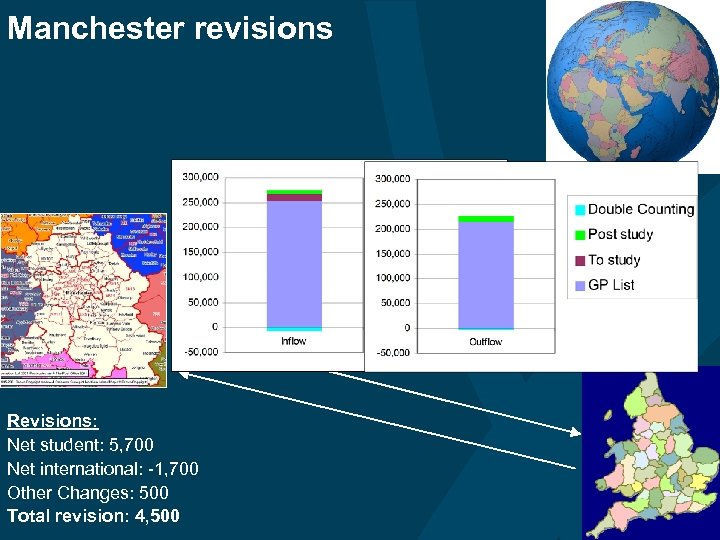 Manchester revisions Revisions: Net student: 5, 700 Net international: -1, 700 Other Changes: 500 Total revision: 4, 500
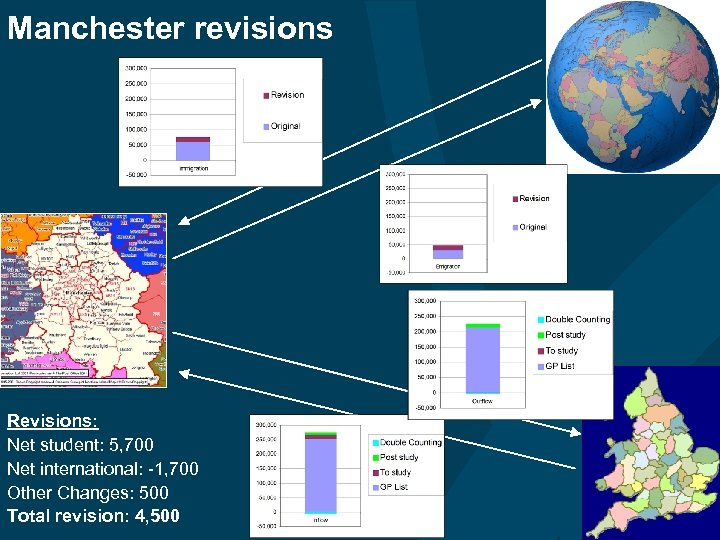 Manchester revisions Revisions: Net student: 5, 700 Net international: -1, 700 Other Changes: 500 Total revision: 4, 500
 Biggest 10 percentage upward revisions by local authority Population, thousands Current Cumulative Percentage Annualised mid-2008 revision percentage population 2002 to ‘ 08 revision Hounslow Boston Southwark Peterborough Crawley 223 58 278 164 101 11 3 11 7 4 5. 0 4. 7 4. 1 4. 0 0. 7 0. 6 Harrow Woking South Cambridgeshire Barnet Great Yarmouth 216 92 139 332 94 8 3 4 10 3 3. 7 3. 2 2. 9 2. 8 0. 5 0. 4 Excludes City of London and Isles of Scilly
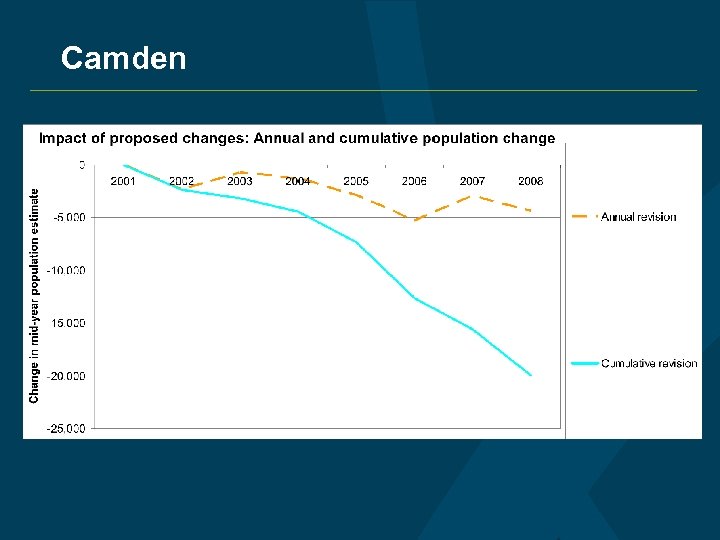
 Biggest 10 percentage downward revisions by local authority Population, thousands Current Cumulative Percentage Annualised mid-2008 revision 200 percentage population 2002 to ‘ 08 revision Camden Cambridge Elmbridge Forest Heath Oxford 236 123 132 65 154 -20 -7 -7 -3 -7 -8. 5 -5. 7 -5. 2 -5. 1 -4. 8 -1. 1 -0. 8 -0. 7 S’th Northamptonshire Durham Ceredigion Rutland Brent 91 96 78 39 271 -4 -4 -3 -2 -9 -4. 3 -4. 2 -4. 0 -3. 9 -3. 5 -0. 6 -0. 5
 National and regional indicative impact population thousands Current mid- Cumulative 2008 effect of population change Cumulative revision 2002 to ‘ 08 Annualised percentage revision England Wales 54, 440 10 0. 02 0. 00 England North East North West Yorkshire & Humber East Midlands West Midlands 51, 446 2, 575 6, 876 5, 213 4, 433 5, 411 13 -1 1 1 -5 -4 0. 03 -0. 04 0. 01 0. 02 -0. 11 -0. 07 0. 00 -0. 01 0. 00 -0. 02 -0. 01 5, 729 7, 620 8, 380 5, 209 -16 58 -16 -4 -0. 28 0. 76 -0. 20 -0. 08 -0. 04 0. 11 -0. 03 -0. 01 -3 -0. 11 -0. 02 East London South East South West Wales 2, 993 -
 Formal Tables • Summary Tables – Table 1: Total impact by year • Table 1 b: Biggest 20 increases, mid-2008 • Table 1 c: Biggest 20 decreases, mid-2008 – Table 2: Cumulative effect by adjustment, mid-2008 • Detailed – Table 3: Annual and cumulative students effect – Table 4: Annual and cumulative effect of net international migration – Table 5: Annual and cumulative effect of other changes • Very Detailed – Table 6: Net and gross students effects, by type of flow • (to study, post study, and counter adj. ) – Table 7: Net and gross international migration – Table 8: Size of increase in student flows, by type of flow • Context – Table 9: Short-term and long-term international immigrants, mid-2007 • • Tables are by LA, county, GOR, etc, and for all years mid-2002 to mid-2008 (except where single year is indicated). Some material by age and sex available on request.
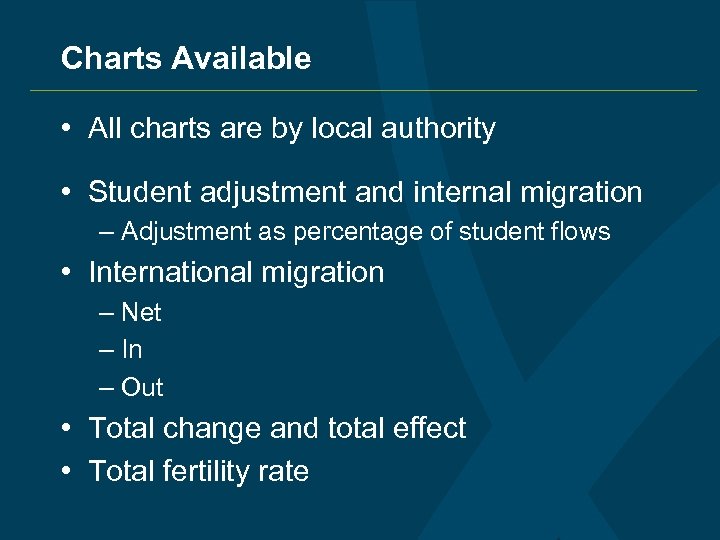 Charts Available • All charts are by local authority • Student adjustment and internal migration – Adjustment as percentage of student flows • International migration – Net – In – Out • Total change and total effect • Total fertility rate
 Centre for Demography Case Study - Camden
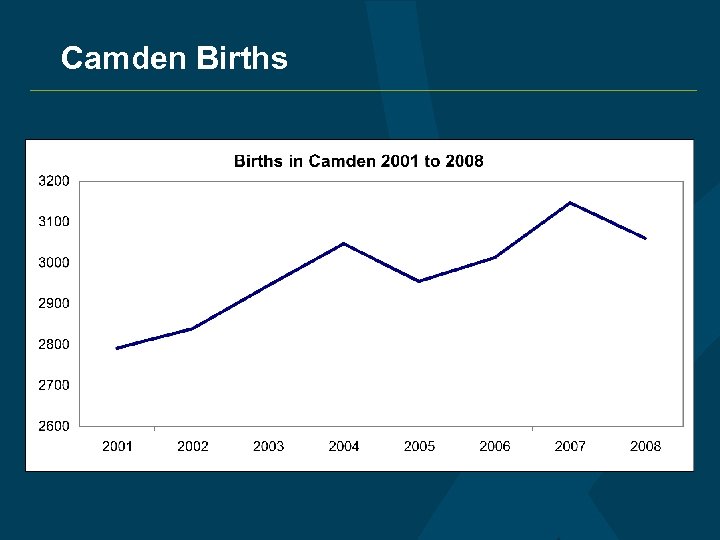 Camden Births
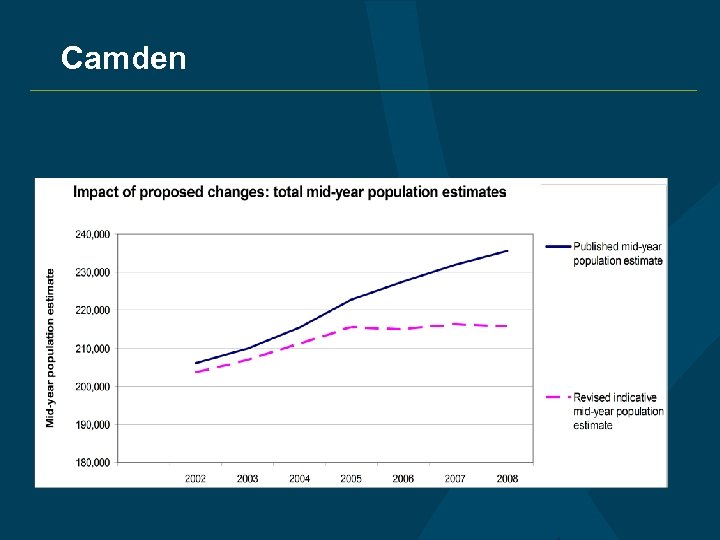
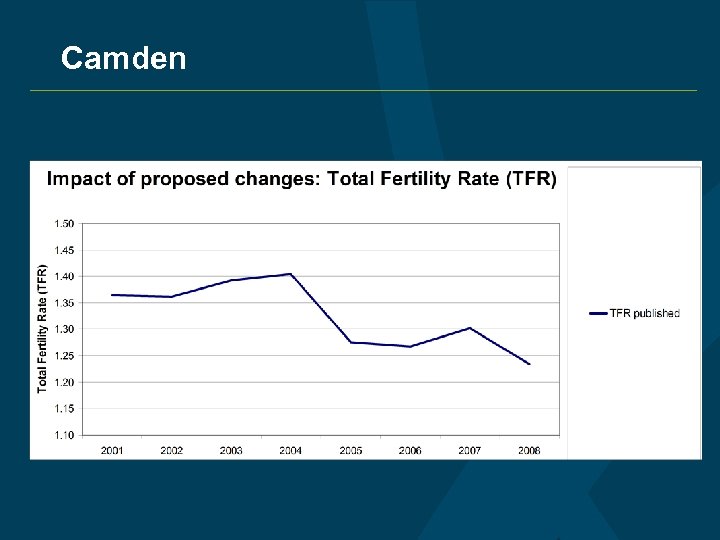 Camden
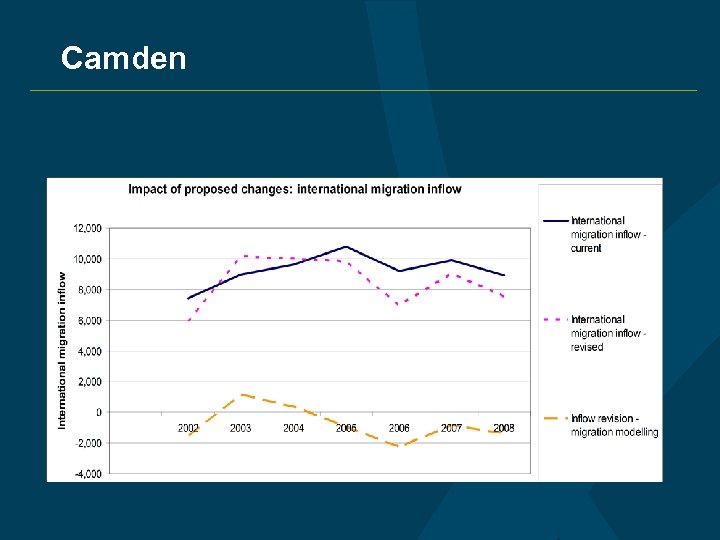
 Camden
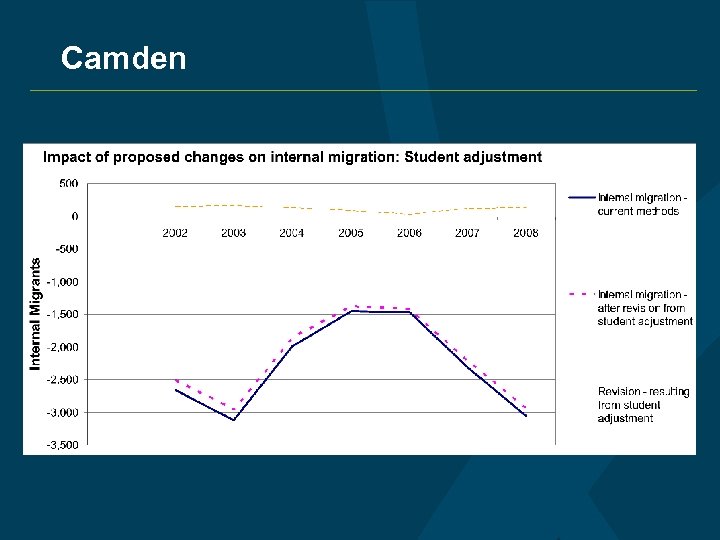
 Camden
 Camden
 Camden
 Camden
 Camden
 Camden
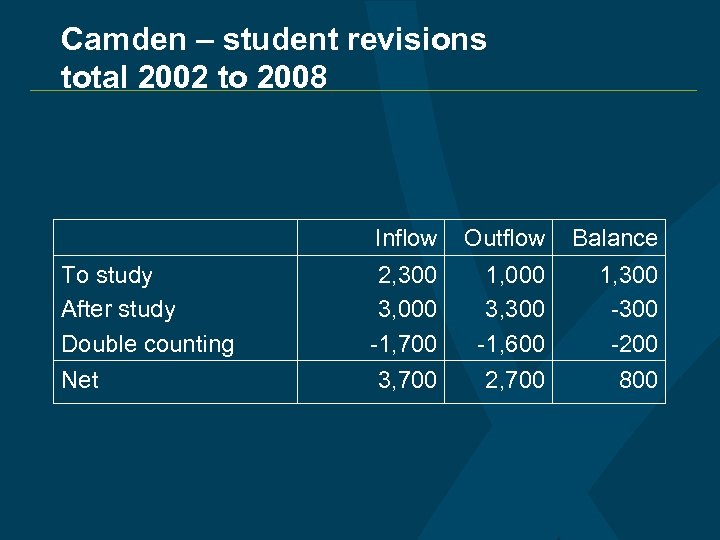 Camden – student revisions total 2002 to 2008 Inflow To study After study Double counting Net Outflow Balance 2, 300 3, 000 -1, 700 1, 000 3, 300 -1, 600 1, 300 -200 3, 700 2, 700 800
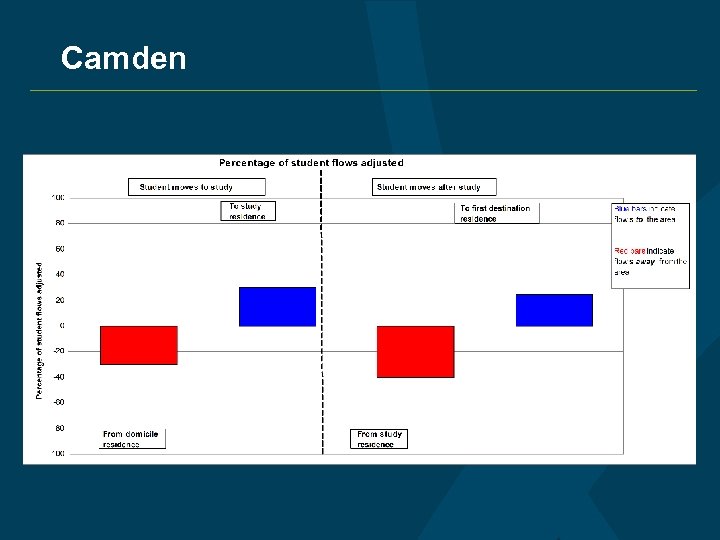 Camden
 Centre for Demography Demonstrating an improvement
 Issues to be addressed by the new methodology… • Some young people, particularly young men, not changing their GP registration soon after they move • Students a sub-set of young people, who necessarily cluster in certain areas of the country • Affects estimation of students moving to university and moving away after their studies • Some encouragement to change GP registration at start of studies, but no encouragement when students leave
 Solution: what’s new? • Higher Education Statistics Agency (HESA) data • Data on all HE students • New term-time postcode detail collected by HESA for all institutions from 2007/08 academic year • New detail received March 2009
 Modelling in-migration • Current method uses 2001 Census data to distribute to LA level • Clear changes in migration trends since 2001 e. g. EU accession • Concept proved with introduction of local authority out-migration models in 2007
 What modelling achieves • Improves timeliness at LA level • Potential use of administrative data • GP registrations (Flag 4 s) • National Insurance Number (NINo) allocations to overseas nationals • Annually updated counts available • Provide counts at local authority level
 Demonstrating an improved methodology • Student adjustment uses data from an independent source that gives actual student moves missed by patient registers • Student adjustments after study – Carefully verified by other data – Based on known student numbers – Using distributions which have been carefully corroborated • International immigration estimation model – Uses updatable sources to distribute instead of fixed 2001 Census data – Model makes use of the best features from a range of administrative and other sources – Minimises the impact of definitional issues with administrative sources • International emigration model – – Updated to reflect comments made previously More technically robust Better reflects data structure Incorporates improved immigration data
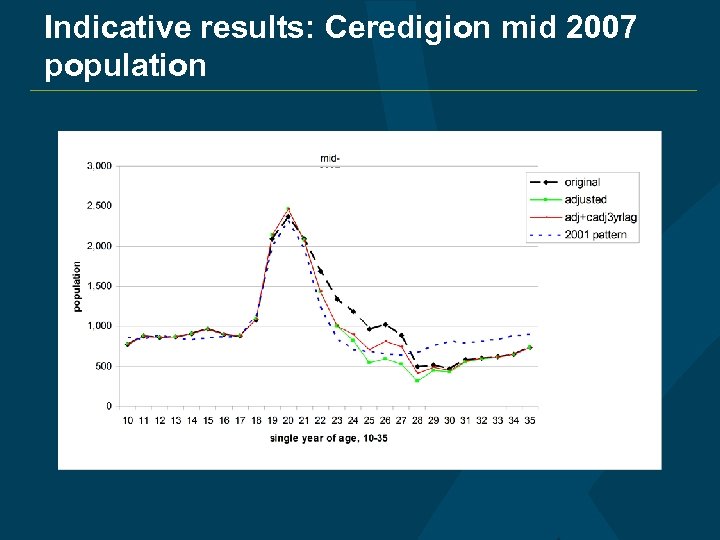
 Demonstrating an improvement • Demographic analysis shows improvement in key areas (e. g. Camden) • Analysis of student areas shows much more plausible age profiles after student adjustment (see June Roadshow slides)
 Indicative results: Ceredigion mid 2007 population
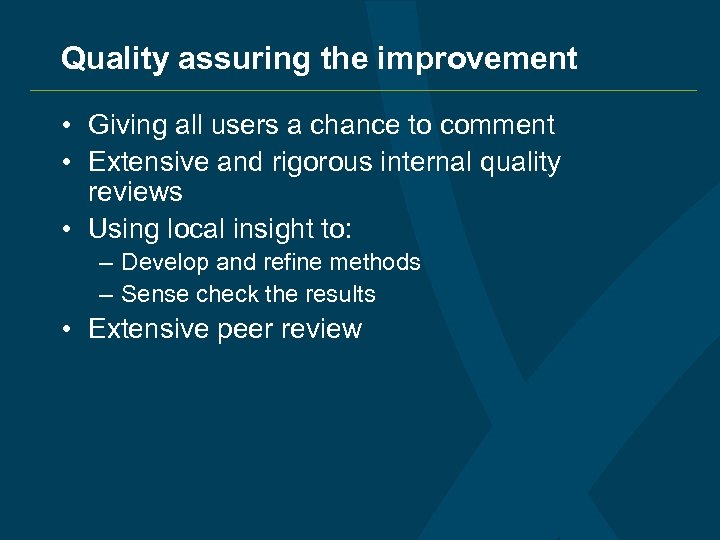 Quality assuring the improvement • Giving all users a chance to comment • Extensive and rigorous internal quality reviews • Using local insight to: – Develop and refine methods – Sense check the results • Extensive peer review
 Centre for Demography Short-term Immigration Estimates at Local Area Level
 Introduction • Local Authority level short-term immigration estimates published for first time in October 2009 as part of a research report • Estimates are available for: • • The year to mid-2007 In-flows only Moves made for between 1 and 12 months All reasons for visit (with a worker/non-worker breakdown provided) • England & Wales level estimates previously published for mid-2004 to mid-2007
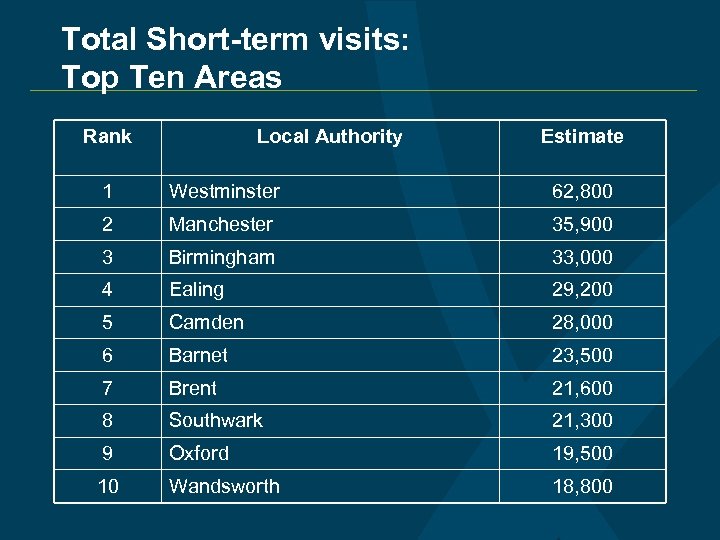 Total Short-term visits: Top Ten Areas Rank Local Authority Estimate 1 Westminster 62, 800 2 Manchester 35, 900 3 Birmingham 33, 000 4 Ealing 29, 200 5 Camden 28, 000 6 Barnet 23, 500 7 Brent 21, 600 8 Southwark 21, 300 9 Oxford 19, 500 10 Wandsworth 18, 800
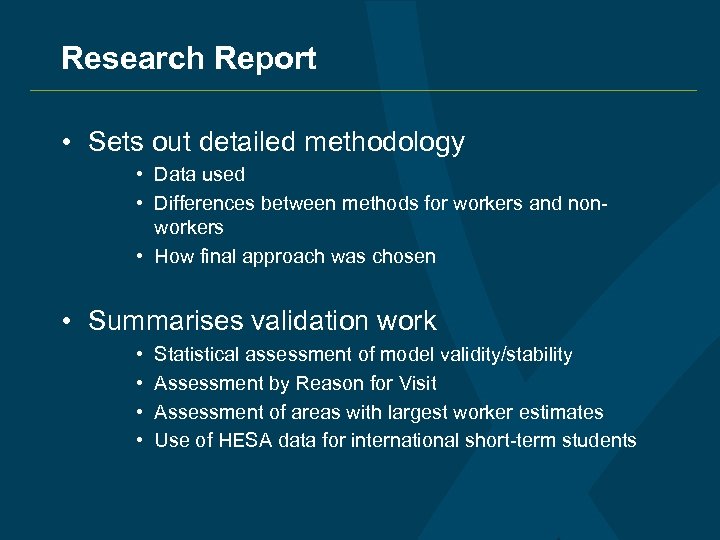 Research Report • Sets out detailed methodology • Data used • Differences between methods for workers and nonworkers • How final approach was chosen • Summarises validation work • • Statistical assessment of model validity/stability Assessment by Reason for Visit Assessment of areas with largest worker estimates Use of HESA data for international short-term students
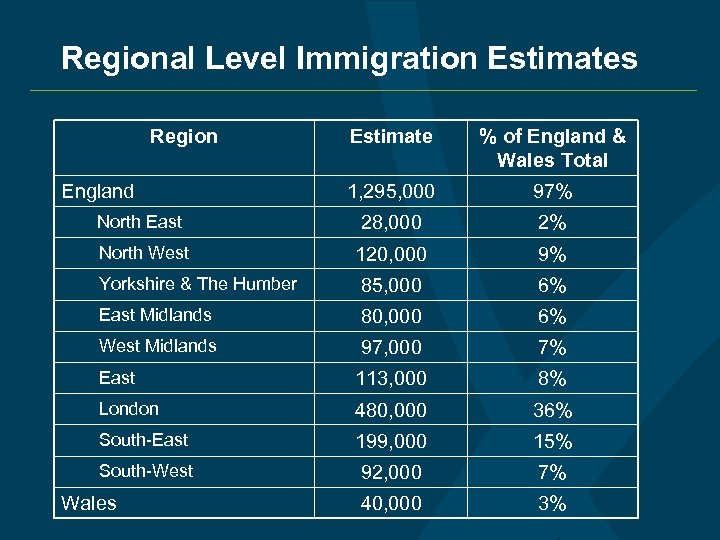 Regional Level Immigration Estimates Region Estimate % of England & Wales Total 1, 295, 000 97% North East 28, 000 2% North West 120, 000 9% Yorkshire & The Humber 85, 000 6% East Midlands 80, 000 6% West Midlands 97, 000 7% East 113, 000 8% London 480, 000 36% South-East 199, 000 15% South-West 92, 000 7% 40, 000 3% England Wales
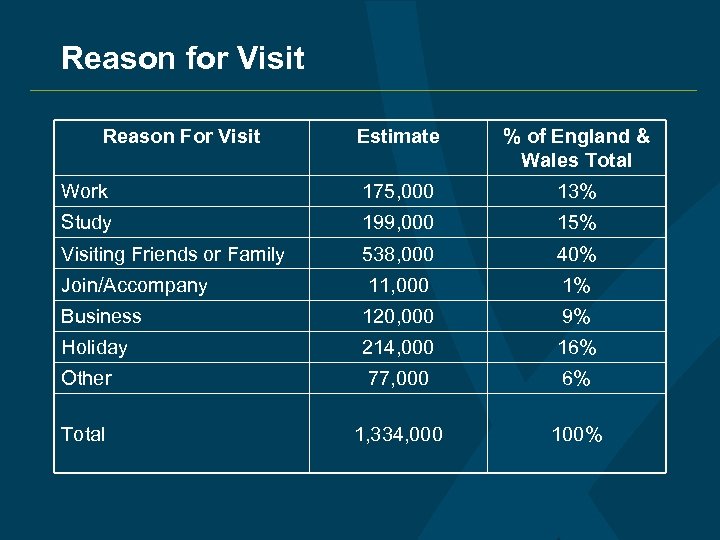 Reason for Visit Reason For Visit Estimate % of England & Wales Total Work 175, 000 13% Study 199, 000 15% Visiting Friends or Family 538, 000 40% Join/Accompany 11, 000 1% Business 120, 000 9% Holiday 214, 000 16% Other 77, 000 6% Total 1, 334, 000 100%
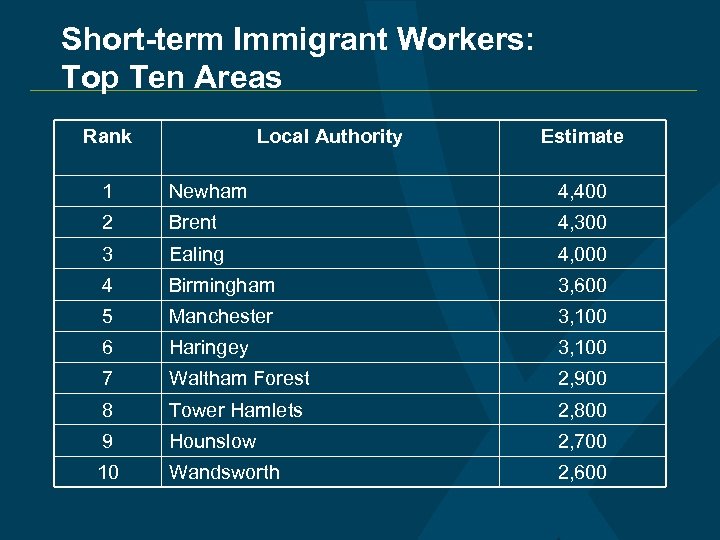 Short-term Immigrant Workers: Top Ten Areas Rank Local Authority Estimate 1 Newham 4, 400 2 Brent 4, 300 3 Ealing 4, 000 4 Birmingham 3, 600 5 Manchester 3, 100 6 Haringey 3, 100 7 Waltham Forest 2, 900 8 Tower Hamlets 2, 800 9 Hounslow 2, 700 10 Wandsworth 2, 600
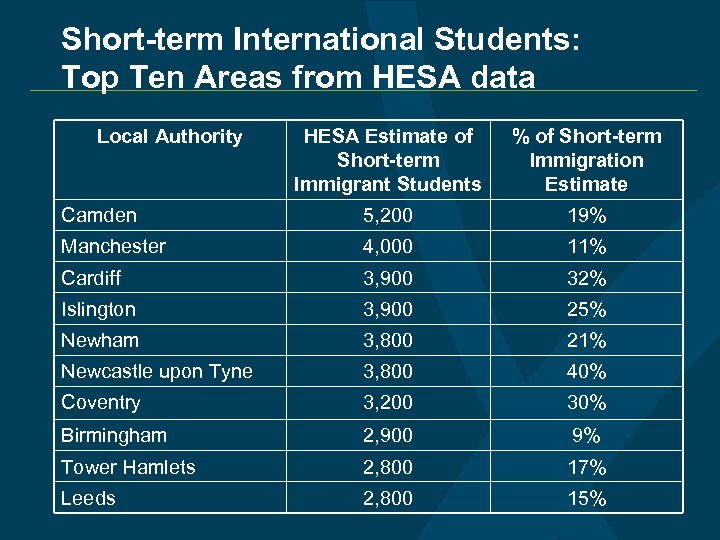 Short-term International Students: Top Ten Areas from HESA data Local Authority HESA Estimate of Short-term Immigrant Students % of Short-term Immigration Estimate Camden 5, 200 19% Manchester 4, 000 11% Cardiff 3, 900 32% Islington 3, 900 25% Newham 3, 800 21% Newcastle upon Tyne 3, 800 40% Coventry 3, 200 30% Birmingham 2, 900 9% Tower Hamlets 2, 800 17% Leeds 2, 800 15%
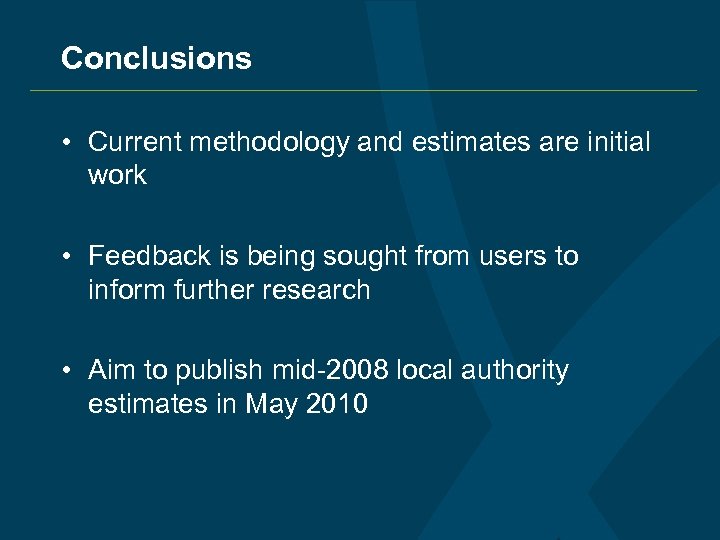 Conclusions • Current methodology and estimates are initial work • Feedback is being sought from users to inform further research • Aim to publish mid-2008 local authority estimates in May 2010