 Скачать презентацию Central America and the Caribbean Chapter 10 Section
a754dcd3ce4960e66429f416e5a897fc.ppt
- Количество слайдов: 8



Central America and the Caribbean Chapter 10 Section 2
Key Terms • Cultural Hearth • United Provinces of Central America • Panama Canal • Calypso • Reggae • Informal Economy
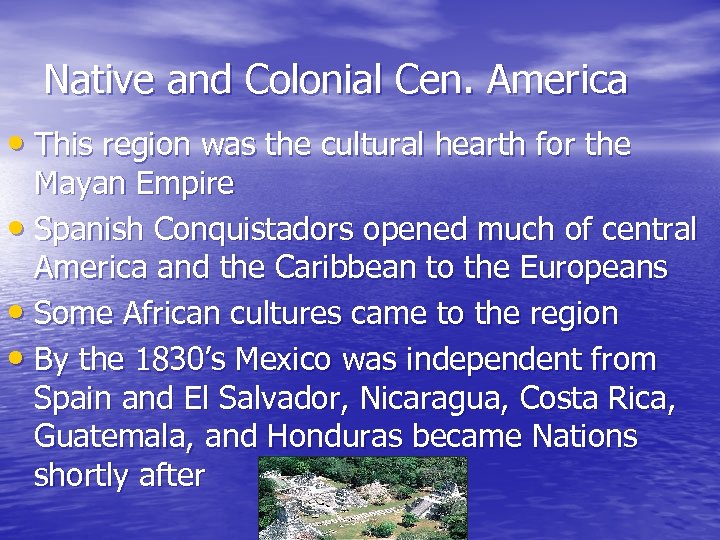
Native and Colonial Cen. America • This region was the cultural hearth for the Mayan Empire • Spanish Conquistadors opened much of central America and the Caribbean to the Europeans • Some African cultures came to the region • By the 1830’s Mexico was independent from Spain and El Salvador, Nicaragua, Costa Rica, Guatemala, and Honduras became Nations shortly after
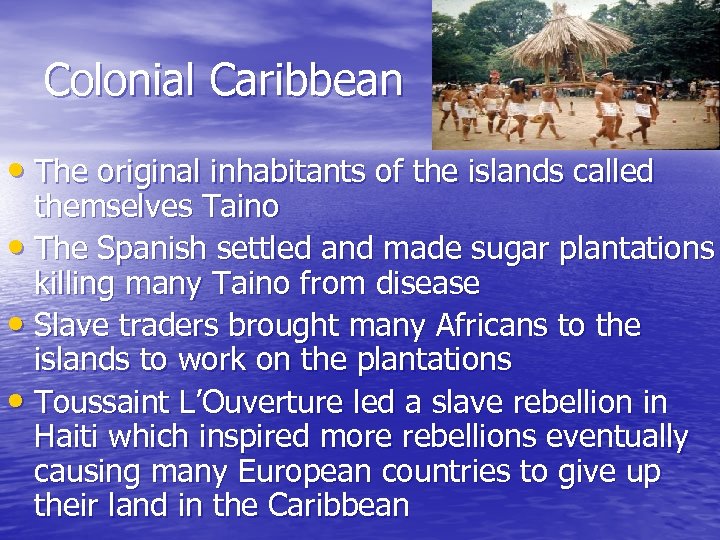
Colonial Caribbean • The original inhabitants of the islands called themselves Taino • The Spanish settled and made sugar plantations killing many Taino from disease • Slave traders brought many Africans to the islands to work on the plantations • Toussaint L’Ouverture led a slave rebellion in Haiti which inspired more rebellions eventually causing many European countries to give up their land in the Caribbean
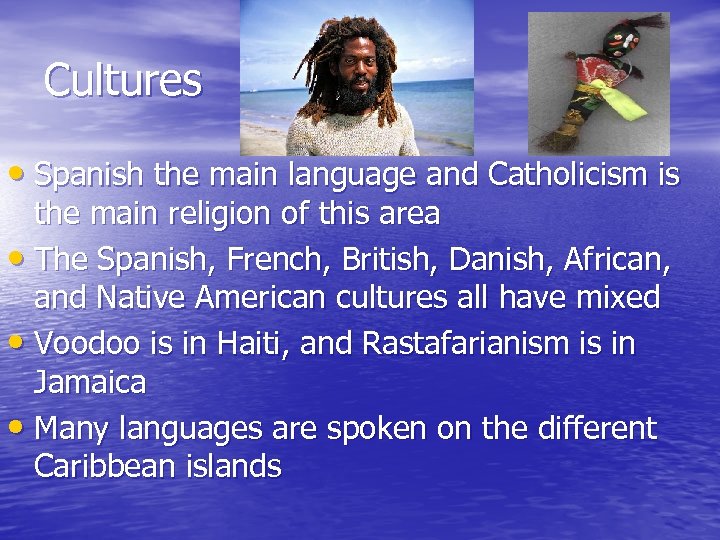
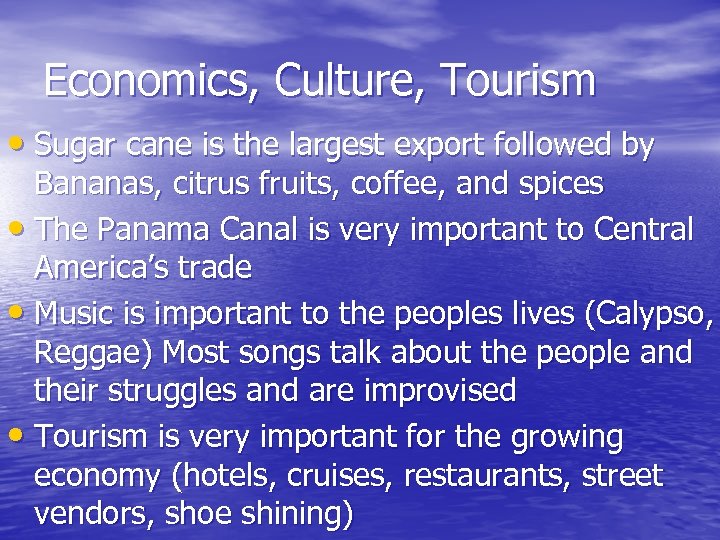
Cultures • Spanish the main language and Catholicism is the main religion of this area • The Spanish, French, British, Danish, African, and Native American cultures all have mixed • Voodoo is in Haiti, and Rastafarianism is in Jamaica • Many languages are spoken on the different Caribbean islands
Economics, Culture, Tourism • Sugar cane is the largest export followed by Bananas, citrus fruits, coffee, and spices • The Panama Canal is very important to Central America’s trade • Music is important to the peoples lives (Calypso, Reggae) Most songs talk about the people and their struggles and are improvised • Tourism is very important for the growing economy (hotels, cruises, restaurants, street vendors, shoe shining)
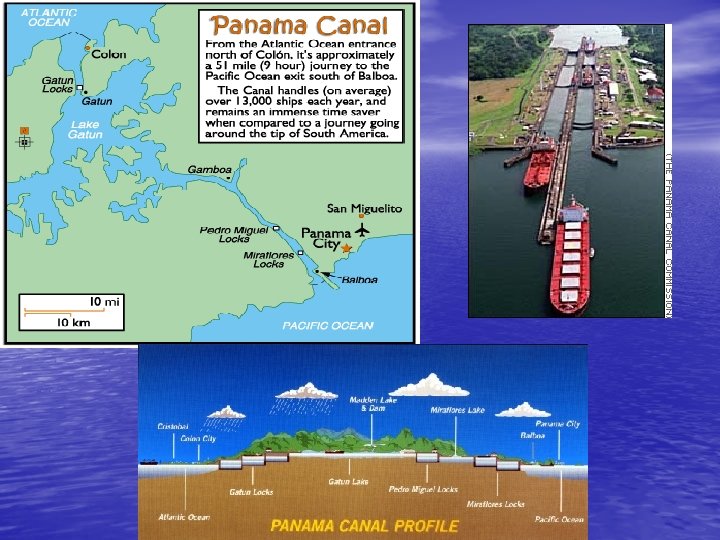
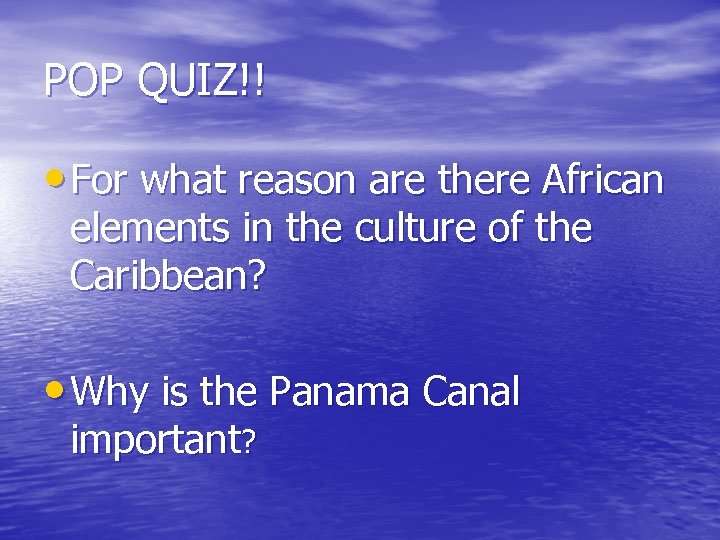
POP QUIZ!! • For what reason are there African elements in the culture of the Caribbean? • Why is the Panama Canal important?
Скачать презентацию Central America and the Caribbean Chapter 10 Section
a754dcd3ce4960e66429f416e5a897fc.ppt