 Скачать презентацию CENG 465 Introduction to Bioinformatics Fall 2015 -2016
bc911f2a7d133d4eb6f2f31b11942222.ppt
- Количество слайдов: 49



CENG 465 Introduction to Bioinformatics Fall 2015 -2016 Tolga Can (Office: B-109) e-mail: tcan@ceng. metu. edu. tr alternative e-mail: tcantr@gmail. com Course Web Page: http: //www. ceng. metu. edu. tr/~tcan/ceng 465_f 1516 odtuclass. metu. edu. tr : for assignment submissions and announcement of grades 1
Goals of the course • Working at the interface of computer science and biology – New motivation – New data and new demands – Real impact • Introduction to main issues in computational biology • Opportunity to interact with algorithms, tools, data in current practice 2
High level overview of the course • A general introduction – – what problems are people working on? how people solve these problems? what key computational techniques are needed? how much help computing has provided to biological research? • A way of thinking -- tackling “biological problems” computationally – – – how to look at a “biological problem” from a computational point of view? how to formulate a computational problem to address a biological issue? how to collect statistics from biological data? how to build a “computational” model? how to solve a computational modeling problem? how to test and evaluate a computational algorithm? 3
Course outline • Motivation and introduction to biology (1 week) • Sequence analysis (4 weeks) – – – Sequence alignment by dynamic programming Statistical significance of alignments NGS – next generation sequencing Profile hidden Markov models Multiple sequence alignment • Phylogenetic trees, clustering methods (1 week) 4
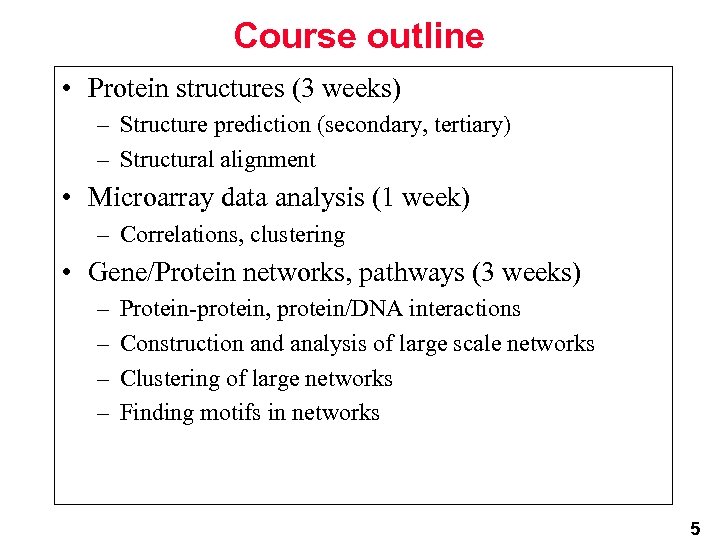
Course outline • Protein structures (3 weeks) – Structure prediction (secondary, tertiary) – Structural alignment • Microarray data analysis (1 week) – Correlations, clustering • Gene/Protein networks, pathways (3 weeks) – – Protein-protein, protein/DNA interactions Construction and analysis of large scale networks Clustering of large networks Finding motifs in networks 5
Teaching assistant • Gulfem Demir – will be grading your assignments • Contact info: – gulfem@ceng. metu. edu. tr – Tel: (312) 210 -5509 – Office: B-203 6
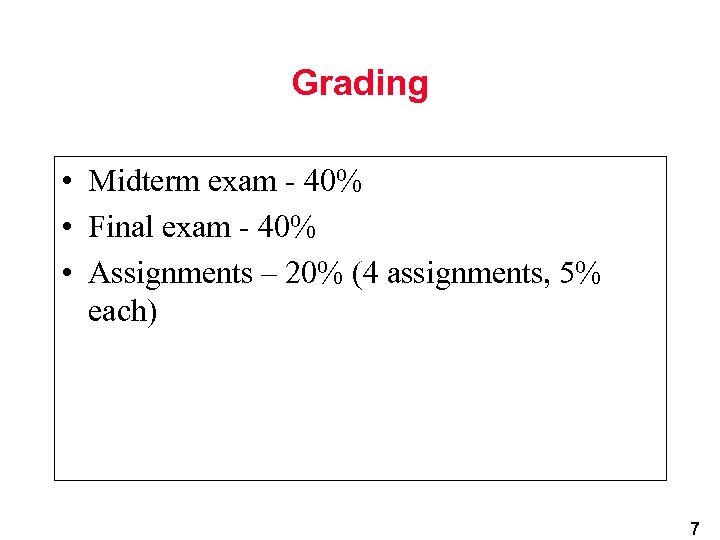
Grading • Midterm exam - 40% • Final exam - 40% • Assignments – 20% (4 assignments, 5% each) 7
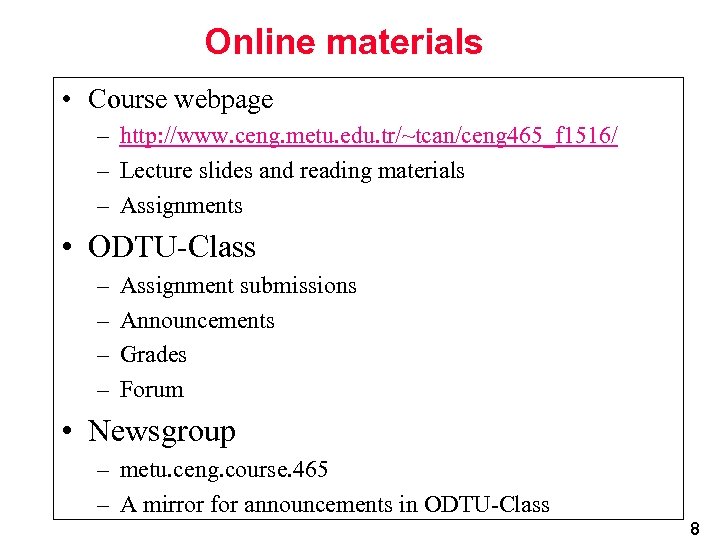
Online materials • Course webpage – http: //www. ceng. metu. edu. tr/~tcan/ceng 465_f 1516/ – Lecture slides and reading materials – Assignments • ODTU-Class – – Assignment submissions Announcements Grades Forum • Newsgroup – metu. ceng. course. 465 – A mirror for announcements in ODTU-Class 8
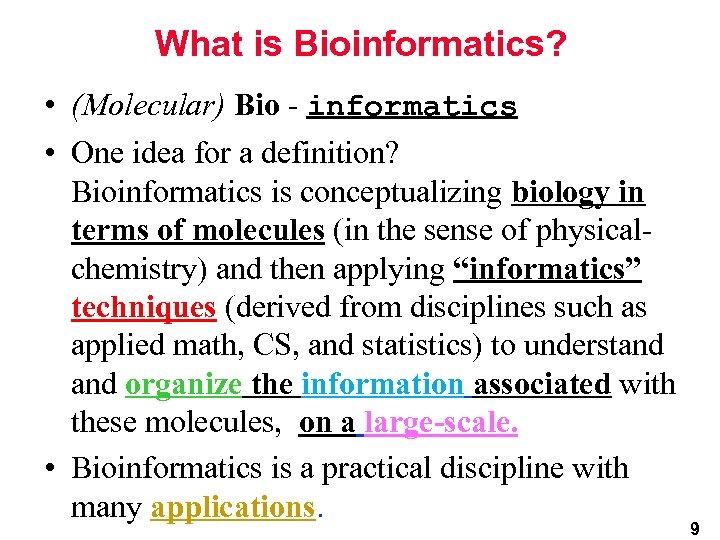
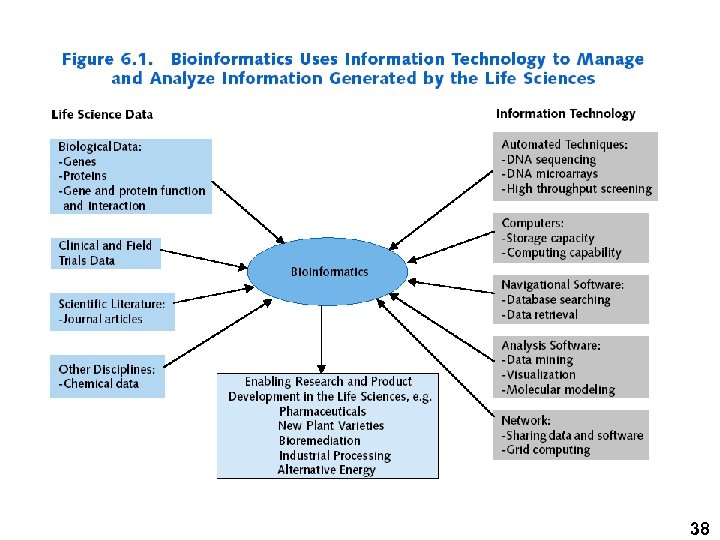
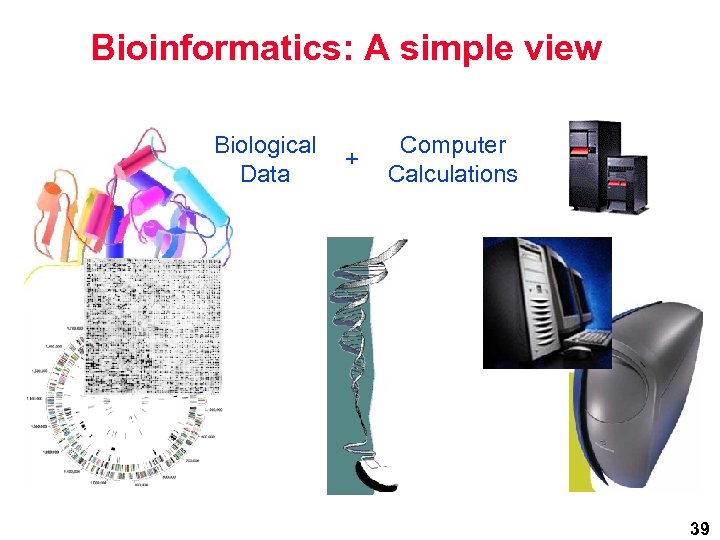
What is Bioinformatics? • (Molecular) Bio - informatics • One idea for a definition? Bioinformatics is conceptualizing biology in terms of molecules (in the sense of physicalchemistry) and then applying “informatics” techniques (derived from disciplines such as applied math, CS, and statistics) to understand organize the information associated with these molecules, on a large-scale. • Bioinformatics is a practical discipline with many applications. 9
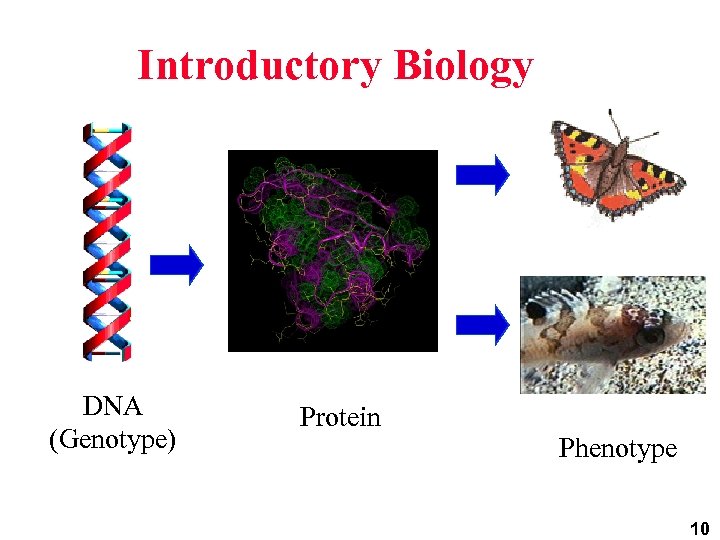
Introductory Biology DNA (Genotype) Protein Phenotype 10
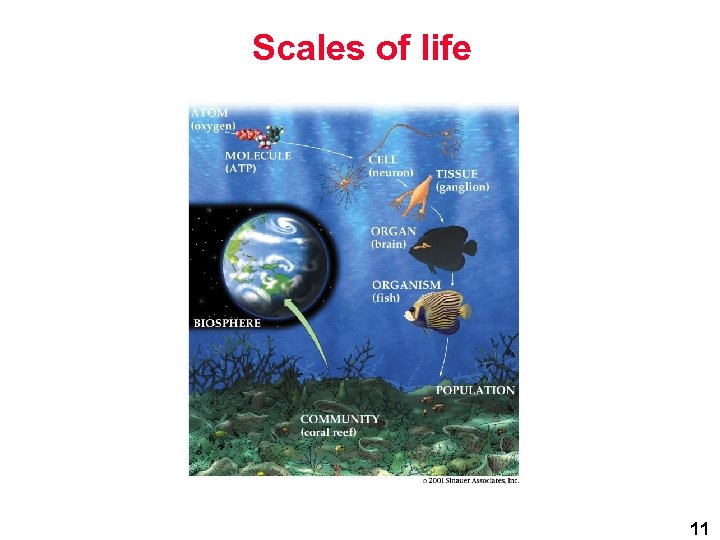
Scales of life 11
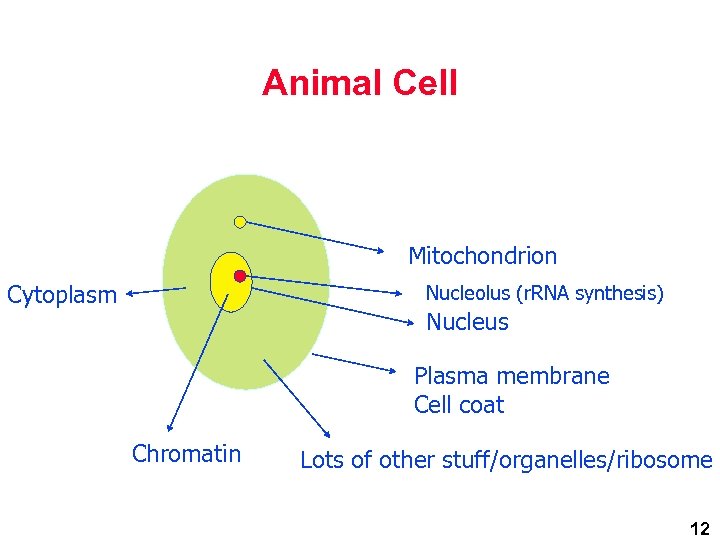
Animal Cell Mitochondrion Cytoplasm Nucleolus (r. RNA synthesis) Nucleus Plasma membrane Cell coat Chromatin Lots of other stuff/organelles/ribosome 12
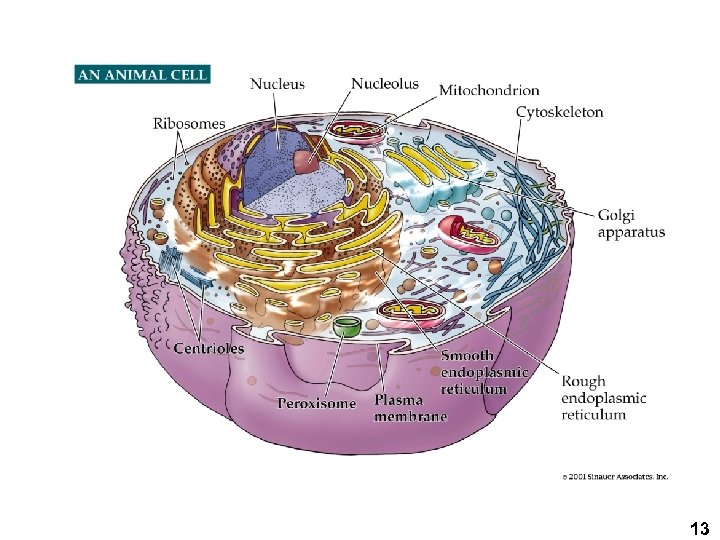
Animal CELL 13
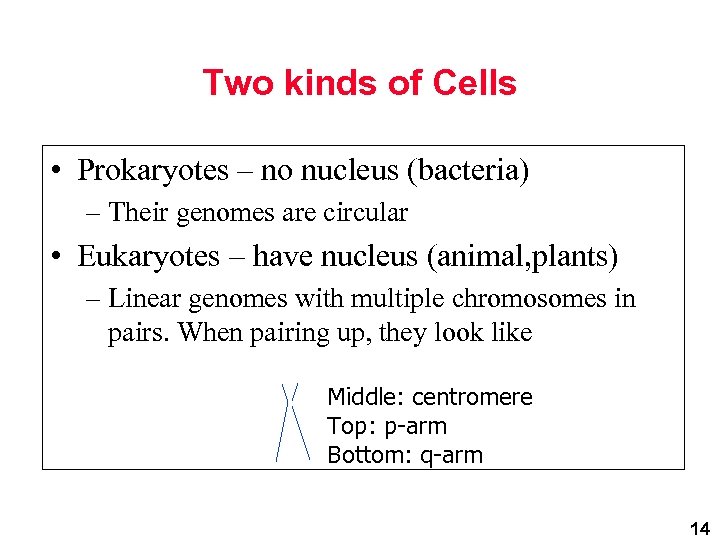
Two kinds of Cells • Prokaryotes – no nucleus (bacteria) – Their genomes are circular • Eukaryotes – have nucleus (animal, plants) – Linear genomes with multiple chromosomes in pairs. When pairing up, they look like Middle: centromere Top: p-arm Bottom: q-arm 14
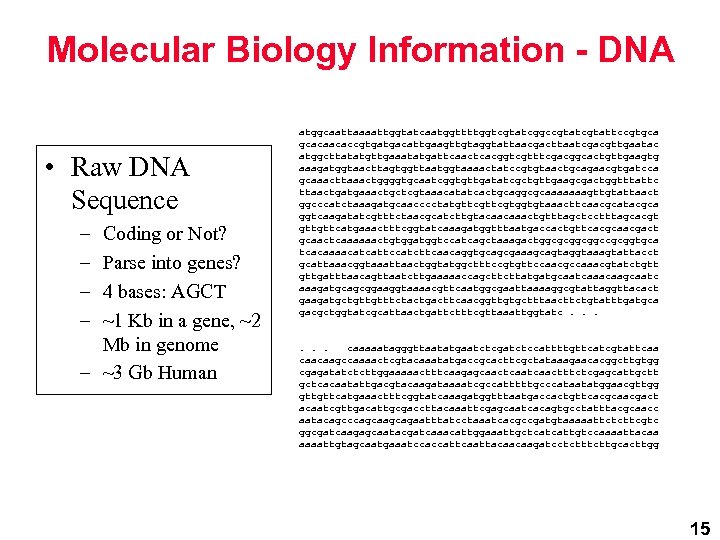
Molecular Biology Information - DNA • Raw DNA Sequence – – Coding or Not? Parse into genes? 4 bases: AGCT ~1 Kb in a gene, ~2 Mb in genome – ~3 Gb Human atggcaattaaaattggtatcaatggttttggtcgtatcggccgtattccgtgca gcacaacaccgtgatgacattgaagttgtaggtattaacgacttaatcgacgttgaatac atggcttatatgttgaaatatgattcaactcacggtcgtttcgacggcactgttgaagtg aaagatggtaacttagtggttaatggtaaaactatccgtgtaactgcagaacgtgatcca gcaaacttaaactggggtgcaatcggtgttgatatcgctgttgaagcgactggtttattc ttaactgatgaaactgctcgtaaacatatcactgcaggcgcaaaaaaagttgtattaact ggcccatctaaagatgcaacccctatgttcgtggtgtaaacttcaacgcatacgca ggtcaagatatcgtttctaacgcatcttgtacaacaaactgtttagctcctttagcacgt gttgttcatgaaactttcggtatcaaagatggtttaatgaccactgttcacgcaacgact gcaactcaaaaaactgtggatggtccatcagctaaagactggcgcggcggccgcggtgca tcacaaaacatcattccatcttcaacaggtgcagcgaaagcagtaggtaaagtattacct gcattaaacggtaaattaactggtatggctttccgtgttccaacgccaaacgtatctgtt gttgatttaacagttaatcttgaaaaaccagcttcttatgatgcaatcaaacaagcaatc aaagatgcagcggaaggtaaaacgttcaatggcgaattaaaaggcgtattaggttacact gaagatgctgttgtttctactgacttcaacggttgtgctttaacttctgtatttgatgca gacgctggtatcgcattaactgattctttcgttaaattggtatc. . . caaaaatagggttaatatgaatctcgatctccattttgttcatcgtattcaa caacaagccaaaactcgtacaaatatgaccgcacttcgctataaagaacacggcttgtgg cgagatatctcttggaaaaactttcaagagcaactcaactttctcgagcattgctt gctcacaatattgacgtacaagataaaatcgccatttttgcccataatatggaacgttgg gttgttcatgaaactttcggtatcaaagatggtttaatgaccactgttcacgcaacgact acaatcgttgacattgcgaccttacaaattcgagcaatcacagtgcctatttacgcaacc aatacagcccagcagaatttatcctaaatcacgccgatgtaaaaattctcttcgtc ggcgatcaagagcaatacgatcaaacattggaaattgctcatcattgtccaaaattacaa aaaattgtagcaatgaaatccaccattcaattacaacaagatcctcttgcacttgg 15
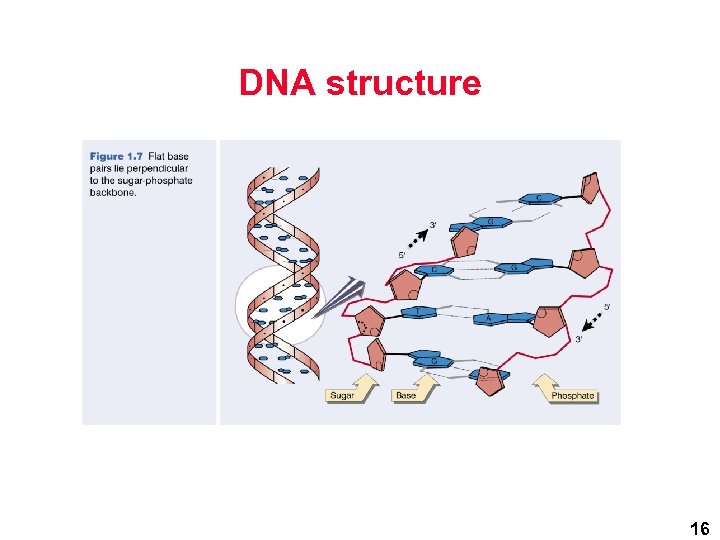
DNA structure 16
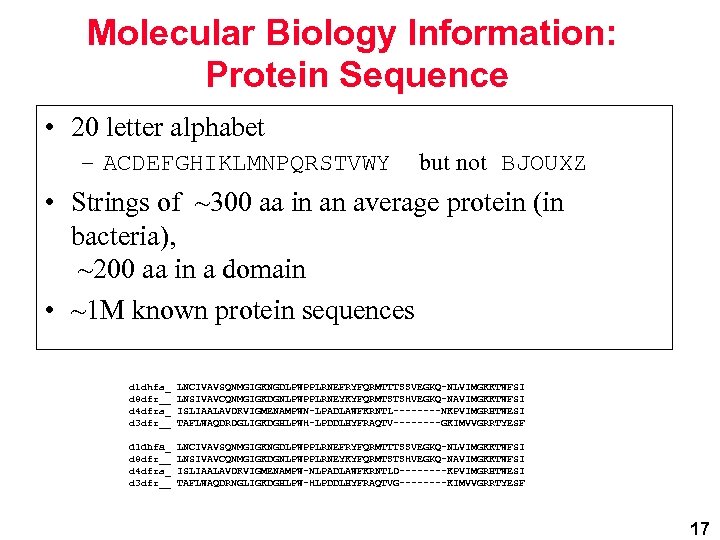
Molecular Biology Information: Protein Sequence • 20 letter alphabet – ACDEFGHIKLMNPQRSTVWY but not BJOUXZ • Strings of ~300 aa in an average protein (in bacteria), ~200 aa in a domain • ~1 M known protein sequences d 1 dhfa_ d 8 dfr__ d 4 dfra_ d 3 dfr__ LNCIVAVSQNMGIGKNGDLPWPPLRNEFRYFQRMTTTSSVEGKQ-NLVIMGKKTWFSI LNSIVAVCQNMGIGKDGNLPWPPLRNEYKYFQRMTSTSHVEGKQ-NAVIMGKKTWFSI ISLIAALAVDRVIGMENAMPWN-LPADLAWFKRNTL----NKPVIMGRHTWESI TAFLWAQDRDGLIGKDGHLPWH-LPDDLHYFRAQTV----GKIMVVGRRTYESF d 1 dhfa_ d 8 dfr__ d 4 dfra_ d 3 dfr__ LNCIVAVSQNMGIGKNGDLPWPPLRNEFRYFQRMTTTSSVEGKQ-NLVIMGKKTWFSI LNSIVAVCQNMGIGKDGNLPWPPLRNEYKYFQRMTSTSHVEGKQ-NAVIMGKKTWFSI ISLIAALAVDRVIGMENAMPW-NLPADLAWFKRNTLD----KPVIMGRHTWESI TAFLWAQDRNGLIGKDGHLPW-HLPDDLHYFRAQTVG----KIMVVGRRTYESF 17
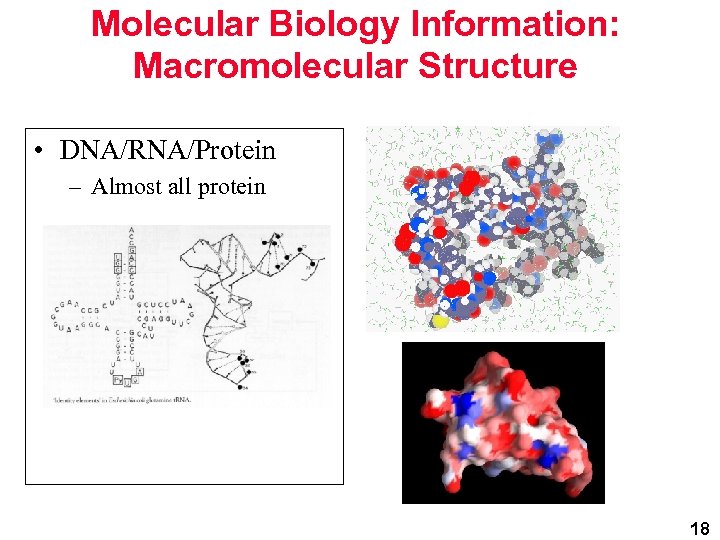
Molecular Biology Information: Macromolecular Structure • DNA/RNA/Protein – Almost all protein 18
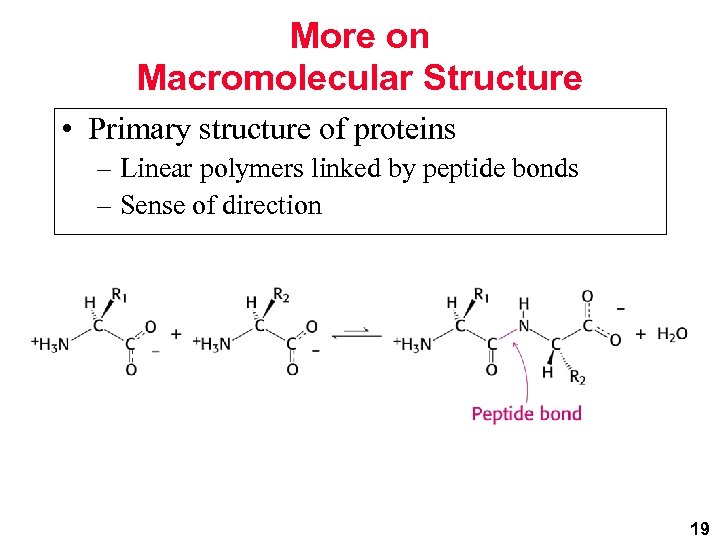
More on Macromolecular Structure • Primary structure of proteins – Linear polymers linked by peptide bonds – Sense of direction 19
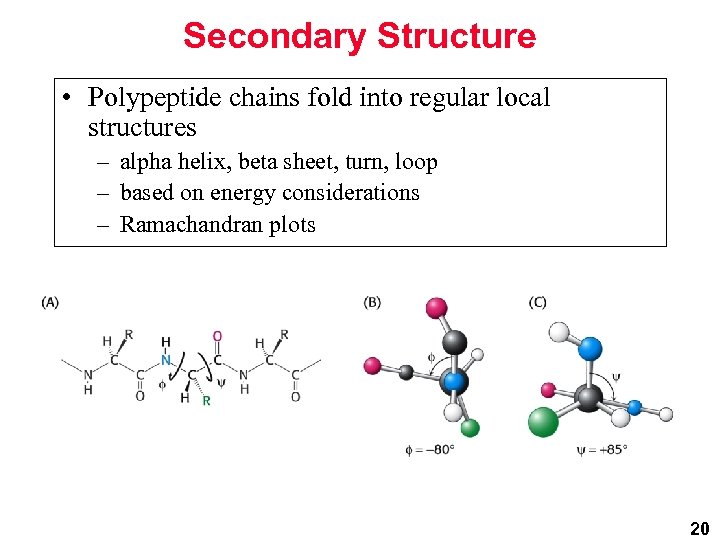
Secondary Structure • Polypeptide chains fold into regular local structures – alpha helix, beta sheet, turn, loop – based on energy considerations – Ramachandran plots 20
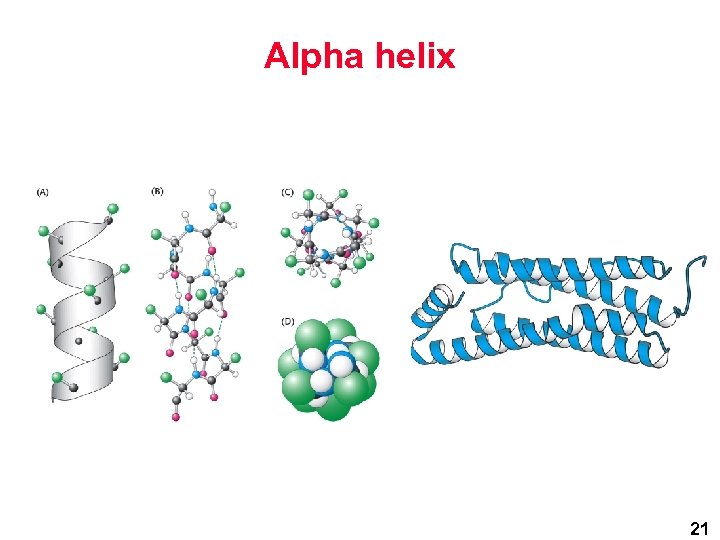
Alpha helix 21
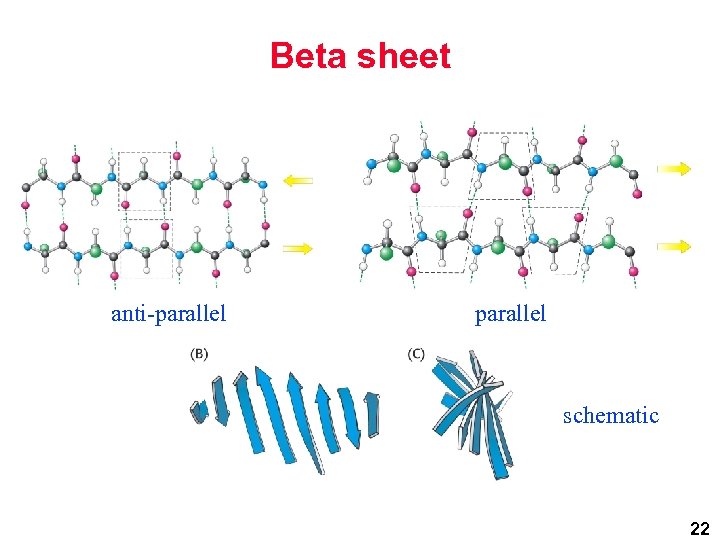
Beta sheet anti-parallel schematic 22
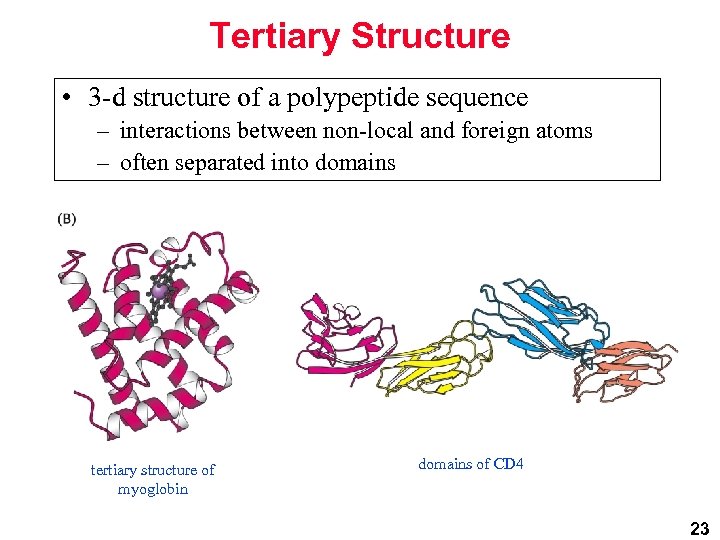
Tertiary Structure • 3 -d structure of a polypeptide sequence – interactions between non-local and foreign atoms – often separated into domains tertiary structure of myoglobin domains of CD 4 23
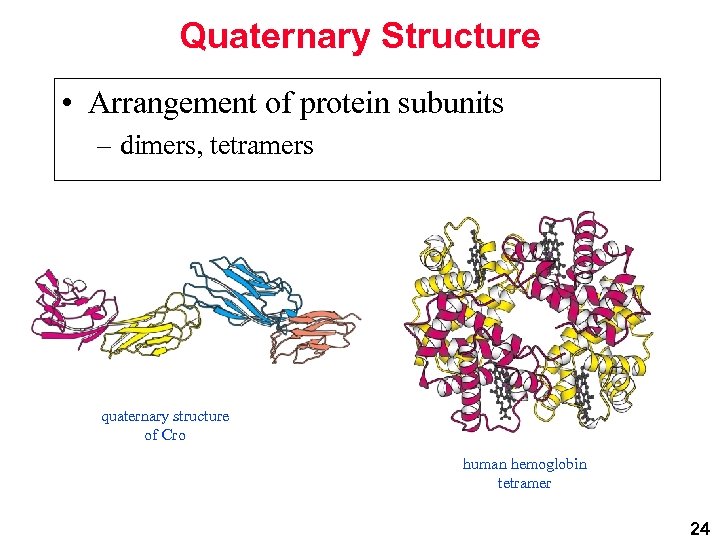
Quaternary Structure • Arrangement of protein subunits – dimers, tetramers quaternary structure of Cro human hemoglobin tetramer 24
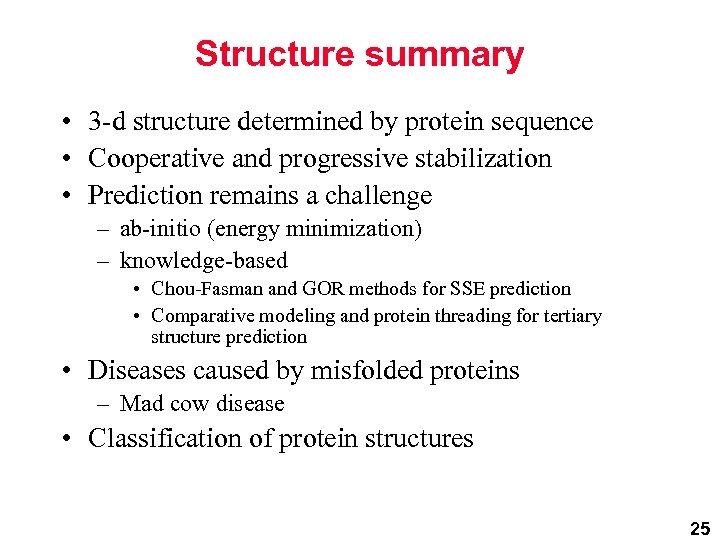
Structure summary • 3 -d structure determined by protein sequence • Cooperative and progressive stabilization • Prediction remains a challenge – ab-initio (energy minimization) – knowledge-based • Chou-Fasman and GOR methods for SSE prediction • Comparative modeling and protein threading for tertiary structure prediction • Diseases caused by misfolded proteins – Mad cow disease • Classification of protein structures 25
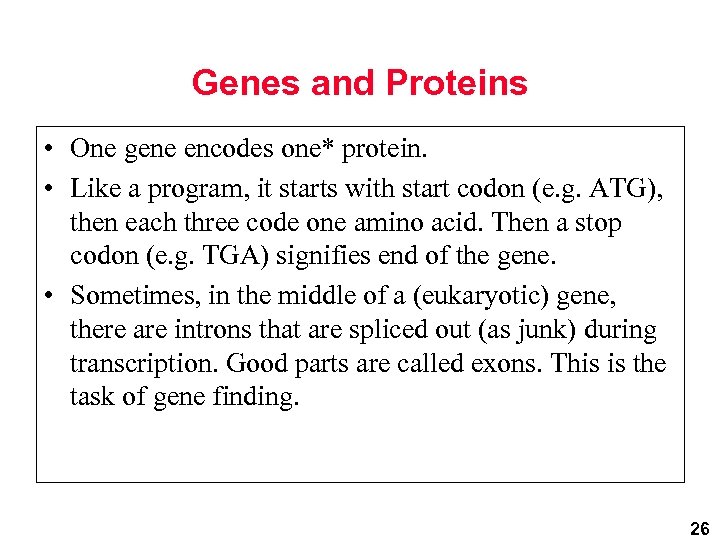
Genes and Proteins • One gene encodes one* protein. • Like a program, it starts with start codon (e. g. ATG), then each three code one amino acid. Then a stop codon (e. g. TGA) signifies end of the gene. • Sometimes, in the middle of a (eukaryotic) gene, there are introns that are spliced out (as junk) during transcription. Good parts are called exons. This is the task of gene finding. 26
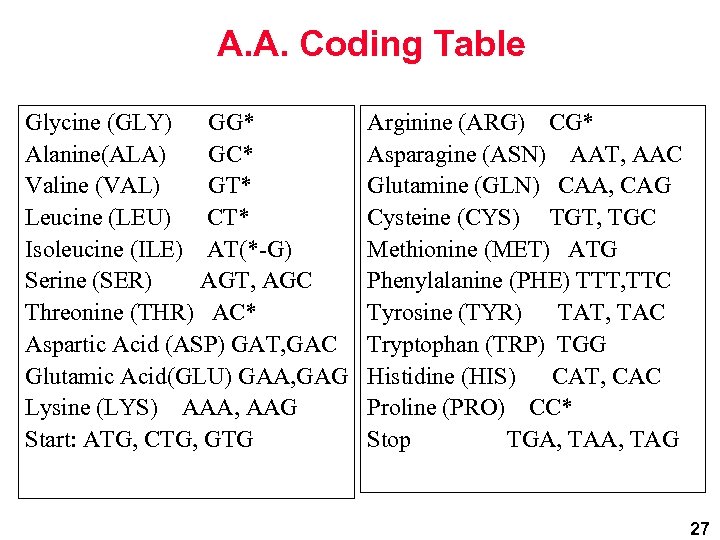
A. A. Coding Table Glycine (GLY) GG* Alanine(ALA) GC* Valine (VAL) GT* Leucine (LEU) CT* Isoleucine (ILE) AT(*-G) Serine (SER) AGT, AGC Threonine (THR) AC* Aspartic Acid (ASP) GAT, GAC Glutamic Acid(GLU) GAA, GAG Lysine (LYS) AAA, AAG Start: ATG, CTG, GTG Arginine (ARG) CG* Asparagine (ASN) AAT, AAC Glutamine (GLN) CAA, CAG Cysteine (CYS) TGT, TGC Methionine (MET) ATG Phenylalanine (PHE) TTT, TTC Tyrosine (TYR) TAT, TAC Tryptophan (TRP) TGG Histidine (HIS) CAT, CAC Proline (PRO) CC* Stop TGA, TAG 27
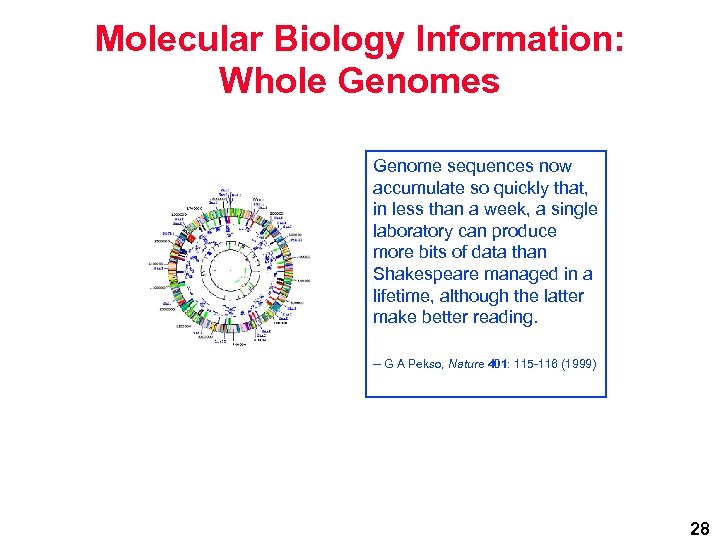
Molecular Biology Information: Whole Genomes Genome sequences now accumulate so quickly that, in less than a week, a single laboratory can produce more bits of data than Shakespeare managed in a lifetime, although the latter make better reading. -- G A Pekso, Nature 401: 115 -116 (1999) 28
![1995 Bacteria, 1. 6 Mb, ~1600 genes [Science 269: 496] 1997 Eukaryote, 13 Mb,](https://present5.com/presentation/bc911f2a7d133d4eb6f2f31b11942222/image-29.jpg "1995 Bacteria, 1. 6 Mb, ~1600 genes [Science 269: 496] 1997 Eukaryote, 13 Mb,")
1995 Bacteria, 1. 6 Mb, ~1600 genes [Science 269: 496] 1997 Eukaryote, 13 Mb, ~6 K genes [Nature 387: 1] Genomes highlight the Finiteness of the “Parts” in Biology 1998 Animal, ~100 Mb, ~20 K genes [Science 282: 1945] 2000? Human, ~3 Gb, ~100 K genes [? ? ? ] 29
30
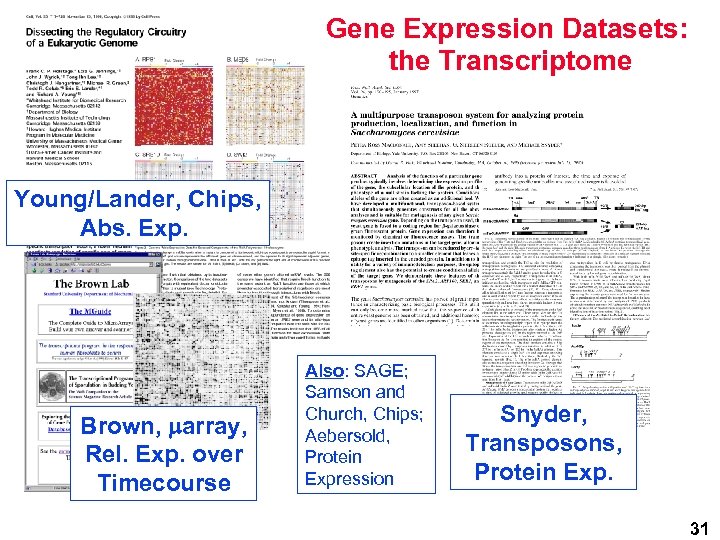
Gene Expression Datasets: the Transcriptome Young/Lander, Chips, Abs. Exp. Brown, marray, Rel. Exp. over Timecourse Also: SAGE; Samson and Church, Chips; Aebersold, Protein Expression Snyder, Transposons, Protein Exp. 31
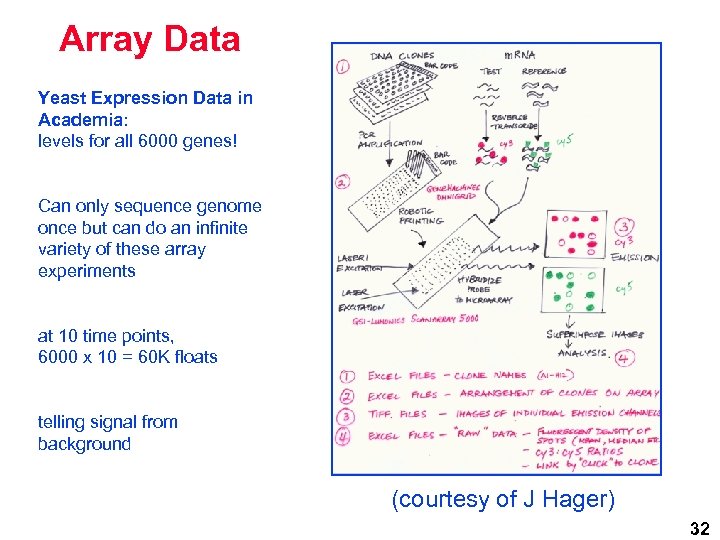
Array Data Yeast Expression Data in Academia: levels for all 6000 genes! Can only sequence genome once but can do an infinite variety of these array experiments at 10 time points, 6000 x 10 = 60 K floats telling signal from background (courtesy of J Hager) 32
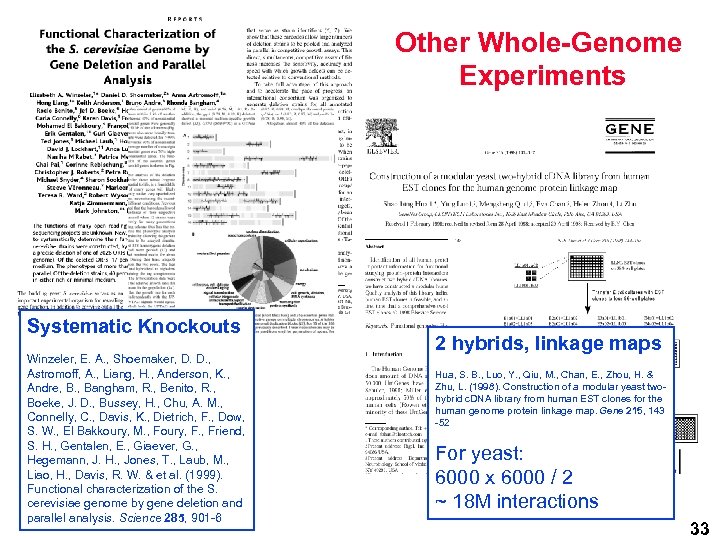
Other Whole-Genome Experiments Systematic Knockouts Winzeler, E. A. , Shoemaker, D. D. , Astromoff, A. , Liang, H. , Anderson, K. , Andre, B. , Bangham, R. , Benito, R. , Boeke, J. D. , Bussey, H. , Chu, A. M. , Connelly, C. , Davis, K. , Dietrich, F. , Dow, S. W. , El Bakkoury, M. , Foury, F. , Friend, S. H. , Gentalen, E. , Giaever, G. , Hegemann, J. H. , Jones, T. , Laub, M. , Liao, H. , Davis, R. W. & et al. (1999). Functional characterization of the S. cerevisiae genome by gene deletion and parallel analysis. Science 285, 901 -6 2 hybrids, linkage maps Hua, S. B. , Luo, Y. , Qiu, M. , Chan, E. , Zhou, H. & Zhu, L. (1998). Construction of a modular yeast twohybrid c. DNA library from human EST clones for the human genome protein linkage map. Gene 215, 143 -52 For yeast: 6000 x 6000 / 2 ~ 18 M interactions 33
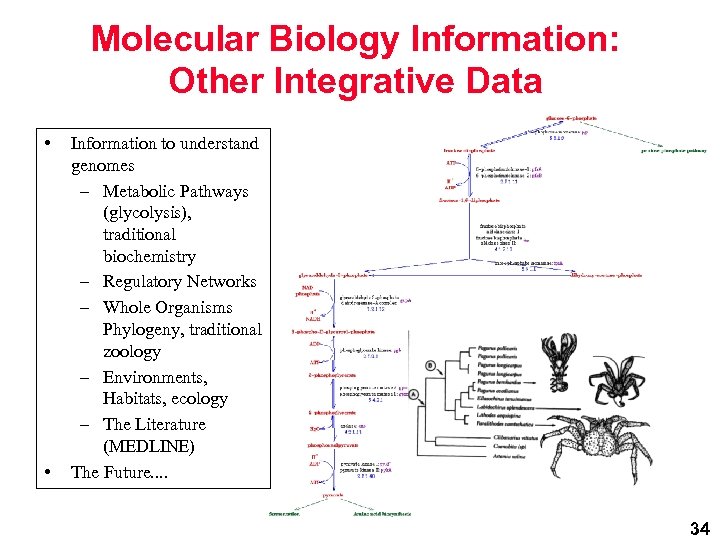
Molecular Biology Information: Other Integrative Data • • Information to understand genomes – Metabolic Pathways (glycolysis), traditional biochemistry – Regulatory Networks – Whole Organisms Phylogeny, traditional zoology – Environments, Habitats, ecology – The Literature (MEDLINE) The Future. . 34
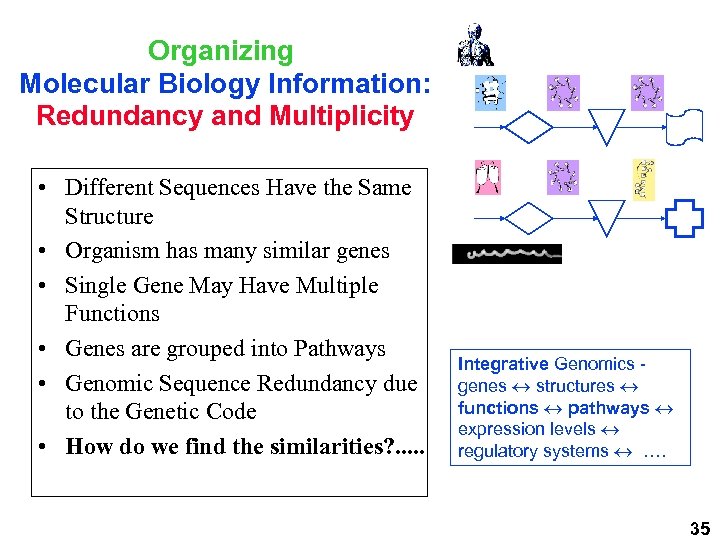
Organizing Molecular Biology Information: Redundancy and Multiplicity • Different Sequences Have the Same Structure • Organism has many similar genes • Single Gene May Have Multiple Functions • Genes are grouped into Pathways • Genomic Sequence Redundancy due to the Genetic Code • How do we find the similarities? . . . Integrative Genomics genes structures functions pathways expression levels regulatory systems …. 35
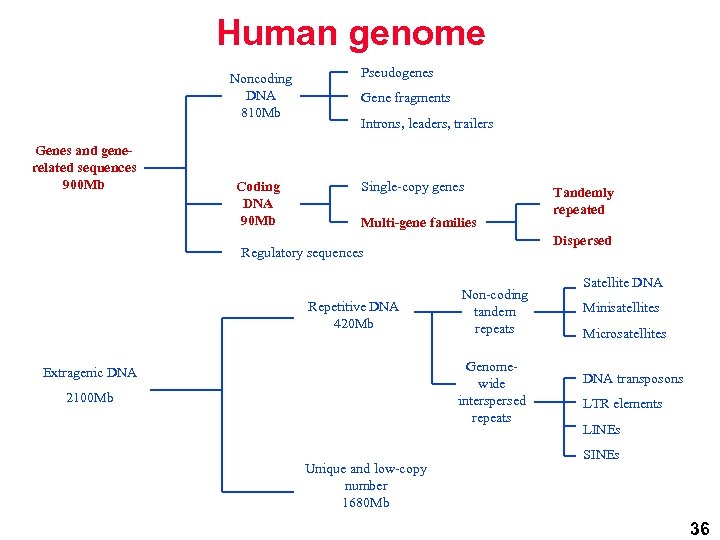
Human genome Noncoding DNA 810 Mb Genes and generelated sequences 900 Mb Coding DNA 90 Mb Pseudogenes Gene fragments Introns, leaders, trailers Single-copy genes Multi-gene families Dispersed Regulatory sequences Repetitive DNA 420 Mb Non-coding tandem repeats Genomewide interspersed repeats Extragenic DNA 2100 Mb Unique and low-copy number 1680 Mb Tandemly repeated Satellite DNA Minisatellites Microsatellites DNA transposons LTR elements LINEs SINEs 36
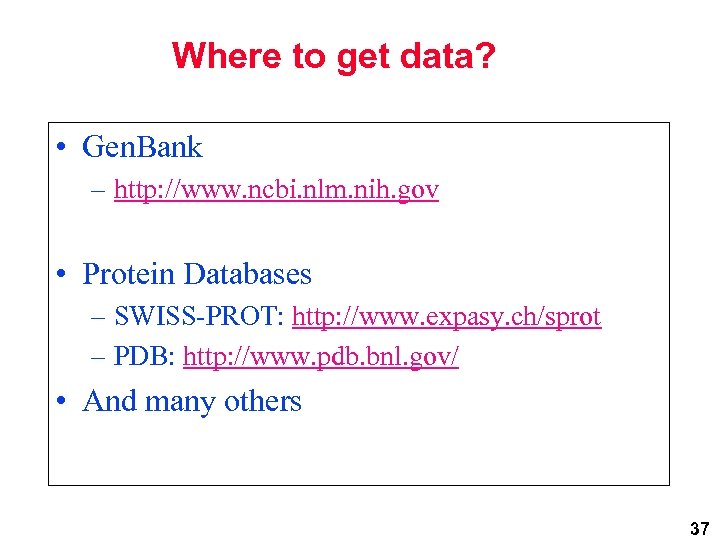
Where to get data? • Gen. Bank – http: //www. ncbi. nlm. nih. gov • Protein Databases – SWISS-PROT: http: //www. expasy. ch/sprot – PDB: http: //www. pdb. bnl. gov/ • And many others 37
Bibliography 38
Bioinformatics: A simple view Biological Data + Computer Calculations 39
Application domains Bio-defense 40
Kinds of activities 41
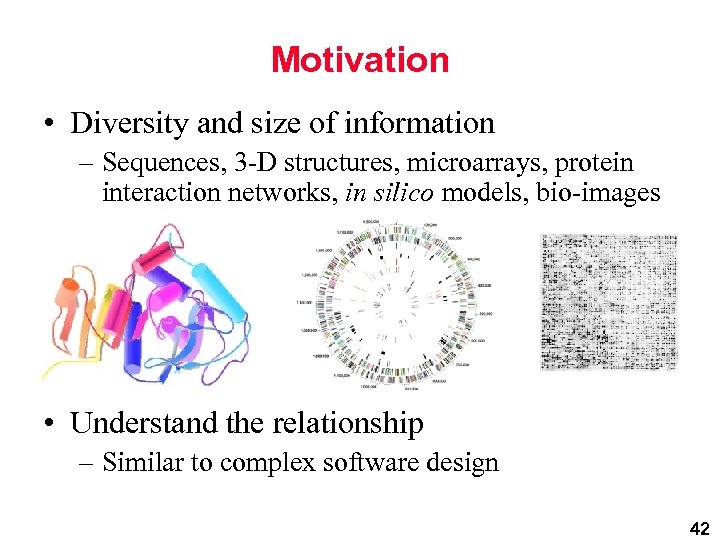
Motivation • Diversity and size of information – Sequences, 3 -D structures, microarrays, protein interaction networks, in silico models, bio-images • Understand the relationship – Similar to complex software design 42
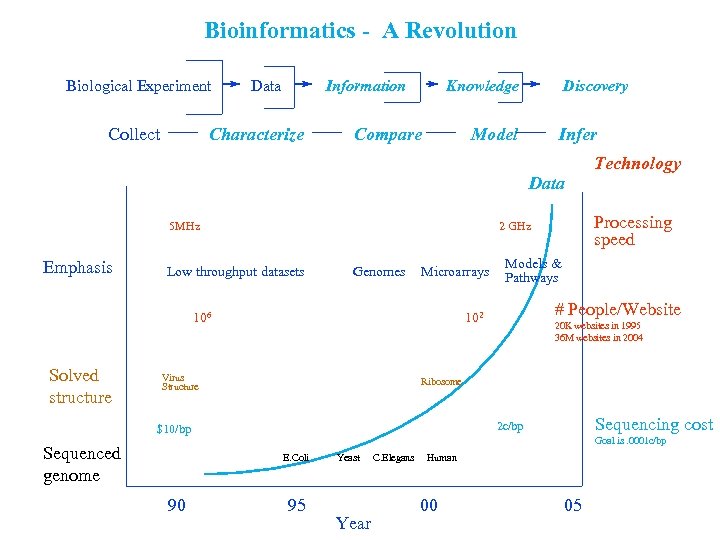
Bioinformatics - A Revolution Biological Experiment Collect Data Information Characterize Knowledge Compare Discovery Model Infer Data 5 MHz Emphasis Genomes Microarrays 106 Solved structure # People/Website 20 K websites in 1995 36 M websites in 2004 Ribosome Sequencing cost 2 c/bp $10/bp Goal is. 0001 c/bp E. Coli 90 Models & Pathways 102 Virus Structure Sequenced genome Processing speed 2 GHz Low throughput datasets Technology 95 Yeast Year C. Elegans Human 00 05
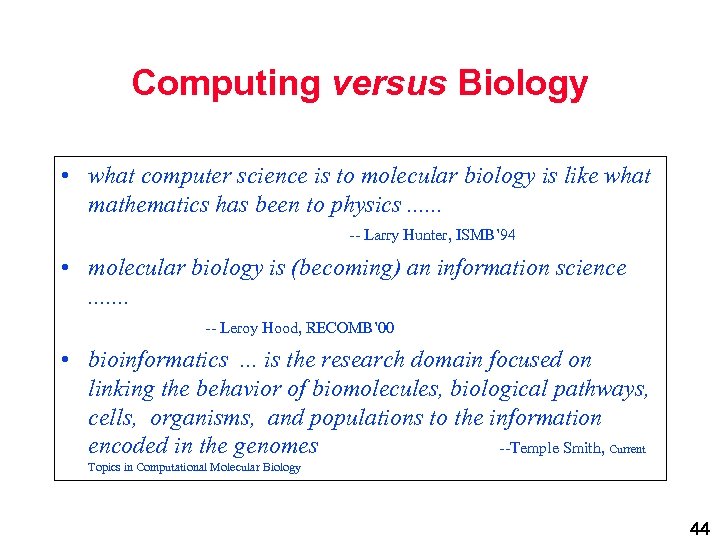
Computing versus Biology • what computer science is to molecular biology is like what mathematics has been to physics. . . -- Larry Hunter, ISMB’ 94 • molecular biology is (becoming) an information science. . . . -- Leroy Hood, RECOMB’ 00 • bioinformatics. . . is the research domain focused on linking the behavior of biomolecules, biological pathways, cells, organisms, and populations to the information encoded in the genomes --Temple Smith, Current Topics in Computational Molecular Biology 44
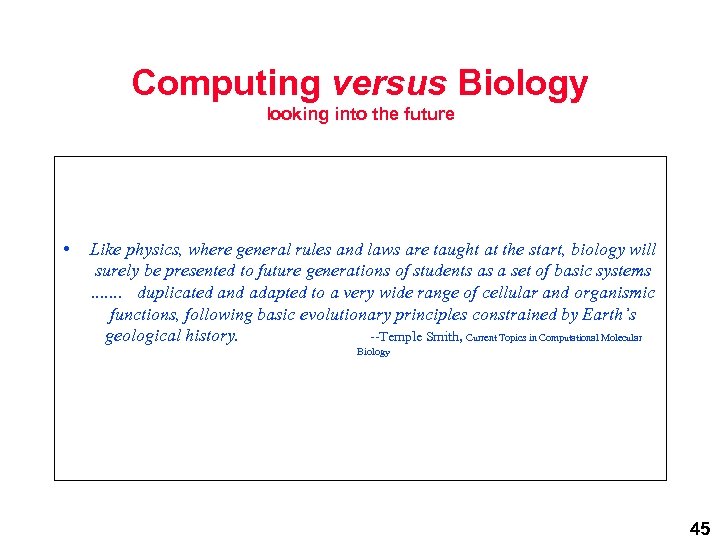
Computing versus Biology looking into the future • Like physics, where general rules and laws are taught at the start, biology will surely be presented to future generations of students as a set of basic systems. . . . duplicated and adapted to a very wide range of cellular and organismic functions, following basic evolutionary principles constrained by Earth’s geological history. --Temple Smith, Current Topics in Computational Molecular Biology 45
Scalability challenges • Special issue of NAR devoted to data collections contains more than 2000 databases – Sequence • Genomes (more than 150), ESTs, Promoters, transcription factor binding sites, repeats, . . – Structure • Domains, motifs, classifications, . . – Others • Microarrays, subcellular localization, ontologies, pathways, SNPs, . . 46
Challenges of working in bioinformatics • Need to feel comfortable in interdisciplinary area • Depend on others for primary data • Need to address important biological and computer science problems 47
Skill set • • • Artificial intelligence Machine learning Statistics & probability Algorithms Databases Programming 48
Current problems • Next generation sequencing • Gene regulation • Epigenetics and genetics of diseases, aging – SNPs, DNA methylation, histone modification • Comparison of whole genomes • Computational systems biology – Complexity, dynamics – the DREAM challenge • Structural bioinformatics, molecular dynamics simulations • Text mining --- the Bio. Creative challenge • …. and many more 49
Скачать презентацию CENG 465 Introduction to Bioinformatics Fall 2015 -2016
bc911f2a7d133d4eb6f2f31b11942222.ppt