


 Скачать презентацию CEMERA Centre of Complex Environmental Monitoring and Environmental
67213d71fe05ae86b1364102eea2aa9b.ppt
- Количество слайдов: 18
 CEMERA Centre of Complex Environmental Monitoring and Environmental Risk Assessment Faculty of Biology, Warsaw University Poland
 Working Groups:
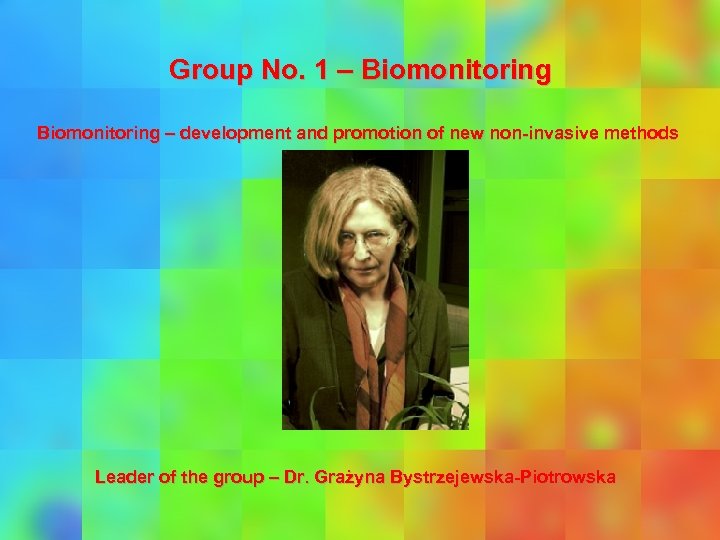 Group No. 1 – Biomonitoring – development and promotion of new non-invasive methods Leader of the group – Dr. Grażyna Bystrzejewska-Piotrowska
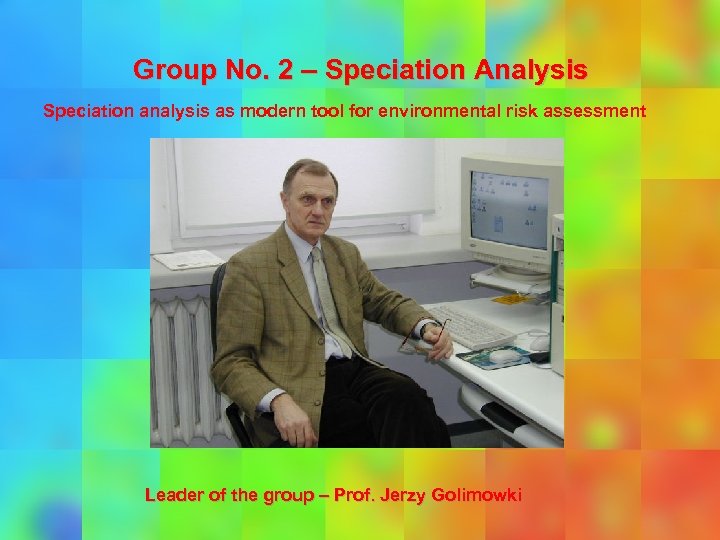 Group No. 2 – Speciation Analysis Speciation analysis as modern tool for environmental risk assessment Leader of the group – Prof. Jerzy Golimowki
 Group No. 3 – Waste Management Leader of the group and coordinator – Prof. Aleksandra Skłodowska
 Group No. 4 - Biological food contamination Health risk connected with quality of food Leader of the group – Prof. Jacek Bielecki
 Group No. 5 Food Analysis Health risk connected with quality of food Leader of the group – Dr. Marek Daniewski in the laboratory, Dr. Karol Bal took over his responsibilities
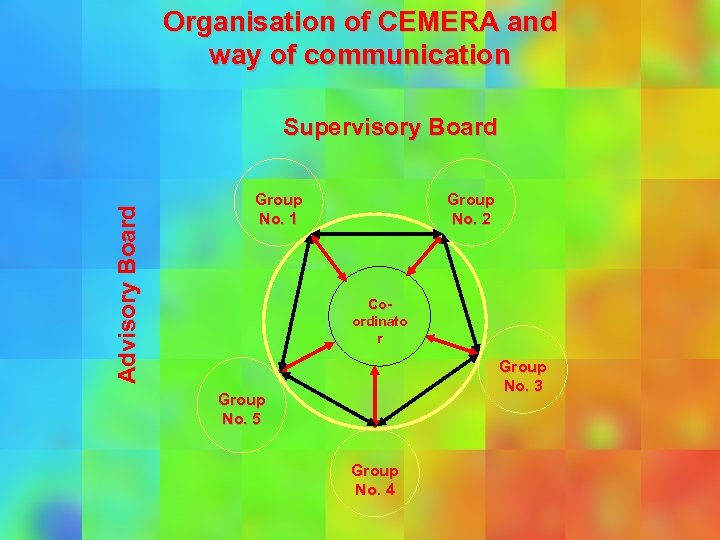 Organisation of CEMERA and way of communication Supervisory Board Advisory Board Group No. 1 Group No. 2 Coordinato r Group No. 3 Group No. 5 Group No. 4
 CEMERA Workpackages 1. Biomonitoring – development and promotion of new noninvasive methods 2. Speciation analysis as modern tool for environmental risk assessment 3. Management of sewage sludge from wastewater treatment plant new technologies 4. Landfill leakage – biological and chemical treatment technologies 5. Health risk connected with quality of food 6. Postgraduate studies and summer school 7. Promotion and dissemination 8. Coordination
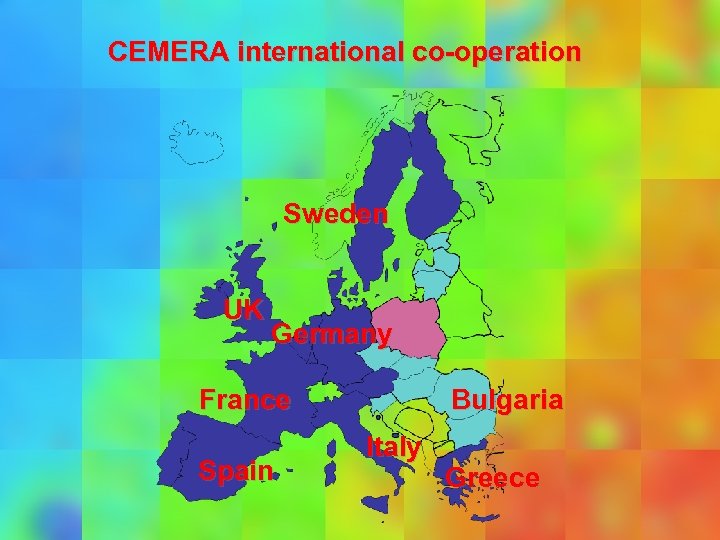 CEMERA international co-operation Sweden UK Germany France Spain Bulgaria Italy Greece
 Special facilities for research groups and international partners: partners Modern infrastructure: conference and lecture halls with audio video system • 1 for 300 persons • 2 for 100 persons • 2 for 70 persons • 20 seminary rooms for 30 -50 persons
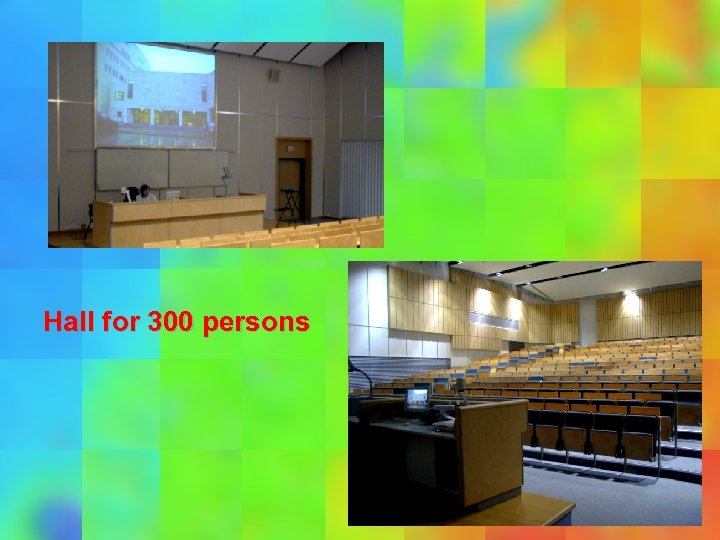 Hall for 300 persons
 Main results and benefits:
 Ø 9 conferences organized in 2003 -2005 Ø 10 workshops organized in 2003 -2005 Ø Accreditation certificate AC 109 according to PL-EN 45013 in 2004 and according to PL EN ISO 17024 in 2005 Ø 34 long 9 term visit to and from CEMERA Ø 6 research projects submitted in 6 th FP EU: one successful and one passed the threshold but has not obtained financial support Ø Awards for young scientists in two international conferences Ø Participation in the creation of National Noodle of GIBIF Ø Strengthening of existing ties based on twinning with units from EU countries (Germany, Sweden, UK, France) and NAS (Bulgaria) Ø Effective promotion of Postgraduate Study of Environmental Protection and Certification Body resulted by a number of obtained diplomas and certificates
 Øedition of 3 books for students: 2 in Polish and 1 in English Ønumber of smaller scientific projects with different EU research centres involving mainly young scientists Øincreased awareness of scientists cooperating with CEMERA of possibilities resulting from participating in Framework Programs
 Application of the results:
 ØNew contacts used in preparation or participation in new European projects ØCommon research projects with Spain, Argentina and group of EU Countries from BIOSHALE consortium. Cooperation resulted in publishing papers ØOpen possibility for examination of EMAS verifiers ØParticipation in GIBIF as a result of creation of National Data Base ØScientific Cooperation Agreement with University la Plata, Argentina ØScientific Cooperation Agreement with George August Gottingen University and Union of German Academies of Sciences – in preparation
 Project Cemera has allowed for better understanding between “new” and “old” countries of the European Union. During the implementation of the project there was a definite growth of the CEMERA’s prestige observed as well as the will of merits based cooperation, which positively influences European integration within the frame of scientific research and the Lisbon Strategy.