

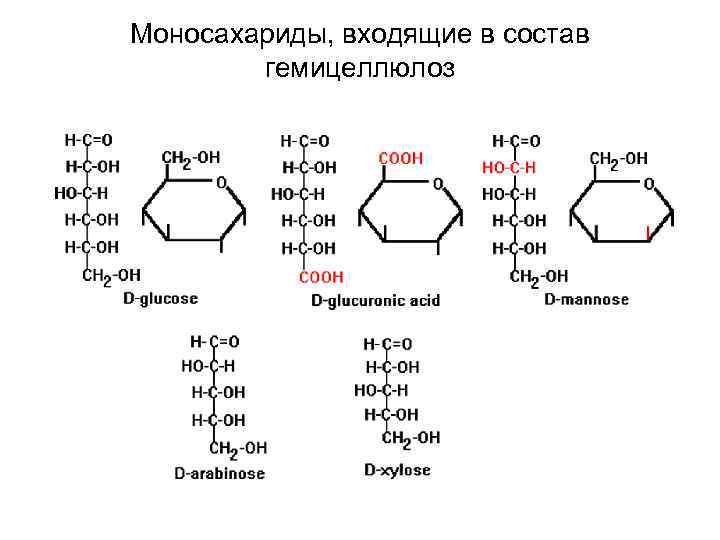
Cellulose Моносахариды, входящие в состав

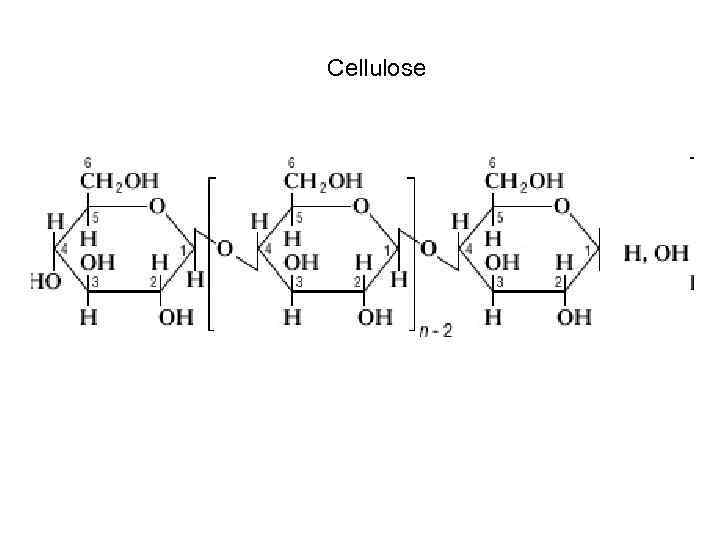

Cellulose
Моносахариды, входящие в состав гемицеллюлоз
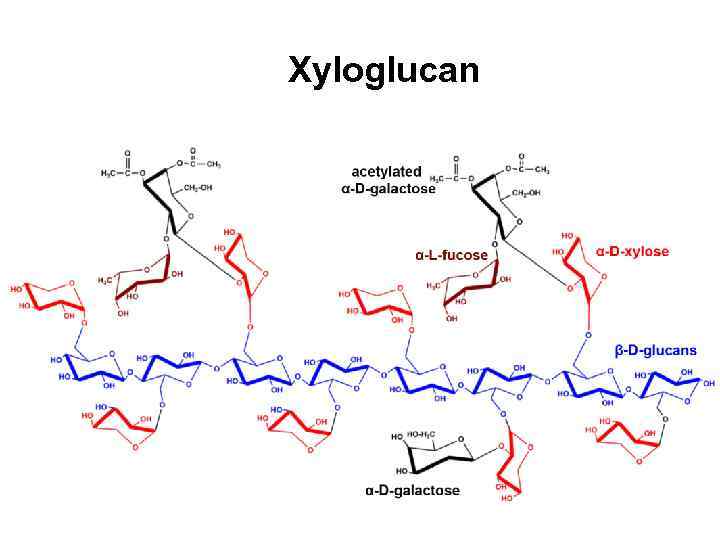
Xyloglucan
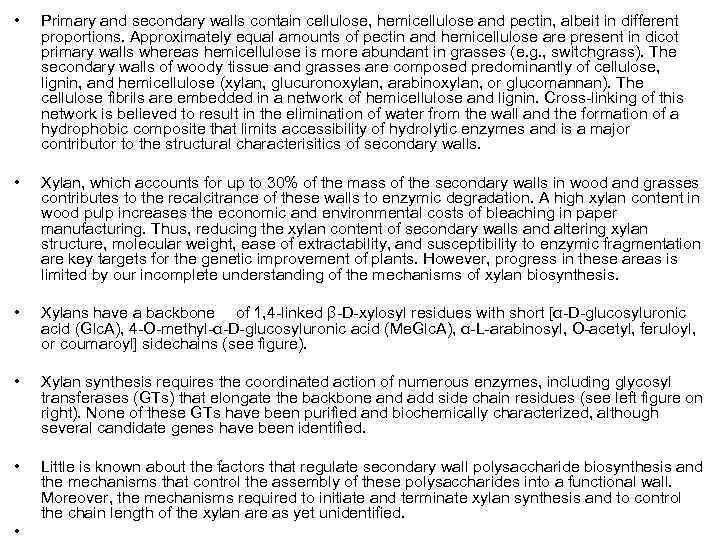
• Primary and secondary walls contain cellulose, hemicellulose and pectin, albeit in different proportions. Approximately equal amounts of pectin and hemicellulose are present in dicot primary walls whereas hemicellulose is more abundant in grasses (e. g. , switchgrass). The secondary walls of woody tissue and grasses are composed predominantly of cellulose, lignin, and hemicellulose (xylan, glucuronoxylan, arabinoxylan, or glucomannan). The cellulose fibrils are embedded in a network of hemicellulose and lignin. Cross-linking of this network is believed to result in the elimination of water from the wall and the formation of a hydrophobic composite that limits accessibility of hydrolytic enzymes and is a major contributor to the structural characterisitics of secondary walls. • Xylan, which accounts for up to 30% of the mass of the secondary walls in wood and grasses contributes to the recalcitrance of these walls to enzymic degradation. A high xylan content in wood pulp increases the economic and environmental costs of bleaching in paper manufacturing. Thus, reducing the xylan content of secondary walls and altering xylan structure, molecular weight, ease of extractability, and susceptibility to enzymic fragmentation are key targets for the genetic improvement of plants. However, progress in these areas is limited by our incomplete understanding of the mechanisms of xylan biosynthesis. • Xylans have a backbone of 1, 4 -linked β-D-xylosyl residues with short [α-D-glucosyluronic acid (Glc. A), 4 -O-methyl-α-D-glucosyluronic acid (Me. Glc. A), α-L-arabinosyl, O-acetyl, feruloyl, or coumaroyl] sidechains (see figure). • Xylan synthesis requires the coordinated action of numerous enzymes, including glycosyl transferases (GTs) that elongate the backbone and add side chain residues (see left figure on right). None of these GTs have been purified and biochemically characterized, although several candidate genes have been identified. • Little is known about the factors that regulate secondary wall polysaccharide biosynthesis and the mechanisms that control the assembly of these polysaccharides into a functional wall. Moreover, the mechanisms required to initiate and terminate xylan synthesis and to control the chain length of the xylan are as yet unidentified. •
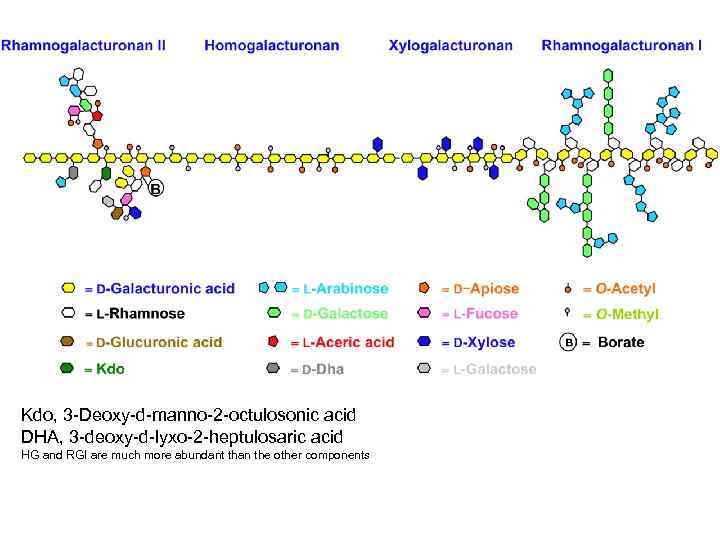
Kdo, 3 -Deoxy-d-manno-2 -octulosonic acid DHA, 3 -deoxy-d-lyxo-2 -heptulosaric acid HG and RGI are much more abundant than the other components
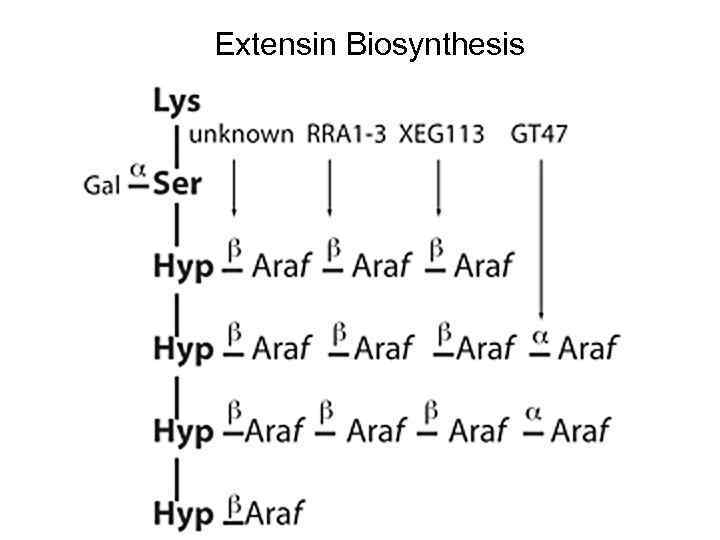
Extensin Biosynthesis
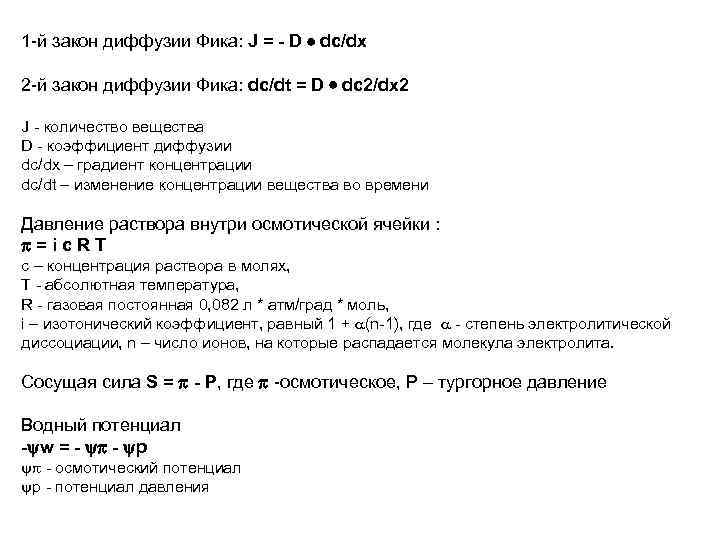
1 -й закон диффузии Фика: J = - D dc/dx 2 -й закон диффузии Фика: dc/dt = D dc 2/dx 2 J - количество вещества D - коэффициент диффузии dc/dx – градиент концентрации dc/dt – изменение концентрации вещества во времени Давление раствора внутри осмотической ячейки : =ic. RT с – концентрация раствора в молях, Т - абсолютная температура, R - газовая постоянная 0, 082 л * атм/град * моль, i – изотонический коэффициент, равный 1 + (n-1), где - степень электролитической диссоциации, n – число ионов, на которые распадается молекула электролита. Сосущая сила S = - P, где -осмотическое, Р – тургорное давление Водный потенциал - w = - - р - осмотический потенциал р - потенциал давления