


 Скачать презентацию Cellular Communication and Introduction to Drug actions Dr
75d37df05474d72d33d8dc5fbd922a45.ppt
- Количество слайдов: 27
 Cellular Communication and Introduction to Drug actions Dr. Sulayma Albarwani Department of Physiology Room 003 E-mail: salbarwani@squ. edu. om
 Cell Structure and Function Lecture 1
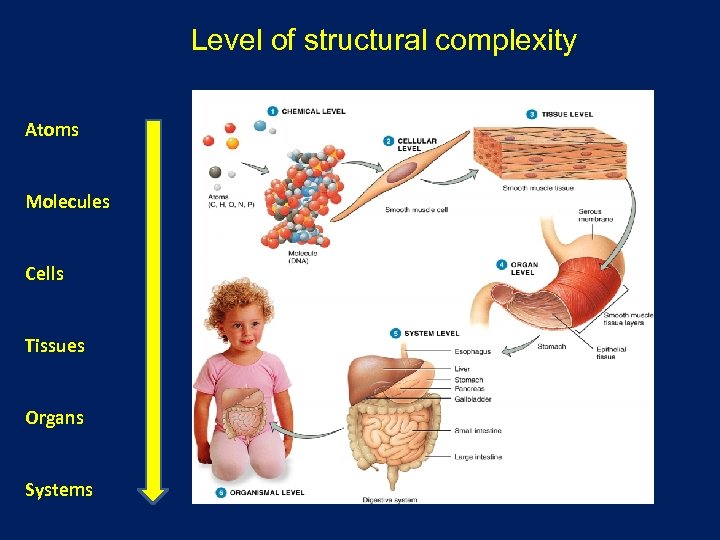 Level of structural complexity Atoms Molecules Cells Tissues Organs Systems
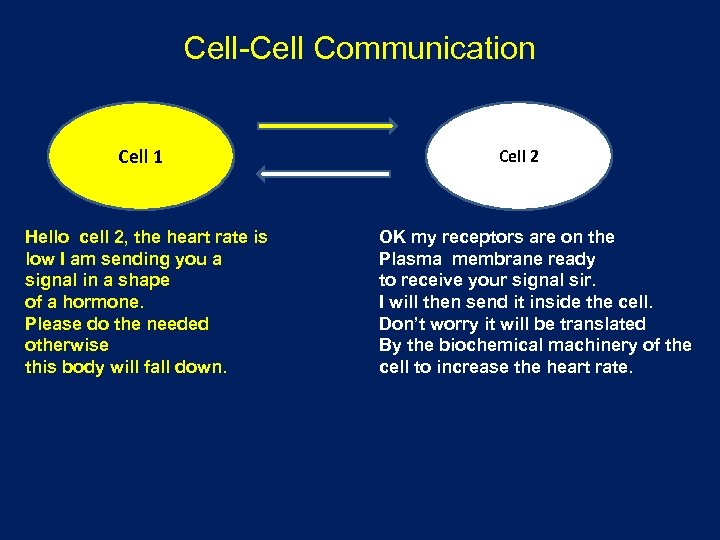 Cell-Cell Communication Cell 1 Hello cell 2, the heart rate is low I am sending you a signal in a shape of a hormone. Please do the needed otherwise this body will fall down. Cell 2 OK my receptors are on the Plasma membrane ready to receive your signal sir. I will then send it inside the cell. Don’t worry it will be translated By the biochemical machinery of the cell to increase the heart rate.
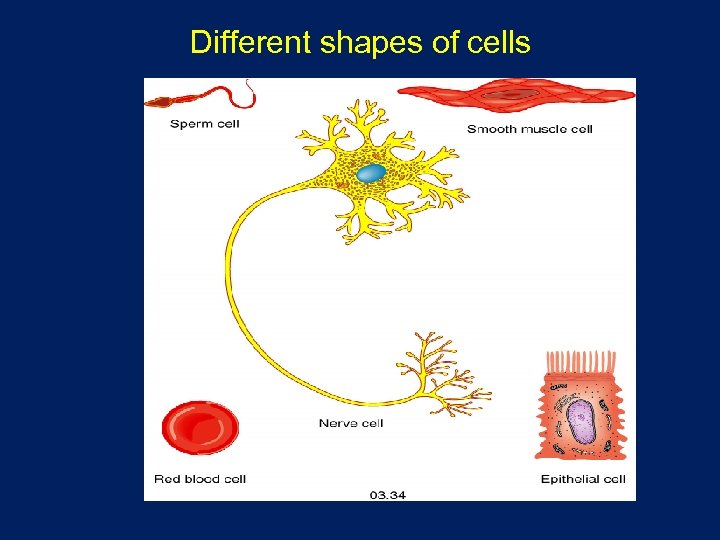 Different shapes of cells
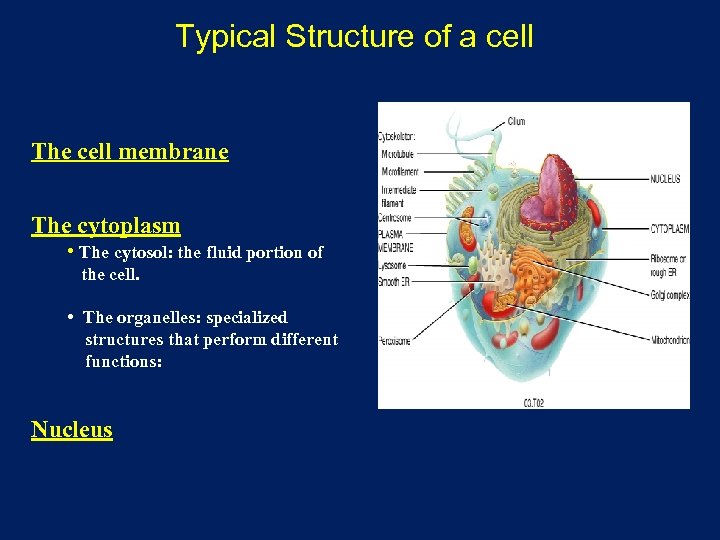 Typical Structure of a cell The cell membrane The cytoplasm • The cytosol: the fluid portion of the cell. • The organelles: specialized structures that perform different functions: Nucleus
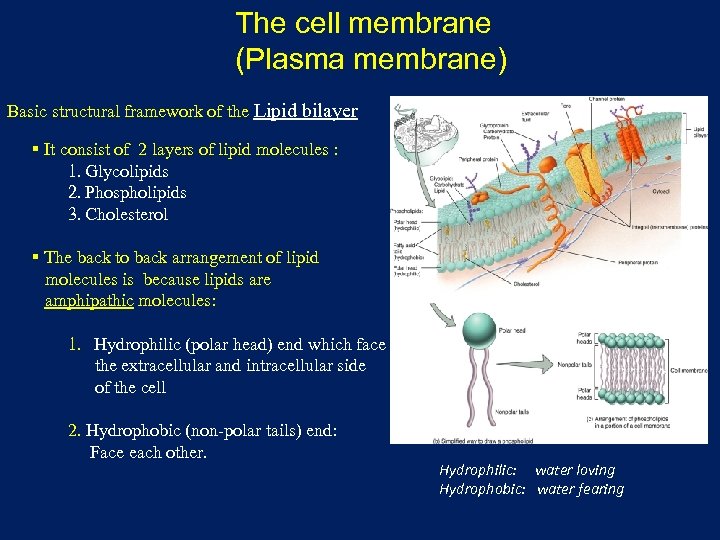 The cell membrane (Plasma membrane) Basic structural framework of the Lipid bilayer § It consist of 2 layers of lipid molecules : 1. Glycolipids 2. Phospholipids 3. Cholesterol § The back to back arrangement of lipid molecules is because lipids are amphipathic molecules: 1. Hydrophilic (polar head) end which face the extracellular and intracellular side of the cell 2. Hydrophobic (non-polar tails) end: Face each other. Hydrophilic: water loving Hydrophobic: water fearing
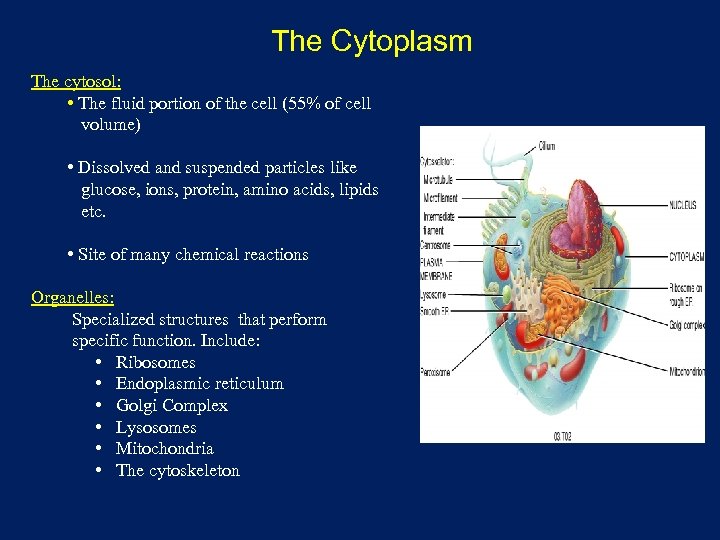 The Cytoplasm The cytosol: • The fluid portion of the cell (55% of cell volume) • Dissolved and suspended particles like glucose, ions, protein, amino acids, lipids etc. • Site of many chemical reactions Organelles: Specialized structures that perform specific function. Include: • Ribosomes • Endoplasmic reticulum • Golgi Complex • Lysosomes • Mitochondria • The cytoskeleton
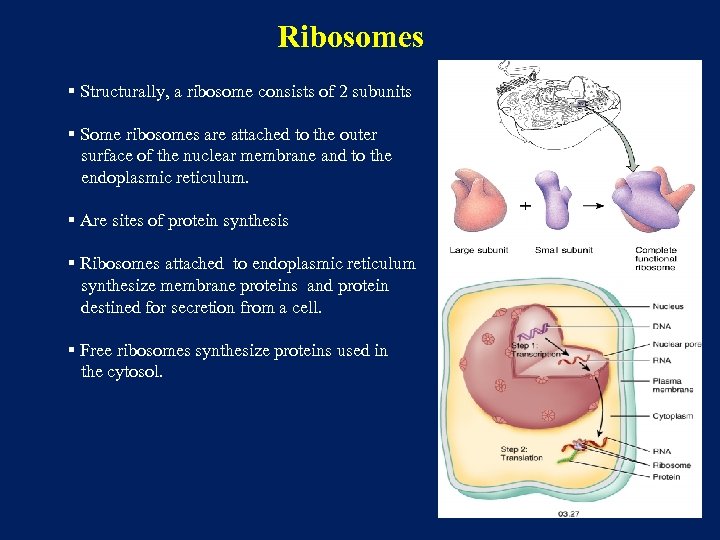 Ribosomes § Structurally, a ribosome consists of 2 subunits § Some ribosomes are attached to the outer surface of the nuclear membrane and to the endoplasmic reticulum. § Are sites of protein synthesis § Ribosomes attached to endoplasmic reticulum synthesize membrane proteins and protein destined for secretion from a cell. § Free ribosomes synthesize proteins used in the cytosol.
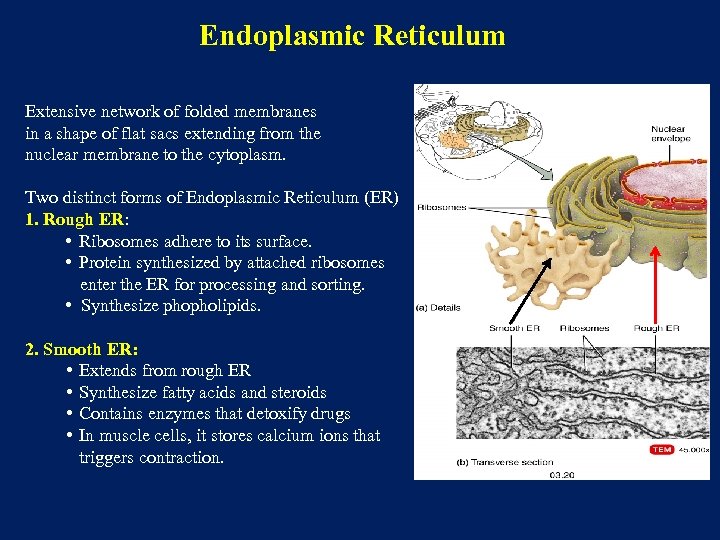 Endoplasmic Reticulum Extensive network of folded membranes in a shape of flat sacs extending from the nuclear membrane to the cytoplasm. Two distinct forms of Endoplasmic Reticulum (ER) 1. Rough ER: • Ribosomes adhere to its surface. • Protein synthesized by attached ribosomes enter the ER for processing and sorting. • Synthesize phopholipids. 2. Smooth ER: • Extends from rough ER • Synthesize fatty acids and steroids • Contains enzymes that detoxify drugs • In muscle cells, it stores calcium ions that triggers contraction.
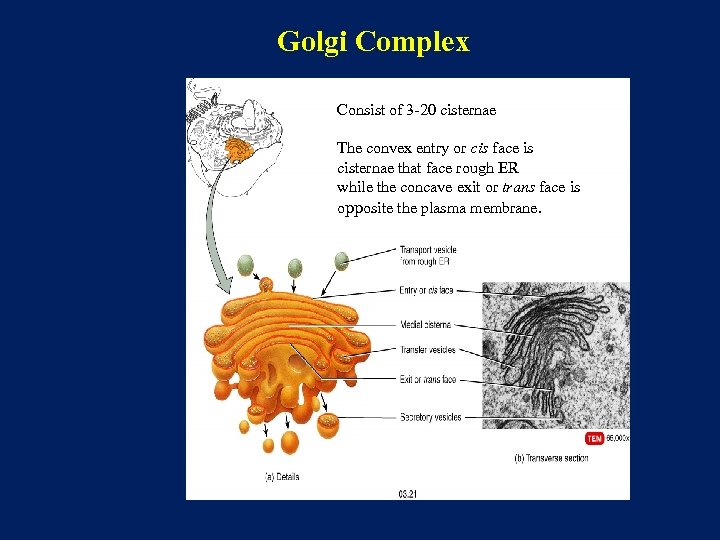 Golgi Complex Consist of 3 -20 cisternae The convex entry or cis face is cisternae that face rough ER while the concave exit or trans face is opposite the plasma membrane.
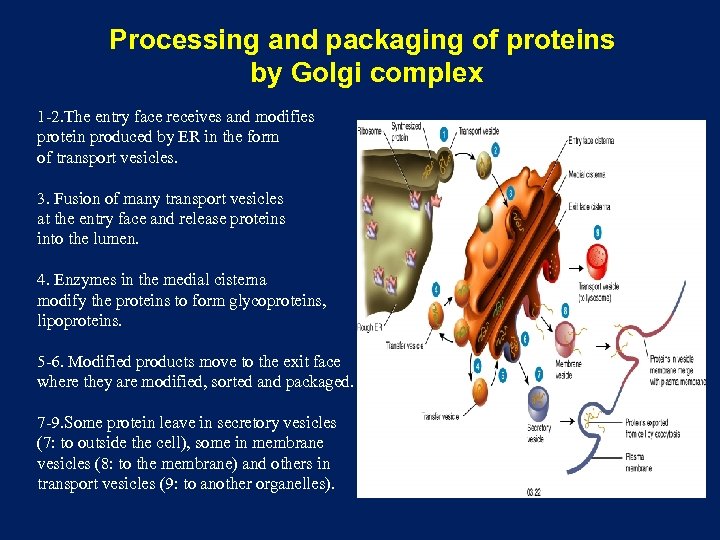 Processing and packaging of proteins by Golgi complex 1 -2. The entry face receives and modifies protein produced by ER in the form of transport vesicles. 3. Fusion of many transport vesicles at the entry face and release proteins into the lumen. 4. Enzymes in the medial cisterna modify the proteins to form glycoproteins, lipoproteins. 5 -6. Modified products move to the exit face where they are modified, sorted and packaged. 7 -9. Some protein leave in secretory vesicles (7: to outside the cell), some in membrane vesicles (8: to the membrane) and others in transport vesicles (9: to another organelles).
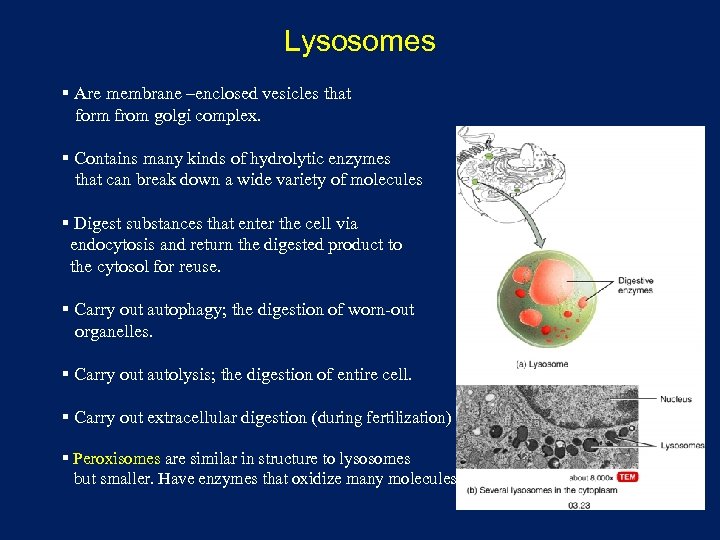 Lysosomes § Are membrane –enclosed vesicles that form from golgi complex. § Contains many kinds of hydrolytic enzymes that can break down a wide variety of molecules § Digest substances that enter the cell via endocytosis and return the digested product to the cytosol for reuse. § Carry out autophagy; the digestion of worn-out organelles. § Carry out autolysis; the digestion of entire cell. § Carry out extracellular digestion (during fertilization) § Peroxisomes are similar in structure to lysosomes but smaller. Have enzymes that oxidize many molecules
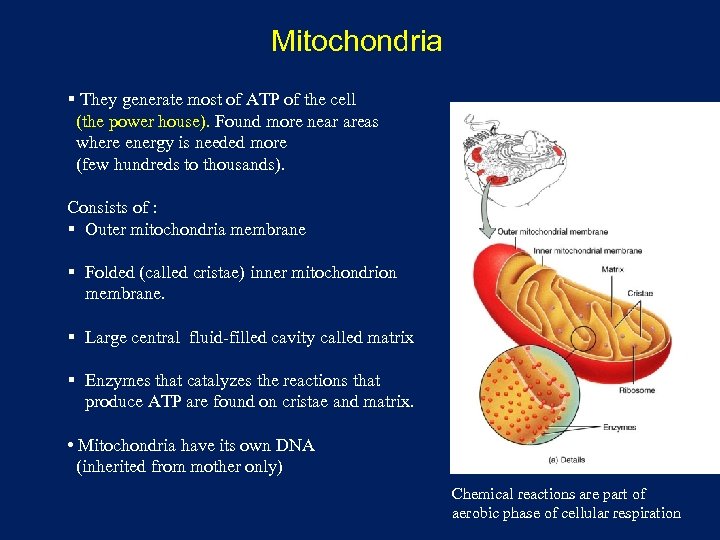 Mitochondria § They generate most of ATP of the cell (the power house). Found more near areas where energy is needed more (few hundreds to thousands). Consists of : § Outer mitochondria membrane § Folded (called cristae) inner mitochondrion membrane. § Large central fluid-filled cavity called matrix § Enzymes that catalyzes the reactions that produce ATP are found on cristae and matrix. • Mitochondria have its own DNA (inherited from mother only) Chemical reactions are part of aerobic phase of cellular respiration
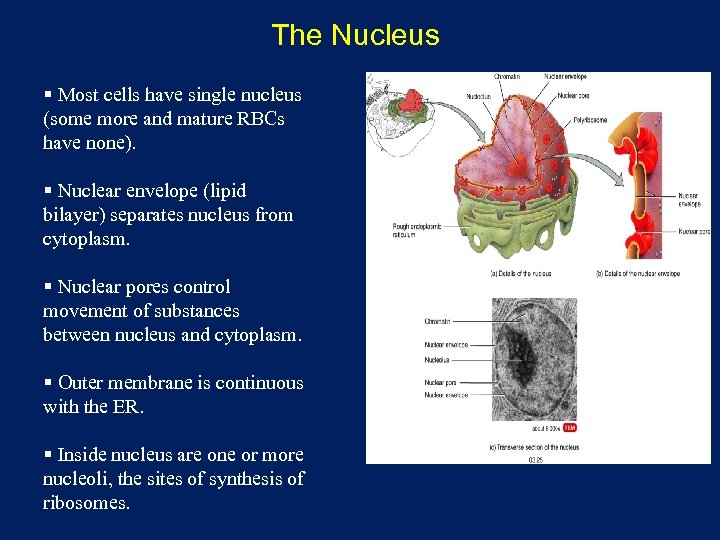 The Nucleus § Most cells have single nucleus (some more and mature RBCs have none). § Nuclear envelope (lipid bilayer) separates nucleus from cytoplasm. § Nuclear pores control movement of substances between nucleus and cytoplasm. § Outer membrane is continuous with the ER. § Inside nucleus are one or more nucleoli, the sites of synthesis of ribosomes.
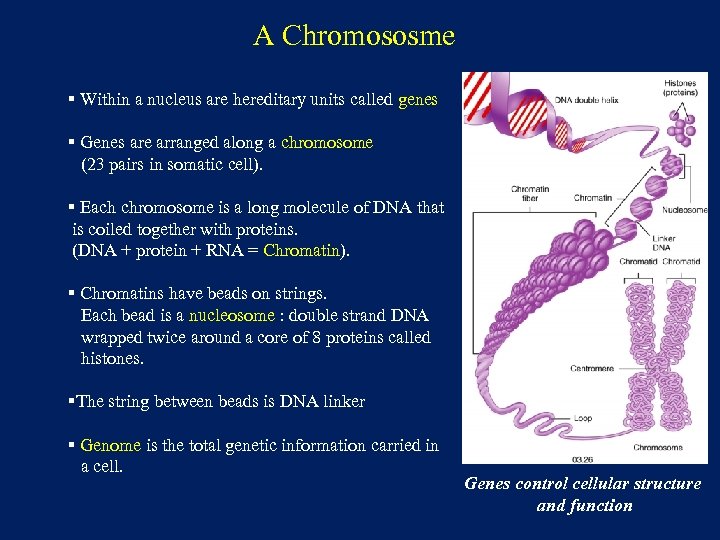 A Chromososme § Within a nucleus are hereditary units called genes § Genes are arranged along a chromosome (23 pairs in somatic cell). § Each chromosome is a long molecule of DNA that is coiled together with proteins. (DNA + protein + RNA = Chromatin). § Chromatins have beads on strings. Each bead is a nucleosome : double strand DNA wrapped twice around a core of 8 proteins called histones. §The string between beads is DNA linker § Genome is the total genetic information carried in a cell. Genes control cellular structure and function
 Cytoskeleton and cell junctions
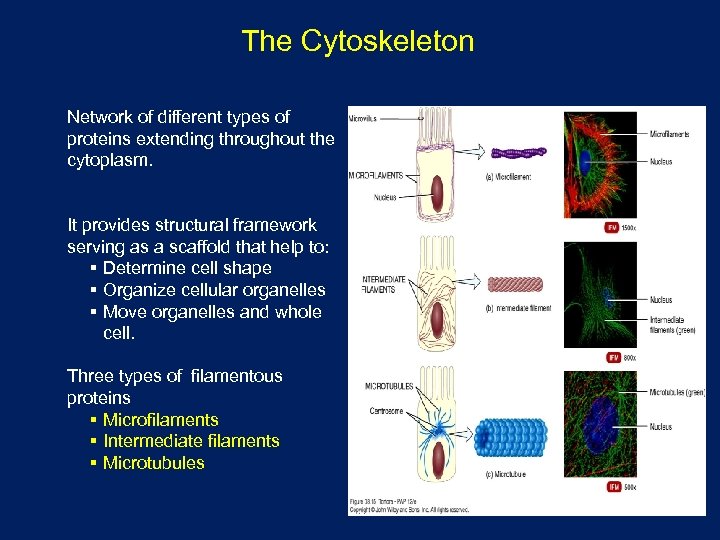 The Cytoskeleton Network of different types of proteins extending throughout the cytoplasm. It provides structural framework serving as a scaffold that help to: § Determine cell shape § Organize cellular organelles § Move organelles and whole cell. Three types of filamentous proteins § Microfilaments § Intermediate filaments § Microtubules
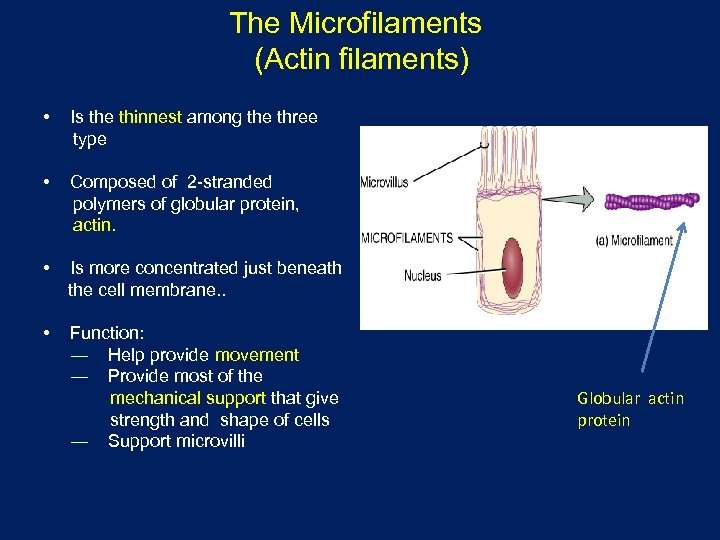 The Microfilaments (Actin filaments) • Is the thinnest among the three type • Composed of 2 -stranded polymers of globular protein, actin. • Is more concentrated just beneath the cell membrane. . • Function: ― Help provide movement ― Provide most of the mechanical support that give strength and shape of cells ― Support microvilli Globular actin protein
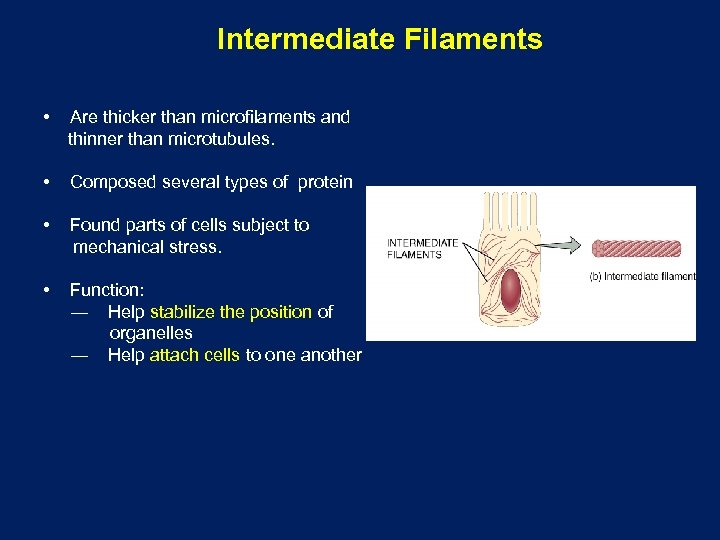 Intermediate Filaments • Are thicker than microfilaments and thinner than microtubules. • Composed several types of protein • Found parts of cells subject to mechanical stress. • Function: ― Help stabilize the position of organelles ― Help attach cells to one another
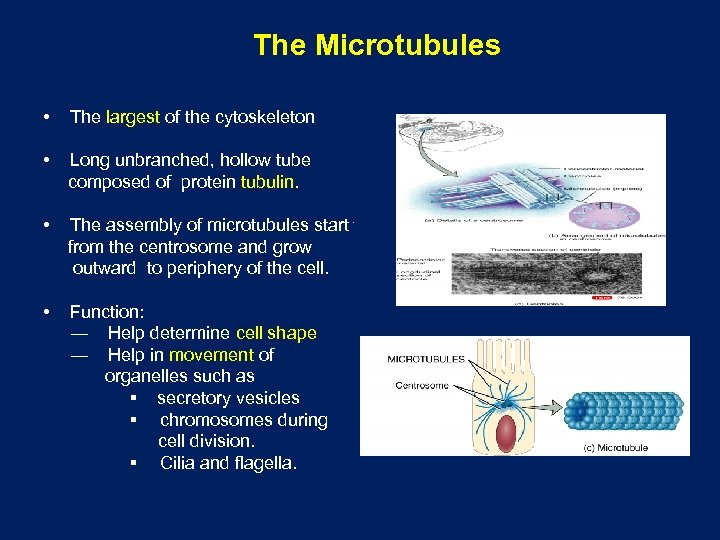 The Microtubules • The largest of the cytoskeleton • Long unbranched, hollow tube composed of protein tubulin. • The assembly of microtubules start from the centrosome and grow outward to periphery of the cell. • Function: ― Help determine cell shape ― Help in movement of organelles such as § secretory vesicles § chromosomes during cell division. § Cilia and flagella.
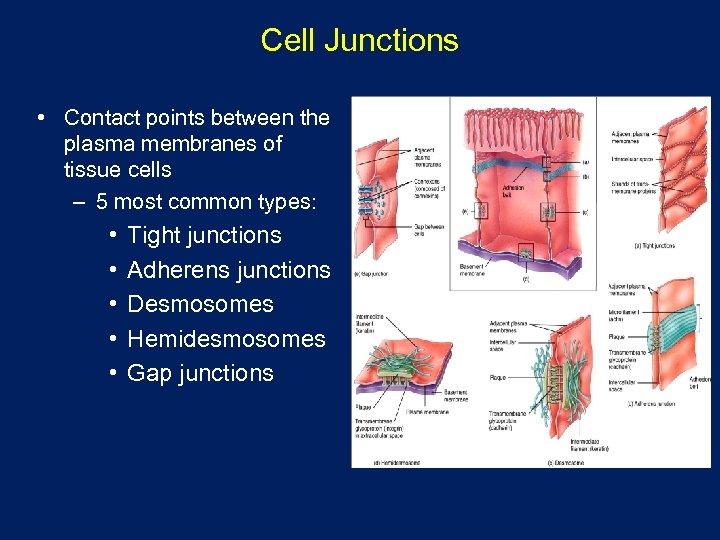 Cell Junctions • Contact points between the plasma membranes of tissue cells – 5 most common types: • • • Tight junctions Adherens junctions Desmosomes Hemidesmosomes Gap junctions
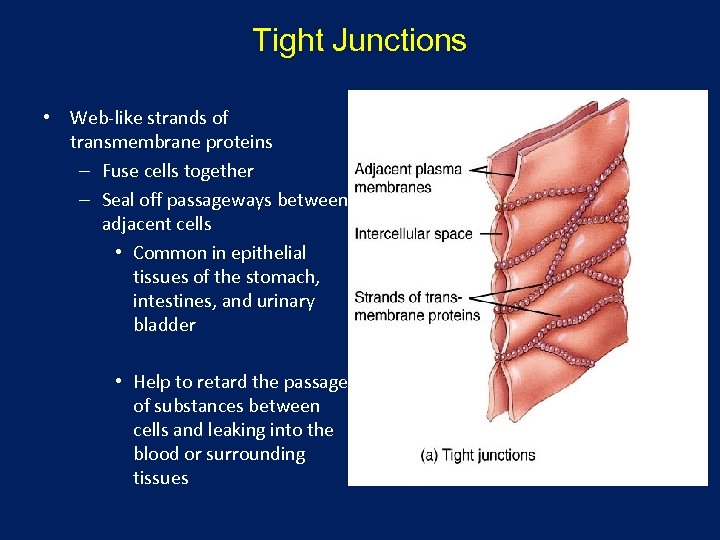 Tight Junctions • Web-like strands of transmembrane proteins – Fuse cells together – Seal off passageways between adjacent cells • Common in epithelial tissues of the stomach, intestines, and urinary bladder • Help to retard the passage of substances between cells and leaking into the blood or surrounding tissues
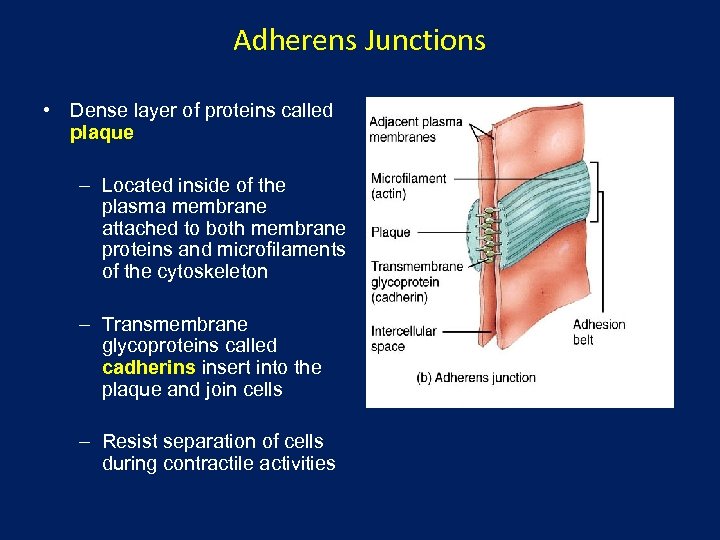 Adherens Junctions • Dense layer of proteins called plaque – Located inside of the plasma membrane attached to both membrane proteins and microfilaments of the cytoskeleton – Transmembrane glycoproteins called cadherins insert into the plaque and join cells – Resist separation of cells during contractile activities
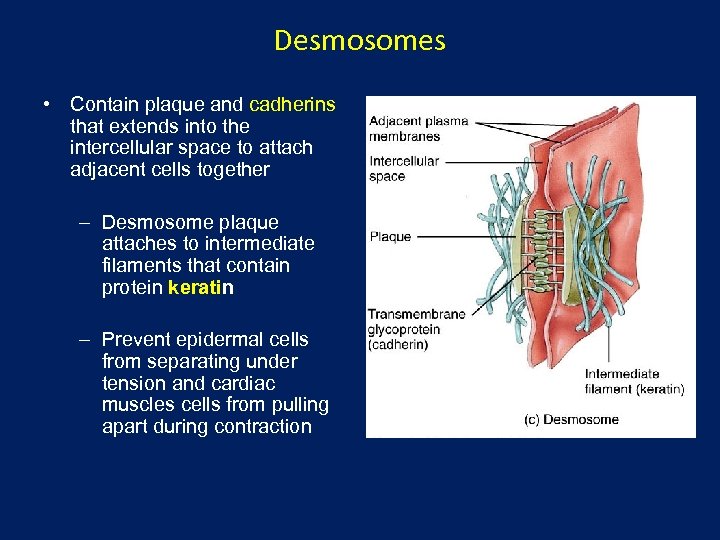 Desmosomes • Contain plaque and cadherins that extends into the intercellular space to attach adjacent cells together – Desmosome plaque attaches to intermediate filaments that contain protein keratin – Prevent epidermal cells from separating under tension and cardiac muscles cells from pulling apart during contraction
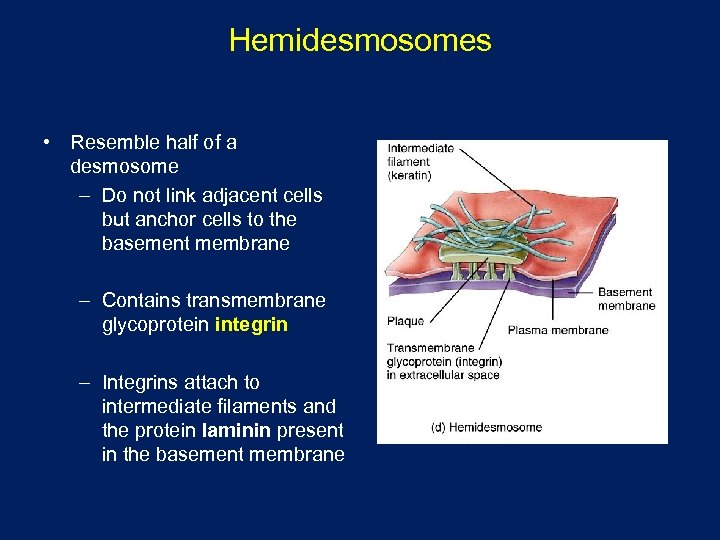 Hemidesmosomes • Resemble half of a desmosome – Do not link adjacent cells but anchor cells to the basement membrane – Contains transmembrane glycoprotein integrin – Integrins attach to intermediate filaments and the protein laminin present in the basement membrane
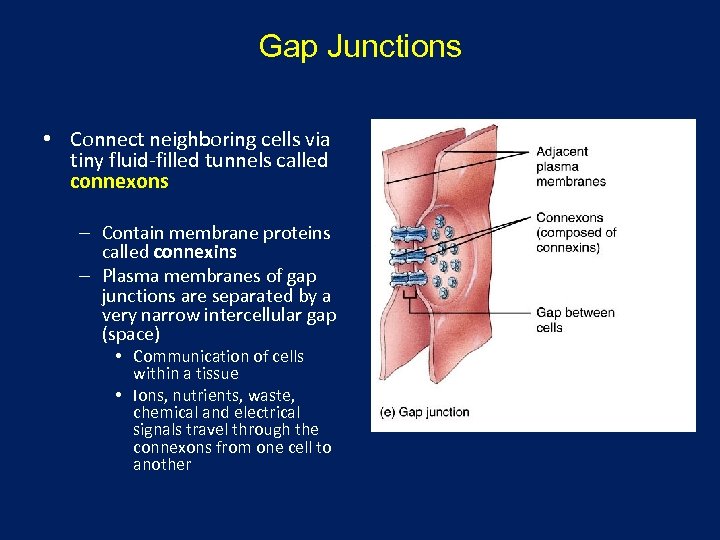 Gap Junctions • Connect neighboring cells via tiny fluid-filled tunnels called connexons – Contain membrane proteins called connexins – Plasma membranes of gap junctions are separated by a very narrow intercellular gap (space) • Communication of cells within a tissue • Ions, nutrients, waste, chemical and electrical signals travel through the connexons from one cell to another