


 Скачать презентацию Cell Structure Function http koning ecsu ctstateu
Cell_structure_function.ppt
- Количество слайдов: 26
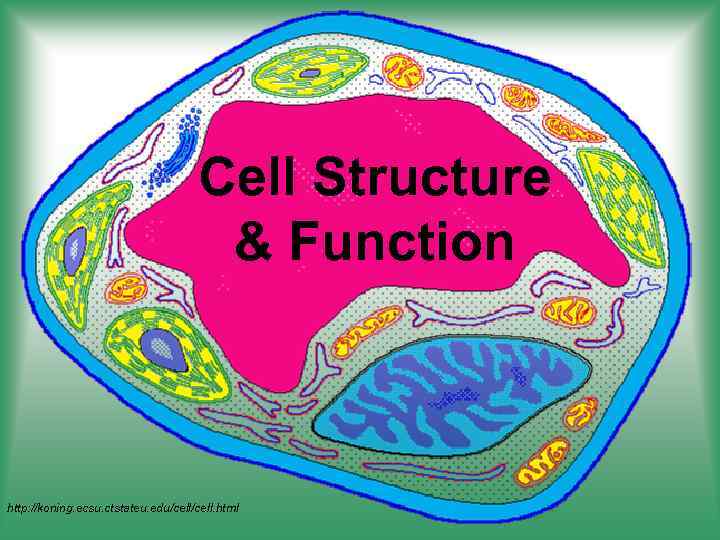 Cell Structure & Function http: //koning. ecsu. ctstateu. edu/cell. html
 Cell Theory • All living things are made up of cells. • Cells are the smallest working units of all living things. • All cells come from preexisting cells through cell division.
 Definition of Cell A cell is the smallest unit that is capable of performing life functions.
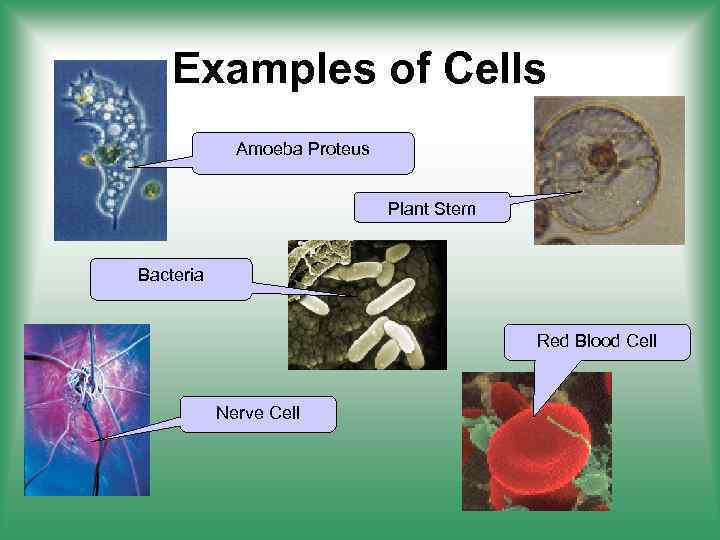 Examples of Cells Amoeba Proteus Plant Stem Bacteria Red Blood Cell Nerve Cell
 Two Types of Cells • Prokaryotic • Eukaryotic
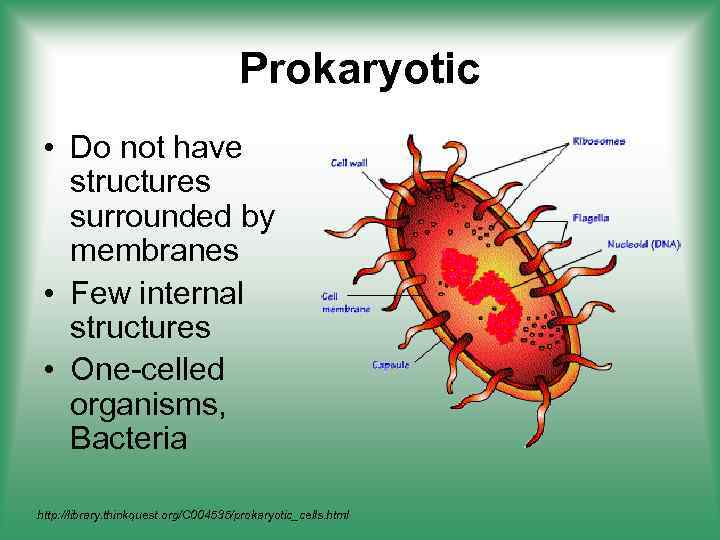 Prokaryotic • Do not have structures surrounded by membranes • Few internal structures • One-celled organisms, Bacteria http: //library. thinkquest. org/C 004535/prokaryotic_cells. html
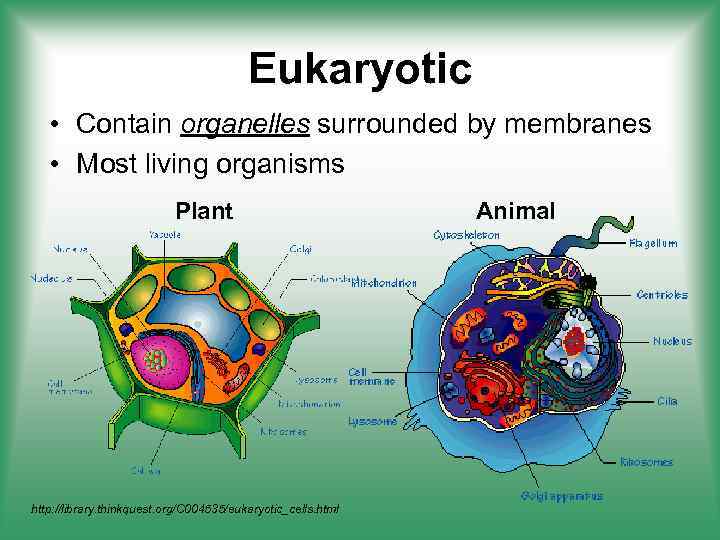 Eukaryotic • Contain organelles surrounded by membranes • Most living organisms Plant http: //library. thinkquest. org/C 004535/eukaryotic_cells. html Animal
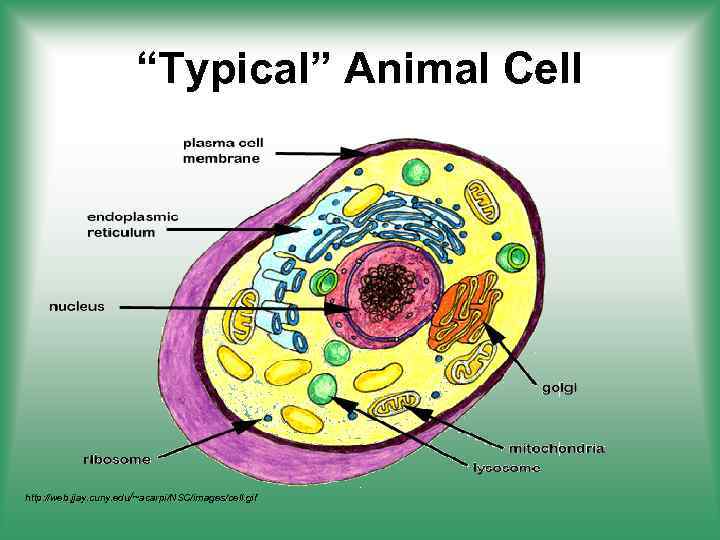 “Typical” Animal Cell http: //web. jjay. cuny. edu/~acarpi/NSC/images/cell. gif
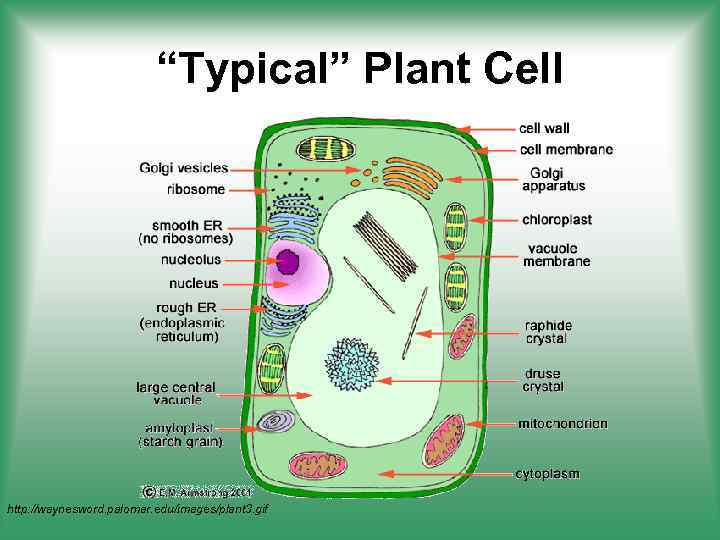 “Typical” Plant Cell http: //waynesword. palomar. edu/images/plant 3. gif
 Cell Parts Organelles
 Surrounding the Cell
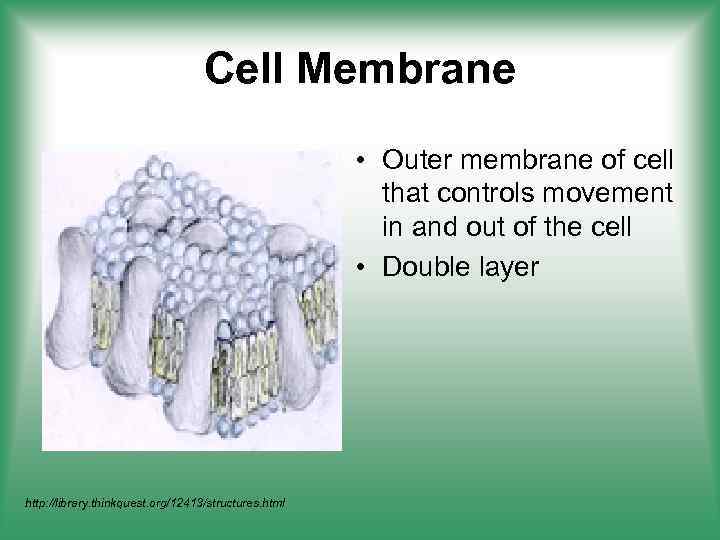 Cell Membrane • Outer membrane of cell that controls movement in and out of the cell • Double layer http: //library. thinkquest. org/12413/structures. html
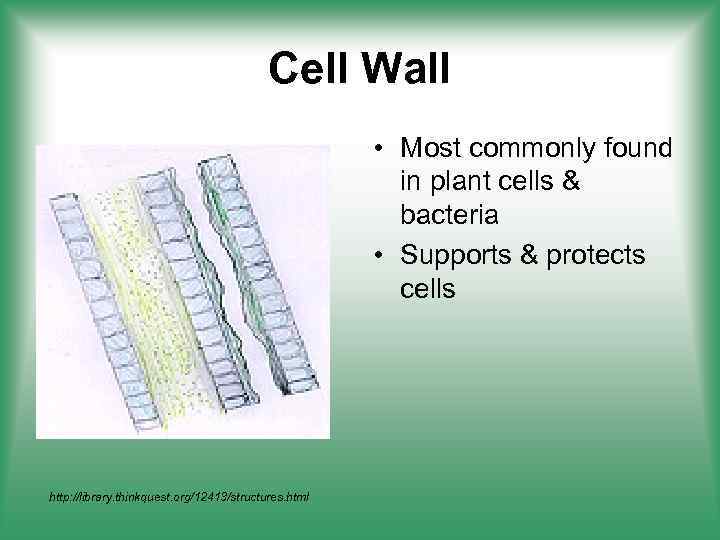 Cell Wall • Most commonly found in plant cells & bacteria • Supports & protects cells http: //library. thinkquest. org/12413/structures. html
 Inside the Cell
 Nucleus • Directs cell activities • Separated from cytoplasm by nuclear membrane • Contains genetic material - DNA
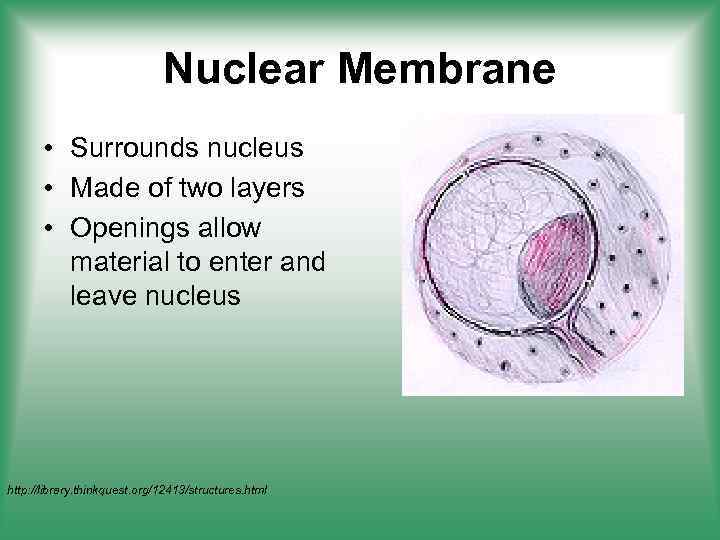 Nuclear Membrane • Surrounds nucleus • Made of two layers • Openings allow material to enter and leave nucleus http: //library. thinkquest. org/12413/structures. html
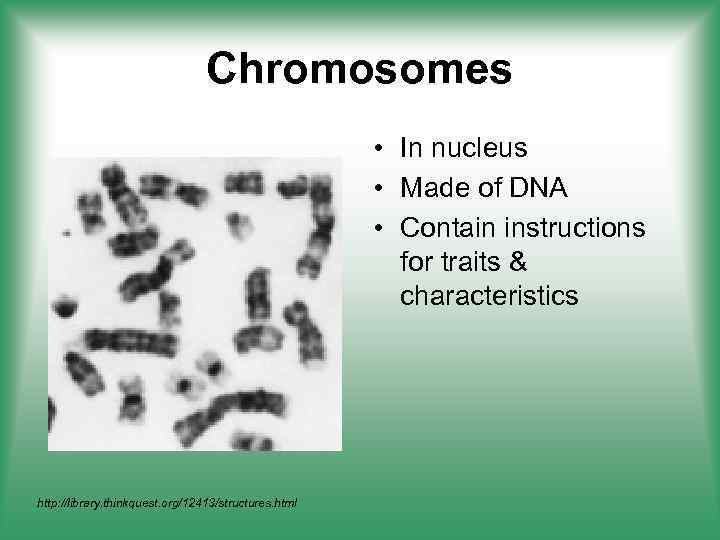 Chromosomes • In nucleus • Made of DNA • Contain instructions for traits & characteristics http: //library. thinkquest. org/12413/structures. html
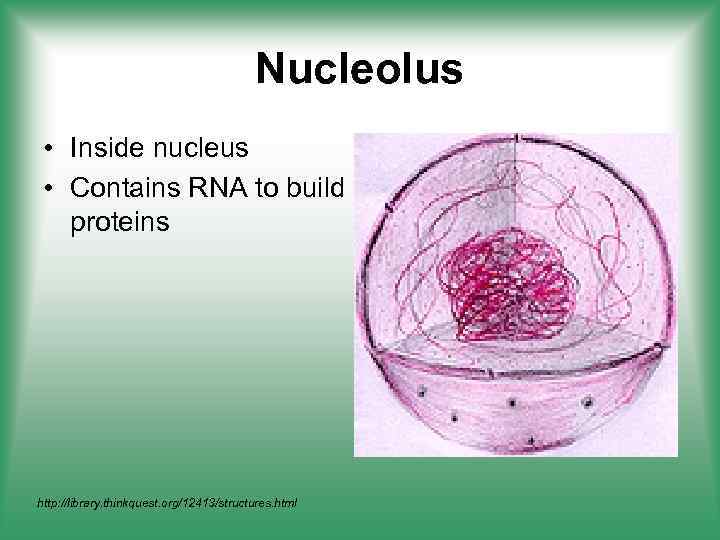 Nucleolus • Inside nucleus • Contains RNA to build proteins http: //library. thinkquest. org/12413/structures. html
 Cytoplasm • Gel-like mixture • Surrounded by cell membrane • Contains hereditary material
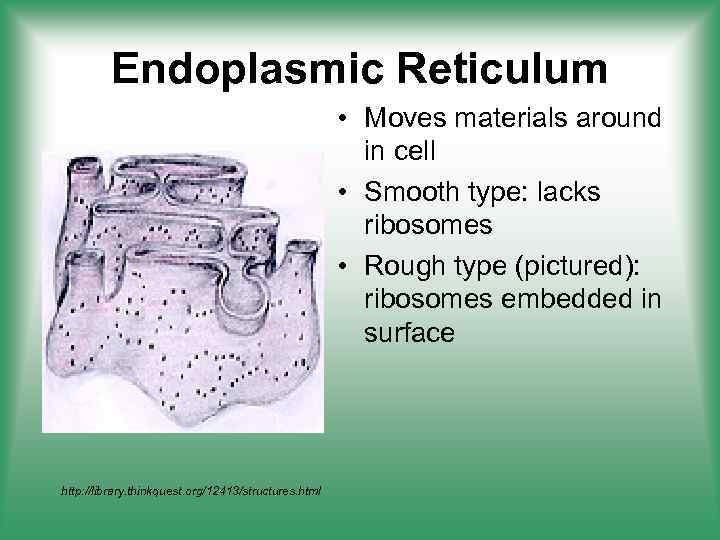 Endoplasmic Reticulum • Moves materials around in cell • Smooth type: lacks ribosomes • Rough type (pictured): ribosomes embedded in surface http: //library. thinkquest. org/12413/structures. html
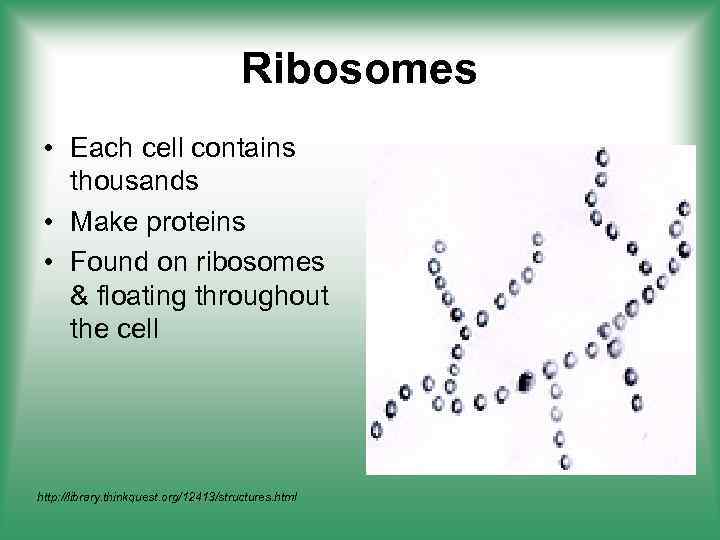 Ribosomes • Each cell contains thousands • Make proteins • Found on ribosomes & floating throughout the cell http: //library. thinkquest. org/12413/structures. html
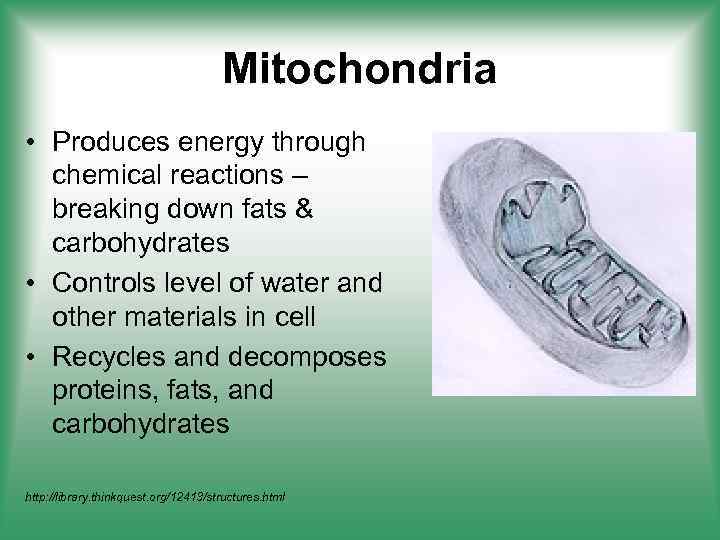 Mitochondria • Produces energy through chemical reactions – breaking down fats & carbohydrates • Controls level of water and other materials in cell • Recycles and decomposes proteins, fats, and carbohydrates http: //library. thinkquest. org/12413/structures. html
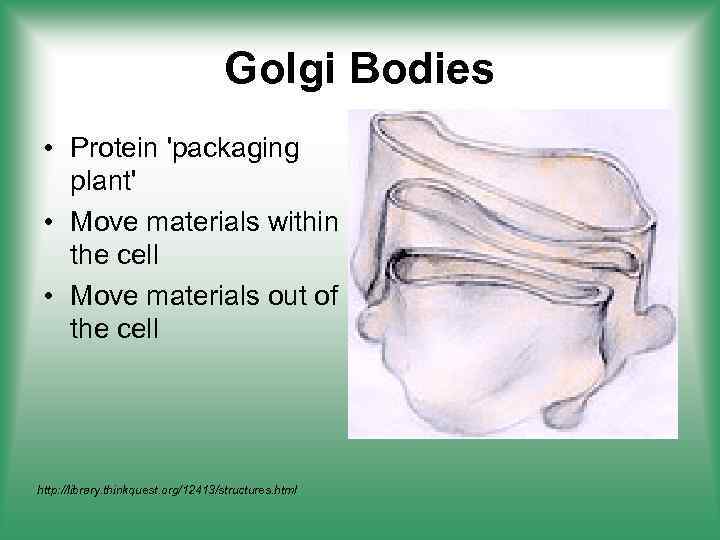 Golgi Bodies • Protein 'packaging plant' • Move materials within the cell • Move materials out of the cell http: //library. thinkquest. org/12413/structures. html
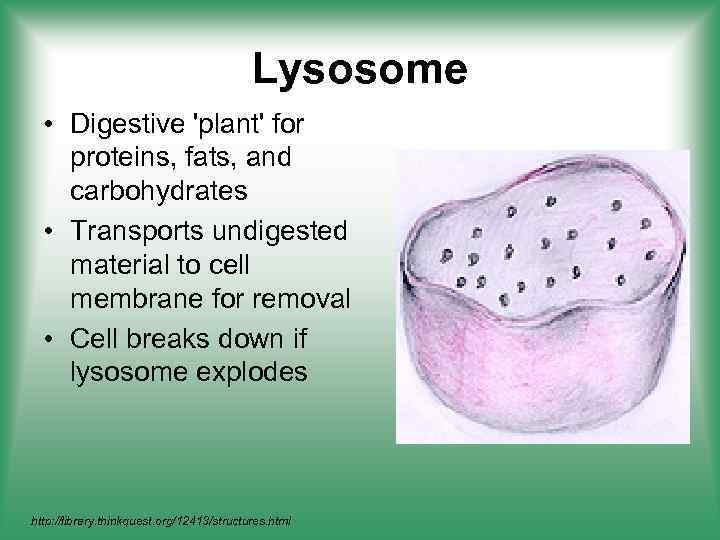 Lysosome • Digestive 'plant' for proteins, fats, and carbohydrates • Transports undigested material to cell membrane for removal • Cell breaks down if lysosome explodes http: //library. thinkquest. org/12413/structures. html
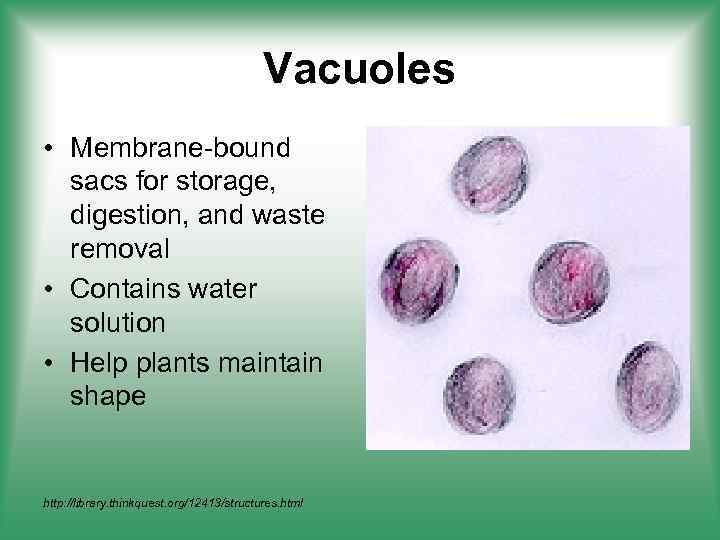 Vacuoles • Membrane-bound sacs for storage, digestion, and waste removal • Contains water solution • Help plants maintain shape http: //library. thinkquest. org/12413/structures. html
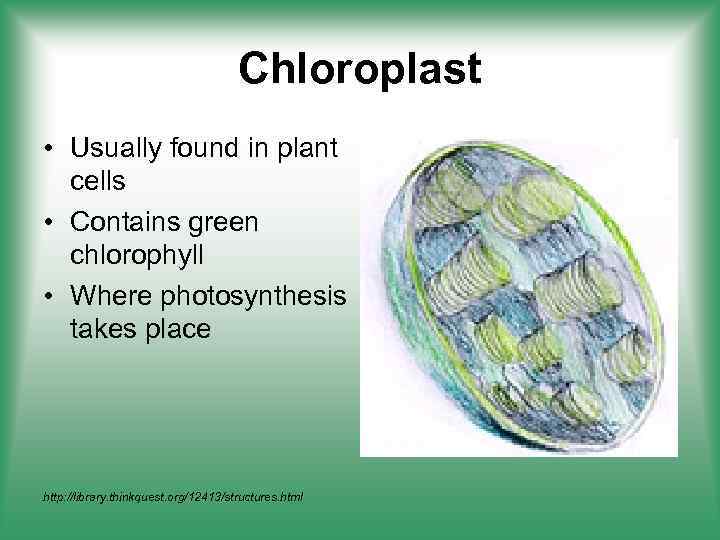 Chloroplast • Usually found in plant cells • Contains green chlorophyll • Where photosynthesis takes place http: //library. thinkquest. org/12413/structures. html