 Скачать презентацию CEIST Limited School Finances Challenging Times October
0a85334b92ade2d94a680c9dfde9563d.ppt
- Количество слайдов: 30



CEIST Limited School Finances – Challenging Times October 2009 1
Welcome! n Welcome to everyone and thank you for being here today. Introduction n Mike Higgins, Director of Finance, CEIST Limited. n Bernadette Mc. Keown, Accountant, CEIST Limited. 2
School Finances Challenging Times 3
Current Situation n D. E. S. Grant Cutbacks. n Current Economic Climate. n Reduction in Household Income. n Disadvantaged Schools – Non-DEIS. n Smaller Schools. 4
School Finances – Challenging Times School Income 5
School Income There are 3 Main Areas of School Income: 1. D. E. S. 2. School Generated Income 3. Other Income 6
School Income D. E. S. Grants are fixed The options remaining are: (a) Maximise School Generated Income and/or (b) Maximise Other Income 7
School Income contd. The Main Areas of School Generated Income that can be maximised: n n n Bus Income Charges for Photocopying T. Y. to cover all T. Y. costs School Tours must always be self-financing School canteens, tuck shops, book shops, uniform sales must always be at least break-even Rental of School Premises – potentially a major source of income (caution on insurance). 8
School Income contd. The Main Areas of Other Income that can be maximised: n Voluntary Subscriptions / Income from Parents n Fundraising n Donations – all CEIST schools have charitable status. Tax reclaimable on donations > € 250 per annum (hope to have this reduced to > € 100 p. a. ) Collecting money from any of these sources is becoming increasingly difficult in the current economic climate 9
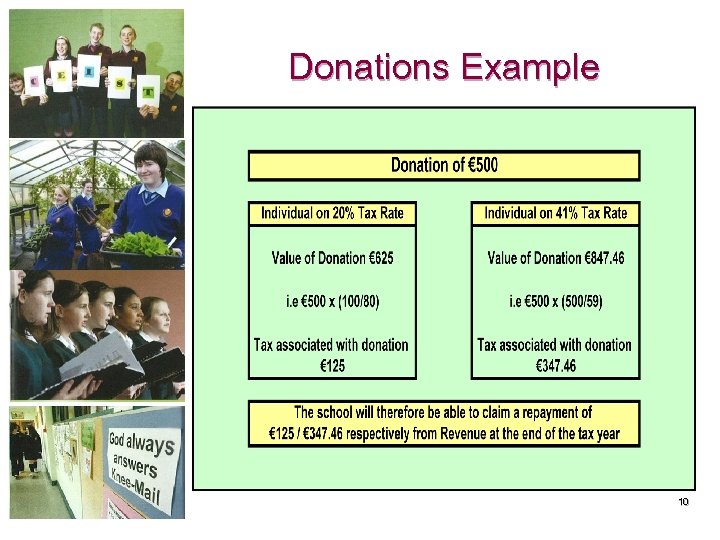
Donations Example 10
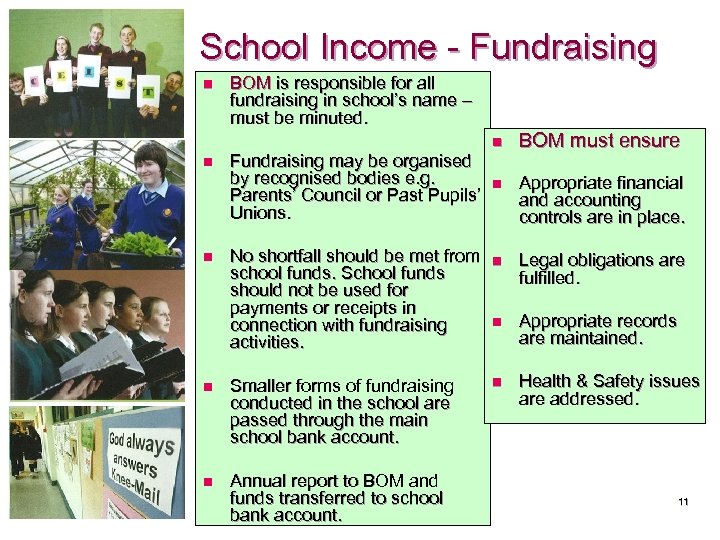
School Income - Fundraising n n n BOM is responsible for all fundraising in school’s name – must be minuted. Fundraising may be organised by recognised bodies e. g. Parents’ Council or Past Pupils’ Unions. No shortfall should be met from school funds. School funds should not be used for payments or receipts in connection with fundraising activities. n Smaller forms of fundraising conducted in the school are passed through the main school bank account. n Annual report to BOM and funds transferred to school bank account. n BOM must ensure n Appropriate financial and accounting controls are in place. n Legal obligations are fulfilled. n Appropriate records are maintained. n Health & Safety issues are addressed. 11
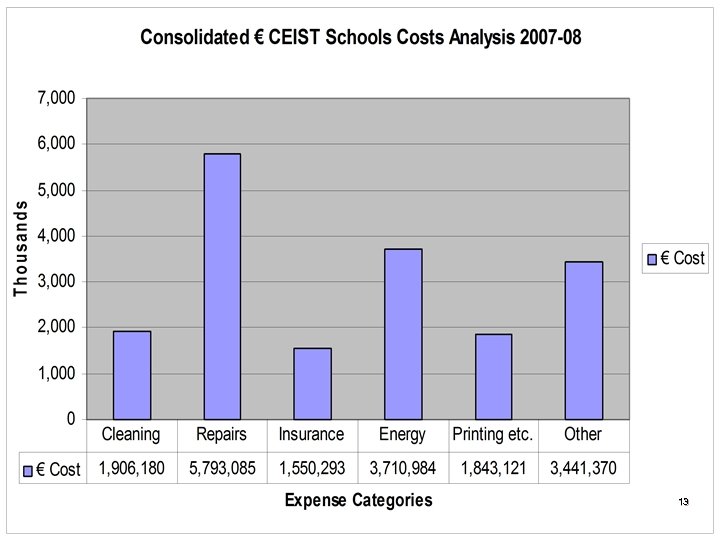
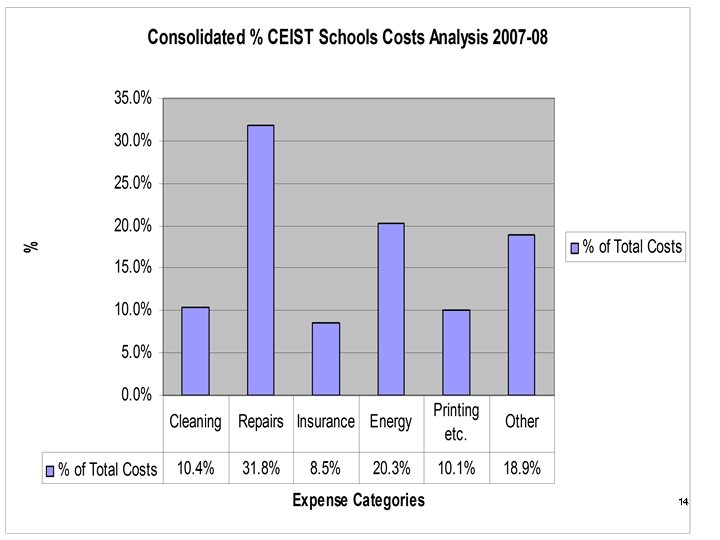
School Finances – Challenging Times School Expenditure 12
13
14
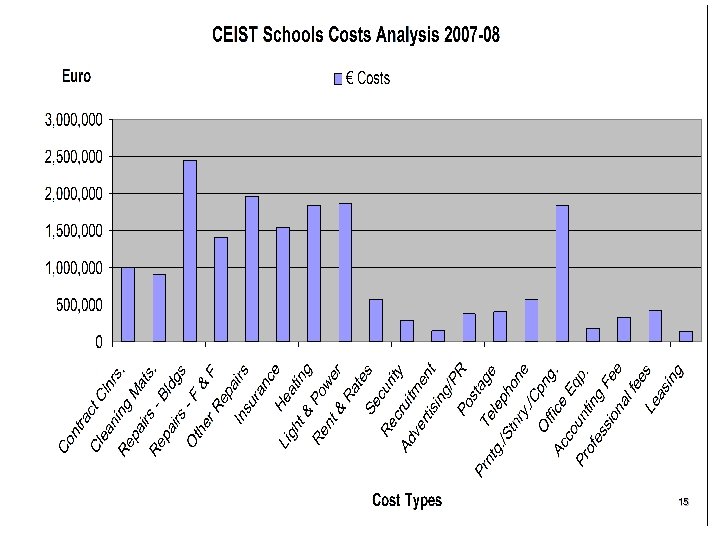
School Expenditure 15
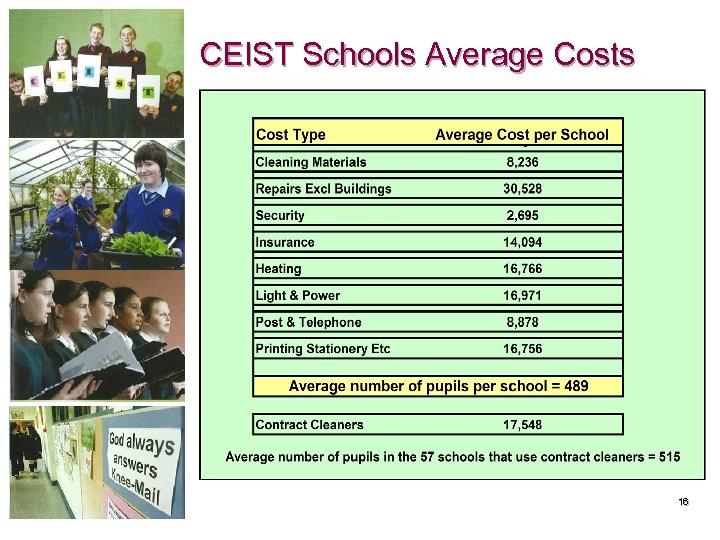
CEIST Schools Average Costs 16
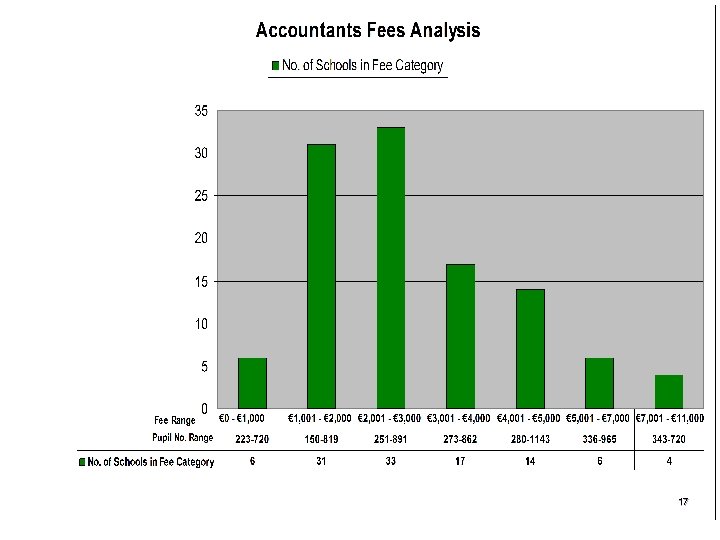
Accountant’s Fees 17
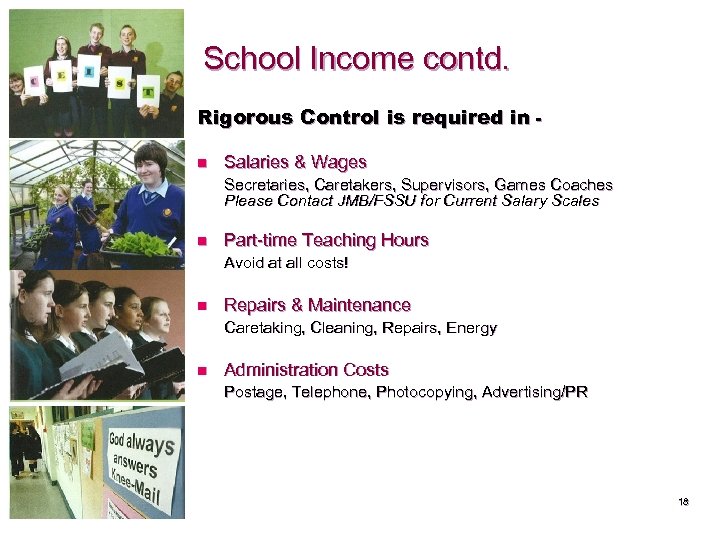
School Income contd. Rigorous Control is required in n Salaries & Wages Secretaries, Caretakers, Supervisors, Games Coaches Please Contact JMB/FSSU for Current Salary Scales n Part-time Teaching Hours Avoid at all costs! n Repairs & Maintenance Caretaking, Cleaning, Repairs, Energy n Administration Costs Postage, Telephone, Photocopying, Advertising/PR 18
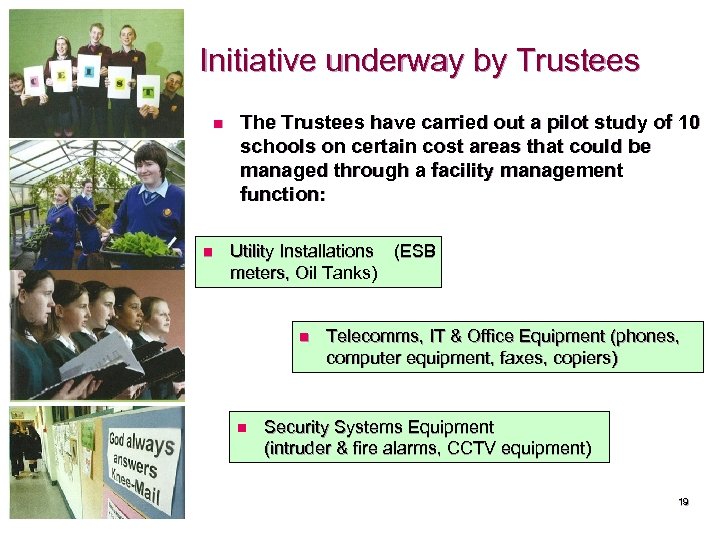
Initiative underway by Trustees n n The Trustees have carried out a pilot study of 10 schools on certain cost areas that could be managed through a facility management function: Utility Installations (ESB meters, Oil Tanks) n n Telecomms, IT & Office Equipment (phones, computer equipment, faxes, copiers) Security Systems Equipment (intruder & fire alarms, CCTV equipment) 19
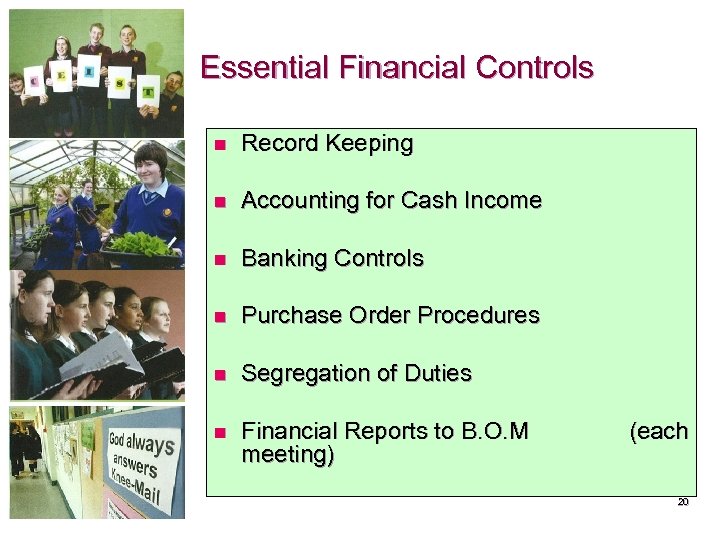
Essential Financial Controls n Record Keeping n Accounting for Cash Income n Banking Controls n Purchase Order Procedures n Segregation of Duties n Financial Reports to B. O. M meeting) (each 20
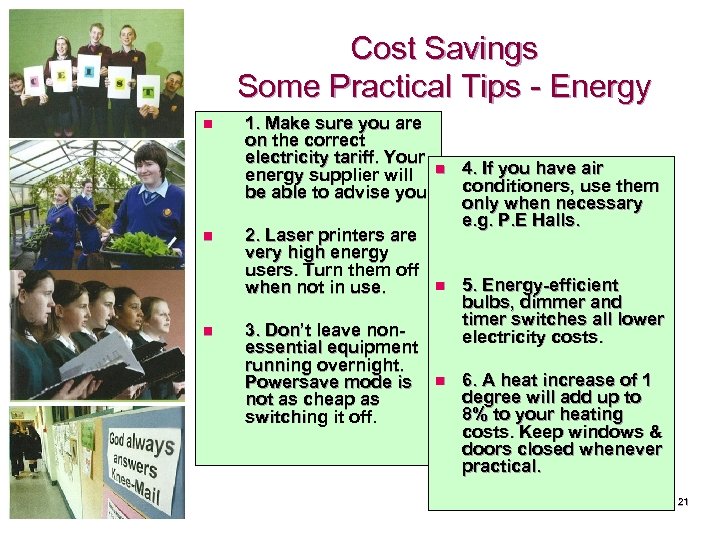
Cost Savings Some Practical Tips - Energy n n n 1. Make sure you are on the correct electricity tariff. Your energy supplier will n 4. If you have air conditioners, use them be able to advise you. only when necessary e. g. P. E Halls. 2. Laser printers are very high energy users. Turn them off n 5. Energy-efficient when not in use. bulbs, dimmer and timer switches all lower 3. Don’t leave nonelectricity costs. essential equipment running overnight. Powersave mode is n 6. A heat increase of 1 degree will add up to not as cheap as 8% to your heating switching it off. costs. Keep windows & doors closed whenever practical. 21

Cost Savings – Some Practical Tips Energy Efficiency Scheme 2009 This scheme allows schools to apply for funding, on a once off basis, to upgrade insulation in attics and the external cavity walls of school buildings n n Contact Details www. energyeducation. ie Freephone 1800 211713 22
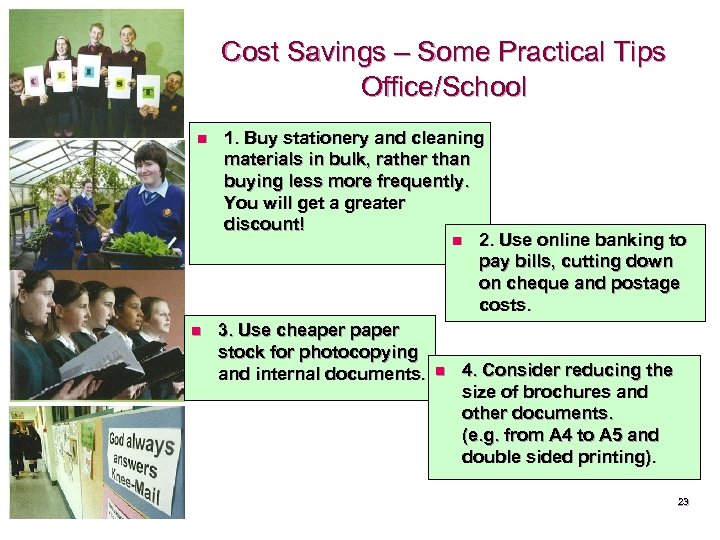
Cost Savings – Some Practical Tips Office/School n n 1. Buy stationery and cleaning materials in bulk, rather than buying less more frequently. You will get a greater discount! n 2. Use online banking to pay bills, cutting down on cheque and postage costs. 3. Use cheaper paper stock for photocopying and internal documents. n 4. Consider reducing the size of brochures and other documents. (e. g. from A 4 to A 5 and double sided printing). 23
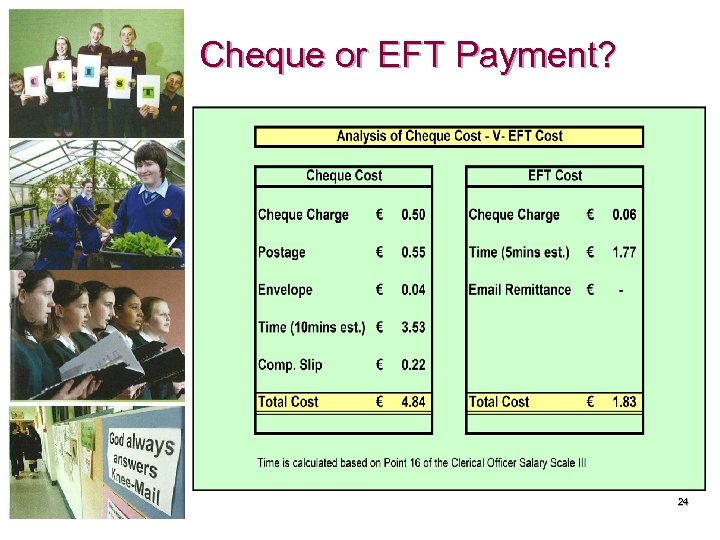
Cheque or EFT Payment? 24
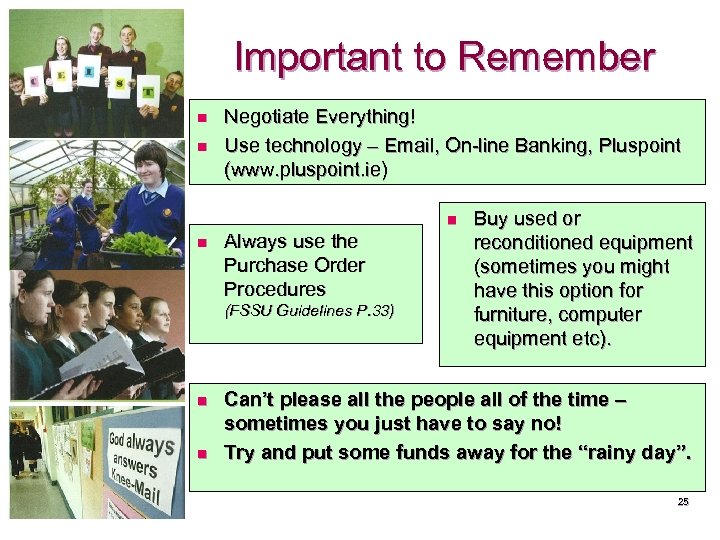
Important to Remember n n Negotiate Everything! Use technology – Email, On-line Banking, Pluspoint (www. pluspoint. ie) n n Always use the Purchase Order Procedures (FSSU Guidelines P. 33) n n Buy used or reconditioned equipment (sometimes you might have this option for furniture, computer equipment etc). Can’t please all the people all of the time – sometimes you just have to say no! Try and put some funds away for the “rainy day”. 25
Finance Sub-Committee 26
Finance Sub-Committee Assists the Principal with: n Articles of Management n Annual Budget (see www. ceist. ie for templates and instructions) n Ensure finalising of School Accounts (see suggested timetable). n School Asset Register (FSSU Appendix 3, Pg 67) n Requirement of Trustees, D. E. S. , F. S. S. U. n Regular financial reports to B. O. M. (FSSU Appendix 5, Pgs. 70 & 71) 27
Regular/Monthly Financial Reports A Financial Report is presented at each B. O. M. meeting (Appendix V FSSU Guidelines) n Summary of Receipts & Payments Statement n n Bank Reconciliation Statement for each bank account Summary Income & Expenditure Account (Actual and Budget). n Capital Income & Expenditure Account 28
The End! Q&A 29
Notes ____________________________ ____________________________ ____________________________ ____________________________ 30
Скачать презентацию CEIST Limited School Finances Challenging Times October
0a85334b92ade2d94a680c9dfde9563d.ppt