 Скачать презентацию Cecil County Comprehensive Plan Oversight Committee Meeting October
b610b10ad6dd4ae9c54d3079fcc88216.ppt
- Количество слайдов: 59



Cecil County Comprehensive Plan Oversight Committee Meeting October 15, 2008 Delivering sustainable solutions in a more competitive world www. erm. com
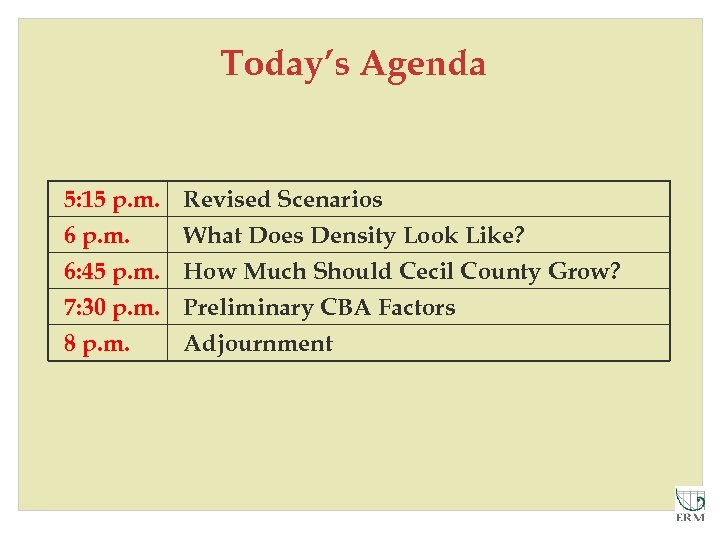
Today’s Agenda 5: 15 p. m. 6: 45 p. m. 7: 30 p. m. Revised Scenarios What Does Density Look Like? How Much Should Cecil County Grow? Preliminary CBA Factors 8 p. m. Adjournment
Proposed Scenarios
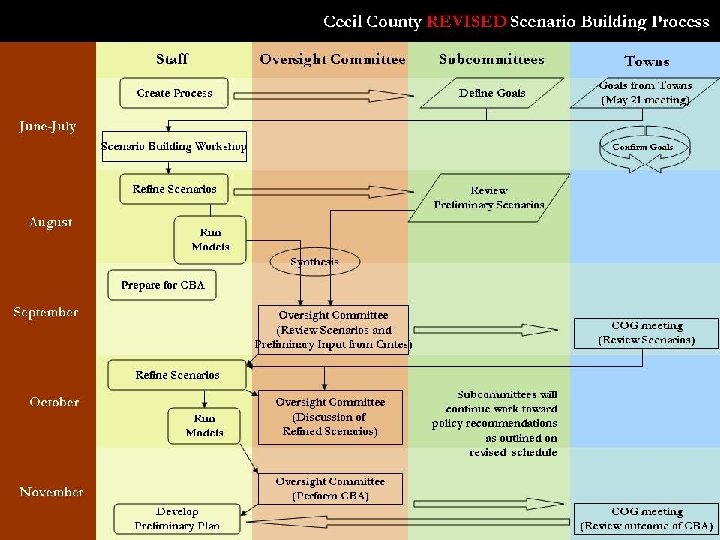
Input from the Oversight Committee • Let’s see the numbers! – Is this a “build out” plan or a “management” plan for 2030? – How much should Cecil County grow in the future? – What densities do we need to support future growth? – What do these densities look like? – Do the towns support the framework of the scenarios? » If so, how do we implement? • Let’s see the details! – How do we translate these general ideas to specific areas? – What about the towns? (COG meeting in September)
Revising the Scenarios • Some concern that there was not enough difference between the scenarios, and that elements of the Growth Centers scenario were unrealistic (urban open space) • Changed the Growth Corridor and Greenbelts scenarios to reflect input from the Oversight Committee • Added Protected Lands
Changes to Greenbelt Scenario The Resource Lands in the Greenbelt Scenario are larger than anything we've previously shown. These expanded Resource Lands are drawn in a way that is intended to cover contiguous natural resources such as agriculture, forest, and environmentally sensitive areas, using the following information: • Productive agricultural soils, as shown in the County's soil layer, cross-referenced with information provided by the APM subcommittee • Sensitive areas, as described above, plus Forest Interior Dwelling Species and Sensitive Species Review Areas • Developed or committed lands (including "pipeline" development, as well as some land zoned for development) was used to exclude areas from the Resource Lands category • 12 -digit watersheds, used as boundaries in some cases • Roads, -used as boundaries in some cases
Land Use Categories • Development: Areas that would be developed on land served by public water and sewer. • Rural (olive green): New development would be permitted, at relatively low densities, with NO extension of public water and sewer (except for health emergencies). No change from before. • Resource Land: Zoning would permit only very low density development (likely at 1/20 or less). The eventual PPA(s) would be drawn within these areas, although every piece of Resource Land would not necessarily fall within a PPA. • Protected Land: Land that is already protected from development by virtue of having sensitive areas (floodplain/wetland), public or private ownership, or easement. This includes federal, state, and county owned land; MALPF, MET, ESLC, and other easements, etc. • Employment Centers • Mixed Development: Areas that would be developed as mixed-use centers of residential, commercial, employment, and institutional uses. The specific mix of use types has not been defined. • Towns
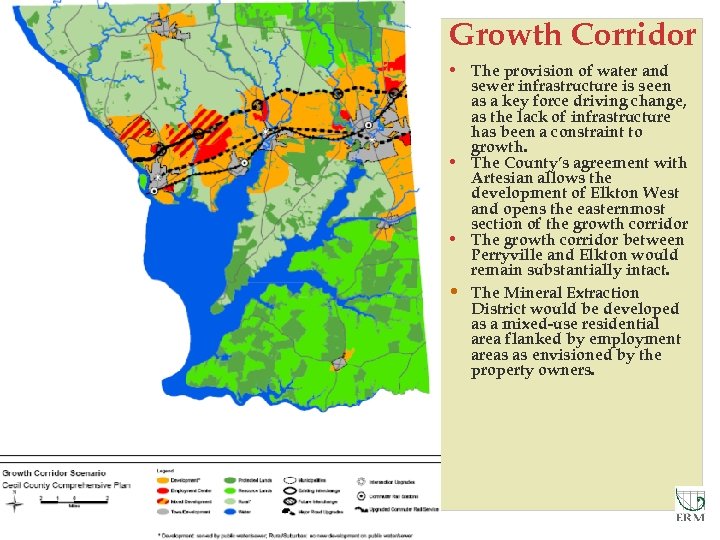
Growth Corridor • The provision of water and sewer infrastructure is seen as a key force driving change, as the lack of infrastructure has been a constraint to growth. • The County’s agreement with Artesian allows the development of Elkton West and opens the easternmost section of the growth corridor • The growth corridor between Perryville and Elkton would remain substantially intact. • The Mineral Extraction District would be developed as a mixed-use residential area flanked by employment areas as envisioned by the property owners.
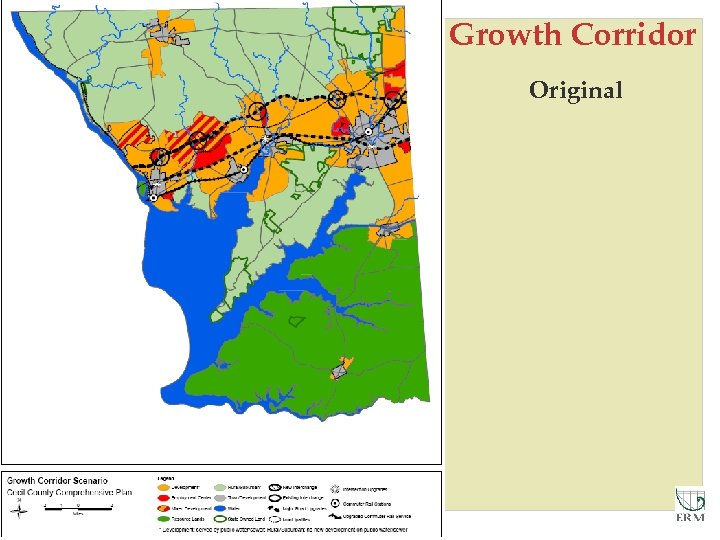
Growth Corridor Original
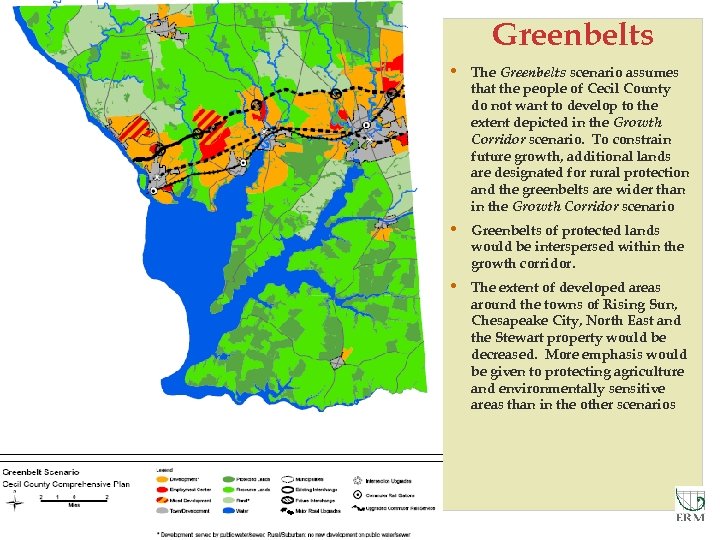
Greenbelts • The Greenbelts scenario assumes that the people of Cecil County do not want to develop to the extent depicted in the Growth Corridor scenario. To constrain future growth, additional lands are designated for rural protection and the greenbelts are wider than in the Growth Corridor scenario • Greenbelts of protected lands would be interspersed within the growth corridor. • The extent of developed areas around the towns of Rising Sun, Chesapeake City, North East and the Stewart property would be decreased. More emphasis would be given to protecting agriculture and environmentally sensitive areas than in the other scenarios
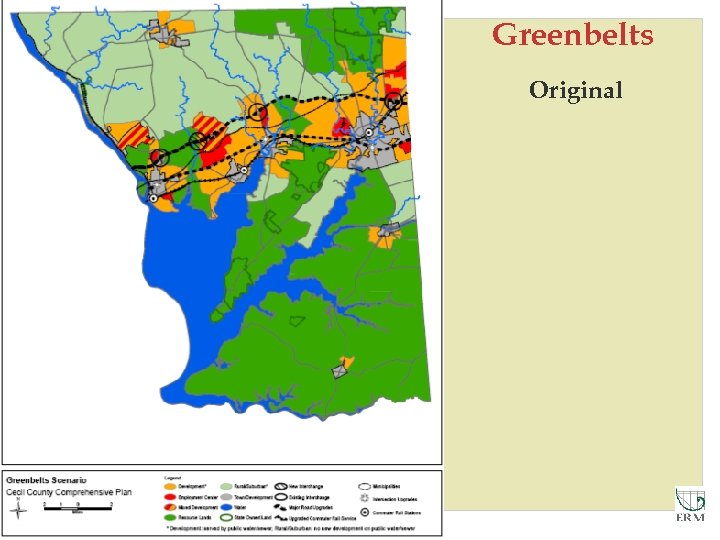
Greenbelts Original
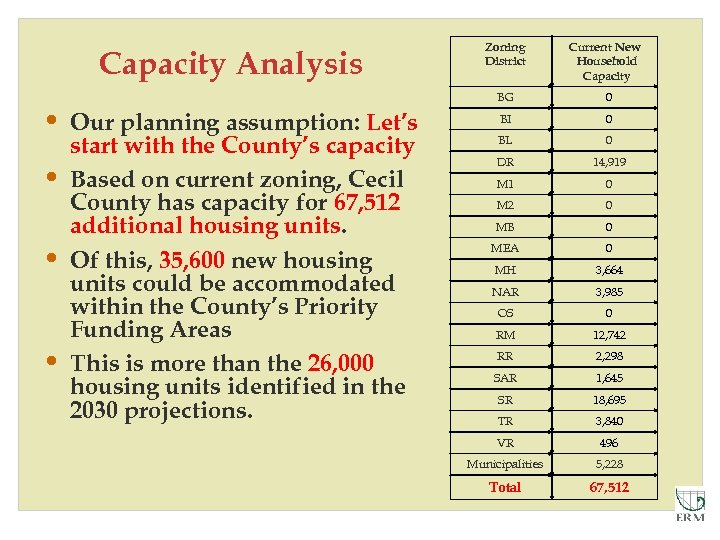
Capacity Analysis • Our planning assumption: Let’s • • • start with the County’s capacity Based on current zoning, Cecil County has capacity for 67, 512 additional housing units. Of this, 35, 600 new housing units could be accommodated within the County’s Priority Funding Areas This is more than the 26, 000 housing units identified in the 2030 projections. Zoning District Current New Household Capacity BG 0 BI 0 BL 0 DR 14, 919 M 1 0 M 2 0 MB 0 MEA 0 MH 3, 664 NAR 3, 985 OS 0 RM 12, 742 RR 2, 298 SAR 1, 645 SR 18, 695 TR 3, 840 VR 496 Municipalities 5, 228 Total 67, 512
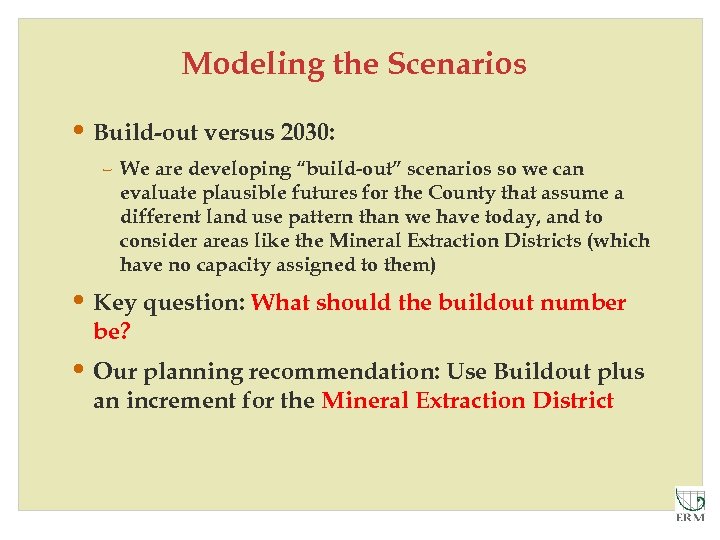
Modeling the Scenarios • Build-out versus 2030: – We are developing “build-out” scenarios so we can evaluate plausible futures for the County that assume a different land use pattern than we have today, and to consider areas like the Mineral Extraction Districts (which have no capacity assigned to them) • Key question: What should the buildout number be? • Our planning recommendation: Use Buildout plus an increment for the Mineral Extraction District
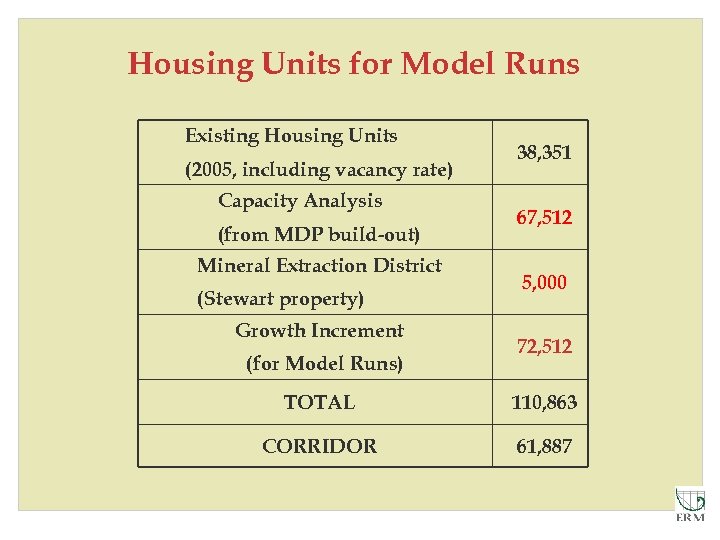
Housing Units for Model Runs Existing Housing Units (2005, including vacancy rate) Capacity Analysis (from MDP build-out) Mineral Extraction District (Stewart property) Growth Increment (for Model Runs) 38, 351 67, 512 5, 000 72, 512 TOTAL 110, 863 CORRIDOR 61, 887
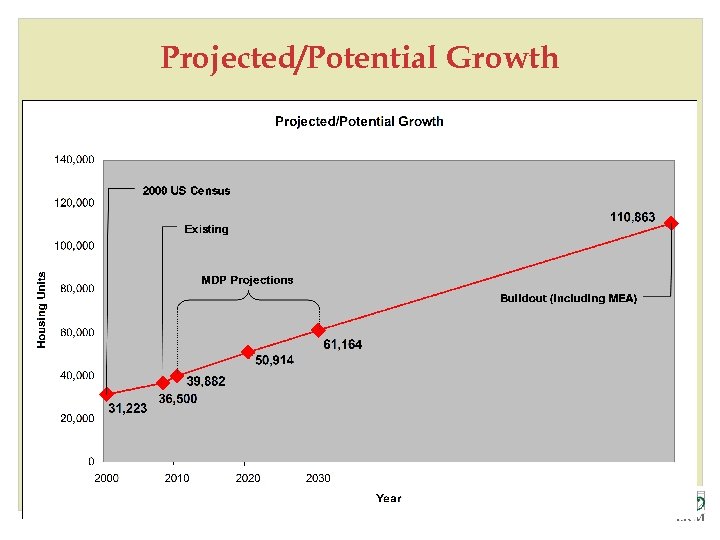
Projected/Potential Growth
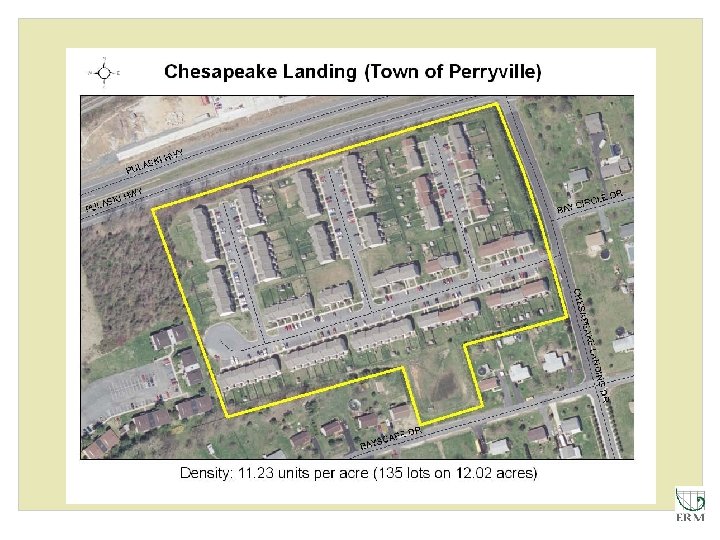
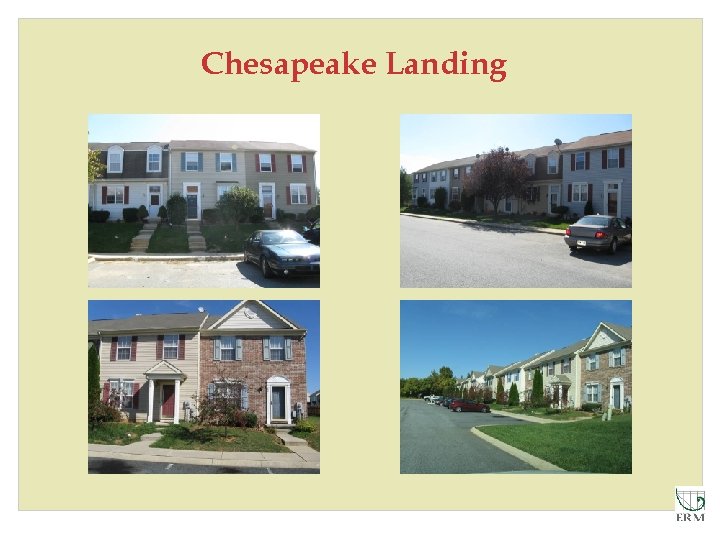
What Does Density Look Like?
Growth Corridor Scenario Residential Zoning District Scenario Land Use MH, RM Existing Density (units/acre) Acres 1. 00 86, 690 49, 061 0. 10 RR 11, 095 0. 20 SR, MH 5, 018 2. 00 DR, TR 232 1. 00 VR 155 3. 00 RM 17 2. 00 RR 1, 097 0. 20 SR 13, 702 2. 00 MH, VR 1, 259 3. 00 NAR 3, 421 0. 10 MEA 396 DR, TR 7, 814 3. 75 RM Development 878 NAR Rural 2. 00 All others Resource Lands 1, 347 1, 284 10. 50 VR, DR, TR Urban Open Space All districts Employment/ Development All districts Town Development All Towns n/a 9, 626 8, 425 3. 5 (unless specified by town)
Greenbelts Scenario 1, 611 2. 00 VR, DR, TR 1, 551 1. 00 134, 377 15, 044 0. 10 OS 37 0. 00 RR 5, 208 0. 20 SR, MH, RM 6, 336 2. 00 DR 232 1. 00 RR 578 0. 20 SR 11, 107 2. 00 1, 217 3. 00 NAR 605 0. 10 MEA 136 DR, TR 7, 296 3. 75 RM Resource Lands Acres Existing Density (units/acre) MH, RM Scenario Land Use Residential Zoning District 1, 283 10. 50 All others NAR Rural MH, VR Development Urban Open Space All districts n/a Employment/ Development All districts 6, 784 Town Development All Towns 9, 918 3. 5 (unless specified by town)
What Does Density Look Like in Cecil County?
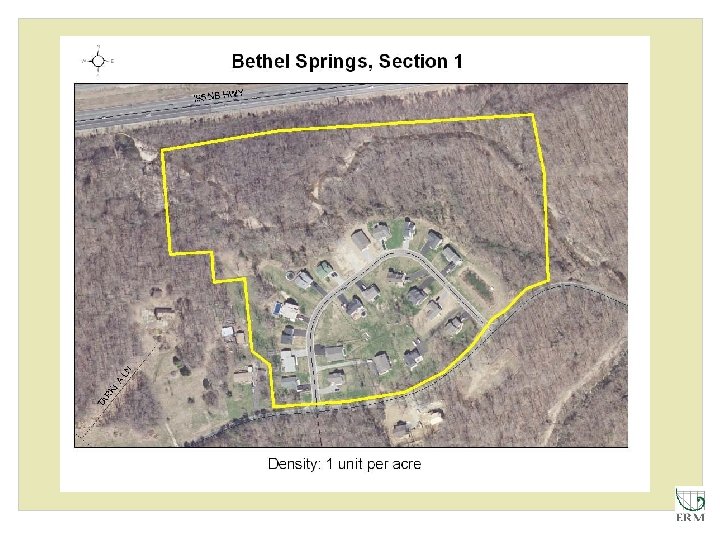
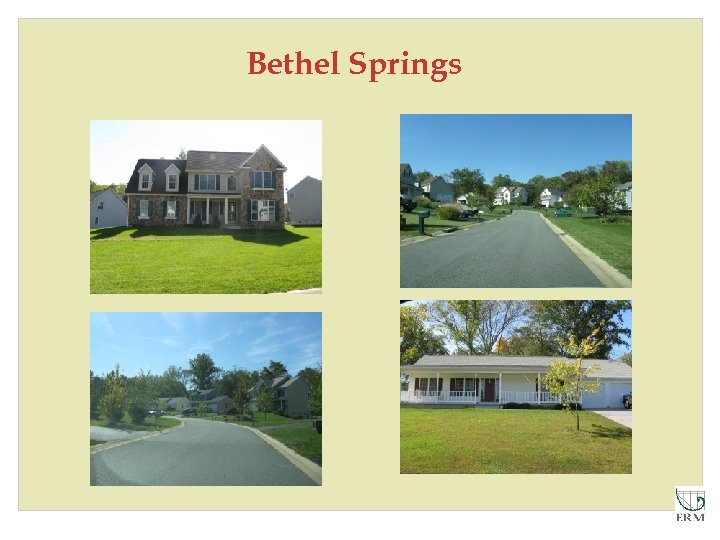
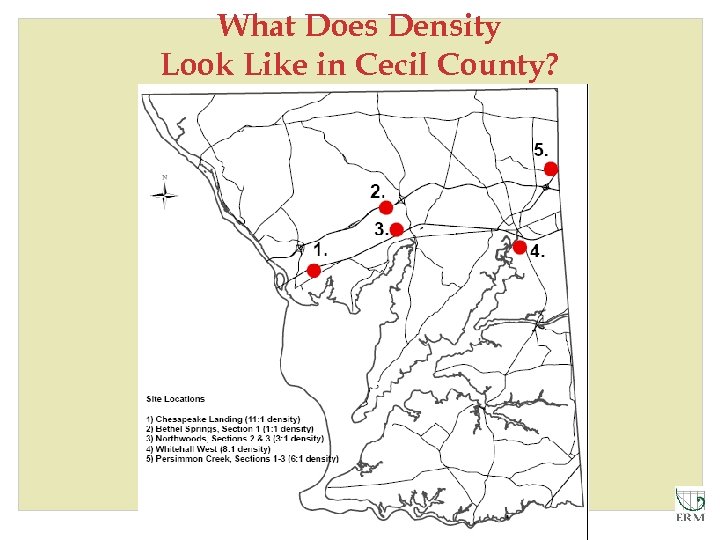
Bethel Springs
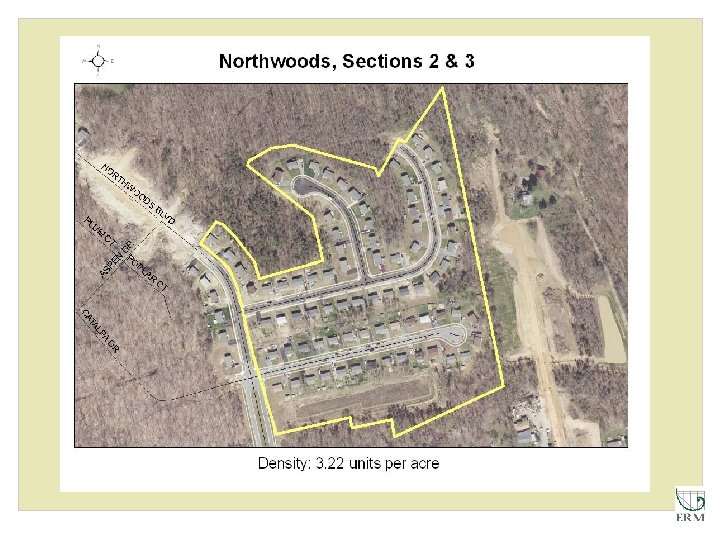
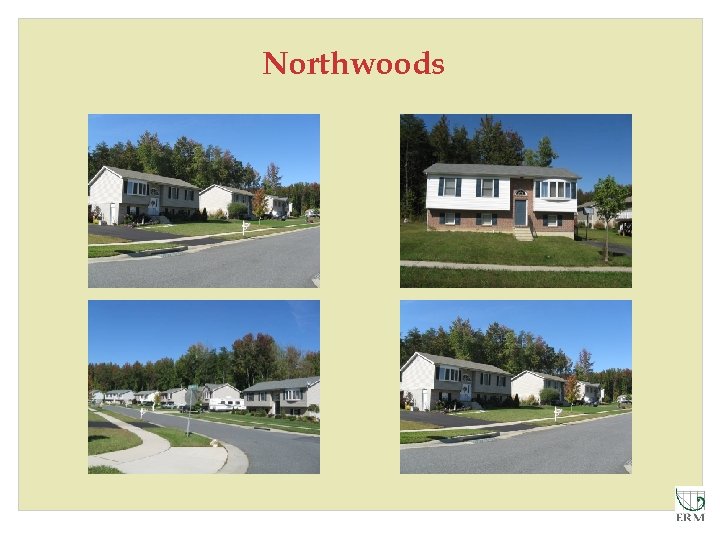
Northwoods
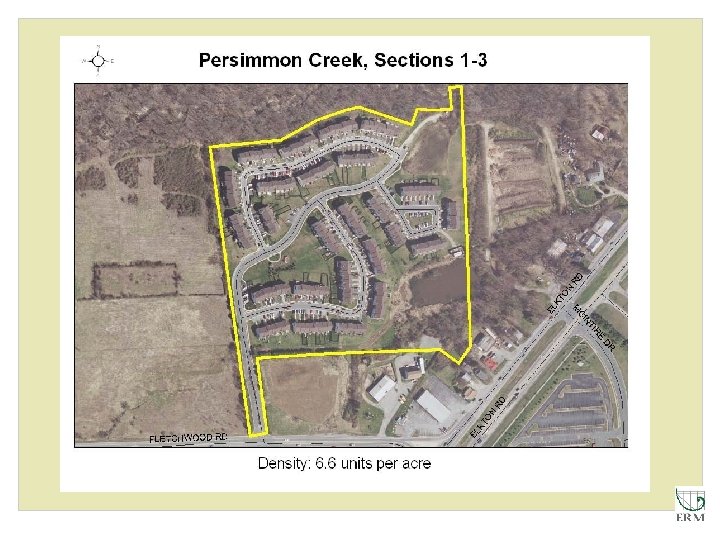
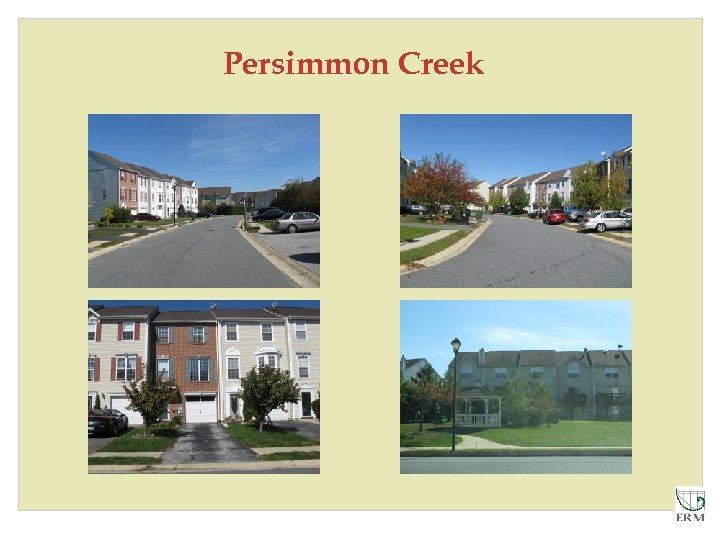
Persimmon Creek
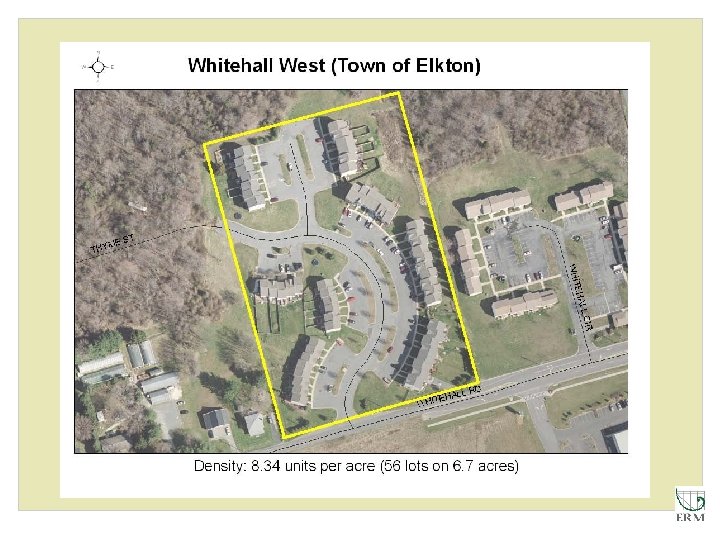
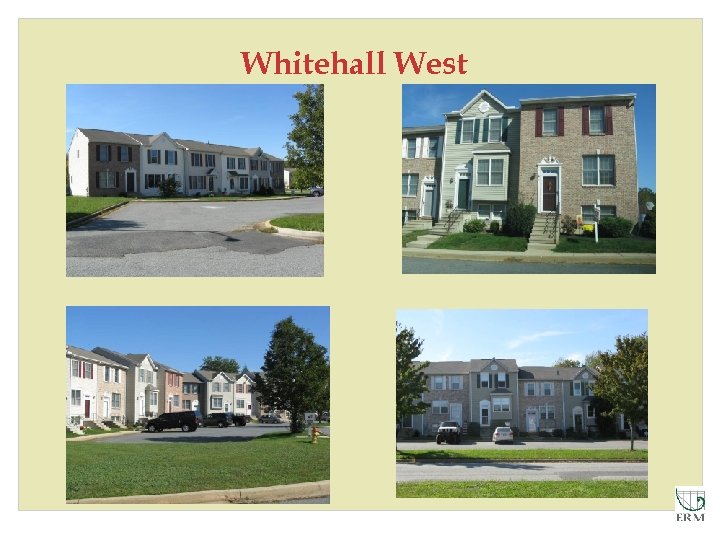
Whitehall West
Chesapeake Landing
How Much Should the County Grow?
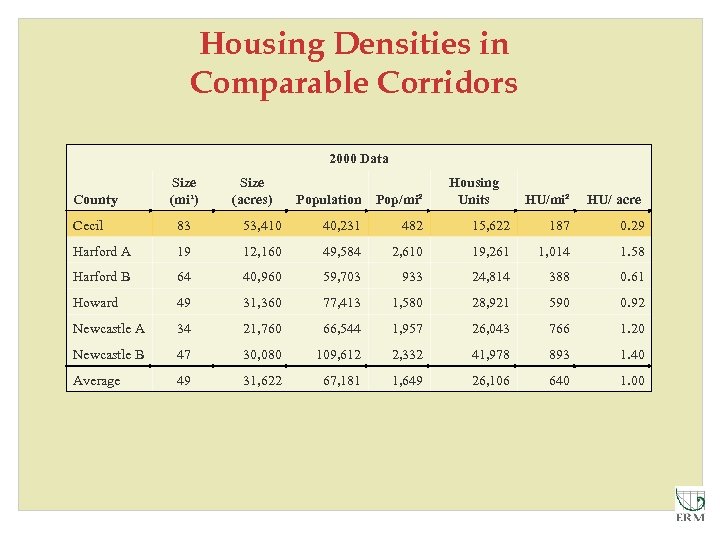
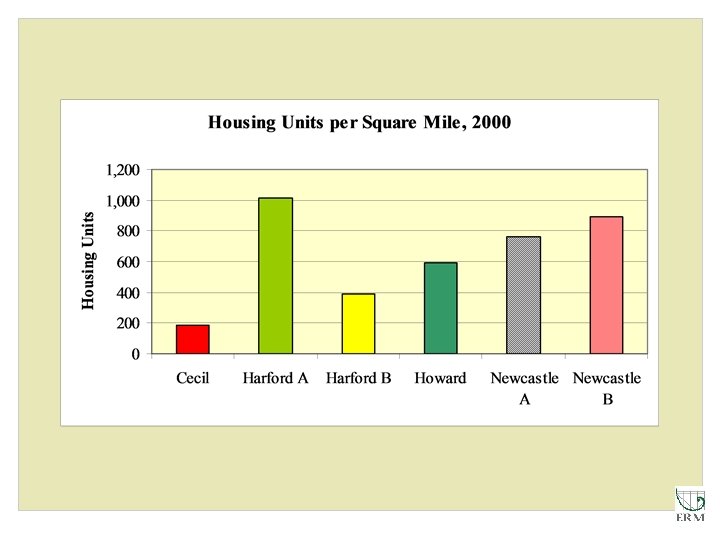
Housing Densities in Comparable Corridors 2000 Data County Size (mi²) Size (acres) Population Pop/mi² Housing Units HU/mi² HU/ acre Cecil 83 53, 410 40, 231 482 15, 622 187 0. 29 Harford A 19 12, 160 49, 584 2, 610 19, 261 1, 014 1. 58 Harford B 64 40, 960 59, 703 933 24, 814 388 0. 61 Howard 49 31, 360 77, 413 1, 580 28, 921 590 0. 92 Newcastle A 34 21, 760 66, 544 1, 957 26, 043 766 1. 20 Newcastle B 47 30, 080 109, 612 2, 332 41, 978 893 1. 40 Average 49 31, 622 67, 181 1, 649 26, 106 640 1. 00
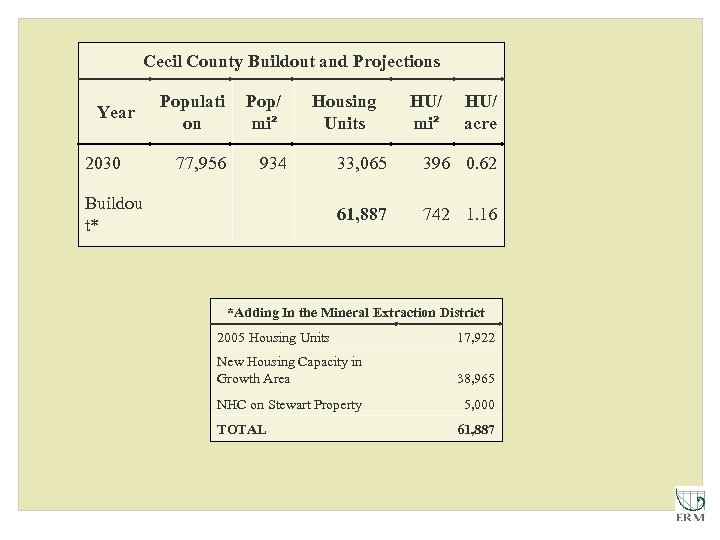
Cecil County Buildout and Projections Year Populati on 2030 Buildou t* Pop/ mi² 77, 956 Housing Units 934 HU/ mi² HU/ acre 33, 065 396 0. 62 61, 887 742 1. 16 *Adding In the Mineral Extraction District 2005 Housing Units 17, 922 New Housing Capacity in Growth Area 38, 965 NHC on Stewart Property 5, 000 TOTAL 61, 887
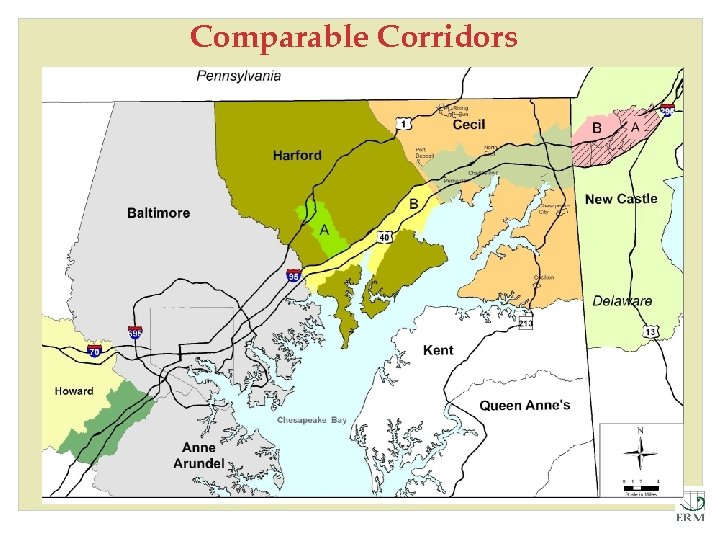
Comparable Corridors
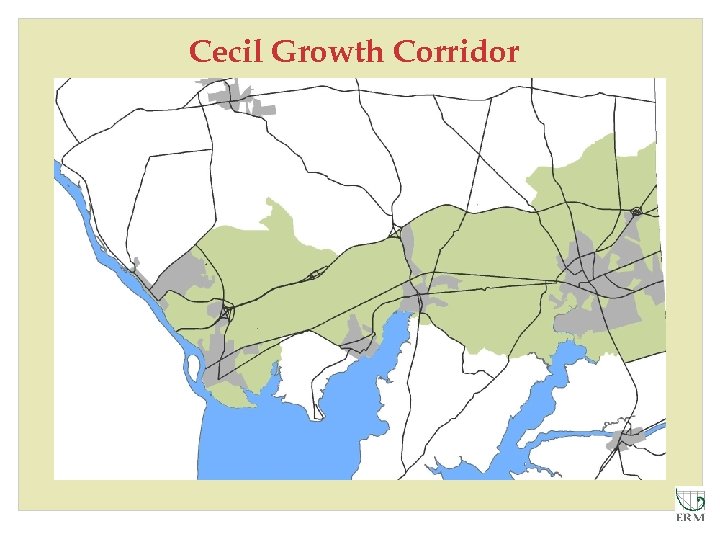
Cecil Growth Corridor
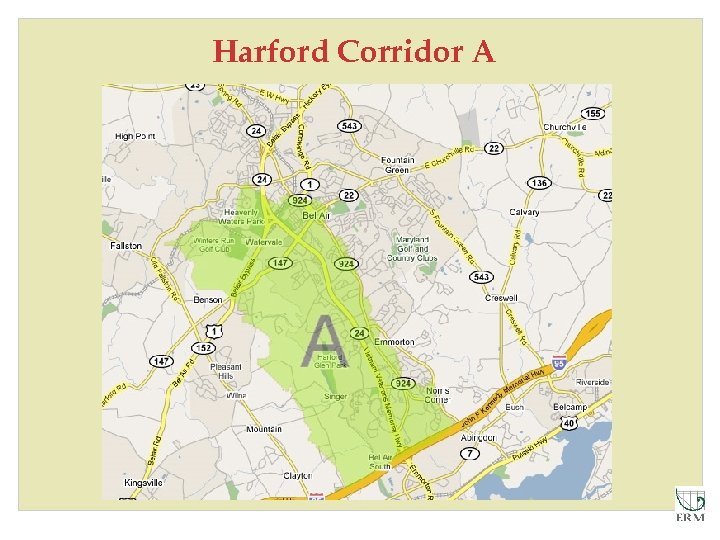
Harford Corridor A
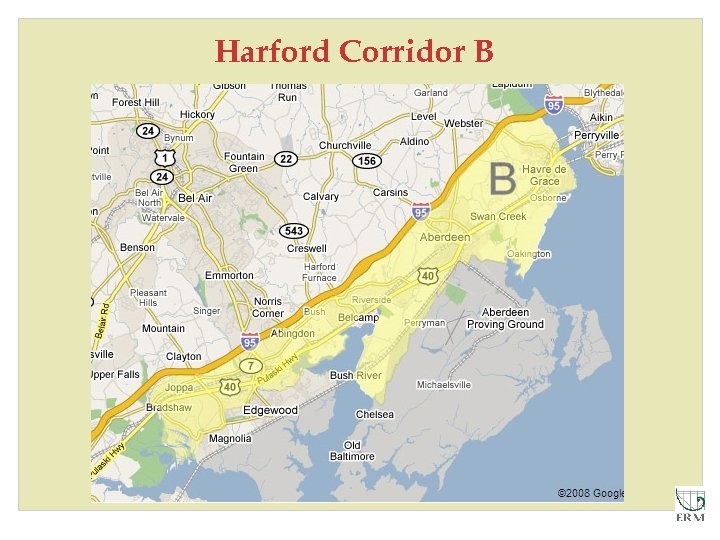
Harford Corridor B
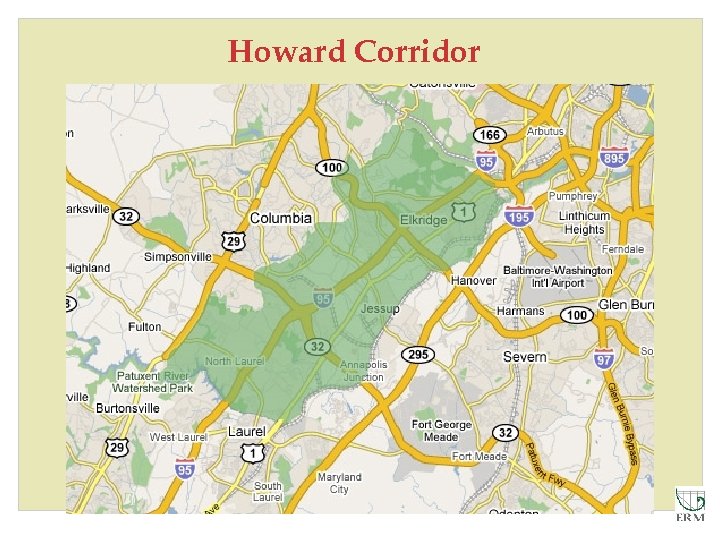
Howard Corridor
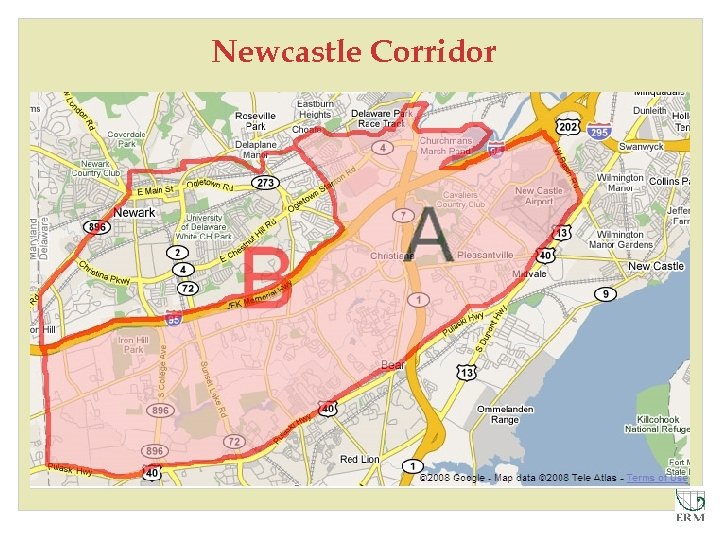
Newcastle Corridor
Preliminary CBA Factors
Choosing a Preferred Scenario Choosing By Advantages The Fundamental Rule of Sound Decision-making: Decisions must be based on the importance of advantages.
Choosing by Advantages To illustrate the logic and simplicity of the CBA vocabulary, following are the CBA definitions of the terms attribute and advantage: • An attribute is a characteristic, quality, or consequence of ONE alternative. • An advantage is a beneficial difference between the attributes of TWO alternatives. For this project, the scenarios are our alternatives.
Purpose of the CBA Group • To give the Oversight Committee a role in determining the factors • To learn and understand the CBA process • To help the other members of the Oversight Committee understand participate fully in the CBA workshop • To review and refine the factors that we will use to evaluate the scenarios • To identify the advantages of each attribute • To generate a draft CBA matrix we will use in November
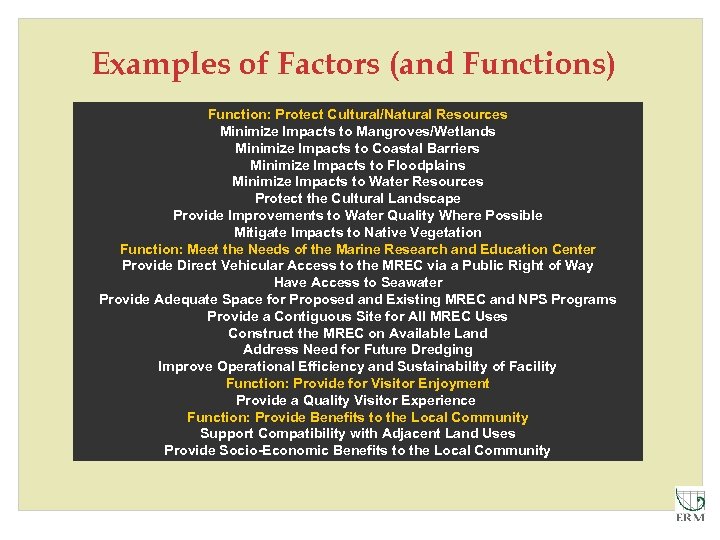
Examples of Factors (and Functions) Function: Protect Cultural/Natural Resources Minimize Impacts to Mangroves/Wetlands Minimize Impacts to Coastal Barriers Minimize Impacts to Floodplains Minimize Impacts to Water Resources Protect the Cultural Landscape Provide Improvements to Water Quality Where Possible Mitigate Impacts to Native Vegetation Function: Meet the Needs of the Marine Research and Education Center Provide Direct Vehicular Access to the MREC via a Public Right of Way Have Access to Seawater Provide Adequate Space for Proposed and Existing MREC and NPS Programs Provide a Contiguous Site for All MREC Uses Construct the MREC on Available Land Address Need for Future Dredging Improve Operational Efficiency and Sustainability of Facility Function: Provide for Visitor Enjoyment Provide a Quality Visitor Experience Function: Provide Benefits to the Local Community Support Compatibility with Adjacent Land Uses Provide Socio-Economic Benefits to the Local Community
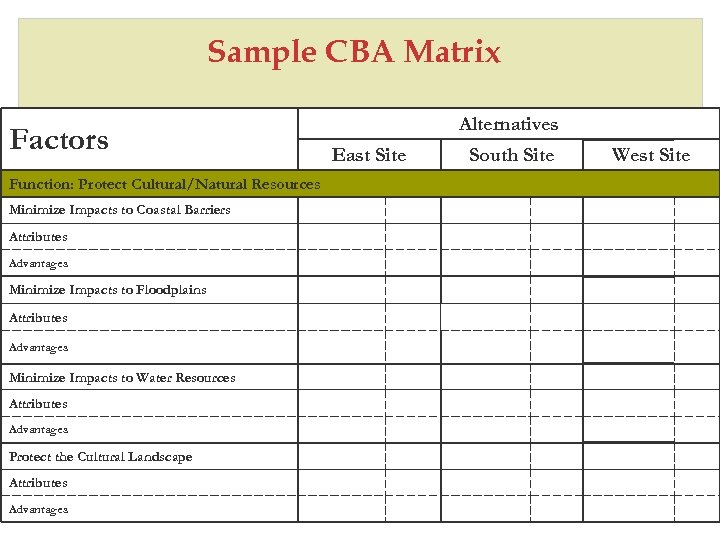
Sample CBA Matrix Factors Function: Protect Cultural/Natural Resources Minimize Impacts to Coastal Barriers Attributes Advantages Minimize Impacts to Floodplains Attributes Advantages Minimize Impacts to Water Resources Attributes Advantages Protect the Cultural Landscape Attributes Advantages Alternatives East Site South Site West Site
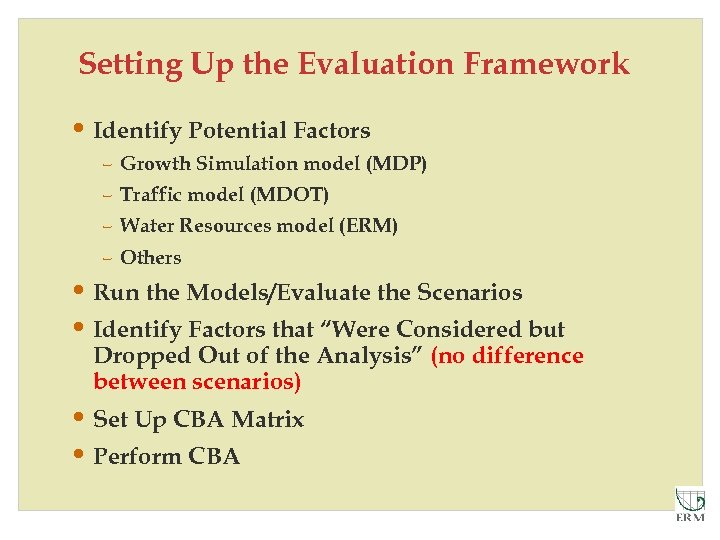
Setting Up the Evaluation Framework • Identify Potential Factors – Growth Simulation model (MDP) – Traffic model (MDOT) – Water Resources model (ERM) – Others • Run the Models/Evaluate the Scenarios • Identify Factors that “Were Considered but Dropped Out of the Analysis” (no difference between scenarios) • Set Up CBA Matrix • Perform CBA
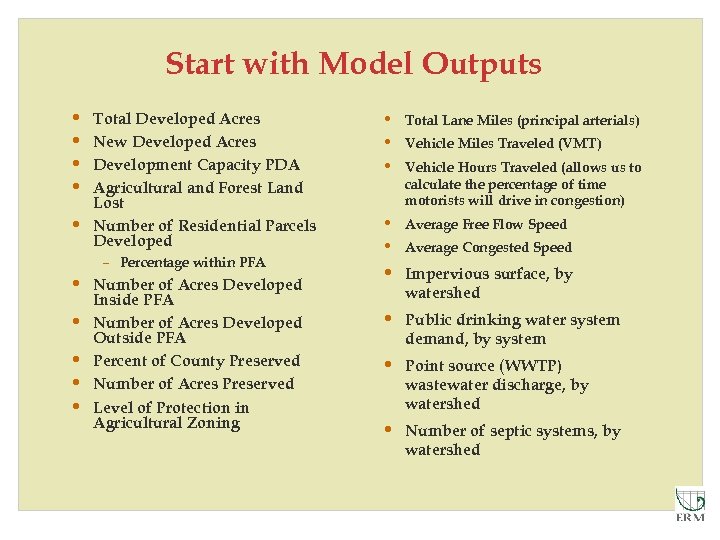
Start with Model Outputs • • • Total Developed Acres New Developed Acres Development Capacity PDA Agricultural and Forest Land Lost Number of Residential Parcels Developed – Percentage within PFA • Number of Acres Developed • • Inside PFA Number of Acres Developed Outside PFA Percent of County Preserved Number of Acres Preserved Level of Protection in Agricultural Zoning • Total Lane Miles (principal arterials) • Vehicle Miles Traveled (VMT) • Vehicle Hours Traveled (allows us to calculate the percentage of time motorists will drive in congestion) • Average Free Flow Speed • Average Congested Speed • Impervious surface, by watershed • Public drinking water system demand, by system • Point source (WWTP) wastewater discharge, by watershed • Number of septic systems, by watershed

How Do We Organize the Factors? The Fundamental Rule of Sound Decision-making: Decisions must be based on the importance of advantages.
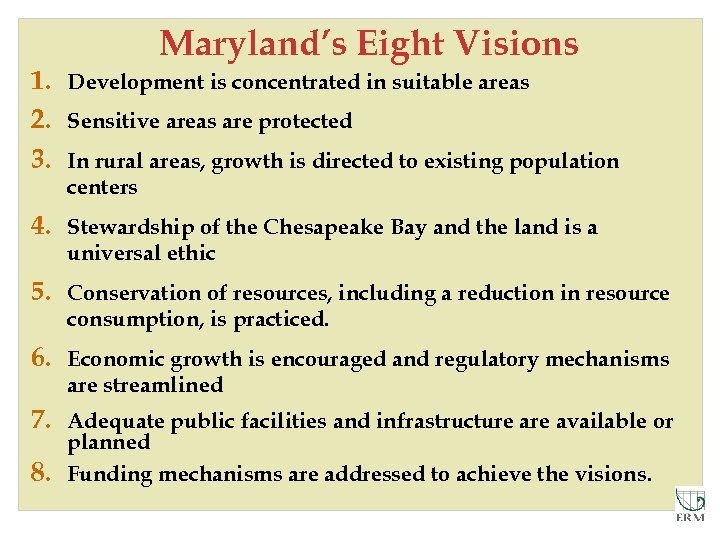
Maryland’s Eight Visions 1. Development is concentrated in suitable areas 2. Sensitive areas are protected 3. In rural areas, growth is directed to existing population centers 4. Stewardship of the Chesapeake Bay and the land is a universal ethic 5. Conservation of resources, including a reduction in resource consumption, is practiced. 6. Economic growth is encouraged and regulatory mechanisms are streamlined 7. Adequate public facilities and infrastructure available or 8. planned Funding mechanisms are addressed to achieve the visions.
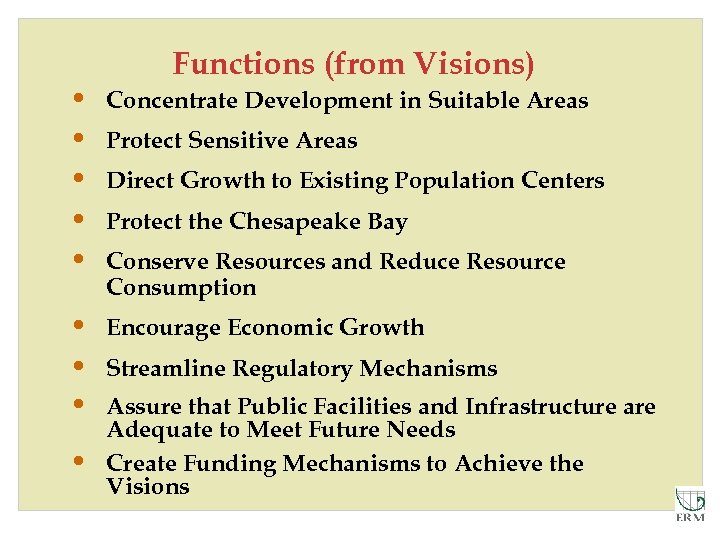
• • • Functions (from Visions) Concentrate Development in Suitable Areas Protect Sensitive Areas Direct Growth to Existing Population Centers Protect the Chesapeake Bay Conserve Resources and Reduce Resource Consumption • Encourage Economic Growth • Streamline Regulatory Mechanisms • Assure that Public Facilities and Infrastructure are • Adequate to Meet Future Needs Create Funding Mechanisms to Achieve the Visions
From Functions to Factors The Fundamental Rule of Sound Decision-making: Decisions must be based on the importance of advantages.
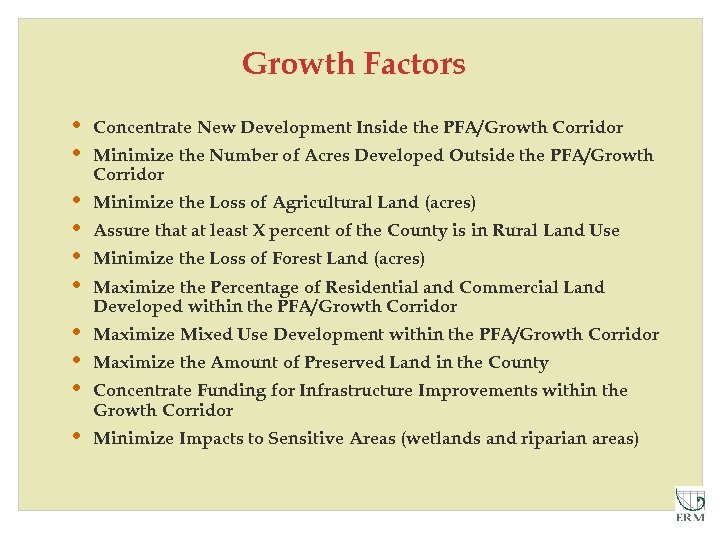
Growth Factors • Concentrate New Development Inside the PFA/Growth Corridor • Minimize the Number of Acres Developed Outside the PFA/Growth Corridor • • Minimize the Loss of Agricultural Land (acres) Assure that at least X percent of the County is in Rural Land Use Minimize the Loss of Forest Land (acres) Maximize the Percentage of Residential and Commercial Land Developed within the PFA/Growth Corridor • Maximize Mixed Use Development within the PFA/Growth Corridor • Maximize the Amount of Preserved Land in the County • Concentrate Funding for Infrastructure Improvements within the Growth Corridor • Minimize Impacts to Sensitive Areas (wetlands and riparian areas)
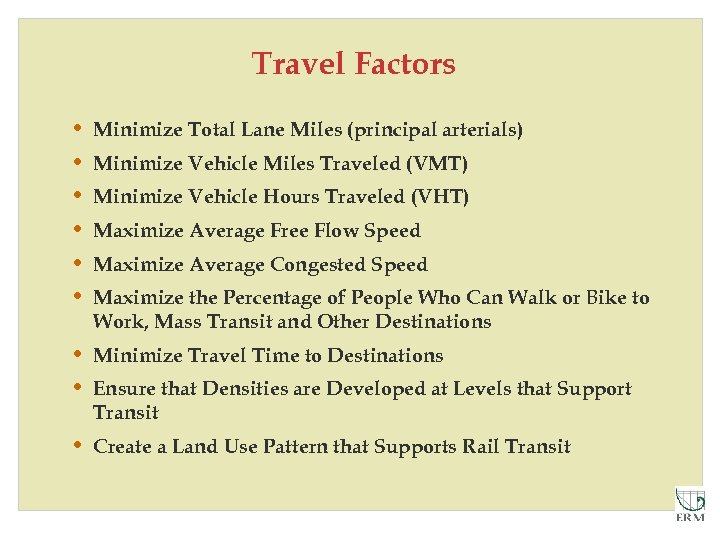
Travel Factors • • • Minimize Total Lane Miles (principal arterials) Minimize Vehicle Miles Traveled (VMT) Minimize Vehicle Hours Traveled (VHT) Maximize Average Free Flow Speed Maximize Average Congested Speed Maximize the Percentage of People Who Can Walk or Bike to Work, Mass Transit and Other Destinations • Minimize Travel Time to Destinations • Ensure that Densities are Developed at Levels that Support Transit • Create a Land Use Pattern that Supports Rail Transit
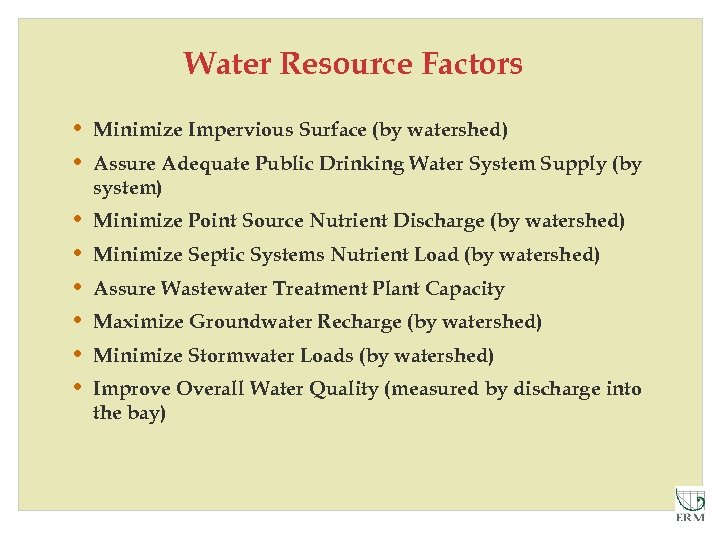
Water Resource Factors • Minimize Impervious Surface (by watershed) • Assure Adequate Public Drinking Water System Supply (by system) • • • Minimize Point Source Nutrient Discharge (by watershed) Minimize Septic Systems Nutrient Load (by watershed) Assure Wastewater Treatment Plant Capacity Maximize Groundwater Recharge (by watershed) Minimize Stormwater Loads (by watershed) Improve Overall Water Quality (measured by discharge into the bay)
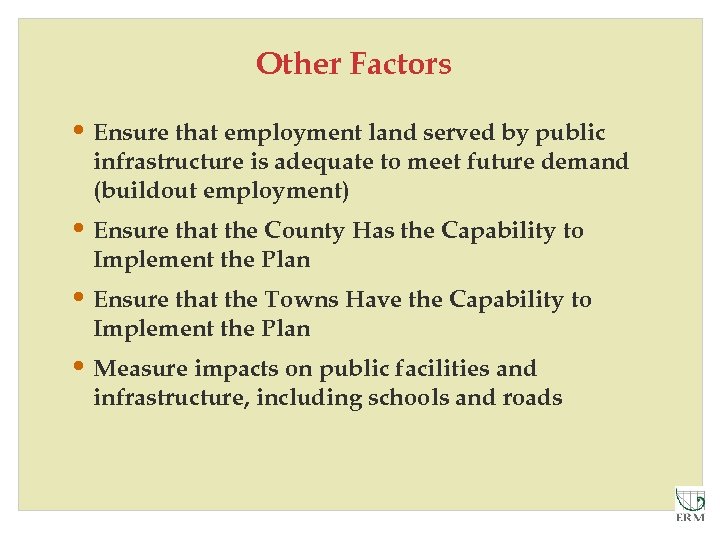
Other Factors • Ensure that employment land served by public infrastructure is adequate to meet future demand (buildout employment) • Ensure that the County Has the Capability to Implement the Plan • Ensure that the Towns Have the Capability to Implement the Plan • Measure impacts on public facilities and infrastructure, including schools and roads
Cecil County Comprehensive Plan Oversight Committee Meeting October 15, 2008 Delivering sustainable solutions in a more competitive world www. erm. com
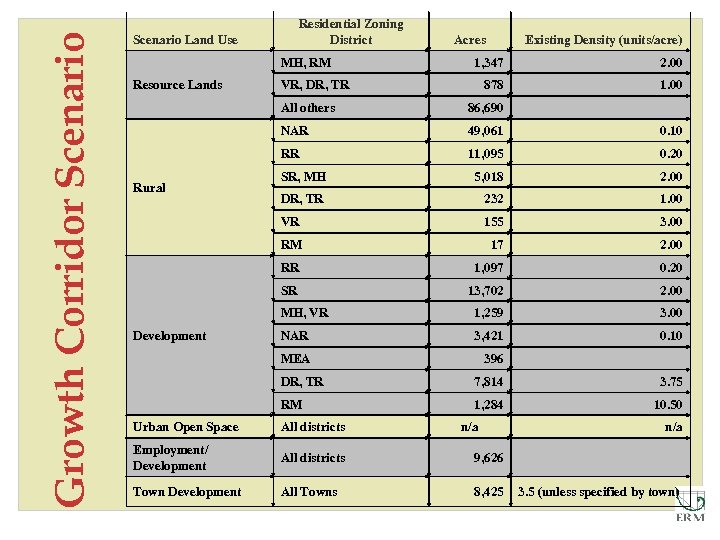
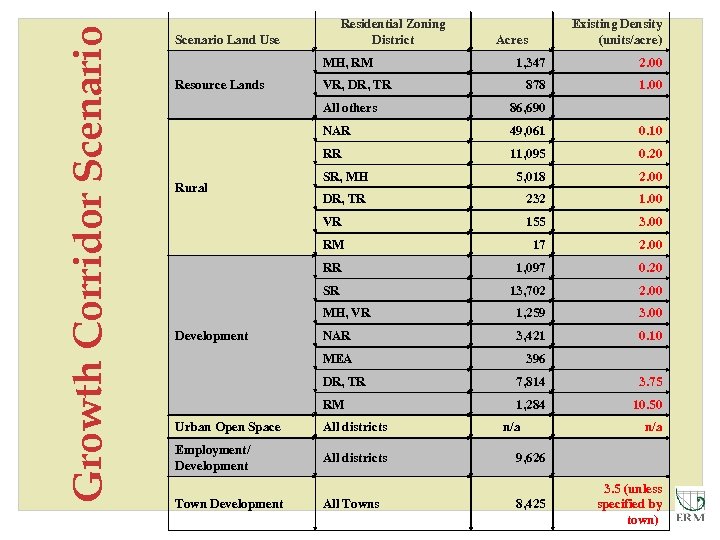
Growth Corridor Scenario Residential Zoning District Scenario Land Use MH, RM Acres Existing Density (units/acre) 1. 00 86, 690 49, 061 0. 10 RR 11, 095 0. 20 SR, MH 5, 018 2. 00 DR, TR 232 1. 00 VR 155 3. 00 RM 17 2. 00 RR 1, 097 0. 20 SR 13, 702 2. 00 MH, VR 1, 259 3. 00 NAR 3, 421 0. 10 MEA 396 DR, TR 7, 814 3. 75 RM Development 878 NAR Rural 2. 00 All others Resource Lands 1, 347 1, 284 10. 50 VR, DR, TR Urban Open Space All districts n/a Employment/ Development All districts 9, 626 Town Development All Towns 8, 425 3. 5 (unless specified by town)
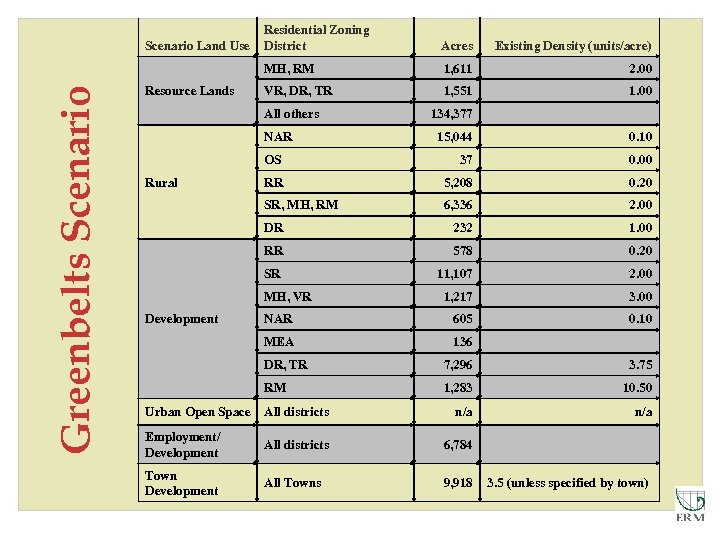
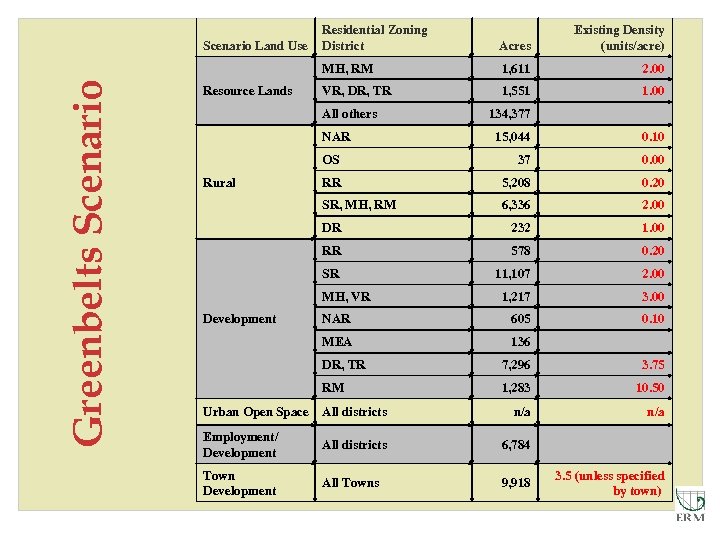
Greenbelts Scenario Existing Density (units/acre) 1, 611 2. 00 VR, DR, TR 1, 551 1. 00 134, 377 15, 044 0. 10 OS 37 0. 00 RR 5, 208 0. 20 SR, MH, RM 6, 336 2. 00 DR 232 1. 00 RR 578 0. 20 SR 11, 107 2. 00 1, 217 3. 00 NAR 605 0. 10 MEA 136 DR, TR 7, 296 3. 75 RM Resource Lands Acres MH, RM Scenario Land Use Residential Zoning District 1, 283 10. 50 All others NAR Rural MH, VR Development Urban Open Space All districts n/a Employment/ Development All districts 6, 784 Town Development All Towns 9, 918 3. 5 (unless specified by town)
Скачать презентацию Cecil County Comprehensive Plan Oversight Committee Meeting October
b610b10ad6dd4ae9c54d3079fcc88216.ppt