


 Скачать презентацию CE 250 — Introduction to Surveying and Geographic
5f35625a5914550a6cf2d24d3c7ff050.ppt
- Количество слайдов: 56
 CE 250 - Introduction to Surveying and Geographic Information Systems e. Learning Version Donald J. Leone, Ph. D. , P. E. Lecture 4
 Introduction Data Analysis Operations – turning data n into information Measurement Techniques
 Introduction Data Analysis Operations – turning data into information n Measurement Techniques n Attribute Queries
 Introduction Data Analysis Operations – turning data into information n Measurement Techniques Attribute Queries n Proximity Analysis n
 Introduction Data Analysis Operations – turning data into information n Measurement Techniques Attribute Queries Proximity Analysis n Overlay Operations n n
 Introduction Data Analysis Operations – turning data into information n n Measurement Techniques Attribute Queries Proximity Analysis Overlay Operations Analysis of Models of Surfaces and Networks
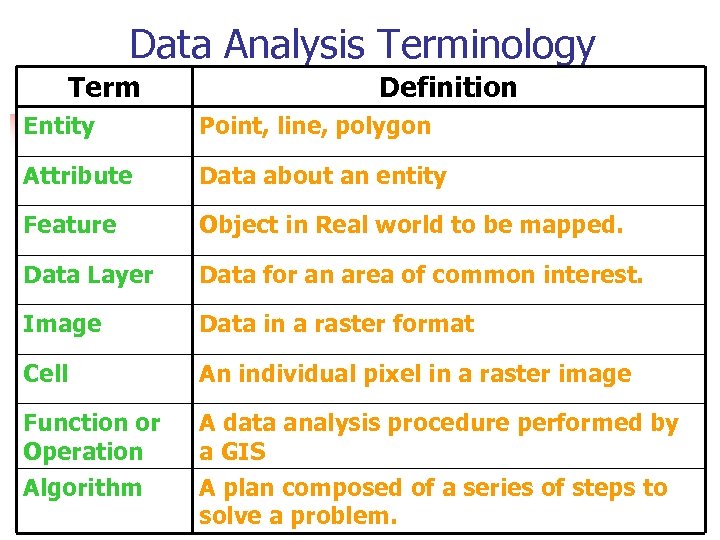 Data Analysis Terminology Term Definition Entity Point, line, polygon Attribute Data about an entity Feature Object in Real world to be mapped. Data Layer Data for an area of common interest. Image Data in a raster format Cell An individual pixel in a raster image Function or Operation A data analysis procedure performed by a GIS Algorithm A plan composed of a series of steps to solve a problem.
 Measurement Techniques Measurements Attribute Queries Proximity Analysis Overlay Operations Analysis of Models of Surfaces and Networks Lengths, Perimeters and Areas n Vector Data n Raster Data
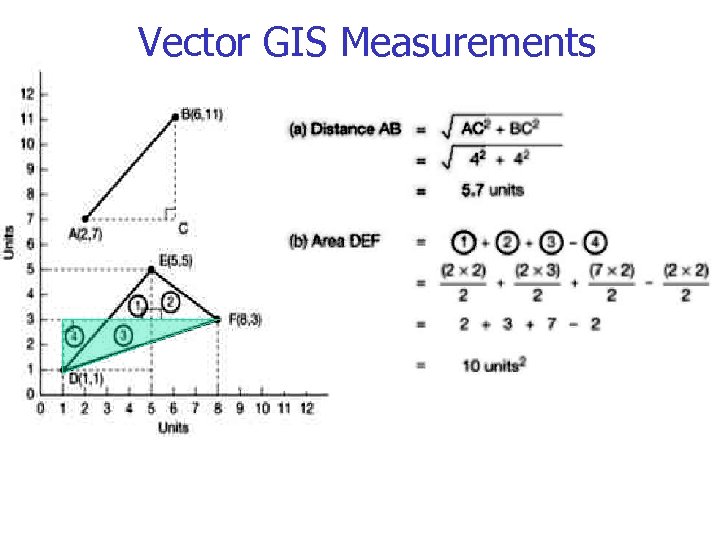 Vector GIS Measurements
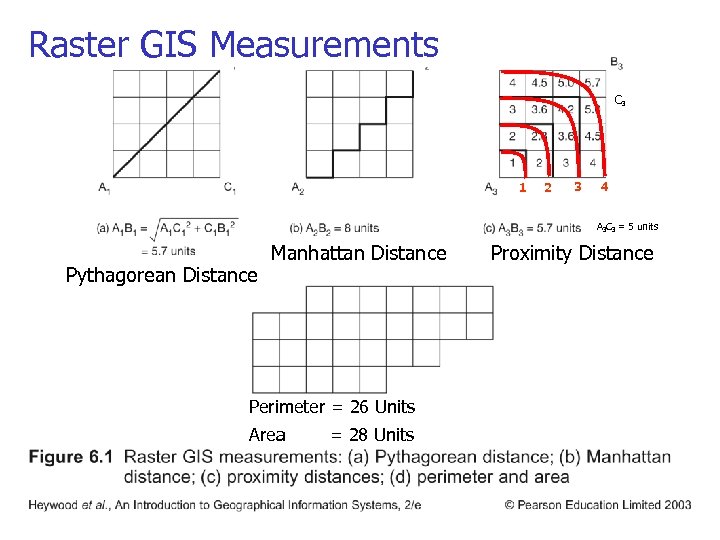 Raster GIS Measurements C 3 1 2 3 4 A 3 C 3 = 5 units Pythagorean Distance Manhattan Distance Perimeter = 26 Units Area = 28 Units Proximity Distance
 Measurement Techniques Attribute Queries n n n Proximity Analysis Overlay Operations Analysis of Models of Surfaces and Networks Search or Browse the database. Retrieve data. Answer questions “How many? ” Answer questions “Where are they? ” Answer questions with more than one criteria using Boolean Operators.
 Boolean Operators Ski resort Example n A = Luxury hotels n B = Hotels with more than 20 rooms
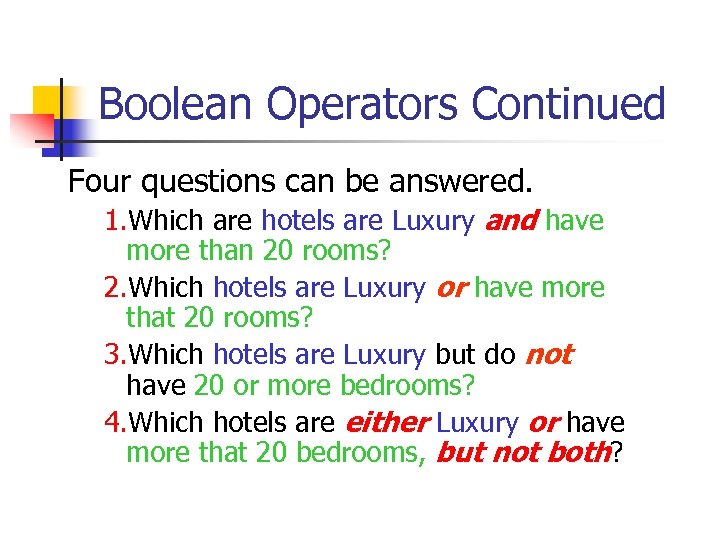 Boolean Operators Continued Four questions can be answered. 1. Which are hotels are Luxury and have more than 20 rooms? 2. Which hotels are Luxury or have more that 20 rooms? 3. Which hotels are Luxury but do not have 20 or more bedrooms? 4. Which hotels are either Luxury or have more that 20 bedrooms, but not both?
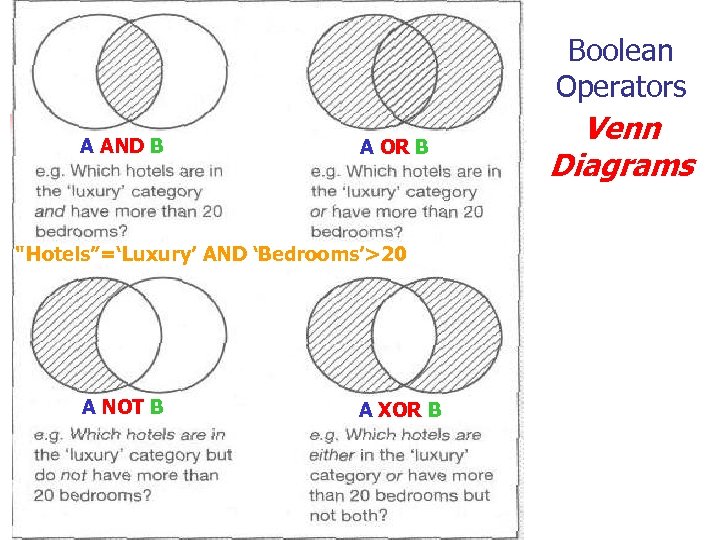 Boolean Operators A AND B A OR B “ Hotels”=‘Luxury’ AND ‘Bedrooms’>20 A NOT B A XOR B Venn Diagrams
 Measurement Techniques Attribute Queries Proximity Analysis Overlay Operations Analysis of Models of Surfaces and Networks Raster Data n Reclassification. Can produce a Boolean Image. n Example: Land Use Raster Image n n Where all the forested areas?
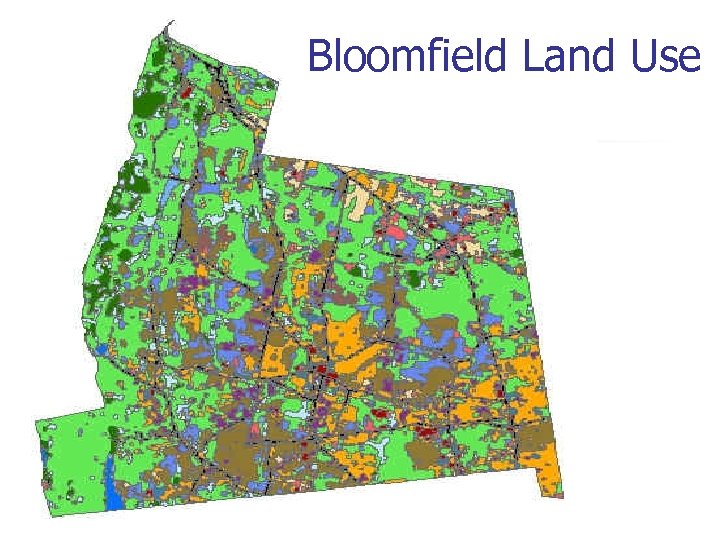 Bloomfield Land Use
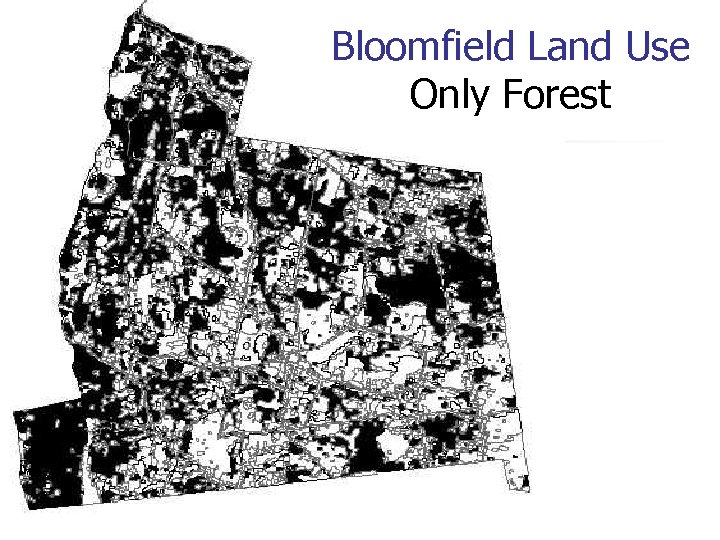 Bloomfield Land Use Only Forest
 Measurement Techniques Attribute Queries Proximity Analysis Overlay Operations Analysis of Models of Surfaces and Networks Proximity Analysis a. k. a. Buffering: The creation of a zone of interest around an entity, or set of entities.
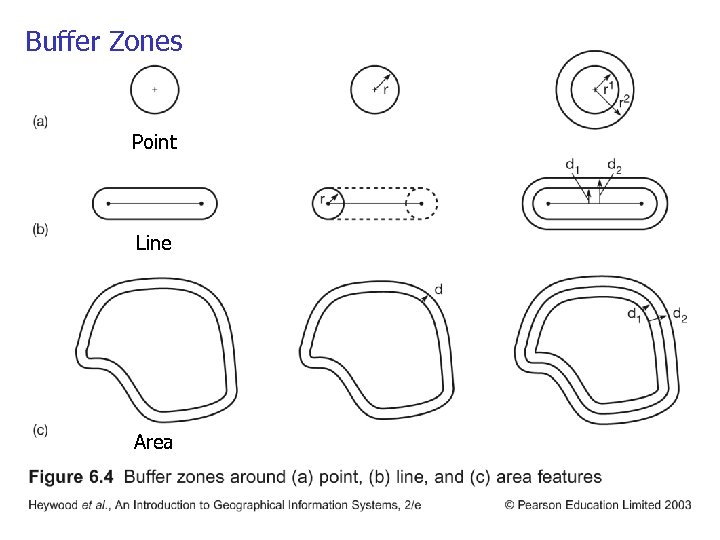 Buffer Zones Point Line Area
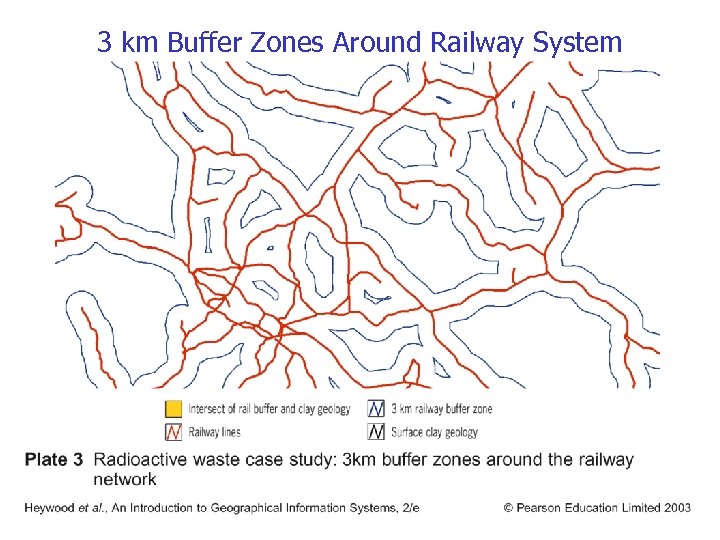 3 km Buffer Zones Around Railway System
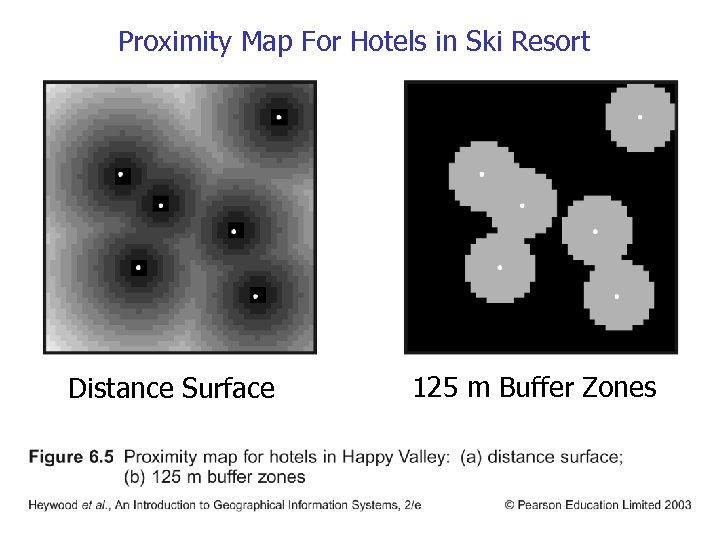 Proximity Map For Hotels in Ski Resort Distance Surface 125 m Buffer Zones
 Measurement Techniques Attribute Queries Proximity Analysis Overlay Operations Analysis of Models of Surfaces and Networks Overlay Operations: n n Simply drawing one map or layer over another. GIS operation that combines information from two layers into a new layer.
 Vector Overlay Operations n n n Data layers overlayed have to be topologically correct. Intersections of lines and polygons from original layers form new lines and new polygons in the new layer. Laws of Geometry and a lot of computational power needed.
 Vector Overlay Types Point-in polygon n Line-in-polygon n Polygon-in-polygon n
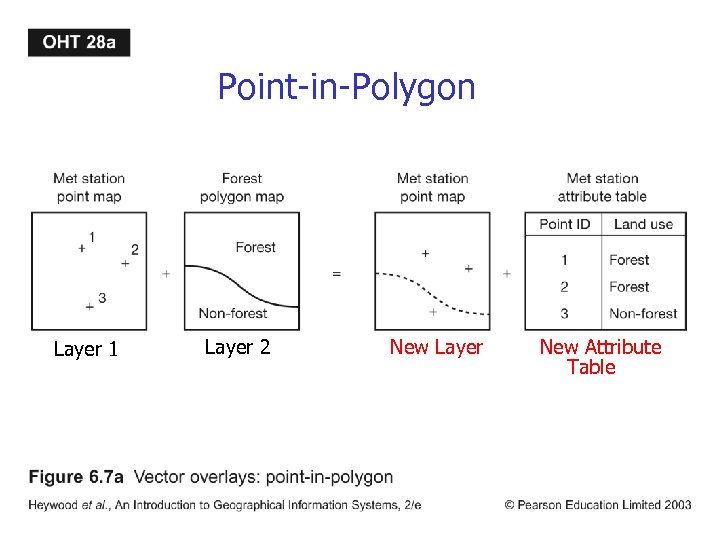 Point-in-Polygon Layer 1 Layer 2 New Layer New Attribute Table
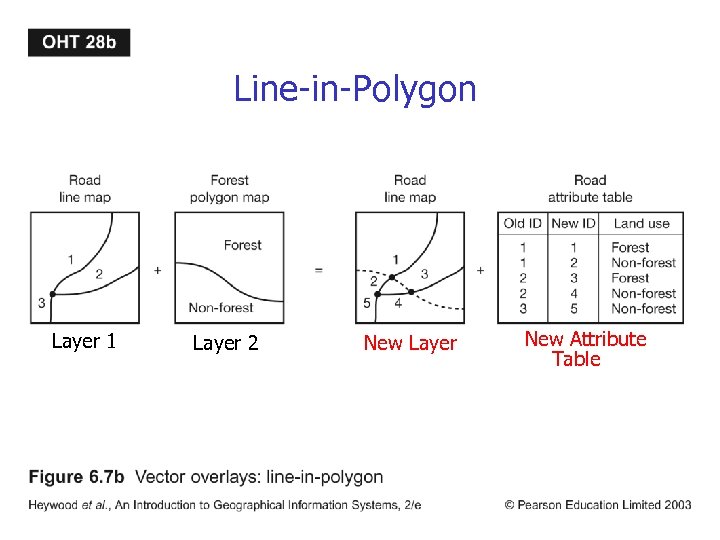 Line-in-Polygon Layer 1 Layer 2 New Layer New Attribute Table
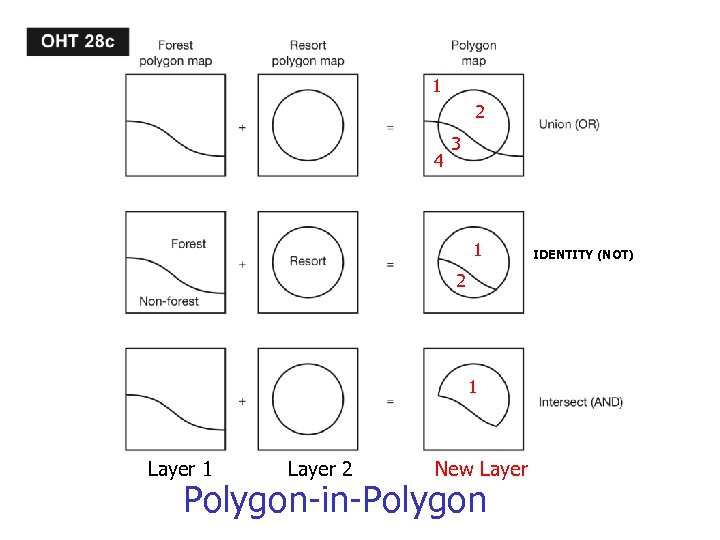 1 2 4 3 1 2 1 Layer 2 New Layer Polygon-in-Polygon IDENTITY (NOT)
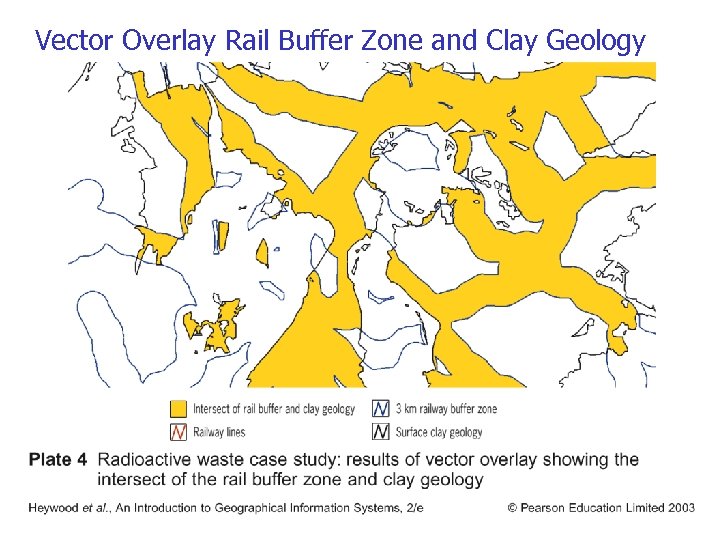 Vector Overlay Rail Buffer Zone and Clay Geology
 Little Grey Cells Quiz n n n A raster image is made up of cells. T or F Which Boolean operator will allow both conditions to exist simultaneously? The creation of a zone of interest around an entity, or set of entities is called an overlay. T or F
 Break!
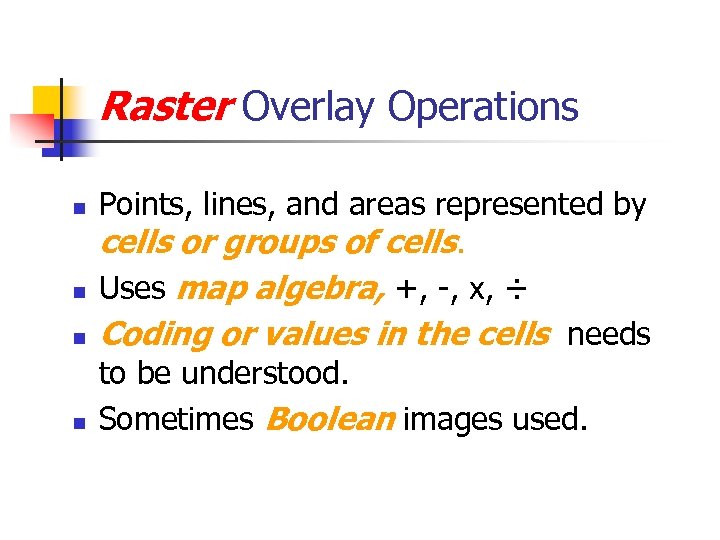 Raster Overlay Operations n n Points, lines, and areas represented by cells or groups of cells. Uses map algebra, +, -, x, ÷ Coding or values in the cells needs to be understood. Sometimes Boolean images used.
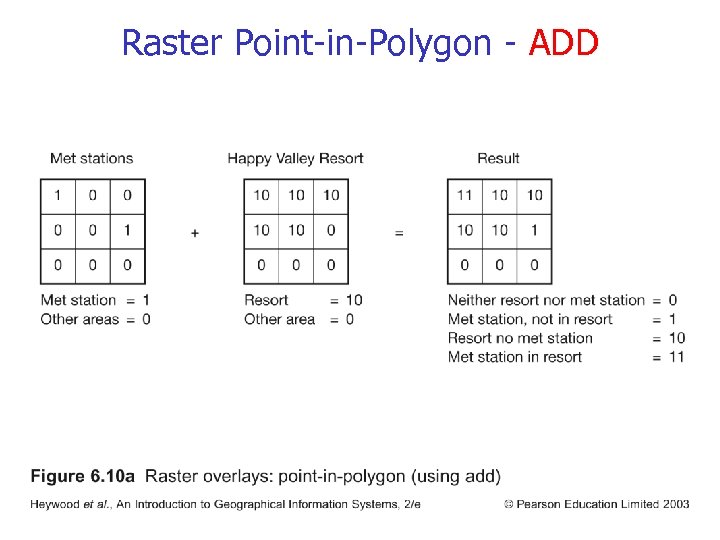 Raster Point-in-Polygon - ADD
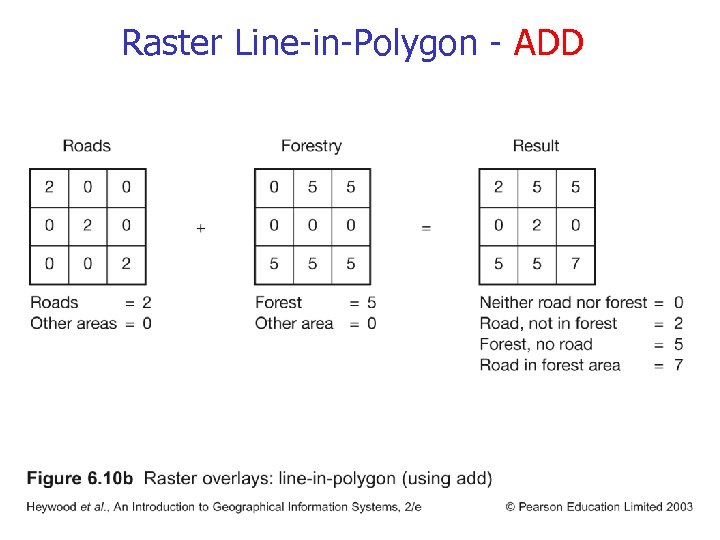 Raster Line-in-Polygon - ADD
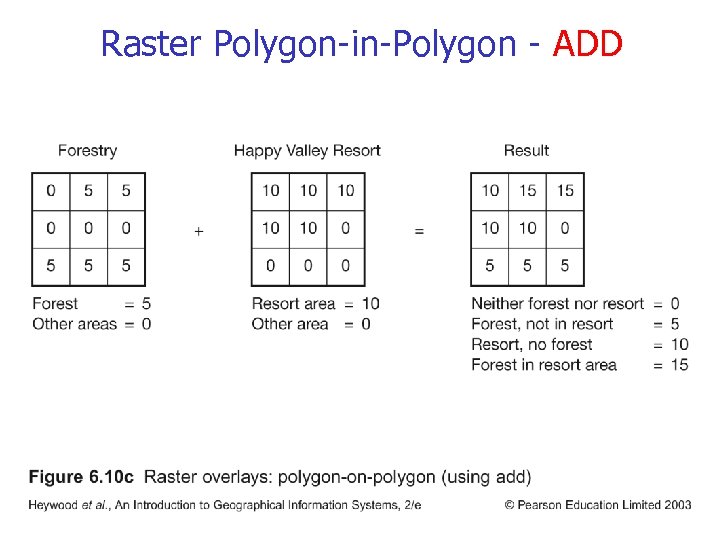 Raster Polygon-in-Polygon - ADD
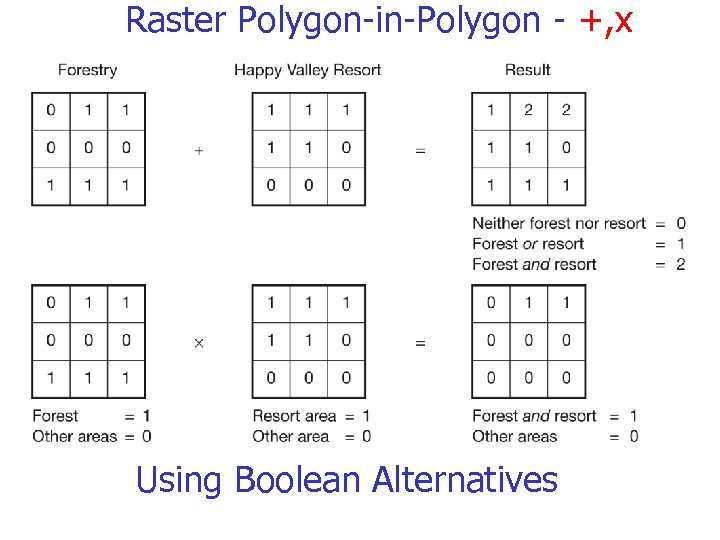 Raster Polygon-in-Polygon - +, x Using Boolean Alternatives
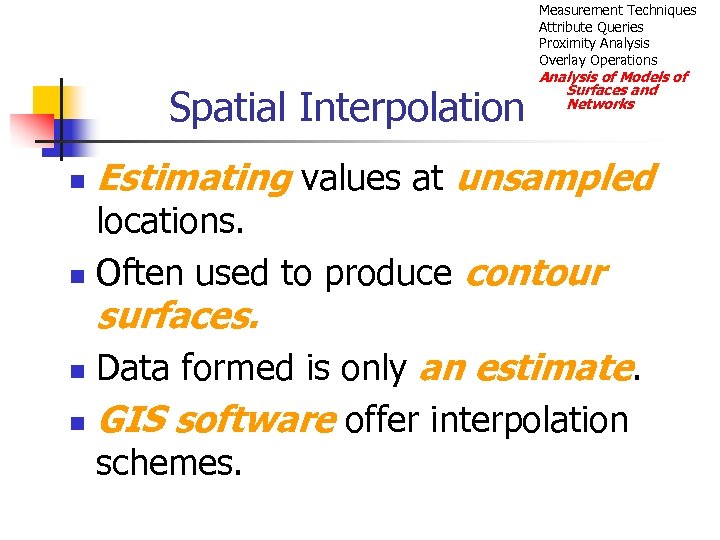 Measurement Techniques Attribute Queries Proximity Analysis Overlay Operations Spatial Interpolation n Analysis of Models of Surfaces and Networks Estimating values at unsampled locations. n Often used to produce contour surfaces. Data formed is only an estimate. n GIS software offer interpolation schemes. n
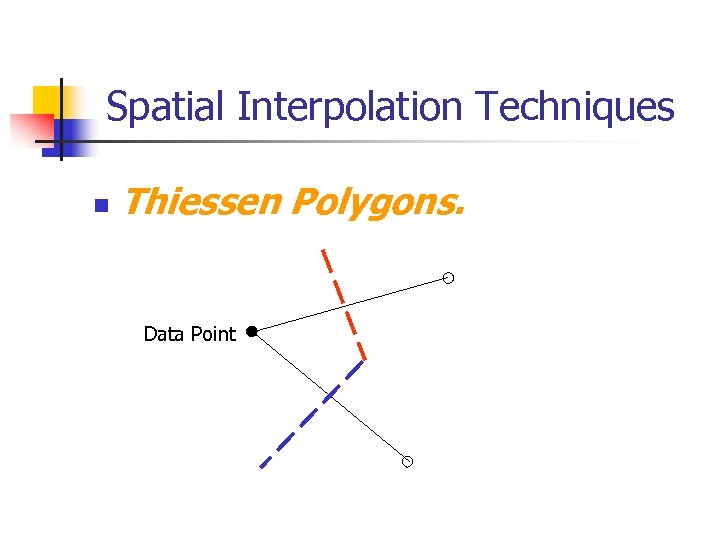 Spatial Interpolation Techniques n Thiessen Polygons. Data Point
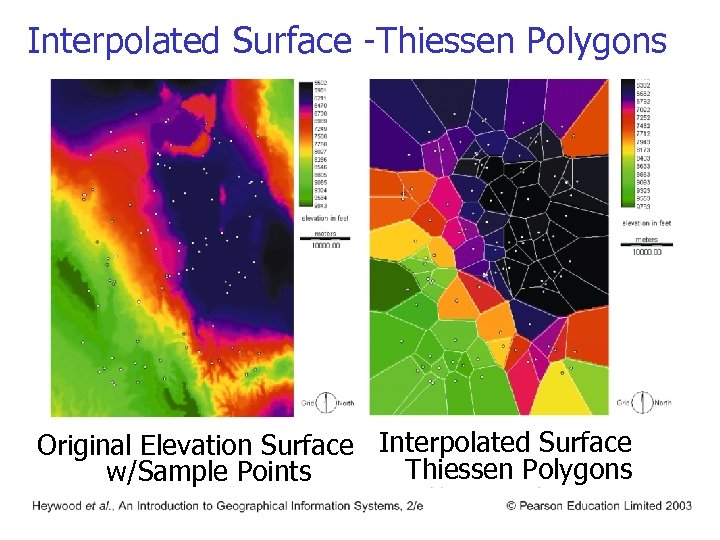 Interpolated Surface -Thiessen Polygons Original Elevation Surface Interpolated Surface Thiessen Polygons w/Sample Points
 Spatial Interpolation Techniques n n Thiessen Polygons. Triangular Irregular Networks – TINS.
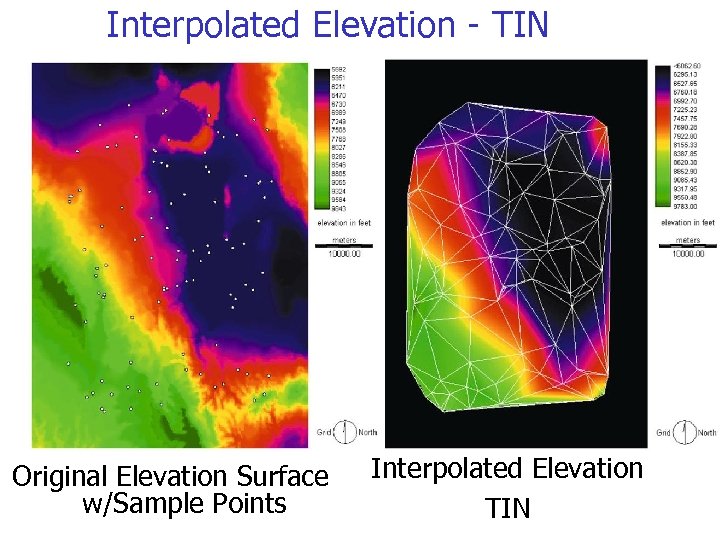 Interpolated Elevation - TIN Original Elevation Surface w/Sample Points Interpolated Elevation TIN
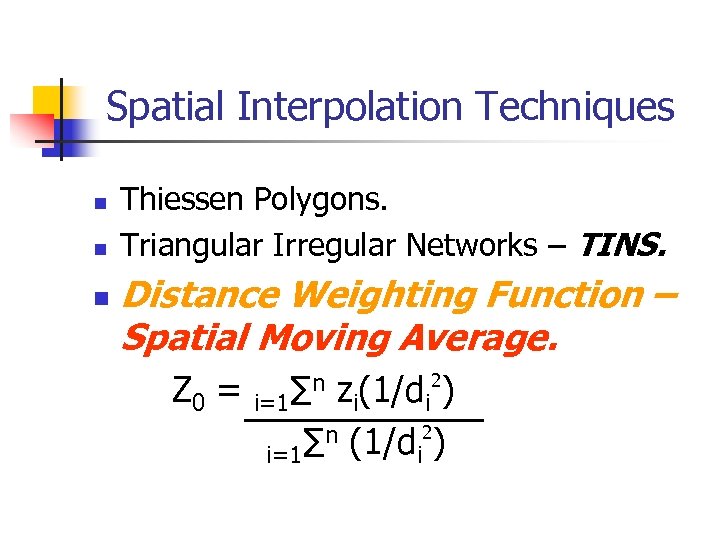 Spatial Interpolation Techniques n n n Thiessen Polygons. Triangular Irregular Networks – TINS. Distance Weighting Function – Spatial Moving Average. Z 0 = zi(1/di ) n (1/d 2) i=1∑ i i=1 ∑n 2
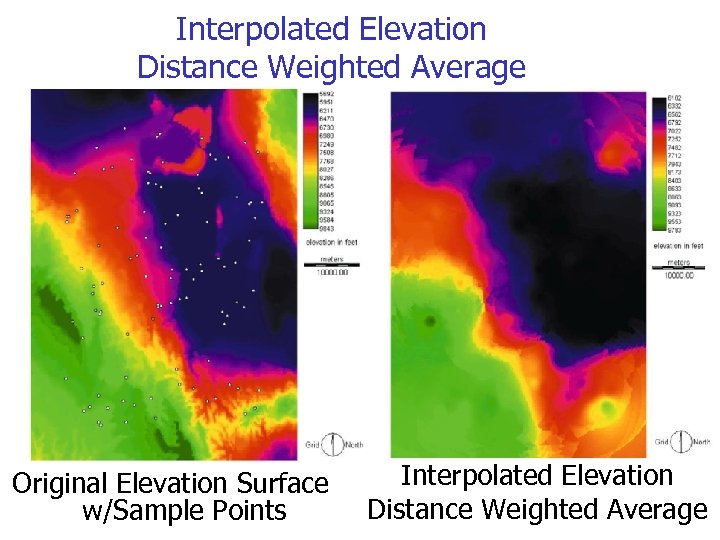 Interpolated Elevation Distance Weighted Average Original Elevation Surface w/Sample Points Interpolated Elevation Distance Weighted Average
 Analysis of Surfaces n n n DTM Surfaces Slope/Aspect Visibility
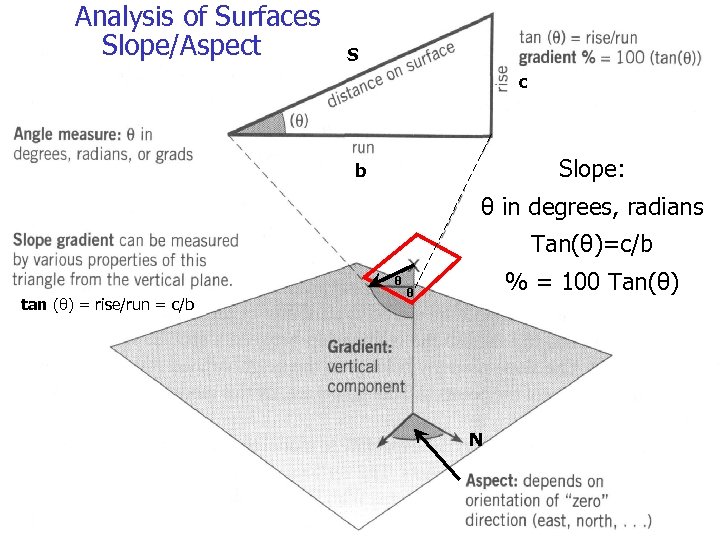 Analysis of Surfaces Slope/Aspect S c Slope: b θ in degrees, radians Tan(θ)=c/b θ tan (θ) = rise/run = c/b % = 100 Tan(θ) θ N
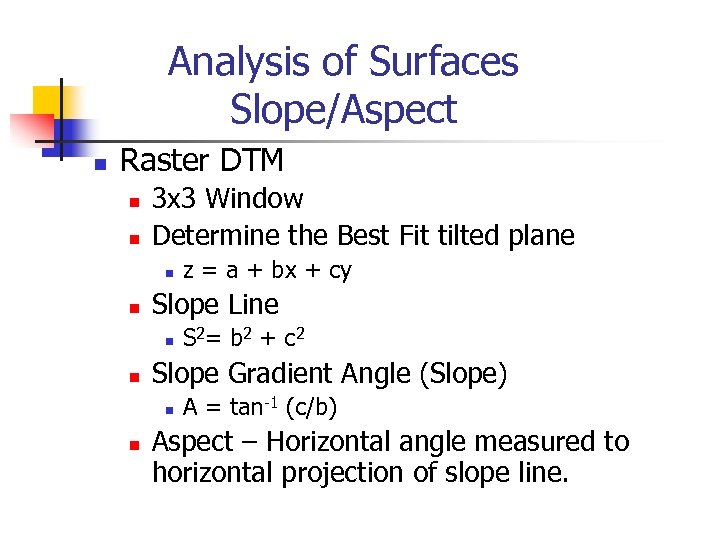 Analysis of Surfaces Slope/Aspect n Raster DTM n n 3 x 3 Window Determine the Best Fit tilted plane n n Slope Line n n S 2 = b 2 + c 2 Slope Gradient Angle (Slope) n n z = a + bx + cy A = tan-1 (c/b) Aspect – Horizontal angle measured to horizontal projection of slope line.
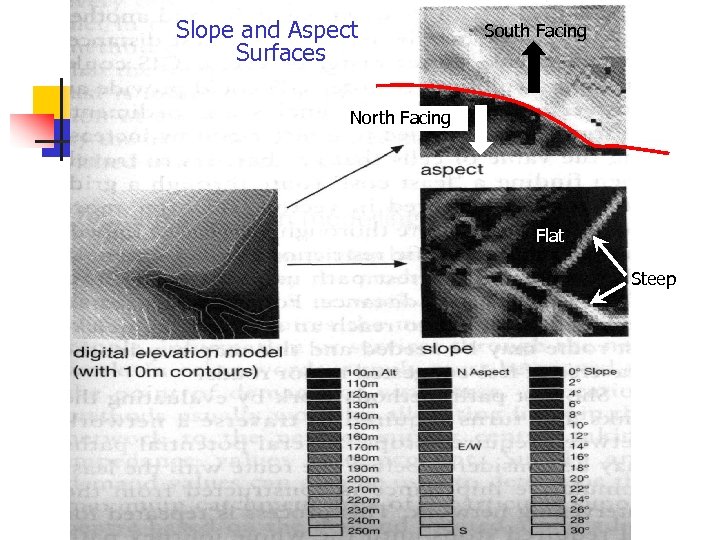 Slope and Aspect Surfaces South Facing North Facing Flat Steep
 Visibility Analysis Line drawn from observer to other points. n Ray Tracing finds blockage areas. n Repeated ray tracing around observation point – Viewshed. n
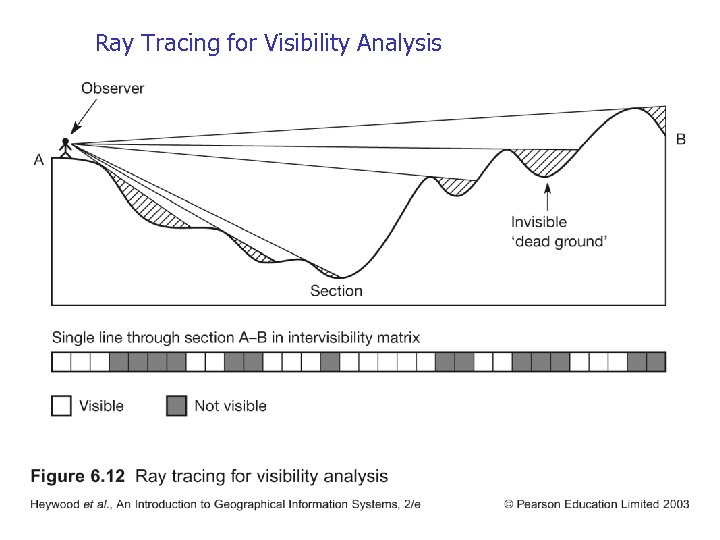 Ray Tracing for Visibility Analysis
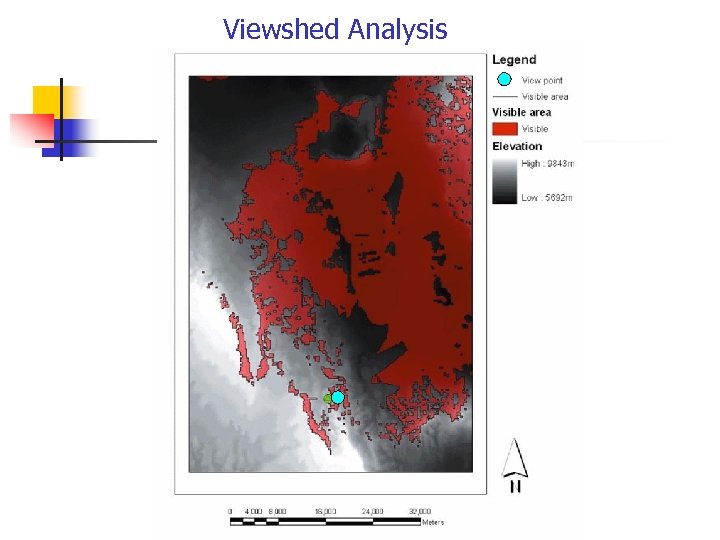 Viewshed Analysis
 Network Analysis A set of interconnected lines through which resources can flow. n n Most Applications – Road Networks Impedance Values n n Network links Turns One way or closed streets Overpasses and Underpasses.
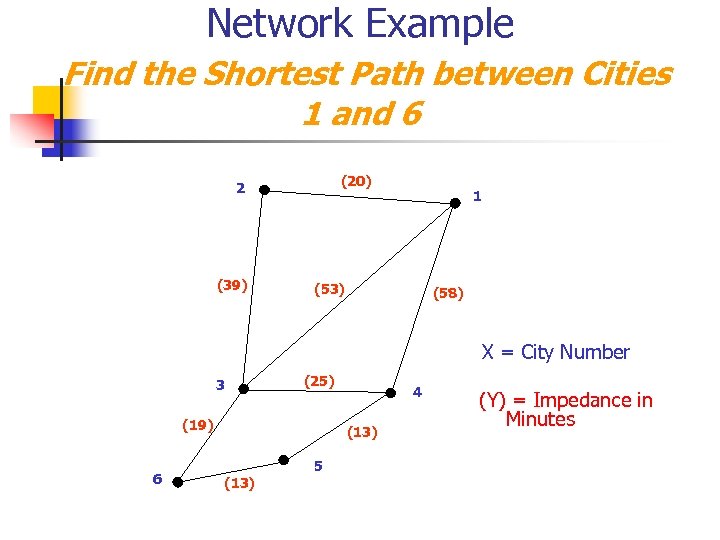 Network Example Find the Shortest Path between Cities 1 and 6 (20) 2 (39) 1 (53) (58) X = City Number 3 (25) (19) 6 4 (13) 5 (13) (Y) = Impedance in Minutes
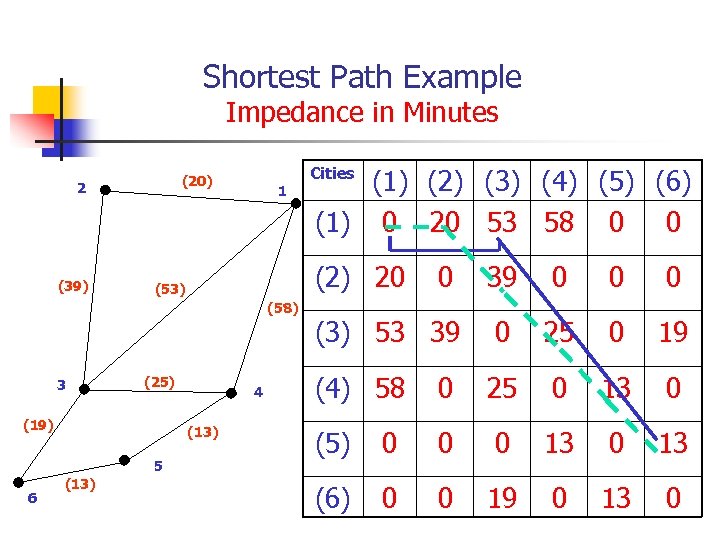 Shortest Path Example Impedance in Minutes (20) 2 (39) 1 (2) 20 (53) (58) 3 (25) (19) 6 4 (13) 5 (13) (1) (2) (3) (4) (5) (6) (1) 0 20 53 58 0 0 Cities 0 39 0 0 0 (3) 53 39 0 25 0 19 (4) 58 0 25 0 13 0 (5) 0 0 0 13 (6) 0 0 19 0 13 0
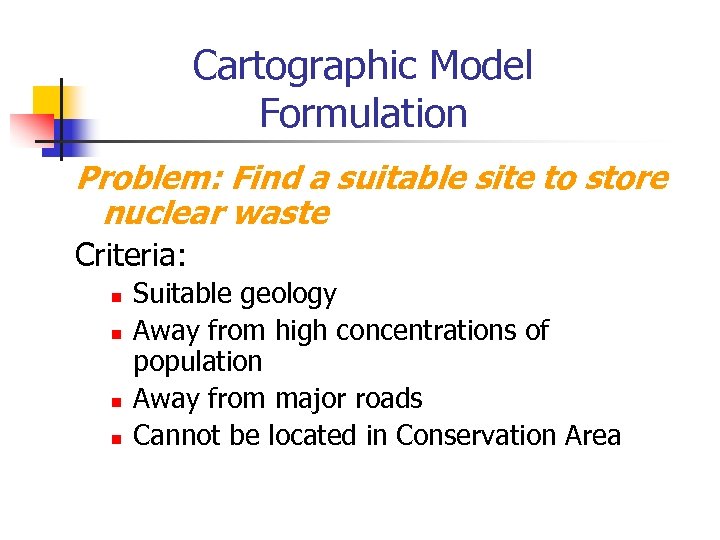 Cartographic Model Formulation Problem: Find a suitable site to store nuclear waste Criteria: n n Suitable geology Away from high concentrations of population Away from major roads Cannot be located in Conservation Area
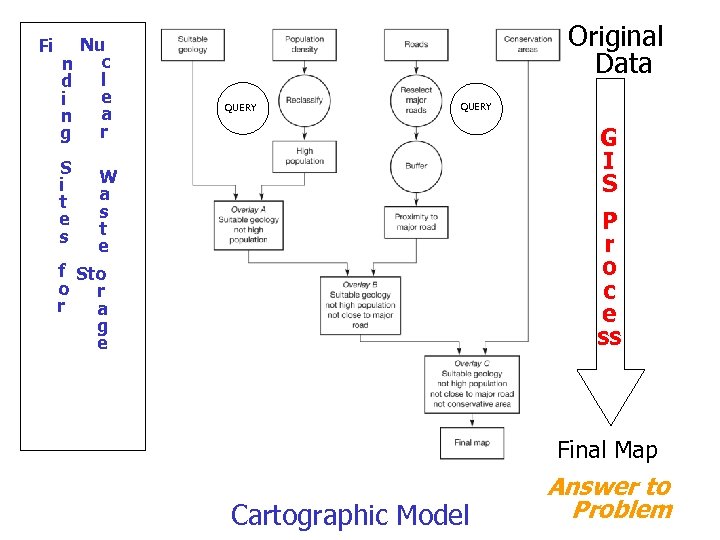 Fi n d i n g S i t e s Nu c l e a r Original Data QUERY G I S W a s t e P r o c e ss f Sto o r r a g e Final Map Cartographic Model Answer to Problem
 Summary Data Analysis Operations – turning data into information n n n Measurement Techniques Attribute Queries Proximity Analysis Overlay Operations Analysis of Models of Surfaces and Networks Cartographic Model
 What’s Next n n Up to now – Data Formation/Data Analysis Next – Semester Project