 Скачать презентацию CCD and CMOS Sensors Craig Robinson Definitions
a31428d4b533e30b84a8b33821669086.ppt
- Количество слайдов: 17



CCD and CMOS Sensors Craig Robinson
Definitions CCD l Charge Coupled Device CMOS l Complementary Metal Oxide Semiconductor
What is CCD and CMOS? Array of Diodes (photosites) that produce a voltage: l l Linearly Proportional to the AMOUNT incident light. Non-linearly Dependant to the WAVELENGTH Built out of layers of Silicone l l Silicone is sensitive to light Layers add functionality – different layers perform different functions. (called ‘die’)
CCD History Invented in 1970 by Bell Labs Honeywell developed this into an X-Y scanner and taken further by IBM. Originally for data storage! Taken up by research and astronomy areas. Now used in security cameras, digital cameras and virtually all digital video applications.
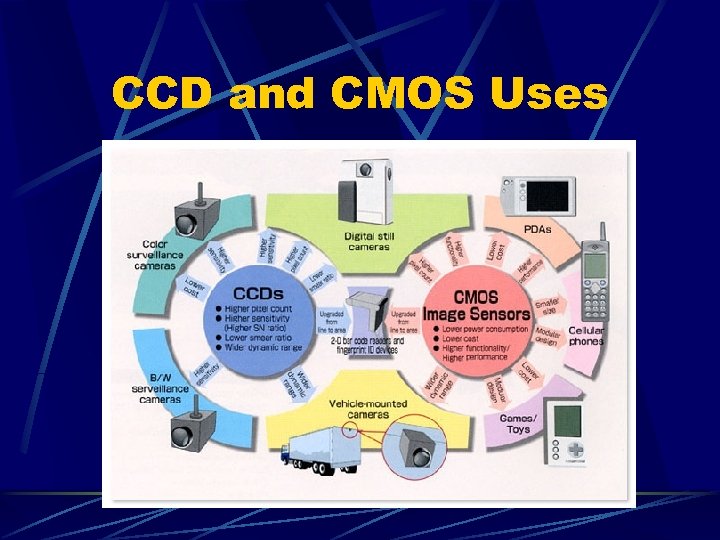
CCD and CMOS Uses
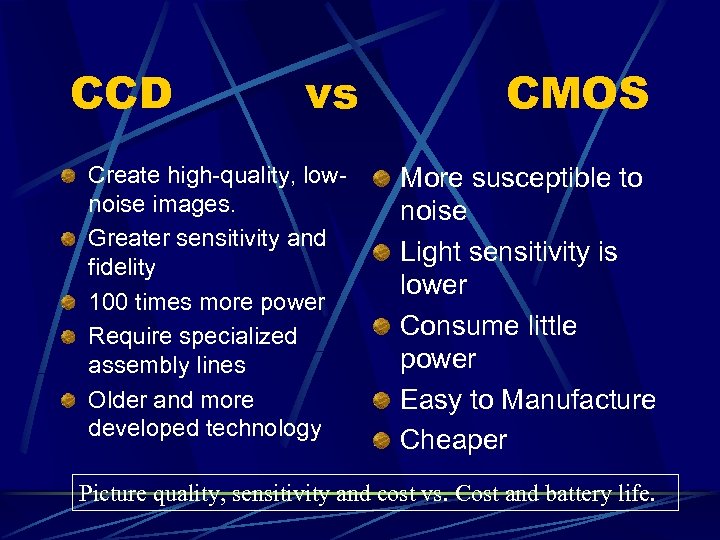
CCD vs Create high-quality, lownoise images. Greater sensitivity and fidelity 100 times more power Require specialized assembly lines Older and more developed technology CMOS More susceptible to noise Light sensitivity is lower Consume little power Easy to Manufacture Cheaper Picture quality, sensitivity and cost vs. Cost and battery life.
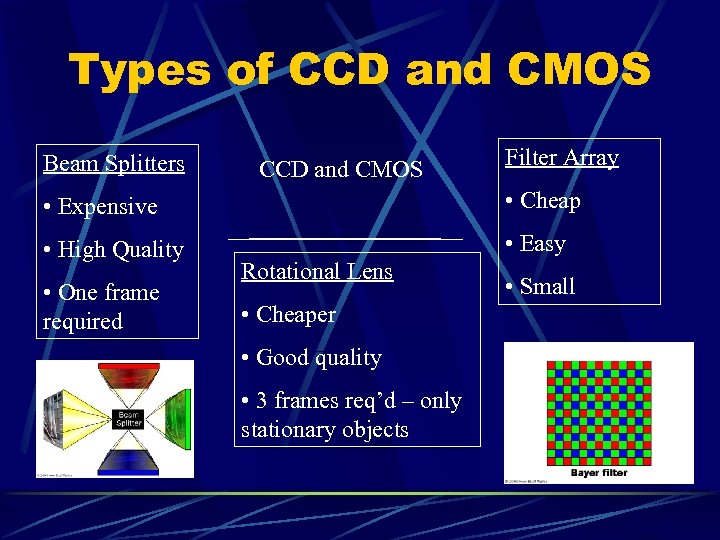
Types of CCD and CMOS Beam Splitters CCD and CMOS Filter Array • Expensive • Cheap • High Quality • Easy • One frame required Rotational Lens • Cheaper • Good quality • 3 frames req’d – only stationary objects • Small
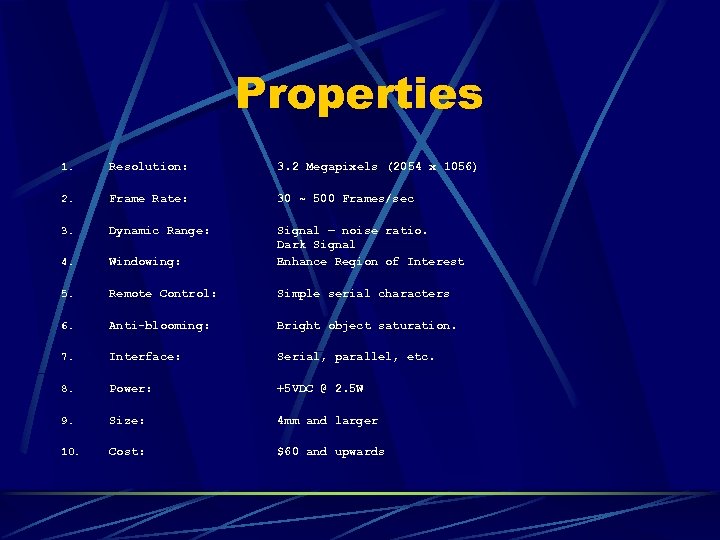
Properties 1. Resolution: 3. 2 Megapixels (2054 x 1056) 2. Frame Rate: 30 ~ 500 Frames/sec 3. Dynamic Range: 4. Windowing: Signal – noise ratio. Dark Signal Enhance Region of Interest 5. Remote Control: Simple serial characters 6. Anti-blooming: Bright object saturation. 7. Interface: Serial, parallel, etc. 8. Power: +5 VDC @ 2. 5 W 9. Size: 4 mm and larger 10. Cost: $60 and upwards

Interfacing Many different options: l l l Serial Transmission Parallel Transmission VHF/UHF output Requires specific power setup Send Input data to setup: l l l Auto Gain Shutter Speed Power mode, image specs etc Increasing # of onboard calculations
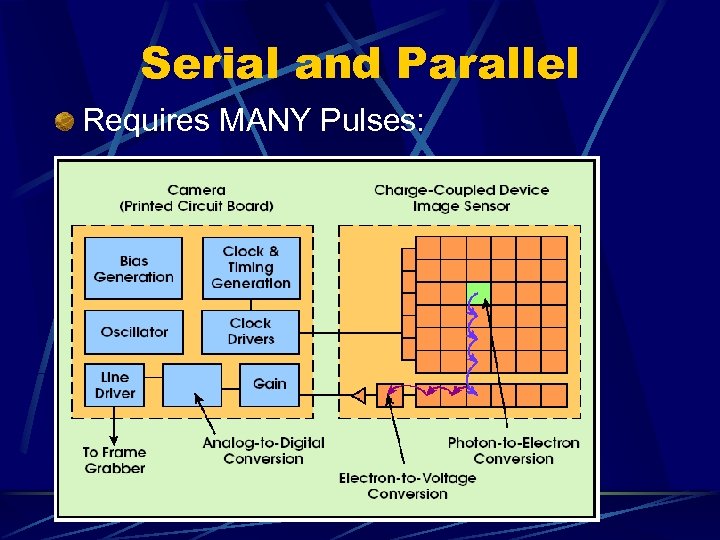
Serial and Parallel Requires MANY Pulses:
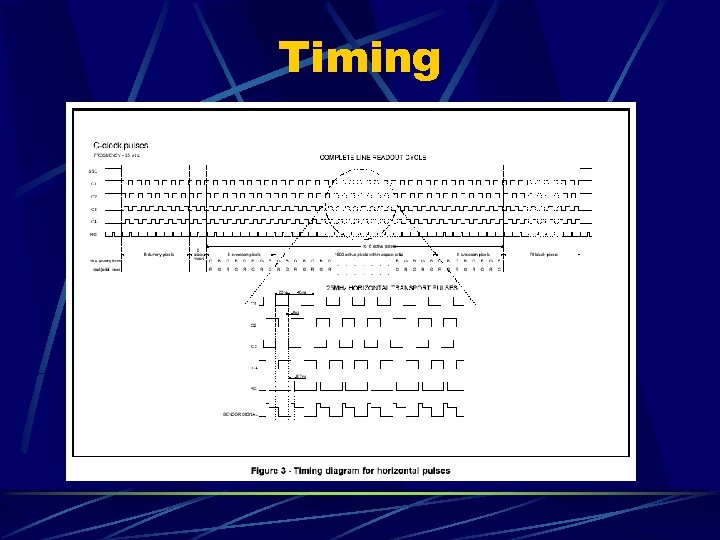
Timing
Example Add a CCD / CMOS to the robot in the lab. Robot must wander and clean the your house while you are sleeping. Choose CMOS due to lower power consumption. l Need high sensitivity for night vision. l Choose the Sharp LZOP 3817.
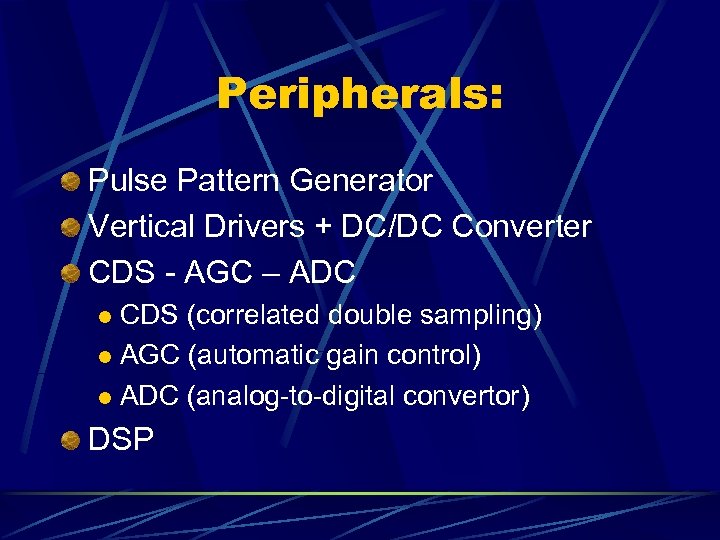
Peripherals: Pulse Pattern Generator Vertical Drivers + DC/DC Converter CDS - AGC – ADC CDS (correlated double sampling) l AGC (automatic gain control) l ADC (analog-to-digital convertor) l DSP
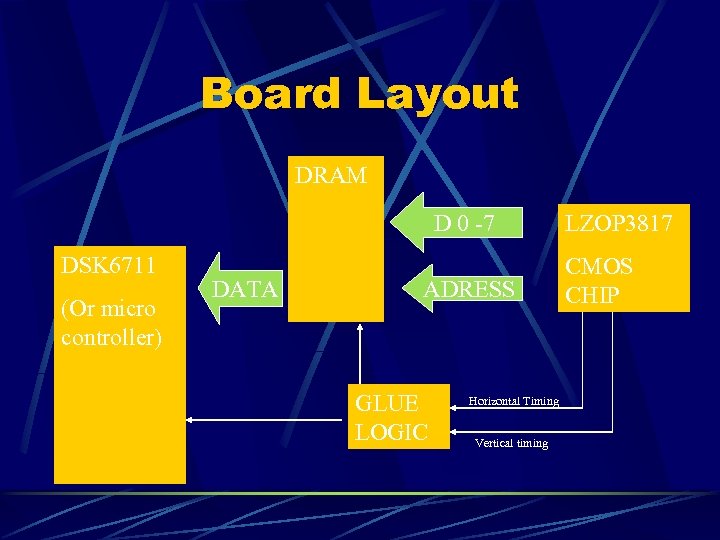
Board Layout DRAM D 0 -7 DSK 6711 (Or micro controller) DATA ADRESS GLUE LOGIC Horizontal Timing Vertical timing LZOP 3817 CMOS CHIP
Manufacturers Philips Sharp Dalsa Fuji Sony Kodak Polaroid
References How. Stuffworks: Digital Cameras www. dalsa. com/markets/Photonics_Spectra_CCDvs. CMOS_Lit willer. pdf www. sharpsma. com www. semiconductors. philips. com http: //www. ccd. com/ Peter Mc. Cullough at The University of Illinois (Astronomy)
Скачать презентацию CCD and CMOS Sensors Craig Robinson Definitions
a31428d4b533e30b84a8b33821669086.ppt