


 Скачать презентацию CAUSES of SIGNING PEREYASLAVSKA AGREEMENT 1654
Causes of Pereyaslav Agreement.1.pptx
- Количество слайдов: 9
 CAUSES of SIGNING PEREYASLAVSKA AGREEMENT 1654
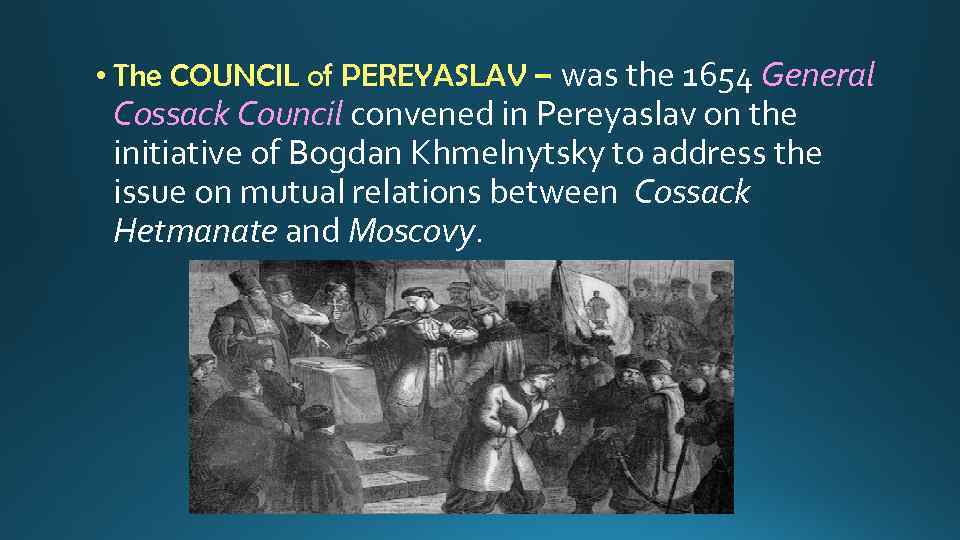 • The COUNCIL of PEREYASLAV – was the 1654 General Cossack Council convened in Pereyaslav on the initiative of Bogdan Khmelnytsky to address the issue on mutual relations between Cossack Hetmanate and Moscovy.
 Preconditions and Preparation • The Hetman of Zaporozhian Cossacks, Bohdan Khmelnytsky, has been leading revolt against Polish rule in Ukraine since 1648. • In 1651 Khmelnytsky asked Moskovyn Tsar to incorporate Ukraine as an autonomous duchy under Russian protection. It was not until October 1653 that a Russian Zemsky Sobor approved the request and Alexis (Moskovian Tsar) sent a delegation, headed by V. V. Buturlin, to the Cossacks.
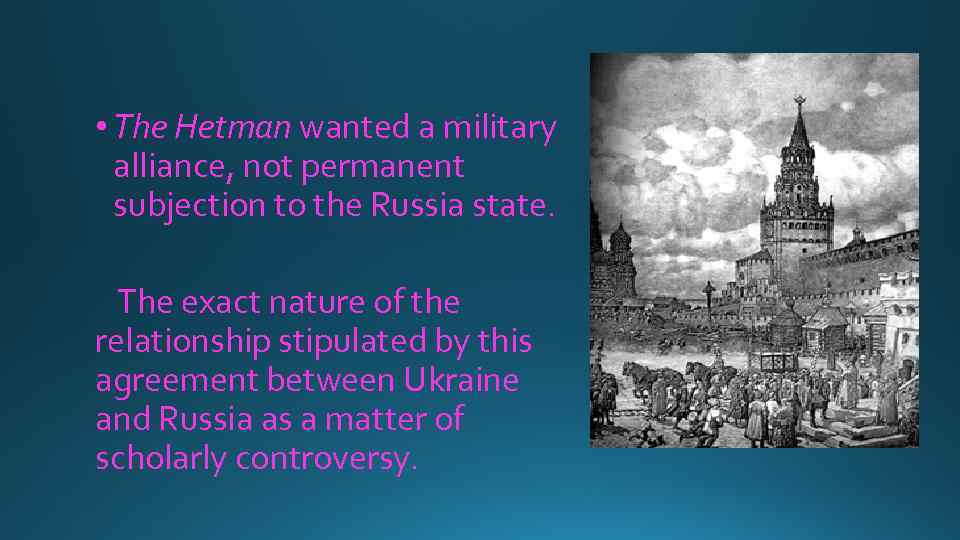 • The Hetman wanted a military alliance, not permanent subjection to the Russia state. The exact nature of the relationship stipulated by this agreement between Ukraine and Russia as a matter of scholarly controversy.
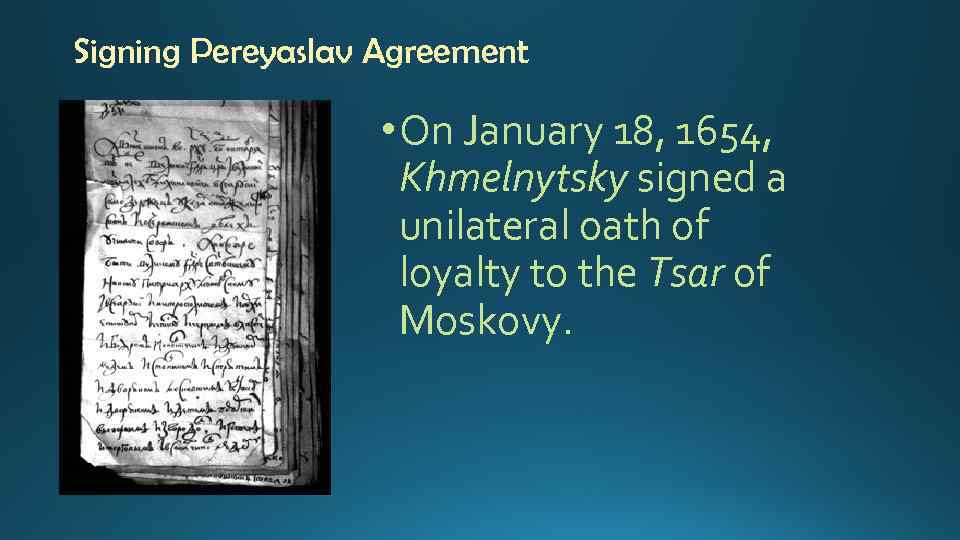 Signing Pereyaslav Agreement • On January 18, 1654, Khmelnytsky signed a unilateral oath of loyalty to the Tsar of Moskovy.
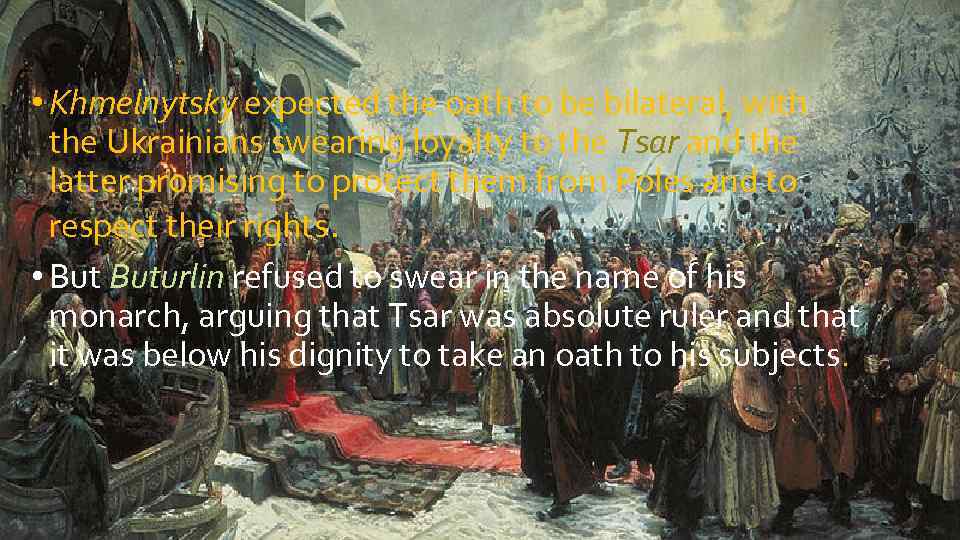 • Khmelnytsky expected the oath to be bilateral, with the Ukrainians swearing loyalty to the Tsar and the latter promising to protect them from Poles and to respect their rights. • Buturlin refused to swear in the name of his monarch, arguing that Tsar was absolute ruler and that it was below his dignity to take an oath to his subjects.
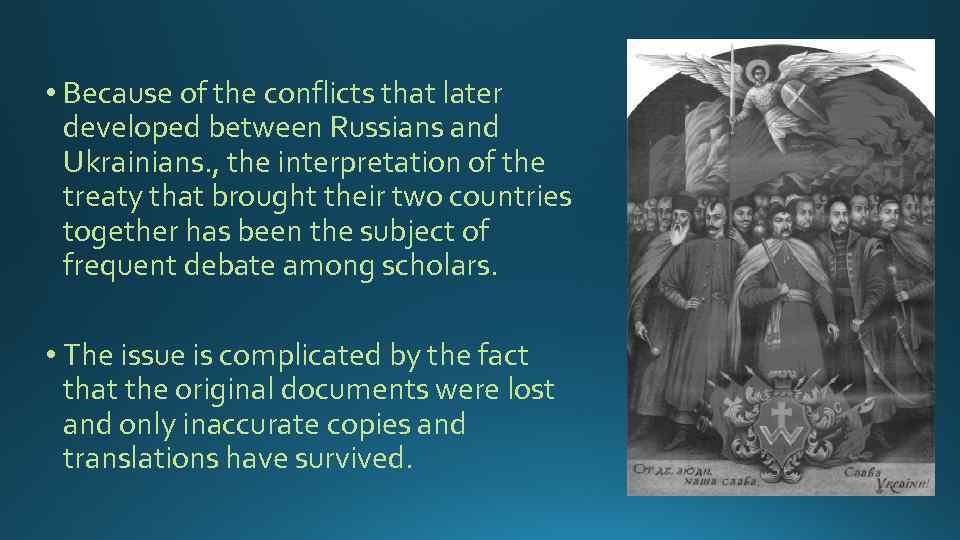 • Because of the conflicts that later developed between Russians and Ukrainians. , the interpretation of the treaty that brought their two countries together has been the subject of frequent debate among scholars. • The issue is complicated by the fact that the original documents were lost and only inaccurate copies and translations have survived.
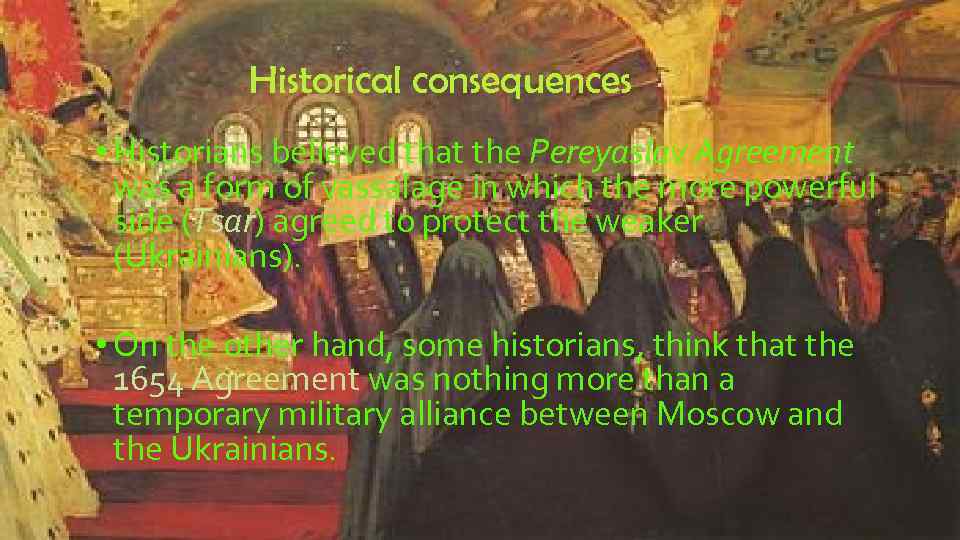 Historical consequences • Historians believed that the Pereyaslav Agreement was a form of vassalage in which the more powerful side (Tsar) agreed to protect the weaker (Ukrainians). • On the other hand, some historians, think that the 1654 Agreement was nothing more than a temporary military alliance between Moscow and the Ukrainians.
 Thank you for your attention