


 Скачать презентацию Cathodoluminescence imaging and spectral analyses of phosphates in
678187293fb8b4f26e248aada988bcd7.ppt
- Количество слайдов: 21
 Cathodoluminescence imaging and spectral analyses of phosphates in the Martian meteorites: A review. A. Gucsik 1, W. J. Protheroe, Jr. 2, J. A. R. Stirling 3, K. Ninagawa 4, H. Nishido 5, T. Okumura 5, N. Matsuda 6, Sz. Berczi 7, Sz. Nagy 7, A. Kereszturi 7 and H. Hargitai 7 1 Max Planck Institute for Chemistry, Mainz, Germany (gucsik@mpch-mainz. mpg. de) 2 AOL Inc. , Houston, USA 3 Geological Survey of Canada, Ottawa, Canada 4 Okayama Unversity of Science, Dept. of Applied Physics, Okayama, Japan 5 Okayama Unversity of Science, RINS, Okayama, Japan 6 Okayama Unversity of Science, ISEI, Tottori, Japan 7 Eotvos Lorand University, Budapest, Hungary NIPR, Tokyo, 07 June 2007
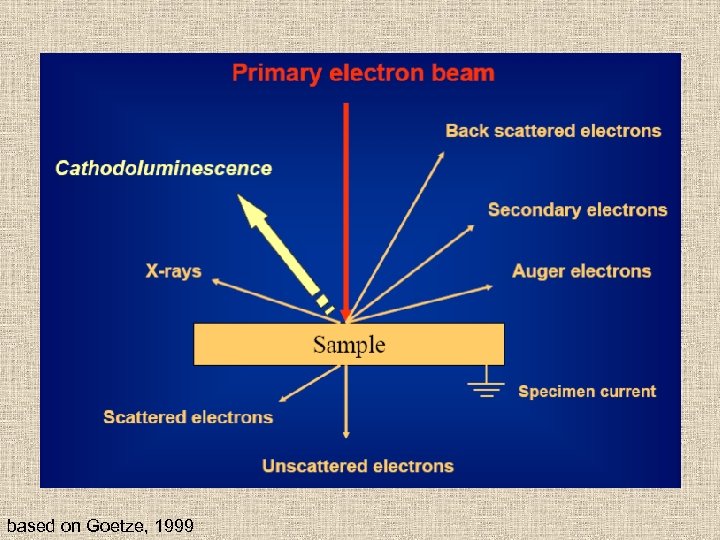
 Contents Basics of the cathodoluminescence signal. CL properties of some Martian meteorites. Conclusions.
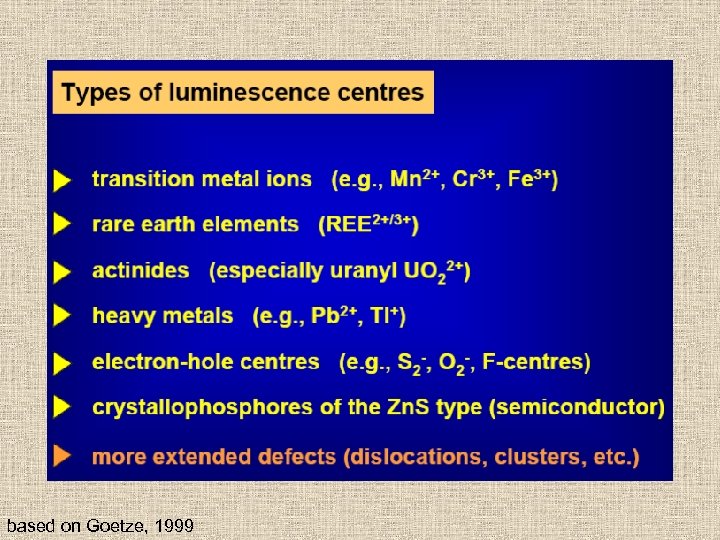
 • Purpose • Scanning Electron Microscopy-Cathodoluminescence (SEM-CL) techniques provide better spatial resolution images of the minerals than the standard optical microscope ones. • Moreover, SEM-CL spectral information might give some details on the activator elements presented in the in minerals. • These observations can aid to understand more about the formation mechanism of different types of phosphates. • It is important to note, that CL characteristics of the Martian meteorite samples have not been documented in great details, so far. • Non-destructive method.
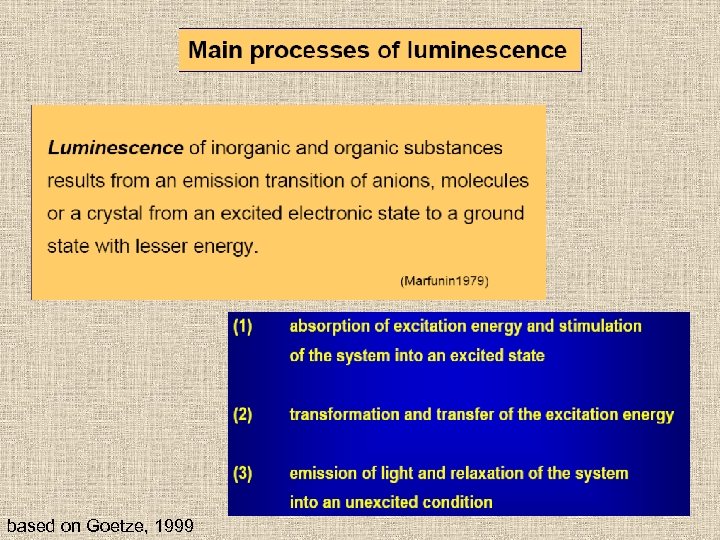 based on Goetze, 1999
 based on Goetze, 1999
 based on Goetze, 1999
 based on Goetze, 1999
 based on Goetze, 1999
 based on Goetze, 1999
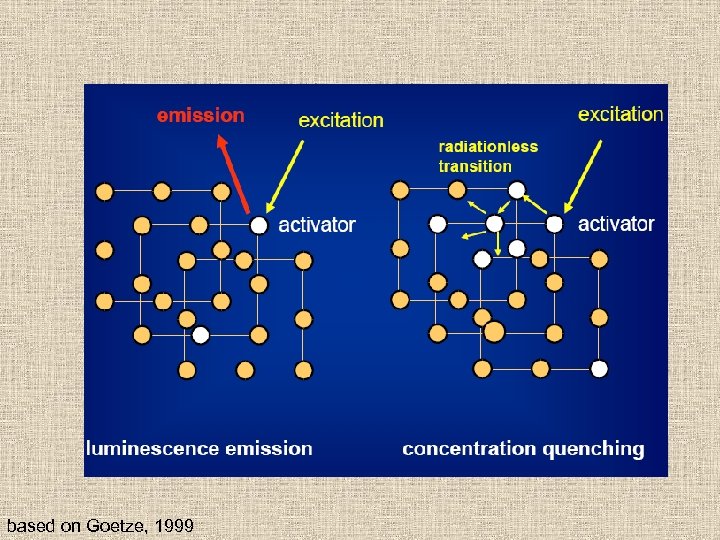 based on Goetze, 1999
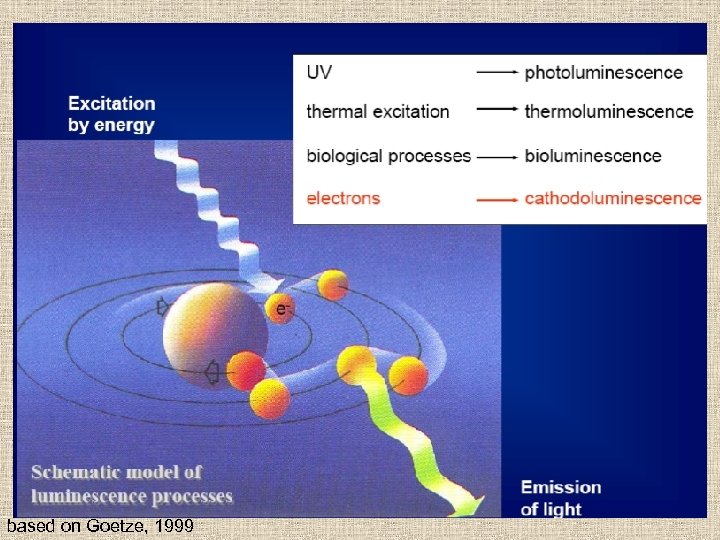
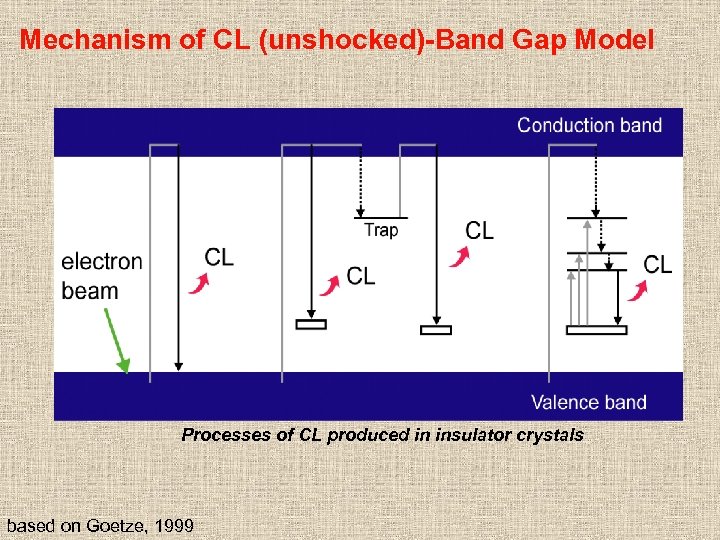 Mechanism of CL (unshocked)-Band Gap Model Processes of CL produced in insulator crystals based on Goetze, 1999
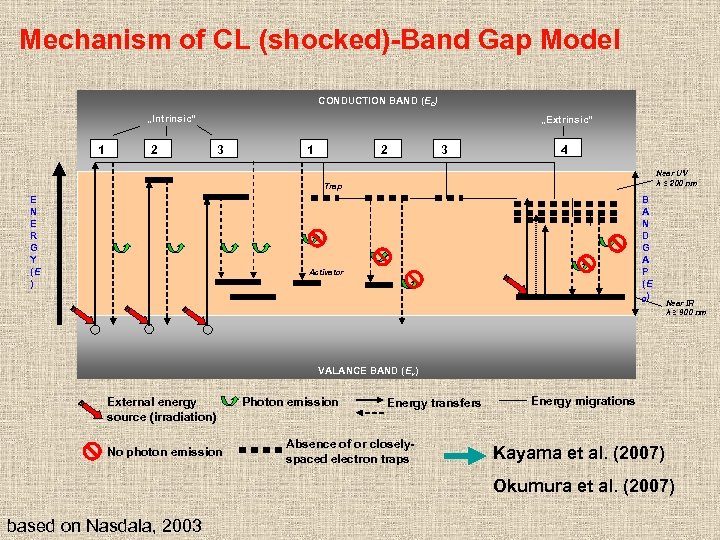 Mechanism of CL (shocked)-Band Gap Model CONDUCTION BAND (Ec) „Intrinsic“ 1 2 „Extrinsic“ 3 1 2 3 4 Near UV λ ≤ 200 nm Trap E N E R G Y (E ) B A N D G A P (E g) Activator Near IR λ ≥ 900 nm VALANCE BAND (Ev) External energy source (irradiation) No photon emission Photon emission Energy transfers Absence of or closelyspaced electron traps Energy migrations Kayama et al. (2007) Okumura et al. (2007) based on Nasdala, 2003
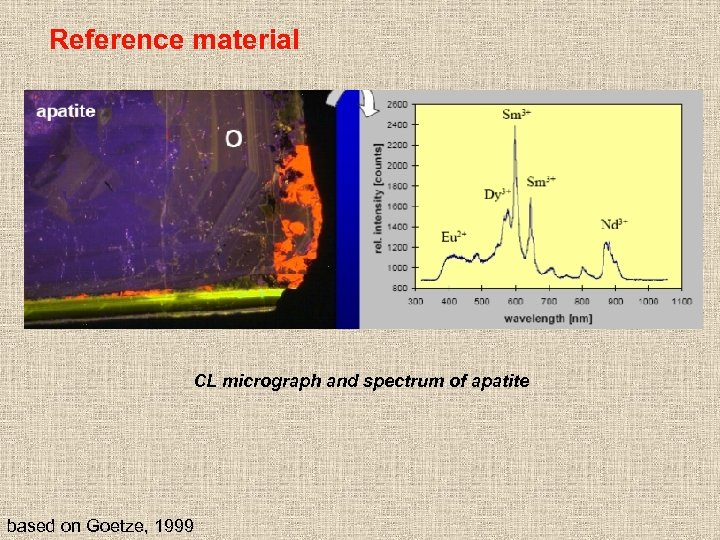 Reference material CL micrograph and spectrum of apatite based on Goetze, 1999
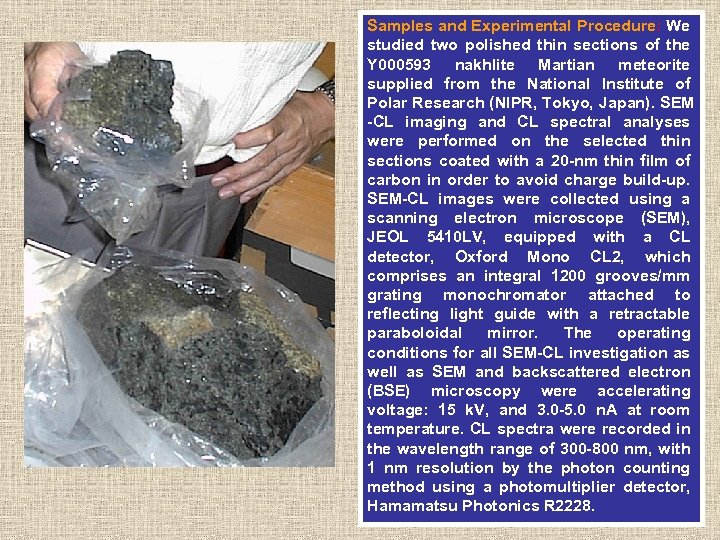 Samples and Experimental Procedure: We studied two polished thin sections of the Y 000593 nakhlite Martian meteorite supplied from the National Institute of Polar Research (NIPR, Tokyo, Japan). SEM -CL imaging and CL spectral analyses were performed on the selected thin sections coated with a 20 -nm thin film of carbon in order to avoid charge build-up. SEM-CL images were collected using a scanning electron microscope (SEM), JEOL 5410 LV, equipped with a CL detector, Oxford Mono CL 2, which comprises an integral 1200 grooves/mm grating monochromator attached to reflecting light guide with a retractable paraboloidal mirror. The operating conditions for all SEM-CL investigation as well as SEM and backscattered electron (BSE) microscopy were accelerating voltage: 15 k. V, and 3. 0 -5. 0 n. A at room temperature. CL spectra were recorded in the wavelength range of 300 -800 nm, with 1 nm resolution by the photon counting method using a photomultiplier detector, Hamamatsu Photonics R 2228.
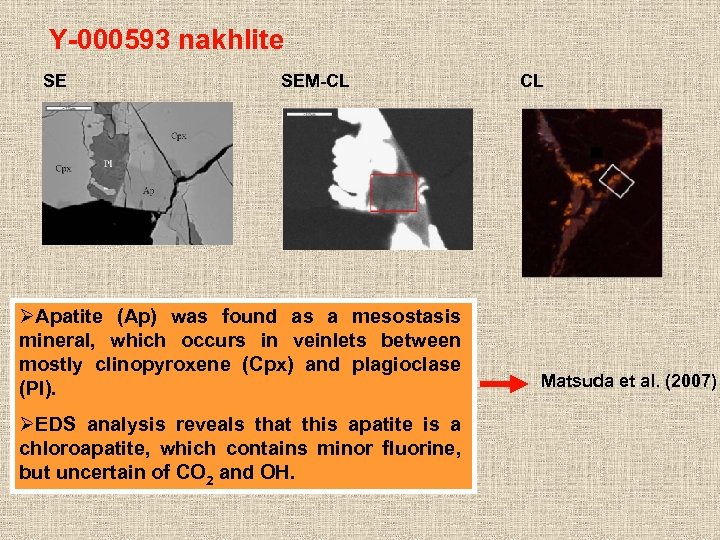 Y-000593 nakhlite SE SEM-CL ØApatite (Ap) was found as a mesostasis mineral, which occurs in veinlets between mostly clinopyroxene (Cpx) and plagioclase (Pl). ØEDS analysis reveals that this apatite is a chloroapatite, which contains minor fluorine, but uncertain of CO 2 and OH. CL Matsuda et al. (2007)
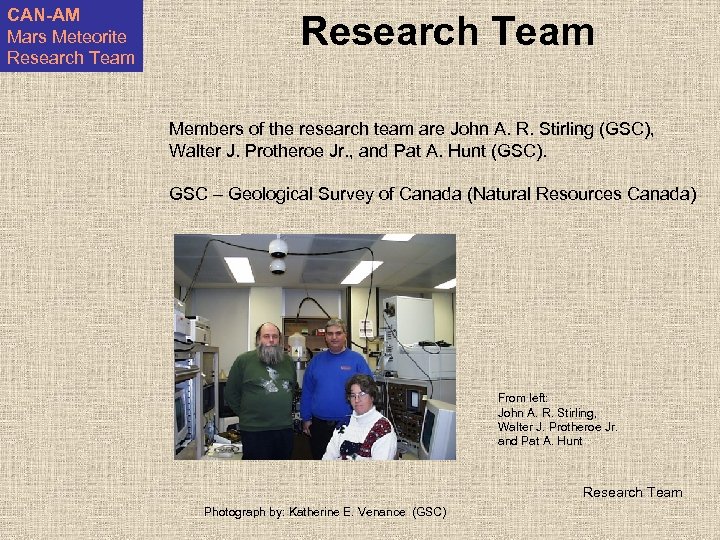 CAN-AM Mars Meteorite Research Team Members of the research team are John A. R. Stirling (GSC), Walter J. Protheroe Jr. , and Pat A. Hunt (GSC). GSC – Geological Survey of Canada (Natural Resources Canada) From left: John A. R. Stirling, Walter J. Protheroe Jr. and Pat A. Hunt Research Team Photograph by: Katherine E. Venance (GSC)
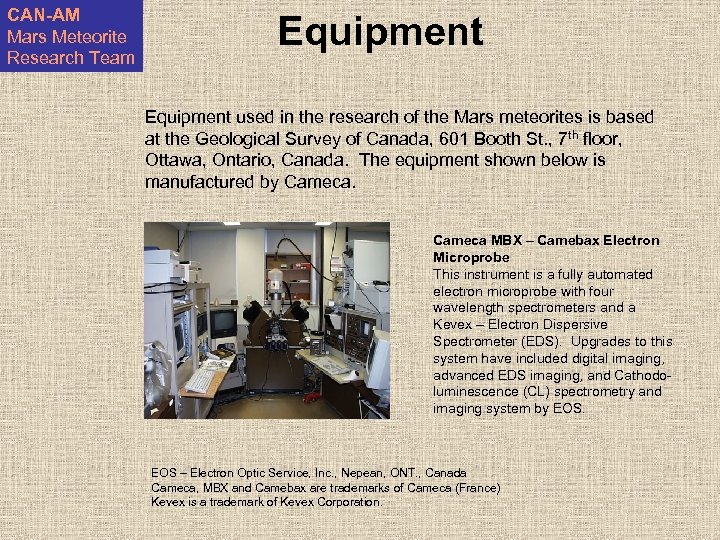 CAN-AM Mars Meteorite Research Team Equipment used in the research of the Mars meteorites is based at the Geological Survey of Canada, 601 Booth St. , 7 th floor, Ottawa, Ontario, Canada. The equipment shown below is manufactured by Cameca MBX – Camebax Electron Microprobe This instrument is a fully automated electron microprobe with four wavelength spectrometers and a Kevex – Electron Dispersive Spectrometer (EDS). Upgrades to this system have included digital imaging, advanced EDS imaging, and Cathodoluminescence (CL) spectrometry and imaging system by EOS – Electron Optic Service, Inc. , Nepean, ONT. , Canada Cameca, MBX and Camebax are trademarks of Cameca (France) Kevex is a trademark of Kevex Corporation.
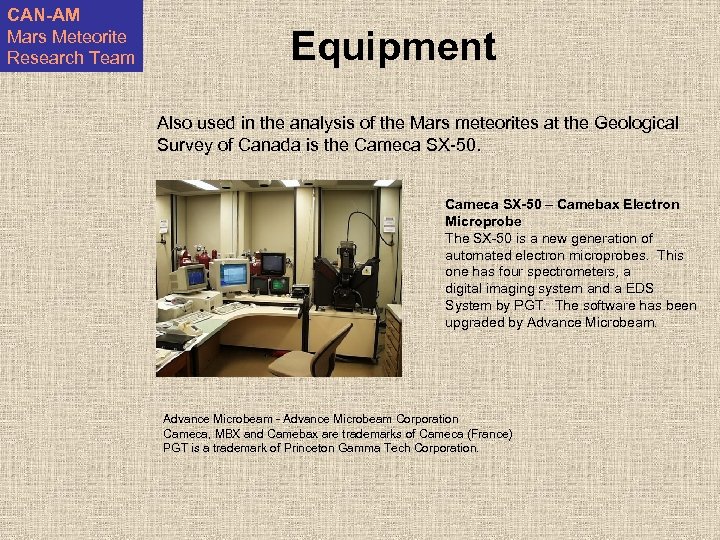 CAN-AM Mars Meteorite Research Team Equipment Also used in the analysis of the Mars meteorites at the Geological Survey of Canada is the Cameca SX-50 – Camebax Electron Microprobe The SX-50 is a new generation of automated electron microprobes. This one has four spectrometers, a digital imaging system and a EDS System by PGT. The software has been upgraded by Advance Microbeam - Advance Microbeam Corporation Cameca, MBX and Camebax are trademarks of Cameca (France) PGT is a trademark of Princeton Gamma Tech Corporation.
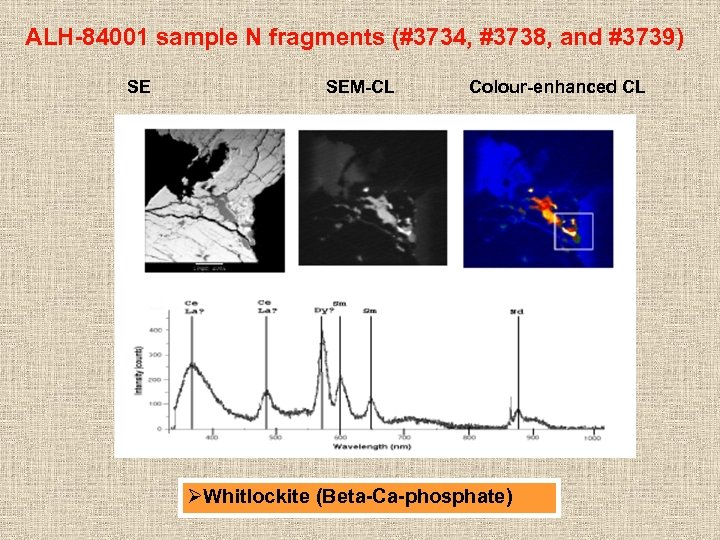 ALH-84001 sample N fragments (#3734, #3738, and #3739) SE SEM-CL Colour-enhanced CL ØWhitlockite (Beta-Ca-phosphate)
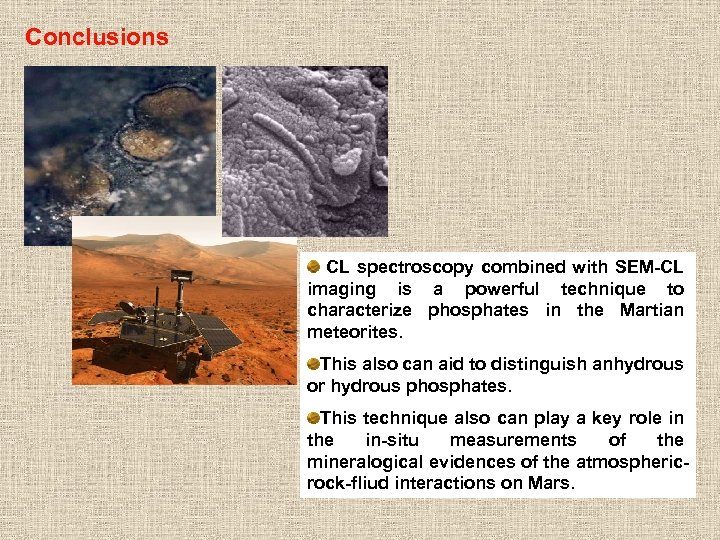 Conclusions CL spectroscopy combined with SEM-CL imaging is a powerful technique to characterize phosphates in the Martian meteorites. This also can aid to distinguish anhydrous or hydrous phosphates. This technique also can play a key role in the in-situ measurements of the mineralogical evidences of the atmosphericrock-fliud interactions on Mars.
 Thank you very much for your attention