 Скачать презентацию Catheter Tube Assembly Process Team Members Darren Brown
e2e36a72ce52937d69f9489f4fe96f85.ppt
- Количество слайдов: 27




Catheter Tube Assembly Process Team Members: Darren Brown Art Chandler Brian Tuchband
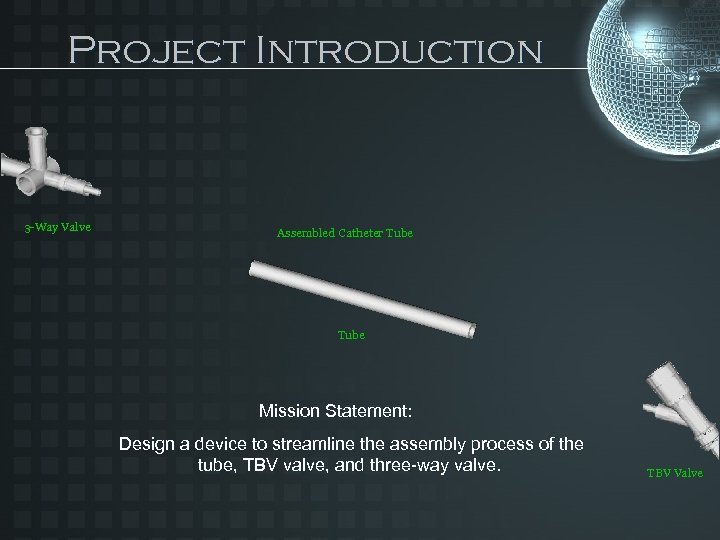
Project Introduction 3 -Way Valve Assembled Catheter Tube Mission Statement: Design a device to streamline the assembly process of the tube, TBV valve, and three-way valve. TBV Valve
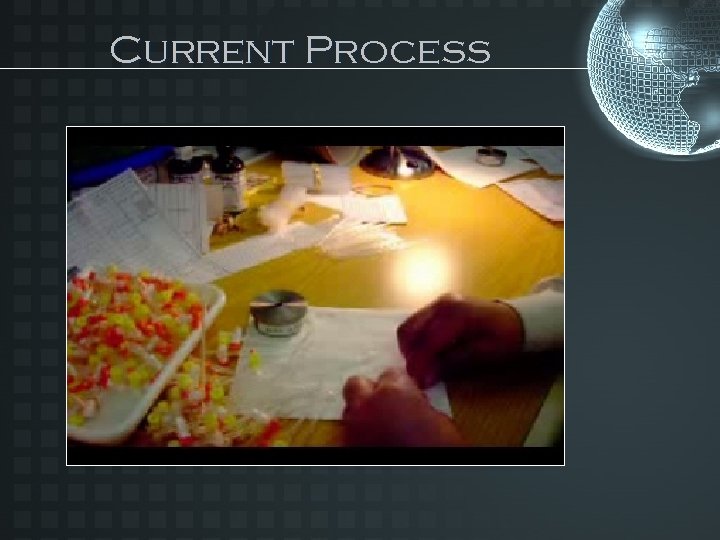
Current Process
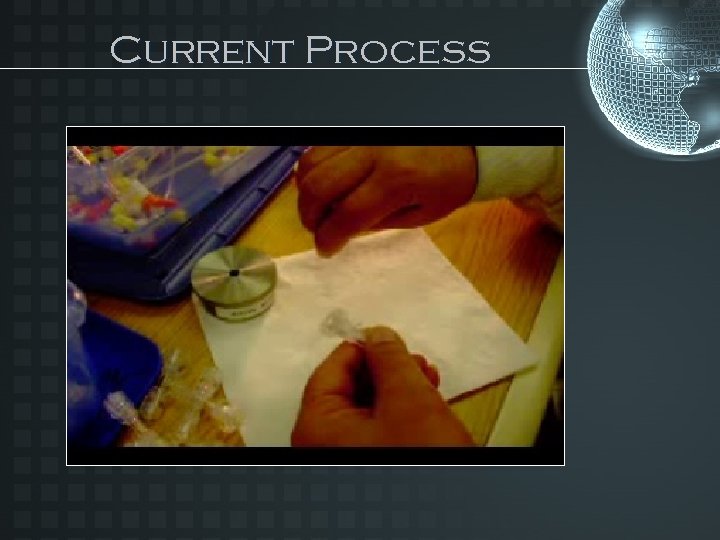
Current Process
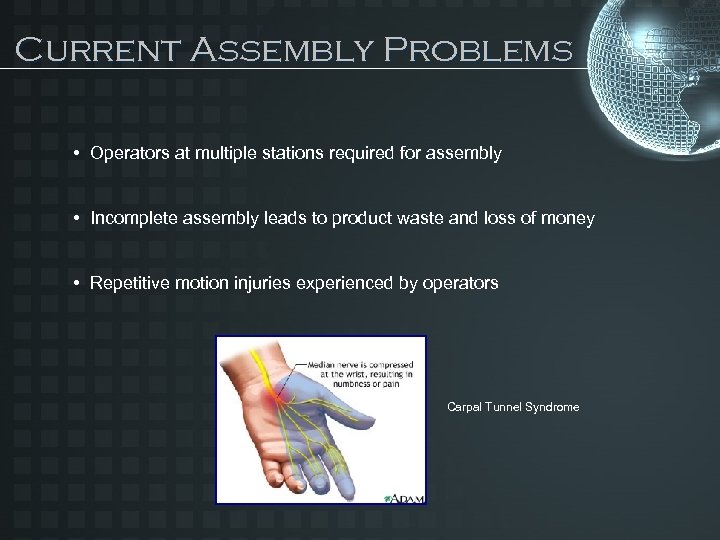
Current Assembly Problems • Operators at multiple stations required for assembly • Incomplete assembly leads to product waste and loss of money • Repetitive motion injuries experienced by operators Carpal Tunnel Syndrome
Benefits of Automation • • • Cost Savings → Fewer operators are needed to assemble the product Ergonomics → Repetitive motion injuries are significantly reduced through the use of automation Productivity → Higher success rate leads to virtually no failed parts that need to be thrown away
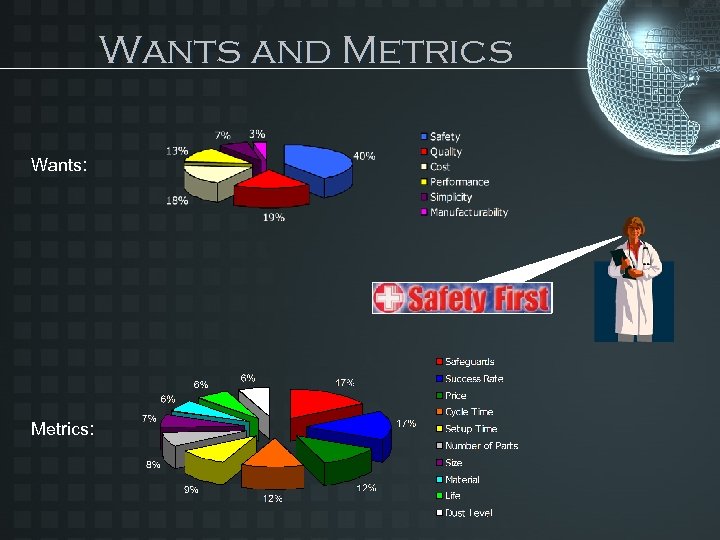
Wants and Metrics Wants: Metrics:
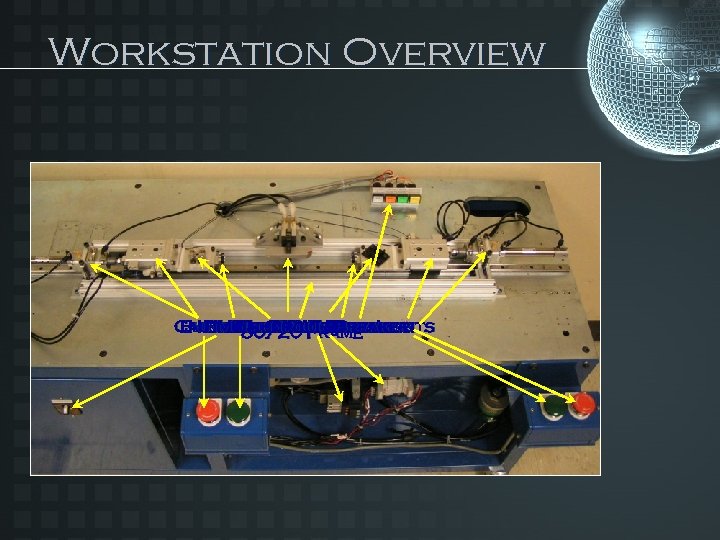
Workstation Overview Cautionary. TBVActuators Emergency Indicator Lights Hand Tube Clamp Positioning. Sensors Insertion Actuators Main Circuit. Buttons Pneumatic. Jig Optical Frame Tie-Down Valves 3 -Way Jig Stop Breaker Buttons 80/20
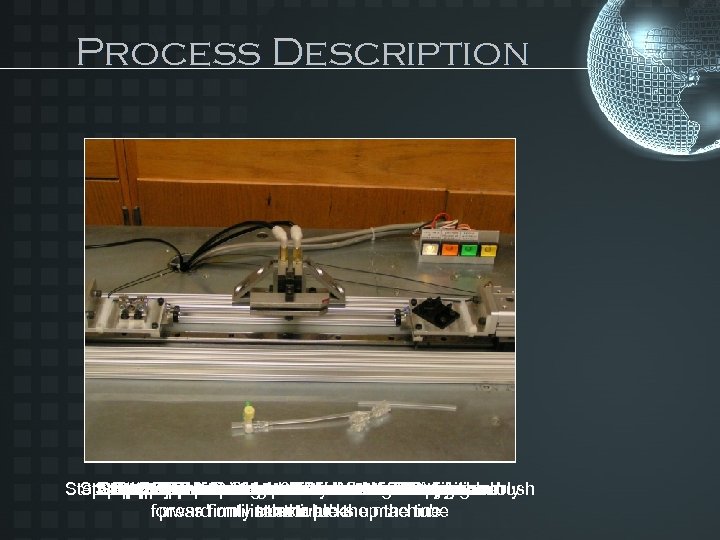
Process Description Step 9: Step 12: opensresets to intotheassemblyvalve Step. Clamp. Insert actuator finishedtheclampvalve brush Step. Insertion theactuatortie-down. TBV jig and Step 5: 7: Step 8: Clamp 3 -way thetheintobuttons a 4: 11: 13: primer actuatorends valve finished assembly Step Insertion to boththe insertsthe. TBV position Step 6: Positioning theclosesmovestube using into Apply Positioningonreleasemoves 3 -way valve Step 3: 1: hands to hand of original valve 10: Machine actuator on Place Insert 2: Remove tube the tube TBV inserts 3 -way its forwardfirmlyintoactivate the machine press until sensor picks up the tube tothe tube
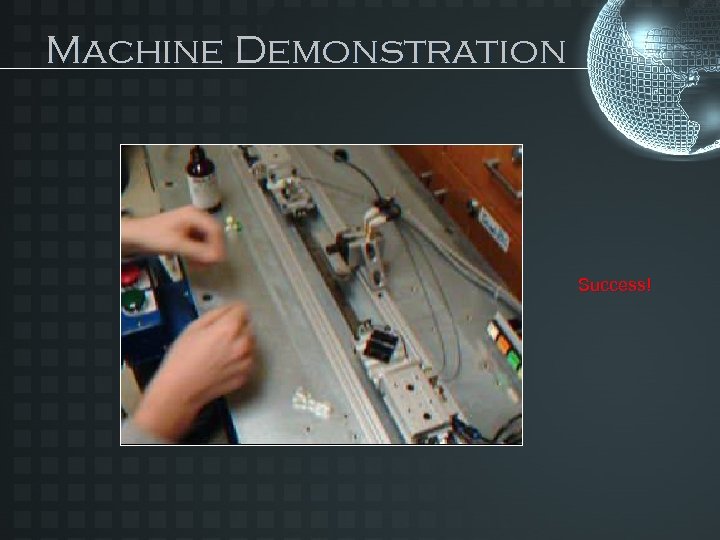
Machine Demonstration Success!
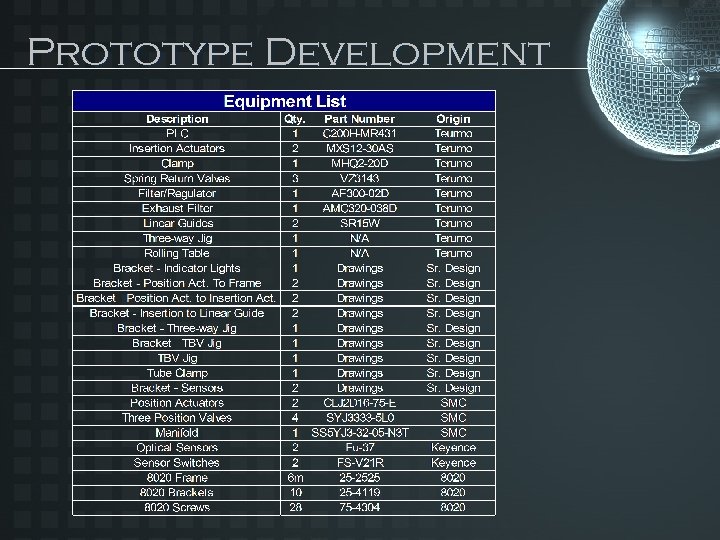
Prototype Development
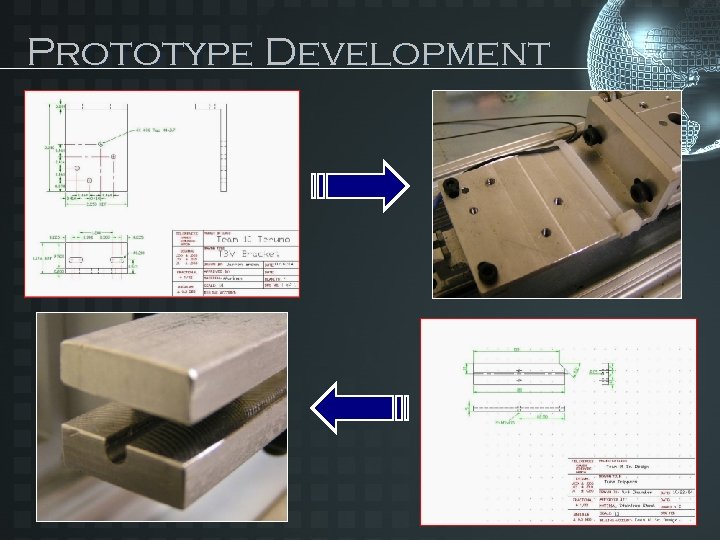
Prototype Development
Level of Automation Full Automation vs. Semi-Automation • High cost and intricacy of a fully automated system such as a robot would not be worth the minor advantages it offers over a semi-automated approach • With our semi-automated system, we can achieve ergonomic and productivity benefits at a much lower cost • Remaining non-automated tasks do not pose any risk to operator safety
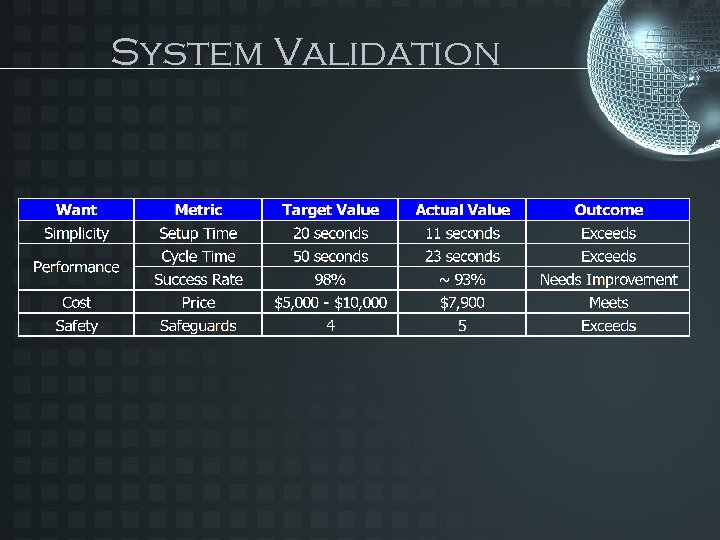
System Validation
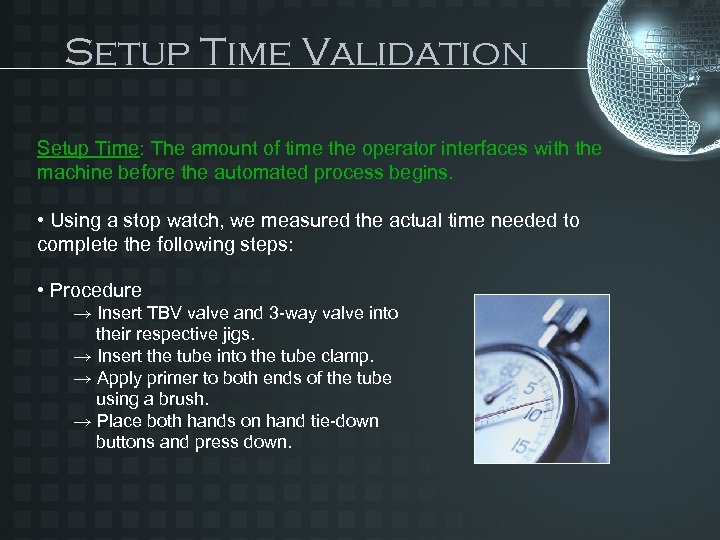
Setup Time Validation Setup Time: The amount of time the operator interfaces with the machine before the automated process begins. • Using a stop watch, we measured the actual time needed to complete the following steps: • Procedure → Insert TBV valve and 3 -way valve into their respective jigs. → Insert the tube into the tube clamp. → Apply primer to both ends of the tube using a brush. → Place both hands on hand tie-down buttons and press down.
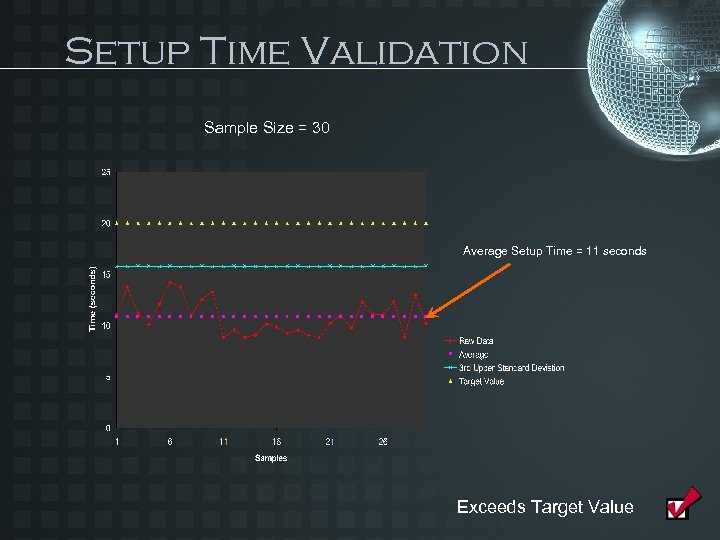
Setup Time Validation Sample Size = 30 Average Setup Time = 11 seconds Exceeds Target Value
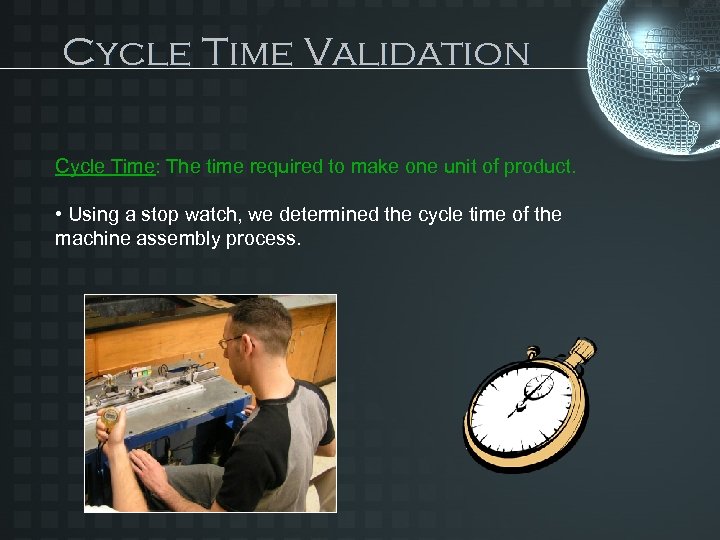
Cycle Time Validation Cycle Time: The time required to make one unit of product. • Using a stop watch, we determined the cycle time of the machine assembly process.
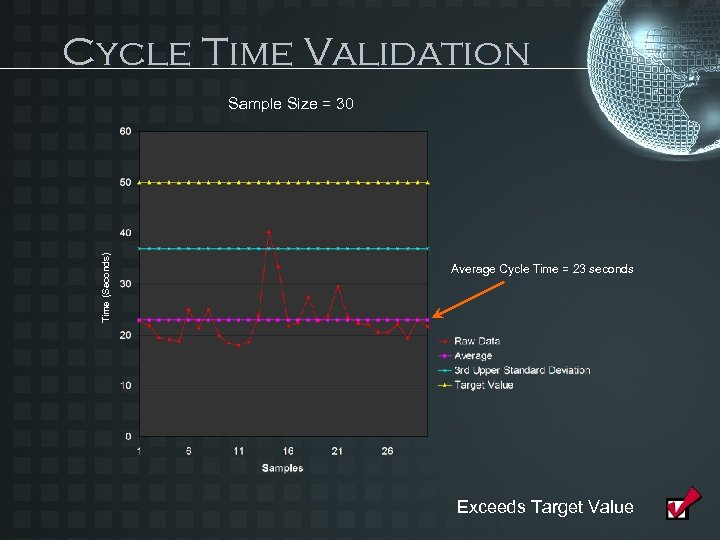
Cycle Time Validation Time (Seconds) Sample Size = 30 Average Cycle Time = 23 seconds Exceeds Target Value
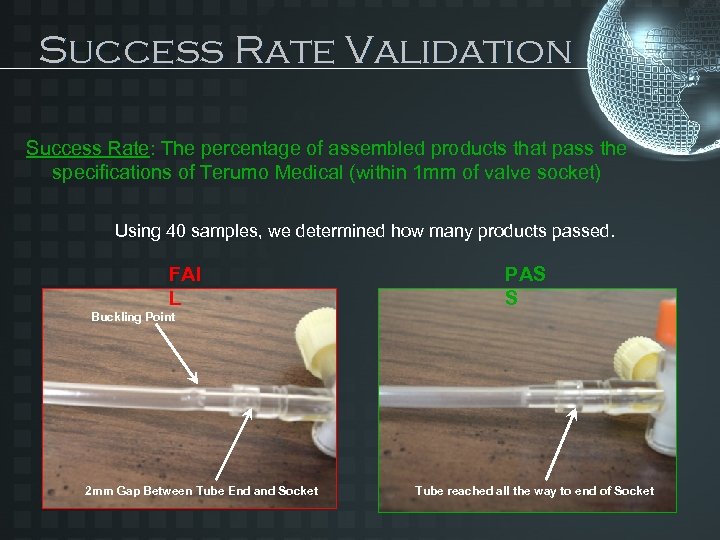
Success Rate Validation Success Rate: The percentage of assembled products that pass the specifications of Terumo Medical (within 1 mm of valve socket) Using 40 samples, we determined how many products passed. FAI L PAS S Buckling Point 2 mm Gap Between Tube End and Socket Tube reached all the way to end of Socket
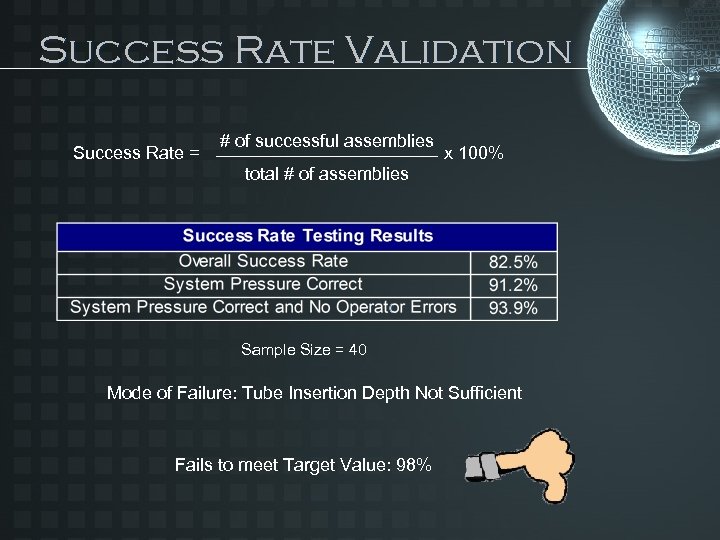
Success Rate Validation Success Rate = # of successful assemblies x 100% total # of assemblies Sample Size = 40 Mode of Failure: Tube Insertion Depth Not Sufficient Fails to meet Target Value: 98%
Price Validation Price: The amount of money it takes to build a production machine. • Final cost is calculated from the actual cost of the prototype in addition to the estimated costs of the hand-off components: → Glue Dispenser → Air Blow-Off
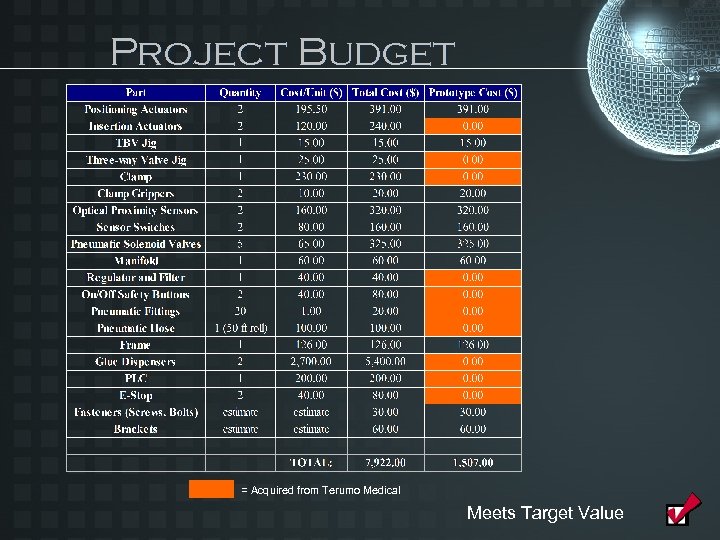
Project Budget = Acquired from Terumo Medical Meets Target Value
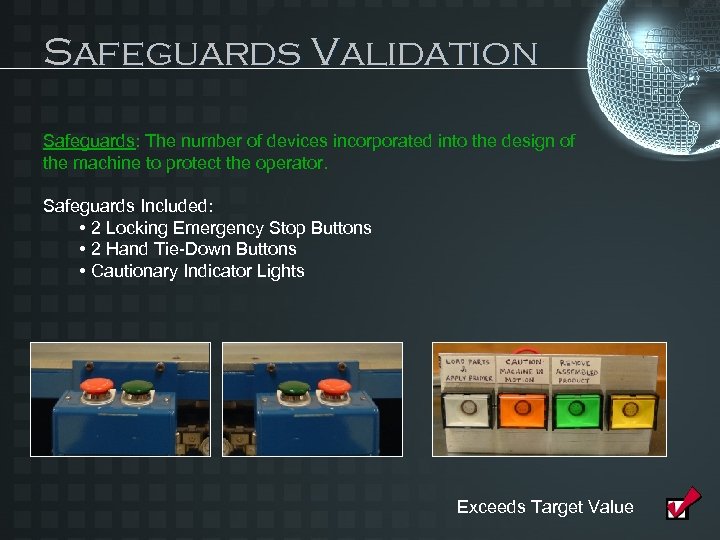
Safeguards Validation Safeguards: The number of devices incorporated into the design of the machine to protect the operator. Safeguards Included: • 2 Locking Emergency Stop Buttons • 2 Hand Tie-Down Buttons • Cautionary Indicator Lights Exceeds Target Value
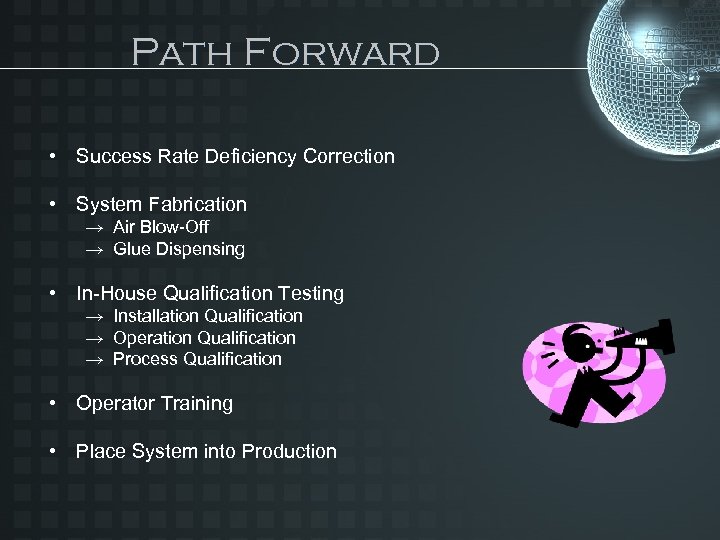
Path Forward • Success Rate Deficiency Correction • System Fabrication → Air Blow-Off → Glue Dispensing • In-House Qualification Testing → Installation Qualification → Operation Qualification → Process Qualification • Operator Training • Place System into Production
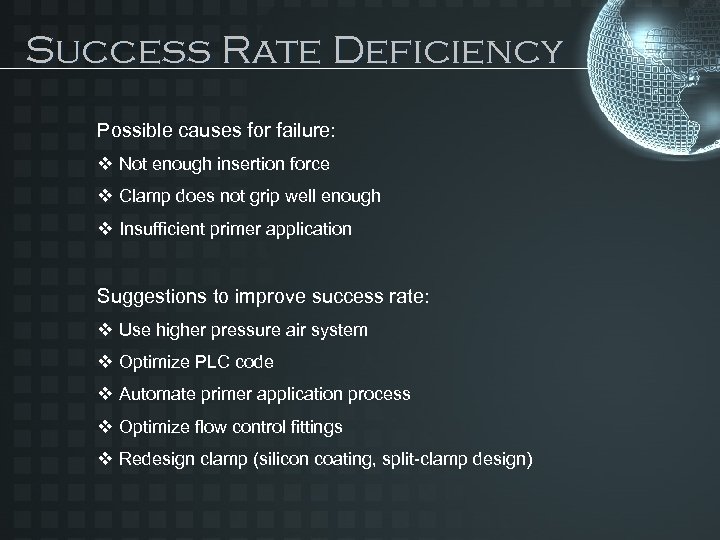
Success Rate Deficiency Possible causes for failure: v Not enough insertion force v Clamp does not grip well enough v Insufficient primer application Suggestions to improve success rate: v Use higher pressure air system v Optimize PLC code v Automate primer application process v Optimize flow control fittings v Redesign clamp (silicon coating, split-clamp design)
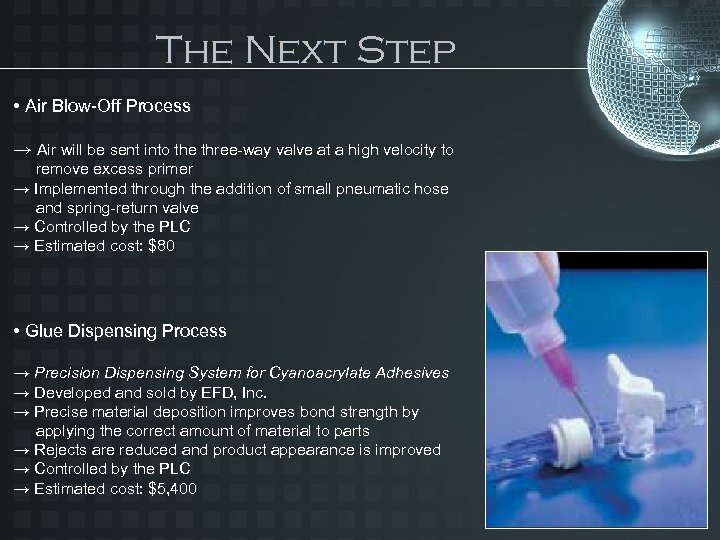
The Next Step • Air Blow-Off Process → Air will be sent into the three-way valve at a high velocity to remove excess primer → Implemented through the addition of small pneumatic hose and spring-return valve → Controlled by the PLC → Estimated cost: $80 • Glue Dispensing Process → Precision Dispensing System for Cyanoacrylate Adhesives → Developed and sold by EFD, Inc. → Precise material deposition improves bond strength by applying the correct amount of material to parts → Rejects are reduced and product appearance is improved → Controlled by the PLC → Estimated cost: $5, 400

Questions
Скачать презентацию Catheter Tube Assembly Process Team Members Darren Brown
e2e36a72ce52937d69f9489f4fe96f85.ppt