 Скачать презентацию Cases of ABO Typing Discrepancies Nicole Draper MD
5bad6e23e37cdec5315d7ededa037dfc.ppt
- Количество слайдов: 59



Cases of ABO Typing Discrepancies Nicole Draper, MD, FCAP, FASCP Assistant Professor, Department of Pathology, University of Colorado Assistant Medical Director, Transfusion Services, University of Colorado Hospital

• I have no financial disclosures.
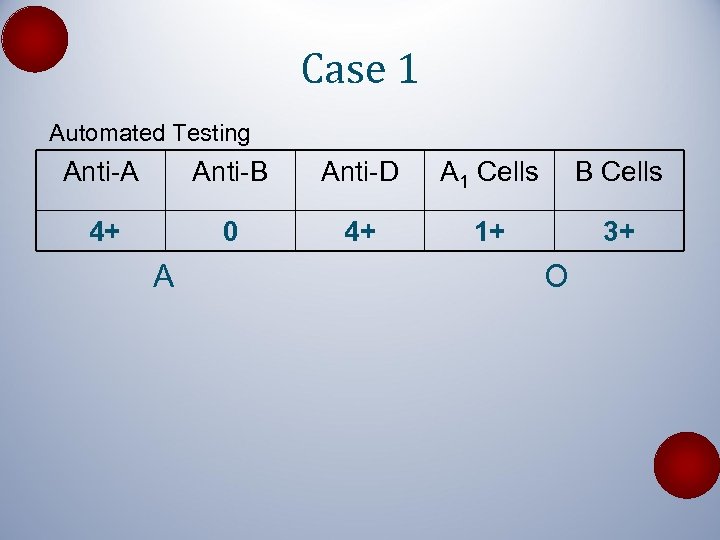
Case 1 Automated Testing Anti-A Anti-B Anti-D A 1 Cells B Cells 4+ 0 4+ 1+ 3+ A O
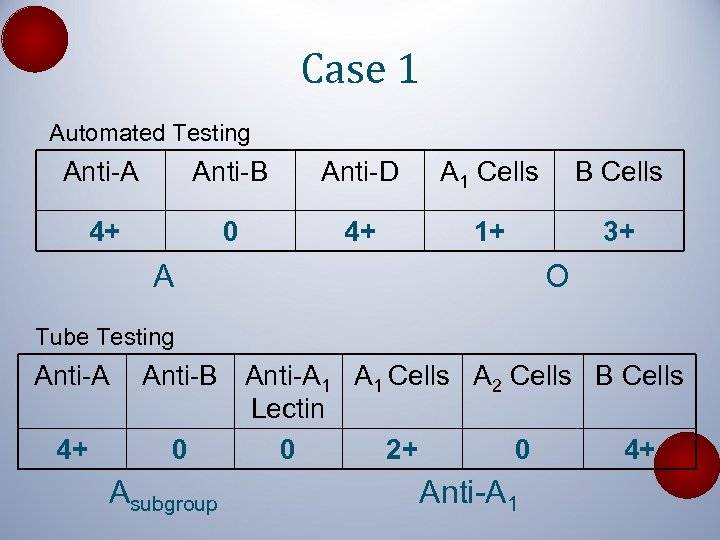
Case 1 Automated Testing Anti-A Anti-B Anti-D A 1 Cells B Cells 4+ 0 4+ 1+ 3+ A O Tube Testing Anti-A 4+ Anti-B Anti-A 1 Cells A 2 Cells B Cells Lectin 0 0 2+ 0 4+ Asubgroup Anti-A 1
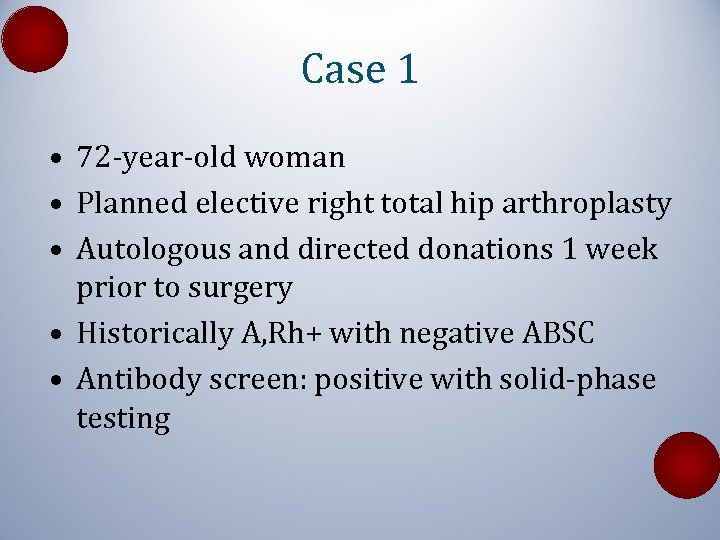
Case 1 • 72 -year-old woman • Planned elective right total hip arthroplasty • Autologous and directed donations 1 week prior to surgery • Historically A, Rh+ with negative ABSC • Antibody screen: positive with solid-phase testing
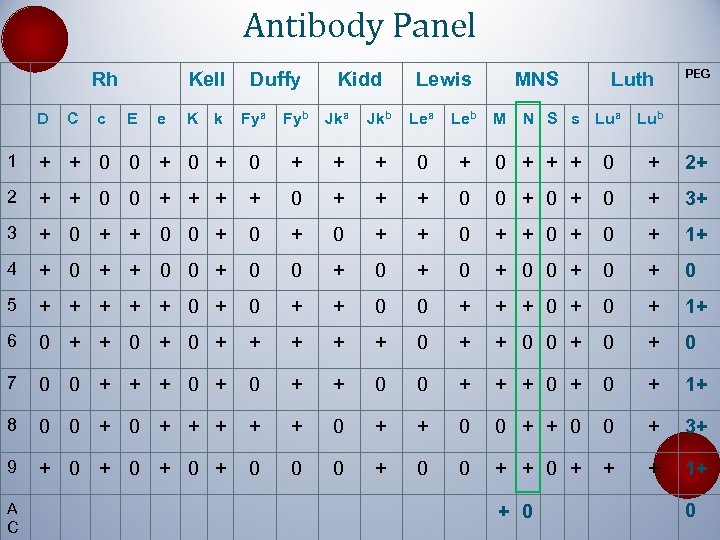
Antibody Panel Rh D C c Kell E e K k Duffy Kidd Lewis Fya Fyb Jka Jkb Lea Leb MNS M Luth N S s Lua PEG Lub 1 + + 0 0 + 0 + + + 0 + 2+ 2 + + 0 0 + + + 0 0 + 0 + 3+ 3 + 0 + + 0 0 + 0 + 1+ 4 + 0 + + 0 0 + 0 5 + + + 0 0 + + + 0 + 1+ 6 0 + + + 0 + + 0 0 + 0 7 0 0 + + + 0 0 + + + 0 + 1+ 8 0 0 + + + 0 0 + 3+ 9 + 0 + 0 0 0 + + + 1+ A C + 0 0
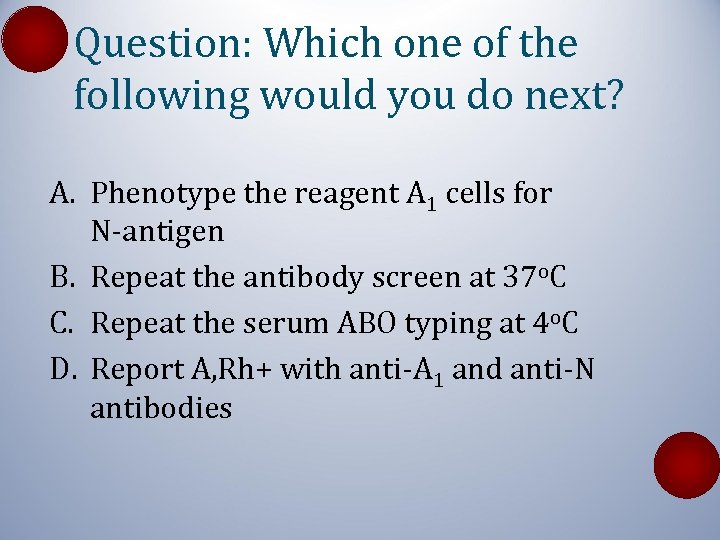
Question: Which one of the following would you do next? A. Phenotype the reagent A 1 cells for N-antigen B. Repeat the antibody screen at 37 o. C C. Repeat the serum ABO typing at 4 o. C D. Report A, Rh+ with anti-A 1 and anti-N antibodies
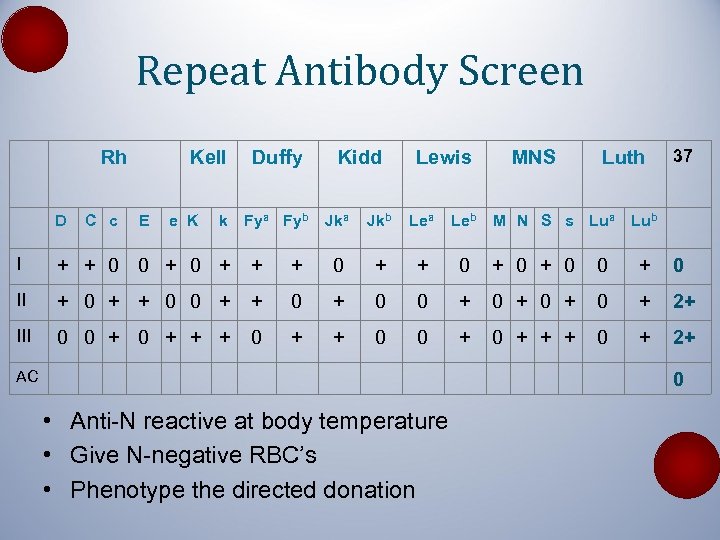
Repeat Antibody Screen Rh D C c Kell E e K k Duffy Fya Fyb Kidd Lewis Jka Jkb Lea Leb MNS Luth M N S s Lua 37 Lub I + + 0 0 + + + 0 + 0 II + 0 + 0 0 + 0 + 2+ III 0 0 + + + 0 + 2+ AC 0 • Anti-N reactive at body temperature • Give N-negative RBC’s • Phenotype the directed donation
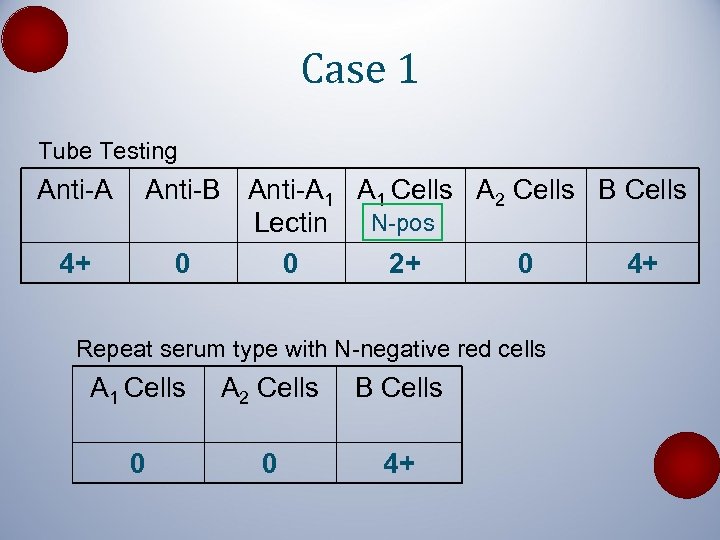
Case 1 Tube Testing Anti-A 4+ Anti-B Anti-A 1 Cells A 2 Cells B Cells N-pos Lectin 0 0 2+ 0 4+ Repeat serum type with N-negative red cells A 1 Cells A 2 Cells B Cells 0 0 4+
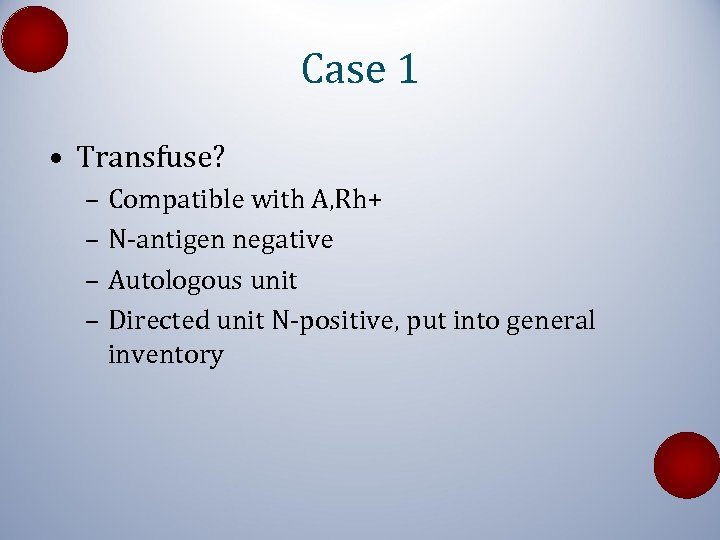
Case 1 • Transfuse? – Compatible with A, Rh+ – N-antigen negative – Autologous unit – Directed unit N-positive, put into general inventory
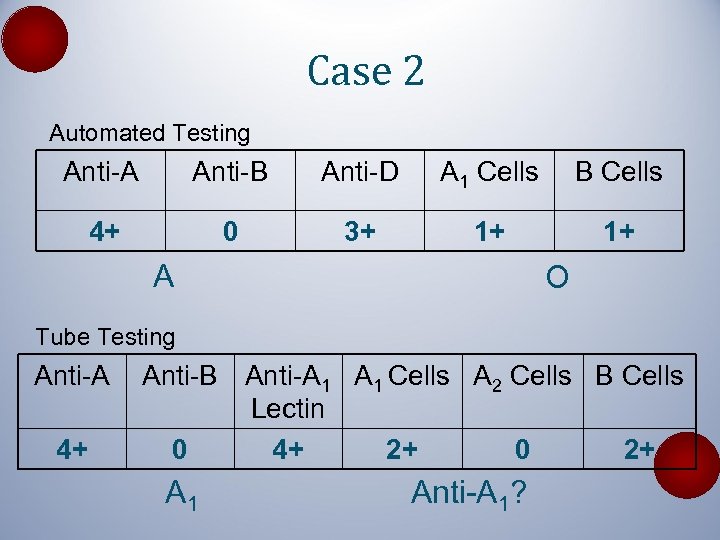
Case 2 Automated Testing Anti-A Anti-B Anti-D A 1 Cells B Cells 4+ 0 3+ 1+ 1+ A O Tube Testing Anti-A 4+ Anti-B Anti-A 1 Cells A 2 Cells B Cells Lectin 0 4+ 2+ 0 2+ A 1 Anti-A 1?
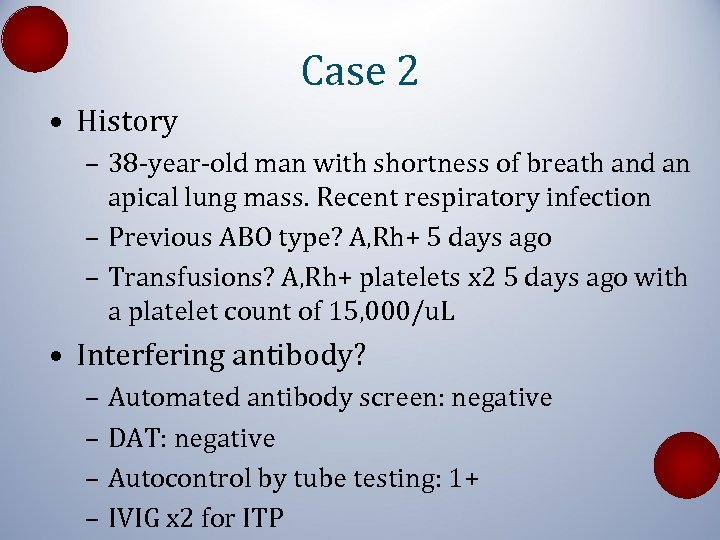
Case 2 • History – 38 -year-old man with shortness of breath and an apical lung mass. Recent respiratory infection – Previous ABO type? A, Rh+ 5 days ago – Transfusions? A, Rh+ platelets x 2 5 days ago with a platelet count of 15, 000/u. L • Interfering antibody? – Automated antibody screen: negative – DAT: negative – Autocontrol by tube testing: 1+ – IVIG x 2 for ITP
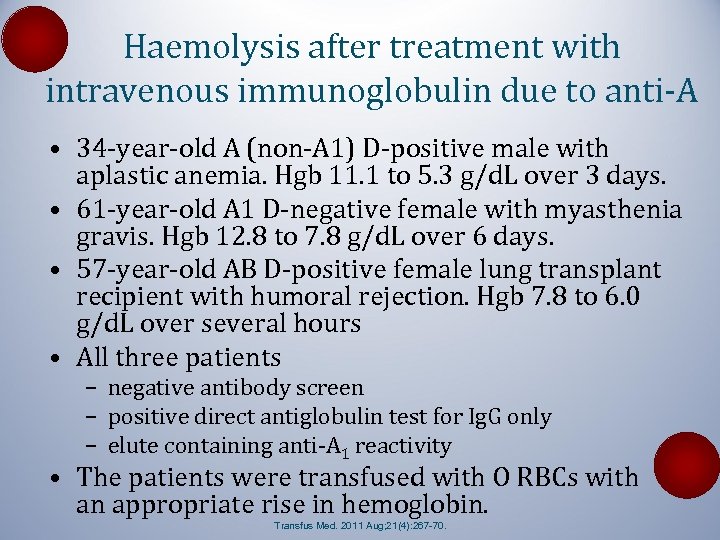
Haemolysis after treatment with intravenous immunoglobulin due to anti-A • 34 -year-old A (non-A 1) D-positive male with aplastic anemia. Hgb 11. 1 to 5. 3 g/d. L over 3 days. • 61 -year-old A 1 D-negative female with myasthenia gravis. Hgb 12. 8 to 7. 8 g/d. L over 6 days. • 57 -year-old AB D-positive female lung transplant recipient with humoral rejection. Hgb 7. 8 to 6. 0 g/d. L over several hours • All three patients – negative antibody screen – positive direct antiglobulin test for Ig. G only – elute containing anti-A 1 reactivity • The patients were transfused with O RBCs with an appropriate rise in hemoglobin. Transfus Med. 2011 Aug; 21(4): 267 -70.
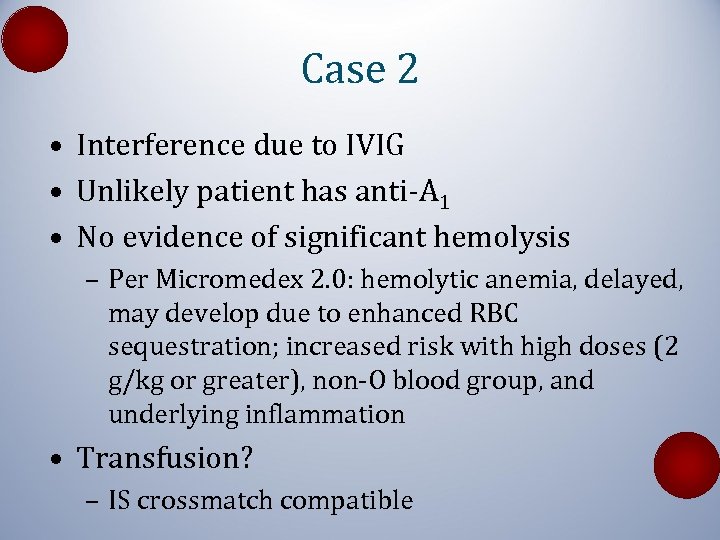
Case 2 • Interference due to IVIG • Unlikely patient has anti-A 1 • No evidence of significant hemolysis – Per Micromedex 2. 0: hemolytic anemia, delayed, may develop due to enhanced RBC sequestration; increased risk with high doses (2 g/kg or greater), non-O blood group, and underlying inflammation • Transfusion? – IS crossmatch compatible
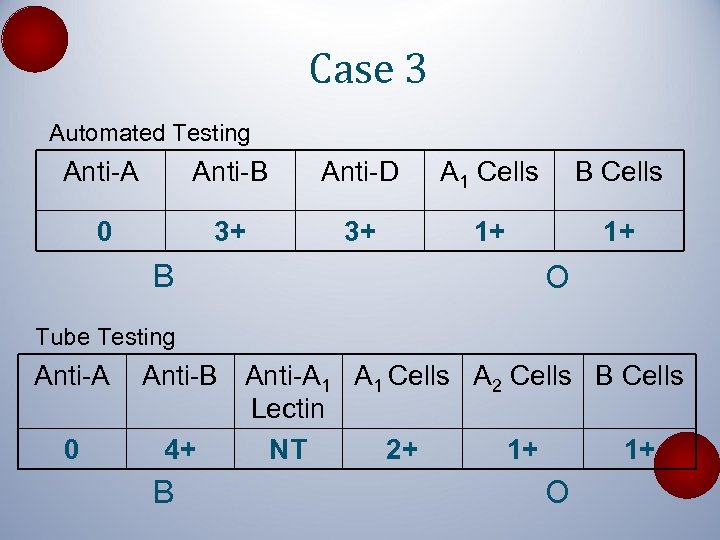
Case 3 Automated Testing Anti-A Anti-B Anti-D A 1 Cells B Cells 0 3+ 3+ 1+ 1+ B O Tube Testing Anti-A 0 Anti-B Anti-A 1 Cells A 2 Cells B Cells Lectin 4+ NT 2+ 1+ 1+ B O
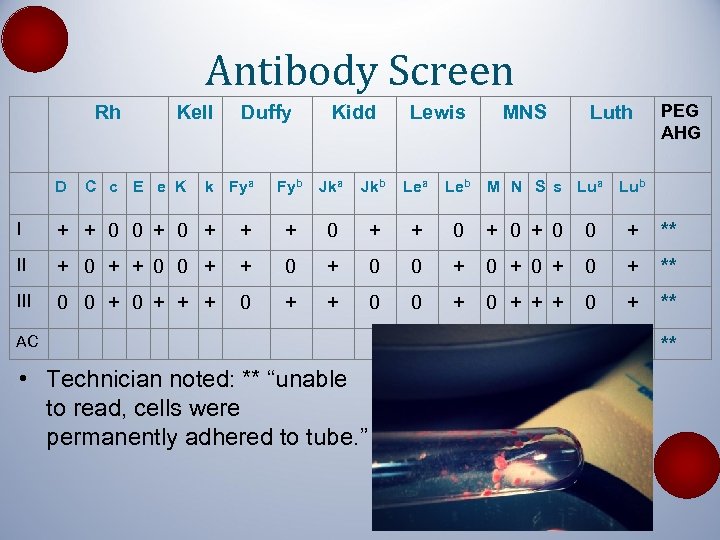
Antibody Screen Rh D Kell C c E e K Duffy k Fya Kidd Lewis Fyb Jka Jkb Lea Leb MNS Luth M N S s Lua PEG AHG Lub I + + 0 0 + + + 0 + 0 0 + ** II + 0 + 0 0 + 0 + ** III 0 0 + + + 0 + ** AC • Technician noted: ** “unable to read, cells were permanently adhered to tube. ” **
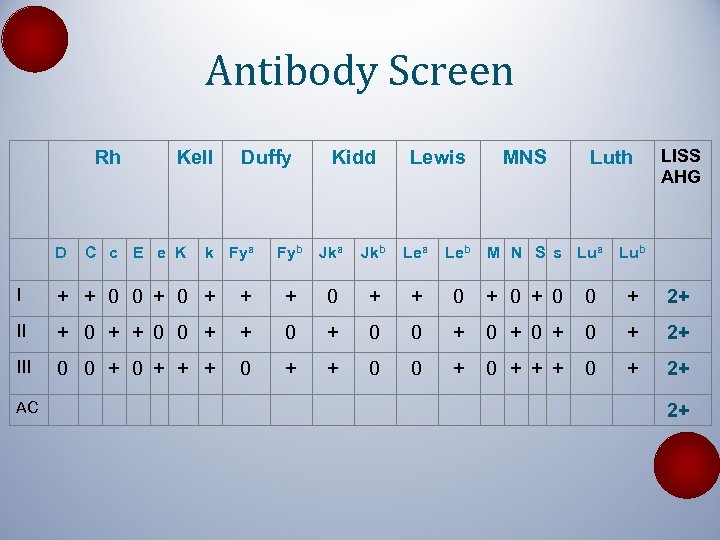
Antibody Screen Rh D Kell C c E e K Duffy k Fya Kidd Lewis Fyb Jka Jkb Lea Leb MNS Luth M N S s Lua LISS AHG Lub I + + 0 0 + + + 0 + 0 0 + 2+ II + 0 + 0 0 + 0 + 2+ III 0 0 + + + 0 + 2+ AC 2+
Question: Which one of the following would you do next? A. Determine the patient’s red cell phenotype B. Perform a saline replacement C. Repeat testing using prewarming technique D. Wash the reagent red cells
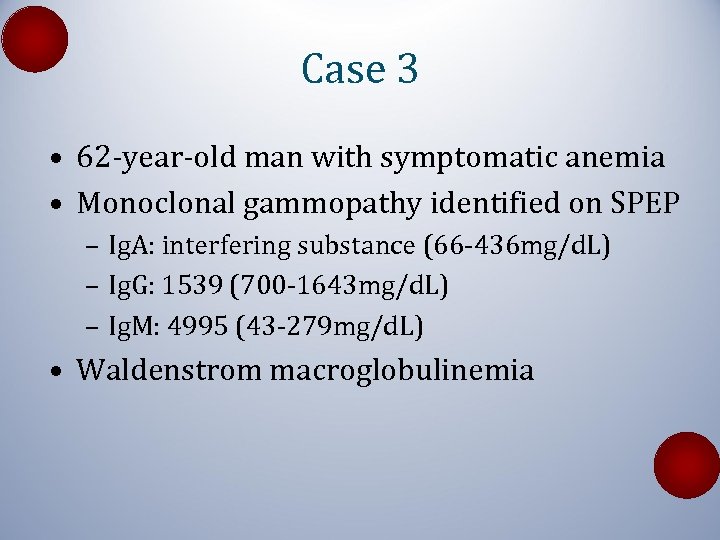
Case 3 • 62 -year-old man with symptomatic anemia • Monoclonal gammopathy identified on SPEP – Ig. A: interfering substance (66 -436 mg/d. L) – Ig. G: 1539 (700 -1643 mg/d. L) – Ig. M: 4995 (43 -279 mg/d. L) • Waldenstrom macroglobulinemia
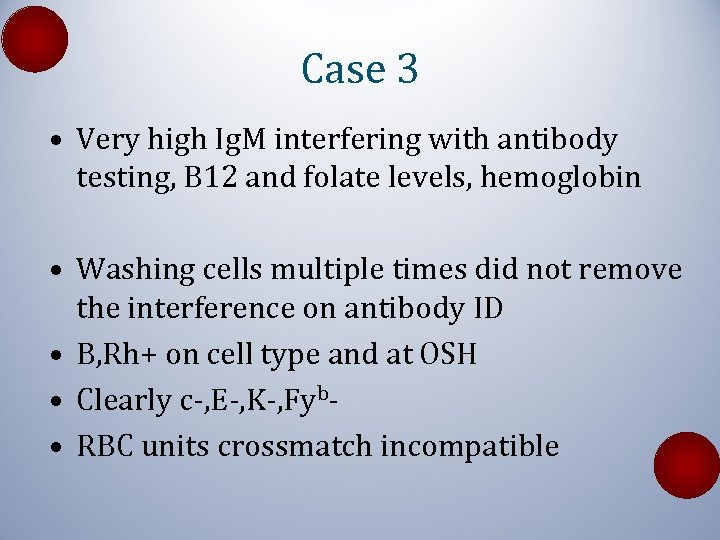
Case 3 • Very high Ig. M interfering with antibody testing, B 12 and folate levels, hemoglobin • Washing cells multiple times did not remove the interference on antibody ID • B, Rh+ on cell type and at OSH • Clearly c-, E-, K-, Fyb • RBC units crossmatch incompatible
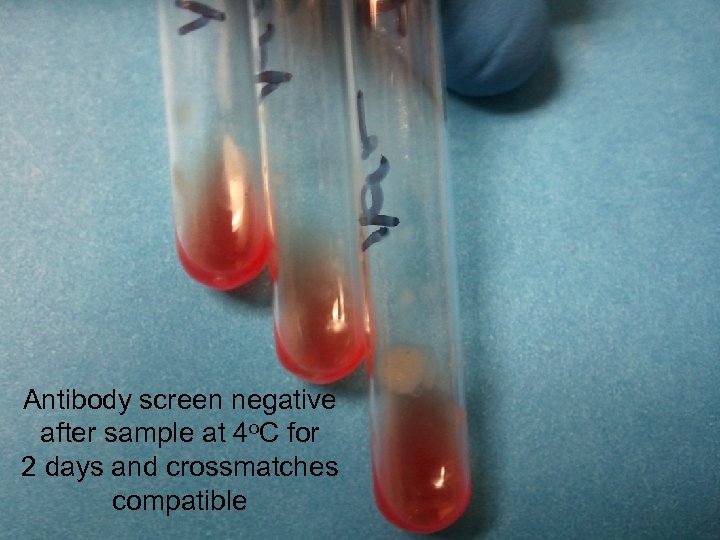
Case 3 Antibody screen negative after sample at 4 o. C for 2 days and crossmatches compatible
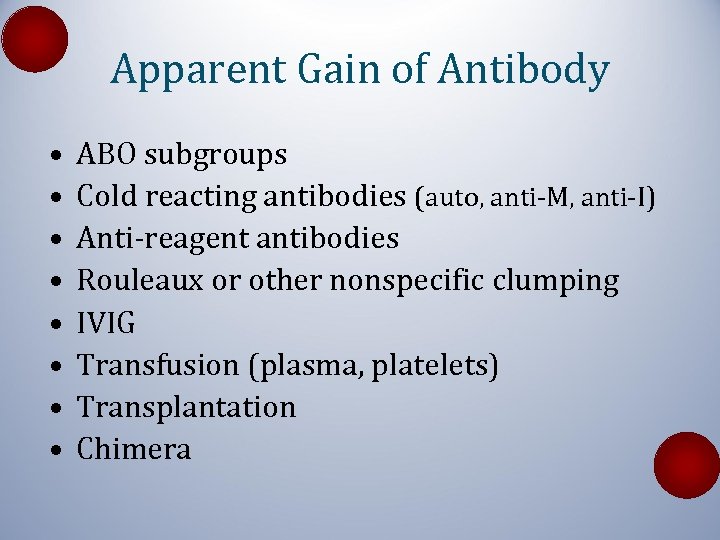
Apparent Gain of Antibody • • ABO subgroups Cold reacting antibodies (auto, anti-M, anti-I) Anti-reagent antibodies Rouleaux or other nonspecific clumping IVIG Transfusion (plasma, platelets) Transplantation Chimera
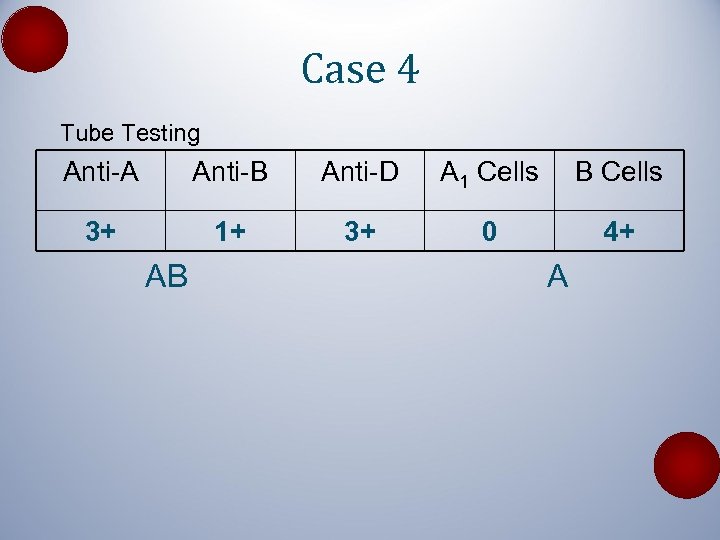
Case 4 Tube Testing Anti-A Anti-B Anti-D A 1 Cells B Cells 3+ 1+ 3+ 0 4+ AB A
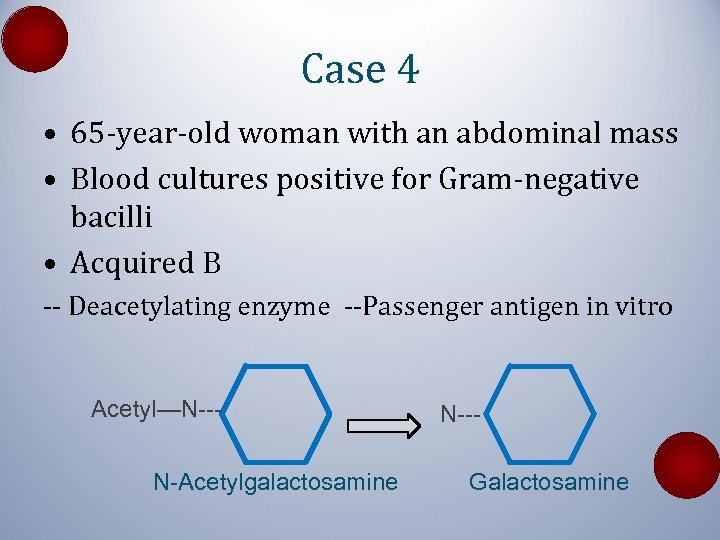
Case 4 • 65 -year-old woman with an abdominal mass • Blood cultures positive for Gram-negative bacilli • Acquired B -- Deacetylating enzyme --Passenger antigen in vitro Acetyl—N--N-Acetylgalactosamine N--Galactosamine
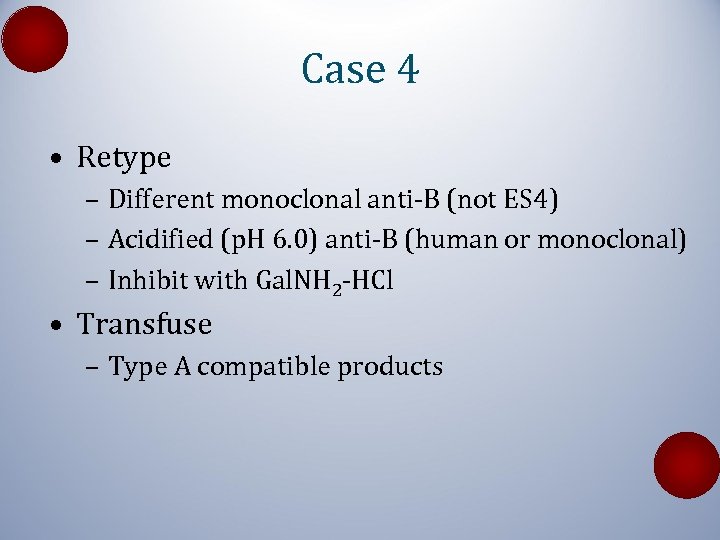
Case 4 • Retype – Different monoclonal anti-B (not ES 4) – Acidified (p. H 6. 0) anti-B (human or monoclonal) – Inhibit with Gal. NH 2 -HCl • Transfuse – Type A compatible products
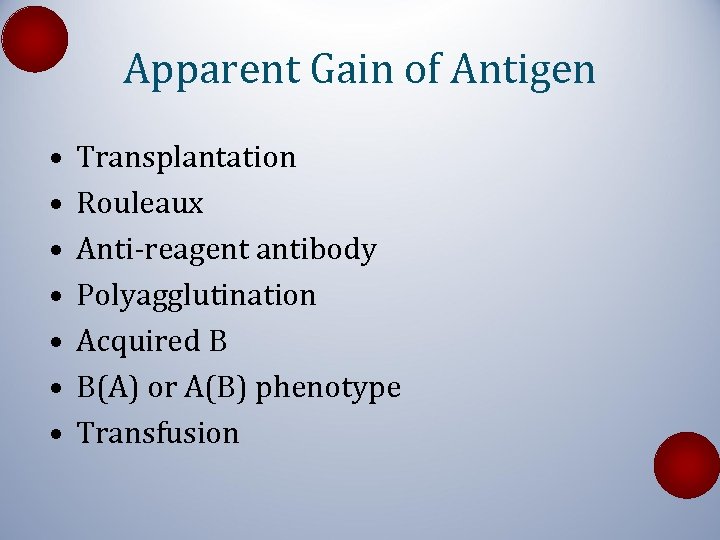
Apparent Gain of Antigen • • Transplantation Rouleaux Anti-reagent antibody Polyagglutination Acquired B B(A) or A(B) phenotype Transfusion
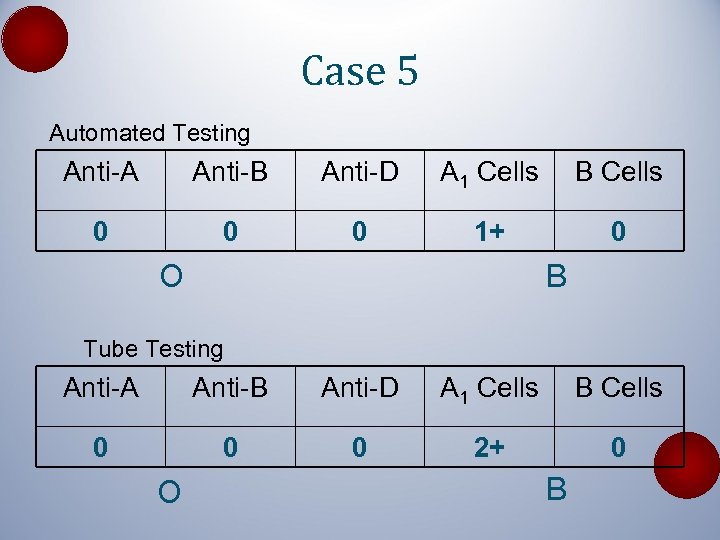
Case 5 Automated Testing Anti-A Anti-B Anti-D A 1 Cells B Cells 0 0 0 1+ 0 O B Tube Testing Anti-A Anti-B Anti-D A 1 Cells B Cells 0 0 0 2+ 0 O B
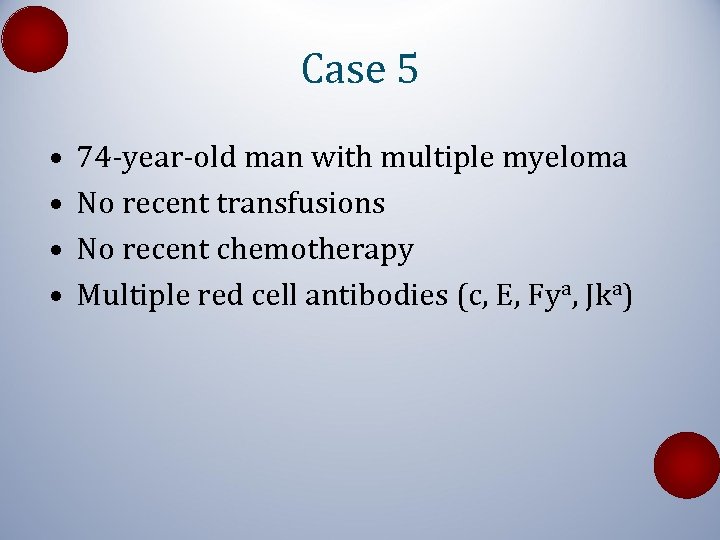
Case 5 • • 74 -year-old man with multiple myeloma No recent transfusions No recent chemotherapy Multiple red cell antibodies (c, E, Fya, Jka)
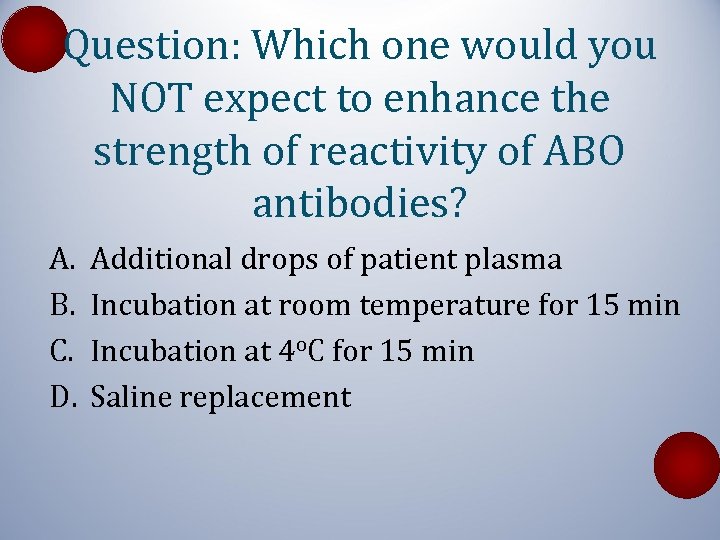
Question: Which one would you NOT expect to enhance the strength of reactivity of ABO antibodies? A. B. C. D. Additional drops of patient plasma Incubation at room temperature for 15 min Incubation at 4 o. C for 15 min Saline replacement
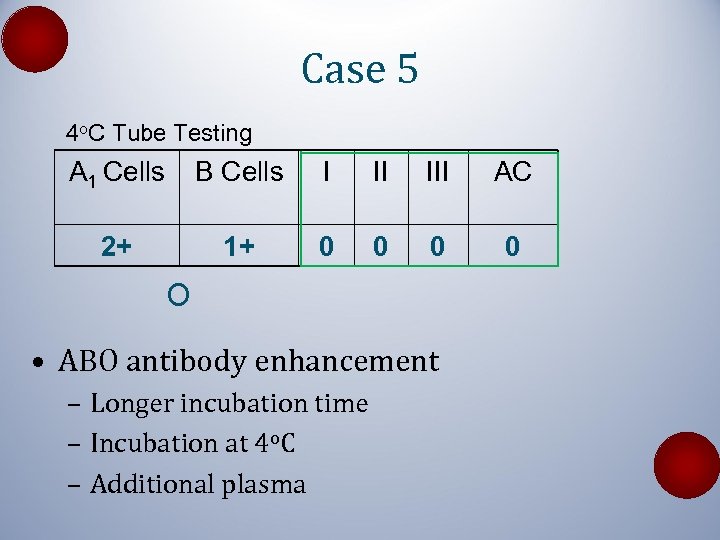
Case 5 4 o. C Tube Testing A 1 Cells B Cells I II III AC 2+ 1+ 0 0 O • ABO antibody enhancement – Longer incubation time – Incubation at 4 o. C – Additional plasma
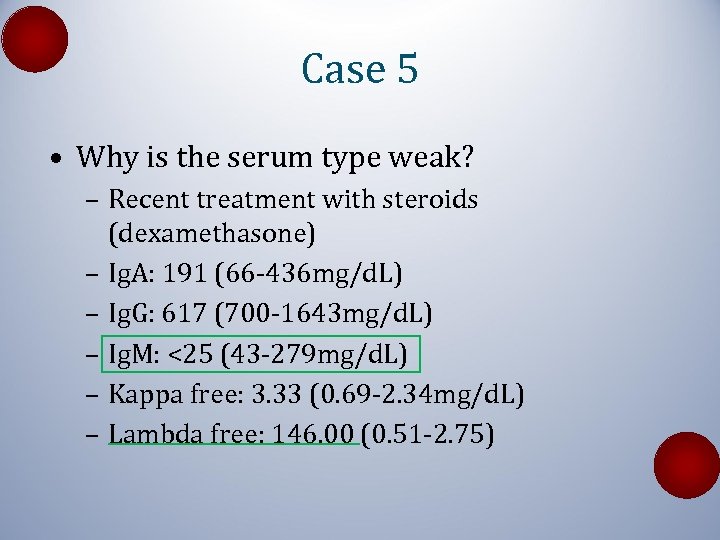
Case 5 • Why is the serum type weak? – Recent treatment with steroids (dexamethasone) – Ig. A: 191 (66 -436 mg/d. L) – Ig. G: 617 (700 -1643 mg/d. L) – Ig. M: <25 (43 -279 mg/d. L) – Kappa free: 3. 33 (0. 69 -2. 34 mg/d. L) – Lambda free: 146. 00 (0. 51 -2. 75)
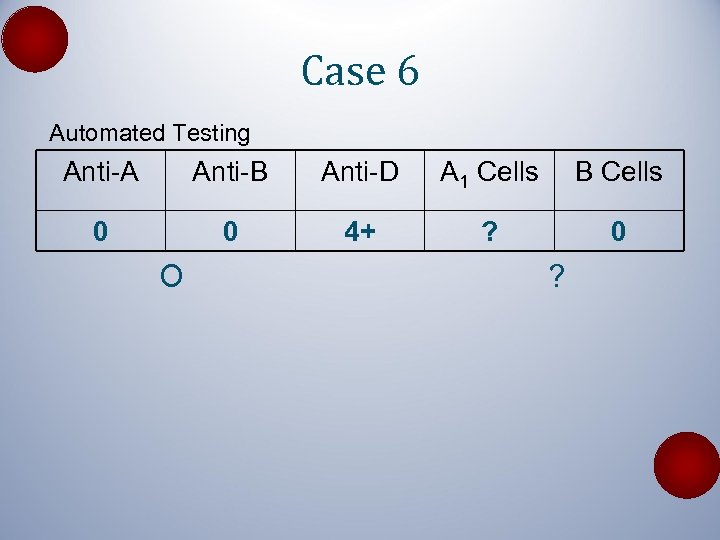
Case 6 Automated Testing Anti-A Anti-B Anti-D A 1 Cells B Cells 0 0 4+ ? 0 O ?
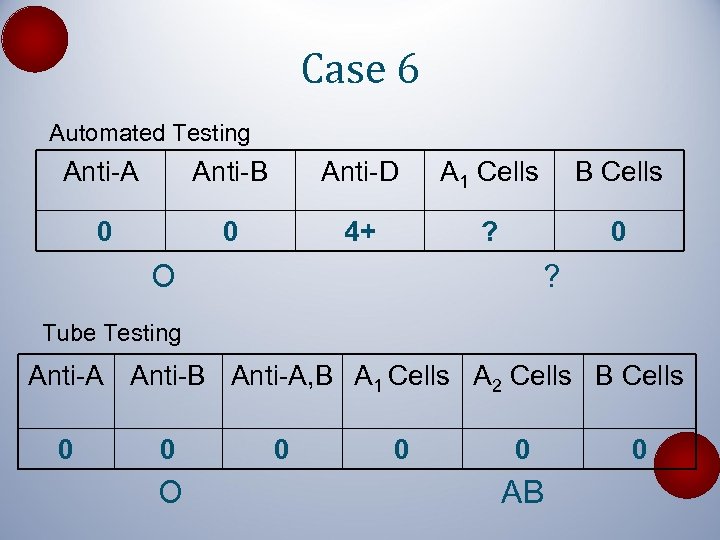
Case 6 Automated Testing Anti-A Anti-B Anti-D A 1 Cells B Cells 0 0 4+ ? 0 O ? Tube Testing Anti-A Anti-B Anti-A, B A 1 Cells A 2 Cells B Cells 0 0 O 0 0 0 AB 0
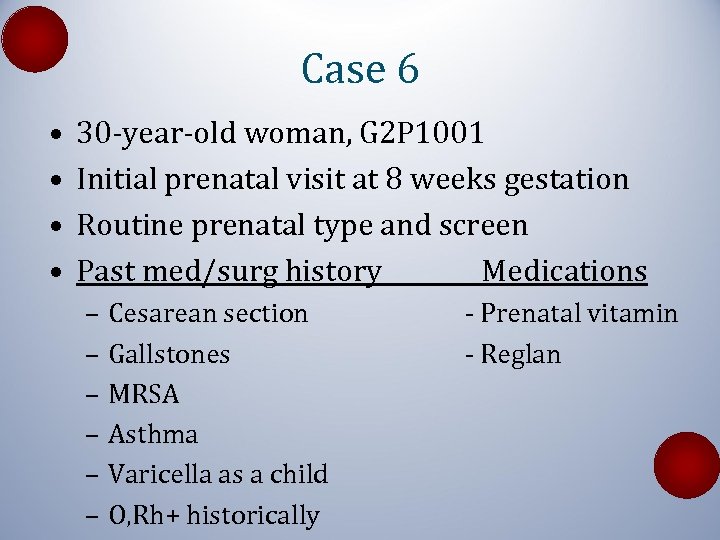
Case 6 • • 30 -year-old woman, G 2 P 1001 Initial prenatal visit at 8 weeks gestation Routine prenatal type and screen Past med/surg history Medications – Cesarean section – Gallstones – MRSA – Asthma – Varicella as a child – O, Rh+ historically - Prenatal vitamin - Reglan
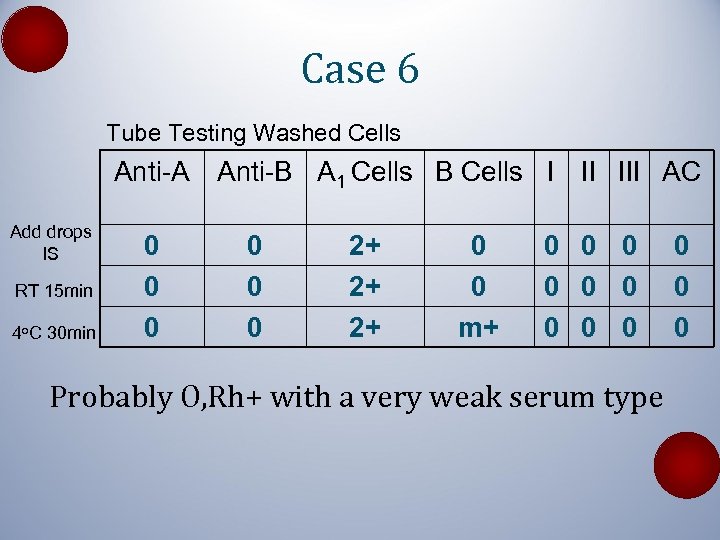
Case 6 Tube Testing Washed Cells Anti-A Anti-B A 1 Cells B Cells I II III AC Add drops IS RT 15 min 4 o. C 30 min 0 0 0 2+ 2+ 2+ 0 0 m+ 0 0 0 0 0 Probably O, Rh+ with a very weak serum type 0 0 0
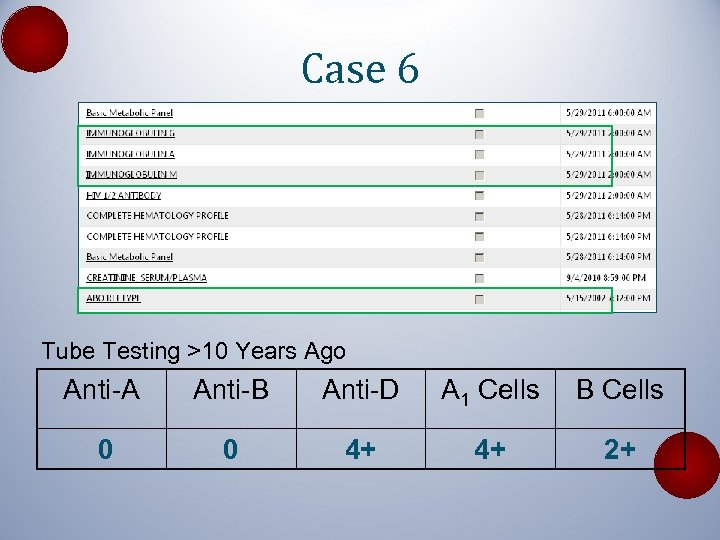
Case 6 Tube Testing >10 Years Ago Anti-A Anti-B Anti-D A 1 Cells B Cells 0 0 4+ 4+ 2+
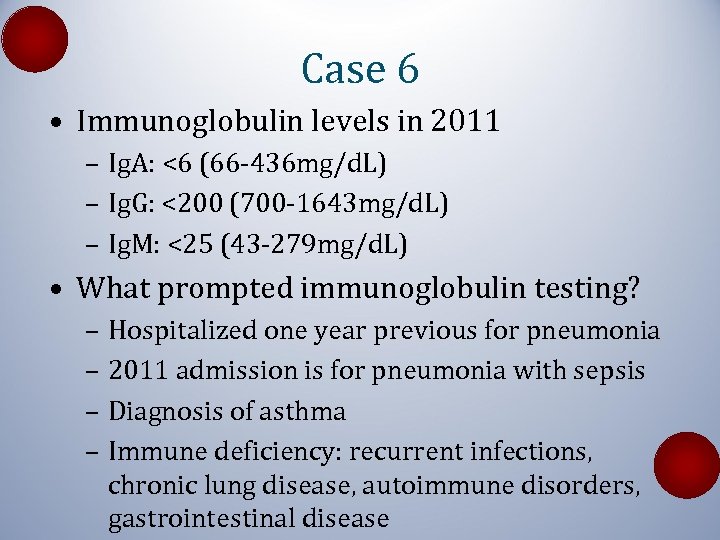
Case 6 • Immunoglobulin levels in 2011 – Ig. A: <6 (66 -436 mg/d. L) – Ig. G: <200 (700 -1643 mg/d. L) – Ig. M: <25 (43 -279 mg/d. L) • What prompted immunoglobulin testing? – Hospitalized one year previous for pneumonia – 2011 admission is for pneumonia with sepsis – Diagnosis of asthma – Immune deficiency: recurrent infections, chronic lung disease, autoimmune disorders, gastrointestinal disease
Case 6 • DISCHARGE DIAGNOSES: – Severe sepsis. – Community-acquired pneumonia. – Acute kidney injury – Anemia – Asthma – Common variable immunodeficiency (impaired B cell differentiation with defective immunoglobulin production), but could be due to systemic illness causing bone marrow suppression
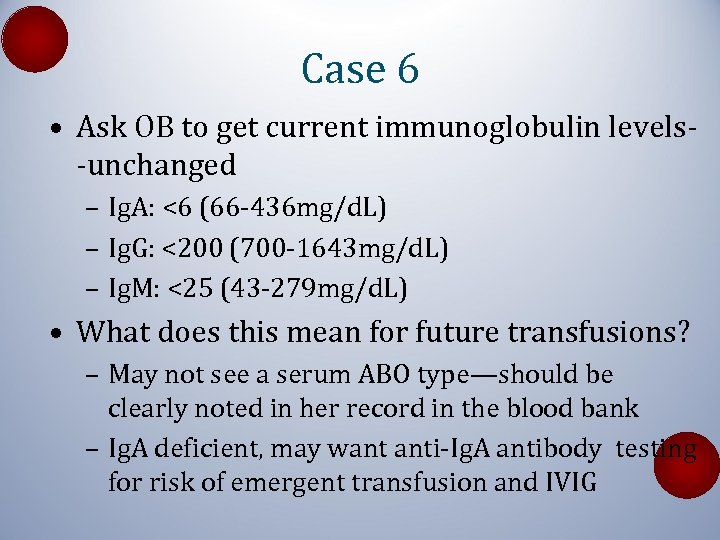
Case 6 • Ask OB to get current immunoglobulin levels-unchanged – Ig. A: <6 (66 -436 mg/d. L) – Ig. G: <200 (700 -1643 mg/d. L) – Ig. M: <25 (43 -279 mg/d. L) • What does this mean for future transfusions? – May not see a serum ABO type—should be clearly noted in her record in the blood bank – Ig. A deficient, may want anti-Ig. A antibody testing for risk of emergent transfusion and IVIG
Apparent Loss of Antibody • • Neonate Immunosuppressed Immunodeficient Leukemia/lymphoma/myeloma ABO subgroup Transfusion (plasma, platelets) Transplantation
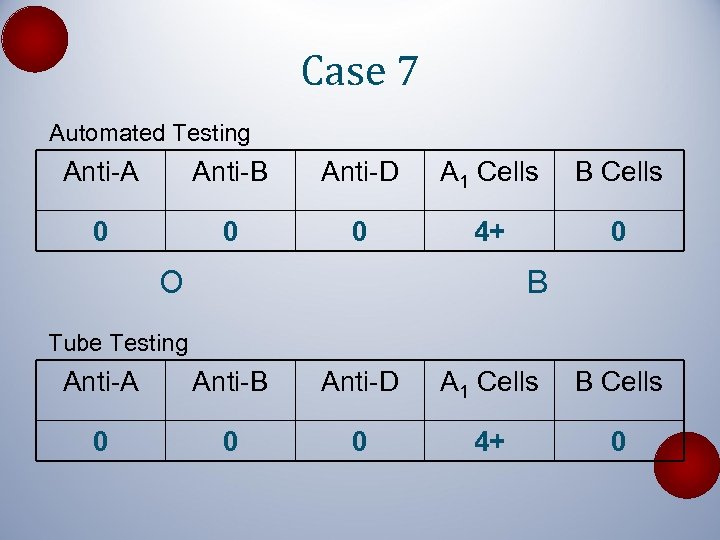
Case 7 Automated Testing Anti-A Anti-B Anti-D A 1 Cells B Cells 0 0 0 4+ 0 O B Tube Testing Anti-A Anti-B Anti-D A 1 Cells B Cells 0 0 0 4+ 0
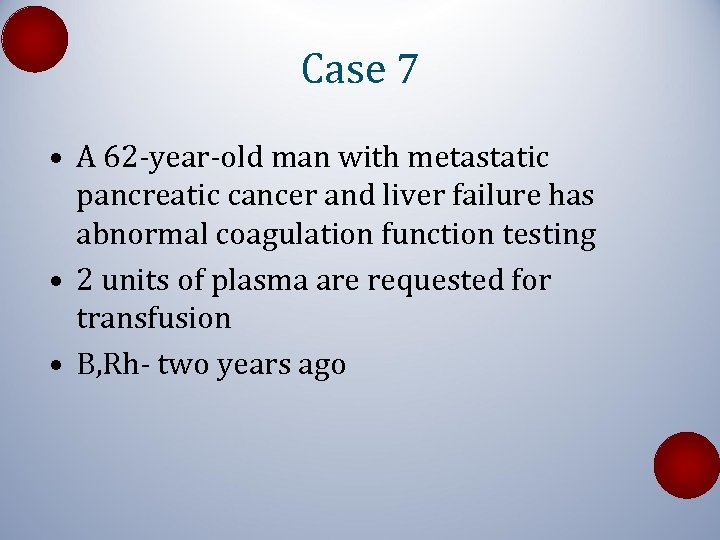
Case 7 • A 62 -year-old man with metastatic pancreatic cancer and liver failure has abnormal coagulation function testing • 2 units of plasma are requested for transfusion • B, Rh- two years ago
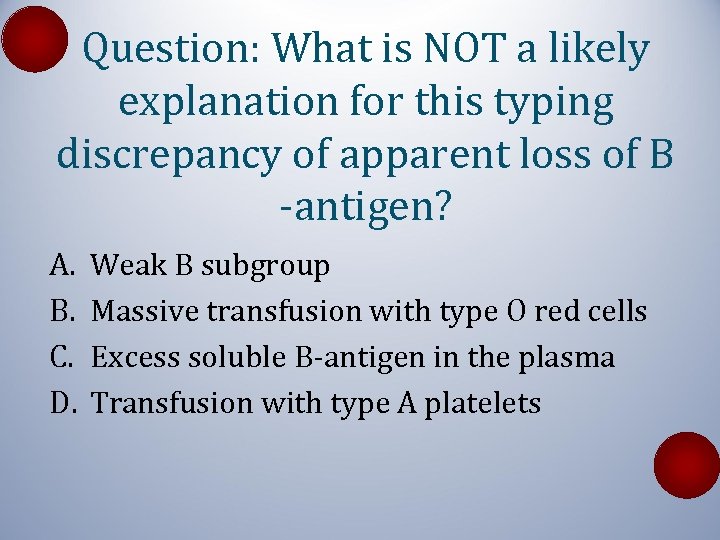
Question: What is NOT a likely explanation for this typing discrepancy of apparent loss of B -antigen? A. B. C. D. Weak B subgroup Massive transfusion with type O red cells Excess soluble B-antigen in the plasma Transfusion with type A platelets
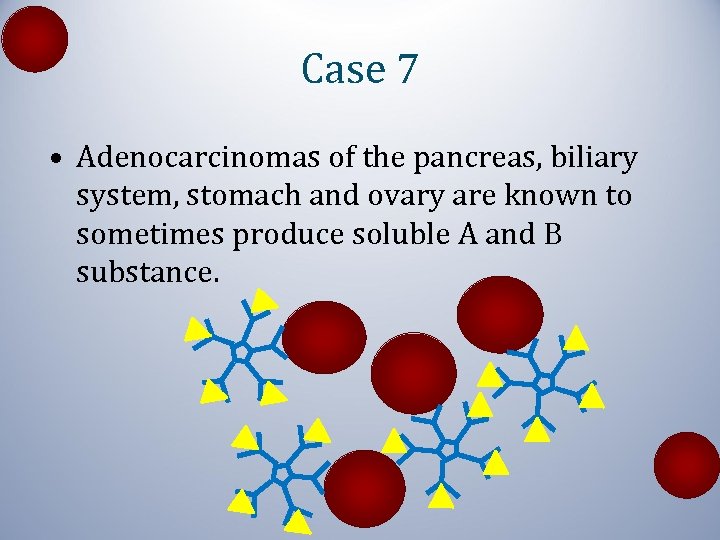
Case 7 • Adenocarcinomas of the pancreas, biliary system, stomach and ovary are known to sometimes produce soluble A and B substance.
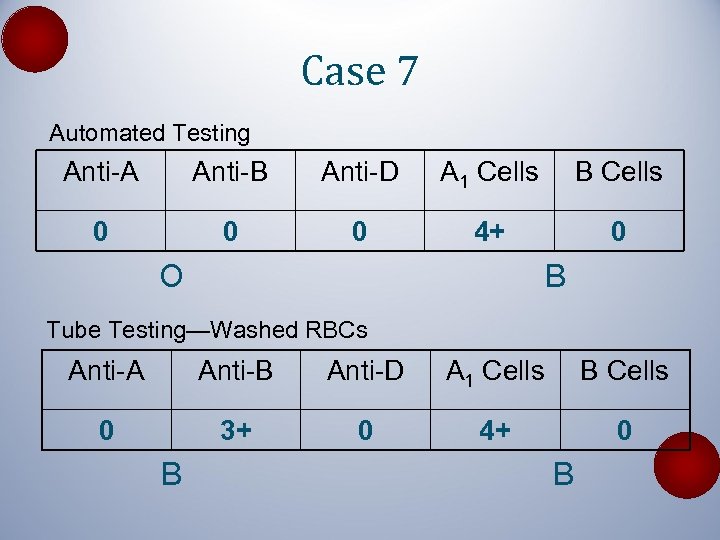
Case 7 Automated Testing Anti-A Anti-B Anti-D A 1 Cells B Cells 0 0 0 4+ 0 O B Tube Testing—Washed RBCs Anti-A Anti-B Anti-D A 1 Cells B Cells 0 3+ 0 4+ 0 B B
Apparent Loss of Antigen • • Transplantation Massive transfusion A or B subgroups Leukemia/lymphoma Red cell aplasia Excessive soluble blood group substance Chimera
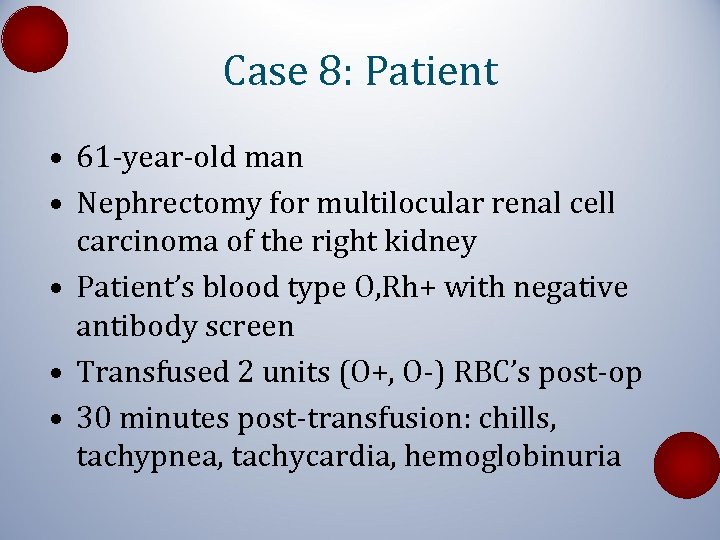
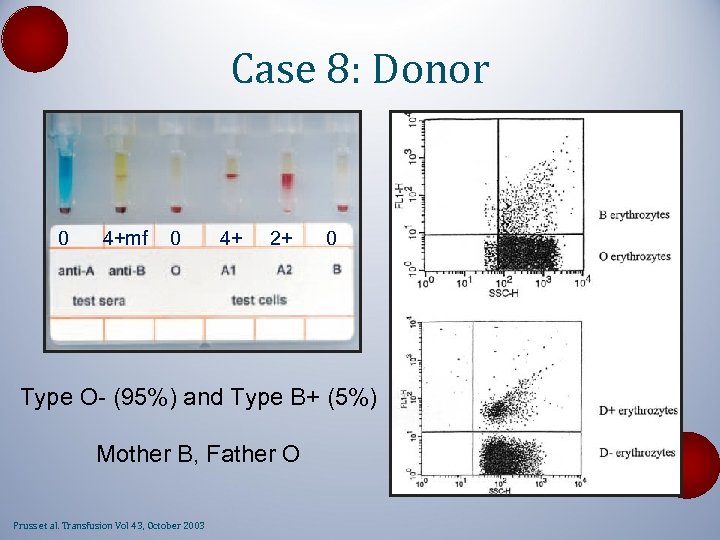
Case 8: Patient • 61 -year-old man • Nephrectomy for multilocular renal cell carcinoma of the right kidney • Patient’s blood type O, Rh+ with negative antibody screen • Transfused 2 units (O+, O-) RBC’s post-op • 30 minutes post-transfusion: chills, tachypnea, tachycardia, hemoglobinuria
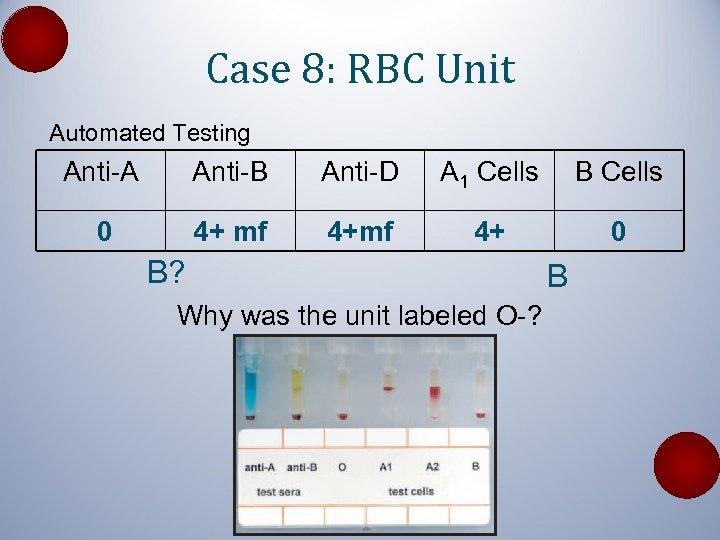
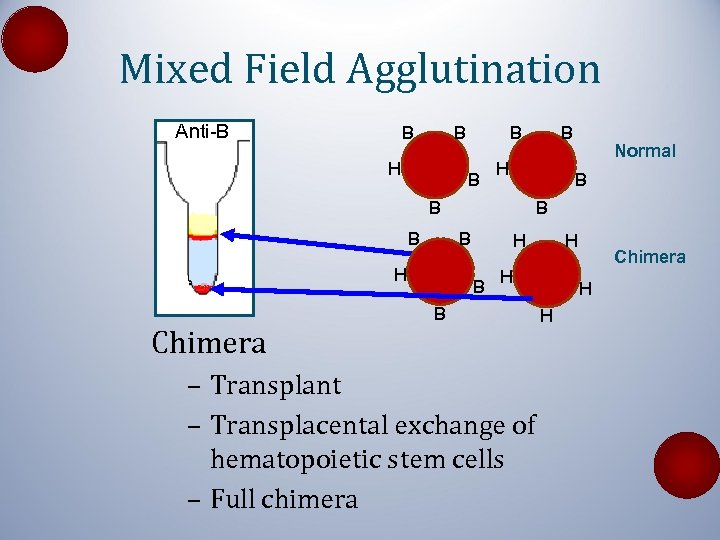
Case 8: RBC Unit Automated Testing Anti-A Anti-B Anti-D A 1 Cells B Cells 0 4+ mf 4+ 0 B? Why was the unit labeled O-? B
Case 8: Donor • 24 -year-old man • Transfusion/Transplantation? No • Donor has a twin sister
Case 8: Donor 0 4+mf 0 4+ 2+ 0 Type O- (95%) and Type B+ (5%) Mother B, Father O Pruss et al. Transfusion Vol 43, October 2003
Mixed Field Agglutination Anti-B B B H Chimera B B H Normal B B H B H H B – Transplant – Transplacental exchange of hematopoietic stem cells – Full chimera Chimera H H
Case 8 • Donation? – RBC type cannot be type confirmed by another institution discarded – Platelets? – Plasma? • Transfusion? – Has anti-A
Case 9 Automated Testing Anti-A Anti-B Anti-D A 1 Cells B Cells 3+ mf 0 3+ 1+ 4+ A? O Tube Testing Anti-A 4+ mf Anti-B Anti-A 1 Cells A 2 Cells B Cells Lectin 0 3+ mf 1+ 1+ 4+
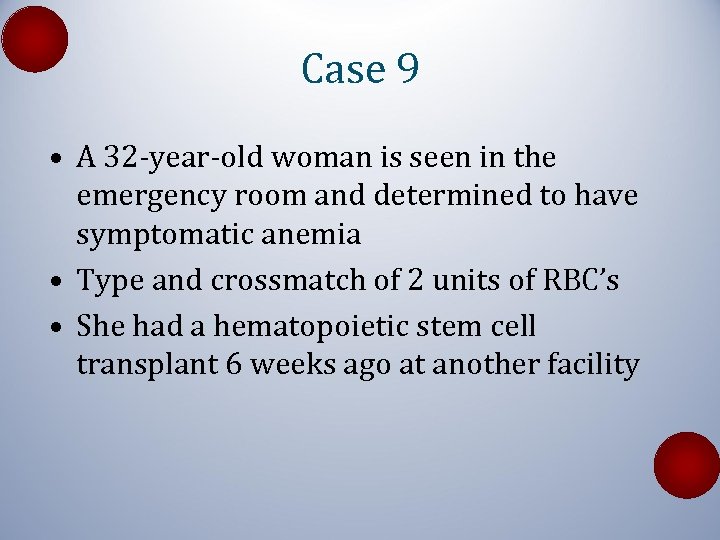
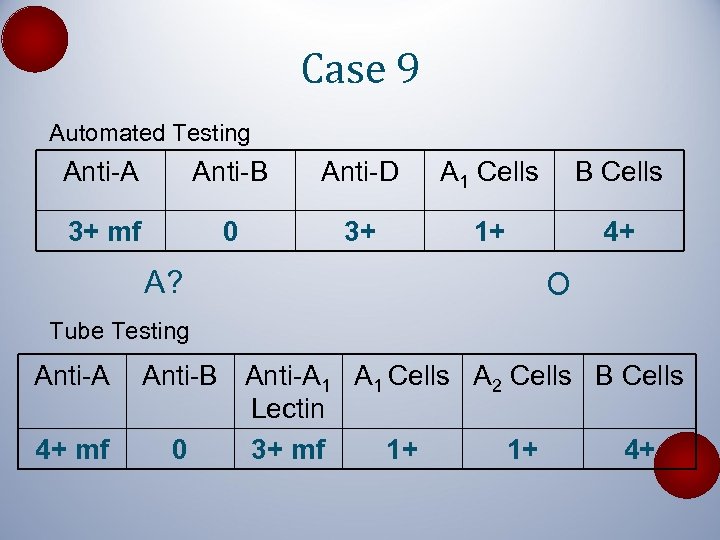
Case 9 • A 32 -year-old woman is seen in the emergency room and determined to have symptomatic anemia • Type and crossmatch of 2 units of RBC’s • She had a hematopoietic stem cell transplant 6 weeks ago at another facility
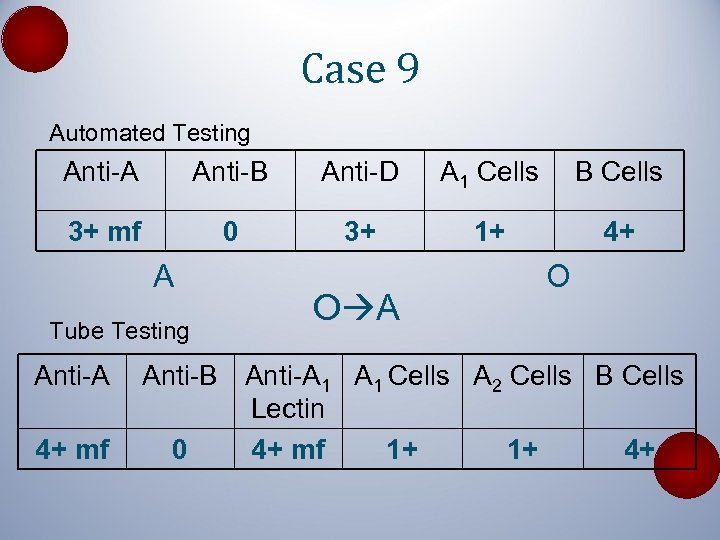
Case 9 Automated Testing Anti-A Anti-B Anti-D A 1 Cells B Cells 3+ mf 0 3+ 1+ 4+ A Tube Testing Anti-A 4+ mf O Anti-B Anti-A 1 Cells A 2 Cells B Cells Lectin 0 4+ mf 1+ 1+ 4+
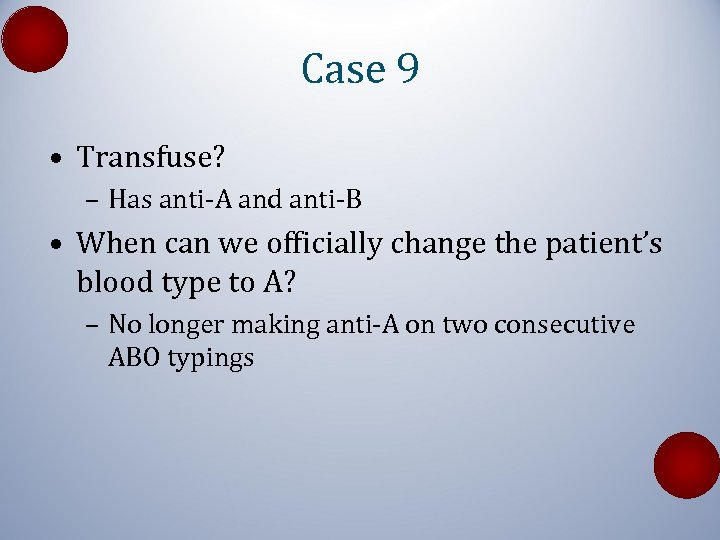
Case 9 • Transfuse? – Has anti-A and anti-B • When can we officially change the patient’s blood type to A? – No longer making anti-A on two consecutive ABO typings
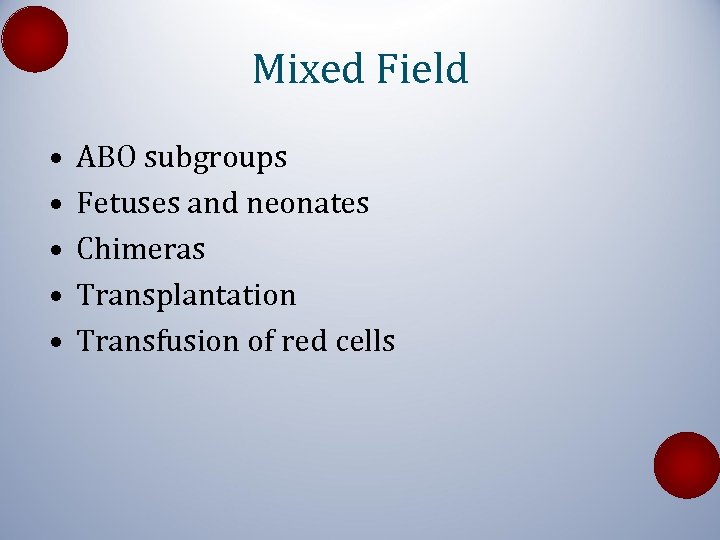
Mixed Field • • • ABO subgroups Fetuses and neonates Chimeras Transplantation Transfusion of red cells
Summary • ABO antibodies are expected • The weaker reactions are typically the aberrant reactions • History is very important in resolving these discrepancies • Until an ABO discrepancy is resolved O RBC’s and AB plasma should be issued
General References • AABB Technical Manual, Seventeenth Edition • Immucor Gamma package inserts: reagent red blood cells, blood grouping reagent, anti-A 1 lectin • Issitt. Applied Blood Group Serology, Third Edition • Judd’s Methods in Immunohematology, Third Edition
Скачать презентацию Cases of ABO Typing Discrepancies Nicole Draper MD
5bad6e23e37cdec5315d7ededa037dfc.ppt