


 Скачать презентацию Case Study UV Disinfection Interference From Industry MWEA
3e7ee1d8129ebdce9c0bc92a3ad65744.ppt
- Количество слайдов: 25
 Case Study UV Disinfection Interference From Industry MWEA Industrial Pretreatment Seminar October 24, 2007 engineers scientists architects constructors Jack D. Fraser City of Big Rapids Jerald O. Thaler, P. E. Fishbeck, Thompson, Carr & Huber, Inc.
 AGENDA • The UV Interference Mystery • Transmittance Local Limit Development • Summary • Questions engineers scientists architects constructors
 The UV Interference Mystery engineers scientists architects constructors
 Background • In 2002, Nestle Waters North America opened a major pumping and bottling facility in Stanwood, Michigan. • Facility has 145 employees, 80% live within 30 miles. • Produces Ice Mountain® bottled water and Pure Life ® (“Splash”) fruit-flavored water. • Wastes originally trucked to Grand Rapids area.
 2003 - 2004 • WWTP operational problems with aging UV disinfection system. – Periodic fecal coliform violations. – Preliminary engineering began for a new system. • City received inquiries about accepting “clean” process wastes from Stanwood facility. – Previous policy - not to accept hauled waste. – Expected monthly revenue to City - up to $25, 000.
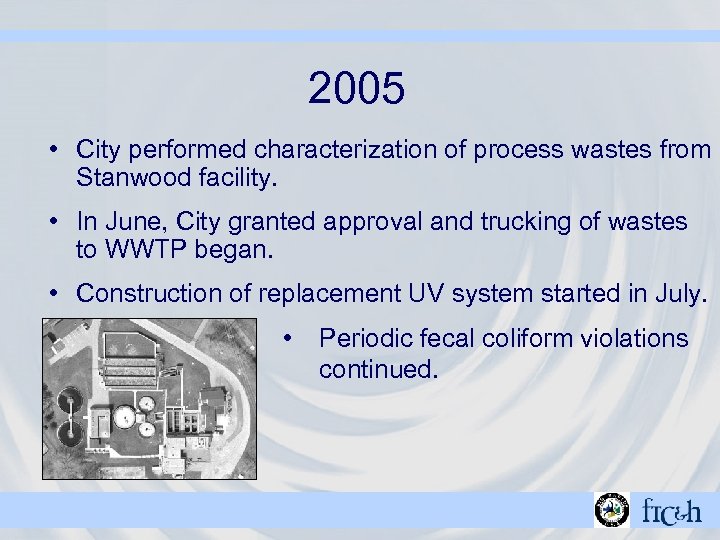 2005 • City performed characterization of process wastes from Stanwood facility. • In June, City granted approval and trucking of wastes to WWTP began. • Construction of replacement UV system started in July. • Periodic fecal coliform violations continued.
 2006 • Fecal coliform violations continued, even after startup of new UV system. • MDEQ initiated formal enforcement action. • Aggressive investigations into cause: – Transmittance testing of effluent and each truckload. – Operators noted color/odor changes in trucked waste and at WWTP headworks. – Evaluation of Stanwood facility raw materials by Mr. Michael Goergen of Merit Laboratories, Inc.
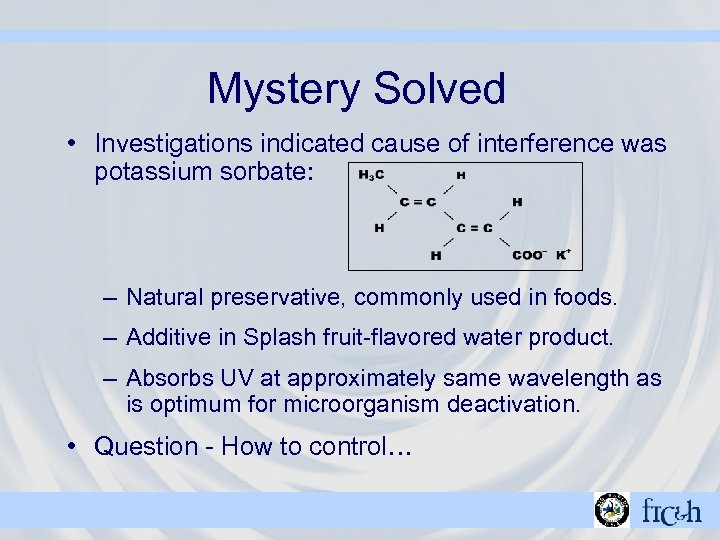 Mystery Solved • Investigations indicated cause of interference was potassium sorbate: – Natural preservative, commonly used in foods. – Additive in Splash fruit-flavored water product. – Absorbs UV at approximately same wavelength as is optimum for microorganism deactivation. • Question - How to control…
 Development of Local Limit for Transmittance engineers scientists architects constructors
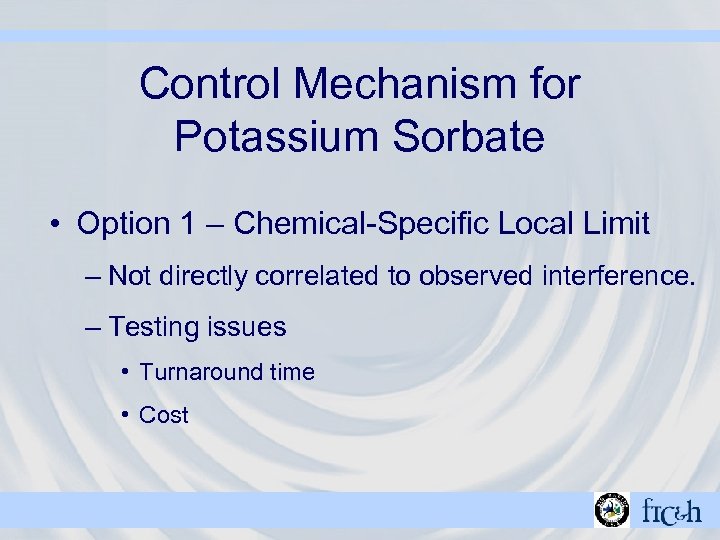 Control Mechanism for Potassium Sorbate • Option 1 – Chemical-Specific Local Limit – Not directly correlated to observed interference. – Testing issues • Turnaround time • Cost
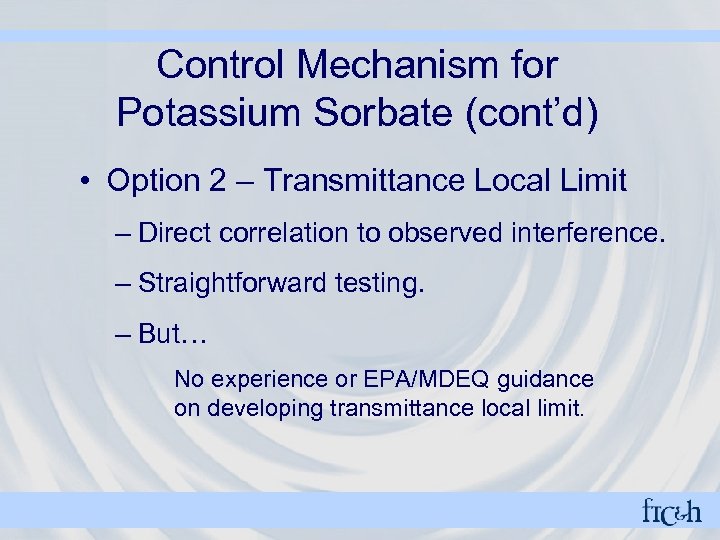 Control Mechanism for Potassium Sorbate (cont’d) • Option 2 – Transmittance Local Limit – Direct correlation to observed interference. – Straightforward testing. – But… No experience or EPA/MDEQ guidance on developing transmittance local limit.
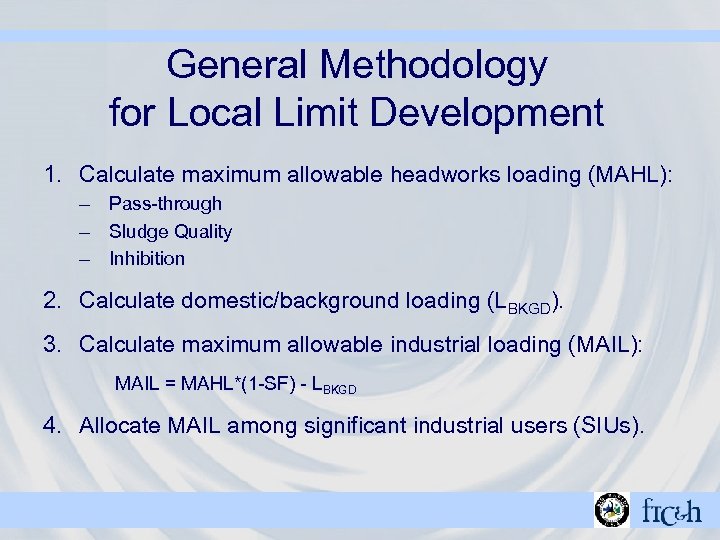 General Methodology for Local Limit Development 1. Calculate maximum allowable headworks loading (MAHL): – Pass-through – Sludge Quality – Inhibition 2. Calculate domestic/background loading (LBKGD). 3. Calculate maximum allowable industrial loading (MAIL): MAIL = MAHL*(1 -SF) - LBKGD 4. Allocate MAIL among significant industrial users (SIUs).
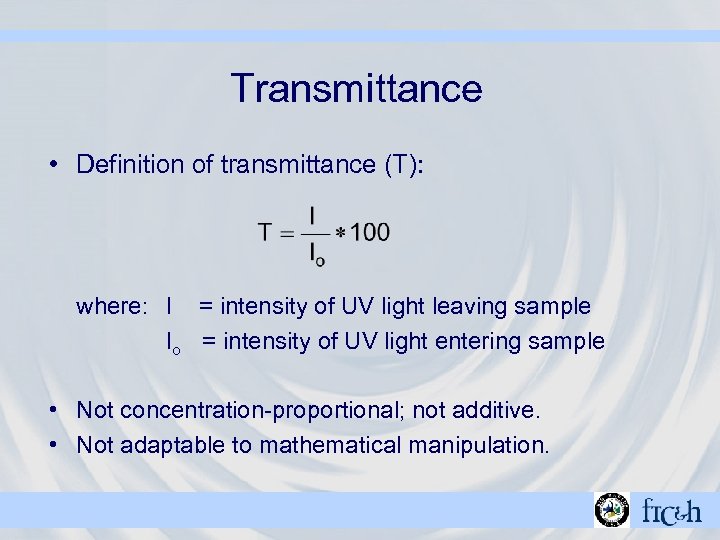 Transmittance • Definition of transmittance (T): where: I = intensity of UV light leaving sample Io = intensity of UV light entering sample • Not concentration-proportional; not additive. • Not adaptable to mathematical manipulation.
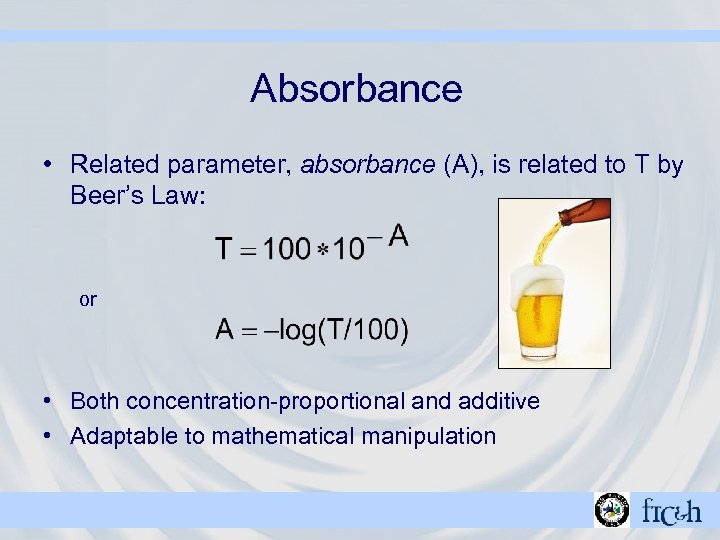 Absorbance • Related parameter, absorbance (A), is related to T by Beer’s Law: or • Both concentration-proportional and additive • Adaptable to mathematical manipulation
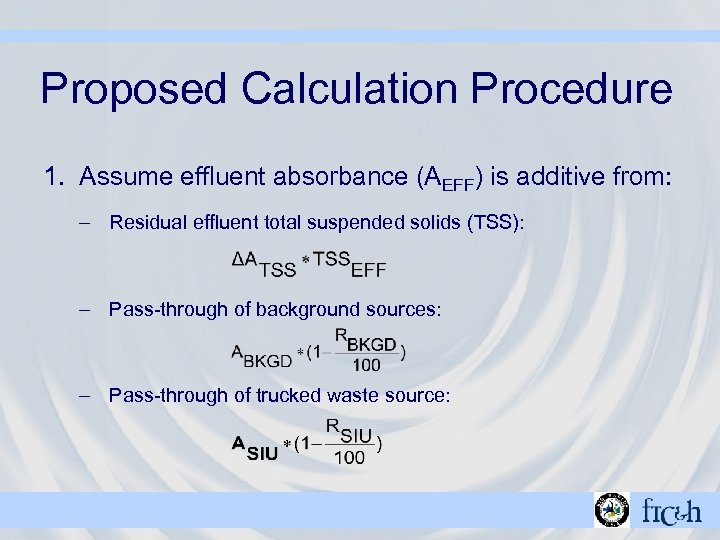 Proposed Calculation Procedure 1. Assume effluent absorbance (AEFF) is additive from: – Residual effluent total suspended solids (TSS): – Pass-through of background sources: – Pass-through of trucked waste source:
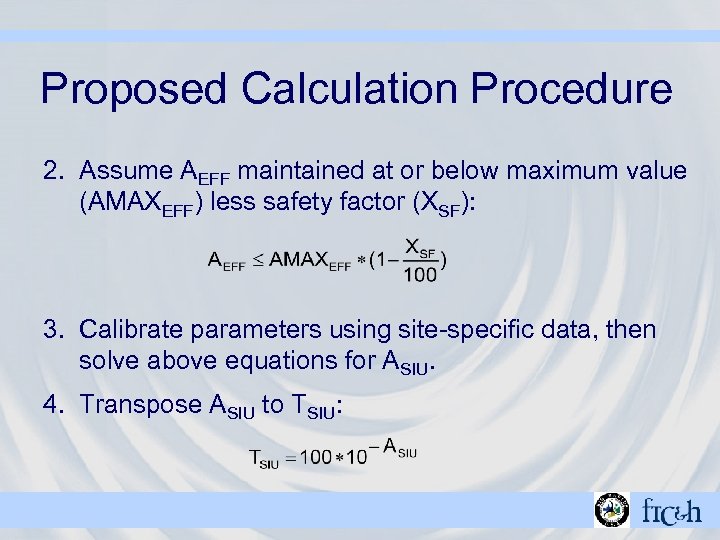 Proposed Calculation Procedure 2. Assume AEFF maintained at or below maximum value (AMAXEFF) less safety factor (XSF): 3. Calibrate parameters using site-specific data, then solve above equations for ASIU. 4. Transpose ASIU to TSIU:
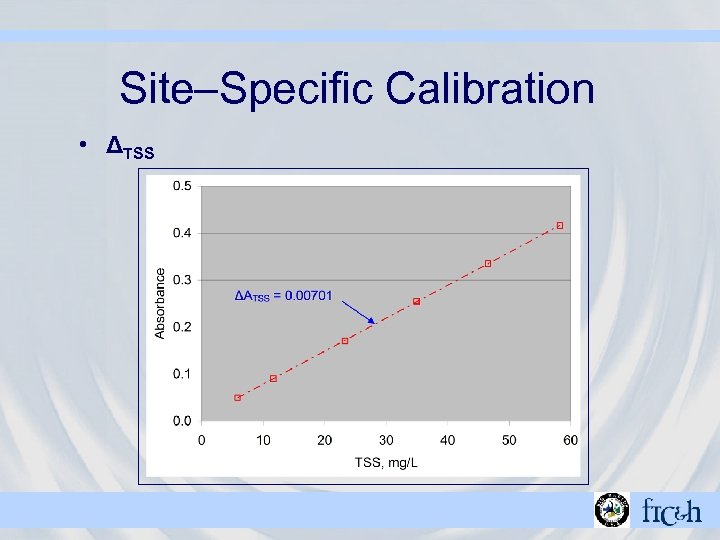 Site–Specific Calibration • ΔTSS
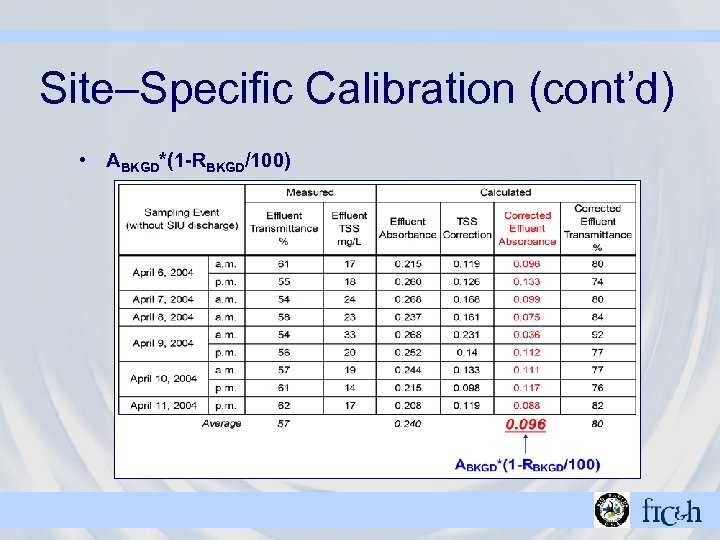 Site–Specific Calibration (cont’d) • ABKGD*(1 -RBKGD/100)
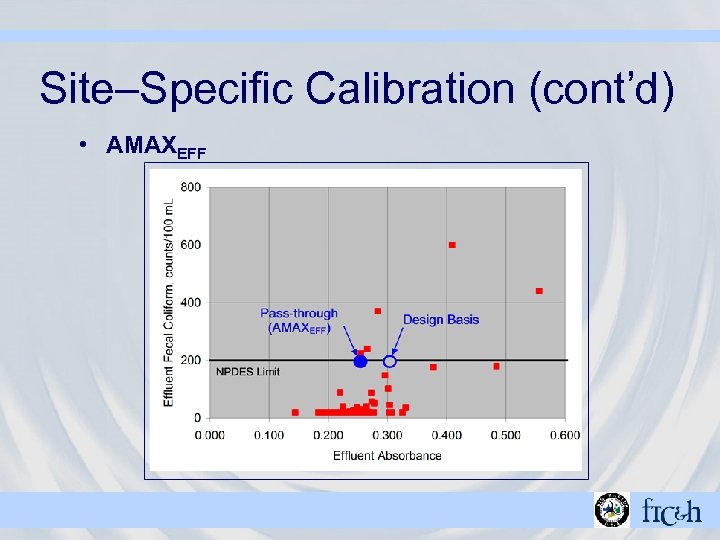 Site–Specific Calibration (cont’d) • AMAXEFF
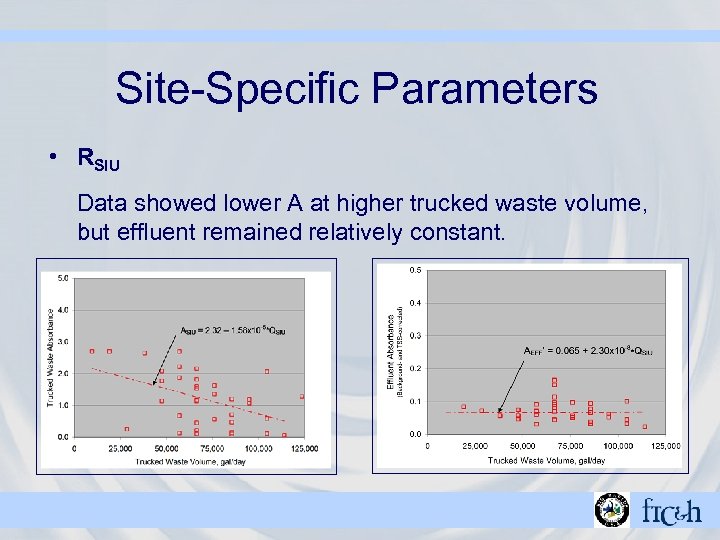 Site-Specific Parameters • RSIU Data showed lower A at higher trucked waste volume, but effluent remained relatively constant.
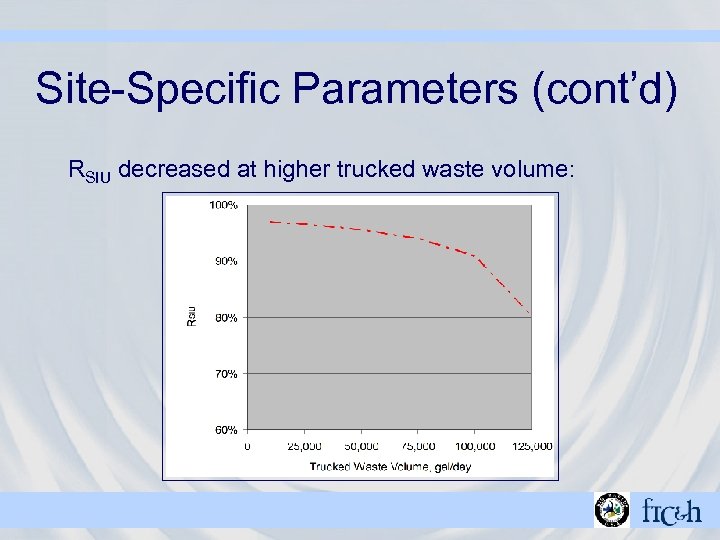 Site-Specific Parameters (cont’d) RSIU decreased at higher trucked waste volume:
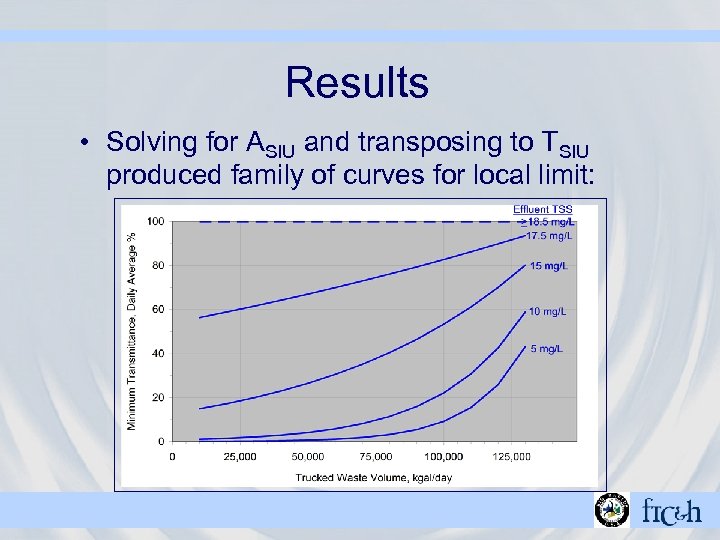 Results • Solving for ASIU and transposing to TSIU produced family of curves for local limit:
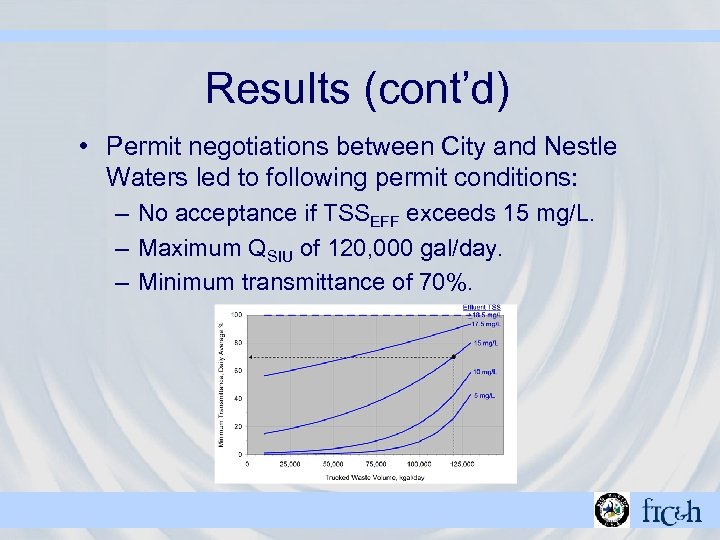 Results (cont’d) • Permit negotiations between City and Nestle Waters led to following permit conditions: – No acceptance if TSSEFF exceeds 15 mg/L. – Maximum QSIU of 120, 000 gal/day. – Minimum transmittance of 70%.
 Summary • “Clean” waste caused interference in this case. • For T limit, use general methodology based on A. • Must specify both TSSEFF and QSIU to set limit. • Lessons learned: – You never know what you will get with trucked waste. – Use all your resources to maximize knowledge. – Get it in writing before it happens. – Permit the discharger, not the transporter.
 Questions engineers scientists architects constructors