


 Скачать презентацию Case Study of Energy Efficiency in Asia and
600afe623c82839ef8a17271680d4dd3.ppt
- Количество слайдов: 54
 Case Study of Energy Efficiency in Asia and Internationally: Some Examples and Food for Thought Peter du Pont, Ph. D. Chief of Party, ECO-Asia Clean Development and Climate Program 14 May 2009 Presented at: First Mekong Energy and Ecology Training (MEE NET) Bangkok, Thailand
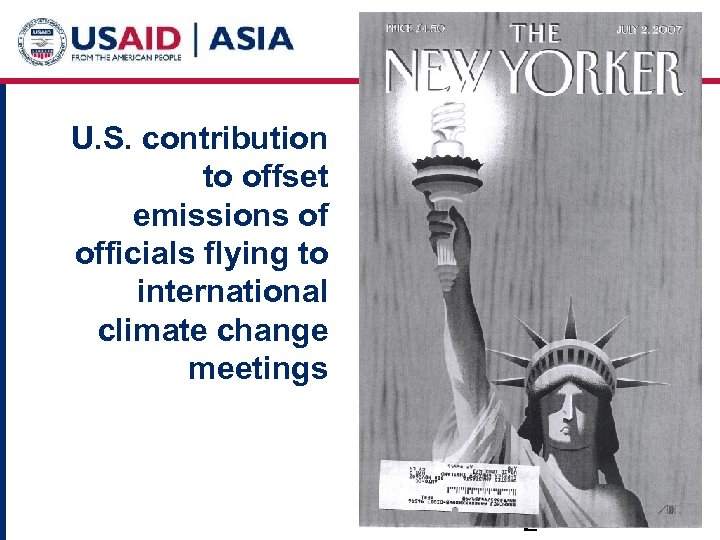 U. S. contribution to offset emissions of officials flying to international climate change meetings 2
 3
3
 What’s Happening? Chaos or Opportunity?
 Disclaimer • • I am not Asian I do not “represent” Asia I live in Asia, and have for 17 years My role is as a consultant and facilitator s Designing, implementing, and monitoring EE programs s Lots of failures, a few successes ; -) • I have been involved with a number or regional and international organizations s International Institute for Energy Conservation s APEC Energy Standards Information System (www. apec. esis. org) s APEC Expert Group on Energy Efficiency & Conservation (www. egeec. apec. org) s International CFL Harmonisation Initiative (www. apec. esis. org/cfl) s Efficient Lighting Initiative (ELI) (www. efficientlighting. net) s USAID ECO-Asia Clean Development and Climate Program (www. cleanenergyasia. net)
 Objectives of This Talk • Identify key issues related to energy efficiency (EE) in context of energy policy • Highlight and explain some case studies • Address issue of how much EE costs • Present some questions in a range of topic areas • Caveats: s This presentation discusses experience with in EE in commercial energy s Does not address transportation energy s Does not address links between energy and poverty
 Topics Covered • About the ECO-Asia Clean Development and Climate Program • Overview of energy and carbon scenarios • What drives energy demand how reliable are demand forecasts? • Some case studies and examples of Energy Efficiency policies and programs • How much does Energy Efficiency cost? • Issues, themes and food for thought
 About the ECO-Asia Clean Development and Climate Program
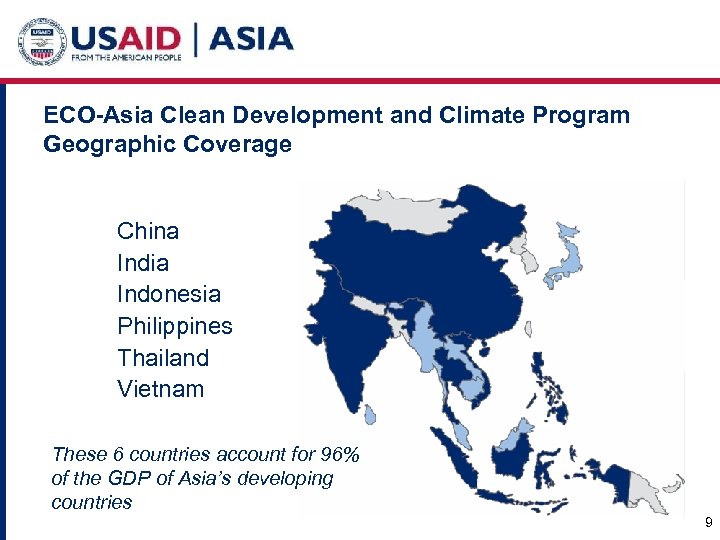 ECO-Asia Clean Development and Climate Program Geographic Coverage China India Indonesia Philippines Thailand Vietnam These 6 countries account for 96% of the GDP of Asia’s developing countries 9
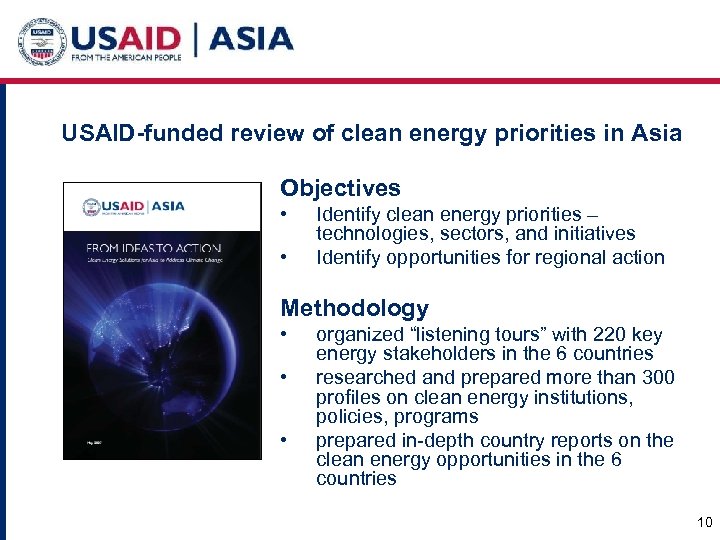 USAID-funded review of clean energy priorities in Asia Objectives • • Identify clean energy priorities – technologies, sectors, and initiatives Identify opportunities for regional action Methodology • • • organized “listening tours” with 220 key energy stakeholders in the 6 countries researched and prepared more than 300 profiles on clean energy institutions, policies, programs prepared in-depth country reports on the clean energy opportunities in the 6 countries 10
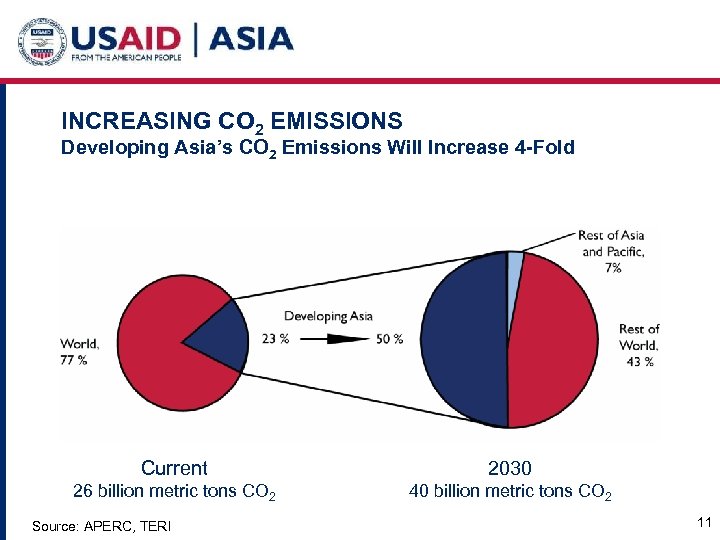 INCREASING CO 2 EMISSIONS Developing Asia’s CO 2 Emissions Will Increase 4 -Fold Current 2030 26 billion metric tons CO 2 40 billion metric tons CO 2 Source: APERC, TERI 11
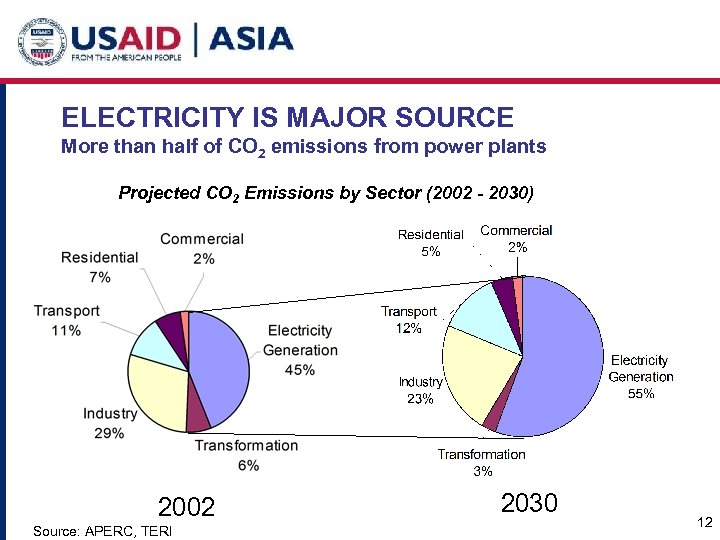 ELECTRICITY IS MAJOR SOURCE More than half of CO 2 emissions from power plants Projected CO 2 Emissions by Sector (2002 - 2030) 2002 Source: APERC, TERI 2030 12
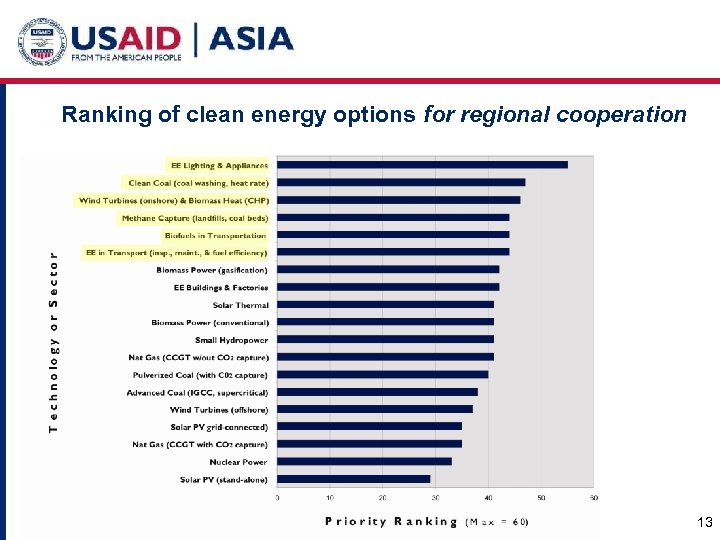 Ranking of clean energy options for regional cooperation 13
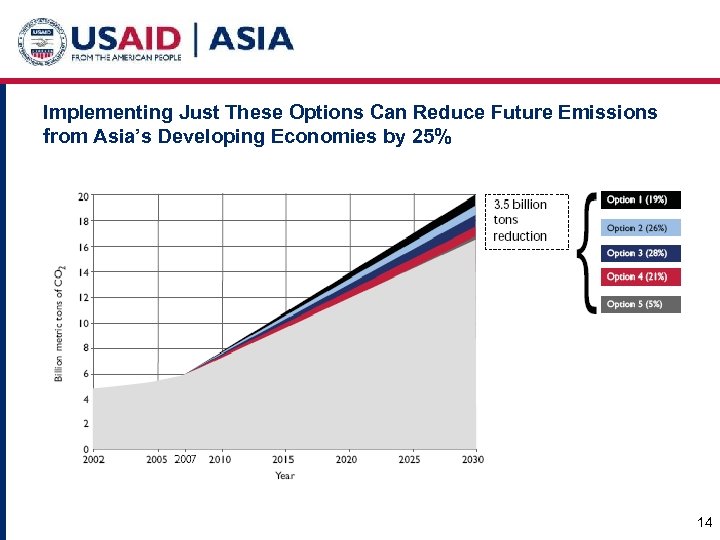 Implementing Just These Options Can Reduce Future Emissions from Asia’s Developing Economies by 25% 14
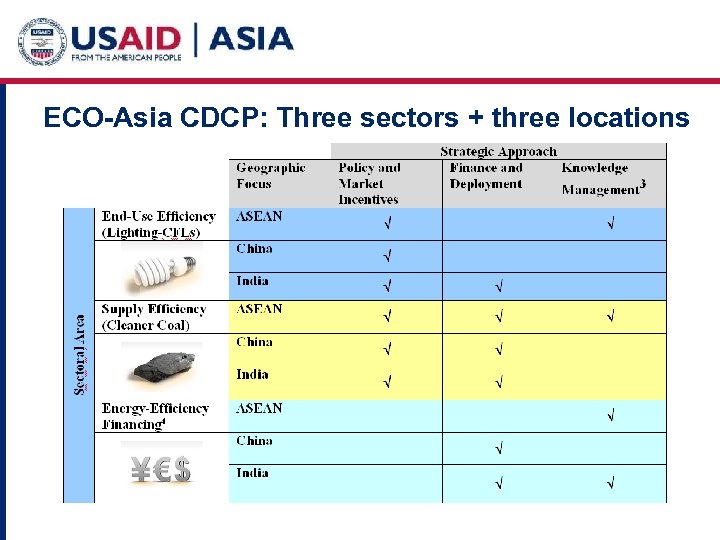 ECO-Asia CDCP: Three sectors + three locations
 What Drives Energy Demand How Reliable are Demand Forecasts?
 What Drives Energy Demand? • Incomes rise • People buy more stuff • The “force” is basically unstoppable
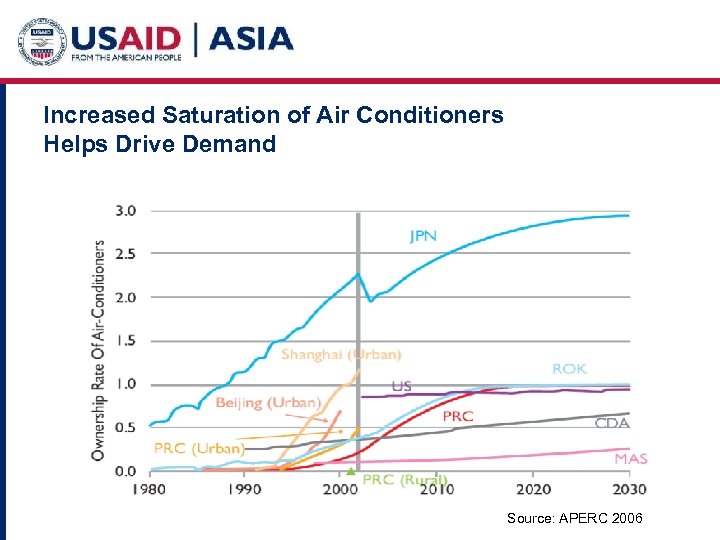 Increased Saturation of Air Conditioners Helps Drive Demand Source: APERC 2006
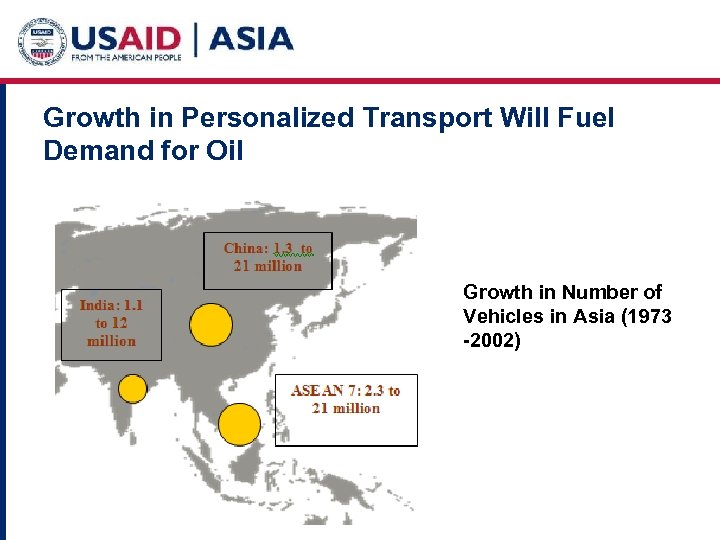 Growth in Personalized Transport Will Fuel Demand for Oil Growth in Number of Vehicles in Asia (1973 -2002)
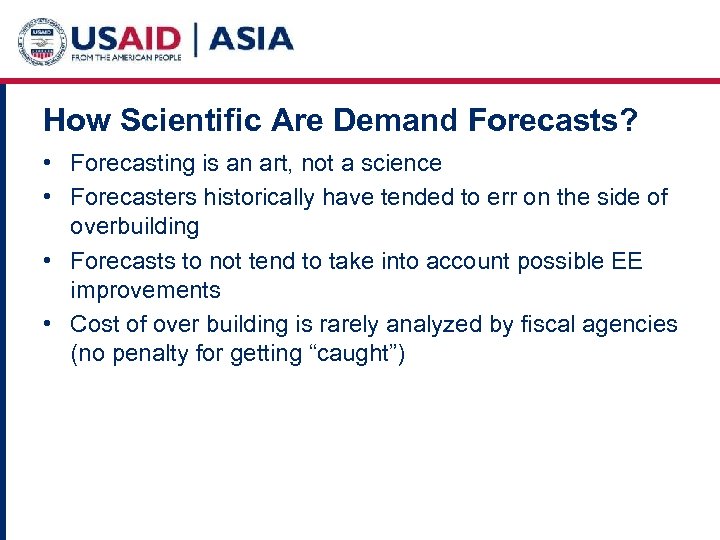 How Scientific Are Demand Forecasts? • Forecasting is an art, not a science • Forecasters historically have tended to err on the side of overbuilding • Forecasts to not tend to take into account possible EE improvements • Cost of over building is rarely analyzed by fiscal agencies (no penalty for getting “caught”)
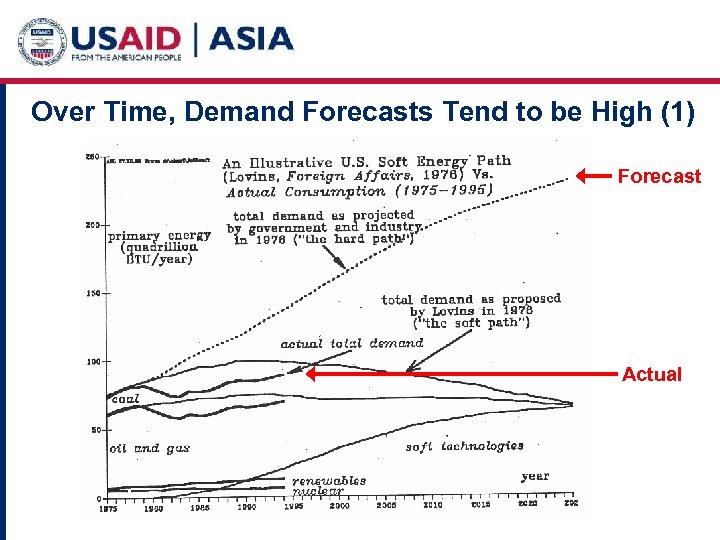 Over Time, Demand Forecasts Tend to be High (1) Forecast Actual
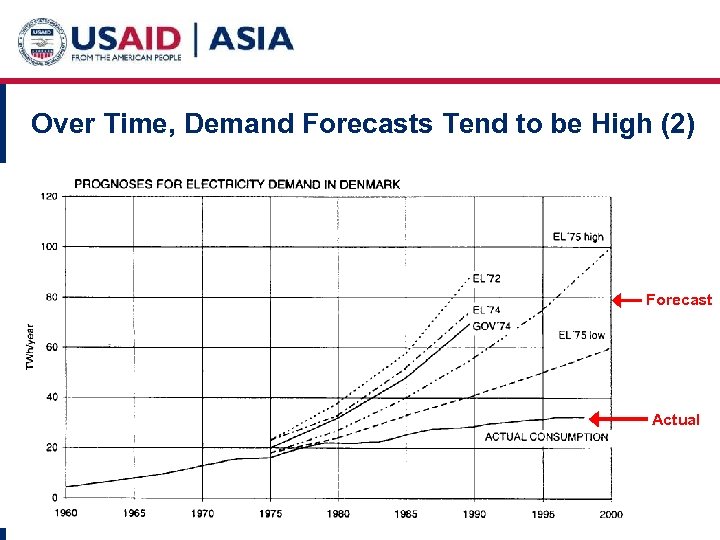 Over Time, Demand Forecasts Tend to be High (2) Forecast Actual
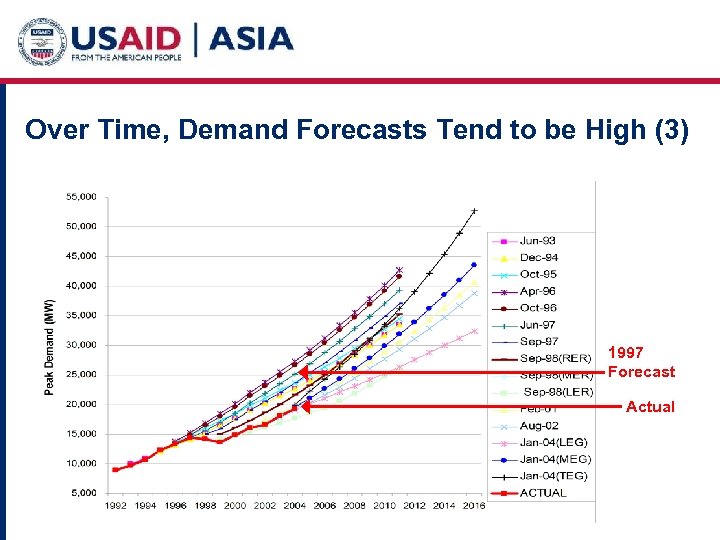 Over Time, Demand Forecasts Tend to be High (3) 1997 Forecast Actual
 Some Case Studies and Examples of Energy Efficiency Policies and Programs
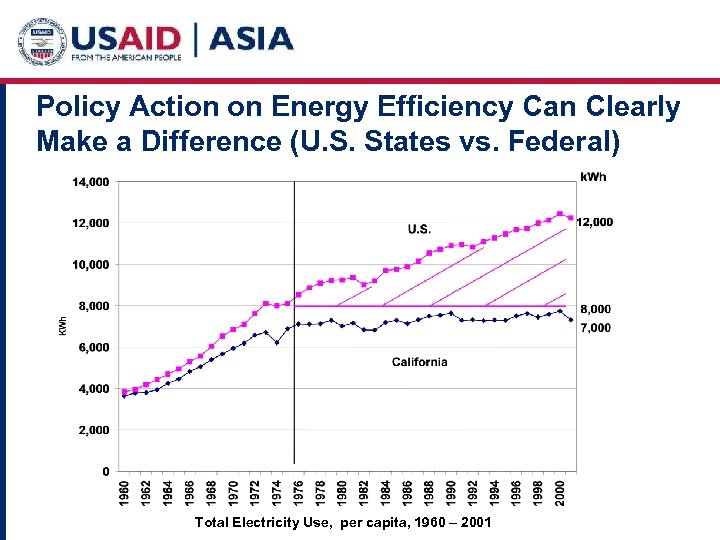 Policy Action on Energy Efficiency Can Clearly Make a Difference (U. S. States vs. Federal) Total Electricity Use, per capita, 1960 – 2001
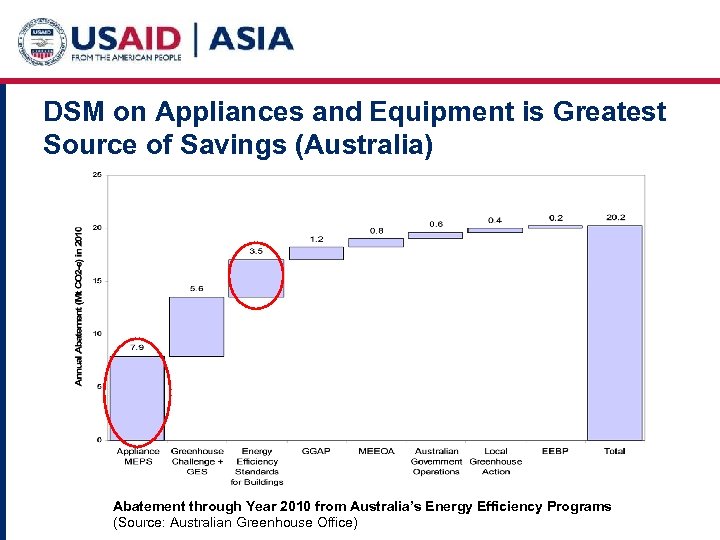 DSM on Appliances and Equipment is Greatest Source of Savings (Australia) Abatement through Year 2010 from Australia’s Energy Efficiency Programs (Source: Australian Greenhouse Office)
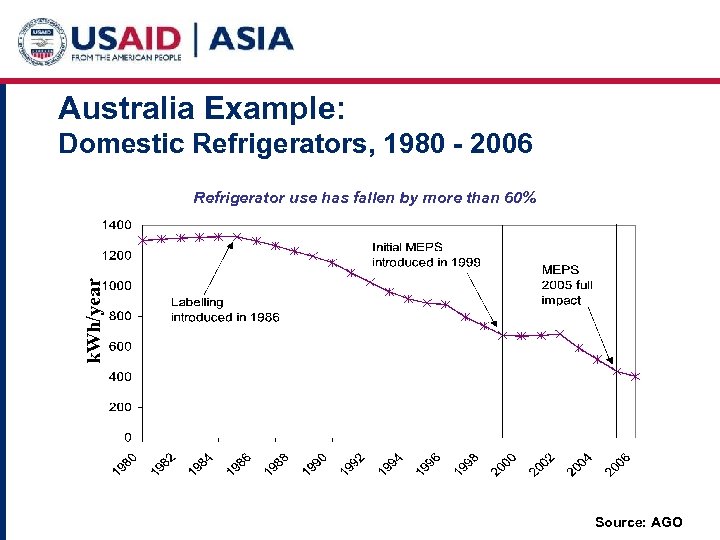 Australia Example: Domestic Refrigerators, 1980 - 2006 k. Wh/year Refrigerator use has fallen by more than 60% Source: AGO
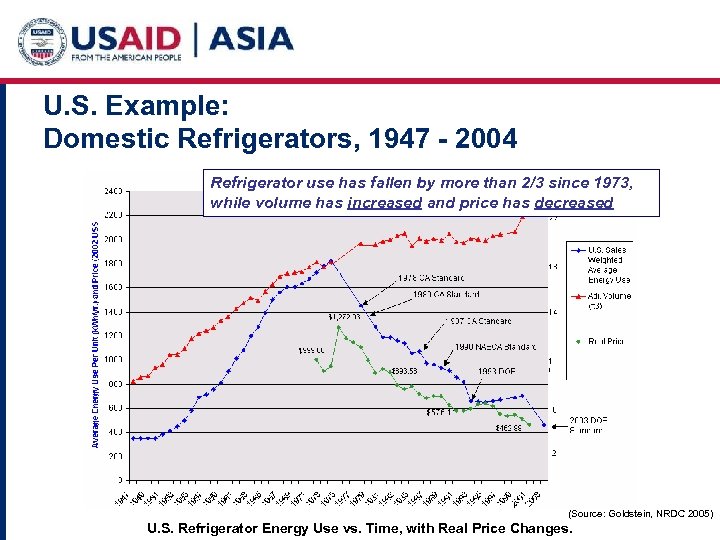 U. S. Example: Domestic Refrigerators, 1947 - 2004 Refrigerator use has fallen by more than 2/3 since 1973, while volume has increased and price has decreased (Source: Goldstein, NRDC 2005) U. S. Refrigerator Energy Use vs. Time, with Real Price Changes.
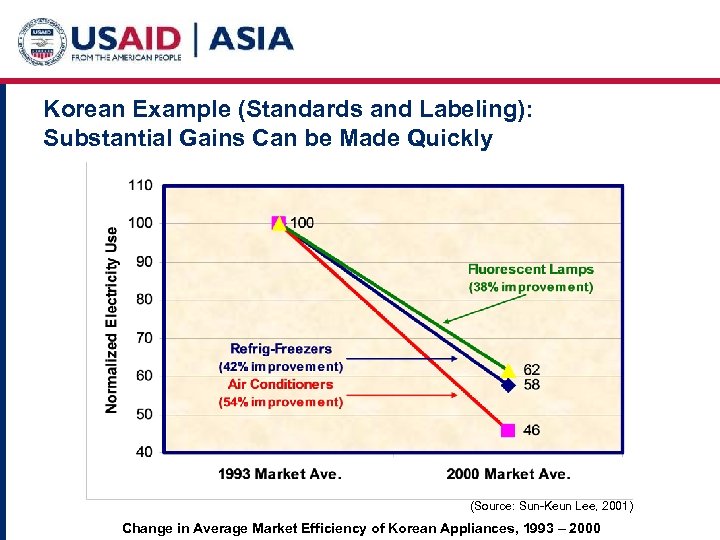 Korean Example (Standards and Labeling): Substantial Gains Can be Made Quickly (Source: Sun-Keun Lee, 2001) Change in Average Market Efficiency of Korean Appliances, 1993 – 2000
 CASE STUDY ON INFORMATION: APEC Energy Standards Information System www. apec-esis. org
 Objectives of APEC-ESIS 1. Established with APEC funding in 2002 2. Serves as clearinghouse for data and documents that specify aspects of energy efficiency, including: s s s Test protocols Energy performance information and labeling Energy performance categories and minimum requirements Minimum energy performance requirements Other energy performance requirements 3. Facilitate and stimulate harmonization through the Standards Notification Procedure 4. Promote international cooperation (esp. within APEC) and reduce barriers to trade in energy-efficient products
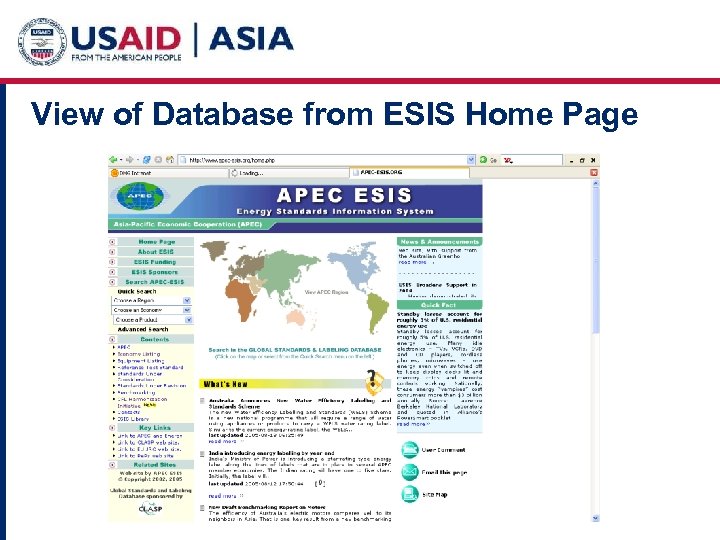 View of Database from ESIS Home Page
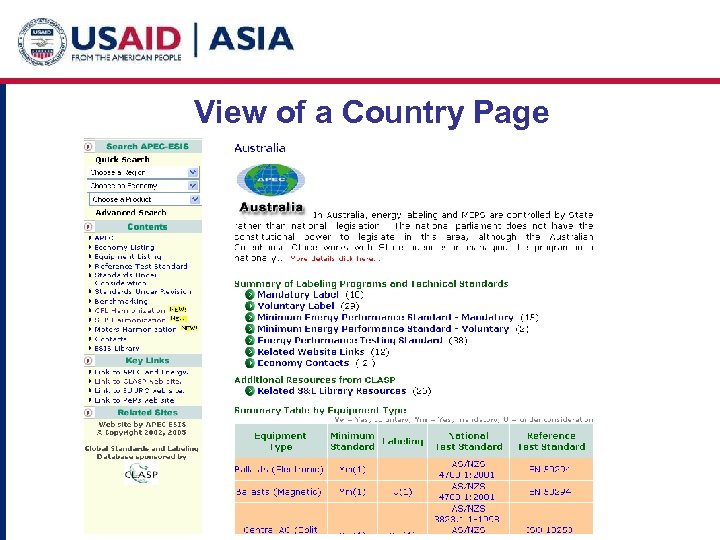 View of a Country Page
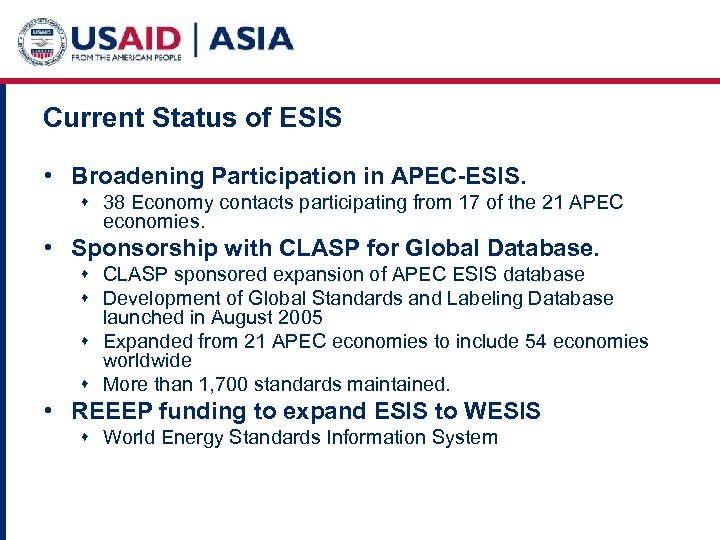 Current Status of ESIS • Broadening Participation in APEC-ESIS. s 38 Economy contacts participating from 17 of the 21 APEC economies. • Sponsorship with CLASP for Global Database. s CLASP sponsored expansion of APEC ESIS database s Development of Global Standards and Labeling Database launched in August 2005 s Expanded from 21 APEC economies to include 54 economies worldwide s More than 1, 700 standards maintained. • REEEP funding to expand ESIS to WESIS s World Energy Standards Information System
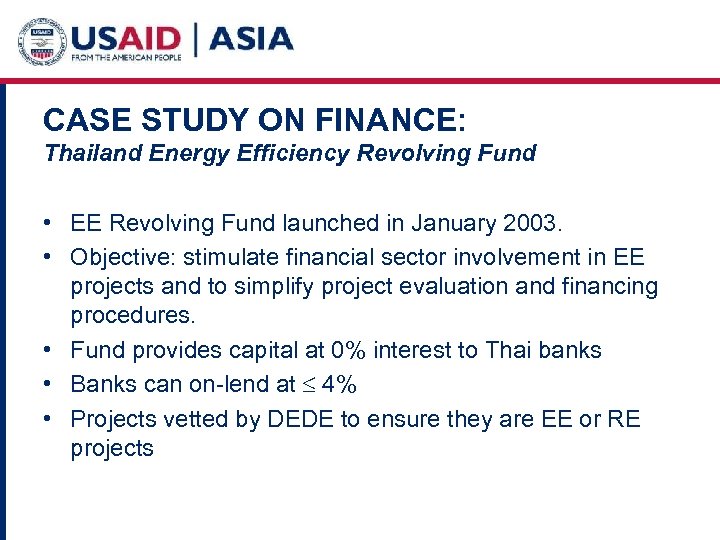 CASE STUDY ON FINANCE: Thailand Energy Efficiency Revolving Fund • EE Revolving Fund launched in January 2003. • Objective: stimulate financial sector involvement in EE projects and to simplify project evaluation and financing procedures. • Fund provides capital at 0% interest to Thai banks • Banks can on-lend at 4% • Projects vetted by DEDE to ensure they are EE or RE projects
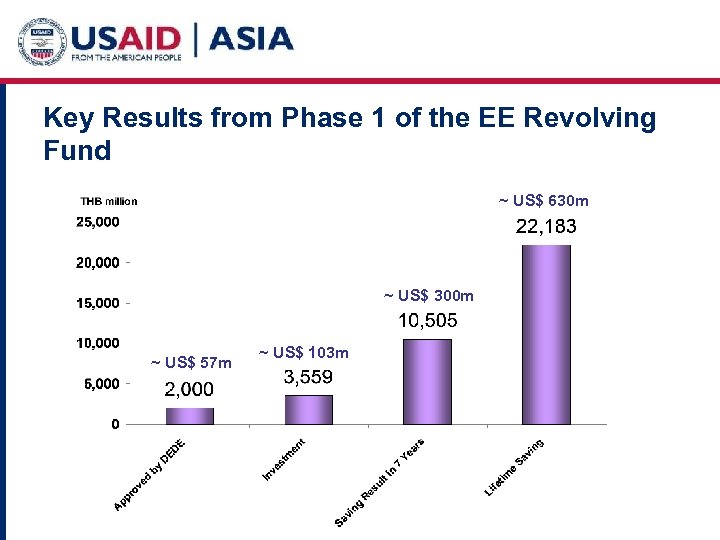 Key Results from Phase 1 of the EE Revolving Fund ~ US$ 630 m ~ US$ 300 m ~ US$ 57 m ~ US$ 103 m
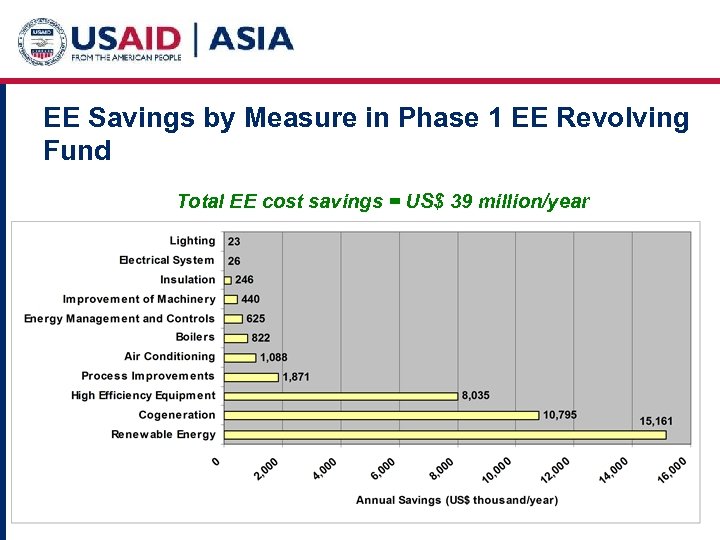 EE Savings by Measure in Phase 1 EE Revolving Fund Total EE cost savings = US$ 39 million/year
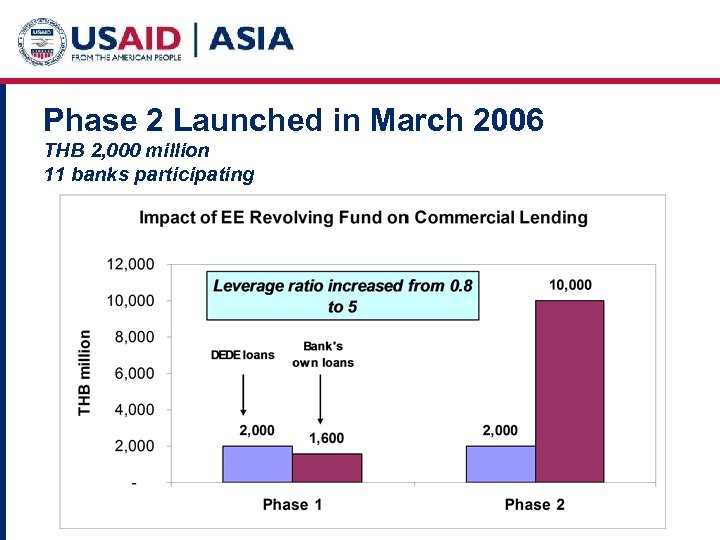 Phase 2 Launched in March 2006 THB 2, 000 million 11 banks participating
 How Much Does EE Cost?
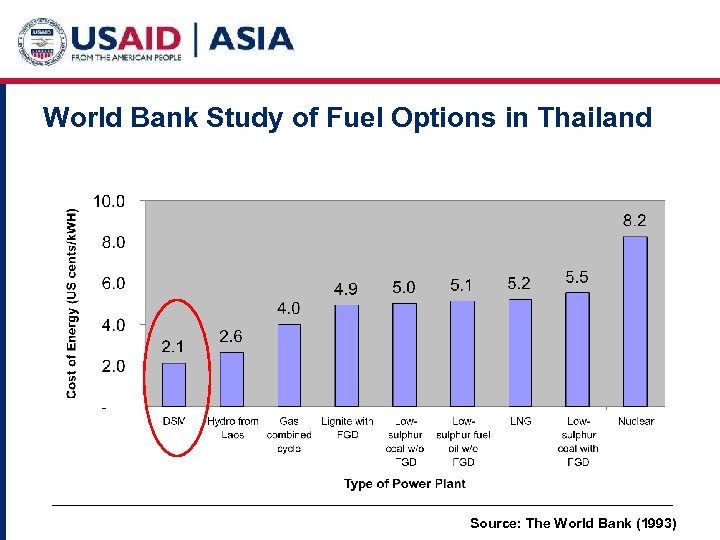 World Bank Study of Fuel Options in Thailand Source: The World Bank (1993)
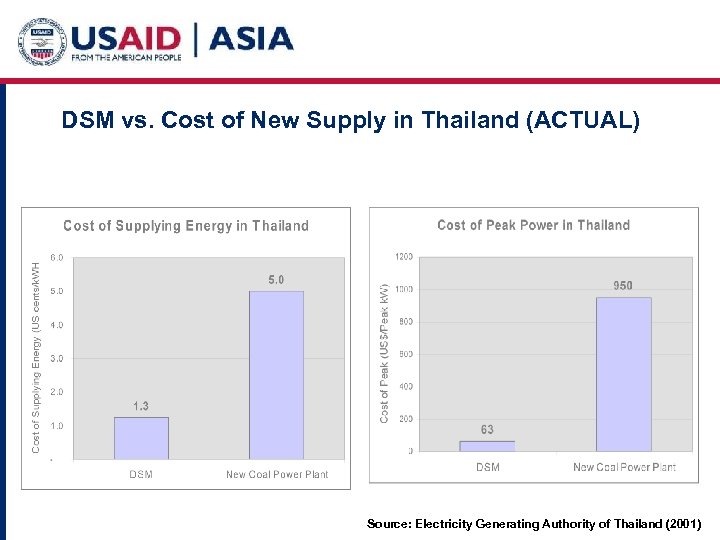 DSM vs. Cost of New Supply in Thailand (ACTUAL) Source: Electricity Generating Authority of Thailand (2001)
 World Bank Study of EE/DSM Potential in Relation to the Nam-Theun 2 Hydropower Project • Carried out in 2005 • Assess whether NT 2 power (about 1, 000 MW, 5, 500 GWh/annum) is required by the Thai system by the projected commissioning date of 2010 • Assess the achievable potential for Thailand’s initiatives at promoting EE and DSM when NT 2 is proposed to come on line
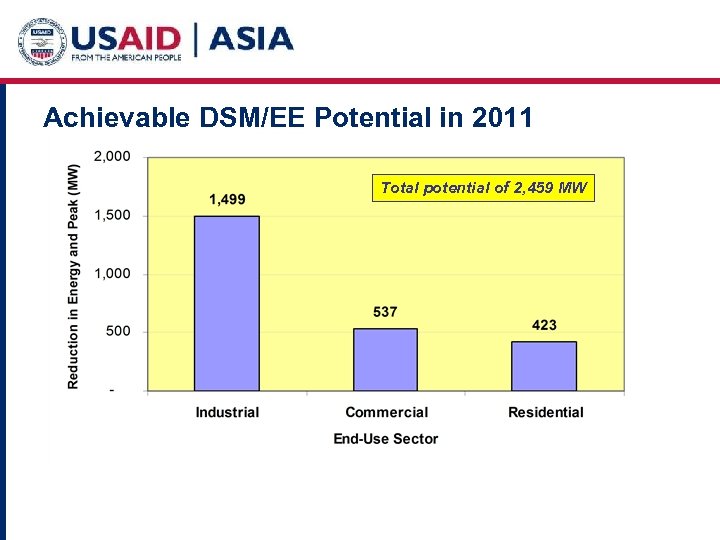 Achievable DSM/EE Potential in 2011 Total potential of 2, 459 MW
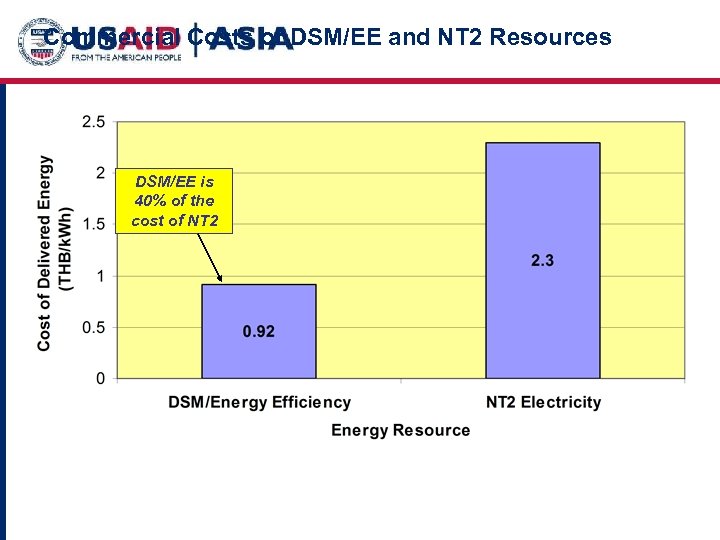 Commercial Costs of DSM/EE and NT 2 Resources DSM/EE is 40% of the cost of NT 2
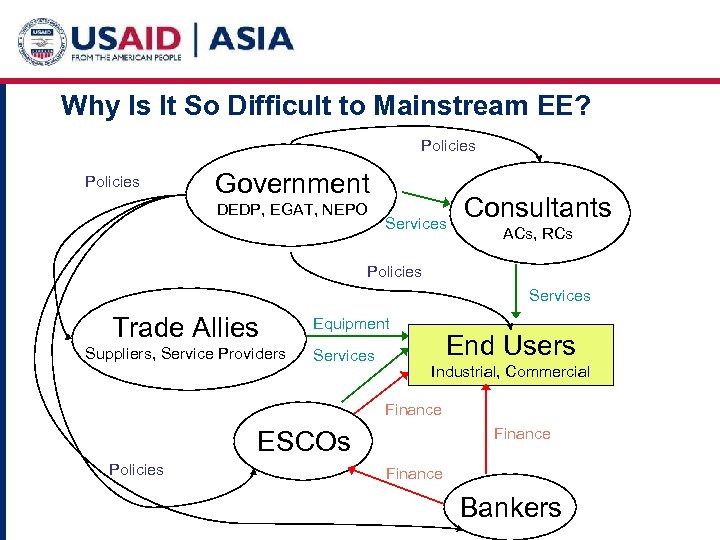 Why Is It So Difficult to Mainstream EE? Policies Government DEDP, EGAT, NEPO Services Consultants ACs, RCs Policies Services Trade Allies Suppliers, Service Providers Equipment Services End Users Industrial, Commercial Finance ESCOs Policies Finance Bankers
 Issues, Themes, and Food for Thought
 List of Issues • Why are DSM (demand side management) and EE separate in many countries? • Institutional Issues • Information and coordination • Climate change
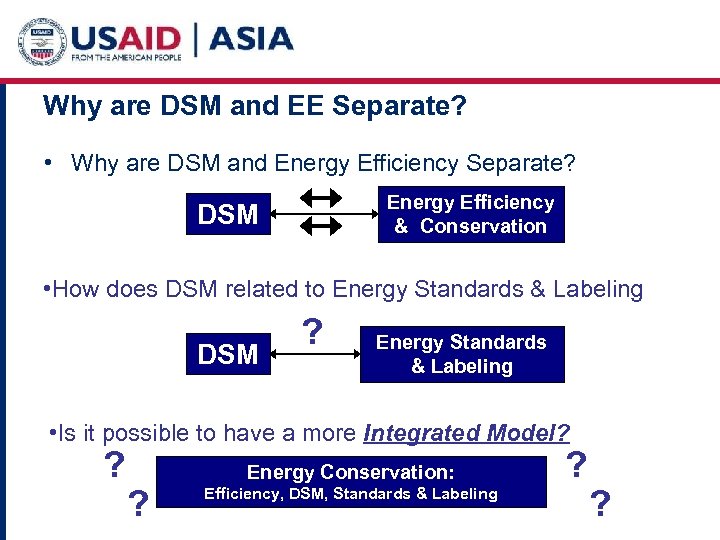 Why are DSM and EE Separate? • Why are DSM and Energy Efficiency Separate? Energy Efficiency & Conservation DSM • How does DSM related to Energy Standards & Labeling DSM ? Energy Standards & Labeling • Is it possible to have a more Integrated Model? ? Energy Conservation: ? Efficiency, DSM, Standards & Labeling ? ?
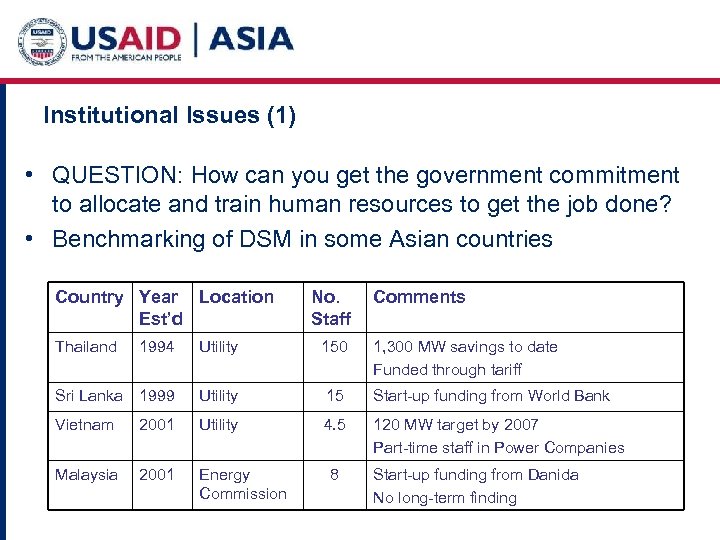 Institutional Issues (1) • QUESTION: How can you get the government commitment to allocate and train human resources to get the job done? • Benchmarking of DSM in some Asian countries Country Year Location Est’d No. Staff Comments Thailand 1994 Utility 150 1, 300 MW savings to date Funded through tariff Sri Lanka 1999 Utility 15 Start-up funding from World Bank Vietnam 2001 Utility 4. 5 120 MW target by 2007 Part-time staff in Power Companies Malaysia 2001 Energy Commission 8 Start-up funding from Danida No long-term finding
 Institutional Issues (2) • Korea and Mexico have set up national agencies which direct implementation of EE s KEMCO in Korea s CONAE in Mexico • This brings a coherence to EE policy and programs • What does it take to seed and enable self-sustaining energy efficiency agencies within a country?
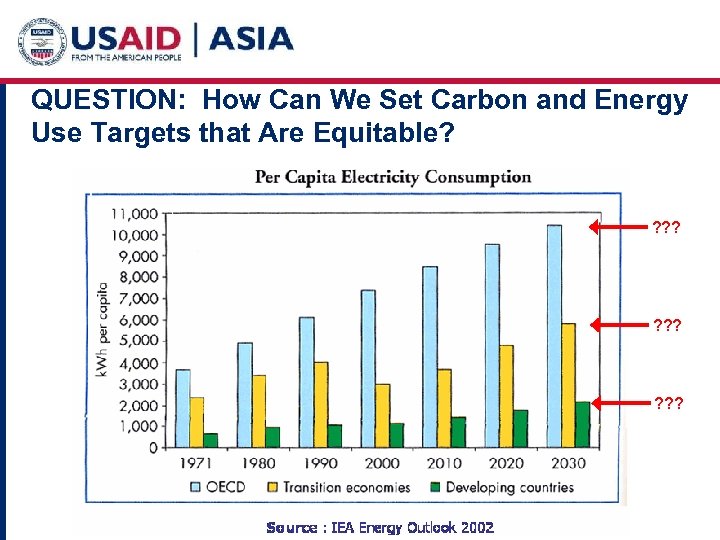 QUESTION: How Can We Set Carbon and Energy Use Targets that Are Equitable? ? ? ?
 Myth: Western Consultants are Needed to Help Advise Asian Governments on How to Implement EE • Sure, there is a lot of great experience in Europe and the U. S. • But there is also a lot of great experience • 2 Examples: s Energy labeling in Thailand s Air conditioners in Australia and East Asia • QUESTION: s How can we systematize sharing of information and EE best practices between countries in Asia?
 Myth: CDM is a Mechanism that will Help Stimulate Investments in EE in Developing Countries • Less than 95% of registered CDM projects are for EE • Transaction costs are way too high • QUESTION s Programmatic CDM may be an answer, but how quickly will it happen?
 Thank you!! For more information: peter@cleanenergyasia. net www. cleanenergyasia. net