


 Скачать презентацию Case Study History Ft Hood Texas Ft Hood
25265cf4392f6323b633a38bfc200c08.ppt
- Количество слайдов: 13
 Case Study/History Ft Hood, Texas
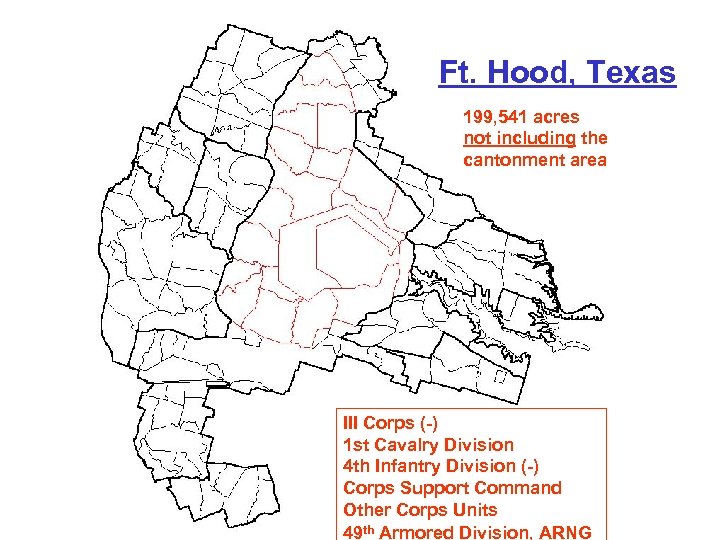 Ft. Hood, Texas 199, 541 acres not including the cantonment area III Corps (-) 1 st Cavalry Division 4 th Infantry Division (-) Corps Support Command Other Corps Units 49 th Armored Division, ARNG
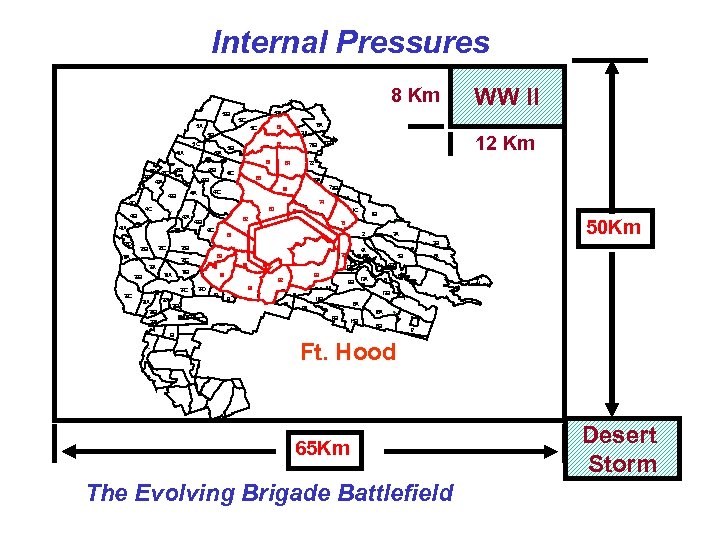 Internal Pressures 8 Km 5 B 2 5 4 A 5 C 2 5 A 1 5 1 C 4 A 5 4 A 8 4 B 5 4 D 4 C 5 5 4 3 C 4 3 A 4 2 A 4 C 2 3 A 3 3 C 4 3 1 B 2 3 3 C 0 B 0 3 A 0 B 9 3 9 2 9 1 1 0 9 5 A 5 B 1 A 1 1 8 1 9 1 2 B 1 B 1 3 B 6 A 4 B 1 A 2 9 0 50 Km 3 A 4 A 7 6 8 4 3 4 D 1 B 7 5 8 3 3 4 B 3 4 A 3 A 2 1 C 8 1 8 9 3 C 6 3 A 1 1 A 3 B 6 3 5 C 3 A 5 3 C 3 73 B 8 2 4 B 2 3 6 A 3 B 3 7 A 3 6 6 4 C 4 8 0 4 A 1 7 2 6 5 4 C 1 3 B 5 6 4 12 Km 7 0 B 7 1 B 7 4 4 B 1 3 D 5 6 2 5 B 3 4 C 8 4 B 4 4 4 A 7 A 1 6 3 4 8 B 4 B 3 4 D 1 5 A 3 7 0 A 6 1 5 3 C 5 B 1 WW II 1 A 3 8 8 1 B 3 1 A 5 1 4 A 1 B 4 1 A 6 1 5 B 1 B 6 1 7 Ft. Hood 65 Km The Evolving Brigade Battlefield Desert Storm
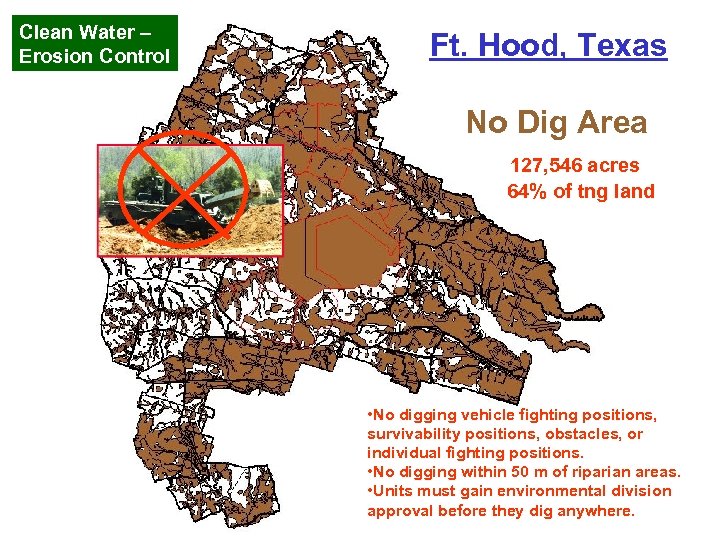 Clean Water – Erosion Control Ft. Hood, Texas No Dig Area 127, 546 acres 64% of tng land • No digging vehicle fighting positions, survivability positions, obstacles, or individual fighting positions. • No digging within 50 m of riparian areas. • Units must gain environmental division approval before they dig anywhere.
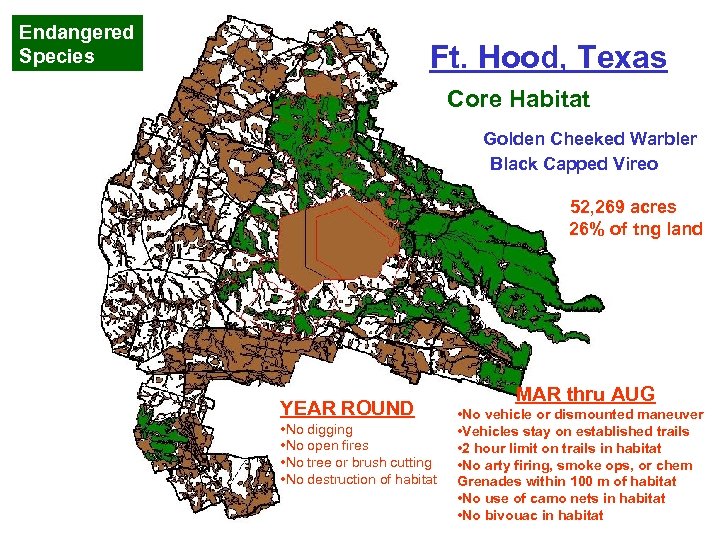 Endangered Species Ft. Hood, Texas Core Habitat Golden Cheeked Warbler Black Capped Vireo 52, 269 acres 26% of tng land YEAR ROUND • No digging • No open fires • No tree or brush cutting • No destruction of habitat MAR thru AUG • No vehicle or dismounted maneuver • Vehicles stay on established trails • 2 hour limit on trails in habitat • No arty firing, smoke ops, or chem Grenades within 100 m of habitat • No use of camo nets in habitat • No bivouac in habitat
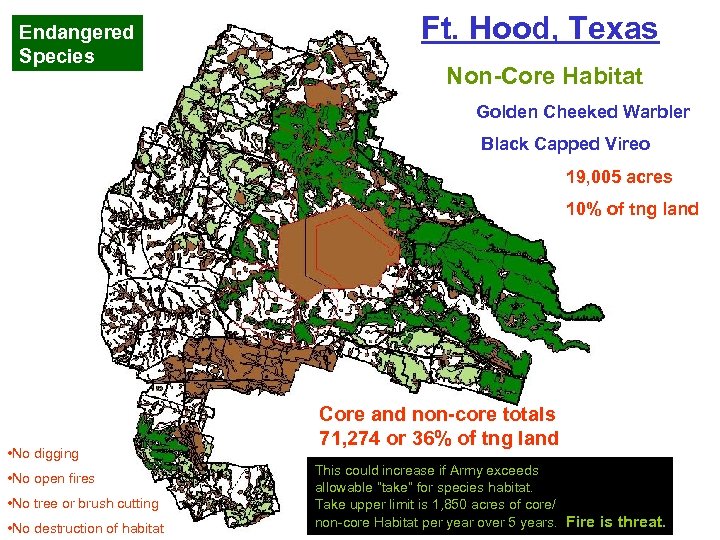 Endangered Species Ft. Hood, Texas Non-Core Habitat Golden Cheeked Warbler Black Capped Vireo 19, 005 acres 10% of tng land • No digging • No open fires • No tree or brush cutting • No destruction of habitat Core and non-core totals 71, 274 or 36% of tng land This could increase if Army exceeds allowable “take” for species habitat. Take upper limit is 1, 850 acres of core/ non-core Habitat per year over 5 years. Fire is threat.
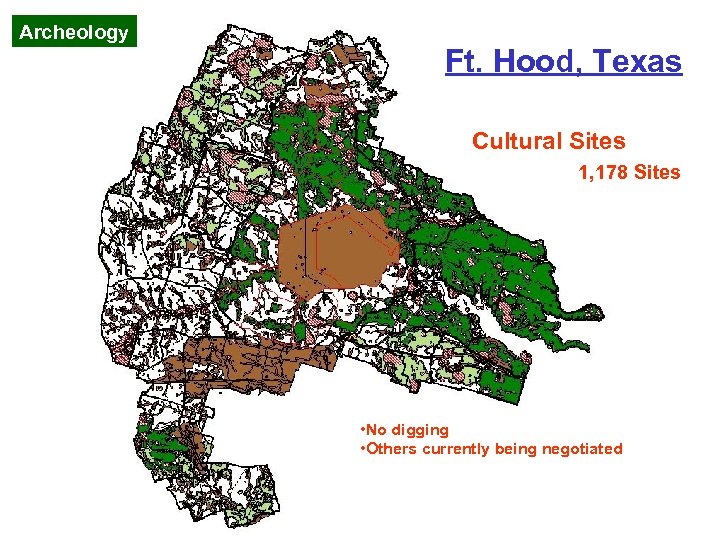 Archeology Ft. Hood, Texas Cultural Sites 1, 178 Sites • No digging • Others currently being negotiated
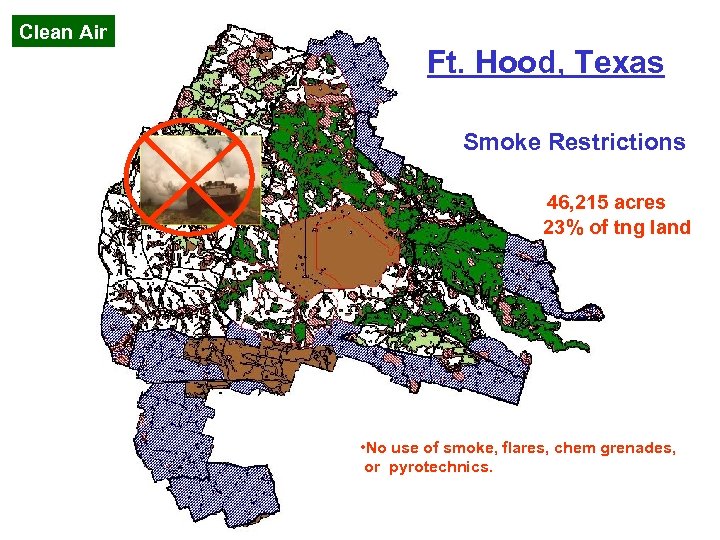 Clean Air Ft. Hood, Texas Smoke Restrictions 46, 215 acres 23% of tng land • No use of smoke, flares, chem grenades, or pyrotechnics.
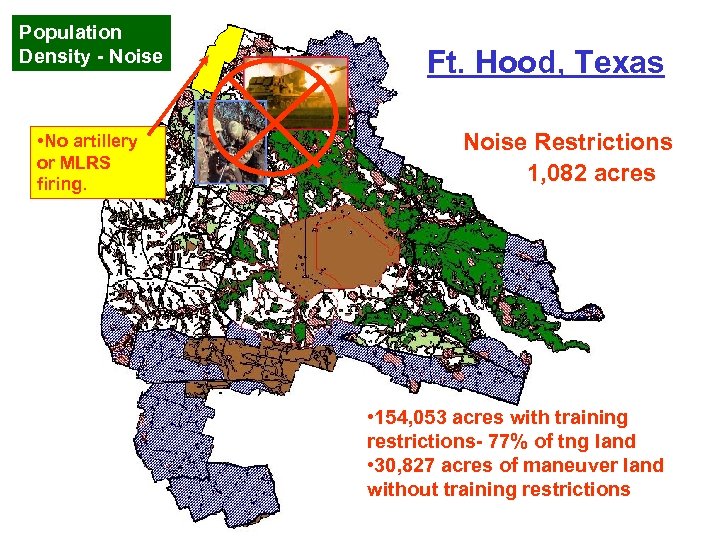 Population Density - Noise • No artillery or MLRS firing. Ft. Hood, Texas Noise Restrictions 1, 082 acres • 154, 053 acres with training restrictions- 77% of tng land • 30, 827 acres of maneuver land without training restrictions
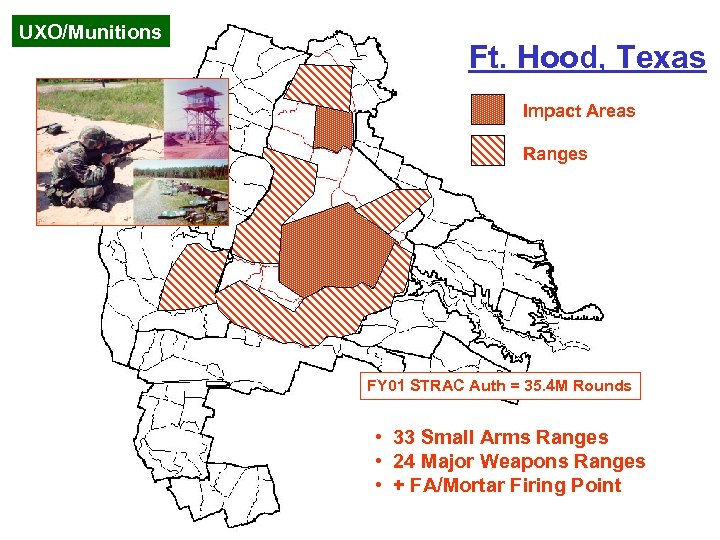 UXO/Munitions Ft. Hood, Texas Impact Areas Ranges FY 01 STRAC Auth = 35. 4 M Rounds • 33 Small Arms Ranges • 24 Major Weapons Ranges • + FA/Mortar Firing Point
 Environmental Contamination (EC) • Adverse impacts to natural resources my result from EC • Installations have Restoration Programs to respond to EC/CERCLA releases • INRMP not required to provide EC/CERCLA actions • INRMP can provide a link (integration) • Core Group is considering an acceptable INRMP statement
 Fort Hood INRMP • Land management effort multi-faceted in past • Work now controlled through INRMP • Contracted with NRCS • Contractor coordinated with State and Federal agencies during development • In-house expertise guided document • Delivered draft product in October 1999 • Staffed inside and outside Fort Hood • Simultaneous development of INRMP document and EA • Public review period in April 2000 • Finial review with outside agencies in October 2000 • USFWS concurred in January 2001 • State has not replied
 INRMP • INRMP contains other plans and documents • 1996 training fire • Training continued • Focused consultation away from training • Influenced BO through negotiation of ESMP • Continuing pro-active approach