 Скачать презентацию Case Based Peds in your ED My kid
b629c7f875e9f0310c8c62aab20d9b95.ppt
- Количество слайдов: 60



Case Based Peds in your ED My kid is seizing Ø My kid is vomiting Ø My kid is having trouble breathing Ø My baby stopped breathing Ø 20 cases over the next 90 minutes Ø Audience participation is requested Ø
Case Based Peds in your ED My kid is seizing Ø My kid is vomiting Ø My kid is having trouble breathing Ø My baby stopped breathing Ø 20 cases over the next 90 minutes Ø Audience participation is required Ø
Managing Seizures in Pediatric Patients in your ED Frank Overly, MD Assistant Professor Emergency Medicine and Pediatrics Alpert Medical School of Brown University
Overview Ø Case based Ø Presentation of illness Ø Important questions to ask Ø Management Ø Physical findings Ø Work up Ø Summary
Pediatric Seizures Ø Most common neurologic disorder in childhood Ø 4 -6% of all kids will have 1 seizure before 16 y/o
Ø 5 year old female Case One Ø GTC seizure Ø Started 15 minutes ago Ø T-101, P-155, RR-40, BP-110/80, Ox Sat-89% Ø What would you like to do? Ø What history do you want to know?
Useful History for Seizure Ø Ø Ø Ø Does s/he have a fever? Does s/he have a seizure disorder? Ø If yes, is s/he on anti-seizure meds? Ø If yes, is s/he taking them, or any recent changes? Any trauma? Any medicines s/he had access to? How was s/he before the seizure started? Is s/he developmentally normal? Bottle or breast? Did you have a party last night?
Case One PMHx former 27 week’er Ø Has a known seizure disorder Ø On phenobarb Ø Has a fever and is seizing
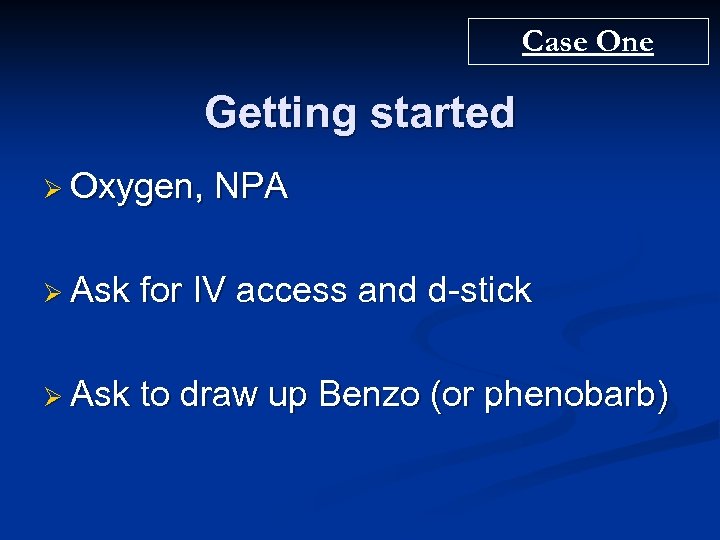
Case One Getting started Ø Oxygen, NPA Ø Ask for IV access and d-stick Ø Ask to draw up Benzo (or phenobarb)
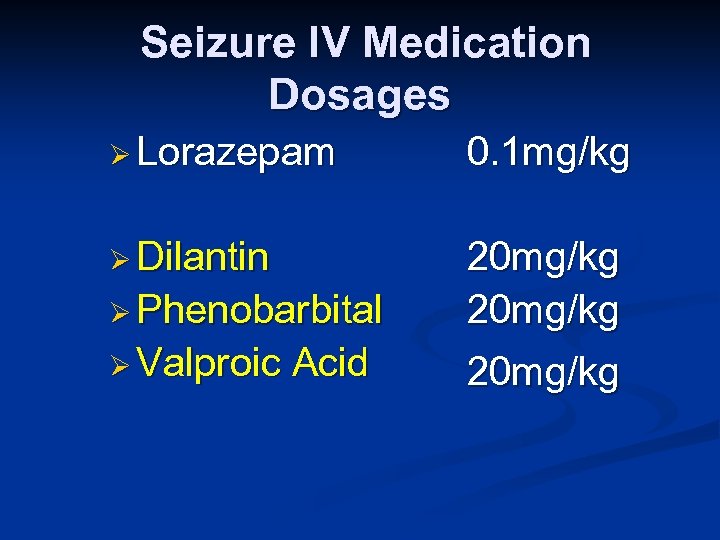
Seizure IV Medication Dosages Ø Lorazepam 0. 1 mg/kg Ø Dilantin Ø Phenobarbital 20 mg/kg Ø Valproic 20 mg/kg Acid

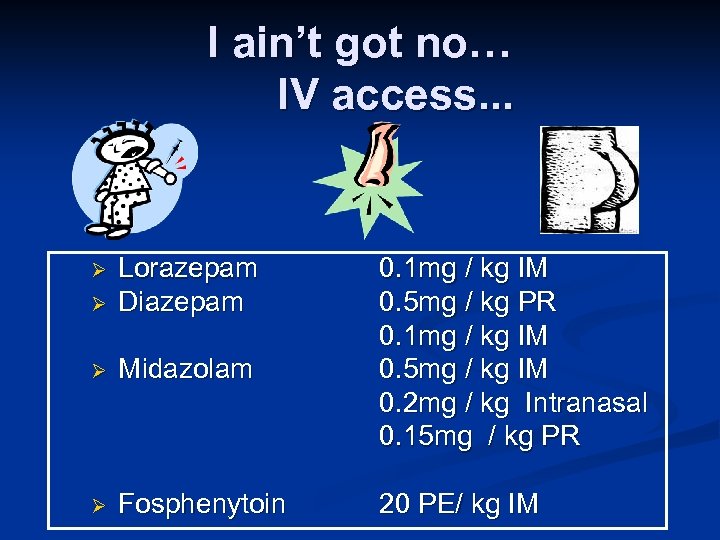
I ain’t got no… IV access. . . Ø Lorazepam Diazepam Ø Midazolam Ø Fosphenytoin Ø 0. 1 mg / kg IM 0. 5 mg / kg PR 0. 1 mg / kg IM 0. 5 mg / kg IM 0. 2 mg / kg Intranasal 0. 15 mg / kg PR 20 PE/ kg IM
Case One Ø Seizure Ø What Stops would you like to know and do?
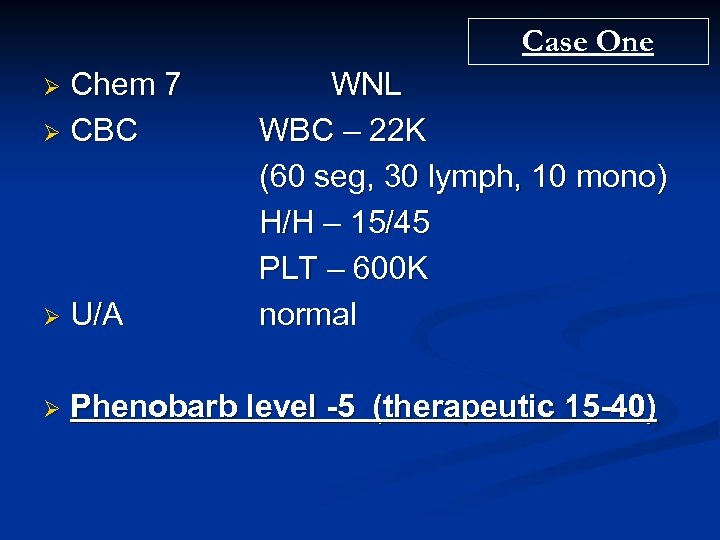
Case One Chem 7 Ø CBC Ø WNL WBC – 22 K (60 seg, 30 lymph, 10 mono) H/H – 15/45 PLT – 600 K normal Ø U/A Ø Phenobarb level -5 (therapeutic 15 -40)
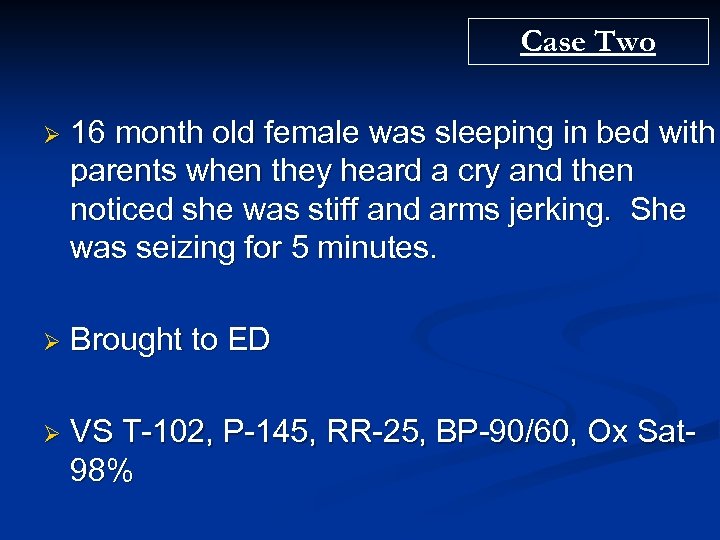
Case Two Ø 16 month old female was sleeping in bed with parents when they heard a cry and then noticed she was stiff and arms jerking. She was seizing for 5 minutes. Ø Brought to ED Ø VS T-102, P-145, RR-25, BP-90/60, Ox Sat 98%
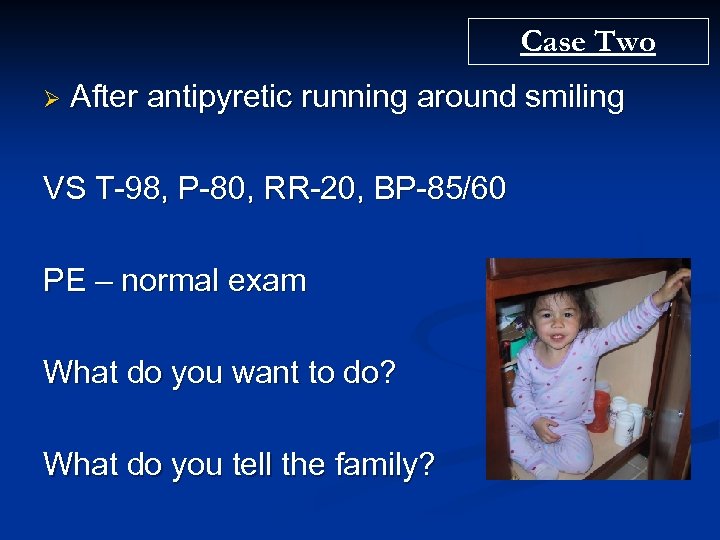
Case Two Ø After antipyretic running around smiling VS T-98, P-80, RR-20, BP-85/60 PE – normal exam What do you want to do? What do you tell the family?
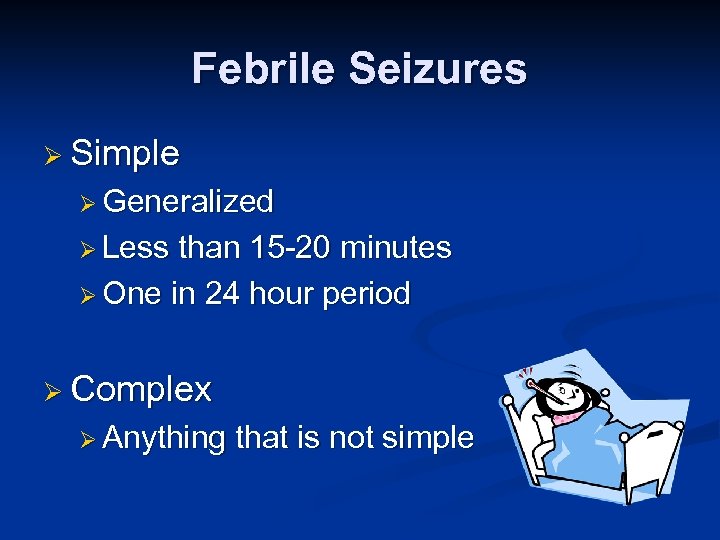
Febrile Seizures Ø Simple Ø Generalized Ø Less than 15 -20 minutes Ø One in 24 hour period Ø Complex Ø Anything that is not simple
Febrile Seizures 6 months to 6 years Ø 2 -5 % of kids have a febrile seizure Ø 33% will have a second Ø 10% will have 3 or more Ø No proven increase risk of epilepsy in “normal” kids Ø
Simple Febrile Seizures Ø Work-up Ø Find Ø If source of fever and treat it you think they have meningitis tap them ØLow threshold to tap kids less than 12 months
Complex Febrile Seizures Ø Work-up Ø Find source of fever and treat it Ø Work up for seizure
Febrile Seizures Antipyretics (what do you tell parents? ) Ø Worth giving, but no study shows you can prevent future febrile seizures
Case Three Ø 6 month old female, brought in by rescue. Mother called and felt the child was having trouble breathing. Ø Seizing, GTC activity Ø T-95, P– 180, RR– 40, BP– 80/50, Ox Sat– 95% Ø What would you like to know and do?
Case Three Ø PE Ø No sign of trauma Ø Fontanelle flat Ø No rashes Ø Rhythmic jerking of arms bilaterally Ø Eyes rolled back Ø Not responding
Case Three Oxygen, NPA Saturation 100% Ø IV access nice work! Ø D-stick 100 good to know Ø Lorazepam 0. 1 mg/kg X 2 doses thank you! Ø Ø Still seizing? ? ?
Case Three Oxygen, NPA Saturation 100% Ø IV access nice work! Ø D-stick 100 good to know Ø Lorazepam 0. 1 mg/kg X 2 doses thank you! Ø Ø Still seizing? ? ?
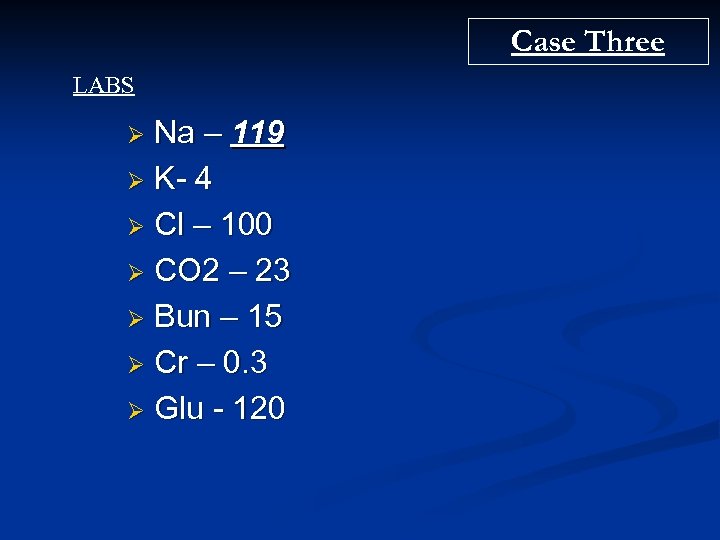
Case Three LABS Na – 119 Ø K- 4 Ø Cl – 100 Ø CO 2 – 23 Ø Bun – 15 Ø Cr – 0. 3 Ø Glu - 120 Ø
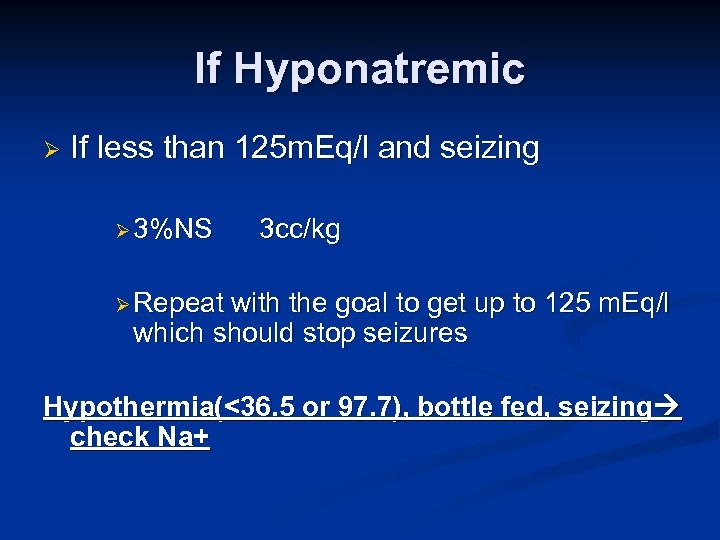
If Hyponatremic Ø If less than 125 m. Eq/l and seizing Ø 3%NS 3 cc/kg Ø Repeat with the goal to get up to 125 m. Eq/l which should stop seizures Hypothermia(<36. 5 or 97. 7), bottle fed, seizing check Na+
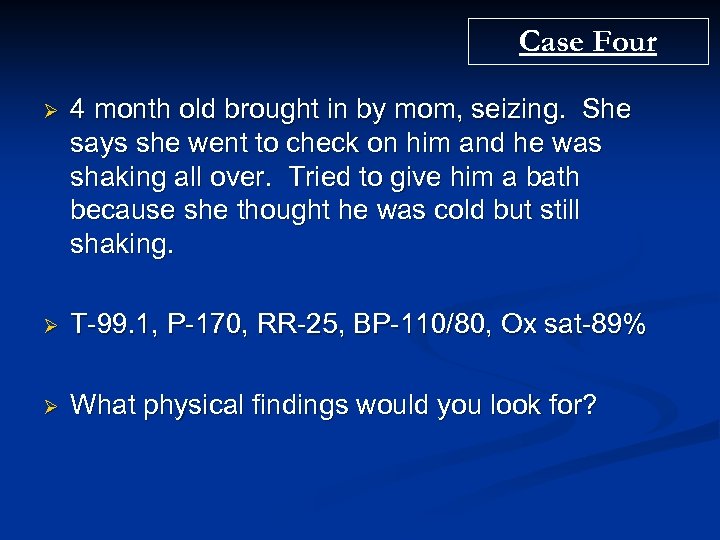
Case Four Ø 4 month old brought in by mom, seizing. She says she went to check on him and he was shaking all over. Tried to give him a bath because she thought he was cold but still shaking. Ø T-99. 1, P-170, RR-25, BP-110/80, Ox sat-89% Ø What physical findings would you look for?
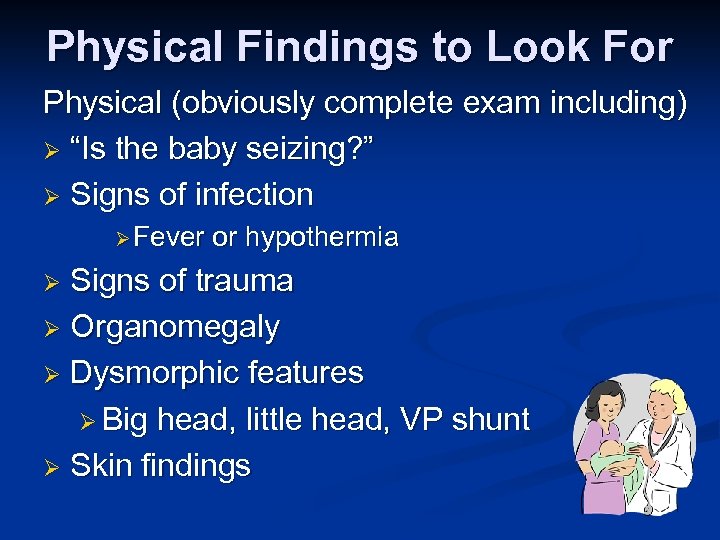
Physical Findings to Look For Physical (obviously complete exam including) Ø “Is the baby seizing? ” Ø Signs of infection Ø Fever or hypothermia Signs of trauma Ø Organomegaly Ø Dysmorphic features Ø Big head, little head, VP shunt Ø Skin findings Ø
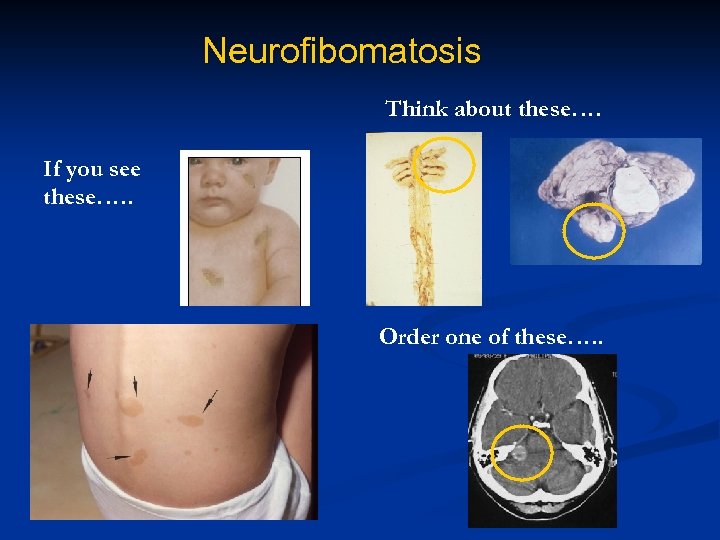
Neurofibomatosis Think about these…. If you see these…. . Order one of these…. .
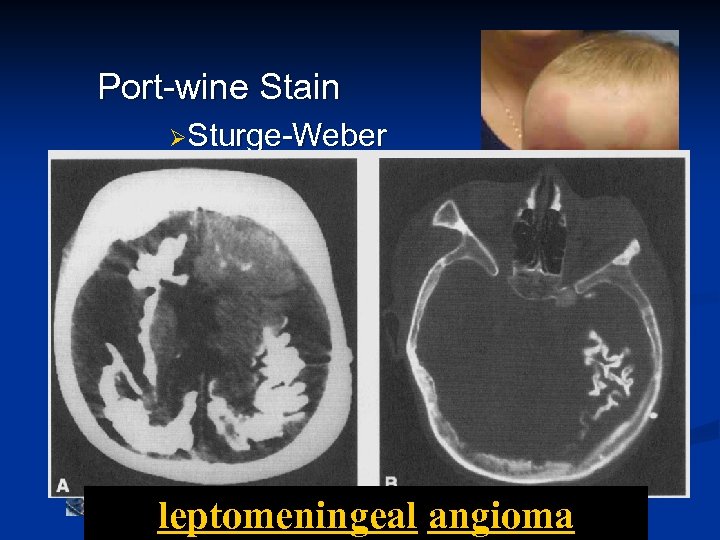
Port-wine Stain ØSturge-Weber leptomeningeal angioma
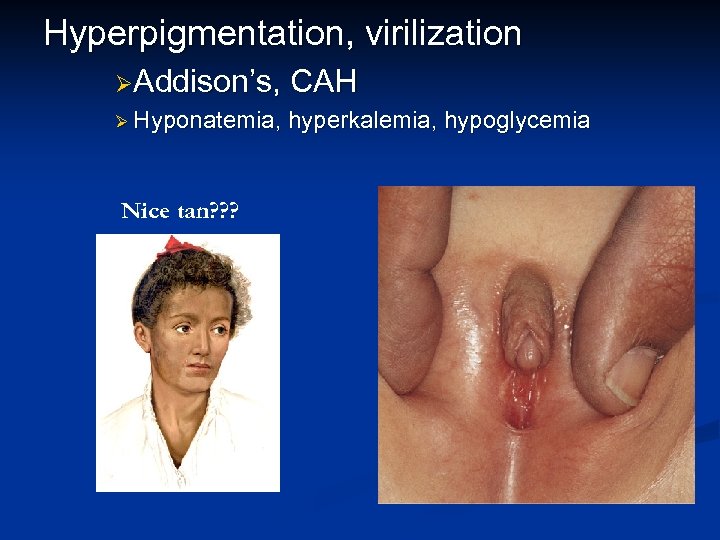
Hyperpigmentation, virilization ØAddison’s, CAH Ø Hyponatemia, hyperkalemia, hypoglycemia Nice tan? ? ? What the ? ? ?
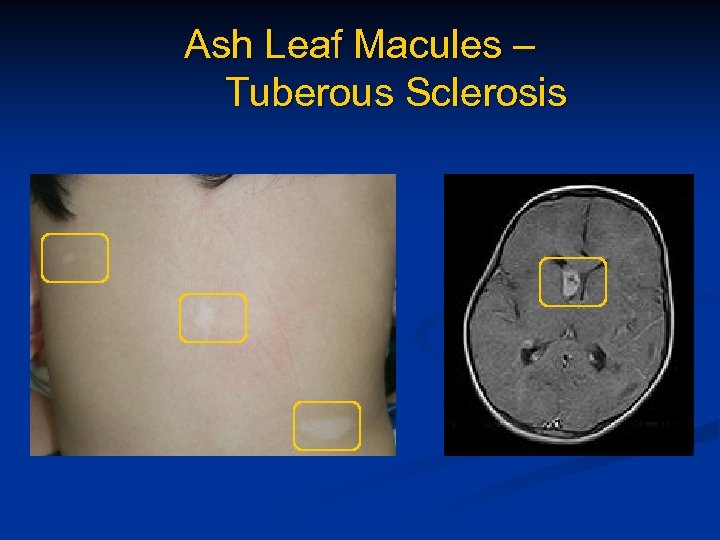
Ash Leaf Macules – Tuberous Sclerosis
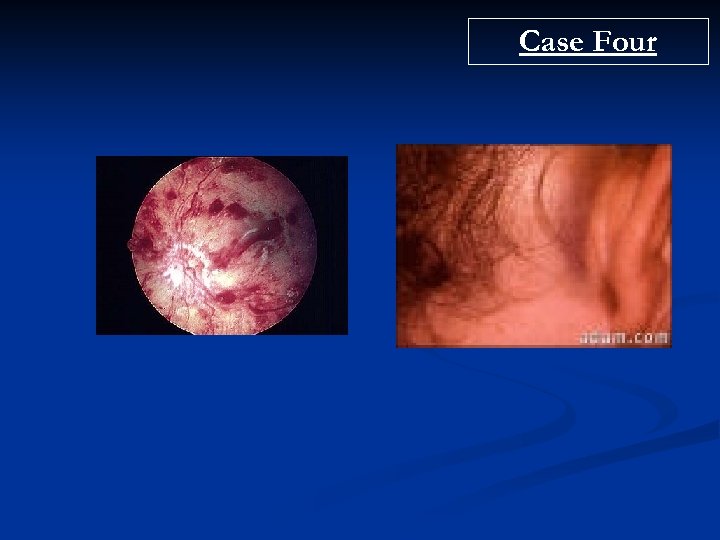
Case Four Ø PE Ø Anterior fontanelle bulging Ø Pupils are minimally reactive Ø CV – RRR Ø Resp – CTA Bilat, but shallow breaths Ø Abd – distended Ø Ext – bruising on the arms Ø Neuro – eyes deviated to right, increased tone, seizing
Case Four
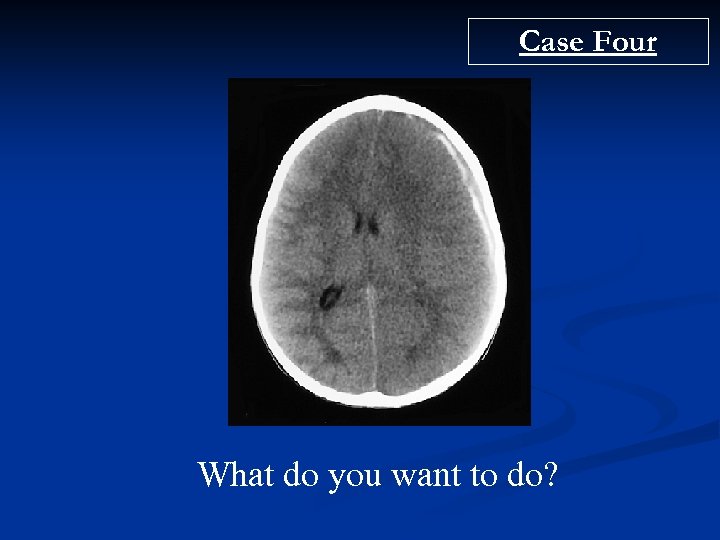
Case Four What do you want to do?
Case Four Airway (if not already intubated) Ø Fosphenytoin or phenobarb Ø Mannitol (is BP adequate? ) Ø Nearest pediatric neurosurgeon Ø Any other children at home? Ø Document the story well!! Ø
Case Five Ø 7 year old was at home working on his computer and parents heard a thump, they ran upstairs and found him seizing. Ø Lasted 2 minutes, he was tired for 30 minutes and now back to baseline Ø What would your work up be?
Case Five Ø If normal exam and no significant PMHx Ø Will need outpatient EEG, outpatient neurology Ø Possibly an MRI of brain Ø No Head CT Ø (some say 1/1000 mortality for each pediatric head CT) Ø No Blood work
Who gets a scan? Ø Ø Ø Ø Ø Focal seizure Persistent seizure Focal neurological deficit VPS Neurocutaneous disorder Signs of increased ICP History of trauma Immunocompromised Bleeding disorder (sickle cell, hyper or hypocoagulable)
Who gets labs? Bedside glucose: Ø Think about it often Electrolytes for: Ø Prolonged or persistent seizures Ø Younger than 6 months old Ø History of metabolic disorder, diabetes, dehydration, excess water intake, altered LOC
Who gets labs? Tox screen if altered LOC CSF for: Ø neonatal seizures Ø altered LOC, prolonged postictal period Ø signs of meningitis
Case Six Ø Rescue arrives with a 2 year old seizing. Parents woke up and found the child in the living room on the floor seizing. Ø T-98, P-160, RR-40, BP-80/50, Ox Sat-92% Ø There was a party the night before Ø You get one lab test what is it and why?
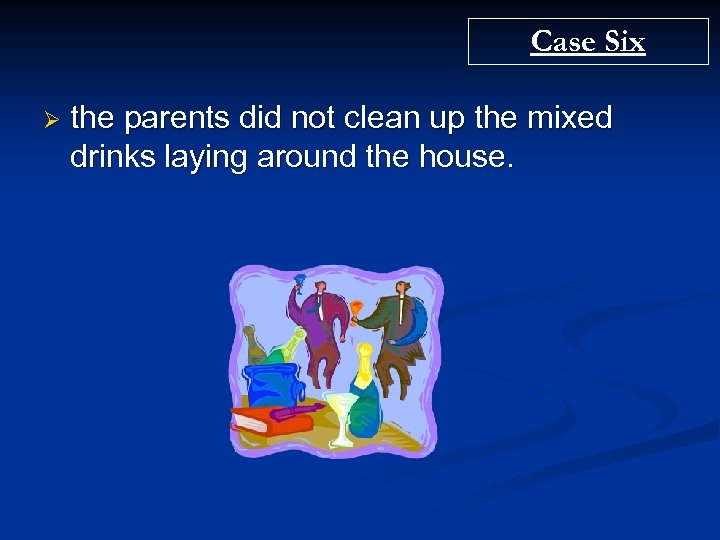
Case Six Ø the parents did not clean up the mixed drinks laying around the house.
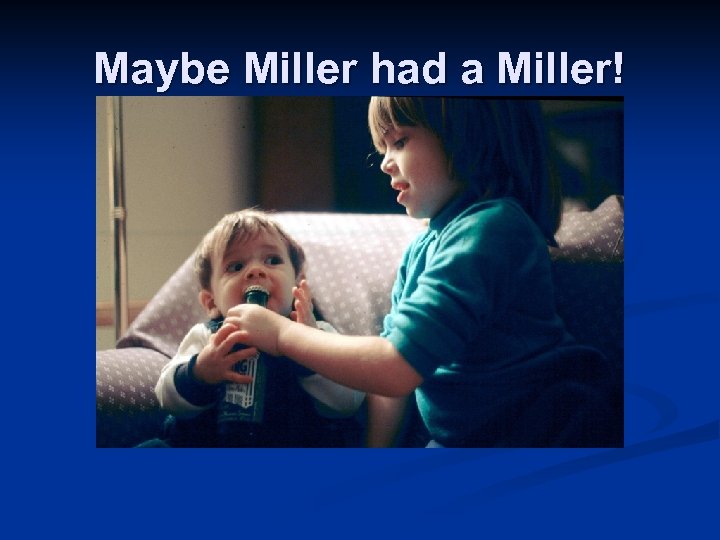
Maybe Miller had a Miller!

Case Six ØD-stick 35
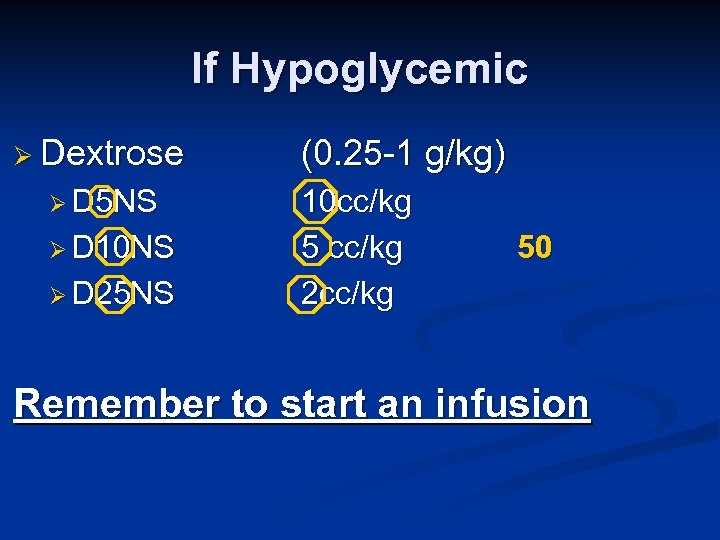
If Hypoglycemic Ø Dextrose Ø D 5 NS Ø D 10 NS Ø D 25 NS (0. 25 -1 g/kg) 10 cc/kg 5 cc/kg 2 cc/kg 50 Remember to start an infusion
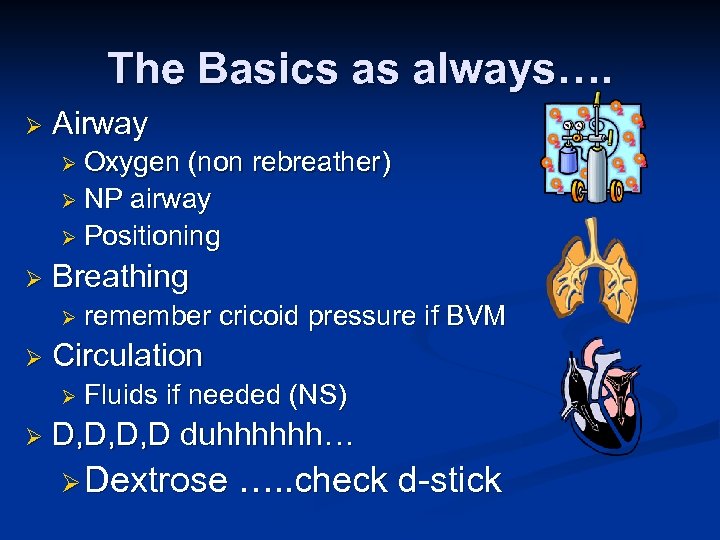
The Basics as always…. Ø Airway Ø Oxygen (non rebreather) Ø NP airway Ø Positioning Ø Breathing Ø remember Ø Circulation Ø Fluids Ø cricoid pressure if BVM if needed (NS) D, D, D, D duhhhhhh… Ø Dextrose …. . check d-stick
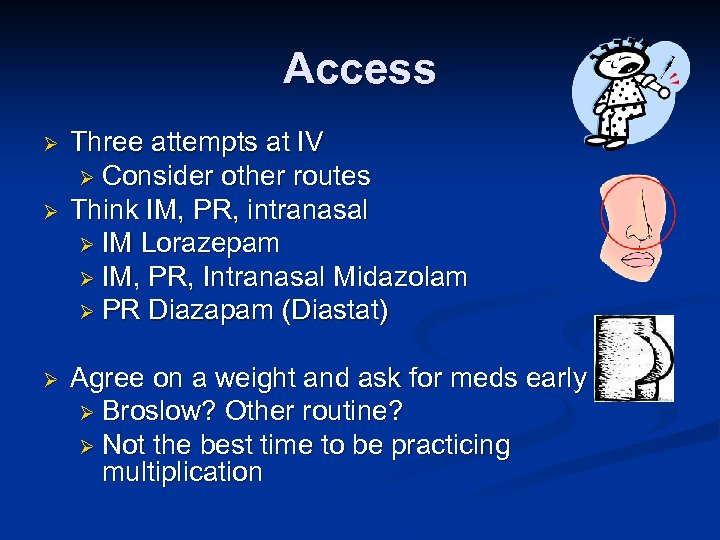
Access Ø Ø Ø Three attempts at IV Ø Consider other routes Think IM, PR, intranasal Ø IM Lorazepam Ø IM, PR, Intranasal Midazolam Ø PR Diazapam (Diastat) Agree on a weight and ask for meds early Ø Broslow? Other routine? Ø Not the best time to be practicing multiplication

Additional Pearls
Pyridoxine (Vit B 6) Ø Consider for persistent seizures in patient <1 yr Ø 50 -100 mg IV Ø Consider in suspected Isoniazid toxicity Ø Initial dose 70 mg/kg
Fosphenytoin Nicer to veins Ø Can be infused rapidly with less hypotension Ø 20 Phenytoin equivalents/kg load Ø
Case Seven Ø 4 day old is brought into your ED for poor feeding. You notice this……. . Ø VS T-99, P-165, RR-35, BP-70/45, Ox Sat 99%
Case Seven Ø PE Ø No sign of trauma Ø No rashes Ø Well hydrated Ø No dysmorphic features Ø Normal tone Ø Eyes deviated to the left Ø Persistent lip smacking/sucking/chewing Ø What would you like to do?
Neonatal Seizures Ø Rare to have GTC movements Ø Immature Ø Can cortical development be subtle focal findings Ø Repetitive movements ØEye blinking ØEye deviation ØChewing ØLip smacking ØBicycling
Neonatal Seizures § Can be focal tonic or clonic seizures Ø Sustained posturing of one or more extremities Ø Possibly just rhythmic jerking of single extremity
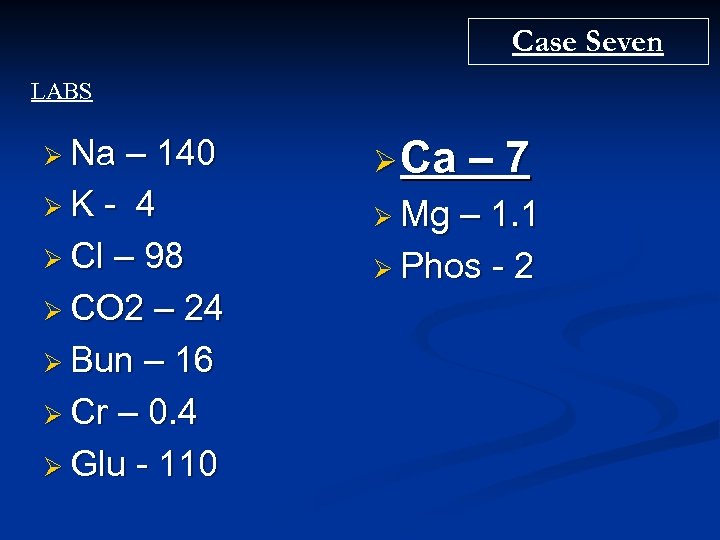
Case Seven LABS Ø Na – 140 ØK - 4 Ø Cl – 98 Ø CO 2 – 24 Ø Bun – 16 Ø Cr – 0. 4 Ø Glu - 110 Ø Ca Ø Mg – 7 – 1. 1 Ø Phos - 2
Hypocalcemia Serum calcium < 7 -8 mg/dl Ø 10% Ca. Gluconate 1 -2 ml/kg slow IV infusion Ø 10% Ca. Cl 0. 2 ml/kg slow IV infusion Ø Ø Continuous Ø ECG monitoring Chest x-ray looking for thymus
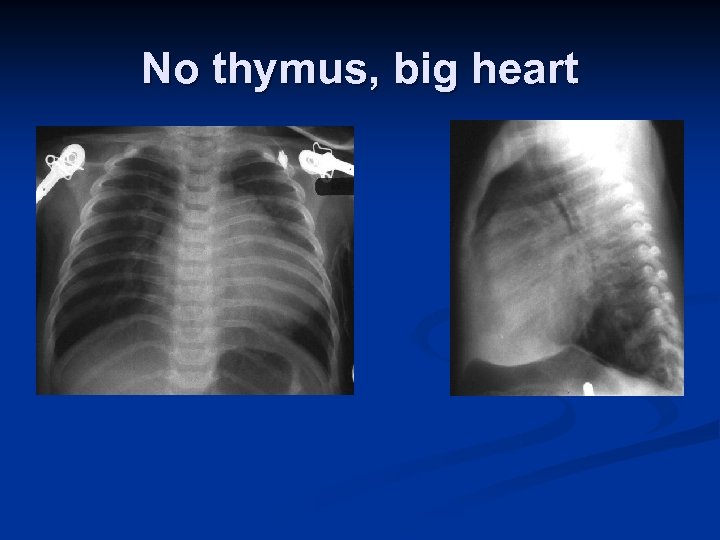
No thymus, big heart
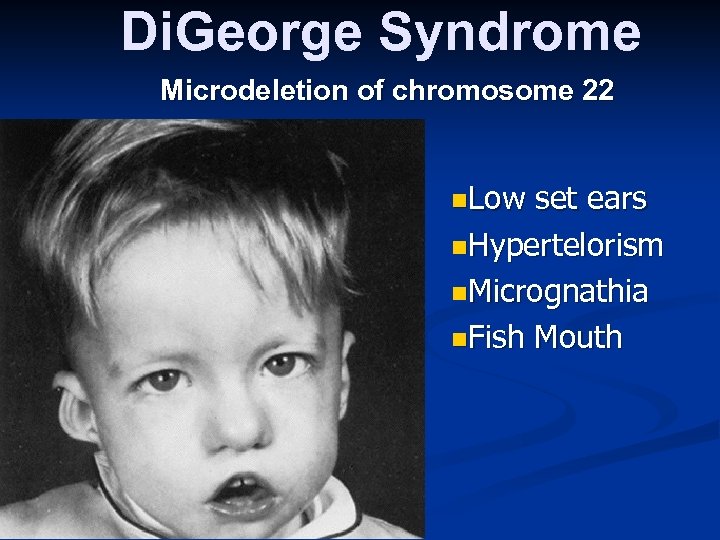
Di. George Syndrome Microdeletion of chromosome 22 n. Low set ears n. Hypertelorism n. Micrognathia n. Fish Mouth
Скачать презентацию Case Based Peds in your ED My kid
b629c7f875e9f0310c8c62aab20d9b95.ppt