


 Скачать презентацию Cartographies of Salt Sodium Healthy Eating the
104a9d9dbcfc2094e1c103cf15f9cdeb.ppt
- Количество слайдов: 23
 Cartographies of Salt: Sodium, Healthy Eating & the Built Environment Prairie Women’s Health Centre of Excellence Research Day, Winnipeg February 11, 2013
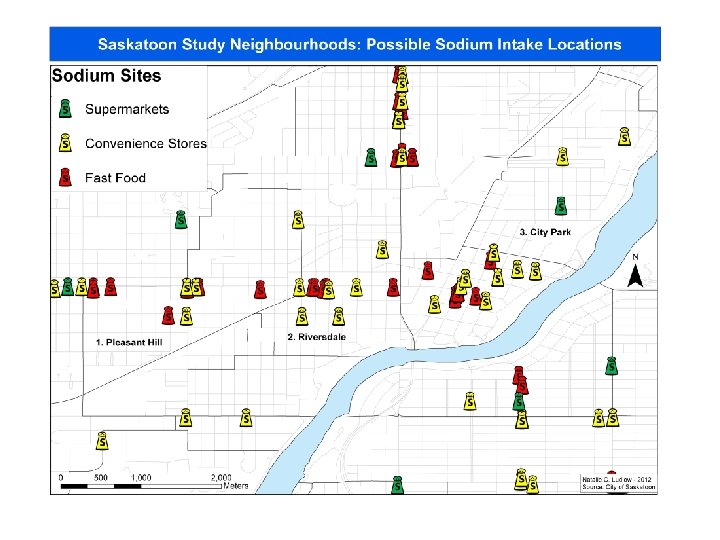
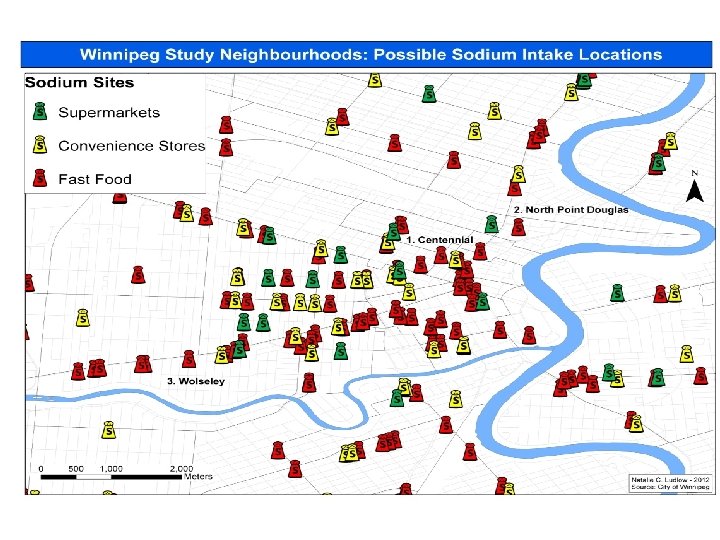
 Study purposes To investigate and map the relationship of sodium intake to women’s overall food consumption in Saskatoon’s and Winnipeg’s “food deserts” Understand access-to-food-issues for women within urban built environments How elevated sodium intake is understood and acted-upon by women
 Research Questions What do individuals know about the health consequences of eating too much sodium? 2. Do you consider yourself to be eating healthy amounts of sodium and if not, what factors contribute to this? 3. Given the ways in which you may play a role in how your family eats, as well in the choices you make for yourself, what would you like to see changed pertaining to food choices and availability? 1.
 Built Environment: “YOU are where you live” Community-level measures include homes, schools, workplaces, roadways, parks, etc. (part of a municipal or institutional plan or design) Human-made & policy-driven “Food Deserts” – limited access & availability to healthy foods in low socioeconomic areas
 SODIUM /Na. Cl ? Salt works as an effective preservative in preventing pathogen bacteria growth by inducing cell dehydration The human body requires small amounts of sodium to function properly Approximately 77% of Canadians’ sodium intake comes from the salt in commercially prepared (processed) foods. (1)
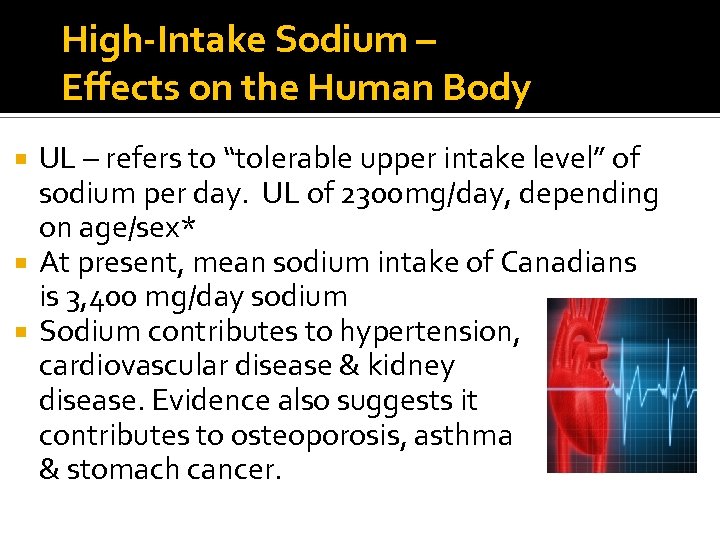 High-Intake Sodium – Effects on the Human Body UL – refers to “tolerable upper intake level” of sodium per day. UL of 2300 mg/day, depending on age/sex* At present, mean sodium intake of Canadians is 3, 400 mg/day sodium Sodium contributes to hypertension, cardiovascular disease & kidney disease. Evidence also suggests it contributes to osteoporosis, asthma & stomach cancer.
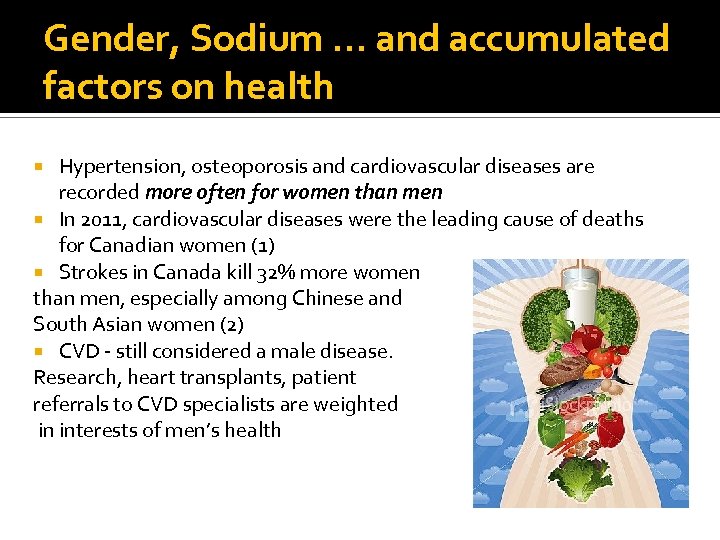 Gender, Sodium … and accumulated factors on health Hypertension, osteoporosis and cardiovascular diseases are recorded more often for women than men In 2011, cardiovascular diseases were the leading cause of deaths for Canadian women (1) Strokes in Canada kill 32% more women than men, especially among Chinese and South Asian women (2) CVD - still considered a male disease. Research, heart transplants, patient referrals to CVD specialists are weighted in interests of men’s health
 Gender-Based Analysis on Built Environment and Healthy Eating Urban poverty – affects women & men differently Built environment & women’s poor rating quality of life (QOL) – most pronounced in low socio-economic (SES) neighbourhoods Women’s gendered role in food purchase & preparation (and the health aspect of fresh food, sodium)
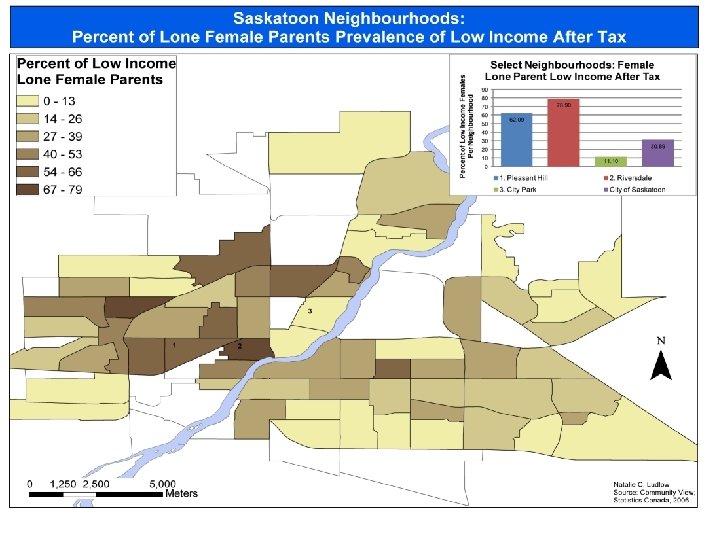
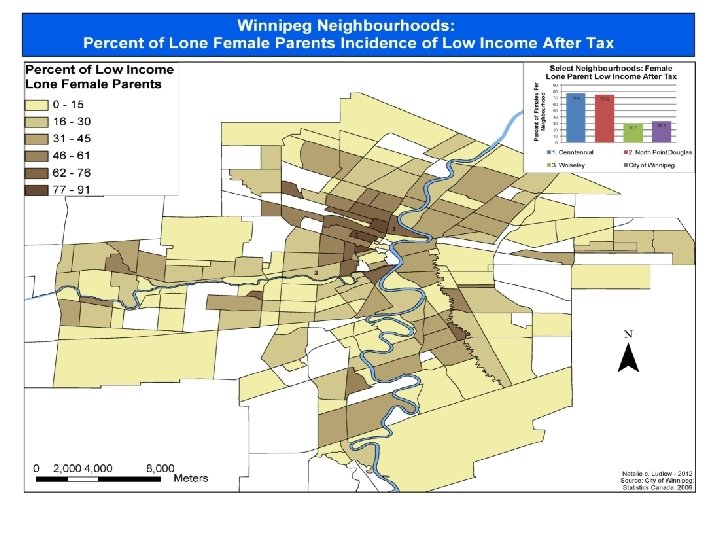
 Study Findings 8 women in Saskatoon’s core neighbourhood (Riversdale and Pleasant Hill); 11 women from Winnipeg’s food desert (North Point Douglas and Centennial) Interviews – semi-structured, qualitative Women shared stories based on aspects of lived experiences: living in poverty, with mental illness, parenting, being new to Canada, being an Aboriginal woman, disabled, elderly, isolated
 Gender, Food, and Built Environment Healthy Eating and Knowledge of Food Women, Resilience and Feeding Others Transportation Issues Personal Safety, Stress
 Women, Resilience and Feeding Others Female lone parenting: income approx. 65% of the income of male lone parent families Single mothers more prevalent in study neighbourhoods than other neighbourhoods in Saskatoon and Winnipeg.
 Transportation & Mobility Major limiting factor for eating healthy foods Women spoke about transportation strategies (take bus 1 way/taxi back with bags of groceries) Challenges for elderly women and women with disabilities
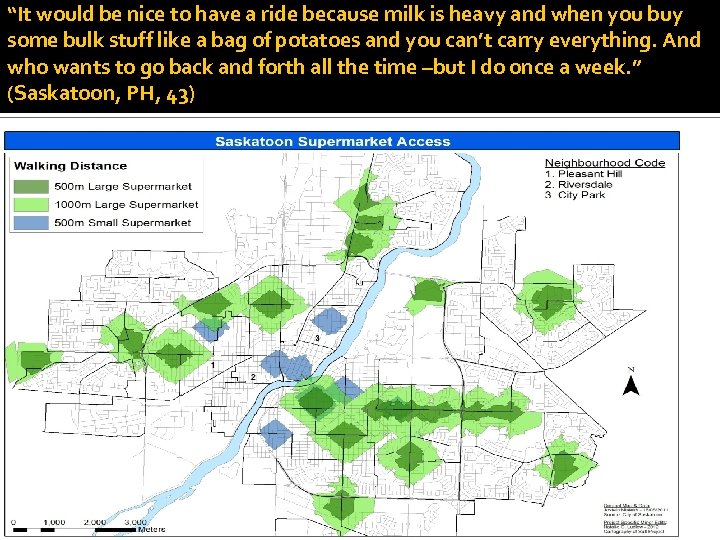 “It would be nice to have a ride because milk is heavy and when you buy some bulk stuff like a bag of potatoes and you can’t carry everything. And who wants to go back and forth all the time –but I do once a week. ” (Saskatoon, PH, 43)
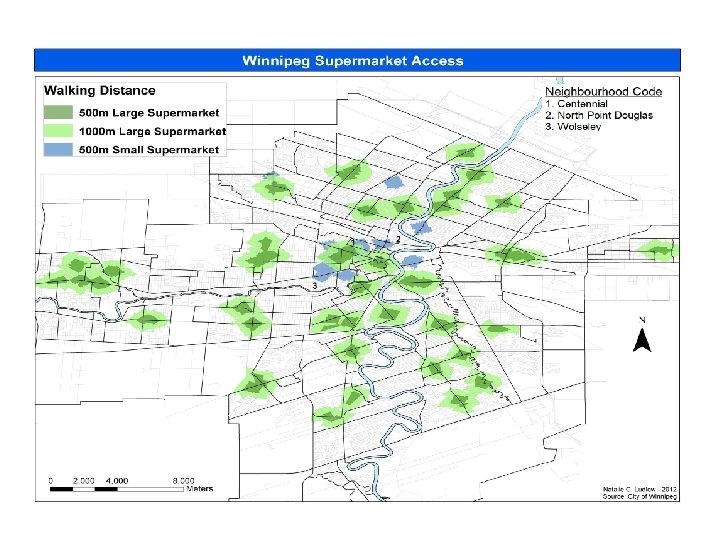
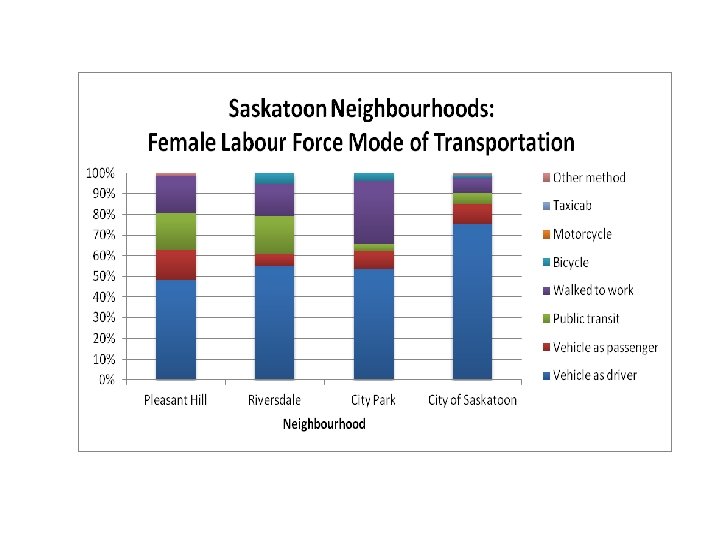
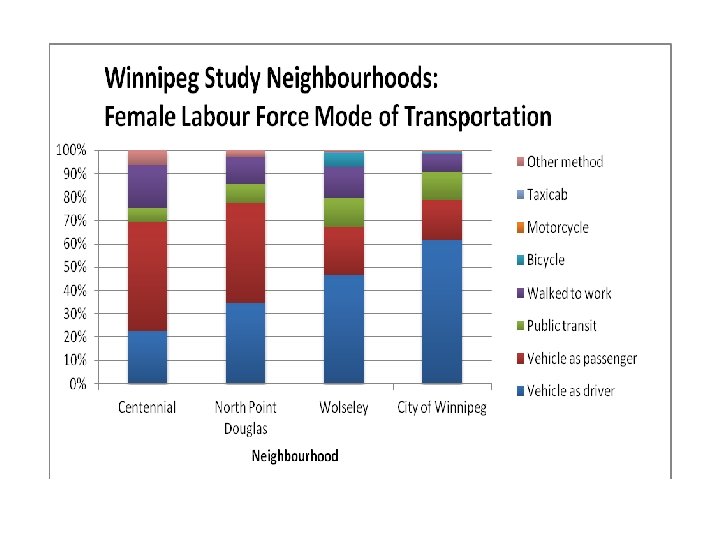
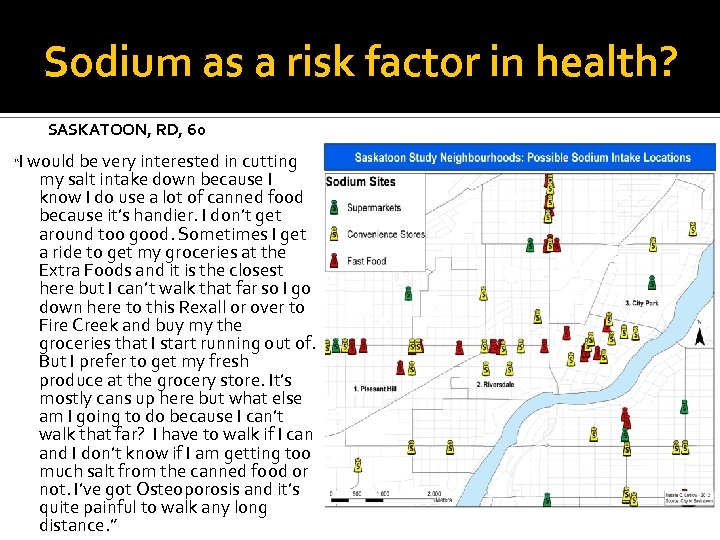 Sodium as a risk factor in health? SASKATOON, RD, 60 “I would be very interested in cutting my salt intake down because I know I do use a lot of canned food because it’s handier. I don’t get around too good. Sometimes I get a ride to get my groceries at the Extra Foods and it is the closest here but I can’t walk that far so I go down here to this Rexall or over to Fire Creek and buy my the groceries that I start running out of. But I prefer to get my fresh produce at the grocery store. It’s mostly cans up here but what else am I going to do because I can’t walk that far? I have to walk if I can and I don’t know if I am getting too much salt from the canned food or not. I’ve got Osteoporosis and it’s quite painful to walk any long distance. ”
 Conclusion Food secure neighbourhoods The right to safe and nutritious food Gender considerations for neighbourhood design Mandatory food industry targets for reductions in sodium in processed foods
 For more information contact: Full report: www. pwhce. ca Yvonne Hanson & Roberta Stout Prairie Women’s Health Centre of Excellence (204) 982 -6630