


 Скачать презентацию CAREERS AND STUDY FOR THE 5 TH YEAR
437e7eb5d1336492478d3db66821520f.ppt
- Количество слайдов: 41
 CAREERS AND STUDY FOR THE 5 TH YEAR STUDENT 29 TH SEPTEMBER 2015 Ms. Mary Costello Ms. Lesley Porter
 AGENDA Career planning and research New common points scale for entry into higher education from 2017 5 th Year Career Night 12 th April 2016 Study skills for 5 th year students
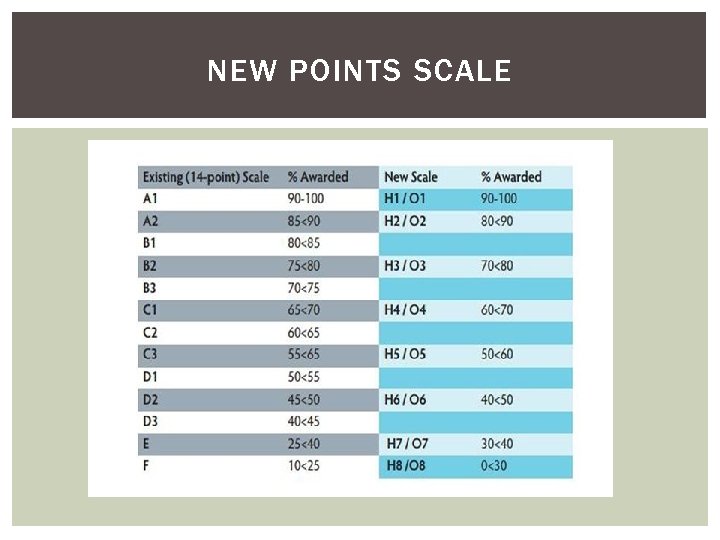 NEW POINTS SCALE
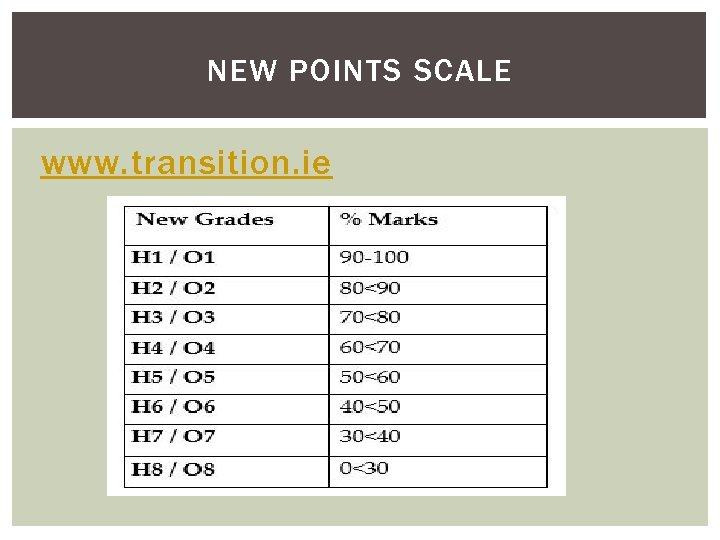 NEW POINTS SCALE www. transition. ie
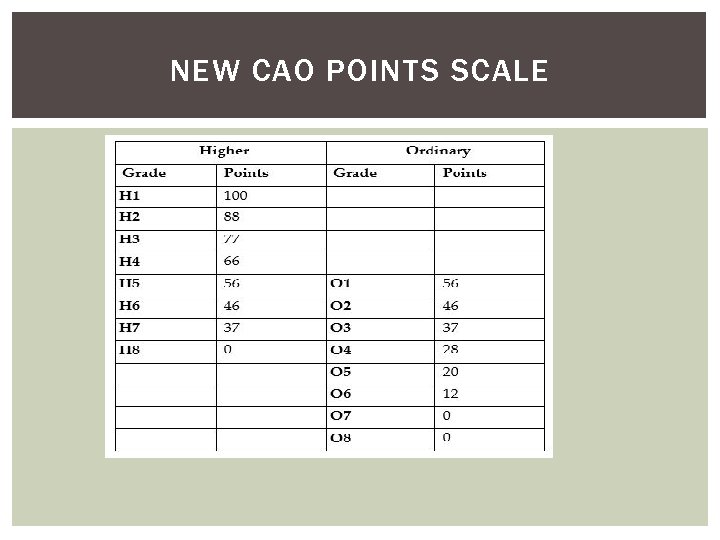 NEW CAO POINTS SCALE
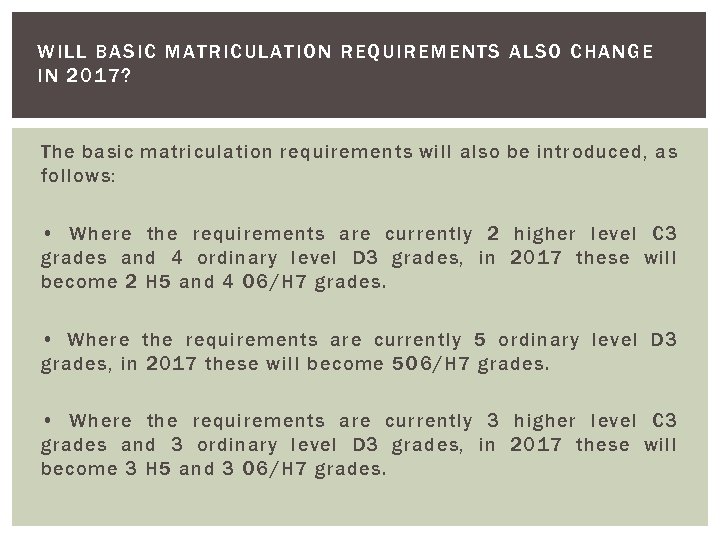 WI LL BASI C MATRICULA TION REQUIREMENTS A LSO CH ANGE IN 2017? The basic matriculation requirements will also be introduced, as follows: • Where the requirements are currently 2 higher level C 3 grades and 4 ordinary level D 3 grades, in 2017 these will become 2 H 5 and 4 O 6/H 7 grades. • Where the requirements are currently 5 ordinary level D 3 grades, in 2017 these will become 5 O 6/H 7 grades. • Where the requirements are currently 3 higher level C 3 grades and 3 ordinary level D 3 grades, in 2017 these will become 3 H 5 and 3 O 6/H 7 grades.
 50 8 6 3
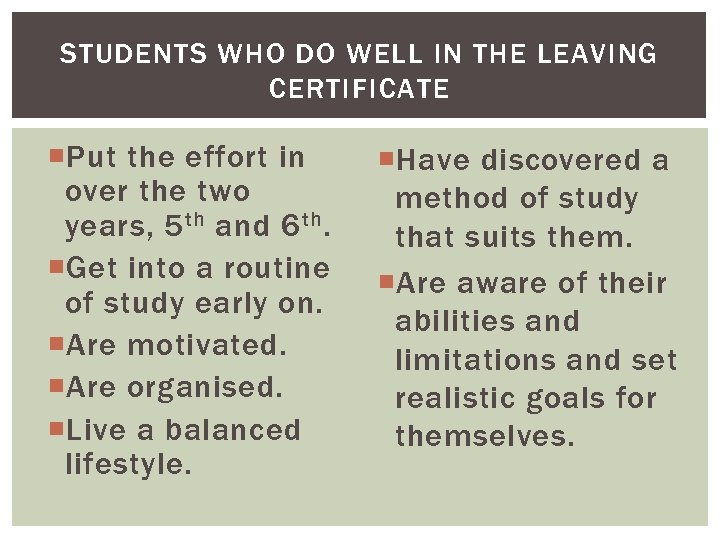 STUDENTS WHO DO WELL IN THE LEAVING CERTIFICATE Put the effort in over the two years, 5 th and 6 th. Get into a routine of study early on. Are motivated. Are organised. Live a balanced lifestyle. Have discovered a method of study that suits them. Are aware of their abilities and limitations and set realistic goals for themselves.
 STUDENTS WHO DO WELL IN THE LEAVING CERTIFICATE Take class tests and school exams seriously. Have conditions at home conducive to study Have supportive, interested parents who encourage, motivate and get the pressure balance right.
 STUDY AND ORGANISATION What is meant by “study”? Homework, Making notes, Revision, Practice exam questions. How much study?
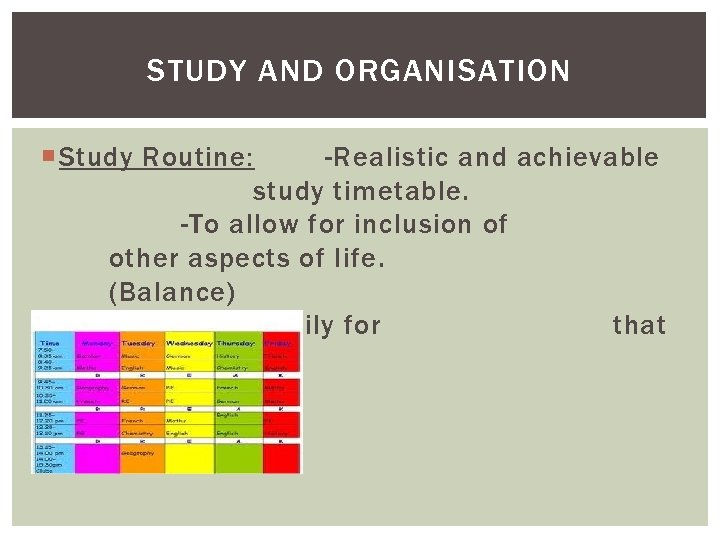 STUDY AND ORGANISATION Study Routine: -Realistic and achievable study timetable. -To allow for inclusion of other aspects of life. (Balance) -Support from family for that routine.
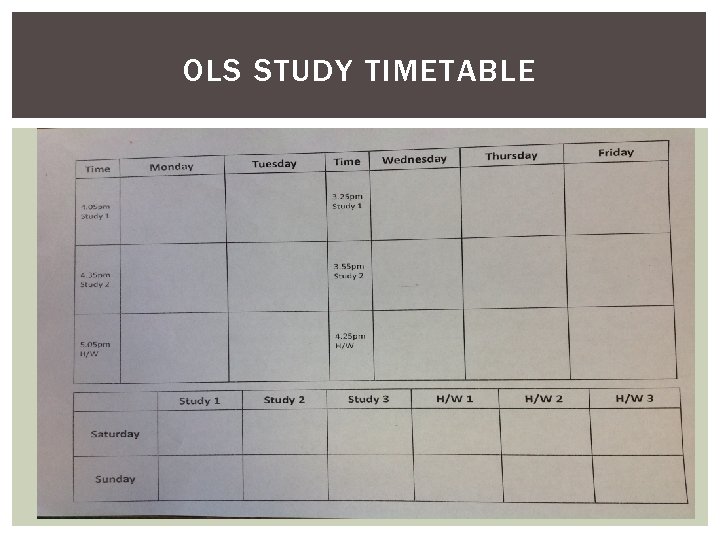 OLS STUDY TIMETABLE
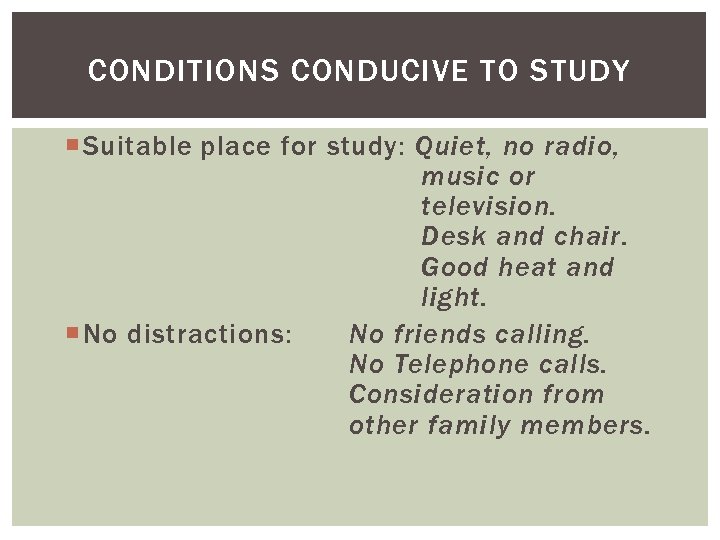 CONDITIONS CONDUCIVE TO STUDY Conditions Conducive to Study: Suitable place for study: Quiet, no radio, music or television. Desk and chair. Good heat and light. No distractions: No friends calling. No Telephone calls. Consideration from other family members.
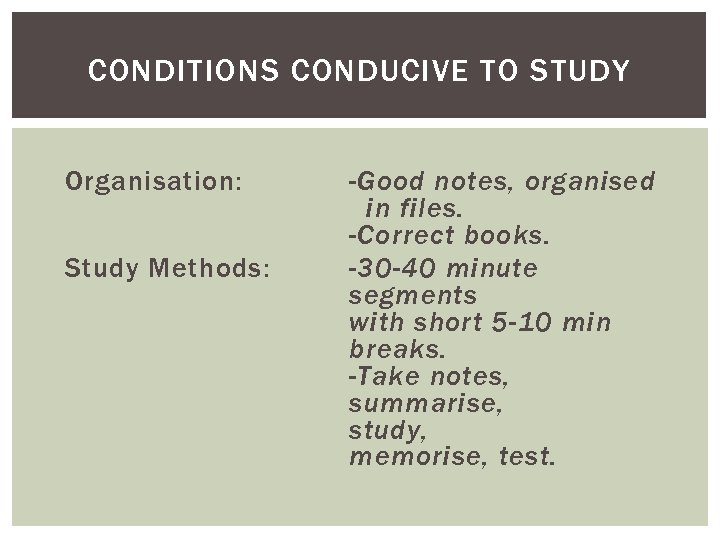 CONDITIONS CONDUCIVE TO STUDY Organisation: Study Methods: -Good notes, organised in files. -Correct books. -30 -40 minute segments with short 5 -10 min breaks. -Take notes, summarise, study, memorise, test.
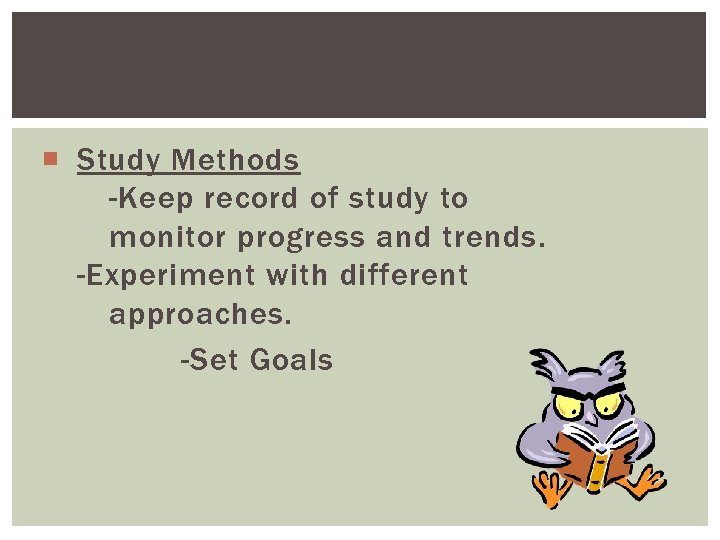 Study Methods -Keep record of study to monitor progress and trends. -Experiment with different approaches. -Set Goals
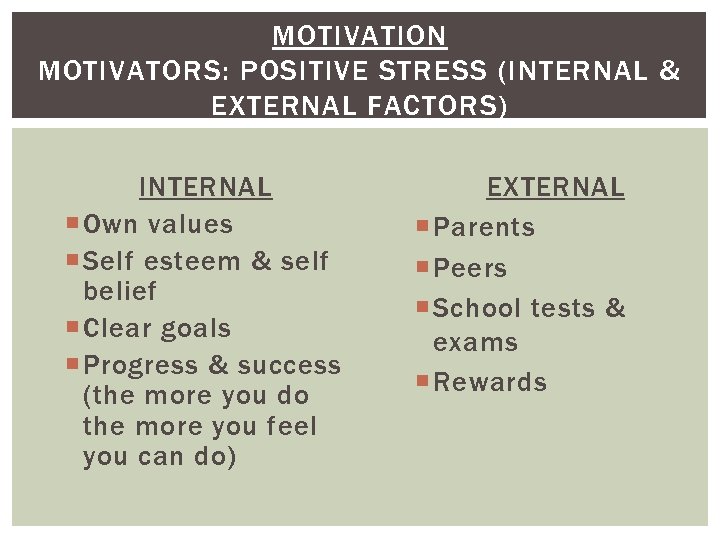 MOTIVATION MOTIVATORS: POSITIVE STRESS (INTERNAL & EXTERNAL FACTORS) INTERNAL Own values Self esteem & self belief Clear goals Progress & success (the more you do the more you feel you can do) EXTERNAL Parents Peers School tests & exams Rewards
 DEMOTIVATORS Low self-esteem (lack of confidence) Negative comparisons with others Unrealistic expectations (high/low) Too much stress/ pressure No clear future career plans Too little stress/ Pressure Lack of Routine Disorganisation (Missing notes, Not being able to find anything) Work is allowed to pile up and becomes too much to cope with
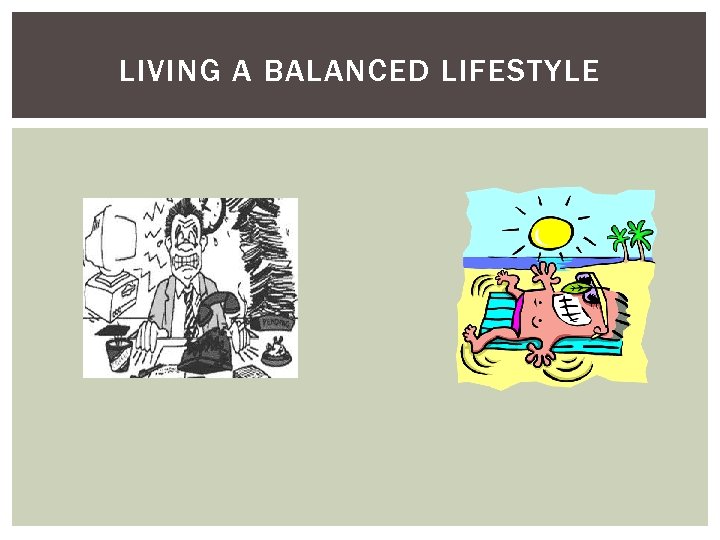
 LIVING A BALANCED LIFESTYLE ORGANISED ROUTINE: ALLOW TIME FOR EVERYTHING. Sleep: Diet: Exercise: 7/8 hours per night Healthy and balanced Sports/ walking/ swimming Part-time work: Keep to a minimum: e. g. Saturdays. Not during the week or Sunday nights. Social life: Not during the week or Sunday nights.
 LIVING A BALANCED LIFESTYLE
 CAREERS
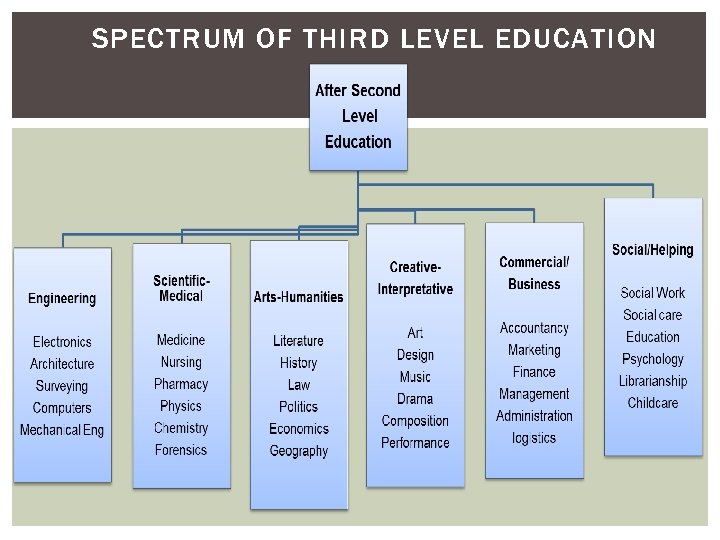 SPECTRUM OF THIRD LEVEL EDUCATION
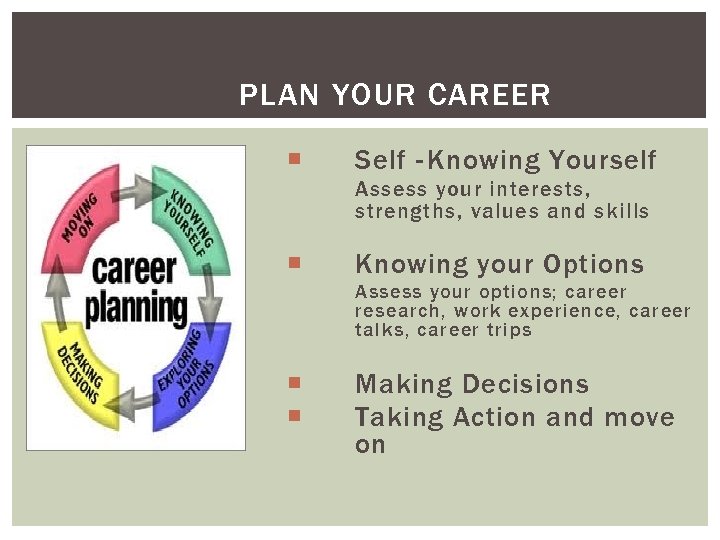 PLAN YOUR CAREER Self - Knowing Yourself Assess your interests, strengths, values and skills Knowing your Options Assess your options; career research, work experience, career talks, career trips Making Decisions Taking Action and move on
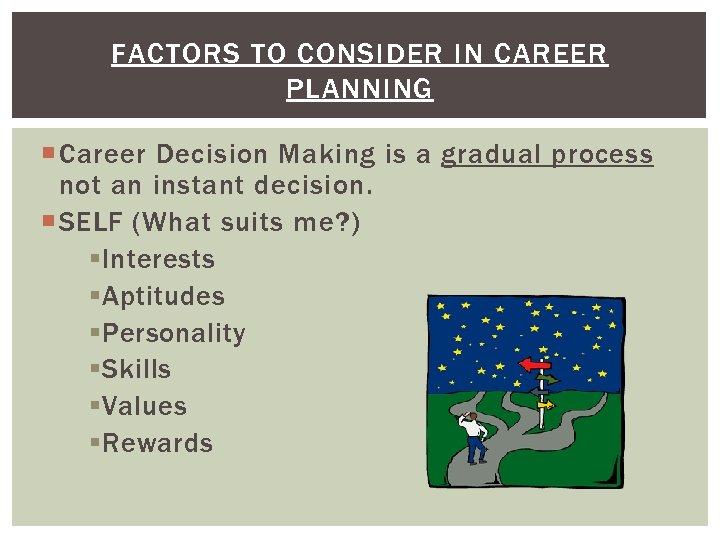 FACTORS TO CONSIDER IN CAREER PLANNING Career Decision Making is a gradual process not an instant decision. SELF (What suits me? ) § Interests § Aptitudes § Personality § Skills § Values § Rewards
 WORK (What’s out there? ) §Opportunities §Level of Entry §Training/Education §Career Development
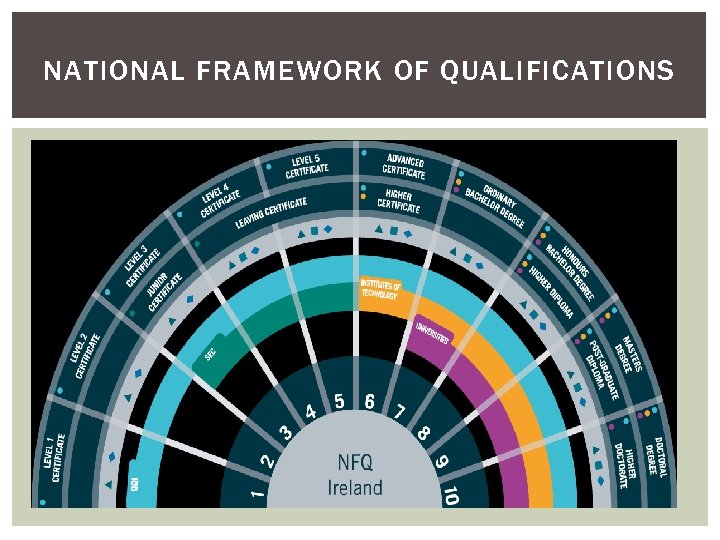 NATIONAL FRAMEWORK OF QUALIFICATIONS
 OPTIONS AFTER THE LEAVING CERTIFICATE: Further/Higher Education -CAO -UCAS (UK Colleges) -Eunicas (Europe) -Post Leaving Certificate Training Work Year Out
 CAREERS RESEARCH Books, Newspapers, Prospectus Careers & Further Education Exhibitions Open Days Career Talks Internet Guidance Counsellor Family and Friends Careers night
 QUESTIONS TO ASK Course Content/ Training schedule Minimum entry requirements Career Opportunities
 COURSE CONTENT Educational or vocational Subjects studied Optional subjects 2 nd/3 rd year choices Professional experience Year abroad Qualification (Is there a ladder of progression available? ) Duration of course
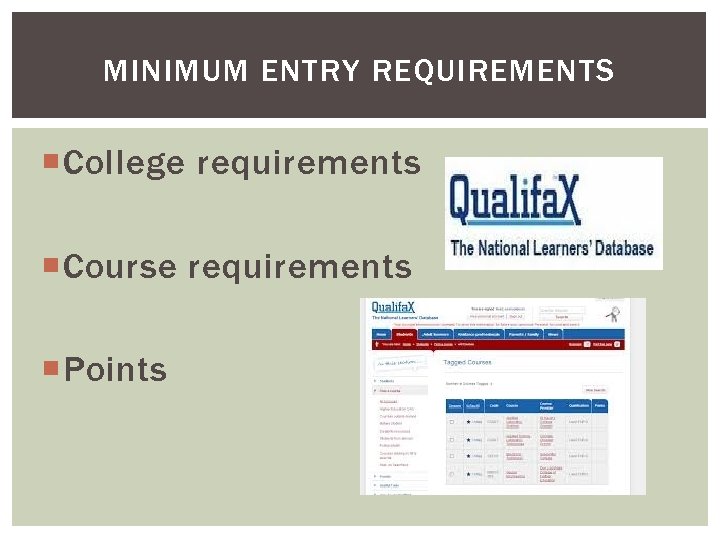 MINIMUM ENTRY REQUIREMENTS College requirements Course requirements Points
 CAREER OPPORTUNITIES The Work What’s involved in the job? Skills needed- Emotional, cognitive communication, physical, etc. Industry Climate- Opportunities, promotions Advantages & Disadvantages of the work Salary The answers to all these queries must be weighed up in conjunction with; Interests, Aptitudes, Personality, Values & Rewards
 SCHOOL GUIDANCE PROGRAMME 5 TH YEAR Trip to UCD Career talks Career evening Student research Student preparation (e. g portfolio) Interest inventories Study skills Individual meeting to discuss career plans
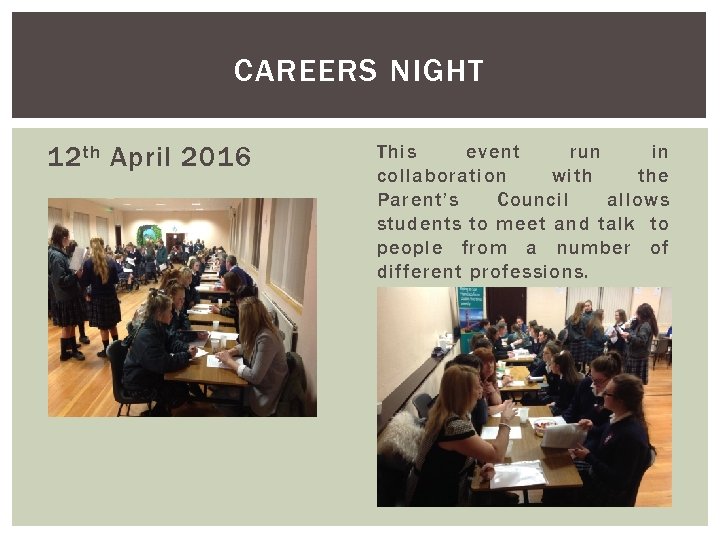 CAREERS NIGHT 12 th April 2016 This event run in collaboration with the Parent’s Council allows students to meet and talk to people from a number of different professions.
 SCHOOL GUIDANCE PROGRAMME 6 TH YEAR Careers Classes Career Talks Open Days Centigrade Interest Inventory Individual Interviews with Guidance Counsellor College Applications
 ROLE OF PARENTS Motivate- Encourage, recognize progress, reward. Monitor- Take interest, check, talk to other parents, P. T. meetings, take exam results seriously. Try to be aware: Of what’s going on in school re: tests, work etc.
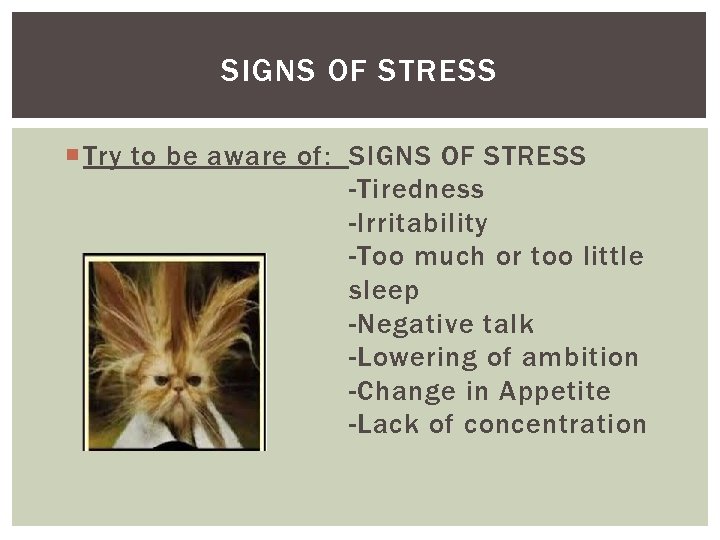 SIGNS OF STRESS Try to be aware of: SIGNS OF STRESS -Tiredness -Irritability -Too much or too little sleep -Negative talk -Lowering of ambition -Change in Appetite -Lack of concentration
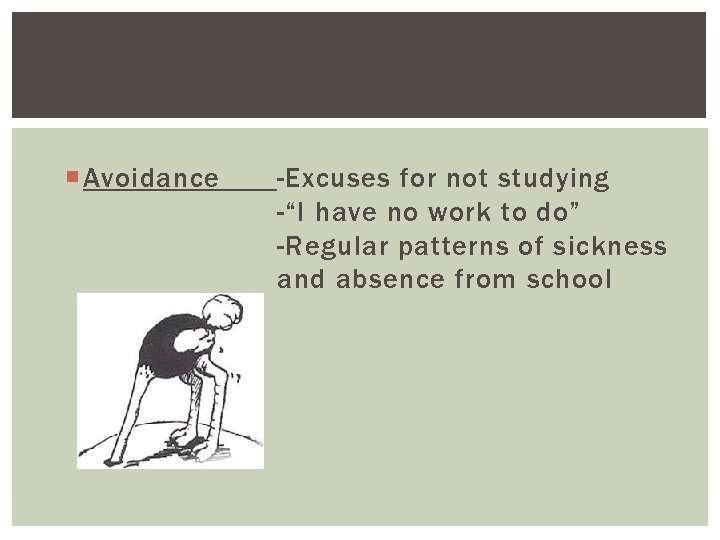 Avoidance -Excuses for not studying -“I have no work to do” -Regular patterns of sickness and absence from school
 CONCLUSION Parental Support & Interest makes a difference Start career planning and research The Leaving Certificate is a 2 year course The student is ultimately responsible.
 USEFUL WEBSITES www. cao. ie www. careersportal. ie www. qualifax. ie www. ucas. com www. studentfinance. ie www. accesscollege. ie www. eunicas. ie
 KEY DATES 15 TH Oct. - UCAS Applications to Med/Dent/Vet and Oxford/Cambridge End of November -All other UCAS app. 1 st Feb. –CAO Deadline Jan. and Feb. – PLC applications
 THANK YOU FOR ATTENDING. If you would like further information please contact us 01 4903241