Скачать презентацию CARE ASAS Validation Framework System Performance Metrics 10
76917c03483e8f4412899c70777b297d.ppt
- Количество слайдов: 22
 CARE ASAS Validation Framework System Performance Metrics 10 th October 2002 M F (Mike) Sharples
 System Performance Metrics Content • Aims • Approach • Analysis 2
 System Performance Metrics Aims • Using recognised metrics is fundamental to measuring system performance • The ASAS Validation Framework requires consistent metrics to provide comparable results • The ‘System Performance Metrics’ work demonstrates a method for identifying existing metrics for new scenarios 3
 System Performance Metrics Approach • Considerable existing work in this area – PRS – C/AFT – TORCH – INTEGRA • Collating these required a consistent hierarchy & taxonomy 4
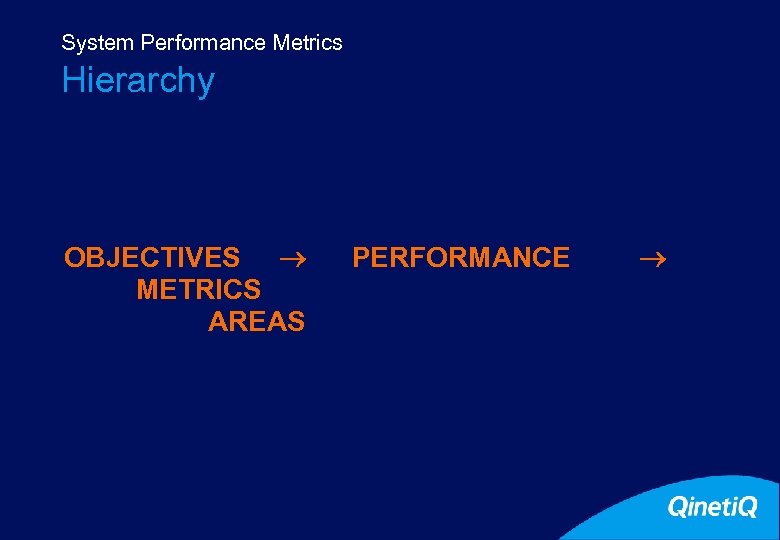 System Performance Metrics 5 Hierarchy OBJECTIVES METRICS AREAS PERFORMANCE
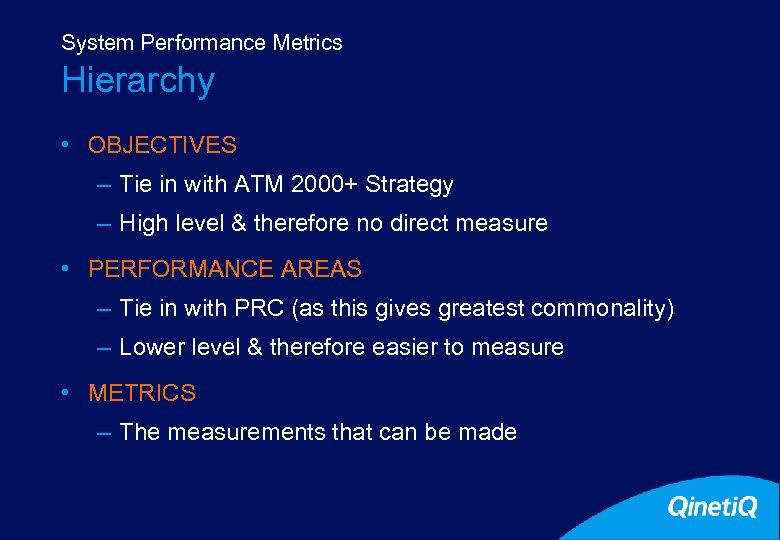 System Performance Metrics Hierarchy • OBJECTIVES – Tie in with ATM 2000+ Strategy – High level & therefore no direct measure • PERFORMANCE AREAS – Tie in with PRC (as this gives greatest commonality) – Lower level & therefore easier to measure • METRICS – The measurements that can be made 6
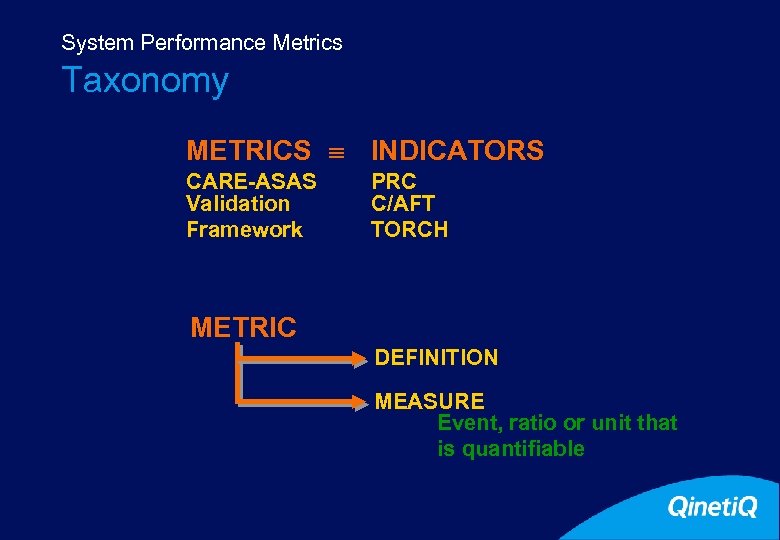 System Performance Metrics 7 Taxonomy METRICS INDICATORS CARE-ASAS Validation Framework PRC C/AFT TORCH METRIC DEFINITION MEASURE Event, ratio or unit that is quantifiable
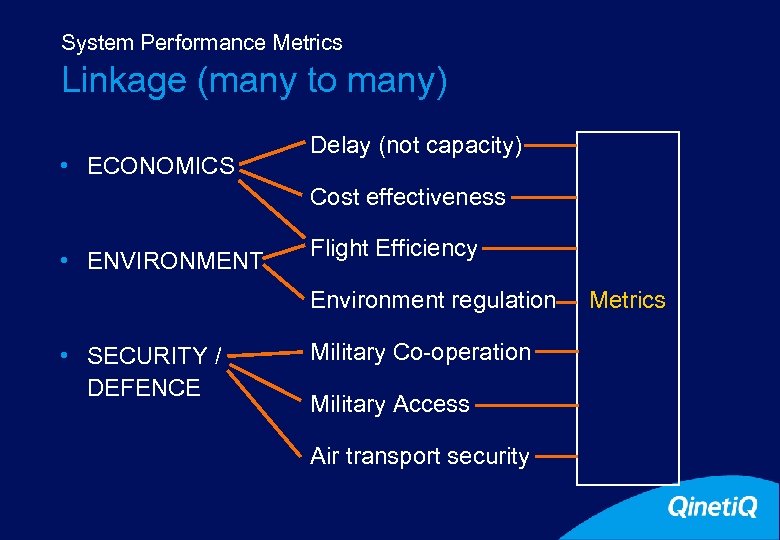 System Performance Metrics 8 Linkage (many to many) • ECONOMICS Delay (not capacity) Cost effectiveness • ENVIRONMENT Flight Efficiency Environment regulation • SECURITY / DEFENCE Military Co-operation Military Access Air transport security Metrics
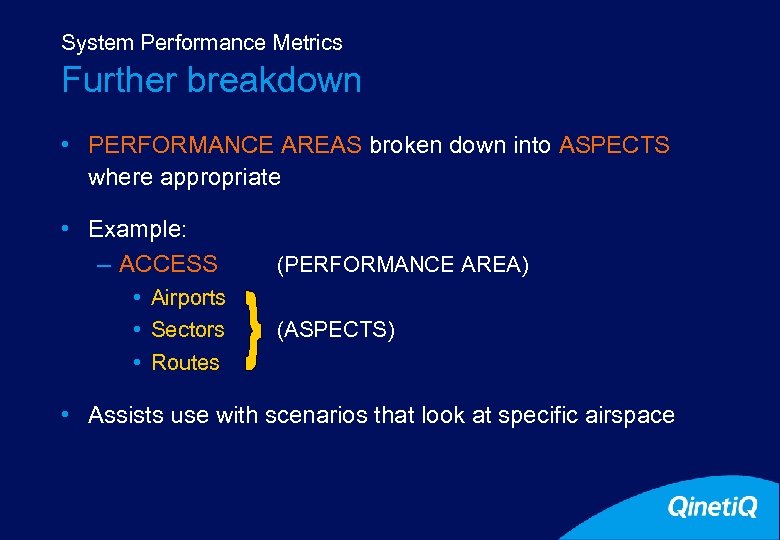 System Performance Metrics Further breakdown • PERFORMANCE AREAS broken down into ASPECTS where appropriate • Example: – ACCESS • Airports • Sectors • Routes (PERFORMANCE AREA) (ASPECTS) • Assists use with scenarios that look at specific airspace 9
 System Performance Metrics Perspectives • Different views (perspectives) can be applied to the selection of metrics: – Airline perspective as in C/AFT – ATM perspective as in PRC – Validation technique • Permits further breakdown and filtering other than purely hierarchical 10
 System Performance Metrics Example of perspective • Performance Area: Flight efficiency – Airline perspective • Actual fuel burn. v. planned fuel burn – ATM perspective • Efficiency of route structure 11
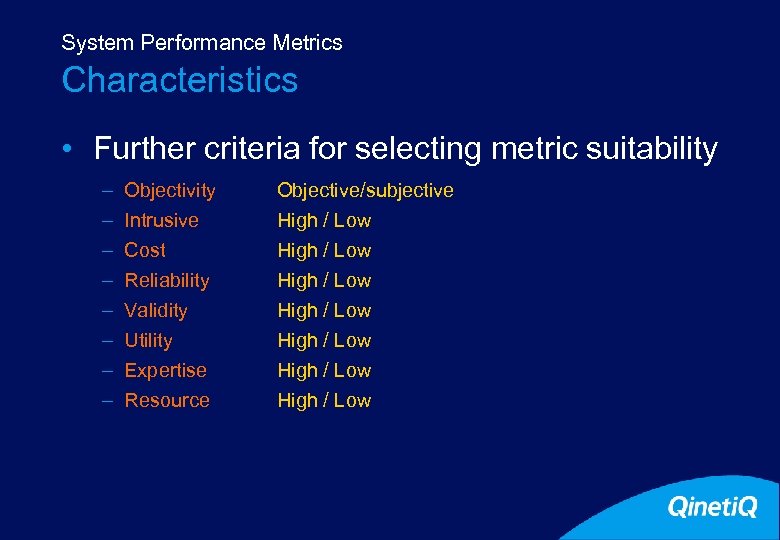 System Performance Metrics Characteristics • Further criteria for selecting metric suitability – – – – Objectivity Intrusive Cost Reliability Validity Utility Expertise Resource Objective/subjective High / Low High / Low 12
 System Performance Metrics Analysis • To illustrate feasibility of approach a ‘demonstrator’ database was created • 230 System Performance Metrics stored on database • Derived from recognised sources • Preliminary metric classification • Perspectives available – ATS provider / Operator / ASAS / Analysis Type (or any combination of these) 13
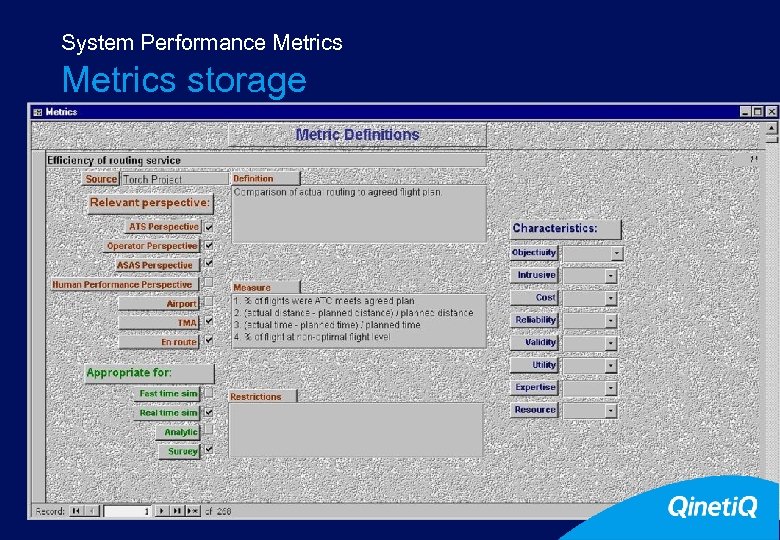 System Performance Metrics storage 14
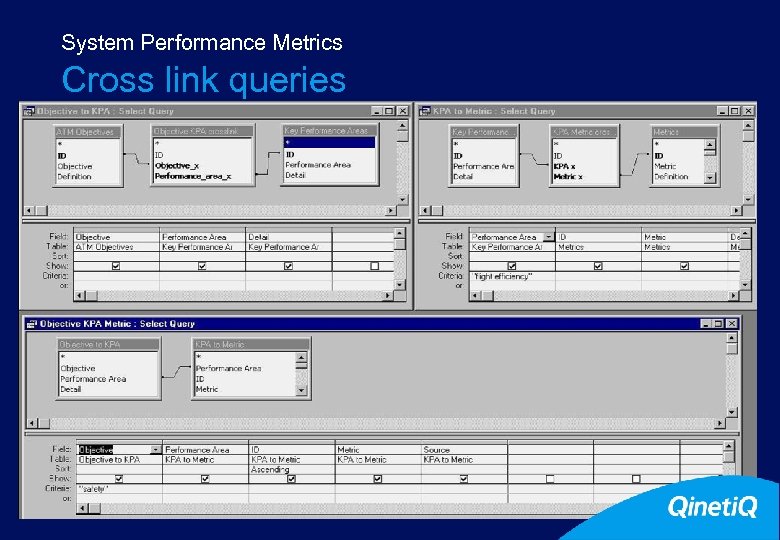 System Performance Metrics Cross link queries 15
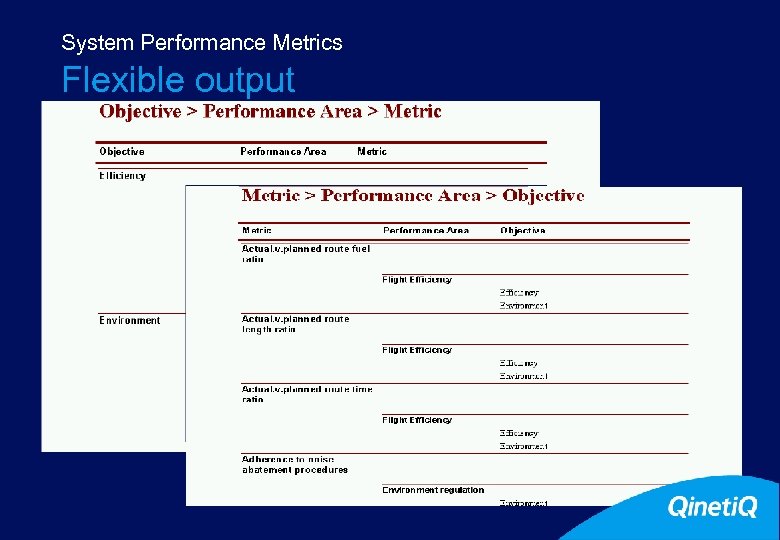 System Performance Metrics Flexible output 16
 System Performance Metrics ASAS case studies • Time based sequencing in approach • Airborne self-separation in en-route airspace 17
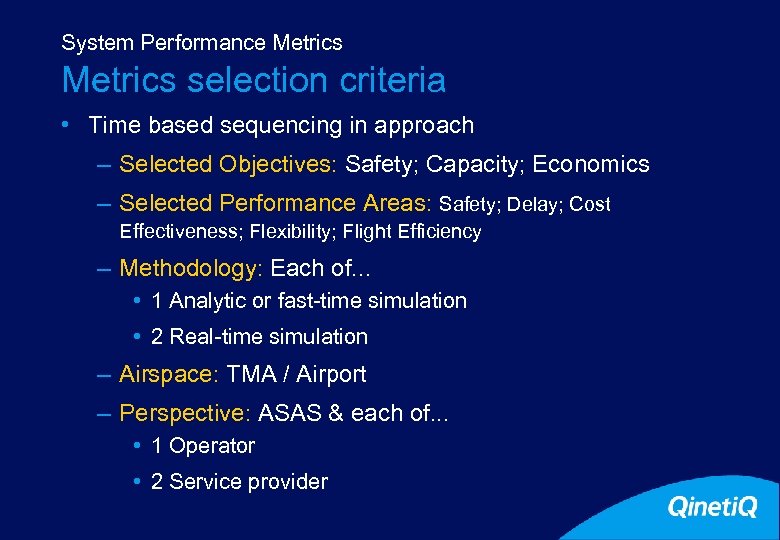 System Performance Metrics selection criteria • Time based sequencing in approach – Selected Objectives: Safety; Capacity; Economics – Selected Performance Areas: Safety; Delay; Cost Effectiveness; Flexibility; Flight Efficiency – Methodology: Each of. . . • 1 Analytic or fast-time simulation • 2 Real-time simulation – Airspace: TMA / Airport – Perspective: ASAS & each of. . . • 1 Operator • 2 Service provider 18
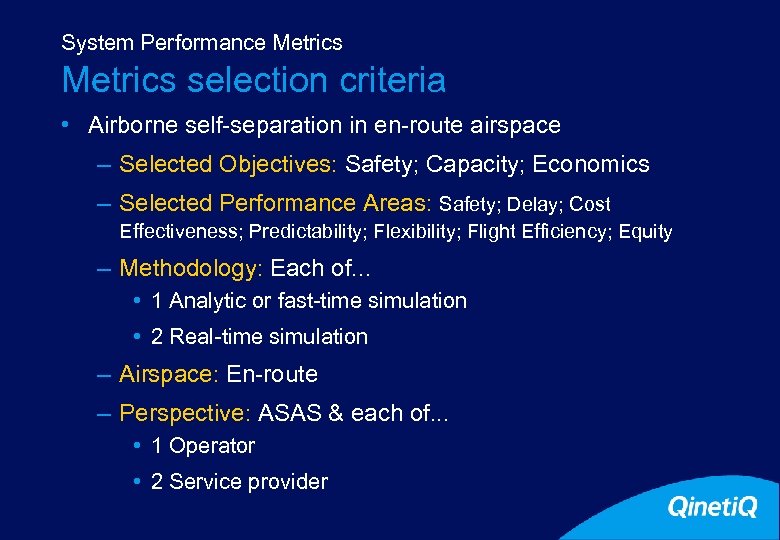 System Performance Metrics selection criteria • Airborne self-separation in en-route airspace – Selected Objectives: Safety; Capacity; Economics – Selected Performance Areas: Safety; Delay; Cost Effectiveness; Predictability; Flexibility; Flight Efficiency; Equity – Methodology: Each of. . . • 1 Analytic or fast-time simulation • 2 Real-time simulation – Airspace: En-route – Perspective: ASAS & each of. . . • 1 Operator • 2 Service provider 19
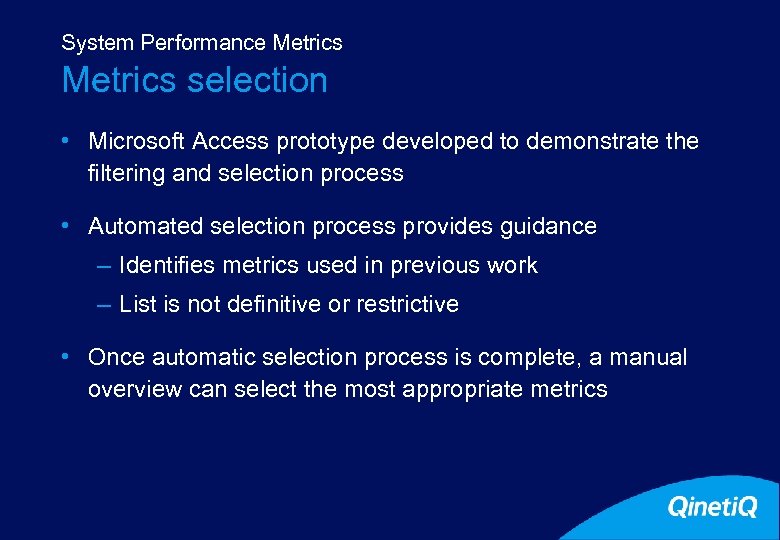 System Performance Metrics selection • Microsoft Access prototype developed to demonstrate the filtering and selection process • Automated selection process provides guidance – Identifies metrics used in previous work – List is not definitive or restrictive • Once automatic selection process is complete, a manual overview can select the most appropriate metrics 20
 System Performance Metrics Conclusions • System performance metrics can be linked to the strategic objectives of ATM (and ASAS) • The work has successfully consolidated metrics from a number of sources • Effective filtering requires effective classification - this will necessarily be an ongoing and iterative process • Selection process provides guidance - it is not definitive or restrictive 21