 Скачать презентацию Carbon Footprint 組員 陳芷羚 高詩閔 曾伃綺 What
03707b43d60382ee2b9769d8f7f15738.ppt
- Количество слайдов: 14



Carbon Footprint 組員: 陳芷羚 高詩閔 曾伃綺
What is “Food Miles” ? ¡ It is the delivery distance where the food is produced and transported to the consumer’s hands (or mouth). ¡ Used to understand the impact of food production to the environment.
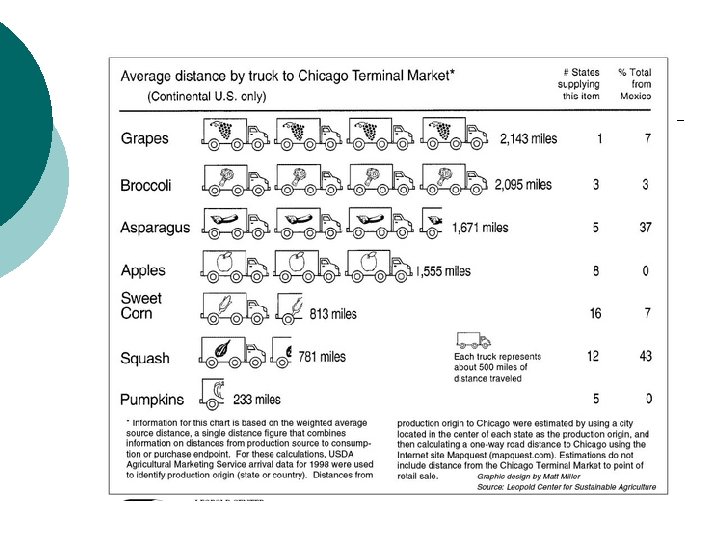
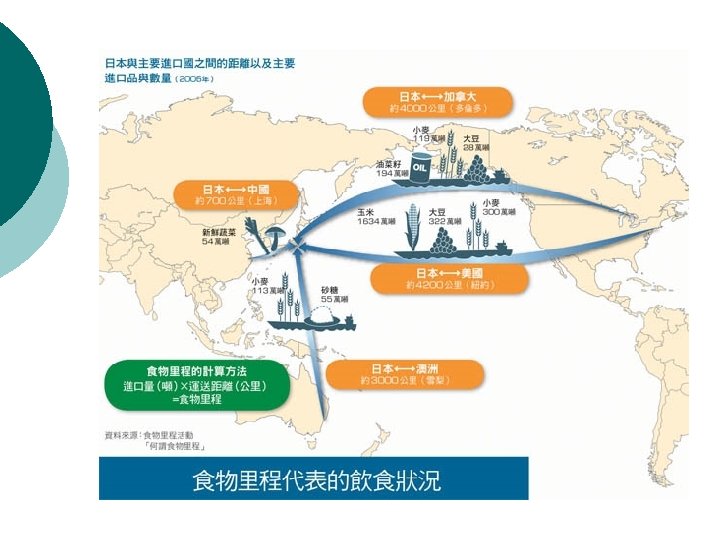
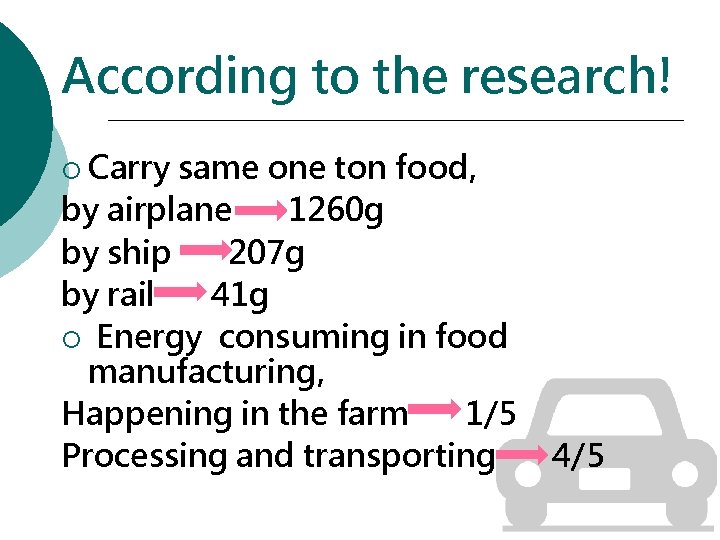
According to the research! ¡ Carry same one ton food, by airplane 1260 g by ship 207 g by rail 41 g ¡ Energy consuming in food manufacturing, Happening in the farm 1/5 Processing and transporting 4/5
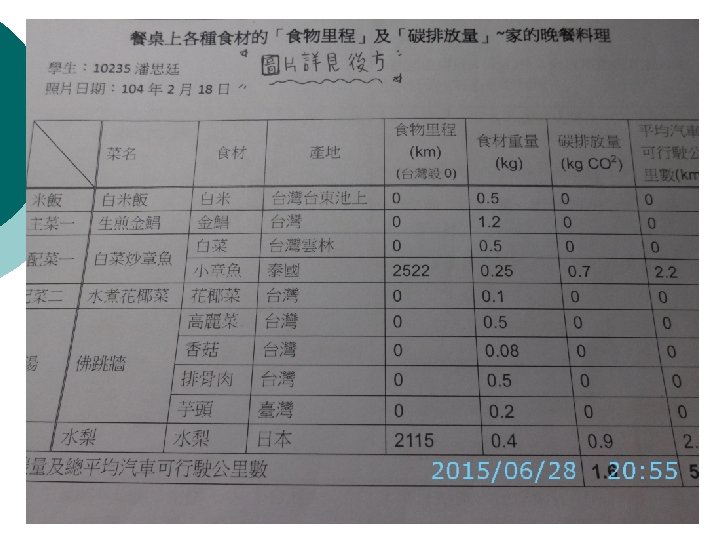
Our Research We investigated one of our local supermarket, finding that most of the vegetables, fruits, and meat etc. come from other areas in Taiwan. ¡ We also did a survey of our daily dinner and investigate where our foods come from. ¡
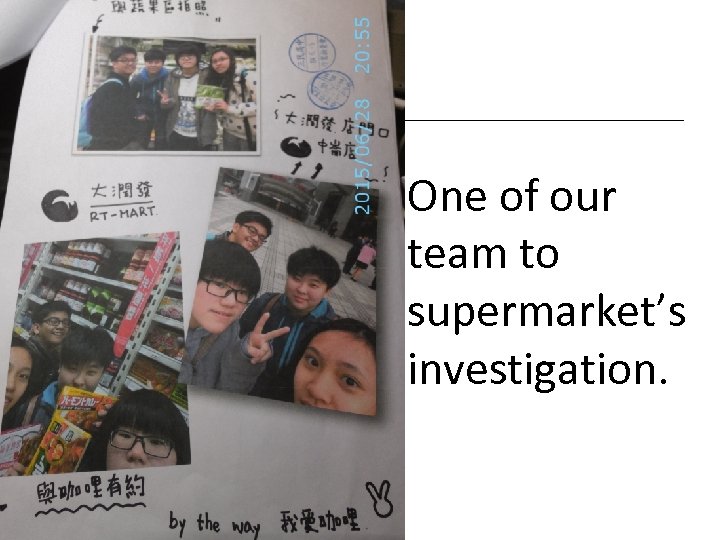
One of our team to supermarket’s investigation.
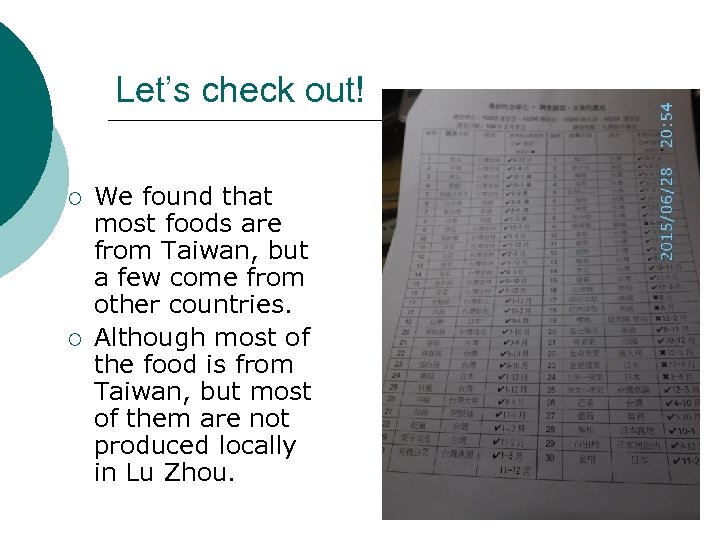
Let’s check out! ¡ ¡ We found that most foods are from Taiwan, but a few come from other countries. Although most of the food is from Taiwan, but most of them are not produced locally in Lu Zhou.
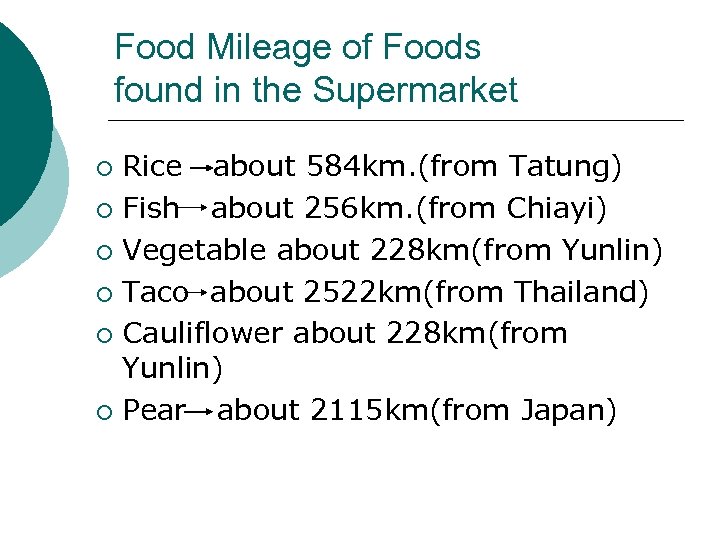
Food Mileage of Foods found in the Supermarket Rice about 584 km. (from Tatung) ¡ Fish about 256 km. (from Chiayi) ¡ Vegetable about 228 km(from Yunlin) ¡ Taco about 2522 km(from Thailand) ¡ Cauliflower about 228 km(from Yunlin) ¡ Pear about 2115 km(from Japan) ¡
About where its product where its sell ¡ local production, local consumption. It can reduce the delivery distance of food, cut down the using of energy and carbon dioxide emission.
But…. . Reducing Food miles is not always the most effective environment solution, because the carbon emission produced in other stages of the product life-cycle may be more than transport. ¡
Reflection After our investigation, we learned that no matter what we eat will consume a lot of energy! Even an apple's long-term transport process will make a lot of carbon! The best way to improve is to buy locally produced fruits, vegetables and other agricultural products. Let's start from small action to save our Earth.

THE END
Скачать презентацию Carbon Footprint 組員 陳芷羚 高詩閔 曾伃綺 What
03707b43d60382ee2b9769d8f7f15738.ppt