 Скачать презентацию Carbo Europe Poznan meeting October 9 2007 Ecosystem
9258d46a1fe83706c894383a6bed70e7.ppt
- Количество слайдов: 27



Carbo. Europe, Poznan meeting, October 9, 2007. Ecosystem component Activity 1. 6 Grasslands and wetlands Jean-François Soussana Katja Klumpp, Nicolas Vuichard INRA, Clermont-Ferrand, France
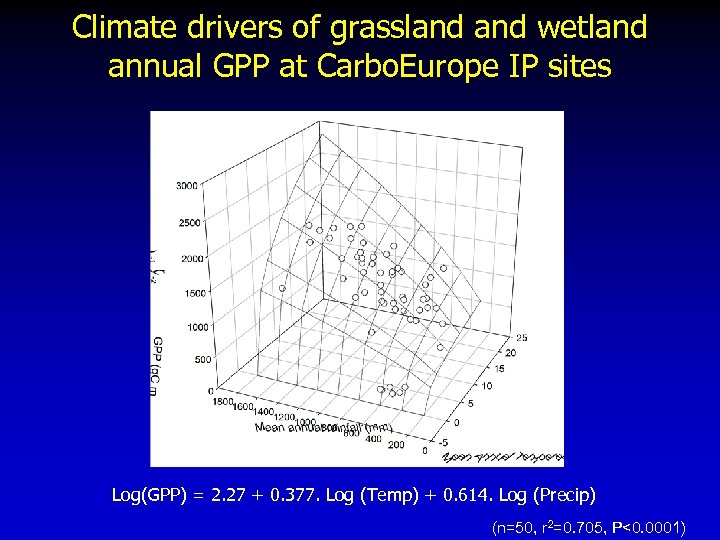
Climate drivers of grassland wetland annual GPP at Carbo. Europe IP sites Log(GPP) = 2. 27 + 0. 377. Log (Temp) + 0. 614. Log (Precip) (n=50, r 2=0. 705, P<0. 0001)
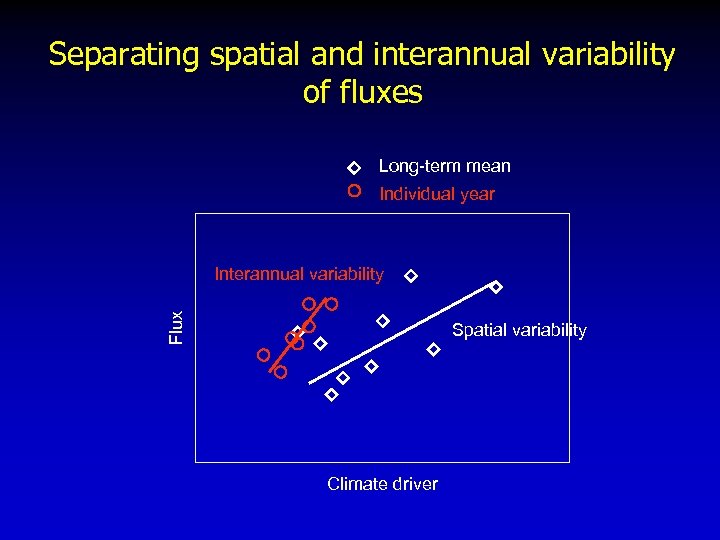
Separating spatial and interannual variability of fluxes Long-term mean Individual year Flux Interannual variability Spatial variability Climate driver
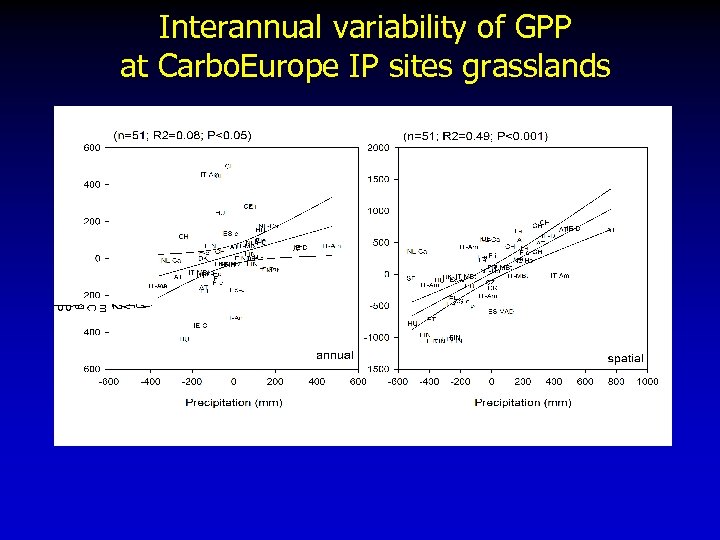
Interannual variability of GPP at Carbo. Europe IP sites grasslands
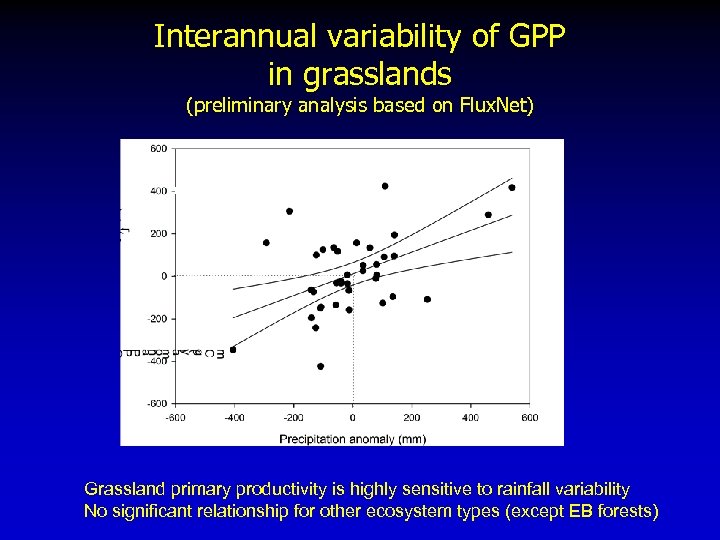
Interannual variability of GPP in grasslands (preliminary analysis based on Flux. Net) (n=37, r 2 =0. 235, P<0. 01) Grassland primary productivity is highly sensitive to rainfall variability No significant relationship for other ecosystem types (except EB forests)
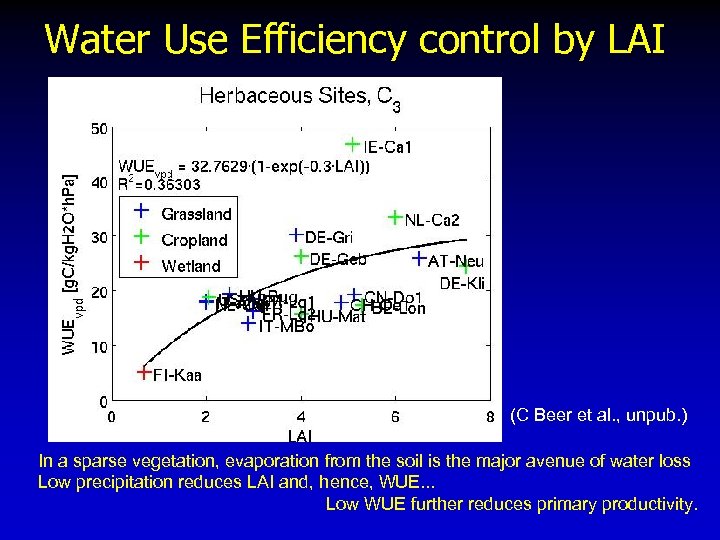
Water Use Efficiency control by LAI (C Beer et al. , unpub. ) In a sparse vegetation, evaporation from the soil is the major avenue of water loss Low precipitation reduces LAI and, hence, WUE. . . Low WUE further reduces primary productivity.
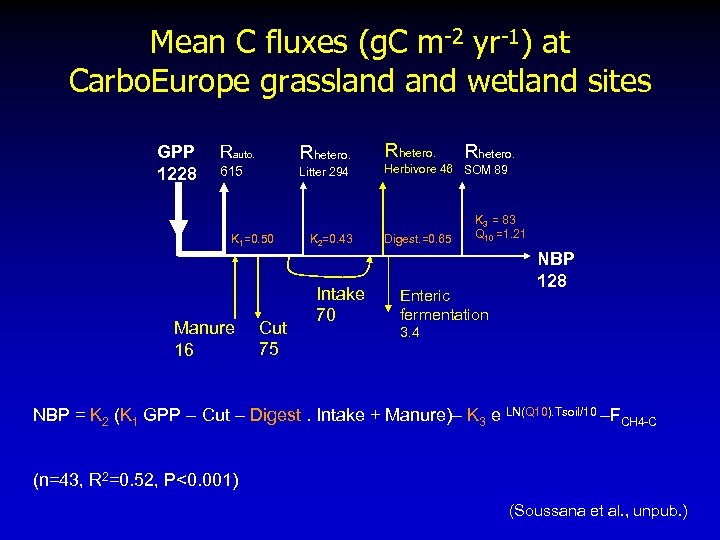
Mean C fluxes (g. C m-2 yr-1) at Carbo. Europe grassland wetland sites GPP 1228 Rhetero. Rauto. 615 Litter 294 K 1=0. 50 Manure 16 Cut 75 K 2=0. 43 Intake 70 Rhetero. Herbivore 46 SOM 89 Digest. =0. 65 K 3 = 83 Q 10 =1. 21 Enteric fermentation NBP 128 3. 4 NBP = K 2 (K 1 GPP – Cut – Digest. Intake + Manure)– K 3 e LN(Q 10). Tsoil/10 –FCH 4 -C (n=43, R 2=0. 52, P<0. 001) (Soussana et al. , unpub. )
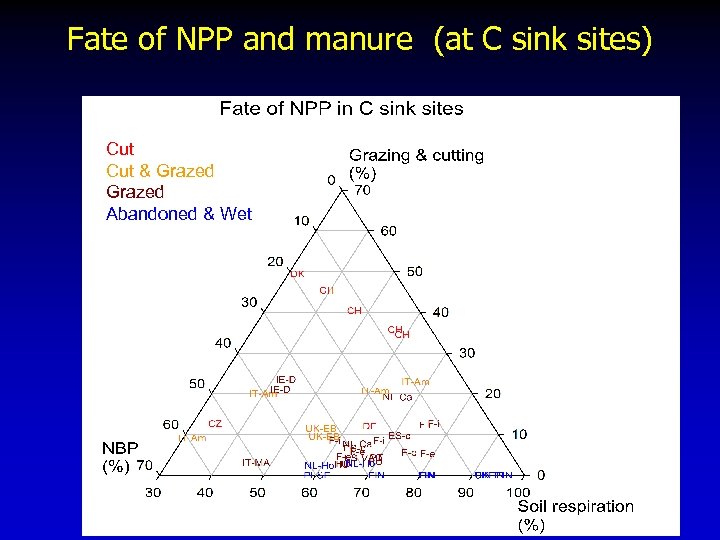
Fate of NPP and manure (at C sink sites) Cut & Grazed Abandoned & Wet
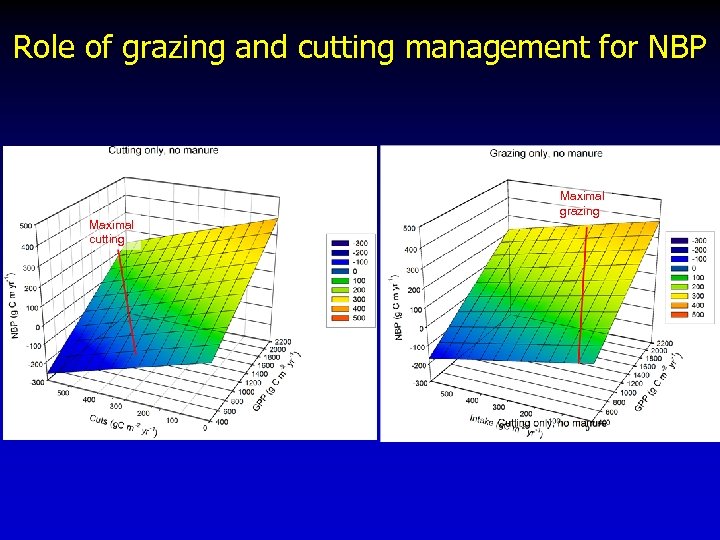
Role of grazing and cutting management for NBP Maximal grazing Maximal cutting
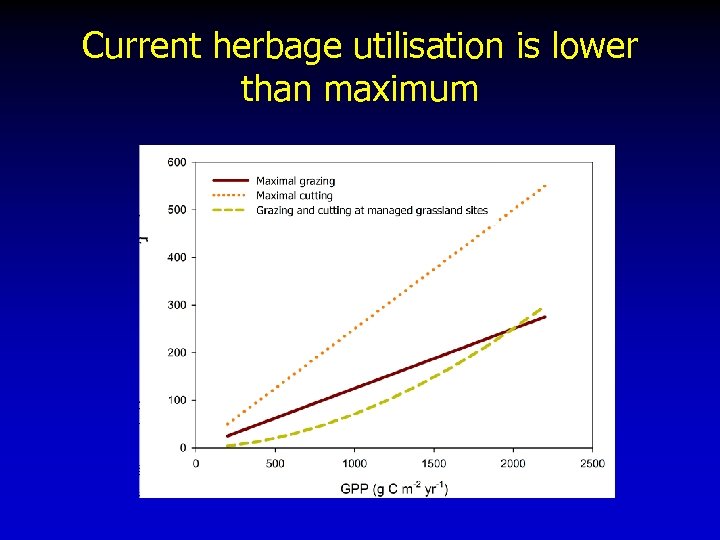
Current herbage utilisation is lower than maximum
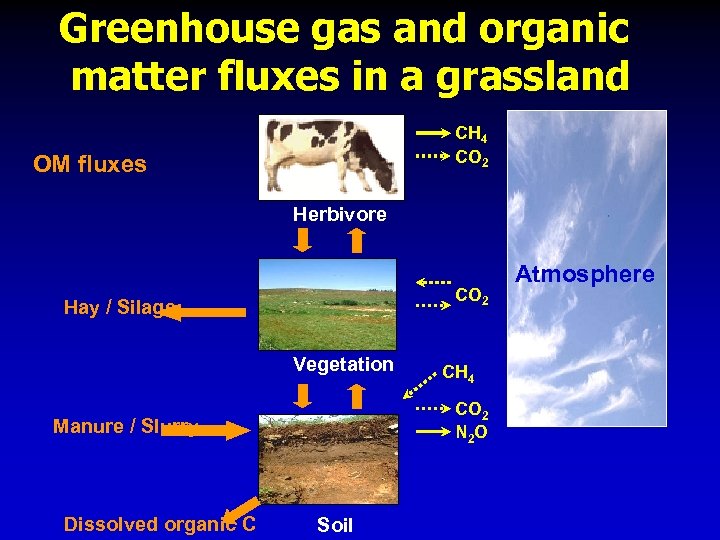
Greenhouse gas and organic matter fluxes in a grassland CH 4 CO 2 OM fluxes Herbivore CO 2 Hay / Silage Vegetation CO 2 N 2 O Manure / Slurry Dissolved organic C CH 4 Soil Atmosphere
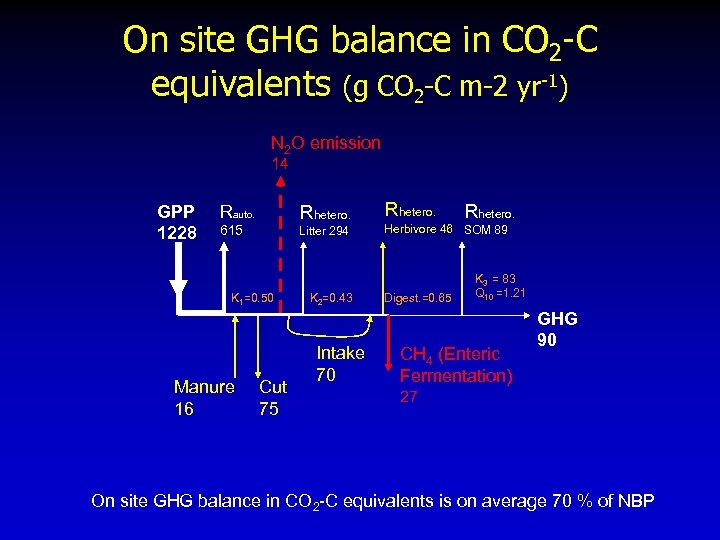
On site GHG balance in CO 2 -C equivalents (g CO 2 -C m-2 yr-1) N 2 O emission 14 GPP 1228 Rhetero. Rauto. 615 Litter 294 K 1=0. 50 Manure 16 Cut 75 K 2=0. 43 Intake 70 Rhetero. Herbivore 46 SOM 89 Digest. =0. 65 K 3 = 83 Q 10 =1. 21 CH 4 (Enteric Fermentation) GHG 90 27 On site GHG balance in CO 2 -C equivalents is on average 70 % of NBP
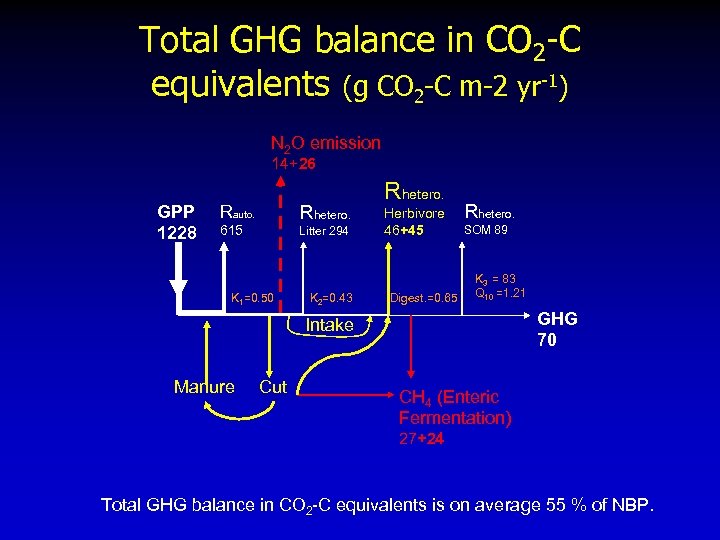
Total GHG balance in CO 2 -C equivalents (g CO 2 -C m-2 yr-1) N 2 O emission 14+26 GPP 1228 Rhetero. Rauto. 615 Litter 294 K 1=0. 50 K 2=0. 43 Rhetero. Herbivore 46+45 Digest. =0. 65 Rhetero. SOM 89 K 3 = 83 Q 10 =1. 21 GHG 70 Intake Manure Cut CH 4 (Enteric Fermentation) 27+24 Total GHG balance in CO 2 -C equivalents is on average 55 % of NBP.
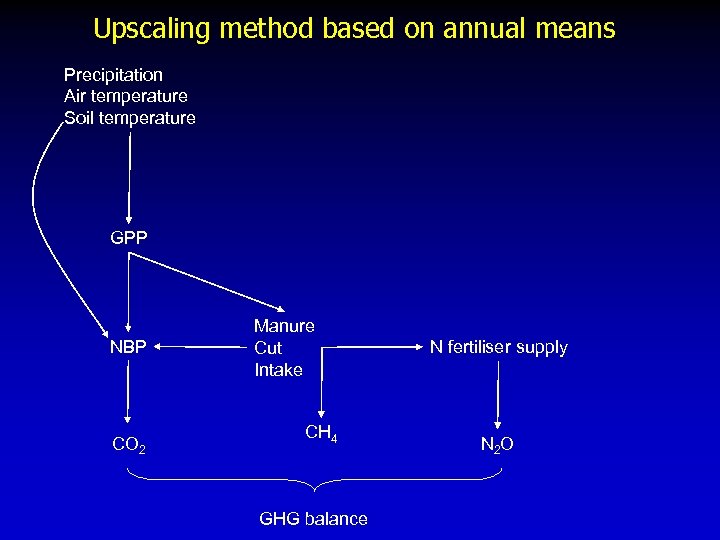
Upscaling method based on annual means Precipitation Air temperature Soil temperature GPP NBP CO 2 Manure Cut Intake CH 4 GHG balance N fertiliser supply N 2 O
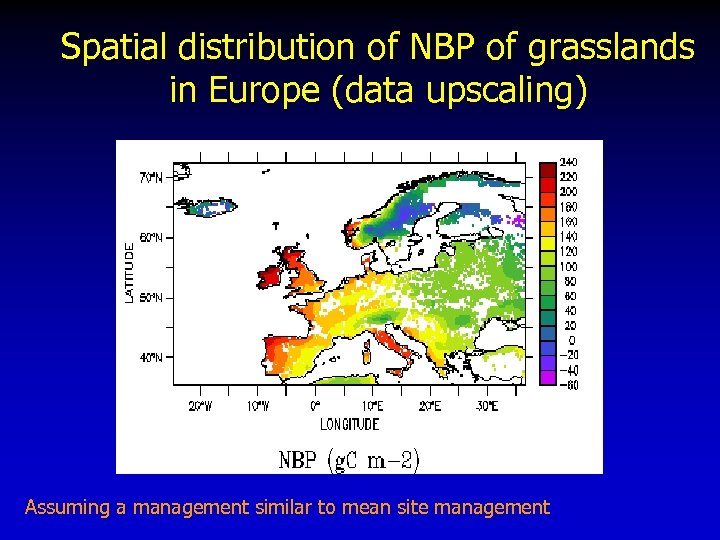
Spatial distribution of NBP of grasslands in Europe (data upscaling) Assuming a management similar to mean site management
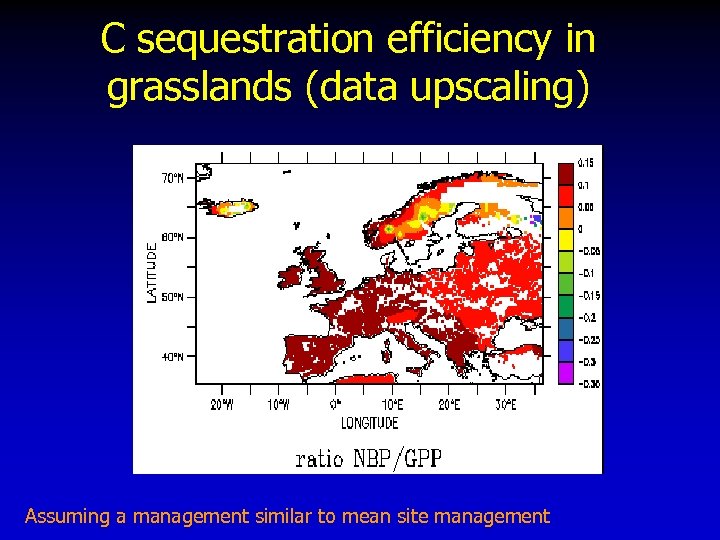
C sequestration efficiency in grasslands (data upscaling) Assuming a management similar to mean site management
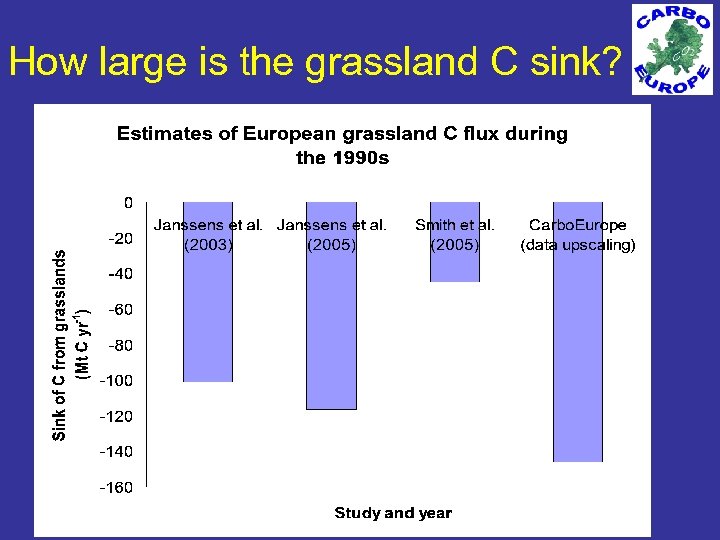
How large is the grassland C sink?
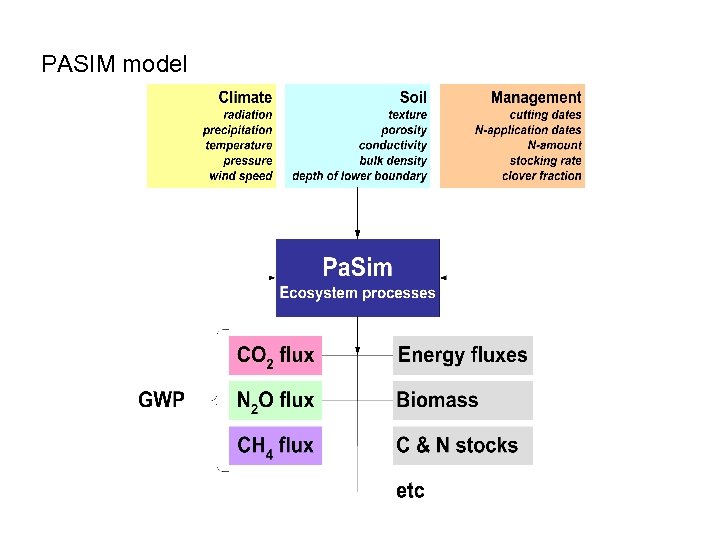
PASIM model
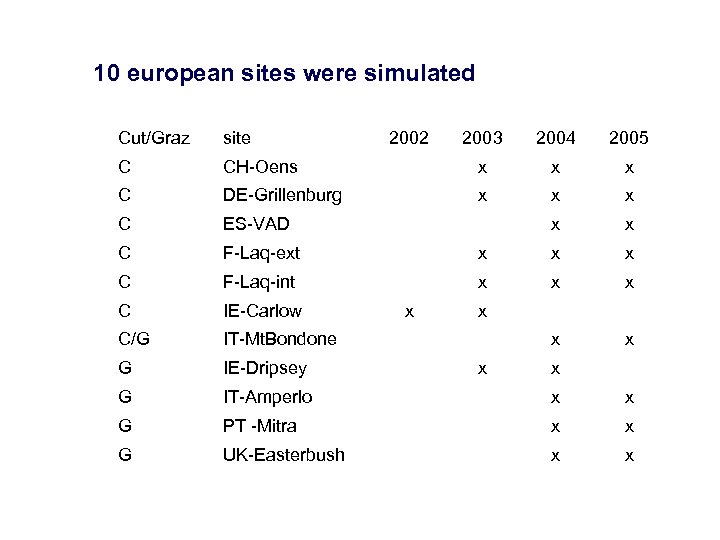
10 european sites were simulated Cut/Graz site C 2002 2003 2004 2005 CH-Oens x x x C DE-Grillenburg x x x C ES-VAD x x C F-Laq-ext x x x C F-Laq-int x x x C IE-Carlow C/G IT-Mt. Bondone x x G IE-Dripsey G IT-Amperlo x x G PT -Mitra x x G UK-Easterbush x x x
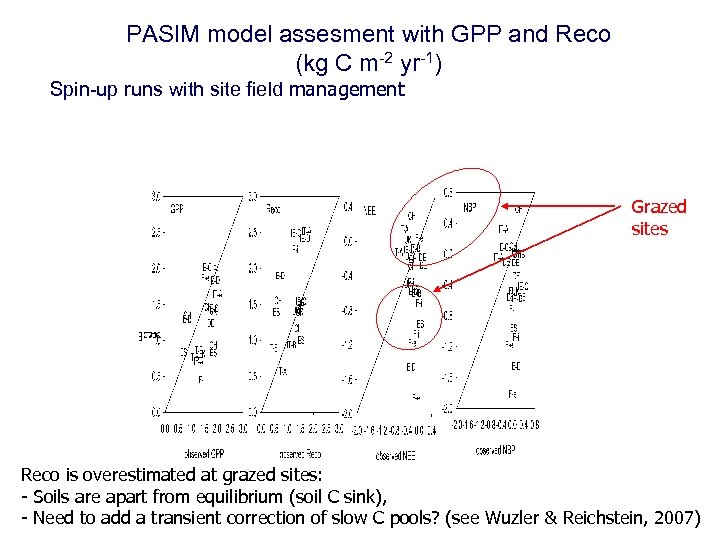
PASIM model assesment with GPP and Reco (kg C m-2 yr-1) Spin-up runs with site field management Grazed sites Reco is overestimated at grazed sites: - Soils are apart from equilibrium (soil C sink), - Need to add a transient correction of slow C pools? (see Wuzler & Reichstein, 2007)
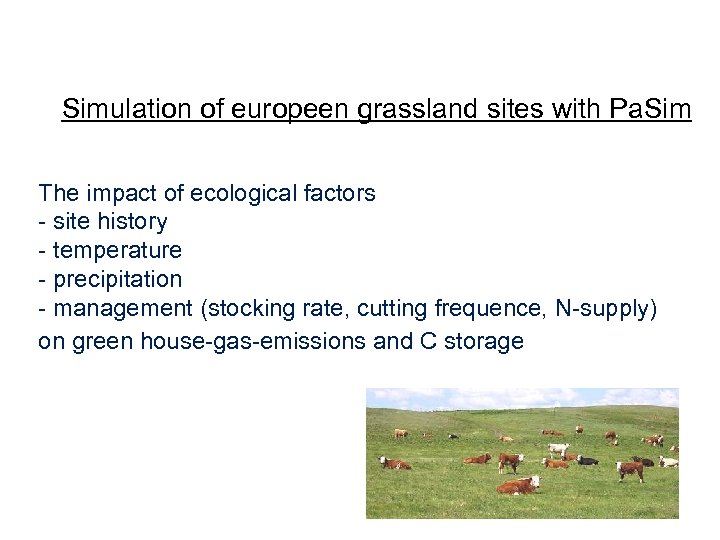
Simulation of europeen grassland sites with Pa. Sim The impact of ecological factors - site history - temperature - precipitation - management (stocking rate, cutting frequence, N-supply) on green house-gas-emissions and C storage
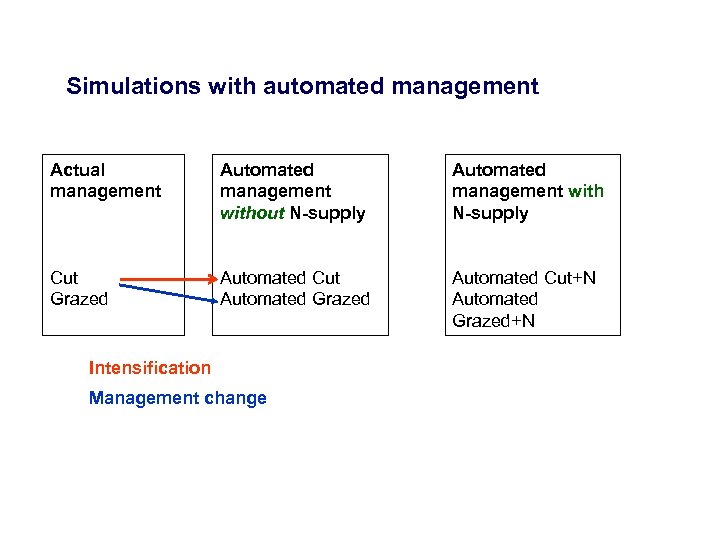
Simulations with automated management Actual management Automated management without N-supply Automated management with N-supply Cut Grazed Automated Cut Automated Grazed Automated Cut+N Automated Grazed+N Intensification Management change
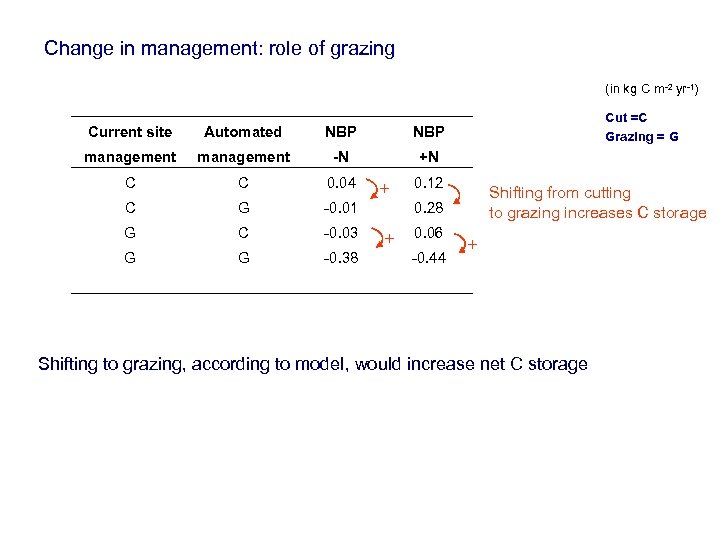
Change in management: role of grazing (in kg C m-2 yr-1) Current site Automated NBP management -N +N C C 0. 04 C G -0. 01 G C -0. 03 G G -0. 38 Cut =C Grazing = G + 0. 12 Shifting from cutting to grazing increases C storage 0. 28 + 0. 06 -0. 44 + Shifting to grazing, according to model, would increase net C storage
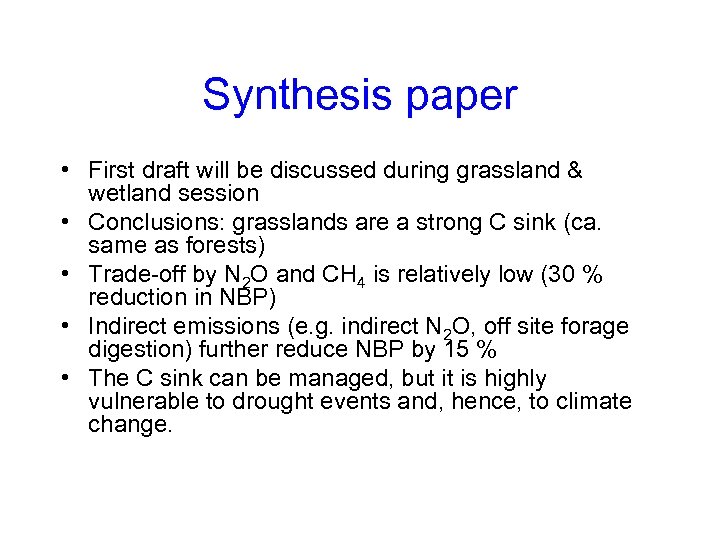
Synthesis paper • First draft will be discussed during grassland & wetland session • Conclusions: grasslands are a strong C sink (ca. same as forests) • Trade-off by N 2 O and CH 4 is relatively low (30 % reduction in NBP) • Indirect emissions (e. g. indirect N 2 O, off site forage digestion) further reduce NBP by 15 % • The C sink can be managed, but it is highly vulnerable to drought events and, hence, to climate change.
Next steps • Upscaling using agricultural statistics (livestock density, grazing type, N fertiliser amounts) • Show that increased herbage utilisation (the livestock footprint) reduces the sink size. • Run PASIM since 1900 and test the role of global change (CO 2, warming, N deposition. . ) and management change drivers for the grassland wetland C balance • Discuss where does the C go ? – Deep soil C (not surveyed but close to 2/3 of total in deep soils) – Is deep soil C stable without energy supply (see C-N session, Fontaine et al. ) Does its accumulation saturate?
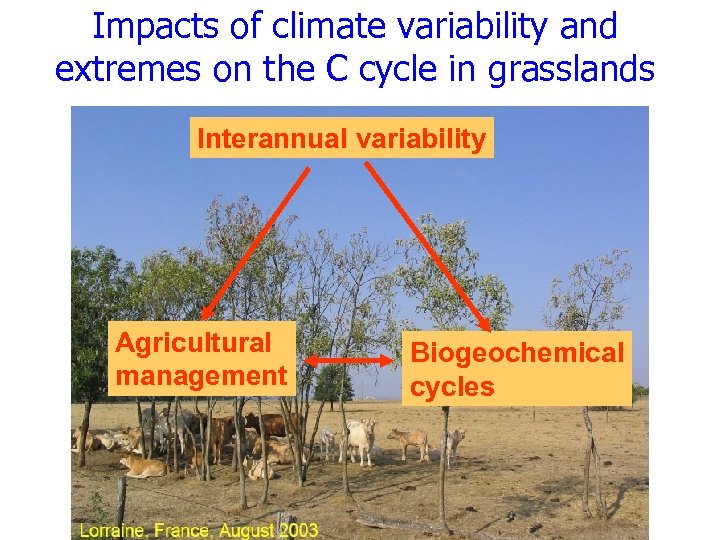
Impacts of climate variability and extremes on the C cycle in grasslands Interannual variability Agricultural management Biogeochemical cycles
Advertisement for grassland & wetland parallel session - Summary of wetland workshop - Synthesis of results on grasslands and wetlands (Discussion based on a first draft ) - Modelling - Plant functional traits: first results and discussion - Other papers to be prepared
Скачать презентацию Carbo Europe Poznan meeting October 9 2007 Ecosystem
9258d46a1fe83706c894383a6bed70e7.ppt